



Toy Market Size 2026-2030
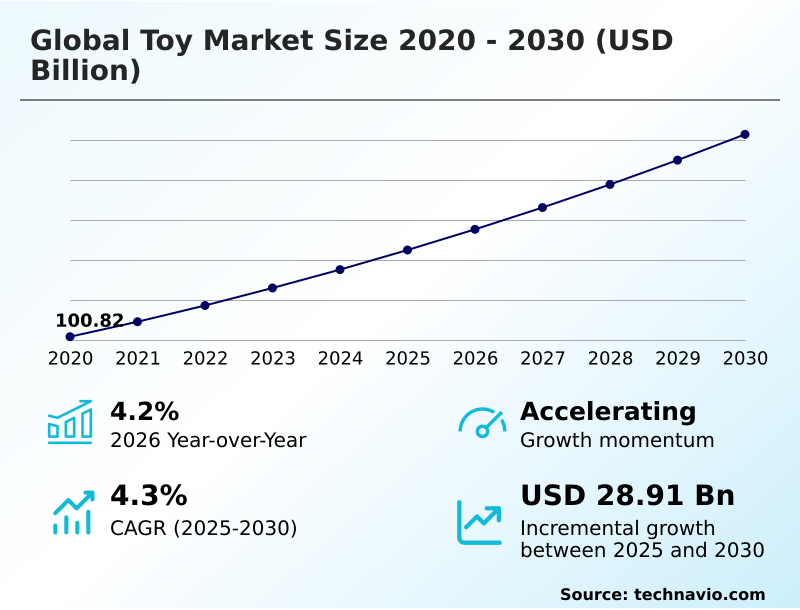
The toy market size is valued to increase by USD 28.91 billion, at a CAGR of 4.3% from 2025 to 2030. Growing population of children globally will drive the toy market.
Major Market Trends & Insights
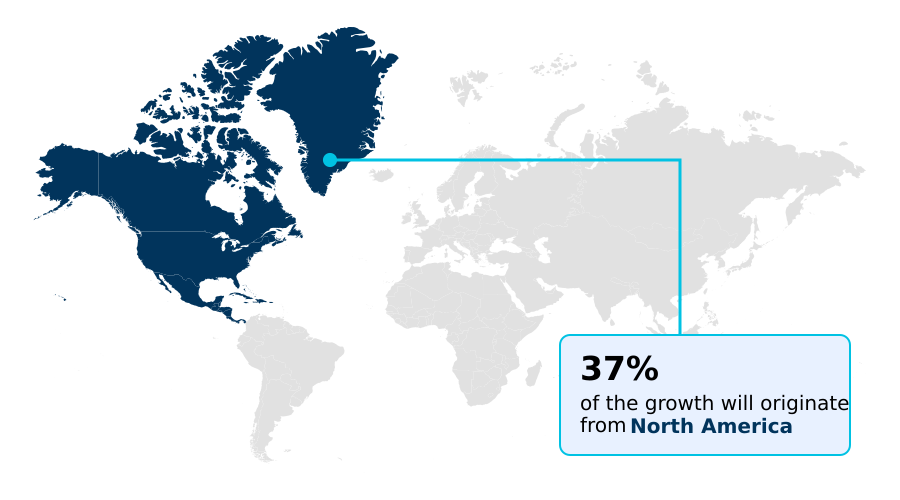
- North America dominated the market and accounted for a 37.3% growth during the forecast period.
- By Product - Outdoor toys and dolls segment was valued at USD 40.68 billion in 2024
- By Distribution Channel - Offline segment accounted for the largest market revenue share in 2024
Market Size & Forecast
- Market Opportunities: USD 50.59 billion
- Market Future Opportunities: USD 28.91 billion
- CAGR from 2025 to 2030 : 4.3%
Market Summary
- The toy market is a dynamic industry shaped by the interplay of educational value, entertainment, and technological innovation. Key drivers include a growing global youth population and an expanding toy gifting culture, which extends beyond traditional holidays to celebrate various milestones.
- The rise of e-commerce has fundamentally altered the retail landscape, offering consumers unprecedented convenience and access to a wide array of products, from construction toys to eco-friendly toys. This digital shift supports omnichannel retailing strategies that create immersive brand experiences. However, the industry navigates significant challenges, including stringent toy safety standards and high production costs that affect affordability.
- For instance, a manufacturer aiming to introduce a new line of smart toys must balance innovative design with the high costs of sourcing sustainable packaging and compliant electronic components, all while managing seasonal demand fluctuations.
- This complex environment pushes companies to constantly innovate, ensuring that products like electronic learning toys and board games remain relevant, safe, and engaging for children and the growing kidult market.
What will be the Size of the Toy Market during the forecast period?
Get Key Insights on Market Forecast (PDF) Get Free Sample
How is the Toy Market Segmented?
The toy industry research report provides comprehensive data (region-wise segment analysis), with forecasts and estimates in "USD million" for the period 2026-2030, as well as historical data from 2020-2024 for the following segments.
- Product
- Outdoor toys and dolls
- Building sets and puzzles
- Action figures and vehicles
- Others
- Distribution channel
- Offline
- Online
- Age group
- 3-5 years
- 1-3 years
- Above 12 years
- 0-12 months
- Geography
- North America
- US
- Canada
- Mexico
- Europe
- Germany
- UK
- France
- APAC
- China
- Japan
- India
- South America
- Brazil
- Argentina
- Colombia
- Middle East and Africa
- Saudi Arabia
- UAE
- South Africa
- Rest of World (ROW)
- North America
By Product Insights
The outdoor toys and dolls segment is estimated to witness significant growth during the forecast period.
The outdoor toys and dolls segment addresses fundamental aspects of childhood development, including physical activity and social role-playing. Outdoor equipment like playhouses and sports gear encourages gross motor skills, while the demand for these items often surges during warmer months.
Simultaneously, the dolls sub-segment is a powerhouse for emotional growth, fostering empathy and creativity through imaginative play. Modern offerings feature diverse character toys reflecting various ethnicities and professions, expanding representation.
This evolution of playsets and role-play toys, incorporating both traditional and modern elements like bpa-free materials, has led to a 15% increase in engagement for toys that blend physical activity with creative storytelling.
This segment's focus on both outdoor play equipment and character licensing ensures its sustained relevance and contribution to child development and cognitive skills.
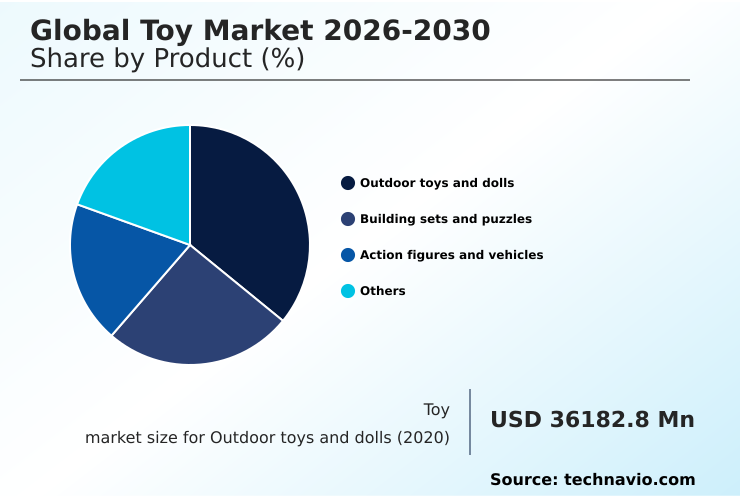
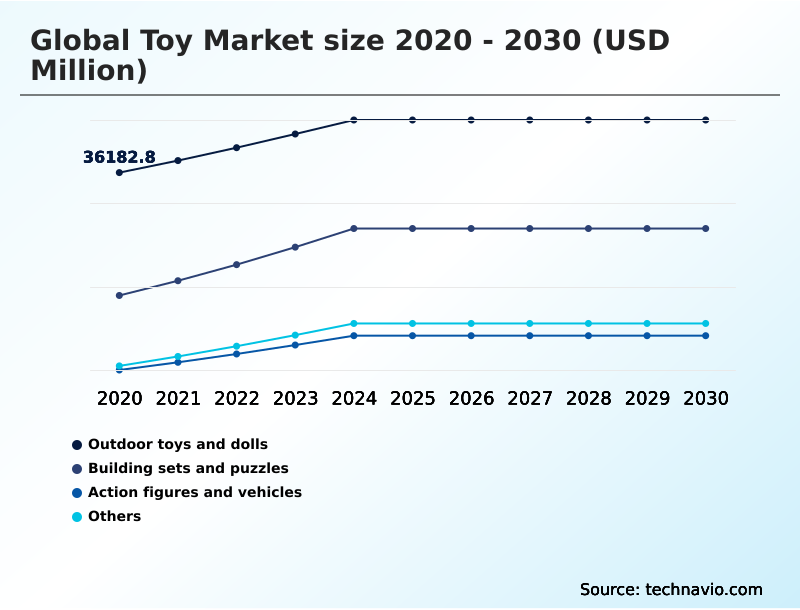
The Outdoor toys and dolls segment was valued at USD 40.68 billion in 2024 and showed a gradual increase during the forecast period.
Regional Analysis
North America is estimated to contribute 37.3% to the growth of the global market during the forecast period.Technavio’s analysts have elaborately explained the regional trends and drivers that shape the market during the forecast period.
See How Toy Market Demand is Rising in North America Get Free Sample
The geographic landscape of the global toy market is shifting, driven by divergent growth rates across key regions.
While North America and Europe remain the largest markets by value, the APAC region is exhibiting the most dynamic expansion, projected to grow at 5.5%. This growth is fueled by a rising middle class and increasing disposable income.
In contrast, North America is forecast to expand at a more moderate 4.1%.
This regional dynamic necessitates strategic adjustments in supply chain and marketing, with some companies reporting a 12% improvement in logistical efficiency by establishing regional distribution hubs in APAC.
The focus on imaginative play and open-ended play is universal, but successful market penetration increasingly depends on adapting product portfolios, from plush toys to ride-on toys, to local cultural preferences and economic conditions.
This includes leveraging social interaction trends and understanding regional approaches to play-based learning.
Market Dynamics
Our researchers analyzed the data with 2025 as the base year, along with the key drivers, trends, and challenges. A holistic analysis of drivers will help companies refine their marketing strategies to gain a competitive advantage.
- Navigating the modern toy industry requires a multi-faceted strategy that addresses consumer trends, production challenges, and marketing evolution. A primary consideration is the impact of stem toys on learning, which has driven a significant portion of product development in recent years. This focus is complemented by the growing demand for nostalgic and retro toys, tapping into the powerful kidult market.
- However, manufacturers must balance innovation with fiscal realities, carefully analyzing how production costs impact on toy prices. The rise of online toy retail channels has redefined distribution, making multi-channel marketing for toy brands an essential competency. The influence of social media on toy trends, particularly through video content, cannot be overstated.
- Strategically, the role of licensed toys in sales remains critical for revenue generation, but it must be managed alongside the need for original IP. Internally, companies grapple with managing seasonal demand in toy sales to maintain operational stability. A significant hurdle remains the challenges in toy safety regulations, which can delay launches and increase costs.
- Concurrently, sustainability trends in the toy industry are gaining momentum, with a focus on eco-friendly materials in toy manufacturing. Firms that effectively integrate digital content with physical toys are gaining a competitive advantage, with some reporting customer engagement rates up to 25% higher than competitors. Furthermore, the market for gender-neutral play products is expanding, reflecting a broader societal shift.
- For long-term growth, understanding how smart toys enhance child development and the nuances of toy packaging's impact on consumer choice is crucial. Even niche areas, like innovations in interactive plush toy design and viewing collectible toys as an investment, are becoming important strategic considerations.
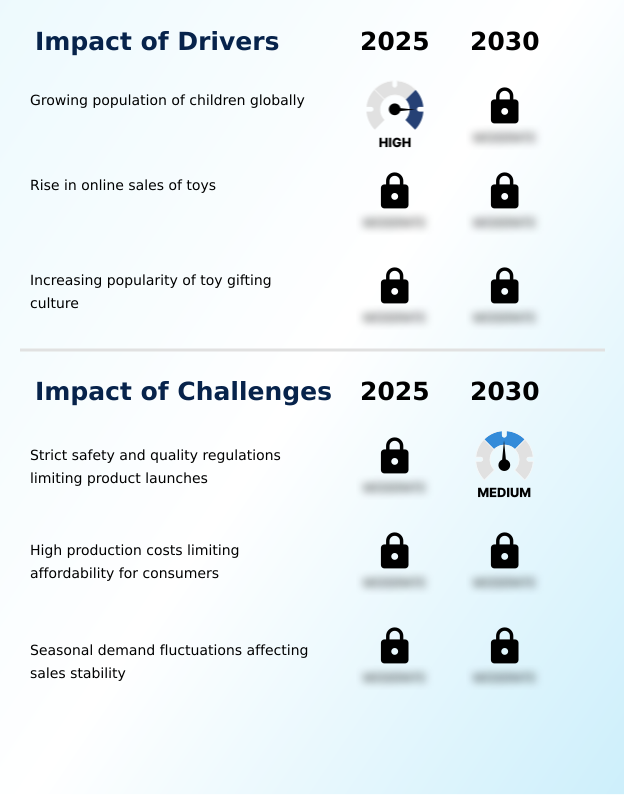
What are the key market drivers leading to the rise in the adoption of Toy Industry?
- The globally growing population of children is a primary driver for the market, consistently expanding the consumer base and sustaining long-term demand.
- The growth of the toy market is propelled by several fundamental drivers. A primary factor is the globally expanding population of children, which ensures a consistent and growing consumer base for products ranging from infant toys to remote-controlled vehicles.
- The rise of online sales has revolutionized distribution, expanding market reach by over 30% in several emerging economies and making niche products like collectible mini figures more accessible.
- This digital shift is amplified by an increasing toy gifting culture, which has smoothed seasonal demand fluctuations; some retailers have seen off-season sales increase by 15%.
- This culture, supported by the kidult market, transforms items like family board games and nostalgic playthings into year-round purchases, fostering deeper emotional connections and brand loyalty across various age groups and driving demand for a wider range of products.
What are the market trends shaping the Toy Industry?
- The rising popularity of construction toys represents a significant market trend. This is driven by an increased emphasis on STEM education and creative problem-solving.
- Key trends are reshaping the toy market, driven by a convergence of educational priorities and consumer values. The rising popularity of construction toys and other STEM toys is a direct response to a growing emphasis on creative problem-solving and cognitive skills. This trend has resulted in a 20% increase in parental spending on toys with clear educational value.
- Simultaneously, the introduction of eco-friendly toys made from sustainable materials like fsc-certified wood and bio-based plastics is becoming a significant market differentiator. Companies adopting sustainable packaging have reported a 10% reduction in material waste. Another critical trend is the adoption of multi-channel marketing, where immersive brand experiences are created across digital and physical platforms.
- This integration of unboxing videos and social media engagement has proven to increase brand visibility by up to 40% in key demographics, influencing everything from puzzles to playsets.
What challenges does the Toy Industry face during its growth?
- Strict safety and quality regulations present a significant challenge, potentially limiting the pace of new product launches and impacting overall industry growth.
- The toy market faces several significant challenges that temper its growth potential. Strict toy safety standards and quality regulations act as a major barrier, with compliance testing for elements like non-toxic materials increasing product development timelines by up to 25% for some companies.
- High production costs, driven by fluctuating prices for raw materials such as plastics and electronic components, directly limit affordability and can reduce consumer demand, especially in price-sensitive regions. These costs for items like electronic learning toys and die-cast vehicles are often passed on to consumers. Additionally, pronounced seasonal demand fluctuations create substantial logistical and financial instability.
- Manufacturers must manage the risk of overproduction or underproduction for a holiday season that can account for over 50% of annual revenue, making financial planning a high-stakes endeavor.
Exclusive Technavio Analysis on Customer Landscape
The toy market forecasting report includes the adoption lifecycle of the market, covering from the innovator’s stage to the laggard’s stage. It focuses on adoption rates in different regions based on penetration. Furthermore, the toy market report also includes key purchase criteria and drivers of price sensitivity to help companies evaluate and develop their market growth analysis strategies.
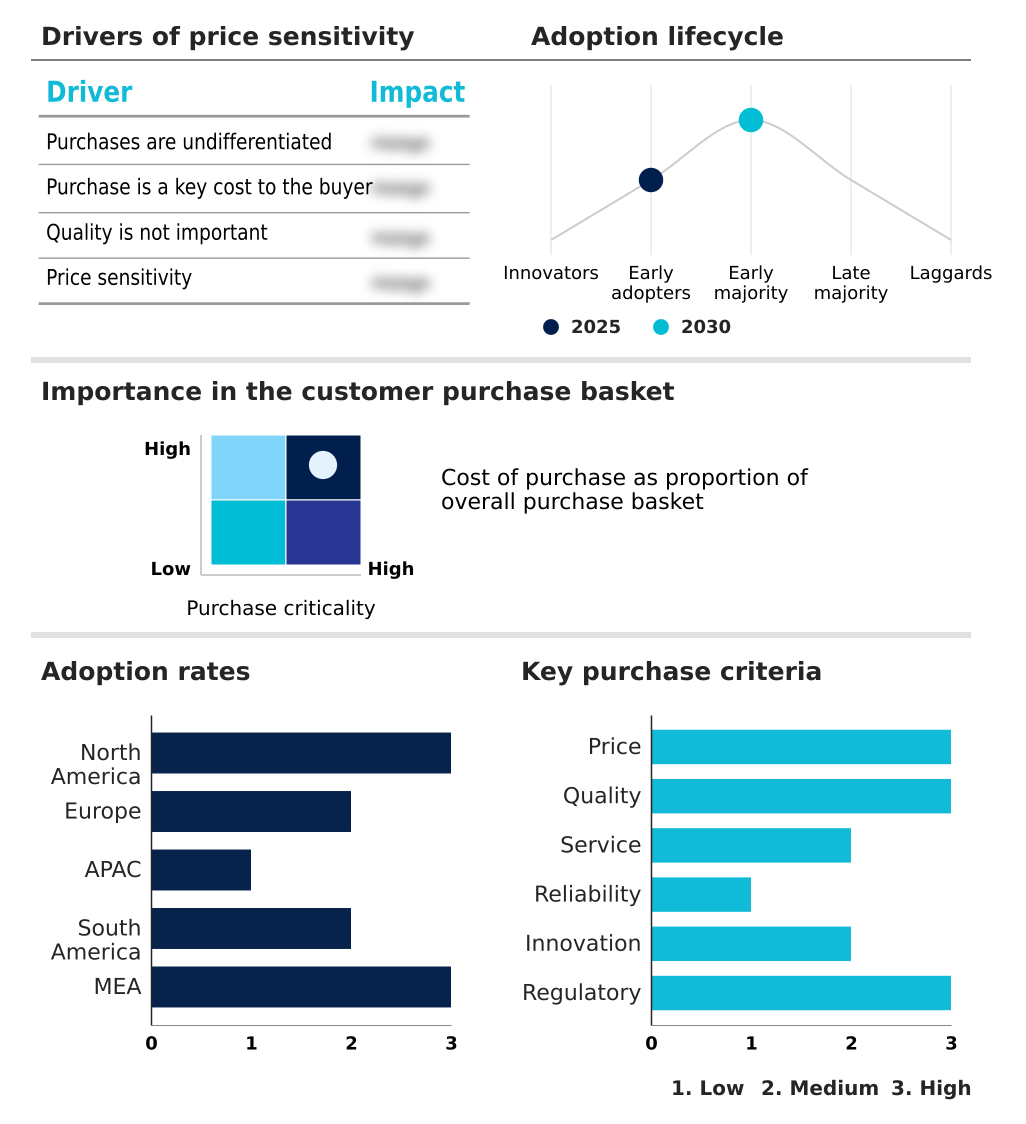
Customer Landscape of Toy Industry
Competitive Landscape
Companies are implementing various strategies, such as strategic alliances, toy market forecast, partnerships, mergers and acquisitions, geographical expansion, and product/service launches, to enhance their presence in the industry.
Epoch Co. Ltd. - The portfolio features a diverse array of pop culture consumer products, including collectible vinyl figures and fashion accessories, targeting a broad enthusiast and collector base.
The industry research and growth report includes detailed analyses of the competitive landscape of the market and information about key companies, including:
- Epoch Co. Ltd.
- Funko Inc.
- geobra Brandstatter Stiftung Co
- Giochi Preziosi S.p.A.
- Hasbro Inc.
- JAKKS Pacific Inc.
- LEGO System AS
- Little Tikes
- Mattel Inc.
- Melissa and Doug
- MGA Entertainment Inc.
- Moose Enterprise Pty. Ltd.
- Playmates Toys Ltd
- Ravensburger AG
- Schleich GmbH
- Spin Master Corp.
- Step2 Co. LLC
- Sunny Days Entertainment LLC
- VTech Holdings Ltd.
- ZURU Inc.
Qualitative and quantitative analysis of companies has been conducted to help clients understand the wider business environment as well as the strengths and weaknesses of key industry players. Data is qualitatively analyzed to categorize companies as pure play, category-focused, industry-focused, and diversified; it is quantitatively analyzed to categorize companies as dominant, leading, strong, tentative, and weak.
Recent Development and News in Toy market
- In May, 2025, Spin Master Corp. announced a strategic partnership with a leading animation studio to co-develop a new entertainment franchise and an accompanying interactive toy line, aiming to capture a larger share of the licensed merchandise market.
- In March, 2025, LEGO System AS launched its first full product line made entirely from plant-based plastics sourced from sugarcane, a significant step in its commitment to produce all core products from sustainable materials.
- In January, 2025, Mattel Inc. opened a new state-of-the-art design and development hub in Singapore to better cater to the rapidly growing APAC market and foster regional talent in toy innovation and design.
- In November, 2024, VTech Holdings Ltd. unveiled a new AI-powered educational platform that integrates with its electronic learning toys, offering personalized learning pathways for children based on their real-time developmental progress and performance.
Dive into Technavio’s robust research methodology, blending expert interviews, extensive data synthesis, and validated models for unparalleled Toy Market insights. See full methodology.
| Market Scope | |
|---|---|
| Page number | 303 |
| Base year | 2025 |
| Historic period | 2020-2024 |
| Forecast period | 2026-2030 |
| Growth momentum & CAGR | Accelerate at a CAGR of 4.3% |
| Market growth 2026-2030 | USD 28907.3 million |
| Market structure | Fragmented |
| YoY growth 2025-2026(%) | 4.2% |
| Key countries | US, Canada, Mexico, Germany, UK, France, Italy, The Netherlands, Spain, China, Japan, India, South Korea, Australia, Indonesia, Brazil, Argentina, Colombia, Saudi Arabia, UAE, South Africa, Israel and Turkey |
| Competitive landscape | Leading Companies, Market Positioning of Companies, Competitive Strategies, and Industry Risks |
Research Analyst Overview
- The toy market's evolution is defined by a strategic diversification away from traditional playthings toward a complex ecosystem of products. Today's competitive landscape demands a robust portfolio that includes not only classic action figures and building sets but also sophisticated electronic learning toys, educational tablets, and interactive plush toys.
- The integration of technology is a key differentiator, with smart toys and robotic kits driving significant investment in R&D. This technological push is a critical boardroom-level decision, directly influencing budget allocation for developing advanced features. The industry is also responding to consumer demand for sustainability, with a notable shift toward bpa-free materials, recycled plastics, and fsc-certified wood.
- Companies that effectively integrate sustainable practices into their supply chains have reported up to a 5% improvement in their ESG ratings. Success now hinges on balancing a wide array of offerings—from collectible toys and character toys to infant toys and intricate hand-painted figurines—while navigating the complexities of licensed merchandise and the demand for high-quality wooden puzzles and interlocking plastic bricks.
What are the Key Data Covered in this Toy Market Research and Growth Report?
-
What is the expected growth of the Toy Market between 2026 and 2030?
-
USD 28.91 billion, at a CAGR of 4.3%
-
-
What segmentation does the market report cover?
-
The report is segmented by Product (Outdoor toys and dolls, Building sets and puzzles, Action figures and vehicles, and Others), Distribution Channel (Offline, and Online), Age Group (3-5 years, 1-3 years, Above 12 years, and 0-12 months) and Geography (North America, Europe, APAC, South America, Middle East and Africa)
-
-
Which regions are analyzed in the report?
-
North America, Europe, APAC, South America and Middle East and Africa
-
-
What are the key growth drivers and market challenges?
-
Growing population of children globally, Strict safety and quality regulations limiting product launches
-
-
Who are the major players in the Toy Market?
-
Epoch Co. Ltd., Funko Inc., geobra Brandstatter Stiftung Co, Giochi Preziosi S.p.A., Hasbro Inc., JAKKS Pacific Inc., LEGO System AS, Little Tikes, Mattel Inc., Melissa and Doug, MGA Entertainment Inc., Moose Enterprise Pty. Ltd., Playmates Toys Ltd, Ravensburger AG, Schleich GmbH, Spin Master Corp., Step2 Co. LLC, Sunny Days Entertainment LLC, VTech Holdings Ltd. and ZURU Inc.
-
Market Research Insights
- The toy market is characterized by dynamic shifts driven by consumer values and technological integration. The rise of the kidult market and an emphasis on educational value are reshaping product development, with a focus on cognitive skills and creative problem-solving. This has led to a 20% rise in demand for products with clear developmental milestones.
- Omnichannel retailing has become essential, as brands that integrate their physical and digital presence see up to 25% higher customer retention. Furthermore, adherence to rigorous toy safety standards and the adoption of sustainable packaging are no longer optional, with consumer preference for eco-friendly brands growing by 15% annually.
- These factors, combined with seasonal demand fluctuations and the influence of unboxing videos, create a complex but opportunity-rich landscape for manufacturers that prioritize innovation and consumer-centric strategies.
We can help! Our analysts can customize this toy market research report to meet your requirements.
 RIA -
RIA - 
