
Smart Cards Market Analysis, Size, and Forecast 2026-2030: APAC (China, India, and Japan), Europe (France, Germany, and UK), North America (US, Canada, and Mexico), Middle East and Africa (Saudi Arabia, UAE, and South Africa), South America (Brazil, Argentina, and Colombia), and Rest of World (ROW)

Smart Cards Market Analysis, Size, and Forecast 2026-2030:
APAC (China, India, and Japan), Europe (France, Germany, and UK), North America (US, Canada, and Mexico), Middle East and Africa (Saudi Arabia, UAE, and South Africa), South America (Brazil, Argentina, and Colombia), and Rest of World (ROW)

Published: Mar 2026 309 Pages SKU: IRTNTR81347

Market Overview at a Glance

$6.14 B
Market Opportunity
6.2%
CAGR 2025 - 2030
44.3%
APAC Growth
$8.19 B
Contactless smart cards segment 2024

Smart Cards Market Size 2026-2030

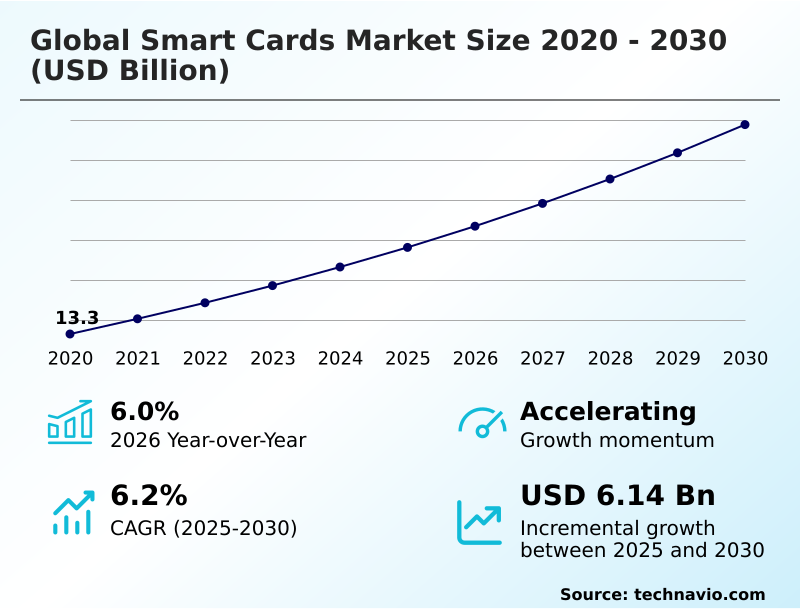
The smart cards market size is valued to increase by USD 6.14 billion, at a CAGR of 6.2% from 2025 to 2030. Proliferation of contactless payment infrastructure will drive the smart cards market.

Major Market Trends & Insights

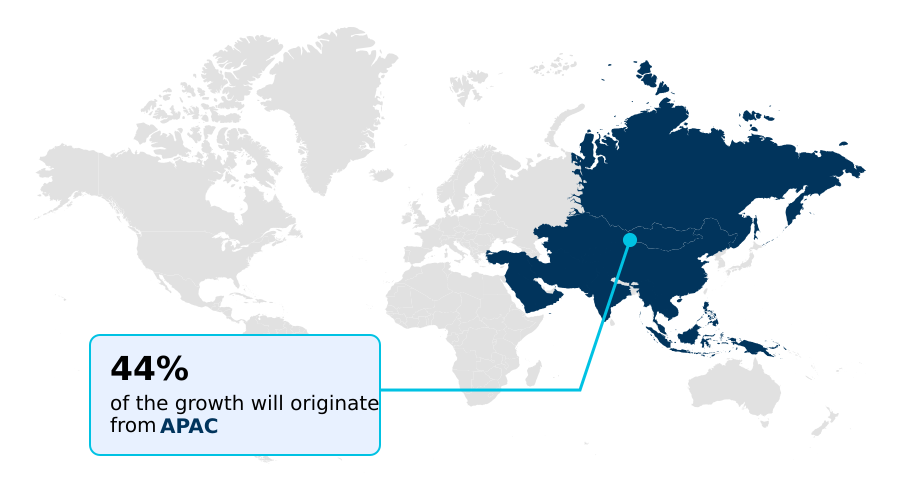
  • APAC dominated the market and accounted for a 44.3% growth during the forecast period.
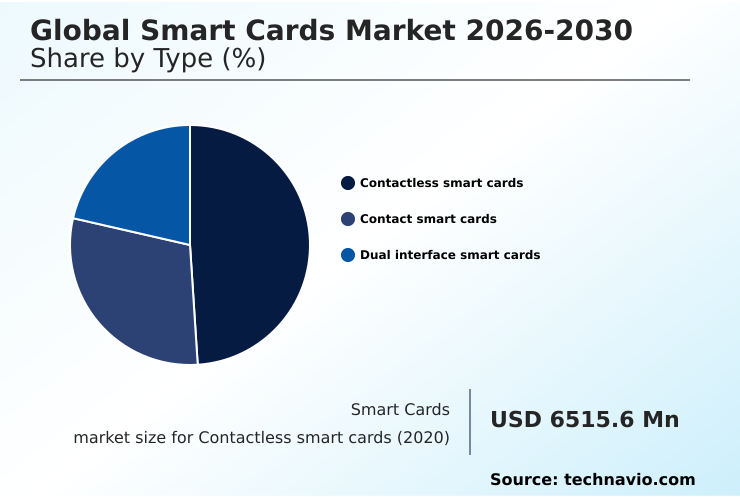
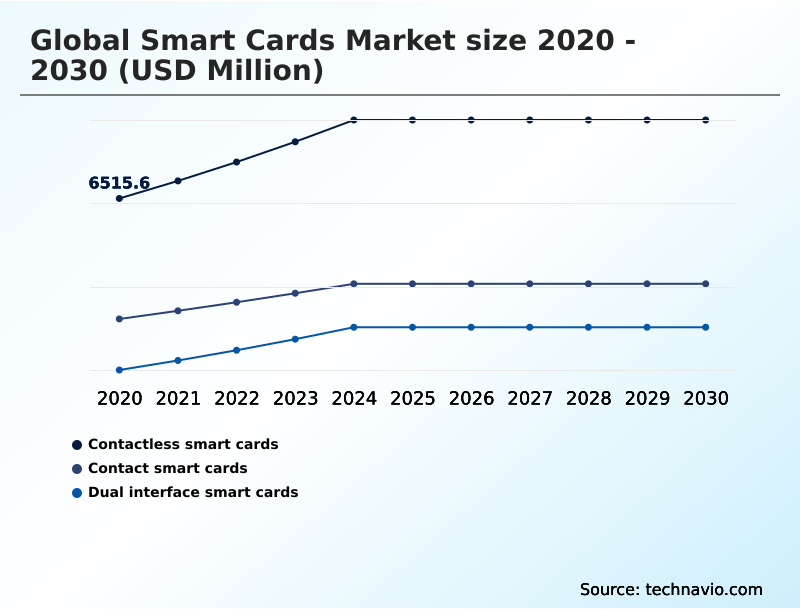
  • By Type - Contactless smart cards segment was valued at USD 8.19 billion in 2024
  • By Application - Transaction segment accounted for the largest market revenue share in 2024

Market Size & Forecast

  • Market Opportunities: USD 10.47 billion
  • Market Future Opportunities: USD 6.14 billion
  • CAGR from 2025 to 2030 : 6.2%

Market Summary

  • The smart cards market is defined by a persistent demand for tamper-resistant hardware and secure transaction protocols. Growth is driven by the global expansion of contactless payment technology and government-led digital identity verification programs. These initiatives leverage microprocessor smart cards with secure elements to protect against fraud.
  • However, the industry faces challenges from the high cost of advanced components and competition from mobile payment solutions. Key trends shaping the market include the integration of biometric system-on-card for enhanced on-card authentication and the development of post-quantum cryptography to ensure long-term data security.
  • For instance, a financial institution implementing biometric cards for corporate accounts can mitigate internal fraud risks by linking transactions to a unique physical identity, ensuring non-repudiation. This continuous innovation in cryptographic algorithms and secure chip operating systems is essential for maintaining trust in a connected world where data integrity is paramount.

What will be the Size of the Smart Cards Market during the forecast period?

Get Key Insights on Market Forecast (PDF) Request Free Sample

How is the Smart Cards Market Segmented?

The smart cards industry research report provides comprehensive data (region-wise segment analysis), with forecasts and estimates in "USD million" for the period 2026-2030, as well as historical data from 2020-2024 for the following segments.

  • Type
    • Contactless smart cards
    • Contact smart cards
    • Dual interface smart cards
  • Application
    • Transaction
    • Communication
    • Government
    • Security and access control
    • Others
  • Product type
    • Memory based smart cards
    • Microprocessor smart cards
    • Magnetic stripe
  • Geography
    • APAC
      • China
      • India
      • Japan
    • Europe
      • France
      • Germany
      • UK
    • North America
      • US
      • Canada
      • Mexico
    • Middle East and Africa
      • Saudi Arabia
      • UAE
      • South Africa
    • South America
      • Brazil
      • Argentina
      • Colombia
    • Rest of World (ROW)

By Type Insights

The contactless smart cards segment is estimated to witness significant growth during the forecast period.

Contactless smart cards, which utilize near field communication (nfc) and radio frequency identification (rfid) via a high-frequency (hf) interface, are transforming user interactions.

This technology is central to enhancing operational efficiency in public transit ticketing systems and is foundational for open-loop transit payments.

The architecture of the smart card reader infrastructure is evolving to support faster on-card authentication, with some systems demonstrating a 30% reduction in transaction latency.

Innovations in energy harvesting technology enable these cards to function without internal batteries, drawing power from the reader's field.

The expansion of contactless payment technology is also a key enabler for iot device security, where seamless and secure authentication is paramount for managing interconnected systems.

Request Free Sample

The Contactless smart cards segment was valued at USD 8.19 billion in 2024 and showed a gradual increase during the forecast period.
Request Free Sample

Regional Analysis

APAC is estimated to contribute 44.3% to the growth of the global market during the forecast period.Technavio’s analysts have elaborately explained the regional trends and drivers that shape the market during the forecast period.

See How Smart Cards Market Demand is Rising in APAC Request Free Sample

The geographic landscape is increasingly shaped by regional needs for secure authentication. In APAC, which contributes 44.3% of the market's incremental growth, government programs are driving demand for advanced solutions.

The use of dual interface smart cards is becoming standard for ensuring backward compatibility, while multi-application card platforms are central to smart city initiatives.

These platforms, often built on java card technology and secured with advanced encryption standard (aes), integrate corporate access control systems, healthcare smart card applications, and payment functionalities.

In Europe, the focus on cross-border digital identity and electronic passport technology is paramount. Meanwhile, North America sees growth in secure vehicle-to-everything (v2x) communication requiring robust security.

Globally, a secure access module (sam) remains critical for authenticating transactions across these diverse applications, while contact smart cards maintain relevance in high-security government and corporate environments.

Market Dynamics

Our researchers analyzed the data with 2025 as the base year, along with the key drivers, trends, and challenges. A holistic analysis of drivers will help companies refine their marketing strategies to gain a competitive advantage.

  • The development and deployment of secure credentials involve a complex lifecycle, beginning with the smart card manufacturing process and the design of the secure microcontroller architecture. A key decision is the migration strategy to dual interface card technology, balancing legacy system support with modern contactless capabilities.
  • For government e-id card deployment, the focus is on robust security, often involving the implementation of pki on smart cards to enable digital signatures. In banking, the use of a biometric smart card for banking is becoming a key differentiator, with its transaction flow relying on advanced on-card verification.
  • This contrasts with the smart card vs mobile nfc security debate, where the hardware-centric approach of cards offers distinct advantages. For public services, a contactless smart card for transit is essential for efficiency. The evolution of the subscriber identity module to 5g and the use of a secure element for iot devices highlight the expanding role of this technology.
  • Throughout this, mitigating threats via side-channel attack mitigation techniques and exploring innovations like energy harvesting for biometric cards are critical. The use of sustainable materials for payment cards is also a growing priority. In specialized sectors, a smart card for healthcare records improves data integrity, while physical access control with smart cards secures facilities.
  • Developers utilize resources like the java card applet development guide to create solutions for multi-application smart cards, which must often pass common criteria evaluation for secure ic to be market-ready.

What are the key market drivers leading to the rise in the adoption of Smart Cards Industry?

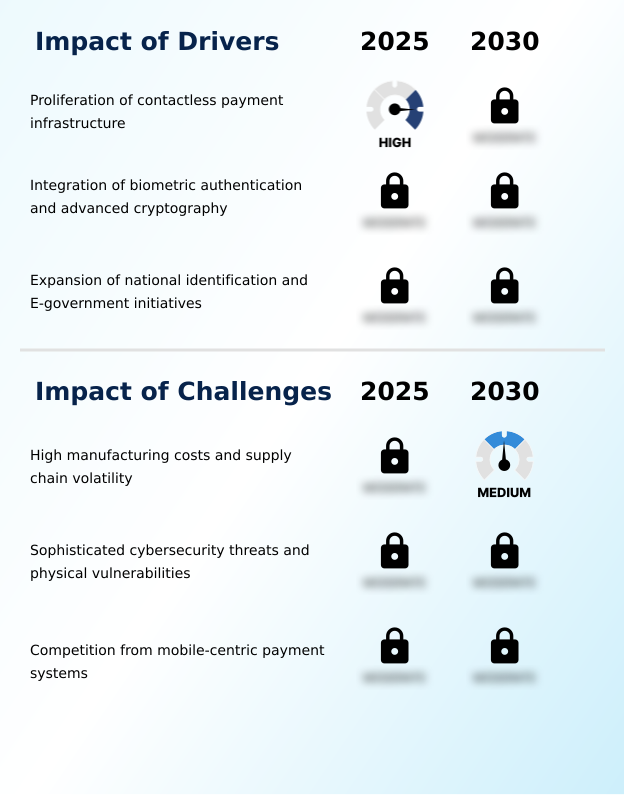
  • The proliferation of contactless payment infrastructure is a key driver for the market's growth.

  • Market growth is primarily driven by the demand for enhanced security and streamlined digital interactions. The global adoption of emv chip technology in microprocessor smart cards has become the baseline, with deployments showing a 60% reduction in card-present fraud.
  • Government id card programs are expanding, leveraging secure digital identity frameworks to improve public service delivery and achieve administrative cost savings of up to 25%.
  • These large-scale projects rely on hardware compliant with common criteria certification and robust smart card security standards. Furthermore, financial inclusion initiatives are bringing secure payment methods to unbanked populations.
  • The underlying secure element (se) and public key infrastructure (pki) enable trusted digital identity verification, which is critical for ensuring data privacy compliance and building trust in the digital ecosystem.

What are the market trends shaping the Smart Cards Industry?

  • A significant market trend is the shift toward sustainable materials and circular economy initiatives, reflecting increasing regulatory pressure and consumer demand for environmentally responsible products.

  • Key market trends are centered on technological advancement and environmental responsibility. The development of biometric system-on-card technology is a significant trend, enabling more secure biometric data matching directly on the device, with some platforms reducing authentication latency by 30%. This innovation is driven by demand for stronger biometric authentication methods.
  • Simultaneously, the industry is preparing for post-quantum readiness by integrating next-generation cryptographic algorithms and physical unclonable function (puf) into the secure chip operating system, ensuring long-term data protection. Another major shift involves the adoption of sustainable card materials, which can reduce reliance on virgin plastics by over 80% in some cases.
  • This aligns with corporate ESG goals and increasing consumer preference, driving innovation in embedded secure element use cases and digital wallet integration without compromising performance.

What challenges does the Smart Cards Industry face during its growth?

  • High manufacturing costs and supply chain volatility present a key challenge affecting the industry's growth.

  • The market faces significant challenges from manufacturing complexities and competitive technologies. The intricate smart card manufacturing process, especially for designs incorporating advanced tamper-resistant hardware and secure microcontrollers, is heavily impacted by the volatile supply chain for semiconductors, which can increase production lead times by up to 50%.
  • The integration of features like a dynamic security code display adds to this complexity. A primary challenge is the rising mobile payment competition, as digital wallet adoption has surpassed physical card usage by 15% in key demographics. These platforms leverage a device's trusted execution environment (tee) as an alternative to a physical card.
  • This competition pressures incumbent solutions, including the subscriber identity module (sim) and the newer embedded universal integrated circuit card (euicc), and even affects traditional closed-loop payment systems.

Exclusive Technavio Analysis on Customer Landscape

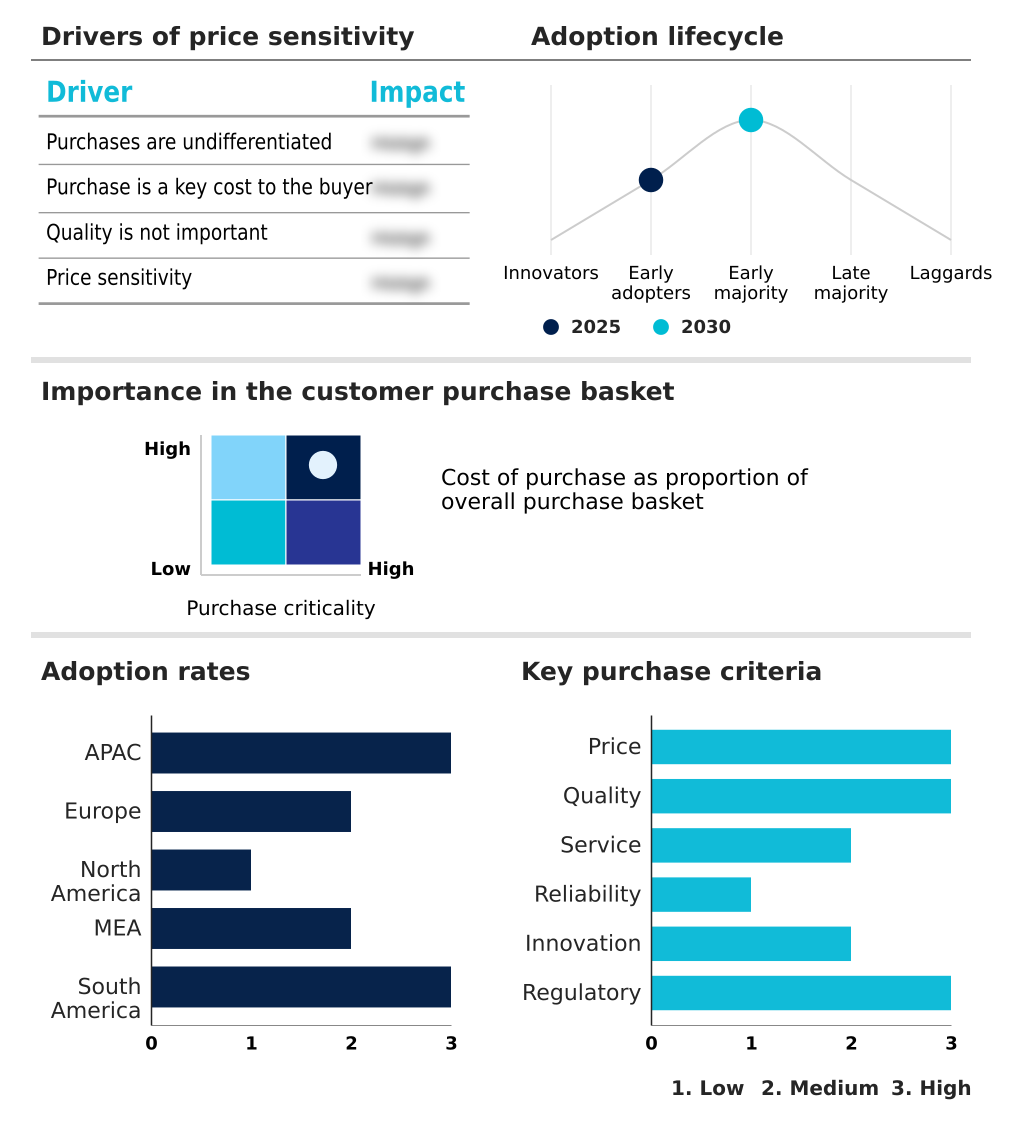
The smart cards market forecasting report includes the adoption lifecycle of the market, covering from the innovator’s stage to the laggard’s stage. It focuses on adoption rates in different regions based on penetration. Furthermore, the smart cards market report also includes key purchase criteria and drivers of price sensitivity to help companies evaluate and develop their market growth analysis strategies.
Customer Landscape of Smart Cards Industry

Competitive Landscape

Companies are implementing various strategies, such as strategic alliances, smart cards market forecast, partnerships, mergers and acquisitions, geographical expansion, and product/service launches, to enhance their presence in the industry.

ABCorp. - Offers secure elements and smart cards for eID, government ID, and mobile identity applications, focusing on advanced personalization and security protocols.

The industry research and growth report includes detailed analyses of the competitive landscape of the market and information about key companies, including:

  • ABCorp.
  • Alioth LLC.
  • CardLogix Corp.
  • CPI Card Group Inc.
  • Eastcompeace Technology Co. Ltd.
  • Excelsecu Data Technology Co. Ltd.
  • Fingerprint Cards AB.
  • Giesecke Devrient GmbH
  • Hengbao Co. Ltd.
  • HID Global Corp.
  • IDEMIA France SAS
  • IDENTIV INC.
  • KONA I
  • NXP Semiconductors NV
  • Sony Group Corp.
  • STMicroelectronics NV
  • Thales Group
  • Toppan Inc.
  • WATCHDATA TECHNOLOGIES Ltd.
  • zwipe solution pvt ltd.

Qualitative and quantitative analysis of companies has been conducted to help clients understand the wider business environment as well as the strengths and weaknesses of key industry players. Data is qualitatively analyzed to categorize companies as pure play, category-focused, industry-focused, and diversified; it is quantitatively analyzed to categorize companies as dominant, leading, strong, tentative, and weak.

Recent Development and News in Smart cards market

  • In February, 2025, Thales Group launched a new high-security smart card body made from non-food corn, designed for government identity projects to advance circular economy goals.
  • In March, 2025, Wells Fargo and Company initiated a comprehensive rollout of a new series of biometric payment cards for its corporate clients to enhance transaction security.
  • In April, 2025, Microsoft Corp. announced an expansion of its cloud identity services to natively support advanced biometric smart card protocols, streamlining large-scale corporate deployments.
  • In May, 2025, NXP Semiconductors NV introduced a new high-security contactless chip architecture designed for next-generation urban mobility projects, focusing on enhanced processing speed and robust encryption.

Dive into Technavio’s robust research methodology, blending expert interviews, extensive data synthesis, and validated models for unparalleled Smart Cards Market insights. See full methodology.

Market Scope
Page number 309
Base year 2025
Historic period 2020-2024
Forecast period 2026-2030
Growth momentum & CAGR Accelerate at a CAGR of 6.2%
Market growth 2026-2030 USD 6137.9 million
Market structure Fragmented
YoY growth 2025-2026(%) 6.0%
Key countries China, India, Japan, South Korea, Australia, Indonesia, France, Germany, UK, Italy, Spain, The Netherlands, US, Canada, Mexico, Saudi Arabia, UAE, South Africa, Israel, Turkey, Brazil, Argentina and Colombia
Competitive landscape Leading Companies, Market Positioning of Companies, Competitive Strategies, and Industry Risks

Request Free Sample

Research Analyst Overview

  • The smart cards market is defined by continuous innovation in tamper-resistant hardware and secure chip operating systems. The industry-wide adoption of emv chip technology and the integration of public key infrastructure (pki) have established a high baseline for security.
  • Now, the focus is shifting toward advanced on-card authentication methods, such as biometric data matching, with some new biometric system-on-card platforms achieving a 30% reduction in authentication latency. This enhances user experience without compromising security.
  • A critical boardroom consideration is future-proofing against emerging threats through post-quantum cryptography, a move that requires significant long-term R&D investment but is essential for protecting long-lifecycle credentials. Technologies like physical unclonable function (puf) and side-channel attack countermeasures are being integrated into the secure microcontroller to harden devices against sophisticated physical attacks.
  • From contactless smart cards and dual interface smart cards used in daily transactions to high-security contact smart cards for government use, the underlying cryptographic algorithms and secure transaction protocols are constantly evolving. The secure element (se) remains the cornerstone of digital identity verification across all applications.

What are the Key Data Covered in this Smart Cards Market Research and Growth Report?

  • What is the expected growth of the Smart Cards Market between 2026 and 2030?

    • USD 6.14 billion, at a CAGR of 6.2%

  • What segmentation does the market report cover?

    • The report is segmented by Type (Contactless smart cards, Contact smart cards, and Dual interface smart cards), Application (Transaction, Communication, Government, Security and access control, and Others), Product Type (Memory based smart cards, Microprocessor smart cards, and Magnetic stripe) and Geography (APAC, Europe, North America, Middle East and Africa, South America)

  • Which regions are analyzed in the report?

    • APAC, Europe, North America, Middle East and Africa and South America

  • What are the key growth drivers and market challenges?

    • Proliferation of contactless payment infrastructure, High manufacturing costs and supply chain volatility

  • Who are the major players in the Smart Cards Market?

    • ABCorp., Alioth LLC., CardLogix Corp., CPI Card Group Inc., Eastcompeace Technology Co. Ltd., Excelsecu Data Technology Co. Ltd., Fingerprint Cards AB., Giesecke Devrient GmbH, Hengbao Co. Ltd., HID Global Corp., IDEMIA France SAS, IDENTIV INC., KONA I, NXP Semiconductors NV, Sony Group Corp., STMicroelectronics NV, Thales Group, Toppan Inc., WATCHDATA TECHNOLOGIES Ltd. and zwipe solution pvt ltd.

Market Research Insights

  • Market dynamics are shaped by the convergence of established smart card security standards and the push for digital transformation. The adoption of secure digital identity frameworks has led to a 25% improvement in efficiency for government id card programs, while corporate access control systems that integrate advanced cards report a 40% reduction in unauthorized access incidents.
  • Public transit ticketing systems are shifting toward open-loop transit payments, enhancing user convenience. Concurrently, the rise of mobile payment competition and digital wallet integration challenges traditional form factors. Strategic focus remains on data privacy compliance and leveraging smart cards for financial inclusion initiatives, which have proven to increase access to banking services by over 30% in underserved regions.
  • The complexity of the supply chain for semiconductors and evolving smart card manufacturing processes also influence market stability and product availability.

We can help! Our analysts can customize this smart cards market research report to meet your requirements.

Get in touch

1. Executive Summary

1.1 Market overview

Executive Summary - Chart on Market Overview
Executive Summary - Data Table on Market Overview
Executive Summary - Chart on Global Market Characteristics
Executive Summary - Chart on Market by Geography
Executive Summary - Chart on Market Segmentation by Type
Executive Summary - Chart on Market Segmentation by Application
Executive Summary - Chart on Market Segmentation by Product Type
Executive Summary - Chart on Incremental Growth
Executive Summary - Data Table on Incremental Growth
Executive Summary - Chart on Company Market Positioning

2. Technavio Analysis

2.1 Analysis of price sensitivity, lifecycle, customer purchase basket, adoption rates, and purchase criteria

2.2 Criticality of inputs and Factors of differentiation

Chart on Overview on criticality of inputs and factors of differentiation

2.3 Factors of disruption

Chart on Overview on factors of disruption

2.4 Impact of drivers and challenges

Chart on Impact of drivers and challenges in 2025 and 2030

3. Market Landscape

3.1 Market ecosystem

Chart on Parent Market
Data Table on - Parent Market

3.2 Market characteristics

Chart on Market characteristics analysis

3.3 Value chain analysis

Chart on Value chain analysis

4. Market Sizing

4.1 Market definition

Data Table on Offerings of companies included in the market definition

4.2 Market segment analysis

Market segments

4.3 Market size 2025

4.4 Market outlook: Forecast for 2025-2030

Chart on Global - Market size and forecast 2025-2030 ($ million)
Data Table on Global - Market size and forecast 2025-2030 ($ million)
Chart on Global Market: Year-over-year growth 2025-2030 (%)
Data Table on Global Market: Year-over-year growth 2025-2030 (%)

5. Historic Market Size

5.1 Global Smart Cards Market 2020 - 2024

Historic Market Size - Data Table on Global Smart Cards Market 2020 - 2024 ($ million)

5.2 Type segment analysis 2020 - 2024

Historic Market Size - Type Segment 2020 - 2024 ($ million)

5.3 Application segment analysis 2020 - 2024

Historic Market Size - Application Segment 2020 - 2024 ($ million)

5.4 Product Type segment analysis 2020 - 2024

Historic Market Size - Product Type Segment 2020 - 2024 ($ million)

5.5 Geography segment analysis 2020 - 2024

Historic Market Size - Geography Segment 2020 - 2024 ($ million)

5.6 Country segment analysis 2020 - 2024

Historic Market Size - Country Segment 2020 - 2024 ($ million)

6. Qualitative Analysis

6.1 Impact of AI on Global Smart Cards Market

6.2 Impact of Geopolitical Conflicts on Global Smart Cards Market

7. Five Forces Analysis

7.1 Five forces summary

Five forces analysis - Comparison between 2025 and 2030

7.2 Bargaining power of buyers

Bargaining power of buyers - Impact of key factors 2025 and 2030

7.3 Bargaining power of suppliers

Bargaining power of suppliers - Impact of key factors in 2025 and 2030

7.4 Threat of new entrants

Threat of new entrants - Impact of key factors in 2025 and 2030

7.5 Threat of substitutes

Threat of substitutes - Impact of key factors in 2025 and 2030

7.6 Threat of rivalry

Threat of rivalry - Impact of key factors in 2025 and 2030

7.7 Market condition

Chart on Market condition - Five forces 2025 and 2030

8. Market Segmentation by Type

8.1 Market segments

Chart on Type - Market share 2025-2030 (%)
Data Table on Type - Market share 2025-2030 (%)

8.2 Comparison by Type

Chart on Comparison by Type
Data Table on Comparison by Type

8.3 Contactless smart cards - Market size and forecast 2025-2030

Chart on Contactless smart cards - Market size and forecast 2025-2030 ($ million)
Data Table on Contactless smart cards - Market size and forecast 2025-2030 ($ million)
Chart on Contactless smart cards - Year-over-year growth 2025-2030 (%)
Data Table on Contactless smart cards - Year-over-year growth 2025-2030 (%)

8.4 Contact smart cards - Market size and forecast 2025-2030

Chart on Contact smart cards - Market size and forecast 2025-2030 ($ million)
Data Table on Contact smart cards - Market size and forecast 2025-2030 ($ million)
Chart on Contact smart cards - Year-over-year growth 2025-2030 (%)
Data Table on Contact smart cards - Year-over-year growth 2025-2030 (%)

8.5 Dual interface smart cards - Market size and forecast 2025-2030

Chart on Dual interface smart cards - Market size and forecast 2025-2030 ($ million)
Data Table on Dual interface smart cards - Market size and forecast 2025-2030 ($ million)
Chart on Dual interface smart cards - Year-over-year growth 2025-2030 (%)
Data Table on Dual interface smart cards - Year-over-year growth 2025-2030 (%)

8.6 Market opportunity by Type

Market opportunity by Type ($ million)
Data Table on Market opportunity by Type ($ million)

9. Market Segmentation by Application

9.1 Market segments

Chart on Application - Market share 2025-2030 (%)
Data Table on Application - Market share 2025-2030 (%)

9.2 Comparison by Application

Chart on Comparison by Application
Data Table on Comparison by Application

9.3 Transaction - Market size and forecast 2025-2030

Chart on Transaction - Market size and forecast 2025-2030 ($ million)
Data Table on Transaction - Market size and forecast 2025-2030 ($ million)
Chart on Transaction - Year-over-year growth 2025-2030 (%)
Data Table on Transaction - Year-over-year growth 2025-2030 (%)

9.4 Communication - Market size and forecast 2025-2030

Chart on Communication - Market size and forecast 2025-2030 ($ million)
Data Table on Communication - Market size and forecast 2025-2030 ($ million)
Chart on Communication - Year-over-year growth 2025-2030 (%)
Data Table on Communication - Year-over-year growth 2025-2030 (%)

9.5 Government - Market size and forecast 2025-2030

Chart on Government - Market size and forecast 2025-2030 ($ million)
Data Table on Government - Market size and forecast 2025-2030 ($ million)
Chart on Government - Year-over-year growth 2025-2030 (%)
Data Table on Government - Year-over-year growth 2025-2030 (%)

9.6 Security and access control - Market size and forecast 2025-2030

Chart on Security and access control - Market size and forecast 2025-2030 ($ million)
Data Table on Security and access control - Market size and forecast 2025-2030 ($ million)
Chart on Security and access control - Year-over-year growth 2025-2030 (%)
Data Table on Security and access control - Year-over-year growth 2025-2030 (%)

9.7 Others - Market size and forecast 2025-2030

Chart on Others - Market size and forecast 2025-2030 ($ million)
Data Table on Others - Market size and forecast 2025-2030 ($ million)
Chart on Others - Year-over-year growth 2025-2030 (%)
Data Table on Others - Year-over-year growth 2025-2030 (%)

9.8 Market opportunity by Application

Market opportunity by Application ($ million)
Data Table on Market opportunity by Application ($ million)

10. Market Segmentation by Product Type

10.1 Market segments

Chart on Product Type - Market share 2025-2030 (%)
Data Table on Product Type - Market share 2025-2030 (%)

10.2 Comparison by Product Type

Chart on Comparison by Product Type
Data Table on Comparison by Product Type

10.3 Memory based smart cards - Market size and forecast 2025-2030

Chart on Memory based smart cards - Market size and forecast 2025-2030 ($ million)
Data Table on Memory based smart cards - Market size and forecast 2025-2030 ($ million)
Chart on Memory based smart cards - Year-over-year growth 2025-2030 (%)
Data Table on Memory based smart cards - Year-over-year growth 2025-2030 (%)

10.4 Microprocessor smart cards - Market size and forecast 2025-2030

Chart on Microprocessor smart cards - Market size and forecast 2025-2030 ($ million)
Data Table on Microprocessor smart cards - Market size and forecast 2025-2030 ($ million)
Chart on Microprocessor smart cards - Year-over-year growth 2025-2030 (%)
Data Table on Microprocessor smart cards - Year-over-year growth 2025-2030 (%)

10.5 Magnetic stripe - Market size and forecast 2025-2030

Chart on Magnetic stripe - Market size and forecast 2025-2030 ($ million)
Data Table on Magnetic stripe - Market size and forecast 2025-2030 ($ million)
Chart on Magnetic stripe - Year-over-year growth 2025-2030 (%)
Data Table on Magnetic stripe - Year-over-year growth 2025-2030 (%)

10.6 Market opportunity by Product Type

Market opportunity by Product Type ($ million)
Data Table on Market opportunity by Product Type ($ million)

11. Customer Landscape

11.1 Customer landscape overview

Analysis of price sensitivity, lifecycle, customer purchase basket, adoption rates, and purchase criteria

12. Geographic Landscape

12.1 Geographic segmentation

Chart on Market share by geography 2025-2030 (%)
Data Table on Market share by geography 2025-2030 (%)

12.2 Geographic comparison

Chart on Geographic comparison
Data Table on Geographic comparison

12.3 APAC - Market size and forecast 2025-2030

Chart on APAC - Market size and forecast 2025-2030 ($ million)
Data Table on APAC - Market size and forecast 2025-2030 ($ million)
Chart on APAC - Year-over-year growth 2025-2030 (%)
Data Table on APAC - Year-over-year growth 2025-2030 (%)
Chart on Regional Comparison - APAC
Data Table on Regional Comparison - APAC

12.3.1 China - Market size and forecast 2025-2030

Chart on China - Market size and forecast 2025-2030 ($ million)
Data Table on China - Market size and forecast 2025-2030 ($ million)
Chart on China - Year-over-year growth 2025-2030 (%)
Data Table on China - Year-over-year growth 2025-2030 (%)

12.3.2 India - Market size and forecast 2025-2030

Chart on India - Market size and forecast 2025-2030 ($ million)
Data Table on India - Market size and forecast 2025-2030 ($ million)
Chart on India - Year-over-year growth 2025-2030 (%)
Data Table on India - Year-over-year growth 2025-2030 (%)

12.3.3 Japan - Market size and forecast 2025-2030

Chart on Japan - Market size and forecast 2025-2030 ($ million)
Data Table on Japan - Market size and forecast 2025-2030 ($ million)
Chart on Japan - Year-over-year growth 2025-2030 (%)
Data Table on Japan - Year-over-year growth 2025-2030 (%)

12.3.4 South Korea - Market size and forecast 2025-2030

Chart on South Korea - Market size and forecast 2025-2030 ($ million)
Data Table on South Korea - Market size and forecast 2025-2030 ($ million)
Chart on South Korea - Year-over-year growth 2025-2030 (%)
Data Table on South Korea - Year-over-year growth 2025-2030 (%)

12.3.5 Australia - Market size and forecast 2025-2030

Chart on Australia - Market size and forecast 2025-2030 ($ million)
Data Table on Australia - Market size and forecast 2025-2030 ($ million)
Chart on Australia - Year-over-year growth 2025-2030 (%)
Data Table on Australia - Year-over-year growth 2025-2030 (%)

12.3.6 Indonesia - Market size and forecast 2025-2030

Chart on Indonesia - Market size and forecast 2025-2030 ($ million)
Data Table on Indonesia - Market size and forecast 2025-2030 ($ million)
Chart on Indonesia - Year-over-year growth 2025-2030 (%)
Data Table on Indonesia - Year-over-year growth 2025-2030 (%)

12.4 Europe - Market size and forecast 2025-2030

Chart on Europe - Market size and forecast 2025-2030 ($ million)
Data Table on Europe - Market size and forecast 2025-2030 ($ million)
Chart on Europe - Year-over-year growth 2025-2030 (%)
Data Table on Europe - Year-over-year growth 2025-2030 (%)
Chart on Regional Comparison - Europe
Data Table on Regional Comparison - Europe

12.4.1 France - Market size and forecast 2025-2030

Chart on France - Market size and forecast 2025-2030 ($ million)
Data Table on France - Market size and forecast 2025-2030 ($ million)
Chart on France - Year-over-year growth 2025-2030 (%)
Data Table on France - Year-over-year growth 2025-2030 (%)

12.4.2 Germany - Market size and forecast 2025-2030

Chart on Germany - Market size and forecast 2025-2030 ($ million)
Data Table on Germany - Market size and forecast 2025-2030 ($ million)
Chart on Germany - Year-over-year growth 2025-2030 (%)
Data Table on Germany - Year-over-year growth 2025-2030 (%)

12.4.3 UK - Market size and forecast 2025-2030

Chart on UK - Market size and forecast 2025-2030 ($ million)
Data Table on UK - Market size and forecast 2025-2030 ($ million)
Chart on UK - Year-over-year growth 2025-2030 (%)
Data Table on UK - Year-over-year growth 2025-2030 (%)

12.4.4 Italy - Market size and forecast 2025-2030

Chart on Italy - Market size and forecast 2025-2030 ($ million)
Data Table on Italy - Market size and forecast 2025-2030 ($ million)
Chart on Italy - Year-over-year growth 2025-2030 (%)
Data Table on Italy - Year-over-year growth 2025-2030 (%)

12.4.5 Spain - Market size and forecast 2025-2030

Chart on Spain - Market size and forecast 2025-2030 ($ million)
Data Table on Spain - Market size and forecast 2025-2030 ($ million)
Chart on Spain - Year-over-year growth 2025-2030 (%)
Data Table on Spain - Year-over-year growth 2025-2030 (%)

12.4.6 The Netherlands - Market size and forecast 2025-2030

Chart on The Netherlands - Market size and forecast 2025-2030 ($ million)
Data Table on The Netherlands - Market size and forecast 2025-2030 ($ million)
Chart on The Netherlands - Year-over-year growth 2025-2030 (%)
Data Table on The Netherlands - Year-over-year growth 2025-2030 (%)

12.5 North America - Market size and forecast 2025-2030

Chart on North America - Market size and forecast 2025-2030 ($ million)
Data Table on North America - Market size and forecast 2025-2030 ($ million)
Chart on North America - Year-over-year growth 2025-2030 (%)
Data Table on North America - Year-over-year growth 2025-2030 (%)
Chart on Regional Comparison - North America
Data Table on Regional Comparison - North America

12.5.1 US - Market size and forecast 2025-2030

Chart on US - Market size and forecast 2025-2030 ($ million)
Data Table on US - Market size and forecast 2025-2030 ($ million)
Chart on US - Year-over-year growth 2025-2030 (%)
Data Table on US - Year-over-year growth 2025-2030 (%)

12.5.2 Canada - Market size and forecast 2025-2030

Chart on Canada - Market size and forecast 2025-2030 ($ million)
Data Table on Canada - Market size and forecast 2025-2030 ($ million)
Chart on Canada - Year-over-year growth 2025-2030 (%)
Data Table on Canada - Year-over-year growth 2025-2030 (%)

12.5.3 Mexico - Market size and forecast 2025-2030

Chart on Mexico - Market size and forecast 2025-2030 ($ million)
Data Table on Mexico - Market size and forecast 2025-2030 ($ million)
Chart on Mexico - Year-over-year growth 2025-2030 (%)
Data Table on Mexico - Year-over-year growth 2025-2030 (%)

12.6 Middle East and Africa - Market size and forecast 2025-2030

Chart on Middle East and Africa - Market size and forecast 2025-2030 ($ million)
Data Table on Middle East and Africa - Market size and forecast 2025-2030 ($ million)
Chart on Middle East and Africa - Year-over-year growth 2025-2030 (%)
Data Table on Middle East and Africa - Year-over-year growth 2025-2030 (%)
Chart on Regional Comparison - Middle East and Africa
Data Table on Regional Comparison - Middle East and Africa

12.6.1 Saudi Arabia - Market size and forecast 2025-2030

Chart on Saudi Arabia - Market size and forecast 2025-2030 ($ million)
Data Table on Saudi Arabia - Market size and forecast 2025-2030 ($ million)
Chart on Saudi Arabia - Year-over-year growth 2025-2030 (%)
Data Table on Saudi Arabia - Year-over-year growth 2025-2030 (%)

12.6.2 UAE - Market size and forecast 2025-2030

Chart on UAE - Market size and forecast 2025-2030 ($ million)
Data Table on UAE - Market size and forecast 2025-2030 ($ million)
Chart on UAE - Year-over-year growth 2025-2030 (%)
Data Table on UAE - Year-over-year growth 2025-2030 (%)

12.6.3 South Africa - Market size and forecast 2025-2030

Chart on South Africa - Market size and forecast 2025-2030 ($ million)
Data Table on South Africa - Market size and forecast 2025-2030 ($ million)
Chart on South Africa - Year-over-year growth 2025-2030 (%)
Data Table on South Africa - Year-over-year growth 2025-2030 (%)

12.6.4 Israel - Market size and forecast 2025-2030

Chart on Israel - Market size and forecast 2025-2030 ($ million)
Data Table on Israel - Market size and forecast 2025-2030 ($ million)
Chart on Israel - Year-over-year growth 2025-2030 (%)
Data Table on Israel - Year-over-year growth 2025-2030 (%)

12.6.5 Turkey - Market size and forecast 2025-2030

Chart on Turkey - Market size and forecast 2025-2030 ($ million)
Data Table on Turkey - Market size and forecast 2025-2030 ($ million)
Chart on Turkey - Year-over-year growth 2025-2030 (%)
Data Table on Turkey - Year-over-year growth 2025-2030 (%)

12.7 South America - Market size and forecast 2025-2030

Chart on South America - Market size and forecast 2025-2030 ($ million)
Data Table on South America - Market size and forecast 2025-2030 ($ million)
Chart on South America - Year-over-year growth 2025-2030 (%)
Data Table on South America - Year-over-year growth 2025-2030 (%)
Chart on Regional Comparison - South America
Data Table on Regional Comparison - South America

12.7.1 Brazil - Market size and forecast 2025-2030

Chart on Brazil - Market size and forecast 2025-2030 ($ million)
Data Table on Brazil - Market size and forecast 2025-2030 ($ million)
Chart on Brazil - Year-over-year growth 2025-2030 (%)
Data Table on Brazil - Year-over-year growth 2025-2030 (%)

12.7.2 Argentina - Market size and forecast 2025-2030

Chart on Argentina - Market size and forecast 2025-2030 ($ million)
Data Table on Argentina - Market size and forecast 2025-2030 ($ million)
Chart on Argentina - Year-over-year growth 2025-2030 (%)
Data Table on Argentina - Year-over-year growth 2025-2030 (%)

12.7.3 Colombia - Market size and forecast 2025-2030

Chart on Colombia - Market size and forecast 2025-2030 ($ million)
Data Table on Colombia - Market size and forecast 2025-2030 ($ million)
Chart on Colombia - Year-over-year growth 2025-2030 (%)
Data Table on Colombia - Year-over-year growth 2025-2030 (%)

12.8 Market opportunity by geography

Market opportunity by geography ($ million)
Data Tables on Market opportunity by geography ($ million)

13. Drivers, Challenges, and Opportunity

13.1 Market drivers

Proliferation of contactless payment infrastructure
Integration of biometric authentication and advanced cryptography
Expansion of national identification and E-government initiatives

13.2 Market challenges

High manufacturing costs and supply chain volatility
Sophisticated cybersecurity threats and physical vulnerabilities
Competition from mobile-centric payment systems

13.3 Impact of drivers and challenges

Impact of drivers and challenges in 2025 and 2030

13.4 Market opportunities

Shift toward sustainable materials and circular economy initiatives
Advancements in biometric system-on-card integration
Preparation for post-quantum cryptographic standards

14. Competitive Landscape

14.1 Overview

14.2

Overview on criticality of inputs and factors of differentiation

14.3 Landscape disruption

Overview on factors of disruption

14.4 Industry risks

Impact of key risks on business

15. Competitive Analysis

15.1 Companies profiled

Companies covered

15.2 Company ranking index

15.3 Market positioning of companies

Matrix on companies position and classification

15.4 ABCorp.

ABCorp. - Overview
ABCorp. - Product / Service
ABCorp. - Key offerings
SWOT

15.5 Alioth LLC.

Alioth LLC. - Overview
Alioth LLC. - Product / Service
Alioth LLC. - Key offerings
SWOT

15.6 CardLogix Corp.

CardLogix Corp. - Overview
CardLogix Corp. - Product / Service
CardLogix Corp. - Key offerings
SWOT

15.7 CPI Card Group Inc.

CPI Card Group Inc. - Overview
CPI Card Group Inc. - Business segments
CPI Card Group Inc. - Key offerings
CPI Card Group Inc. - Segment focus
SWOT

15.8 Eastcompeace Technology Co. Ltd.

Eastcompeace Technology Co. Ltd. - Overview
Eastcompeace Technology Co. Ltd. - Product / Service
Eastcompeace Technology Co. Ltd. - Key offerings
SWOT

15.9 Excelsecu Data Technology Co. Ltd.

Excelsecu Data Technology Co. Ltd. - Overview
Excelsecu Data Technology Co. Ltd. - Product / Service
Excelsecu Data Technology Co. Ltd. - Key offerings
SWOT

15.10 Fingerprint Cards AB.

Fingerprint Cards AB. - Overview
Fingerprint Cards AB. - Business segments
Fingerprint Cards AB. - Key offerings
Fingerprint Cards AB. - Segment focus
SWOT

15.11 Giesecke Devrient GmbH

Giesecke Devrient GmbH - Overview
Giesecke Devrient GmbH - Product / Service
Giesecke Devrient GmbH - Key news
Giesecke Devrient GmbH - Key offerings
SWOT

15.12 Hengbao Co. Ltd.

Hengbao Co. Ltd. - Overview
Hengbao Co. Ltd. - Product / Service
Hengbao Co. Ltd. - Key offerings
SWOT

15.13 HID Global Corp.

HID Global Corp. - Overview
HID Global Corp. - Product / Service
HID Global Corp. - Key news
HID Global Corp. - Key offerings
SWOT

15.14 IDEMIA France SAS

IDEMIA France SAS - Overview
IDEMIA France SAS - Product / Service
IDEMIA France SAS - Key news
IDEMIA France SAS - Key offerings
SWOT

15.15 IDENTIV INC.

IDENTIV INC. - Overview
IDENTIV INC. - Business segments
IDENTIV INC. - Key offerings
IDENTIV INC. - Segment focus
SWOT

15.16 KONA I

KONA I - Overview
KONA I - Product / Service
KONA I - Key offerings
SWOT

15.17 NXP Semiconductors NV

NXP Semiconductors NV - Overview
NXP Semiconductors NV - Business segments
NXP Semiconductors NV - Key offerings
NXP Semiconductors NV - Segment focus
SWOT

15.18 Sony Group Corp.

Sony Group Corp. - Overview
Sony Group Corp. - Business segments
Sony Group Corp. - Key offerings
Sony Group Corp. - Segment focus
SWOT

16. Appendix

16.1 Scope of the report

Market definition
Objectives
Notes and caveats

16.2 Inclusions and exclusions checklist

Inclusions checklist
Exclusions checklist

16.3 Currency conversion rates for US$

16.4 Research methodology

16.5 Data procurement

Information sources

16.6 Data validation

16.7 Validation techniques employed for market sizing

16.8 Data synthesis

16.9 360 degree market analysis

16.10 List of abbreviations

Research Methodology

Technavio presents a detailed picture of the market by way of study, synthesis, and summation of data from multiple sources. The analysts have presented the various facets of the market with a particular focus on identifying the key industry influencers. The data thus presented is comprehensive, reliable, and the result of extensive research, both primary and secondary.

INFORMATION SOURCES

Primary sources

  • Manufacturers and suppliers
  • Channel partners
  • Industry experts
  • Strategic decision makers

Secondary sources

  • Industry journals and periodicals
  • Government data
  • Financial reports of key industry players
  • Historical data
  • Press releases

DATA ANALYSIS

Data Synthesis

  • Collation of data
  • Estimation of key figures
  • Analysis of derived insights

Data Validation

  • Triangulation with data models
  • Reference against proprietary databases
  • Corroboration with industry experts

REPORT WRITING

Qualitative

  • Market drivers
  • Market challenges
  • Market trends
  • Five forces analysis

Quantitative

  • Market size and forecast
  • Market segmentation
  • Geographical insights
  • Competitive landscape

Interested in this report?

Get your sample now to see our research methodology and insights!

Download Now

Frequently Asked Questions

Smart Cards market growth will increase by USD 6137.9 million during 2026-2030.

The Smart Cards market is expected to grow at a CAGR of 6.2% during 2026-2030.

Smart Cards market is segmented by Type (Contactless smart cards, Contact smart cards, Dual interface smart cards) Application (Transaction, Communication, Government, Security and access control, Others) Product type (Memory based smart cards, Microprocessor smart cards, Magnetic stripe)

ABCorp., Alioth LLC., CardLogix Corp., CPI Card Group Inc., Eastcompeace Technology Co. Ltd., Excelsecu Data Technology Co. Ltd., Fingerprint Cards AB., Giesecke Devrient GmbH, Hengbao Co. Ltd., HID Global Corp., IDEMIA France SAS, IDENTIV INC., KONA I, NXP Semiconductors NV, Sony Group Corp., STMicroelectronics NV, Thales Group, Toppan Inc., WATCHDATA TECHNOLOGIES Ltd., zwipe solution pvt ltd. are a few of the key vendors in the Smart Cards market.

APAC will register the highest growth rate of 44.3% among the other regions. Therefore, the Smart Cards market in APAC is expected to garner significant business opportunities for the vendors during the forecast period.

China, India, Japan, South Korea, Australia, Indonesia, France, Germany, UK, Italy, Spain, The Netherlands, US, Canada, Mexico, Saudi Arabia, UAE, South Africa, Israel, Turkey, Brazil, Argentina, Colombia

  • Proliferation of contactless payment infrastructure is the driving factor this market.

The Smart Cards market vendors should focus on grabbing business opportunities from the Type segment as it accounted for the largest market share in the base year.
RIA - Research AI Assistant
Ask RIA