



Smart City Information And Communication Technologies (ICT) Infrastructure Market Size 2026-2030
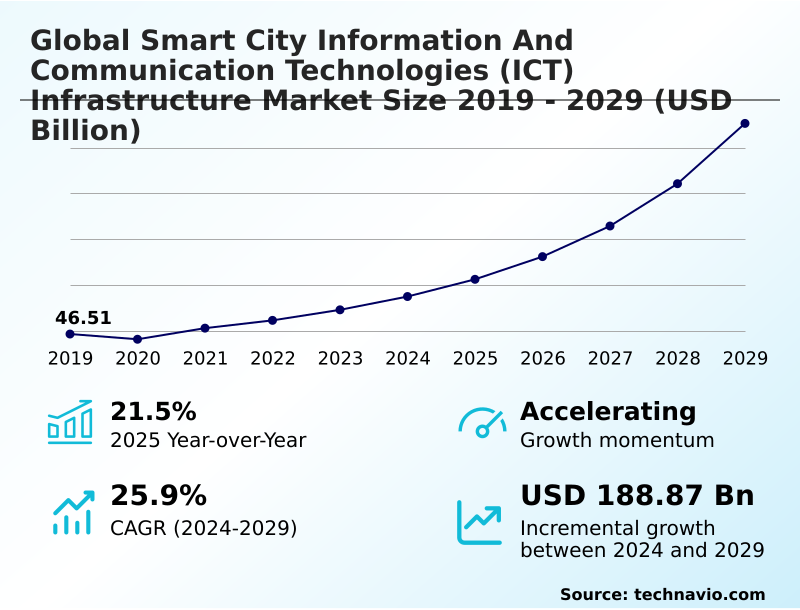
The smart city information and communication technologies (ict) infrastructure market size is valued to increase by USD 237.23 billion, at a CAGR of 26.5% from 2025 to 2030. Increasing urbanization and imperative for sustainable management will drive the smart city information and communication technologies (ict) infrastructure market.
Major Market Trends & Insights
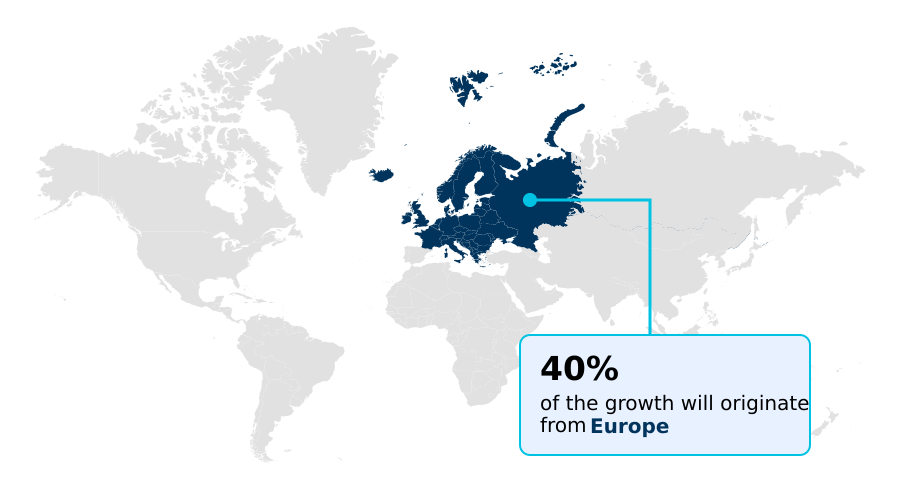
- Europe dominated the market and accounted for a 41.6% growth during the forecast period.
- By Application - Communication segment was valued at USD 28.10 billion in 2024
- By Component - Smart utilities segment accounted for the largest market revenue share in 2024
Market Size & Forecast
- Market Opportunities: USD 302.62 billion
- Market Future Opportunities: USD 237.23 billion
- CAGR from 2025 to 2030 : 26.5%
Market Summary
- The Smart City Information And Communication Technologies (ICT) Infrastructure market provides the essential digital backbone for modern urban environments. This framework enables the transition toward proactive governance by leveraging a confluence of advanced technologies. The deployment of a city-wide fiber optic network, augmented by 5G wireless technology, creates a high-capacity, low-latency environment.
- This connectivity supports a vast array of Internet of Things devices that generate real-time data from every corner of the urban landscape. This data fuels AI-powered governance platforms that enable predictive infrastructure maintenance and optimize public services. For instance, in a public safety scenario, real-time crime centers integrate data from traffic sensors, public transit systems, and video feeds.
- During a major event, this IT/OT convergence allows authorities to use computer-aided dispatch systems to dynamically reroute emergency vehicles, adjust traffic signals via intelligent transportation systems, and issue targeted alerts, showcasing a holistic and responsive operational model based on a security-by-design philosophy and robust command and control platforms.
What will be the Size of the Smart City Information And Communication Technologies (ICT) Infrastructure Market during the forecast period?
Get Key Insights on Market Forecast (PDF) Get Free Sample
How is the Smart City Information And Communication Technologies (ICT) Infrastructure Market Segmented?
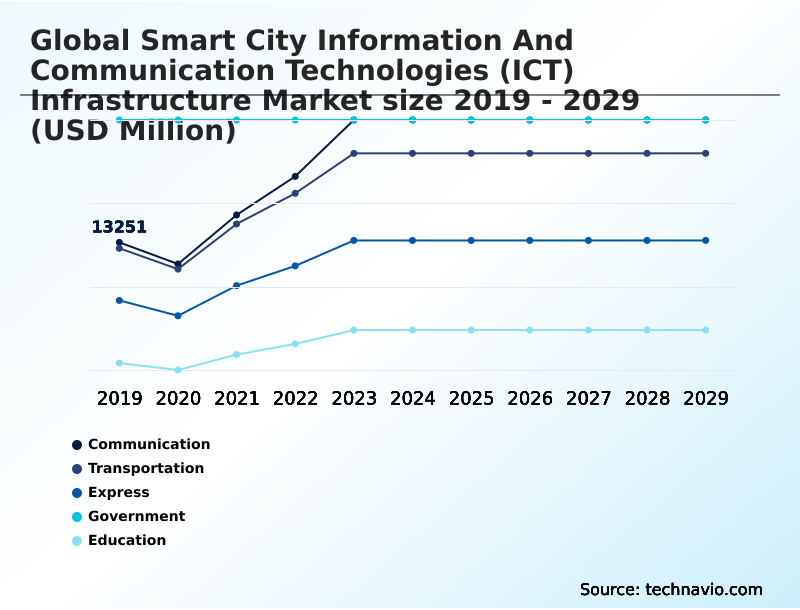
The smart city information and communication technologies (ict) infrastructure industry research report provides comprehensive data (region-wise segment analysis), with forecasts and estimates in "USD million" for the period 2026-2030, as well as historical data from 2020-2024 for the following segments.
- Application
- Communication
- Transportation
- Express
- Government
- Education
- Component
- Smart utilities
- Smart transport
- Smart home and building
- Others
- Technology
- IoTs
- Cloud computing
- AI
- Big data analytics
- Geography
- Europe
- Germany
- UK
- France
- North America
- US
- Canada
- Mexico
- APAC
- China
- Japan
- India
- Middle East and Africa
- Saudi Arabia
- UAE
- South Africa
- South America
- Brazil
- Argentina
- Rest of World (ROW)
- Europe
By Application Insights
The communication segment is estimated to witness significant growth during the forecast period.
The communication segment, underpinned by a city-wide fiber optic network, serves as the foundational nervous system for smart city information and communication technologies (ict) infrastructure.
This layer enables digital transformation strategies through ubiquitous connectivity, supporting a high density of internet of things devices and onboard units for sustainable urban mobility.
The deployment of 5G wireless technology is critical, delivering the ultra-low latency and massive machine-type communications necessary for real-time data analytics.
This creates an integrated urban platform where connected public services and e-governance platforms operate seamlessly, with initiatives reporting a 30% increase in service delivery efficiency after network upgrades. The integration allows for advanced applications, including shared mobility services.
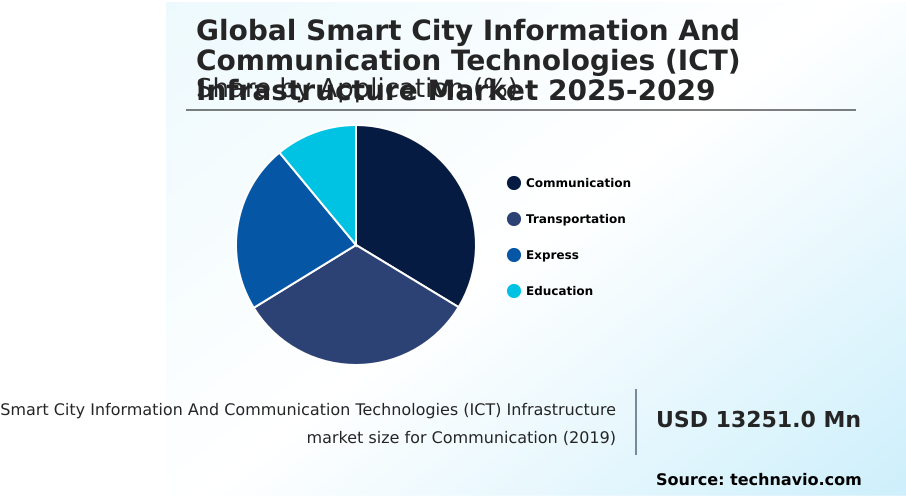
The Communication segment was valued at USD 28.10 billion in 2024 and showed a gradual increase during the forecast period.
Regional Analysis
Europe is estimated to contribute 41.6% to the growth of the global market during the forecast period.Technavio’s analysts have elaborately explained the regional trends and drivers that shape the market during the forecast period.
See How Smart City Information And Communication Technologies (ICT) Infrastructure Market Demand is Rising in Europe Get Free Sample
The geographic landscape reveals distinct regional priorities, with some areas focusing on retrofitting legacy systems while others develop greenfield projects.
Advanced traffic management systems are a global focus, with deployments of vehicle-to-everything communication infrastructure demonstrating a 15% reduction in intersection-related incidents.
In densely populated urban centers, real-time crime centers are leveraging public safety broadband networks and computer-aided dispatch to shorten emergency response times by over 20%.
Other regions are prioritizing foundational connectivity, deploying low power wide area networks to support millions of devices for services like smart metering. These initiatives are often paired with data anonymization techniques to protect citizen privacy.
A focus on digital citizenship education is also emerging to ensure equitable access, while situational awareness systems are being integrated to address challenges like regional population decline and enable multi-modal urban freight.
Market Dynamics
Our researchers analyzed the data with 2025 as the base year, along with the key drivers, trends, and challenges. A holistic analysis of drivers will help companies refine their marketing strategies to gain a competitive advantage.
- The strategic deployment of smart city ICT infrastructure for public safety remains a paramount objective for municipal governments, leveraging real-time data to enhance emergency response and law enforcement effectiveness. This is closely intertwined with the expansion of IoT sensor networks for urban environmental monitoring, which provides crucial data on air quality, noise pollution, and climate factors.
- The foundational connectivity for these real-time data streams is enabled by the ongoing 5G deployment for intelligent transportation systems, which facilitates advanced V2X communication and helps mitigate urban congestion. In the utilities sector, AI analytics in smart grid energy management are becoming essential for balancing electrical loads, integrating renewable energy sources, and improving grid stability.
- For long-term strategic urbanism, digital twin applications in urban planning simulation allow city planners to model and test new infrastructure projects and policy changes in a risk-free virtual environment.
- Central to the viability of these interconnected systems are robust cybersecurity measures for critical urban infrastructure, which have been shown to reduce breach-related service disruptions by more than half compared to systems lacking a comprehensive security-by-design philosophy.
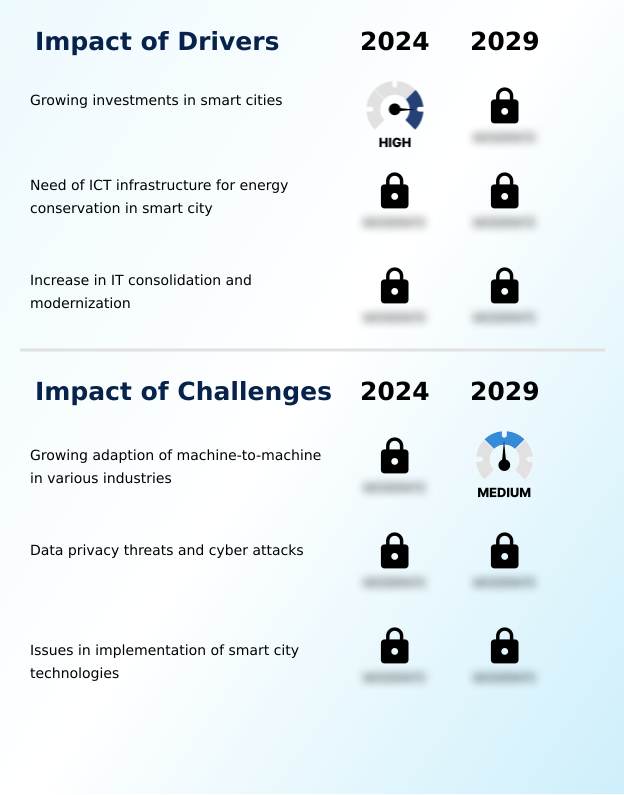
What are the key market drivers leading to the rise in the adoption of Smart City Information And Communication Technologies (ICT) Infrastructure Industry?
- Increasing urbanization and the imperative for sustainable management are key drivers for the market.
- Market growth is significantly propelled by the maturation of core enabling technologies and strategic government initiatives.
- Proactive resource management is achieved through the deployment of smart grid technologies and intelligent energy grids, where dynamic load management has improved energy efficiency by over 12%.
- The convergence of IT/OT systems, incorporating phaser measurement units for granular grid monitoring, enables predictive infrastructure maintenance and automated fault detection. This data-driven decision making, central to AI-powered governance, is transforming city operations.
- Furthermore, the increasing prevalence of public-private partnerships fosters a holistic urban management approach, accelerating the deployment of complex intelligent transportation systems.
- These collaborations are proving effective, with some projects reporting a 20% faster rollout compared to purely public-sector initiatives, showcasing the power of combined expertise and investment.
What are the market trends shaping the Smart City Information And Communication Technologies (ICT) Infrastructure Industry?
- A strategic shift toward edge and fog computing architectures represents a key market trend. This evolution addresses latency and bandwidth limitations inherent in purely centralized cloud models.
- Key market trends are driving an architectural evolution away from the traditional centralized cloud computing model. The strategic shift toward edge and fog computing creates a decentralized intelligence model, processing data closer to its source to reduce latency and bandwidth consumption.
- This approach is critical for real-time applications and enhances the cyber resilience framework, with edge deployments reducing data transmission to the cloud by up to 40%. Concurrently, the adoption of the urban digital twin, often developed using a local digital twin toolbox, is accelerating.
- These virtual urban replicas, which integrate Building Information Modeling and Geographic Information Systems data, enable complex simulations, improving urban planning accuracy by over 25%. This trend, facilitated by roadside units and security operations centers, moves beyond static models to create a dynamic urban digital replica, while a security-by-design philosophy helps mitigate vendor lock-in risk.
What challenges does the Smart City Information And Communication Technologies (ICT) Infrastructure Industry face during its growth?
- Prohibitively high initial capital investment and the complexity of justifying ROI present a key challenge affecting industry growth.
- Significant challenges persist, primarily rooted in financial and organizational complexities. The lack of universal interoperability standards creates fragmented systems, hindering the cross-domain analysis necessary for a truly integrated city. This fragmentation can increase redundant infrastructure spending by up to 30% as departments deploy siloed operational technology.
- Justifying high initial capital for projects like advanced metering infrastructure without a clear data governance policy is difficult for municipalities. Furthermore, legacy command and control platforms often cannot support modern software-defined networking or network function virtualization, complicating upgrades. The inability to integrate systems like meter data management and advanced distribution management systems prevents the implementation of advanced demand response programs.
- Overcoming these hurdles requires a strategic focus on open standards and new governance models that can support a circular economy model and facilitate climate change adaptation.
Exclusive Technavio Analysis on Customer Landscape
The smart city information and communication technologies (ict) infrastructure market forecasting report includes the adoption lifecycle of the market, covering from the innovator’s stage to the laggard’s stage. It focuses on adoption rates in different regions based on penetration. Furthermore, the smart city information and communication technologies (ict) infrastructure market report also includes key purchase criteria and drivers of price sensitivity to help companies evaluate and develop their market growth analysis strategies.
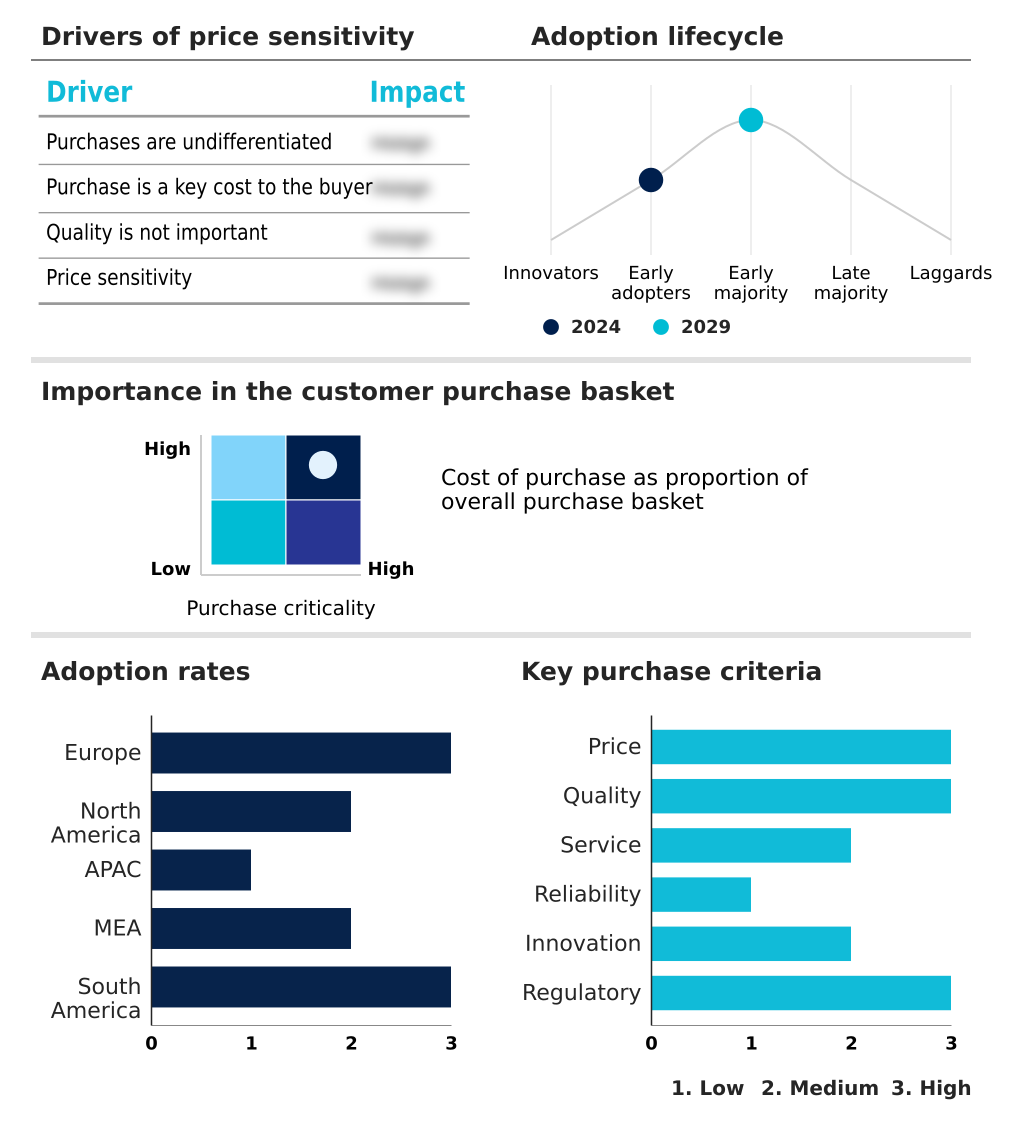
Customer Landscape of Smart City Information And Communication Technologies (ICT) Infrastructure Industry
Competitive Landscape
Companies are implementing various strategies, such as strategic alliances, smart city information and communication technologies (ict) infrastructure market forecast, partnerships, mergers and acquisitions, geographical expansion, and product/service launches, to enhance their presence in the industry.
ABB Ltd. - Offers smart city ICT infrastructure, including electrification systems, smart grids, EV charging, and data-driven automation solutions to optimize urban operations.
The industry research and growth report includes detailed analyses of the competitive landscape of the market and information about key companies, including:
- ABB Ltd.
- Accenture Plc
- AT and T Inc.
- China Mobile Ltd.
- Cisco Systems Inc.
- Deutsche Telekom AG
- Hitachi Ltd.
- Honeywell International Inc.
- Huawei Technologies Co. Ltd.
- IBM Corp.
- Microsoft Corp.
- Nippon Telegh and Teleph Corp.
- Nokia Corp.
- Oracle Corp.
- Schneider Electric SE
- Siemens AG
- Telefonaktiebolaget Ericsson
- Telefonica SA
- Verizon Communications Inc.
- Vodafone Group Plc
Qualitative and quantitative analysis of companies has been conducted to help clients understand the wider business environment as well as the strengths and weaknesses of key industry players. Data is qualitatively analyzed to categorize companies as pure play, category-focused, industry-focused, and diversified; it is quantitatively analyzed to categorize companies as dominant, leading, strong, tentative, and weak.
Recent Development and News in Smart city information and communication technologies (ict) infrastructure market
- In November, 2024, Cisco Systems Inc. unveiled its Urban Secure suite, a comprehensive cybersecurity infrastructure solution specifically designed for municipal environments to protect networks, IoT devices, and critical infrastructure.
- In January, 2025, the government of South Korea launched its 2025 Smart City Creation and Expansion Project, a national initiative providing financial support to local governments for developing hub-type and specialized smart city solutions.
- In April, 2025, the UAE Cabinet approved a national-level initiative to launch the world's first AI-enabled ecosystem in government, integrating AI into the legislative and regulatory process to create smarter, adaptive governance.
- In May, 2025, Cisco Systems Inc. announced its collaboration with the AI Infrastructure Partnership (AIP), which includes Microsoft and NVIDIA, to build scalable AI infrastructure essential for processing data from urban technologies.
Dive into Technavio’s robust research methodology, blending expert interviews, extensive data synthesis, and validated models for unparalleled Smart City Information And Communication Technologies (ICT) Infrastructure Market insights. See full methodology.
| Market Scope | |
|---|---|
| Page number | 323 |
| Base year | 2025 |
| Historic period | 2020-2024 |
| Forecast period | 2026-2030 |
| Growth momentum & CAGR | Accelerate at a CAGR of 26.5% |
| Market growth 2026-2030 | USD 237233.9 million |
| Market structure | Fragmented |
| YoY growth 2025-2026(%) | 22.9% |
| Key countries | Germany, UK, France, Italy, Spain, The Netherlands, US, Canada, Mexico, China, Japan, India, South Korea, Australia, Indonesia, Saudi Arabia, UAE, South Africa, Israel, Turkey, Brazil, Argentina and Chile |
| Competitive landscape | Leading Companies, Market Positioning of Companies, Competitive Strategies, and Industry Risks |
Research Analyst Overview
- The Smart City Information And Communication Technologies (ICT) Infrastructure market is defined by a complex interplay of hardware, software, and networking components. The successful integration of operational technology with IT systems, known as IT/OT convergence, is critical.
- Foundational elements include the city-wide fiber optic network and 5G wireless technology, which deliver the ultra-low latency required by intelligent transportation systems and vehicle-to-everything communication. This connectivity supports a dense layer of Internet of Things devices, from advanced metering infrastructure to sensors enabling predictive infrastructure maintenance, which has reduced maintenance costs by up to 18% in some municipalities.
- Data from these devices are managed by advanced distribution management systems and analyzed within security operations centers or real-time crime centers. The architectural shift toward edge and fog computing is a key trend, influencing boardroom decisions on capital expenditure for decentralized hardware versus centralized cloud, directly impacting the strategy for AI-powered governance.
- This entire ecosystem, incorporating technologies like Building Information Modeling and software-defined networking, must be built on a security-by-design philosophy to protect connected public services and intelligent energy grids.
What are the Key Data Covered in this Smart City Information And Communication Technologies (ICT) Infrastructure Market Research and Growth Report?
-
What is the expected growth of the Smart City Information And Communication Technologies (ICT) Infrastructure Market between 2026 and 2030?
-
USD 237.23 billion, at a CAGR of 26.5%
-
-
What segmentation does the market report cover?
-
The report is segmented by Application (Communication, Transportation, Express, Government, and Education), Component (Smart utilities, Smart transport, Smart home and building, and Others), Technology (IoTs, Cloud computing, AI, and Big data analytics) and Geography (Europe, North America, APAC, Middle East and Africa, South America)
-
-
Which regions are analyzed in the report?
-
Europe, North America, APAC, Middle East and Africa and South America
-
-
What are the key growth drivers and market challenges?
-
Increasing urbanization and imperative for sustainable management, Prohibitively high initial capital investment and complex ROI justification
-
-
Who are the major players in the Smart City Information And Communication Technologies (ICT) Infrastructure Market?
-
ABB Ltd., Accenture Plc, AT and T Inc., China Mobile Ltd., Cisco Systems Inc., Deutsche Telekom AG, Hitachi Ltd., Honeywell International Inc., Huawei Technologies Co. Ltd., IBM Corp., Microsoft Corp., Nippon Telegh and Teleph Corp., Nokia Corp., Oracle Corp., Schneider Electric SE, Siemens AG, Telefonaktiebolaget Ericsson, Telefonica SA, Verizon Communications Inc. and Vodafone Group Plc
-
Market Research Insights
- Market dynamics are increasingly shaped by the pursuit of operational efficiency through data-driven decision-making, which has been shown to improve resource allocation by up to 15%. The formation of strategic public-private partnerships is accelerating digital transformation strategies, with collaborative projects reaching key deployment milestones 20% faster than purely public-sector endeavors.
- A critical factor influencing procurement is the adoption of interoperability standards, which mitigates vendor lock-in risk and fosters a more competitive ecosystem. The development of a clear data governance policy is now a prerequisite for large-scale deployments, enhancing public trust and ensuring a robust cyber resilience framework.
- This focus on an integrated urban platform, rather than siloed solutions, underscores the market's maturation toward holistic urban management and sustainable, long-term value creation.
We can help! Our analysts can customize this smart city information and communication technologies (ict) infrastructure market research report to meet your requirements.
 RIA -
RIA - 
