
Smart Fitting Room Market Analysis, Size, and Forecast 2026-2030: North America (US, Canada, and Mexico), Europe (Germany, UK, and France), APAC (China, Japan, and India), Middle East and Africa (UAE, Saudi Arabia, and South Africa), South America (Brazil, Argentina, and Colombia), and Rest of World (ROW)

Smart Fitting Room Market Analysis, Size, and Forecast 2026-2030:
North America (US, Canada, and Mexico), Europe (Germany, UK, and France), APAC (China, Japan, and India), Middle East and Africa (UAE, Saudi Arabia, and South Africa), South America (Brazil, Argentina, and Colombia), and Rest of World (ROW)

Published: Mar 2026 291 Pages SKU: IRTNTR81327

Market Overview at a Glance

$2.18 B
Market Opportunity
18.2%
CAGR 2025 - 2030
40%
North America Growth
$473.7 Mn
AR and VR rooms segment 2024

Smart Fitting Room Market Size 2026-2030

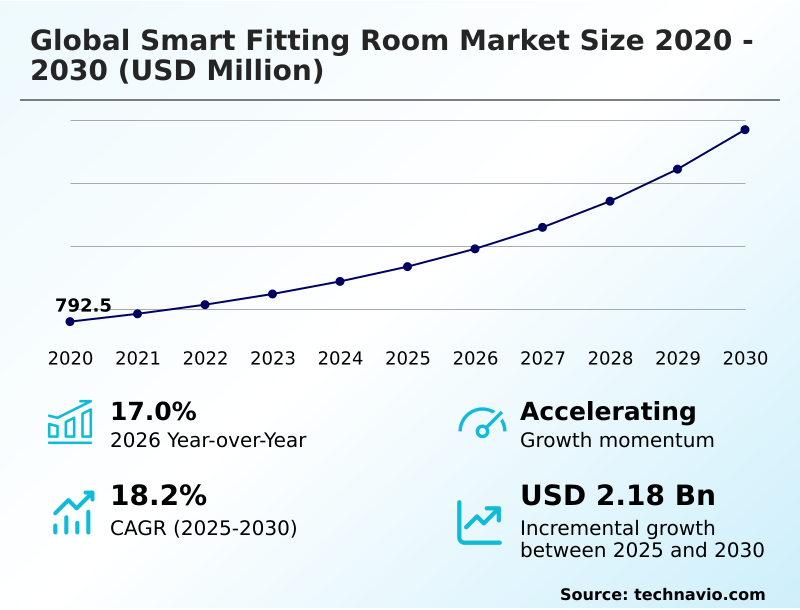
The smart fitting room market size is valued to increase by USD 2.18 billion, at a CAGR of 18.2% from 2025 to 2030. Mainstreaming of AI-driven hyper-personalization and real-time body scanning will drive the smart fitting room market.

Major Market Trends & Insights

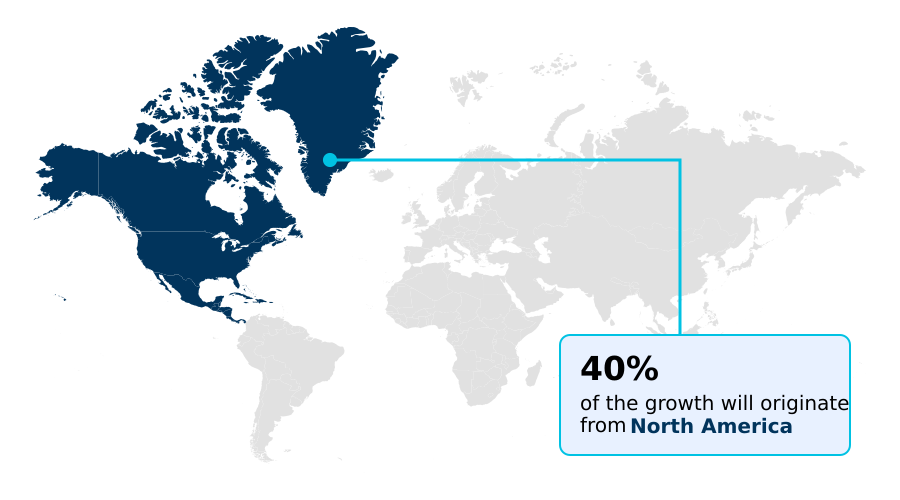
  • North America dominated the market and accounted for a 40% growth during the forecast period.
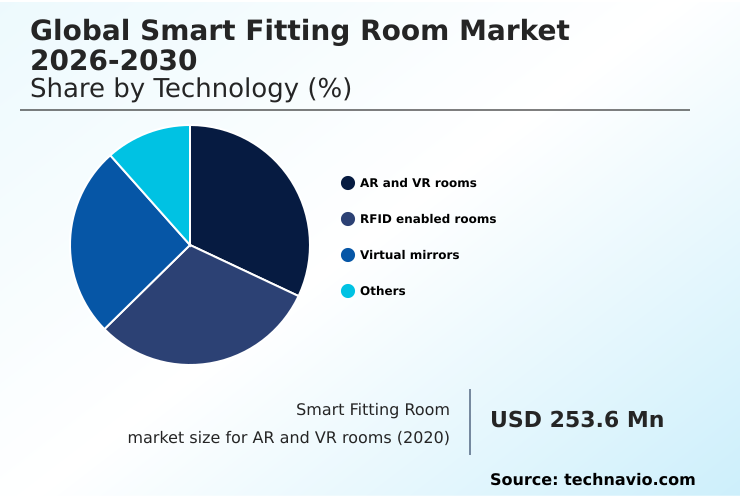
  • By Technology - AR and VR rooms segment was valued at USD 473.7 million in 2024
  • By Component - Hardware segment accounted for the largest market revenue share in 2024

Market Size & Forecast

  • Market Opportunities: USD 3.05 billion
  • Market Future Opportunities: USD 2.18 billion
  • CAGR from 2025 to 2030 : 18.2%

Market Summary

  • The smart fitting room market is transforming the retail landscape by integrating interactive digital interfaces and advanced spatial computing into the apparel try-on experience. Core to this evolution is the use of radio-frequency identification (RFID) sensors and high-definition smart mirrors, which operate using augmented reality (AR) and artificial intelligence (AI).
  • These systems allow shoppers to visualize different styles and sizes without redressing, directly addressing the industry's need for a hyper-personalized shopping experience. A primary driver is the significant reduction of e-commerce return rates, which stems from improved fit accuracy.
  • For instance, a retailer can leverage granular data from virtual try-ons to refine its production cycles, aligning garment specifications with actual consumer body shapes rather than theoretical charts. This data-driven approach not only enhances customer satisfaction but also promotes sustainability.
  • However, the industry grapples with challenges related to data privacy regulations and the high financial barrier of high-fidelity 3D asset creation, which are critical considerations for scalable deployment and maintaining consumer trust in this evolving phygital retail model.

What will be the Size of the Smart Fitting Room Market during the forecast period?

Get Key Insights on Market Forecast (PDF) Request Free Sample

How is the Smart Fitting Room Market Segmented?

The smart fitting room industry research report provides comprehensive data (region-wise segment analysis), with forecasts and estimates in "USD million" for the period 2026-2030, as well as historical data from 2020-2024 for the following segments.

  • Technology
    • AR and VR rooms
    • RFID enabled rooms
    • Virtual mirrors
    • Others
  • Component
    • Hardware
    • Software
    • Services
  • End-user
    • Physical stores
    • Virtual and e-commerce stores
  • Geography
    • North America
      • US
      • Canada
      • Mexico
    • Europe
      • Germany
      • UK
      • France
    • APAC
      • China
      • Japan
      • India
    • Middle East and Africa
      • UAE
      • Saudi Arabia
      • South Africa
    • South America
      • Brazil
      • Argentina
      • Colombia
    • Rest of World (ROW)

By Technology Insights

The ar and vr rooms segment is estimated to witness significant growth during the forecast period.

The market is advancing through immersive retail environments powered by AR and VR rooms. These systems leverage augmented reality platforms and sophisticated machine learning models to provide data-driven personalization for the omniconsumer experience.

By enabling 3D body scanning and deploying generative AI avatars, retailers create a frictionless customer journey that supports contactless shopping experiences.

This technological integration is critical for capturing high-intent engagement data, which is then used to refine the user experience and boost in-store conversion rates.

The application of these technologies has proven effective, with some implementations reducing size-related apparel returns by as much as 80%, directly impacting operational efficiency and profitability.

Request Free Sample

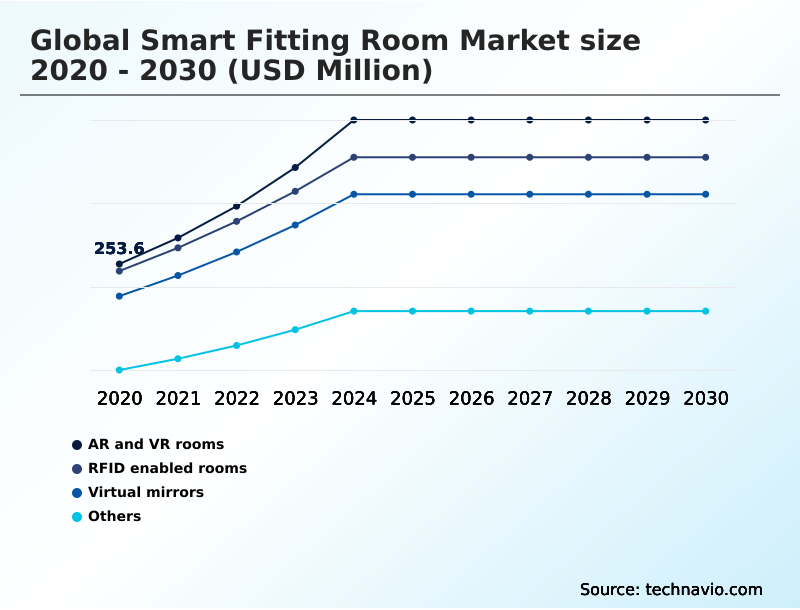
The AR and VR rooms segment was valued at USD 473.7 million in 2024 and showed a gradual increase during the forecast period.
Request Free Sample

Regional Analysis

North America is estimated to contribute 40% to the growth of the global market during the forecast period.Technavio’s analysts have elaborately explained the regional trends and drivers that shape the market during the forecast period.

See How Smart Fitting Room Market Demand is Rising in North America Request Free Sample

The geographic landscape of the market is led by North America, which accounts for nearly 40% of the market's incremental growth, driven by a mature retail sector and high consumer receptivity to digital innovation.

In this region, retailers are deploying biometric scanners and focusing on a phygital retail model to enhance the customer journey.

In contrast, the APAC region is the fastest-growing market, with a growth rate over 2% higher than that of Europe, fueled by rapid urbanization and a tech-savvy demographic that readily engages with robotic fulfillment and smart lighting control.

Real-time inventory management is a key focus in both regions.

However, escalating data privacy regulations and the need for robust data-sovereignty protocols present a universal challenge, influencing technology adoption and operational strategies globally, particularly concerning biometric authentication features and the use of voice-activated assistants.

Market Dynamics

Our researchers analyzed the data with 2025 as the base year, along with the key drivers, trends, and challenges. A holistic analysis of drivers will help companies refine their marketing strategies to gain a competitive advantage.

  • The primary focus for retailers is reducing e-commerce return rates, a challenge directly addressed through AI hyper-personalization in retail and the strategic integration of smart technologies. A key strategy involves integrating RFID with mobile POS systems to create a seamless checkout process directly from the fitting room, which helps in improving in-store conversion rates.
  • However, this path is complicated by significant legacy system integration hurdles and ensuring the interoperability of retail systems. The cost of 3D asset creation, including physics-based draping for apparel, remains a substantial barrier. Furthermore, the imperative of managing biometric data privacy, driven by GDPR compliance for body scanning, necessitates the adoption of secure technologies like edge computing for data privacy.
  • The industry is also advancing toward the digital product passport implementation to enhance supply chain transparency. Advanced solutions now include generative AI for virtual-try-on experiences and the use of phygital touchpoints for data collection to provide real-time inventory in fitting rooms.
  • Addressing these omnichannel smart fitting integration challenges while navigating AI stylists in conversational commerce and mitigating the circular economy logistics impact is crucial for achieving a lower carbon footprint via returns, where technologies have shown potential to cut return rates from 40% to under 10%.

What are the key market drivers leading to the rise in the adoption of Smart Fitting Room Industry?

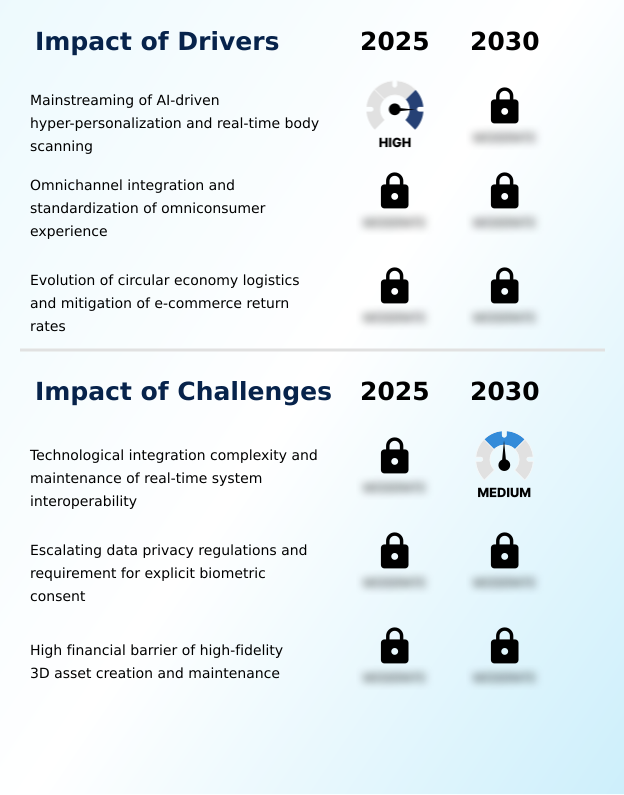
  • The mainstreaming of AI-driven hyper-personalization and real-time body scanning is a key driver propelling market growth and enhancing the consumer experience.

  • The market is propelled by the strategic imperative for a hyper-personalized shopping experience and seamless omnichannel integration. Retailers are implementing a unified commerce protocol to connect in-store and online activities, transforming the fitting room into a pivotal, data-rich touchpoint.
  • This is critical for mitigating e-commerce return rates, which historically have been as high as 40% for apparel. By leveraging cross-selling algorithms and AI-powered visual search, smart systems not only enhance the customer experience but also drive revenue.
  • The successful integration of these technologies, despite challenges related to legacy system integration and ensuring real-time system interoperability, has demonstrated a capacity to reduce size-related returns by up to 80%, underscoring a clear return on investment.

What are the market trends shaping the Smart Fitting Room Industry?

  • A key market trend involves the strategic adoption of circular commerce principles. This is increasingly complemented by sustainability-driven fit analytics to address environmental concerns and optimize supply chains.

  • Key market trends are converging around sustainability and intelligent automation, compelling retailers to adopt new strategies. The move toward circular economy logistics is supported by sustainability-driven fit analytics, which helps minimize waste and returns. This is complemented by the integration of agentic AI stylists into conversational commerce ecosystems, creating a highly personalized and interactive customer engagement hub.
  • In a competitive landscape, growth in the APAC region is outpacing Europe's by over two percentage points, driven by rapid adoption of technologies like edge-computing models and virtual closets. These innovations facilitate frictionless customer journeys and support the expansion of phygital retail synergy, where physical and digital channels are seamlessly connected, fostering a more efficient and responsive retail environment.

What challenges does the Smart Fitting Room Industry face during its growth?

  • Technological integration complexity, coupled with the maintenance of real-time system interoperability, presents a primary challenge affecting widespread industry adoption and growth.

  • The market faces significant hurdles, primarily the high financial barrier to entry and ongoing operational complexities. The process of high-fidelity 3D asset creation for digital twin creation can exceed traditional photography budgets by a factor of five, creating a substantial cost bottleneck for retailers.
  • Concurrently, stringent data privacy regulations require robust data-sovereignty protocols and cybersecurity breach mitigation strategies, especially when handling biometric data. This challenge is magnified by the technical difficulties of ensuring real-time system interoperability across diverse hardware and software platforms.
  • Without seamless integration, retailers risk a fractured customer experience, which undermines the core value proposition of a frictionless and personalized shopping journey, ultimately impacting conversion rates.

Exclusive Technavio Analysis on Customer Landscape

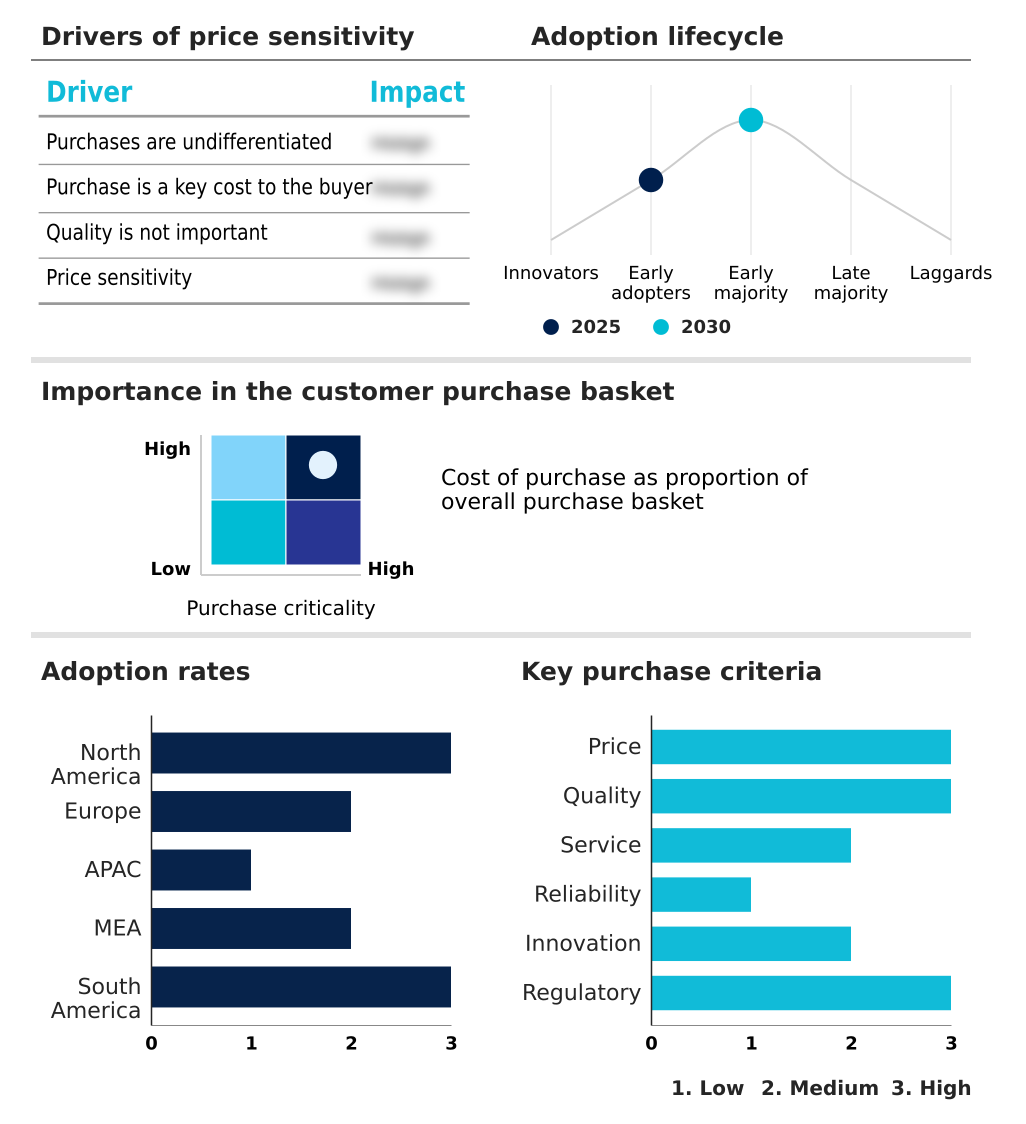
The smart fitting room market forecasting report includes the adoption lifecycle of the market, covering from the innovator’s stage to the laggard’s stage. It focuses on adoption rates in different regions based on penetration. Furthermore, the smart fitting room market report also includes key purchase criteria and drivers of price sensitivity to help companies evaluate and develop their market growth analysis strategies.
Customer Landscape of Smart Fitting Room Industry

Competitive Landscape

Companies are implementing various strategies, such as strategic alliances, smart fitting room market forecast, partnerships, mergers and acquisitions, geographical expansion, and product/service launches, to enhance their presence in the industry.

3DLOOK Inc. - Delivers AI-powered mobile body scanning, generating precise 3D avatars and measurements from photos to enhance virtual fit personalization and reduce e-commerce returns for apparel retailers.

The industry research and growth report includes detailed analyses of the competitive landscape of the market and information about key companies, including:

  • 3DLOOK Inc.
  • Autumn Rock Ltd.
  • Cisco Systems Inc.
  • Else Corp.
  • Fit match
  • Fitle.
  • FXGear Inc.
  • Johnson Controls International
  • K3 Business Technology Group.
  • Magic Mirror
  • MIRRORSIZE US INC.
  • mysizeid
  • Panasonic Holdings Corp.
  • Raydiant
  • Samsung Electronics Co. Ltd.
  • SIZEBAY
  • Streamoid Technologies Inc.
  • Style.me
  • Syte
  • Virtusize Co.Ltd.

Qualitative and quantitative analysis of companies has been conducted to help clients understand the wider business environment as well as the strengths and weaknesses of key industry players. Data is qualitatively analyzed to categorize companies as pure play, category-focused, industry-focused, and diversified; it is quantitatively analyzed to categorize companies as dominant, leading, strong, tentative, and weak.

Recent Development and News in Smart fitting room market

  • In August, 2024, a prominent Silicon Valley-based retail technology firm finalized a strategic partnership with a national department store chain to deploy next-generation biometric fitting sensors that adjust lighting and provide real-time haptic feedback based on garment texture.
  • In September, 2024, the parent company of Uniqlo, launched a flagship store in Tokyo that featured a fully contactless fitting room system utilizing gesture control and light detection and ranging sensors to cater to consumer demand for hygiene and efficiency.
  • In December, 2024, Emaar Malls introduced a sophisticated array of interactive dressing rooms within the Dubai Mall, featuring high-definition displays and AI-driven styling assistants that provide recommendations based on regional fashion trends.
  • In May, 2025, Amazon Style expanded its physical retail presence by introducing biometric scanners within fitting rooms across its California locations to provide hyper-personalized size recommendations, highlighting a shift toward data-centric retail environments.

Dive into Technavio’s robust research methodology, blending expert interviews, extensive data synthesis, and validated models for unparalleled Smart Fitting Room Market insights. See full methodology.

Market Scope
Page number 291
Base year 2025
Historic period 2020-2024
Forecast period 2026-2030
Growth momentum & CAGR Accelerate at a CAGR of 18.2%
Market growth 2026-2030 USD 2178.5 million
Market structure Fragmented
YoY growth 2025-2026(%) 17.0%
Key countries US, Canada, Mexico, Germany, UK, France, Italy, Spain, The Netherlands, China, Japan, India, South Korea, Australia, Indonesia, UAE, Saudi Arabia, South Africa, Israel, Turkey, Brazil, Argentina and Colombia
Competitive landscape Leading Companies, Market Positioning of Companies, Competitive Strategies, and Industry Risks

Request Free Sample

Research Analyst Overview

  • The smart fitting room market has evolved into a critical component of modern retail strategy, driven by advancements in AR and VR rooms, RFID enabled rooms, and virtual mirrors. The integration of computer vision algorithms and machine learning models with hardware like depth-sensing cameras and 4K display panels facilitates a superior customer experience.
  • The rise of agentic AI stylists within conversational commerce ecosystems and the pursuit of phygital retail synergy are defining current investments. Boardroom decisions are increasingly influenced by the need for robust biometric consent management to comply with privacy regulations, impacting budgets for new technology rollouts.
  • Systems now incorporate sophisticated features like physics-based draping, texture mapping, and human pose estimation on augmented reality platforms. The deployment of generative AI avatars, biometric scanners, and haptic feedback sensors is becoming more common.
  • This technological shift, which includes mobile point-of-sale integration, edge-computing models, and even robotic fulfillment, is justified by significant ROI, with some retailers achieving an 80% reduction in returns. As the industry moves toward digital product passport readiness, overcoming challenges like high-fidelity 3D asset creation and ensuring real-time system interoperability after legacy system integration remains paramount.

What are the Key Data Covered in this Smart Fitting Room Market Research and Growth Report?

  • What is the expected growth of the Smart Fitting Room Market between 2026 and 2030?

    • USD 2.18 billion, at a CAGR of 18.2%

  • What segmentation does the market report cover?

    • The report is segmented by Technology (AR and VR rooms, RFID enabled rooms, Virtual mirrors, and Others), Component (Hardware, Software, and Services), End-user (Physical stores, and Virtual and e-commerce stores) and Geography (North America, Europe, APAC, Middle East and Africa, South America)

  • Which regions are analyzed in the report?

    • North America, Europe, APAC, Middle East and Africa and South America

  • What are the key growth drivers and market challenges?

    • Mainstreaming of AI-driven hyper-personalization and real-time body scanning, Technological integration complexity and maintenance of real-time system interoperability

  • Who are the major players in the Smart Fitting Room Market?

    • 3DLOOK Inc., Autumn Rock Ltd., Cisco Systems Inc., Else Corp., Fit match, Fitle., FXGear Inc., Johnson Controls International, K3 Business Technology Group., Magic Mirror, MIRRORSIZE US INC., mysizeid, Panasonic Holdings Corp., Raydiant, Samsung Electronics Co. Ltd., SIZEBAY, Streamoid Technologies Inc., Style.me, Syte and Virtusize Co.Ltd.

Market Research Insights

  • Market dynamics are shaped by the strategic push toward a hyper-personalized shopping experience and the mitigation of high e-commerce return rates. The implementation of a unified commerce protocol enables a frictionless customer journey, where data from smart mirrors is shared with e-commerce backends to support omnichannel integration.
  • Historically, online apparel return rates have reached as high as 40%, primarily due to poor fit. Advanced pre-emptive returns management solutions utilizing 3D fit-prediction engines have demonstrated the ability to reduce size-related returns by up to 80%.
  • This significant improvement in operational efficiency is achieved through the use of cross-selling algorithms and enhanced service quality, transforming the fitting room into a high-conversion sales floor and a critical data-rich touchpoint.

We can help! Our analysts can customize this smart fitting room market research report to meet your requirements.

Get in touch

1. Executive Summary

1.1 Market overview

Executive Summary - Chart on Market Overview
Executive Summary - Data Table on Market Overview
Executive Summary - Chart on Global Market Characteristics
Executive Summary - Chart on Market by Geography
Executive Summary - Chart on Market Segmentation by Technology
Executive Summary - Chart on Market Segmentation by Component
Executive Summary - Chart on Market Segmentation by End-user
Executive Summary - Chart on Incremental Growth
Executive Summary - Data Table on Incremental Growth
Executive Summary - Chart on Company Market Positioning

2. Technavio Analysis

2.1 Analysis of price sensitivity, lifecycle, customer purchase basket, adoption rates, and purchase criteria

2.2 Criticality of inputs and Factors of differentiation

Chart on Overview on criticality of inputs and factors of differentiation

2.3 Factors of disruption

Chart on Overview on factors of disruption

2.4 Impact of drivers and challenges

Chart on Impact of drivers and challenges in 2025 and 2030

3. Market Landscape

3.1 Market ecosystem

Chart on Parent Market
Data Table on - Parent Market

3.2 Market characteristics

Chart on Market characteristics analysis

3.3 Value chain analysis

Chart on Value chain analysis

4. Market Sizing

4.1 Market definition

Data Table on Offerings of companies included in the market definition

4.2 Market segment analysis

Market segments

4.3 Market size 2025

4.4 Market outlook: Forecast for 2025-2030

Chart on Global - Market size and forecast 2025-2030 ($ million)
Data Table on Global - Market size and forecast 2025-2030 ($ million)
Chart on Global Market: Year-over-year growth 2025-2030 (%)
Data Table on Global Market: Year-over-year growth 2025-2030 (%)

5. Historic Market Size

5.1 Global Smart Fitting Room Market 2020 - 2024

Historic Market Size - Data Table on Global Smart Fitting Room Market 2020 - 2024 ($ million)

5.2 Technology segment analysis 2020 - 2024

Historic Market Size - Technology Segment 2020 - 2024 ($ million)

5.3 Component segment analysis 2020 - 2024

Historic Market Size - Component Segment 2020 - 2024 ($ million)

5.4 End-user segment analysis 2020 - 2024

Historic Market Size - End-user Segment 2020 - 2024 ($ million)

5.5 Geography segment analysis 2020 - 2024

Historic Market Size - Geography Segment 2020 - 2024 ($ million)

5.6 Country segment analysis 2020 - 2024

Historic Market Size - Country Segment 2020 - 2024 ($ million)

6. Qualitative Analysis

6.1 The AI impact on Global Smart Fitting Room Market

7. Five Forces Analysis

7.1 Five forces summary

Five forces analysis - Comparison between 2025 and 2030

7.2 Bargaining power of buyers

Bargaining power of buyers - Impact of key factors 2025 and 2030

7.3 Bargaining power of suppliers

Bargaining power of suppliers - Impact of key factors in 2025 and 2030

7.4 Threat of new entrants

Threat of new entrants - Impact of key factors in 2025 and 2030

7.5 Threat of substitutes

Threat of substitutes - Impact of key factors in 2025 and 2030

7.6 Threat of rivalry

Threat of rivalry - Impact of key factors in 2025 and 2030

7.7 Market condition

Chart on Market condition - Five forces 2025 and 2030

8. Market Segmentation by Technology

8.1 Market segments

Chart on Technology - Market share 2025-2030 (%)
Data Table on Technology - Market share 2025-2030 (%)

8.2 Comparison by Technology

Chart on Comparison by Technology
Data Table on Comparison by Technology

8.3 AR and VR rooms - Market size and forecast 2025-2030

Chart on AR and VR rooms - Market size and forecast 2025-2030 ($ million)
Data Table on AR and VR rooms - Market size and forecast 2025-2030 ($ million)
Chart on AR and VR rooms - Year-over-year growth 2025-2030 (%)
Data Table on AR and VR rooms - Year-over-year growth 2025-2030 (%)

8.4 RFID enabled rooms - Market size and forecast 2025-2030

Chart on RFID enabled rooms - Market size and forecast 2025-2030 ($ million)
Data Table on RFID enabled rooms - Market size and forecast 2025-2030 ($ million)
Chart on RFID enabled rooms - Year-over-year growth 2025-2030 (%)
Data Table on RFID enabled rooms - Year-over-year growth 2025-2030 (%)

8.5 Virtual mirrors - Market size and forecast 2025-2030

Chart on Virtual mirrors - Market size and forecast 2025-2030 ($ million)
Data Table on Virtual mirrors - Market size and forecast 2025-2030 ($ million)
Chart on Virtual mirrors - Year-over-year growth 2025-2030 (%)
Data Table on Virtual mirrors - Year-over-year growth 2025-2030 (%)

8.6 Others - Market size and forecast 2025-2030

Chart on Others - Market size and forecast 2025-2030 ($ million)
Data Table on Others - Market size and forecast 2025-2030 ($ million)
Chart on Others - Year-over-year growth 2025-2030 (%)
Data Table on Others - Year-over-year growth 2025-2030 (%)

8.7 Market opportunity by Technology

Market opportunity by Technology ($ million)
Data Table on Market opportunity by Technology ($ million)

9. Market Segmentation by Component

9.1 Market segments

Chart on Component - Market share 2025-2030 (%)
Data Table on Component - Market share 2025-2030 (%)

9.2 Comparison by Component

Chart on Comparison by Component
Data Table on Comparison by Component

9.3 Hardware - Market size and forecast 2025-2030

Chart on Hardware - Market size and forecast 2025-2030 ($ million)
Data Table on Hardware - Market size and forecast 2025-2030 ($ million)
Chart on Hardware - Year-over-year growth 2025-2030 (%)
Data Table on Hardware - Year-over-year growth 2025-2030 (%)

9.4 Software - Market size and forecast 2025-2030

Chart on Software - Market size and forecast 2025-2030 ($ million)
Data Table on Software - Market size and forecast 2025-2030 ($ million)
Chart on Software - Year-over-year growth 2025-2030 (%)
Data Table on Software - Year-over-year growth 2025-2030 (%)

9.5 Services - Market size and forecast 2025-2030

Chart on Services - Market size and forecast 2025-2030 ($ million)
Data Table on Services - Market size and forecast 2025-2030 ($ million)
Chart on Services - Year-over-year growth 2025-2030 (%)
Data Table on Services - Year-over-year growth 2025-2030 (%)

9.6 Market opportunity by Component

Market opportunity by Component ($ million)
Data Table on Market opportunity by Component ($ million)

10. Market Segmentation by End-user

10.1 Market segments

Chart on End-user - Market share 2025-2030 (%)
Data Table on End-user - Market share 2025-2030 (%)

10.2 Comparison by End-user

Chart on Comparison by End-user
Data Table on Comparison by End-user

10.3 Physical stores - Market size and forecast 2025-2030

Chart on Physical stores - Market size and forecast 2025-2030 ($ million)
Data Table on Physical stores - Market size and forecast 2025-2030 ($ million)
Chart on Physical stores - Year-over-year growth 2025-2030 (%)
Data Table on Physical stores - Year-over-year growth 2025-2030 (%)

10.4 Virtual and e-commerce stores - Market size and forecast 2025-2030

Chart on Virtual and e-commerce stores - Market size and forecast 2025-2030 ($ million)
Data Table on Virtual and e-commerce stores - Market size and forecast 2025-2030 ($ million)
Chart on Virtual and e-commerce stores - Year-over-year growth 2025-2030 (%)
Data Table on Virtual and e-commerce stores - Year-over-year growth 2025-2030 (%)

10.5 Market opportunity by End-user

Market opportunity by End-user ($ million)
Data Table on Market opportunity by End-user ($ million)

11. Customer Landscape

11.1 Customer landscape overview

Analysis of price sensitivity, lifecycle, customer purchase basket, adoption rates, and purchase criteria

12. Geographic Landscape

12.1 Geographic segmentation

Chart on Market share by geography 2025-2030 (%)
Data Table on Market share by geography 2025-2030 (%)

12.2 Geographic comparison

Chart on Geographic comparison
Data Table on Geographic comparison

12.3 North America - Market size and forecast 2025-2030

Chart on North America - Market size and forecast 2025-2030 ($ million)
Data Table on North America - Market size and forecast 2025-2030 ($ million)
Chart on North America - Year-over-year growth 2025-2030 (%)
Data Table on North America - Year-over-year growth 2025-2030 (%)
Chart on Regional Comparison - North America
Data Table on Regional Comparison - North America

12.3.1 US - Market size and forecast 2025-2030

Chart on US - Market size and forecast 2025-2030 ($ million)
Data Table on US - Market size and forecast 2025-2030 ($ million)
Chart on US - Year-over-year growth 2025-2030 (%)
Data Table on US - Year-over-year growth 2025-2030 (%)

12.3.2 Canada - Market size and forecast 2025-2030

Chart on Canada - Market size and forecast 2025-2030 ($ million)
Data Table on Canada - Market size and forecast 2025-2030 ($ million)
Chart on Canada - Year-over-year growth 2025-2030 (%)
Data Table on Canada - Year-over-year growth 2025-2030 (%)

12.3.3 Mexico - Market size and forecast 2025-2030

Chart on Mexico - Market size and forecast 2025-2030 ($ million)
Data Table on Mexico - Market size and forecast 2025-2030 ($ million)
Chart on Mexico - Year-over-year growth 2025-2030 (%)
Data Table on Mexico - Year-over-year growth 2025-2030 (%)

12.4 Europe - Market size and forecast 2025-2030

Chart on Europe - Market size and forecast 2025-2030 ($ million)
Data Table on Europe - Market size and forecast 2025-2030 ($ million)
Chart on Europe - Year-over-year growth 2025-2030 (%)
Data Table on Europe - Year-over-year growth 2025-2030 (%)
Chart on Regional Comparison - Europe
Data Table on Regional Comparison - Europe

12.4.1 Germany - Market size and forecast 2025-2030

Chart on Germany - Market size and forecast 2025-2030 ($ million)
Data Table on Germany - Market size and forecast 2025-2030 ($ million)
Chart on Germany - Year-over-year growth 2025-2030 (%)
Data Table on Germany - Year-over-year growth 2025-2030 (%)

12.4.2 UK - Market size and forecast 2025-2030

Chart on UK - Market size and forecast 2025-2030 ($ million)
Data Table on UK - Market size and forecast 2025-2030 ($ million)
Chart on UK - Year-over-year growth 2025-2030 (%)
Data Table on UK - Year-over-year growth 2025-2030 (%)

12.4.3 France - Market size and forecast 2025-2030

Chart on France - Market size and forecast 2025-2030 ($ million)
Data Table on France - Market size and forecast 2025-2030 ($ million)
Chart on France - Year-over-year growth 2025-2030 (%)
Data Table on France - Year-over-year growth 2025-2030 (%)

12.4.4 Italy - Market size and forecast 2025-2030

Chart on Italy - Market size and forecast 2025-2030 ($ million)
Data Table on Italy - Market size and forecast 2025-2030 ($ million)
Chart on Italy - Year-over-year growth 2025-2030 (%)
Data Table on Italy - Year-over-year growth 2025-2030 (%)

12.4.5 Spain - Market size and forecast 2025-2030

Chart on Spain - Market size and forecast 2025-2030 ($ million)
Data Table on Spain - Market size and forecast 2025-2030 ($ million)
Chart on Spain - Year-over-year growth 2025-2030 (%)
Data Table on Spain - Year-over-year growth 2025-2030 (%)

12.4.6 The Netherlands - Market size and forecast 2025-2030

Chart on The Netherlands - Market size and forecast 2025-2030 ($ million)
Data Table on The Netherlands - Market size and forecast 2025-2030 ($ million)
Chart on The Netherlands - Year-over-year growth 2025-2030 (%)
Data Table on The Netherlands - Year-over-year growth 2025-2030 (%)

12.5 APAC - Market size and forecast 2025-2030

Chart on APAC - Market size and forecast 2025-2030 ($ million)
Data Table on APAC - Market size and forecast 2025-2030 ($ million)
Chart on APAC - Year-over-year growth 2025-2030 (%)
Data Table on APAC - Year-over-year growth 2025-2030 (%)
Chart on Regional Comparison - APAC
Data Table on Regional Comparison - APAC

12.5.1 China - Market size and forecast 2025-2030

Chart on China - Market size and forecast 2025-2030 ($ million)
Data Table on China - Market size and forecast 2025-2030 ($ million)
Chart on China - Year-over-year growth 2025-2030 (%)
Data Table on China - Year-over-year growth 2025-2030 (%)

12.5.2 Japan - Market size and forecast 2025-2030

Chart on Japan - Market size and forecast 2025-2030 ($ million)
Data Table on Japan - Market size and forecast 2025-2030 ($ million)
Chart on Japan - Year-over-year growth 2025-2030 (%)
Data Table on Japan - Year-over-year growth 2025-2030 (%)

12.5.3 India - Market size and forecast 2025-2030

Chart on India - Market size and forecast 2025-2030 ($ million)
Data Table on India - Market size and forecast 2025-2030 ($ million)
Chart on India - Year-over-year growth 2025-2030 (%)
Data Table on India - Year-over-year growth 2025-2030 (%)

12.5.4 South Korea - Market size and forecast 2025-2030

Chart on South Korea - Market size and forecast 2025-2030 ($ million)
Data Table on South Korea - Market size and forecast 2025-2030 ($ million)
Chart on South Korea - Year-over-year growth 2025-2030 (%)
Data Table on South Korea - Year-over-year growth 2025-2030 (%)

12.5.5 Australia - Market size and forecast 2025-2030

Chart on Australia - Market size and forecast 2025-2030 ($ million)
Data Table on Australia - Market size and forecast 2025-2030 ($ million)
Chart on Australia - Year-over-year growth 2025-2030 (%)
Data Table on Australia - Year-over-year growth 2025-2030 (%)

12.5.6 Indonesia - Market size and forecast 2025-2030

Chart on Indonesia - Market size and forecast 2025-2030 ($ million)
Data Table on Indonesia - Market size and forecast 2025-2030 ($ million)
Chart on Indonesia - Year-over-year growth 2025-2030 (%)
Data Table on Indonesia - Year-over-year growth 2025-2030 (%)

12.6 Middle East and Africa - Market size and forecast 2025-2030

Chart on Middle East and Africa - Market size and forecast 2025-2030 ($ million)
Data Table on Middle East and Africa - Market size and forecast 2025-2030 ($ million)
Chart on Middle East and Africa - Year-over-year growth 2025-2030 (%)
Data Table on Middle East and Africa - Year-over-year growth 2025-2030 (%)
Chart on Regional Comparison - Middle East and Africa
Data Table on Regional Comparison - Middle East and Africa

12.6.1 UAE - Market size and forecast 2025-2030

Chart on UAE - Market size and forecast 2025-2030 ($ million)
Data Table on UAE - Market size and forecast 2025-2030 ($ million)
Chart on UAE - Year-over-year growth 2025-2030 (%)
Data Table on UAE - Year-over-year growth 2025-2030 (%)

12.6.2 Saudi Arabia - Market size and forecast 2025-2030

Chart on Saudi Arabia - Market size and forecast 2025-2030 ($ million)
Data Table on Saudi Arabia - Market size and forecast 2025-2030 ($ million)
Chart on Saudi Arabia - Year-over-year growth 2025-2030 (%)
Data Table on Saudi Arabia - Year-over-year growth 2025-2030 (%)

12.6.3 South Africa - Market size and forecast 2025-2030

Chart on South Africa - Market size and forecast 2025-2030 ($ million)
Data Table on South Africa - Market size and forecast 2025-2030 ($ million)
Chart on South Africa - Year-over-year growth 2025-2030 (%)
Data Table on South Africa - Year-over-year growth 2025-2030 (%)

12.6.4 Israel - Market size and forecast 2025-2030

Chart on Israel - Market size and forecast 2025-2030 ($ million)
Data Table on Israel - Market size and forecast 2025-2030 ($ million)
Chart on Israel - Year-over-year growth 2025-2030 (%)
Data Table on Israel - Year-over-year growth 2025-2030 (%)

12.6.5 Turkey - Market size and forecast 2025-2030

Chart on Turkey - Market size and forecast 2025-2030 ($ million)
Data Table on Turkey - Market size and forecast 2025-2030 ($ million)
Chart on Turkey - Year-over-year growth 2025-2030 (%)
Data Table on Turkey - Year-over-year growth 2025-2030 (%)

12.7 South America - Market size and forecast 2025-2030

Chart on South America - Market size and forecast 2025-2030 ($ million)
Data Table on South America - Market size and forecast 2025-2030 ($ million)
Chart on South America - Year-over-year growth 2025-2030 (%)
Data Table on South America - Year-over-year growth 2025-2030 (%)
Chart on Regional Comparison - South America
Data Table on Regional Comparison - South America

12.7.1 Brazil - Market size and forecast 2025-2030

Chart on Brazil - Market size and forecast 2025-2030 ($ million)
Data Table on Brazil - Market size and forecast 2025-2030 ($ million)
Chart on Brazil - Year-over-year growth 2025-2030 (%)
Data Table on Brazil - Year-over-year growth 2025-2030 (%)

12.7.2 Argentina - Market size and forecast 2025-2030

Chart on Argentina - Market size and forecast 2025-2030 ($ million)
Data Table on Argentina - Market size and forecast 2025-2030 ($ million)
Chart on Argentina - Year-over-year growth 2025-2030 (%)
Data Table on Argentina - Year-over-year growth 2025-2030 (%)

12.7.3 Colombia - Market size and forecast 2025-2030

Chart on Colombia - Market size and forecast 2025-2030 ($ million)
Data Table on Colombia - Market size and forecast 2025-2030 ($ million)
Chart on Colombia - Year-over-year growth 2025-2030 (%)
Data Table on Colombia - Year-over-year growth 2025-2030 (%)

12.8 Market opportunity by geography

Market opportunity by geography ($ million)
Data Tables on Market opportunity by geography ($ million)

13. Drivers, Challenges, and Opportunity

13.1 Market drivers

Mainstreaming of AI-driven hyper-personalization and real-time body scanning
Omnichannel integration and standardization of omniconsumer experience
Evolution of circular economy logistics and mitigation of e-commerce return rates

13.2 Market challenges

Technological integration complexity and maintenance of real-time system interoperability
Escalating data privacy regulations and requirement for explicit biometric consent
High financial barrier of high-fidelity 3D asset creation and maintenance

13.3 Impact of drivers and challenges

Impact of drivers and challenges in 2025 and 2030

13.4 Market opportunities

Strategic adoption of circular commerce and sustainability-driven fit analytics
Integration of agentic AI stylists and conversational commerce ecosystems
Expansion of phygital retail synergy through RFID and mobile point-of-sale integration

14. Competitive Landscape

14.1 Overview

14.2

Overview on criticality of inputs and factors of differentiation

14.3 Landscape disruption

Overview on factors of disruption

14.4 Industry risks

Impact of key risks on business

15. Competitive Analysis

15.1 Companies profiled

Companies covered

15.2 Company ranking index

15.3 Market positioning of companies

Matrix on companies position and classification

15.4 3DLOOK Inc.

3DLOOK Inc. - Overview
3DLOOK Inc. - Product / Service
3DLOOK Inc. - Key offerings
SWOT

15.5 Autumn Rock Ltd.

Autumn Rock Ltd. - Overview
Autumn Rock Ltd. - Product / Service
Autumn Rock Ltd. - Key offerings
SWOT

15.6 Cisco Systems Inc.

Cisco Systems Inc. - Overview
Cisco Systems Inc. - Business segments
Cisco Systems Inc. - Key news
Cisco Systems Inc. - Key offerings
Cisco Systems Inc. - Segment focus
SWOT

15.7 Else Corp.

Else Corp. - Overview
Else Corp. - Product / Service
Else Corp. - Key offerings
SWOT

15.8 Fit match

Fit match - Overview
Fit match - Product / Service
Fit match - Key offerings
SWOT

15.9 Fitle.

Fitle. - Overview
Fitle. - Product / Service
Fitle. - Key offerings
SWOT

15.10 FXGear Inc.

FXGear Inc. - Overview
FXGear Inc. - Product / Service
FXGear Inc. - Key offerings
SWOT

15.11 Johnson Controls International

Johnson Controls International - Overview
Johnson Controls International - Business segments
Johnson Controls International - Key news
Johnson Controls International - Key offerings
Johnson Controls International - Segment focus
SWOT

15.12 K3 Business Technology Group.

K3 Business Technology Group. - Overview
K3 Business Technology Group. - Product / Service
K3 Business Technology Group. - Key offerings
SWOT

15.13 Magic Mirror

Magic Mirror - Overview
Magic Mirror - Product / Service
Magic Mirror - Key offerings
SWOT

15.14 MIRRORSIZE US INC.

MIRRORSIZE US INC. - Overview
MIRRORSIZE US INC. - Product / Service
MIRRORSIZE US INC. - Key offerings
SWOT

15.15 mysizeid

mysizeid - Overview
mysizeid - Product / Service
mysizeid - Key offerings
SWOT

15.16 Panasonic Holdings Corp.

Panasonic Holdings Corp. - Overview
Panasonic Holdings Corp. - Business segments
Panasonic Holdings Corp. - Key news
Panasonic Holdings Corp. - Key offerings
Panasonic Holdings Corp. - Segment focus
SWOT

15.17 Raydiant

Raydiant - Overview
Raydiant - Product / Service
Raydiant - Key offerings
SWOT

15.18 Samsung Electronics Co. Ltd.

Samsung Electronics Co. Ltd. - Overview
Samsung Electronics Co. Ltd. - Business segments
Samsung Electronics Co. Ltd. - Key news
Samsung Electronics Co. Ltd. - Key offerings
Samsung Electronics Co. Ltd. - Segment focus
SWOT

16. Appendix

16.1 Scope of the report

Market definition
Objectives
Notes and caveats

16.2 Inclusions and exclusions checklist

Inclusions checklist
Exclusions checklist

16.3 Currency conversion rates for US$

16.4 Research methodology

16.5 Data procurement

Information sources

16.6 Data validation

16.7 Validation techniques employed for market sizing

16.8 Data synthesis

16.9 360 degree market analysis

16.10 List of abbreviations

Research Methodology

Technavio presents a detailed picture of the market by way of study, synthesis, and summation of data from multiple sources. The analysts have presented the various facets of the market with a particular focus on identifying the key industry influencers. The data thus presented is comprehensive, reliable, and the result of extensive research, both primary and secondary.

INFORMATION SOURCES

Primary sources

  • Manufacturers and suppliers
  • Channel partners
  • Industry experts
  • Strategic decision makers

Secondary sources

  • Industry journals and periodicals
  • Government data
  • Financial reports of key industry players
  • Historical data
  • Press releases

DATA ANALYSIS

Data Synthesis

  • Collation of data
  • Estimation of key figures
  • Analysis of derived insights

Data Validation

  • Triangulation with data models
  • Reference against proprietary databases
  • Corroboration with industry experts

REPORT WRITING

Qualitative

  • Market drivers
  • Market challenges
  • Market trends
  • Five forces analysis

Quantitative

  • Market size and forecast
  • Market segmentation
  • Geographical insights
  • Competitive landscape

Interested in this report?

Get your sample now to see our research methodology and insights!

Download Now

Frequently Asked Questions

Smart Fitting Room market growth will increase by USD 2178.5 million during 2026-2030.

The Smart Fitting Room market is expected to grow at a CAGR of 18.2% during 2026-2030.

Smart Fitting Room market is segmented by Technology (AR and VR rooms, RFID enabled rooms, Virtual mirrors, Others) Component (Hardware, Software, Services) End-user (Physical stores, Virtual and e-commerce stores)

3DLOOK Inc., Autumn Rock Ltd., Cisco Systems Inc., Else Corp., Fit match, Fitle., FXGear Inc., Johnson Controls International, K3 Business Technology Group., Magic Mirror, MIRRORSIZE US INC., mysizeid, Panasonic Holdings Corp., Raydiant, Samsung Electronics Co. Ltd., SIZEBAY, Streamoid Technologies Inc., Style.me, Syte, Virtusize Co.Ltd. are a few of the key vendors in the Smart Fitting Room market.

North America will register the highest growth rate of 40% among the other regions. Therefore, the Smart Fitting Room market in North America is expected to garner significant business opportunities for the vendors during the forecast period.

US, Canada, Mexico, Germany, UK, France, Italy, Spain, The Netherlands, China, Japan, India, South Korea, Australia, Indonesia, UAE, Saudi Arabia, South Africa, Israel, Turkey, Brazil, Argentina, Colombia

  • Mainstreaming of AI-driven hyper-personalization and real-time body scanning is the driving factor this market.

The Smart Fitting Room market vendors should focus on grabbing business opportunities from the Technology segment as it accounted for the largest market share in the base year.