



Solar Photovoltaic (PV) Market Size 2026-2030
The solar photovoltaic (pv) market size is valued to increase by USD 65.98 billion, at a CAGR of 9.2% from 2025 to 2030. Technological innovation and commercialization of high efficiency cell architectures will drive the solar photovoltaic (pv) market.
Major Market Trends & Insights
- APAC dominated the market and accounted for a 45.2% growth during the forecast period.
- By Deployment - Ground-mounted segment was valued at USD 60.31 billion in 2024
- By End-user - Commercial segment accounted for the largest market revenue share in 2024
Market Size & Forecast
- Market Opportunities: USD 103.46 billion
- Market Future Opportunities: USD 65.98 billion
- CAGR from 2025 to 2030 : 9.2%
Market Summary
- The Solar Photovoltaic (PV) Market is undergoing a strategic evolution, moving beyond simple capacity expansion to focus on technological sophistication and lifecycle value. This shift is driven by the rapid commercialization of advanced module architecture, such as tunnel oxide passivated contact (TOPCon) and heterojunction technology, which significantly boosts energy yields.
- A dominant trend is the integration of solar plus storage systems to provide grid stability solutions and ensure energy independence for commercial and industrial users. For instance, a manufacturing facility can deploy an on-site solar array with batteries to mitigate production losses during grid outages and reduce electricity costs through peak shaving.
- However, the market contends with significant challenges, including supply chain resilience for materials like high-purity polysilicon and geopolitical tensions influencing domestic content mandates. Success now depends on navigating these complexities while leveraging innovations like building-integrated photovoltaics and automated manufacturing to maintain a competitive edge and support decarbonization pathways.
What will be the Size of the Solar Photovoltaic (PV) Market during the forecast period?
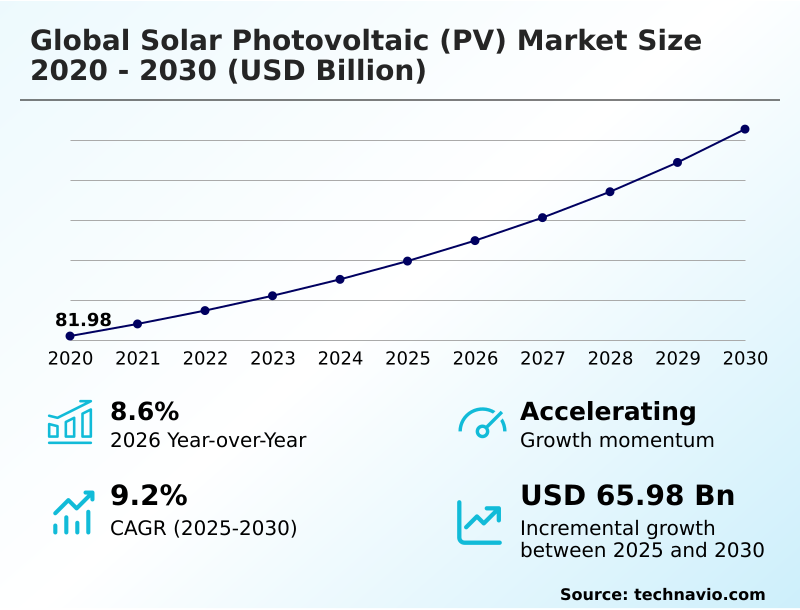
Get Key Insights on Market Forecast (PDF) Get Free Sample
How is the Solar Photovoltaic (PV) Market Segmented?
The solar photovoltaic (pv) industry research report provides comprehensive data (region-wise segment analysis), with forecasts and estimates in "USD million" for the period 2026-2030, as well as historical data from 2020-2024 for the following segments.
- Deployment
- Ground-mounted
- Rooftop
- End-user
- Commercial
- Residential
- Utility
- Technology
- Monocrystalline silicon
- Polycrystalline silicon
- Thin-film
- Bifacial solar panels
- Others
- Geography
- APAC
- China
- India
- Japan
- Europe
- Germany
- Spain
- Italy
- North America
- US
- Canada
- Mexico
- Middle East and Africa
- Saudi Arabia
- UAE
- South Africa
- South America
- Brazil
- Argentina
- Rest of World (ROW)
- APAC
By Deployment Insights
The ground-mounted segment is estimated to witness significant growth during the forecast period.
The ground-mounted segment is foundational to utility-scale energy strategies, defined by large solar farms utilizing sophisticated solar trackers to optimize sunlight capture. This segment is increasingly adopting bifacial modules, which improve energy production by up to 15% in high-albedo environments.
A key development is the rise of agrivoltaics, a dual-use approach that integrates solar power generation with agriculture, addressing land-use conflicts. These large installations are critical for providing dispatchable power, often paired with battery storage to enhance grid stability solutions.
The focus remains on maximizing energy yield through advanced module architecture and bifacial solar panels, ensuring these systems serve as the backbone for national renewable energy portfolios and contribute to grid-edge intelligence.
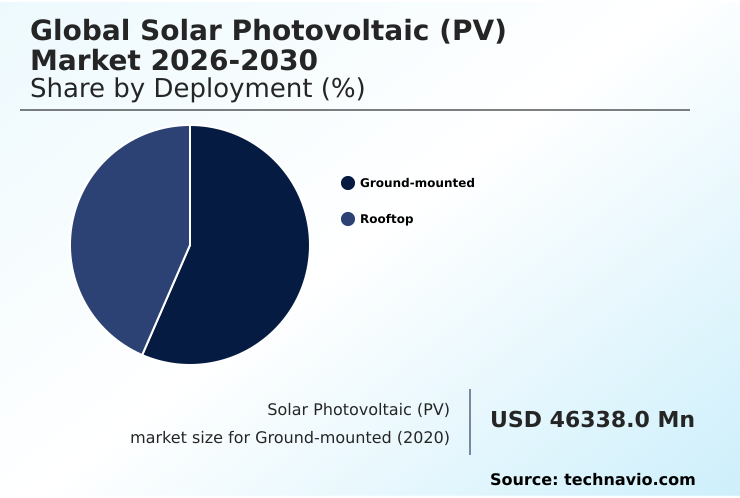
The Ground-mounted segment was valued at USD 60.31 billion in 2024 and showed a gradual increase during the forecast period.
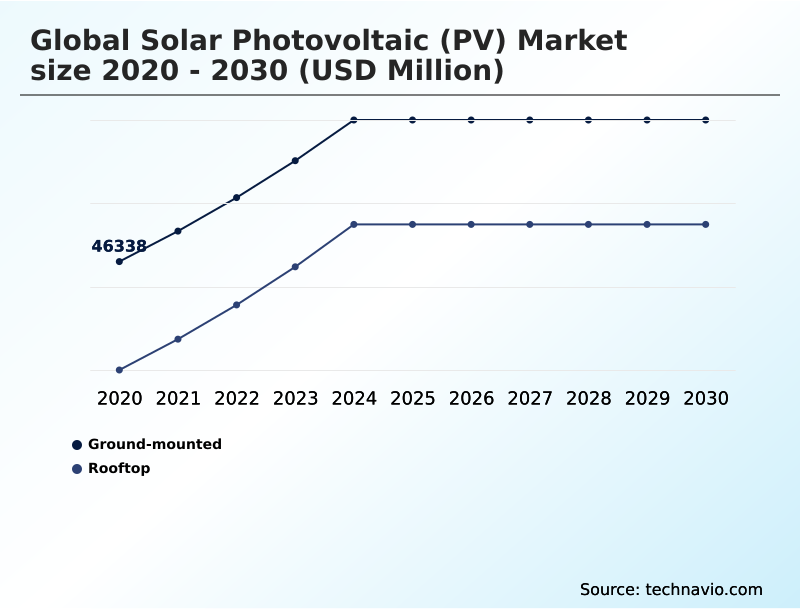
Regional Analysis
APAC is estimated to contribute 45.2% to the growth of the global market during the forecast period.Technavio’s analysts have elaborately explained the regional trends and drivers that shape the market during the forecast period.
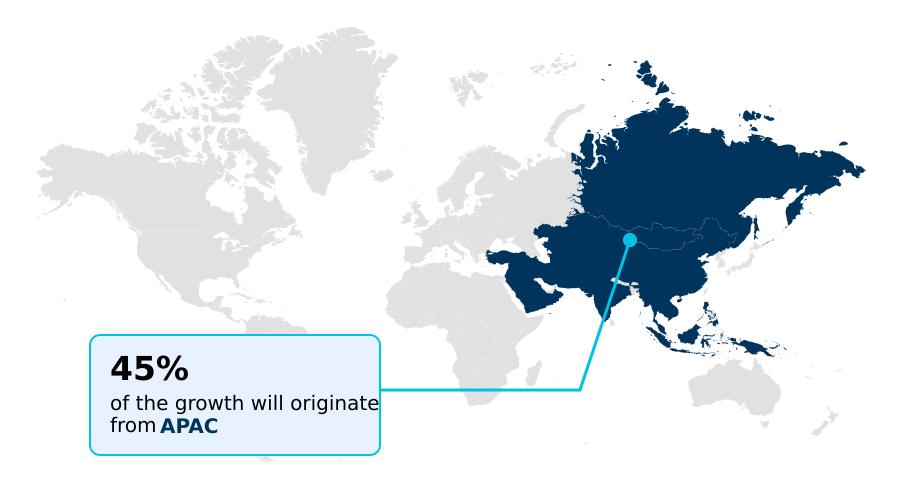
See How Solar Photovoltaic (PV) Market Demand is Rising in APAC Get Free Sample
The global geographic landscape is diversifying, though APAC remains the market's center of gravity, projected to account for 45.2% of incremental growth.
In this region, nations are focused on achieving energy sovereignty through aggressive domestic content mandates and scaling technologies like floating solar projects. Europe is concentrating on building-integrated photovoltaics and repowering older assets to meet stringent decarbonization pathways.
In North America, the focus is on strengthening domestic manufacturing to improve energy security mandates and reduce reliance on complex global supply chains.
Across all regions, the development of green hydrogen production facilities powered by solar is emerging as a critical application, promising to further expand the utility of photovoltaic technology and drive the next wave of investment in the energy transition.
Market Dynamics
Our researchers analyzed the data with 2025 as the base year, along with the key drivers, trends, and challenges. A holistic analysis of drivers will help companies refine their marketing strategies to gain a competitive advantage.
- Strategic decision-making in the current market requires a deep understanding of evolving technologies and their economic implications. A key consideration is the n-type vs p-type silicon wafer performance, as n-type offers superior longevity and output. Firms are focused on optimizing energy yield with bifacial modules, especially in utility-scale deployments.
- The impact of silver prices on solar cell manufacturing is forcing innovation in metallization to control costs. Simultaneously, grid integration challenges for utility-scale solar necessitate sophisticated power electronics and smart inverters for grid support functions. A detailed cost-benefit analysis of perovskite tandem cells reveals their potential to disrupt efficiency benchmarks.
- The role of AI in solar plant predictive maintenance is now standard for reducing operational expenditures, with some operators reporting a 15% reduction in unplanned downtime. Exploring agrivoltaics for dual-use land efficiency is gaining traction in land-scarce regions. Adopting large wafer formats to reduce BOS costs is a critical lever for project economics.
- Similarly, floating solar projects on man-made reservoirs open new deployment frontiers. The advantages of heterojunction technology for enhanced bifaciality and TOPCon in high-temperature climates guide technology selection.
- Other critical long-term strategies include deploying solar plus storage for firm power generation, reducing light-induced degradation in PV modules, ensuring supply chain diversification for polysilicon, and navigating residential solar ROI with net metering changes.
- Furthermore, commercial solar adoption for ESG reporting, developing new utility-scale solar project financing models, establishing robust PV module recycling and lifecycle management, utilizing cadmium telluride thin-film for hot climates, and leveraging smart inverters for grid support functions are all vital for sustained success.
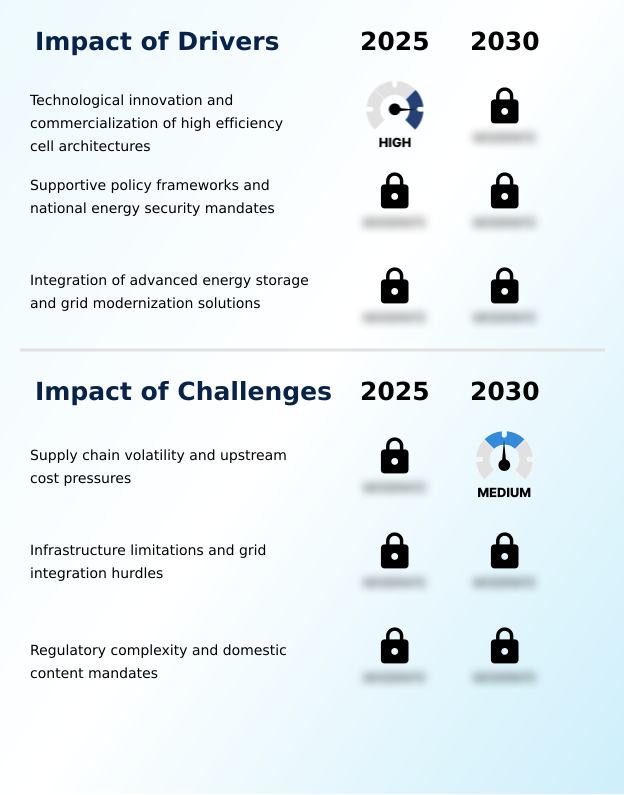
What are the key market drivers leading to the rise in the adoption of Solar Photovoltaic (PV) Industry?
- Technological innovation and the commercialization of high-efficiency cell architectures are key drivers of market growth.
- The market's primary driver is the rapid technological evolution from conventional passivated emitter and rear cell designs to superior architectures like tunnel oxide passivated contact.
- This innovation fundamentally improves the economics of solar, with some systems achieving a 5% higher energy yield in high-temperature conditions.
- Manufacturers are prioritizing innovations that reduce balance of system costs, such as the adoption of the larger M10 and G12 wafer formats.
- The integration of artificial intelligence into automated manufacturing facilities allows for real-time quality control, reducing material waste by up to 3%.
- This focus on efficiency and quality in the production of high-purity polysilicon and silicon ingots provides a robust technical foundation that supports broader adoption across all segments and underpins the bankability of modules for institutional investors.
What are the market trends shaping the Solar Photovoltaic (PV) Industry?
- A key market trend is the acceleration of high-efficiency n-type cell architectures. This includes the increasing integration of perovskite technology to enhance performance.
- A dominant trend is the definitive shift toward high-efficiency n-type silicon wafers, which form the basis for next-generation cell designs like heterojunction technology. This transition is delivering higher lifetime energy yields, with modern module architecture reducing performance degradation rates by over 10% compared to older p-type technologies.
- The market is also seeing early commercialization of perovskite silicon tandem cells, which are designed to surpass the efficiency limits of conventional single-junction silicon cells. This innovation is critical for the energy transition, particularly in space-constrained applications.
- Further, the adoption of advanced cell stringing processes and automated manufacturing has improved production throughput by 15%, lowering the overall levelized cost of electricity and accelerating the displacement of conventional power sources.
What challenges does the Solar Photovoltaic (PV) Industry face during its growth?
- Supply chain volatility and upstream cost pressures represent a key challenge affecting the industry's growth trajectory.
- The market is navigating significant structural imbalances, where systemic supply chain volatility presents a greater challenge than technology adoption. Despite advancements, acute overcapacity in polysilicon production contrasts sharply with rising upstream cost pressures for critical materials like silver conductive paste.
- Geopolitical friction, evidenced by countervailing duty actions, disrupts procurement and can increase project costs by over 20% if developers are forced to source from higher-cost domestic suppliers. This inability to secure long-term pricing for raw materials creates a high-risk environment and threatens the pace of deployment required to meet decarbonization pathways.
- Consequently, the industry focus has shifted toward disciplined inventory management and enhancing supply chain resilience to ensure financial stability.
Exclusive Technavio Analysis on Customer Landscape
The solar photovoltaic (pv) market forecasting report includes the adoption lifecycle of the market, covering from the innovator’s stage to the laggard’s stage. It focuses on adoption rates in different regions based on penetration. Furthermore, the solar photovoltaic (pv) market report also includes key purchase criteria and drivers of price sensitivity to help companies evaluate and develop their market growth analysis strategies.
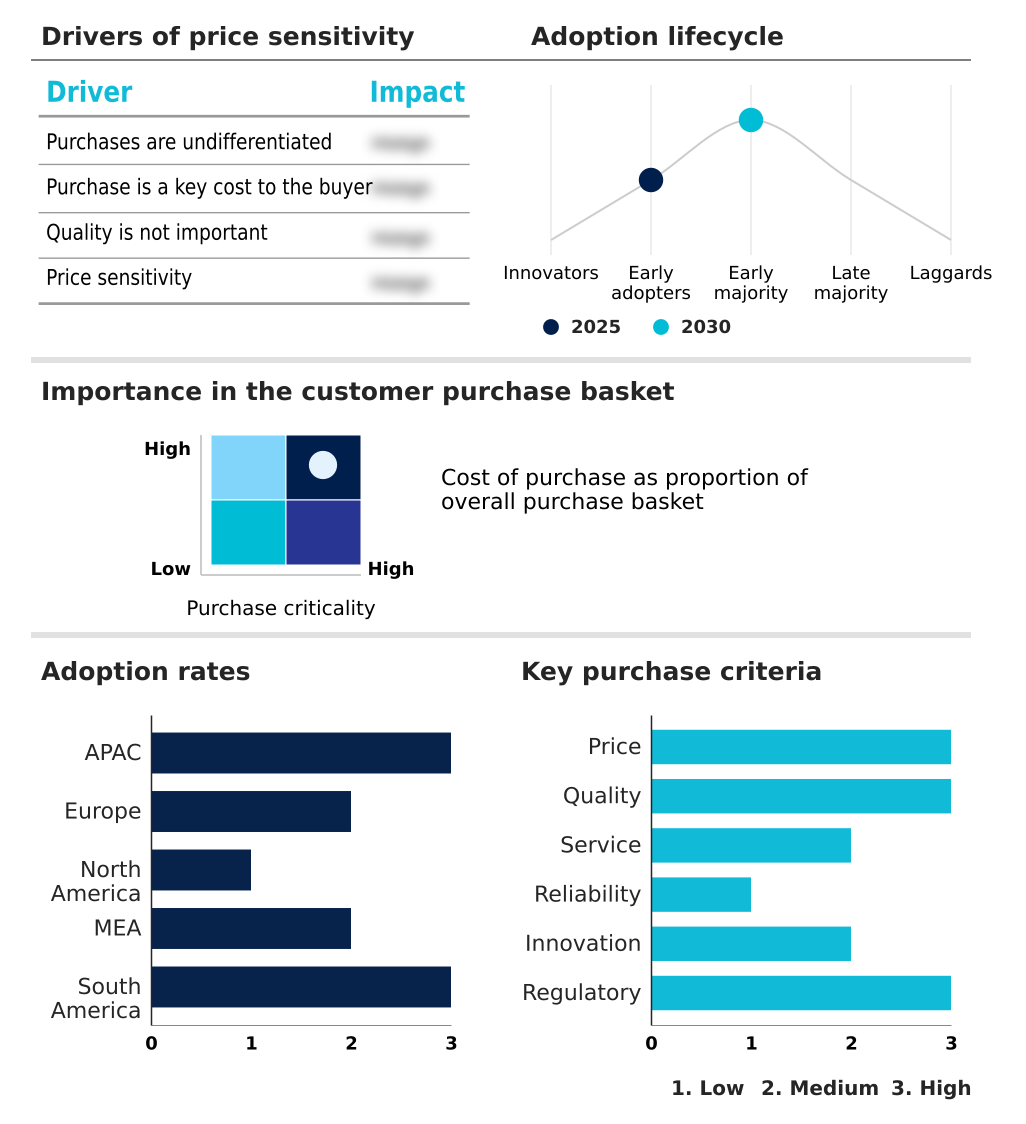
Customer Landscape of Solar Photovoltaic (PV) Industry
Competitive Landscape
Companies are implementing various strategies, such as strategic alliances, solar photovoltaic (pv) market forecast, partnerships, mergers and acquisitions, geographical expansion, and product/service launches, to enhance their presence in the industry.
Adani Solar - Delivers integrated solar solutions, from high-efficiency modules to full EPC services, addressing complex energy infrastructure requirements.
The industry research and growth report includes detailed analyses of the competitive landscape of the market and information about key companies, including:
- Adani Solar
- AE Solar GmbH
- Astronergy Co Ltd
- Bauer Solar GmbH
- Canadian Solar Inc.
- First Solar Inc.
- GAF Materials LLC
- HELIENE Inc.
- Huasun Energy Co Ltd
- JA Solar Technology Co. Ltd.
- JinkoSolar Holding Co. Ltd.
- LONGi Green Energy Co. Ltd.
- Maxeon Solar Technologies Ltd.
- Shanghai AIKO Energy Co Ltd.
- Talesun Solar Technologies
- Trina Solar Co. Ltd.
- Yingli Solar
Qualitative and quantitative analysis of companies has been conducted to help clients understand the wider business environment as well as the strengths and weaknesses of key industry players. Data is qualitatively analyzed to categorize companies as pure play, category-focused, industry-focused, and diversified; it is quantitatively analyzed to categorize companies as dominant, leading, strong, tentative, and weak.
Recent Development and News in Solar photovoltaic (pv) market
- In March 2025, RenewSys operationalized a 3 GW fully automated solar module manufacturing facility in Maharashtra, India, leveraging artificial intelligence for real-time quality control and production optimization.
- In February 2025, the United States Department of Commerce established a preliminary countervailing duty of 125.87% on solar cell and module imports from India, highlighting intensifying trade protectionism in the sector.
- In November 2024, HoloSolis secured over $255.2 million in funding to construct one of Europe's largest solar panel factories in France, aiming to bolster regional energy sovereignty.
- In January 2025, Cosmic PV Power commenced operations at its 1.6 GW solar module production line in Surat, India, utilizing advanced G12R cell technology to enhance module power output and meet rising domestic demand.
Dive into Technavio’s robust research methodology, blending expert interviews, extensive data synthesis, and validated models for unparalleled Solar Photovoltaic (PV) Market insights. See full methodology.
| Market Scope | |
|---|---|
| Page number | 285 |
| Base year | 2025 |
| Historic period | 2020-2024 |
| Forecast period | 2026-2030 |
| Growth momentum & CAGR | Accelerate at a CAGR of 9.2% |
| Market growth 2026-2030 | USD 65978.5 million |
| Market structure | Fragmented |
| YoY growth 2025-2026(%) | 8.6% |
| Key countries | China, India, Japan, Australia, South Korea, Indonesia, Germany, Spain, Italy, France, The Netherlands, UK, US, Canada, Mexico, Saudi Arabia, UAE, South Africa, Egypt, Morocco, Brazil, Chile and Argentina |
| Competitive landscape | Leading Companies, Market Positioning of Companies, Competitive Strategies, and Industry Risks |
Research Analyst Overview
- The Solar Photovoltaic (PV) Market is defined by a rapid technological race away from traditional p-type silicon wafers toward advanced n-type silicon wafers, which significantly reduce light-induced degradation. The manufacturing of monocrystalline silicon via the Czochralski process is enabling complex module architecture. This includes passivated emitter and rear cell (PERC), advanced tunnel oxide passivated contact (TOPCon), and high-performance heterojunction technology.
- These innovations, alongside developments in polycrystalline silicon and cadmium telluride thin-film, are pushing the boundaries of single-junction silicon cells. The industry is also seeing wider adoption of bifacial solar panels and bifacial modules, which can increase energy yield by over 20% in optimal conditions.
- This shift is critical for boardroom decisions related to capital investment in new production lines for M10 wafer format and G12 wafer format systems, which are becoming standard. Key components like solar PV inverters and solar trackers are being integrated with grid-edge intelligence, supporting virtual power plants.
- Strategic investments are also flowing into agrivoltaics, floating solar projects, and building-integrated photovoltaics, diversifying applications. The entire value chain, from high-purity polysilicon, silicon ingots, and wafer manufacturing equipment to the cell stringing process using silver conductive paste, PV backsheets, and PV ribbon material on specialized solar glass, is being optimized.
- This intense innovation is crucial for competing with advanced geothermal energy and supporting green hydrogen production.
What are the Key Data Covered in this Solar Photovoltaic (PV) Market Research and Growth Report?
-
What is the expected growth of the Solar Photovoltaic (PV) Market between 2026 and 2030?
-
USD 65.98 billion, at a CAGR of 9.2%
-
-
What segmentation does the market report cover?
-
The report is segmented by Deployment (Ground-mounted, and Rooftop), End-user (Commercial, Residential, and Utility), Technology (Monocrystalline silicon, Polycrystalline silicon, Thin-film, Bifacial solar panels, and Others) and Geography (APAC, Europe, North America, Middle East and Africa, South America)
-
-
Which regions are analyzed in the report?
-
APAC, Europe, North America, Middle East and Africa and South America
-
-
What are the key growth drivers and market challenges?
-
Technological innovation and commercialization of high efficiency cell architectures , Supply chain volatility and upstream cost pressures
-
-
Who are the major players in the Solar Photovoltaic (PV) Market?
-
Adani Solar, AE Solar GmbH, Astronergy Co Ltd, Bauer Solar GmbH, Canadian Solar Inc., First Solar Inc., GAF Materials LLC, HELIENE Inc., Huasun Energy Co Ltd, JA Solar Technology Co. Ltd., JinkoSolar Holding Co. Ltd., LONGi Green Energy Co. Ltd., Maxeon Solar Technologies Ltd., Shanghai AIKO Energy Co Ltd., Talesun Solar Technologies, Trina Solar Co. Ltd. and Yingli Solar
-
Market Research Insights
- The market's momentum is defined by a strategic pivot toward enhancing energy security mandates and achieving carbon neutrality. This transition is supported by favorable policies like production-linked incentive schemes, which encourage domestic manufacturing and bolster supply chain resilience.
- Innovations in solar plus storage are creating dispatchable power assets, crucial for grid stability solutions, while corporate power purchase agreements enable large-scale decarbonization pathways. The adoption of advanced power electronics has improved efficiency by over 5%, directly lowering the levelized cost of electricity.
- This focus on efficiency and industrial self-consumption is reshaping energy procurement, with an emphasis on the long-term bankability of modules and alignment with environmental, social, and governance (ESG) criteria, reducing reliance on volatile energy markets.
We can help! Our analysts can customize this solar photovoltaic (pv) market research report to meet your requirements.
 RIA -
RIA - 
