


Solder Flux Market Size 2026-2030
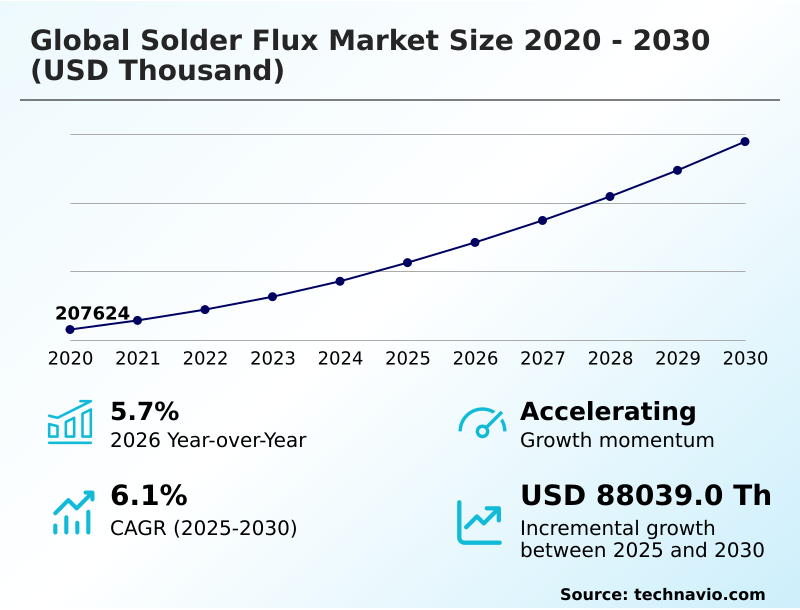
The solder flux market size is valued to increase by USD 88.04 million, at a CAGR of 6.1% from 2025 to 2030. Rapid electrification of automotive sector and expansion of advanced driver assistance systems will drive the solder flux market.
Major Market Trends & Insights
- APAC dominated the market and accounted for a 50.3% growth during the forecast period.
- By Product Type - No-clean flux segment was valued at USD 109.93 million in 2024
- By End-user - Consumer electronics segment accounted for the largest market revenue share in 2024
Market Size & Forecast
- Market Opportunities:
- Market Future Opportunities: USD 88.04 million
- CAGR from 2025 to 2030 : 6.1%
Market Summary
- Solder Flux Market expansion is heavily dictated by the relentless miniaturization of electronic components and the electrification of automotive powertrains. As original equipment manufacturers pack greater functional density into constrained form factors, precision chemical formulations become essential to ensure reliable interconnections.
- One major driver accelerating consumption is the deployment of electric vehicle battery management systems, which require exceptional thermal stability and void reduction capabilities to prevent electrical failures under mechanical stress. Consequently, facilities utilizing advanced zero-halogen chemistry have reported a 20% improvement in first-pass assembly yields compared to legacy solvent-based processes.
- In a real-world manufacturing scenario, automated surface mount technology lines apply targeted liquid fluxes via micro-dispensing jets, entirely eliminating the need for post-reflow washing and substantially lowering hazardous wastewater treatment overhead. However, severe volatility in natural rosin pricing and synthetic chemical supply chain bottlenecks challenge formulators, forcing them to absorb increased production costs while maintaining competitive contract pricing.
- Striking a balance between high-activity oxide removal and stringent environmental compliance remains a definitive priority for advanced microelectronics fabrication worldwide.
What will be the Size of the Solder Flux Market during the forecast period?
Get Key Insights on Market Forecast (PDF) Get Free Sample
How is the Solder Flux Market Segmented?
The solder flux industry research report provides comprehensive data (region-wise segment analysis), with forecasts and estimates in "USD thousand" for the period 2026-2030, as well as historical data from 2020-2024 for the following segments.
- Product type
- No-clean flux
- Rosin-based flux
- Water-soluble flux
- Acid flux
- End-user
- Consumer electronics
- Automotive electronics
- Telecommunications and data centers
- Industrial electronics
- Others
- Type
- Liquid flux
- Solid flux
- Gel flux
- Geography
- APAC
- China
- Japan
- India
- South Korea
- Australia
- Indonesia
- Europe
- Germany
- UK
- France
- Italy
- The Netherlands
- Spain
- North America
- US
- Canada
- Mexico
- Middle East and Africa
- Israel
- South Africa
- Turkey
- Saudi Arabia
- UAE
- South America
- Brazil
- Argentina
- Colombia
- APAC
By Product Type Insights
The no-clean flux segment is estimated to witness significant growth during the forecast period.
Industrial manufacturers are increasingly optimizing high-volume production lines by integrating advanced residue-free chemical formulations. As electronic assemblies shrink, managing a fine pitch component becomes critical to maintaining structural integrity without requiring post-reflow washing.
Formulators utilize a specialized thixotropic gelling agent and a halide free activator to ensure precise application during a selective soldering process, preventing bridging and micro-voids.
This approach delivers exceptional thermal stress endurance for a power conversion module operating in demanding conditions. By eliminating aqueous cleaning steps, facilities have reduced operational water consumption by 25%.
Such efficiency gains allow engineers to seamlessly execute complex ball grid array rework while bypassing traditional rosin mildly activated compounds, ultimately streamlining output speed and lowering overall chemical disposal costs across assembly workflows.
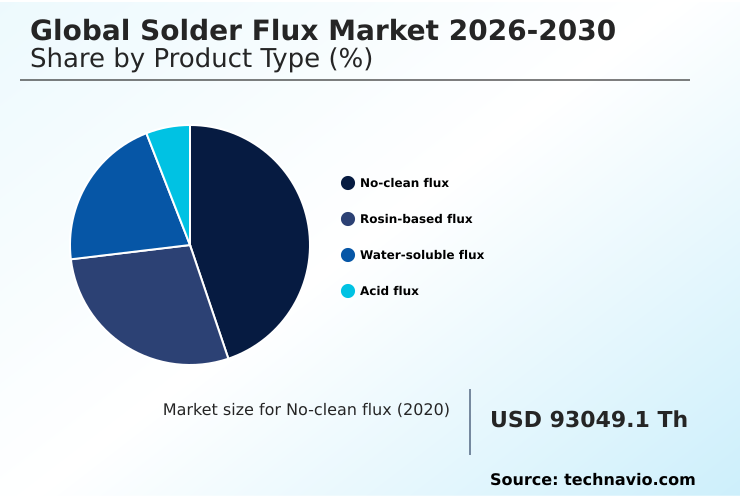
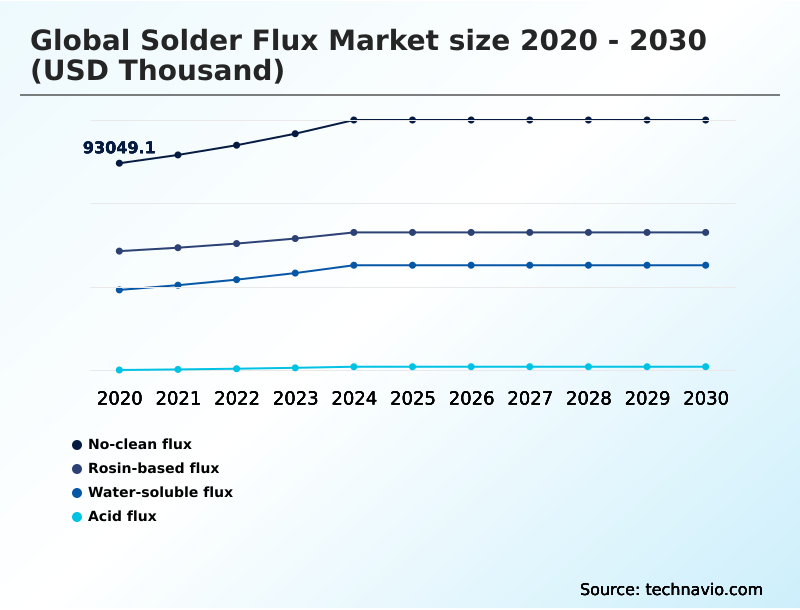
The No-clean flux segment was valued at USD 109.93 million in 2024 and showed a gradual increase during the forecast period.
Regional Analysis
APAC is estimated to contribute 50.3% to the growth of the global market during the forecast period.Technavio’s analysts have elaborately explained the regional trends and drivers that shape the market during the forecast period.
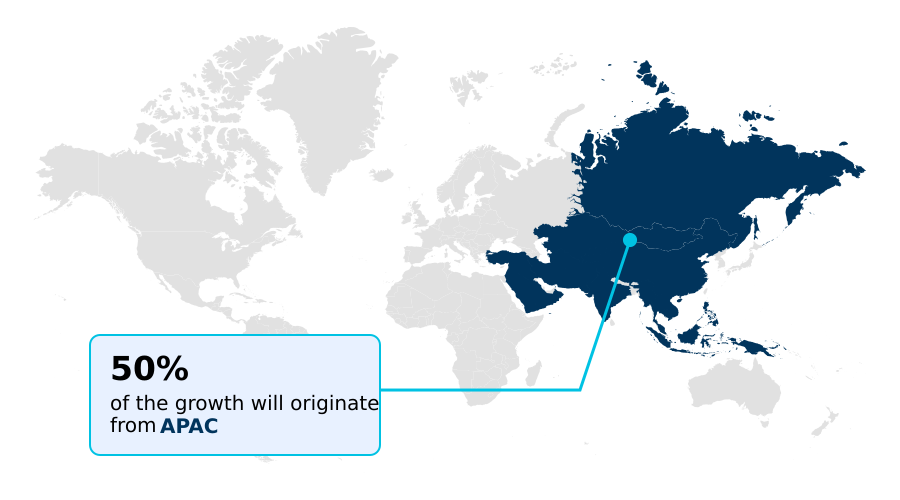
See How Solder Flux Market Demand is Rising in APAC Get Free Sample
Geographic adoption of electronic assembly materials reveals stark operational contrasts, particularly between the rapidly expanding APAC supply chain and the highly regulated European sector.
APAC facilities prioritize high-throughput automated wave soldering to support massive consumer electronics output, achieving a 35% higher production velocity than European counterparts.
Conversely, European manufacturers focus heavily on a sophisticated synthetic resin matrix to meet strict environmental compliance during smart grid modernization initiatives.
This regulatory pressure has driven European plants to reduce hazardous chemical usage by 18% through the integration of advanced water soluble organic materials and closed-loop aqueous cleaning system technologies.
Meanwhile, specialized sectors such as aerospace instrumentation assembly depend on exact intermetallic bonding facilitation to ensure joint durability.
The integration of advanced industrial automation equipment across APAC has subsequently lowered manual rework costs by 14%, demonstrating how distinct regional priorities dictate the deployment of highly active, defect-reducing chemical formulations.
Market Dynamics
Our researchers analyzed the data with 2025 as the base year, along with the key drivers, trends, and challenges. A holistic analysis of drivers will help companies refine their marketing strategies to gain a competitive advantage.
- Advanced electronics fabrication continuously demands highly specialized chemical solutions to address the increasingly complex architectural requirements of modern circuitry. As hardware designs rapidly miniaturize, the shift toward ultra fine pitch semiconductor packaging forces manufacturers to implement exceptionally precise material dispensing techniques to prevent bridging and micro-voids.
- This precision is fundamentally critical for the production of high reliability automotive control units, which must endure relentless thermal cycling and intense mechanical vibration without experiencing parasitic electrical leakage. Consequently, assembly operations integrating advanced synthetic liquid fluxes have noted a 15% higher thermal durability rating compared to those relying on conventional rosin formulations, directly bolstering supply chain confidence.
- Simultaneously, the pursuit of lean manufacturing is accelerating the industry-wide transition toward no clean flux residue elimination, fundamentally streamlining production cycles by bypassing secondary cleaning phases. For environments where ionic cleanliness is absolutely paramount, facilities must navigate the complexities of aqueous wash cycle waste management to mitigate the steep overhead costs associated with hazardous effluent treatment.
- Meanwhile, contractors servicing orbital platforms face distinct operational constraints, strictly adhering to aerospace grade low outgassing requirements to prevent volatile condensation from degrading sensitive optical sensors in vacuum environments.
- By aligning precise chemical activation profiles with rigorous environmental safety standards, global formulators empower electronic assembly plants to drastically lower defect rates, reduce energy consumption, and sustain robust long-term functionality across both commercial and mission-critical hardware deployments.
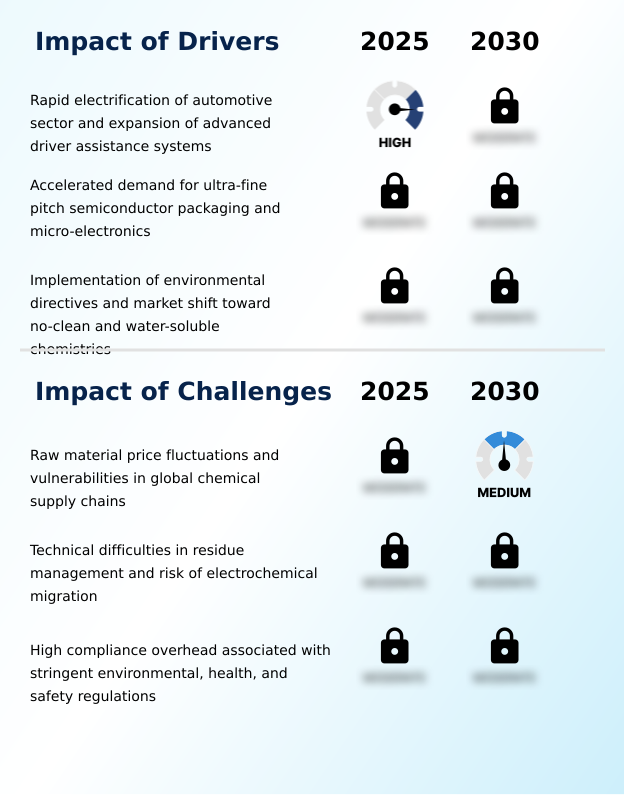
What are the key market drivers leading to the rise in the adoption of Solder Flux Industry?
- The rapid electrification of the automotive sector, alongside the widespread expansion of advanced driver assistance systems, serves as the primary structural driver propelling market expansion.
- Stringent environmental regulations and automotive modernization mandates are fundamentally propelling the widespread adoption of sustainable assembly materials.
- The rapid integration of an advanced driver assistance system demands highly durable electronic control unit production capable of surviving a harsh operating environment without performance degradation.
- To support this, manufacturers are rapidly transitioning toward zero halogen chemistry and low volatile organic compound formulations. This strategic shift allows facilities utilizing a lead free solder alloy to decrease toxic emissions by 24% while simultaneously improving joint fatigue resistance.
- Furthermore, the push for a sophisticated high density interconnect design within modern surface mount technology lines has lowered post-reflow inspection failures by 12%.
- These measurable compliance and efficiency gains ensure that specialized chemical activators remain indispensable to automated electronic manufacturing processes.
What are the market trends shaping the Solder Flux Industry?
- The surging integration of high-reliability, low-voiding fluxes within renewable energy infrastructure constitutes a major upcoming market trend. This shift emphasizes the critical need for robust thermal management in modern power electronics.
- The proliferation of complex electronic architectures is driving a massive transition toward high-precision material application techniques across the technology sector. As device footprints shrink, manufacturers are actively deploying advanced micro dispensing application methods to seamlessly support intricate system in package architecture. This technological shift directly facilitates reliable flip chip bonding by preventing unwanted solder bridging on densely packed substrates.
- By leveraging superior capillary action enhancement, modern formulations allow liquid solder to penetrate ultra-fine clearances, thereby reducing joint voiding defects by 28%. Consequently, this refined void reduction technique dramatically improves thermal dissipation in a high power semiconductor, boosting overall operational lifespan.
- As global telecommunication network expansion accelerates, optimized printed circuit board assembly processes are enabling data centers to increase hardware processing stability by 14%, proving that targeted chemical innovation is fundamentally reshaping modern digital infrastructure.
What challenges does the Solder Flux Industry face during its growth?
- Severe price fluctuations of critical raw materials, coupled with persistent vulnerabilities across global chemical supply chains, present significant operational challenges that suppress industry profitability.
- Managing post-reflow chemical residues presents a formidable structural challenge for high-density microelectronic assembly facilities. As component stand-off heights decrease, achieving total dendritic growth inhibition becomes exceedingly difficult, elevating the risk of catastrophic parasitic electrical leakage across tightly spaced conductive pads.
- To ensure absolute electrochemical migration prevention within mission critical hardware, manufacturers must often utilize aggressive aqueous solutions, which subsequently increases hazardous wastewater treatment costs by up to 18%. Maintaining adequate surface insulation resistance requires perfect optimization of the thermal reflow profile to fully volatilize active chemical agents without damaging sensitive surrounding modules.
- Consequently, strict adherence to a complex environmental compliance mandate severely limits formulation flexibility, forcing engineers to navigate an intricate balance between superior oxide removal and absolute long-term reliability.
Exclusive Technavio Analysis on Customer Landscape
The solder flux market forecasting report includes the adoption lifecycle of the market, covering from the innovator’s stage to the laggard’s stage. It focuses on adoption rates in different regions based on penetration. Furthermore, the solder flux market report also includes key purchase criteria and drivers of price sensitivity to help companies evaluate and develop their market growth analysis strategies.
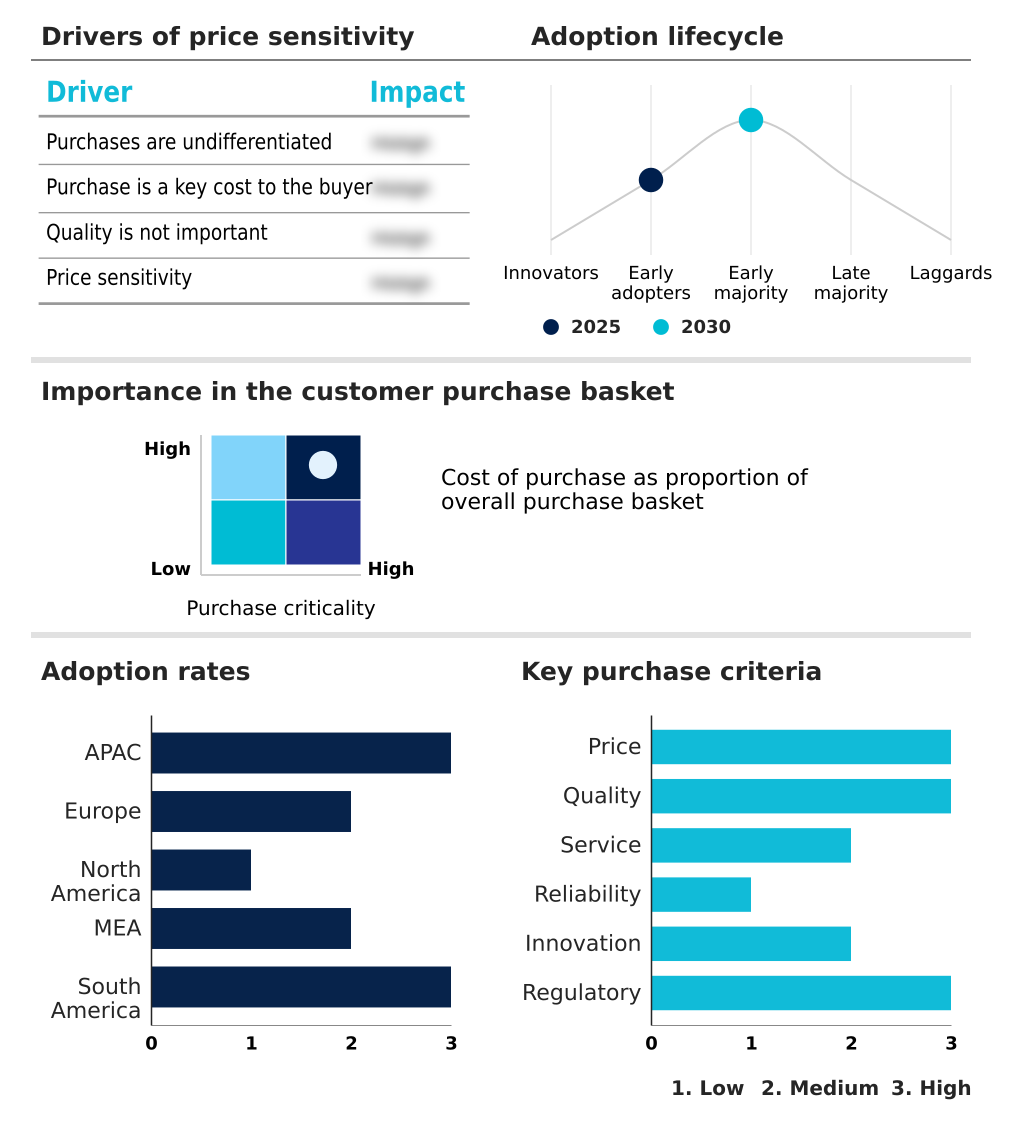
Customer Landscape of Solder Flux Industry
Competitive Landscape
Companies are implementing various strategies, such as strategic alliances, solder flux market forecast, partnerships, mergers and acquisitions, geographical expansion, and product/service launches, to enhance their presence in the industry.
AIM Solder Pvt. Ltd. - Provides specialized no-clean, water-soluble, and halogen-free formulations optimized for advanced semiconductor packaging, surface-mount technology, and highly reliable printed circuit board assembly processes.
The industry research and growth report includes detailed analyses of the competitive landscape of the market and information about key companies, including:
- AIM Solder Pvt. Ltd.
- Canfield Technologies LLC
- Felder GmbH
- Henkel Adhesives India Pvt Ltd
- Heraeus Holding GmbH
- Indium Corp.
- Interflux Electronics N.V.
- Inventec Performance Chemicals
- Johnson Matthey Plc
- KOKI Co Ltd.
- Kothari Metsol Pvt Ltd
- Lucas Milhaupt Inc.
- MacDermid Alpha Elec. Sol.
- MG Chemicals Ltd.
- Senju Metal Industry
- Shenmao Technology Inc.
- STANNOL GMBH
- Superior Flux
- Tamura Corp.
- The Harris Products Group
Qualitative and quantitative analysis of companies has been conducted to help clients understand the wider business environment as well as the strengths and weaknesses of key industry players. Data is qualitatively analyzed to categorize companies as pure play, category-focused, industry-focused, and diversified; it is quantitatively analyzed to categorize companies as dominant, leading, strong, tentative, and weak.
Recent Development and News in Solder flux market
- In the Diversified Chemicals industry, the stringent implementation of REACH and RoHS directives mandating the elimination of halogenated flame retardants and hazardous volatile organic compounds has shifted raw material procurement, directly impacting Solder Flux demand by accelerating the formulation of zero-halogen and bio-based synthetic resin fluxes for electronics manufacturing.
- The aggressive scaling of local hydrometallurgical recycling infrastructure for critical metals has stabilized the supply of high-purity tin and silver precursors, directly enhancing the production economics of lead-free soldering pastes and liquid fluxes utilized in advanced semiconductor packaging.
- Rapid transitions toward water-based solvent chemistries to reduce industrial wastewater toxicity have forced contract manufacturers to upgrade their aqueous cleaning systems, increasing the operational adoption rate of eco-friendly water-soluble flux formulations by 30% across mission-critical aerospace and medical device assembly lines.
- Advancements in precision polymer additive manufacturing have improved the rheological properties of industrial adhesives and thixotropic gels, enabling the development of ultra-fine micro-dispensing flux vehicles that support high-density interconnect applications and reduce component voiding rates below industry-standard thresholds.
Dive into Technavio’s robust research methodology, blending expert interviews, extensive data synthesis, and validated models for unparalleled Solder Flux Market insights. See full methodology.
| Market Scope | |
|---|---|
| Page number | 307 |
| Base year | 2025 |
| Historic period | 2020-2024 |
| Forecast period | 2026-2030 |
| Growth momentum & CAGR | Accelerate at a CAGR of 6.1% |
| Market growth 2026-2030 | USD 88039.0 thousand |
| Market structure | Fragmented |
| YoY growth 2025-2026(%) | 5.7% |
| Key countries | China, Japan, India, South Korea, Australia, Indonesia, Germany, UK, France, Italy, The Netherlands, Spain, US, Canada, Mexico, Israel, South Africa, Turkey, Saudi Arabia, UAE, Brazil, Argentina and Colombia |
| Competitive landscape | Leading Companies, Market Positioning of Companies, Competitive Strategies, and Industry Risks |
Research Analyst Overview
- The foundational mechanics of electronic manufacturing are undergoing a massive transformation driven by the mandatory integration of sustainable, high-efficiency joining materials. Boardroom executives are increasingly prioritizing zero halogen chemistry to align with global environmental mandates while simultaneously accelerating production throughput. This strategic pivot actively mitigates supply chain risks and avoids the steep penalties associated with hazardous waste disposal.
- By optimizing the specific thermal reflow profile of advanced liquid compounds, contract manufacturers have successfully driven down energy consumption by 15% relative to legacy production lines. Such operational enhancements are highly dependent on reliable dendritic growth inhibition, which directly prevents catastrophic parasitic electrical leakage in high-voltage applications.
- As automated surface mount technology lines operate at unprecedented speeds, the transition away from traditional rosin mildly activated fluxes ensures that microscopic solder joints remain structurally sound without requiring intense post-process washing. These targeted chemical innovations empower procurement leaders to reduce raw material waste, streamline localized assembly protocols, and dramatically improve the long-term operational resilience of next-generation digital hardware.
What are the Key Data Covered in this Solder Flux Market Research and Growth Report?
-
What is the expected growth of the Solder Flux Market between 2026 and 2030?
-
USD 88.04 million, at a CAGR of 6.1%
-
-
What segmentation does the market report cover?
-
The report is segmented by Product Type (No-clean flux, Rosin-based flux, Water-soluble flux, and Acid flux), End-user (Consumer electronics, Automotive electronics, Telecommunications and data centers, Industrial electronics, and Others), Type (Liquid flux, Solid flux, and Gel flux) and Geography (APAC, Europe, North America, Middle East and Africa, South America)
-
-
Which regions are analyzed in the report?
-
APAC, Europe, North America, Middle East and Africa and South America
-
-
What are the key growth drivers and market challenges?
-
Rapid electrification of automotive sector and expansion of advanced driver assistance systems, Raw material price fluctuations and vulnerabilities in global chemical supply chains
-
-
Who are the major players in the Solder Flux Market?
-
AIM Solder Pvt. Ltd., Canfield Technologies LLC, Felder GmbH, Henkel Adhesives India Pvt Ltd, Heraeus Holding GmbH, Indium Corp., Interflux Electronics N.V., Inventec Performance Chemicals, Johnson Matthey Plc, KOKI Co Ltd., Kothari Metsol Pvt Ltd, Lucas Milhaupt Inc., MacDermid Alpha Elec. Sol., MG Chemicals Ltd., Senju Metal Industry, Shenmao Technology Inc., STANNOL GMBH, Superior Flux, Tamura Corp. and The Harris Products Group
-
Market Research Insights
- The Solder Flux Market is fundamentally reshaping modern printed circuit board assembly by enabling highly reliable connections in extreme environments. As manufacturers transition to a high density interconnect design, adopting an advanced void reduction technique becomes vital for maintaining thermal stability in mission critical hardware.
- Facilities upgrading to these precision chemistries have witnessed a 15% reduction in post-solder defect rates, directly improving overall operational output. Furthermore, substituting legacy rosin materials with eco-friendly alternatives has decreased hazardous wastewater disposal costs by 22%.
- By eliminating secondary cleaning stages, electronics contract manufacturers can optimize factory floor space and accelerate production cycles, thereby securing a definitive competitive advantage in automated semiconductor packaging operations.
We can help! Our analysts can customize this solder flux market research report to meet your requirements.
 RIA -

