



Space Lander And Rover Market Size 2024-2028
The space lander and rover market size is forecast to increase by USD 447.2 million, at a CAGR of 9.42% between 2023 and 2028.
- The market is experiencing significant growth due to the increasing investments in space exploration across the globe. These investments are driven by the collective ambition of various nations to expand their knowledge of outer space and its resources. A key trend shaping this market is the technological advancements in 3D printing technology, which is enabling the production of lighter and more cost-effective spacecraft components. However, the high costs involved in space exploration missions pose a significant challenge for market participants. Despite these challenges, opportunities abound for companies that can effectively manage costs and leverage advanced technologies to deliver innovative solutions.
- The ability to design and manufacture reusable spacecraft components, for instance, could significantly reduce mission costs and enhance overall market competitiveness. Additionally, collaborations between public and private entities could help spread the financial burden and accelerate technological advancements in this field. Overall, the market presents a compelling landscape for companies seeking to capitalize on the growing demand for space exploration and navigation solutions.
What will be the Size of the Space Lander And Rover Market during the forecast period?
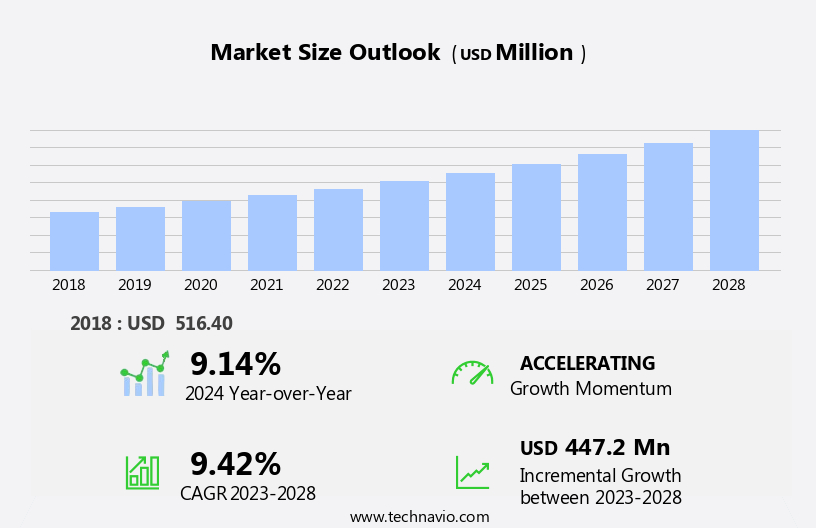
Explore in-depth regional segment analysis with market size data - historical 2018-2022 and forecasts 2024-2028 - in the full report.
Request Free Sample
The market continues to evolve, driven by the relentless pursuit of scientific discovery and exploration beyond Earth's boundaries. This dynamic industry encompasses various sectors, including mission planning for Mars exploration, lunar exploration, asteroid exploration, and deep space communication. Mission planning integrates cost optimization, terrain mapping, track systems, mineralogical analysis, autonomous navigation, micrometeoroid protection, radiation shielding, operational life, parachute deployment, remote sensing, obstacle avoidance, and launch services. These elements are seamlessly woven into the fabric of complete spacecraft design, ensuring the successful execution of scientific objectives. Communication systems and life support systems are essential components, enabling real-time data transmission and maintaining the sustainability of future missions.
Ground station networks and mission control facilitate data analysis, testing, and simulation, while scientific instruments and payload delivery enable geochemical analysis, atmospheric composition studies, and exobiological research. Reliability and safety, sustainability considerations, and space environment factors are paramount in the design and integration of spacecraft. Launch vehicles and trajectory optimization play a crucial role in ensuring landing accuracy and landing systems' structural integrity. International collaboration, deep space communication, and space exploration policy further fuel the ongoing unfolding of market activities. The evolving patterns of this industry reflect the continuous integration of advanced technologies, such as autonomous navigation, micrometeoroid protection, radiation shielding, and power systems, into spacecraft design.
As the industry progresses, the focus on cost optimization, mission duration, and data processing becomes increasingly important. The integration of scientific experiments, surface exploration, planetary defense, command and control, and thermal control further expands the market's scope and potential applications. In the ever-evolving landscape of space exploration, the market continues to push the boundaries of scientific discovery and technological innovation.
How is this Space Lander And Rover Industry segmented?
The space lander and rover industry research report provides comprehensive data (region-wise segment analysis), with forecasts and estimates in "USD million" for the period 2024-2028, as well as historical data from 2018-2022 for the following segments.
- Product
- Lunar surface exploration
- Mars surface exploration
- Asteroids surface exploration
- Geography
- North America
- US
- Europe
- Germany
- UK
- APAC
- China
- Japan
- Rest of World (ROW)
- North America
.
By Product Insights
The lunar surface exploration segment is estimated to witness significant growth during the forecast period.
The market is experiencing notable advancements in various segments, including Mars exploration, lunar exploration, and asteroid exploration. Mars exploration continues to be a significant focus with ongoing missions, such as NASA's Perseverance Rover and China's Tianwen-1, aiming for sample collection and scientific research. In the lunar exploration segment, investments from agencies like NASA, JAXA, and ISRO are driving growth through innovative rover designs, improved communication systems, and advanced life support systems. These advancements enable more efficient data processing, testing, and simulation, enhancing mission control capabilities and data transmission. Surface locomotion technologies are evolving, with autonomous navigation and obstacle avoidance systems ensuring smoother terrain mapping and track systems.
International collaboration and deep space communication networks are strengthening, allowing for more complex missions and data analysis. Power systems and trajectory optimization are essential considerations for mission duration and cost optimization. Future missions include geochemical analysis, mineralogical analysis, and planetary defense, requiring advanced scientific instruments and command and control systems. Reliability and safety, sustainability considerations, and data analysis are crucial elements in spacecraft design, space environment, and mission policy. Payload delivery, landing accuracy, and landing systems are undergoing continuous improvements, with structural integrity, thermal control, and exobiological research gaining importance. Lunar exploration is expected to witness substantial growth due to the increasing number of investments in lunar surface exploration missions and advancements in rover technology.
These developments include robust design, autonomous maneuverability, and superior entry, descent, and landing technologies, as seen in NASA's Commercial Lunar Payload Services program, Chandrayaan-3, and the Emirates Lunar Mission.
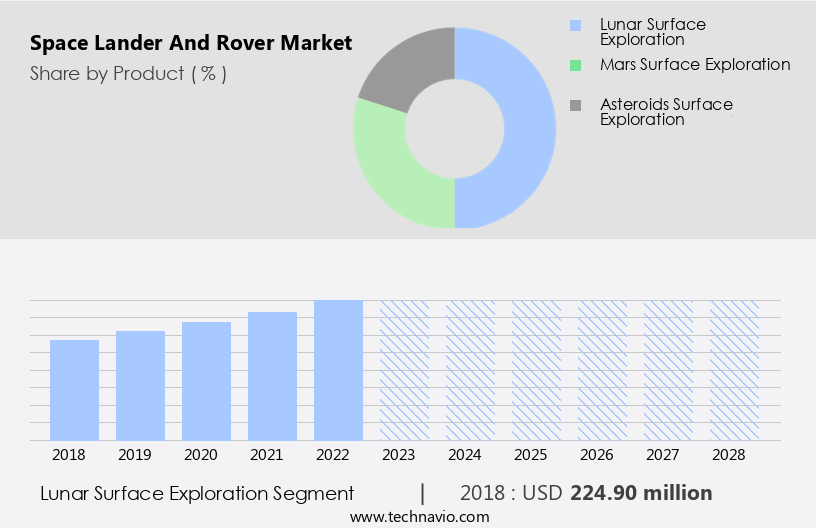
The Lunar surface exploration segment was valued at USD 224.90 million in 2018 and showed a gradual increase during the forecast period.
Regional Analysis
North America is estimated to contribute 41% to the growth of the global market during the forecast period.Technavio's analysts have elaborately explained the regional trends and drivers that shape the market during the forecast period.
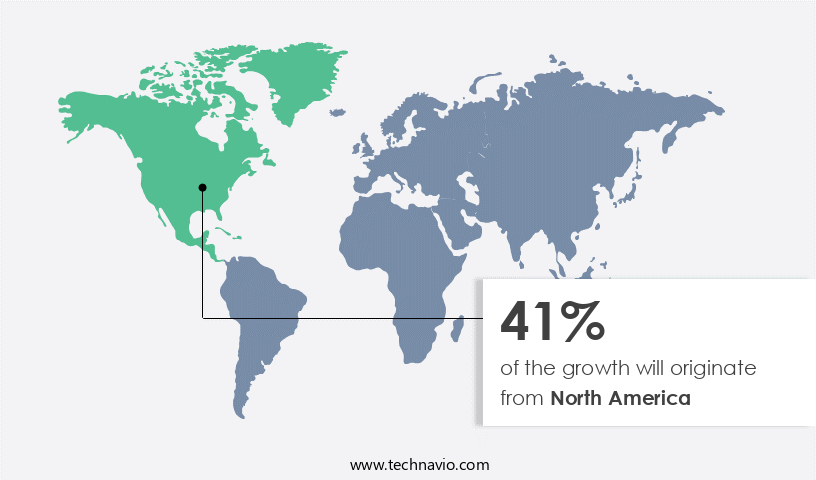
The US market leads the space lander and rover industry, driven by NASA's investments in advanced technologies for Mars exploration, lunar missions, and asteroid exploration. The primary focus is on mission planning, sample collection, and surface exploration. Robust communication systems, life support systems, and data processing are essential for successful missions. International collaboration enhances scientific discoveries, with deep space communication and ground station networks playing crucial roles. Spacecraft integration involves testing and simulation to ensure reliability and safety, while sustainability considerations are essential for long-term missions. Power systems, trajectory optimization, and cost optimization are significant factors in mission duration and success.
Scientific instruments, including mineralogical analysis, geochemical analysis, and remote sensing, provide valuable data. Mars rover mobility and autonomous navigation enable efficient surface locomotion and obstacle avoidance. Micrometeoroid protection and radiation shielding ensure operational life and crew safety. Launch services, spacecraft design, and space environment analysis are integral parts of the mission. Command and control, scientific experiments, and payload delivery are critical components of mission success. The market encompasses launch vehicles, landing systems, and structural integrity. Thermal control, exobiological research, and navigation systems contribute to the overall mission objectives. Space exploration policy and planetary defense are essential aspects of the industry's future direction.
Market Dynamics
Our researchers analyzed the data with 2023 as the base year, along with the key drivers, trends, and challenges. A holistic analysis of drivers will help companies refine their marketing strategies to gain a competitive advantage.
What are the key market drivers leading to the rise in the adoption of Space Lander And Rover Industry?
- The global market is propelled forward by the significant rise in investments dedicated to space explorations worldwide.
- Space rovers play a crucial role in space exploration, serving as semi- or fully autonomous vehicles designed to traverse and collect samples from the surfaces of planets and celestial bodies. International collaboration among governments, including the US, China, Russia, France, and Japan, has fueled the space industry with substantial investments worth billions of dollars. For instance, NASA's Mars 2020 mission, launched on July 30, 2020, featured the Perseverance rover, which aims to discover water, precious elements, and other compounds on Mars. Deep space communication and spacecraft integration are critical aspects of rover missions. Advanced wheel designs ensure the rovers' mobility on various terrains.
- Lunar exploration and asteroid exploration are primary focuses for space agencies, with reliability and safety, sustainability considerations, data analysis, power systems, trajectory optimization, and mission duration being essential factors. These elements contribute to the success and longevity of rover missions. Mission objectives range from atmospheric composition analysis to the search for extraterrestrial life. The integration of advanced technologies, such as high-resolution cameras, spectrometers, and drills, enables rovers to gather valuable data for scientific research. Power systems, including solar panels and nuclear reactors, provide the necessary energy for rovers to function effectively. The importance of these missions extends beyond scientific discovery, as they contribute to our understanding of the universe and pave the way for future space exploration endeavors.
What are the market trends shaping the Space Lander And Rover Industry?
- The current market trend is driven by technological advancements in the 3D printing industry. This sector is experiencing significant growth due to innovations in 3D printing technology.
- The aerospace industry is advancing with innovative technologies, leading to the development of cost-effective spacecraft and rovers for terrain mapping and mineralogical analysis. Three-dimensional (3D) printing technology is revolutionizing the manufacturing process, enabling the production of high-endurance and lightweight parts for space vehicles. For instance, NASA's Mars 2020 mission's Perseverance Rover features 11 3D-printed metal components, including those for its PIXL device, which enhances the rover's search for signs of ancient microbial life using X-rays. Autonomous navigation, obstacle avoidance, and remote sensing are crucial features in the design of space rovers and landers. Micrometeoroid protection and radiation shielding are essential for ensuring the operational life of these spacecraft.
- Parachute deployment is another critical aspect, ensuring a safe landing in the harsh space environment. Launch services play a vital role in the success of space missions, and advancements in rocket technology are reducing costs while increasing payload capacity. Companies invest heavily in research and development to improve spacecraft design, focusing on operational efficiency and performance in the space environment. In conclusion, the aerospace industry's continuous innovation and advancements in technology are driving the development of cost-effective, high-performance space rovers and landers for terrain mapping, mineralogical analysis, and other applications. 3D printing technology, autonomous navigation, obstacle avoidance, and remote sensing are some of the key areas of focus for enhancing the capabilities of these spacecraft.
- Micrometeoroid protection, radiation shielding, and parachute deployment are essential features for ensuring their operational life and success in the space environment.
What challenges does the Space Lander And Rover Industry face during its growth?
- The escalating costs associated with space exploration missions pose a significant challenge to the industry's growth trajectory.
- Space exploration missions necessitate substantial investments for the design, testing, and launch of advanced space equipment. Space vehicles, including rovers, must be engineered to withstand extreme temperatures and pressures in space. Communication systems with uninterrupted connectivity between the base station and the space probe are essential. Robotic arms, sensors, cameras, and solar panels require precise engineering for error-free and robust performance on extraterrestrial planets. The launch vehicles used to place rovers in their designated orbits add to the overall expenses of a space research program. Geochemical analysis, planetary defense, command and control, scientific experiments, surface exploration, and exobiological research are key areas of focus for space rovers.
- Landing accuracy and structural integrity are crucial factors for successful missions. Thermal control systems ensure the rover's survival in extreme temperatures. Navigation systems enable rovers to traverse challenging terrains and collect valuable data. Payload delivery and landing systems are critical components of space rovers, as they must safely transport scientific instruments and samples. The importance of these advancements in space exploration cannot be overstated, as they contribute significantly to our understanding of the universe and our place within it.
Exclusive Customer Landscape
The space lander and rover market forecasting report includes the adoption lifecycle of the market, covering from the innovator's stage to the laggard's stage. It focuses on adoption rates in different regions based on penetration. Furthermore, the space lander and rover market report also includes key purchase criteria and drivers of price sensitivity to help companies evaluate and develop their market growth analysis strategies.
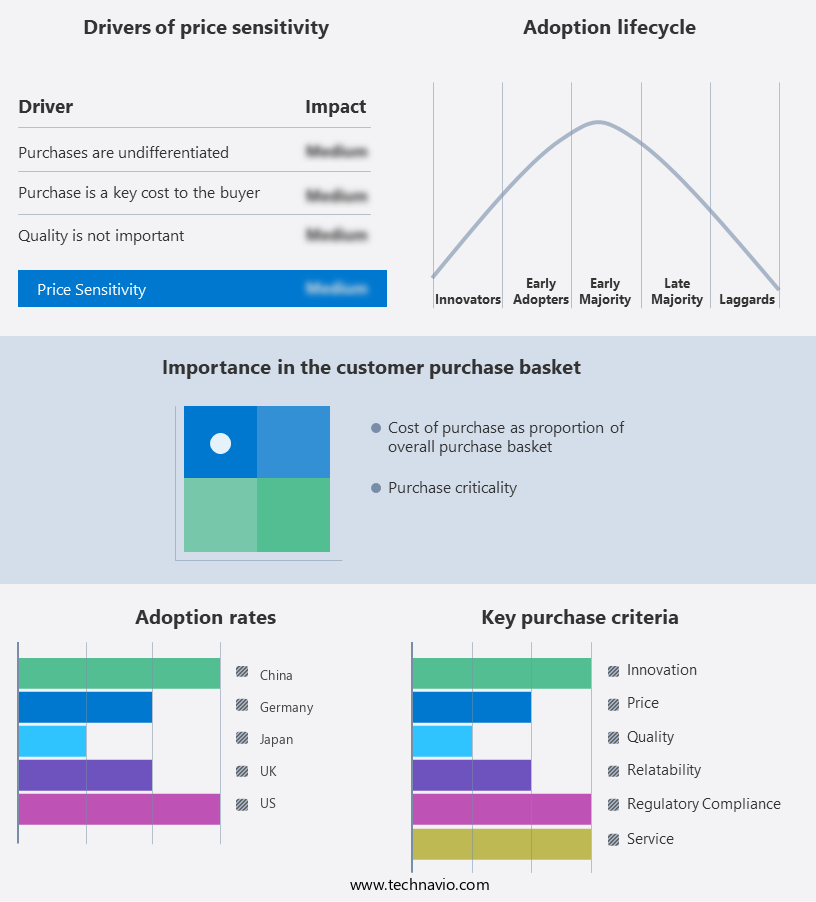
Customer Landscape
Key Companies & Market Insights
Companies are implementing various strategies, such as strategic alliances, space lander and rover market forecast, partnerships, mergers and acquisitions, geographical expansion, and product/service launches, to enhance their presence in the industry.
Airbus SE - The company specializes in designing and manufacturing advanced space exploration equipment, including landers and rovers.
The industry research and growth report includes detailed analyses of the competitive landscape of the market and information about key companies, including:
- Airbus SE
- Astrobotic Technology Inc.
- Blue Origin Enterprises LP
- China National Space Administration
- Deep Space Industries
- European Space Agency
- Indian Space Research Organisation
- Intuitive Machines LLC
- ispace Inc.
- Japan Aerospace Exploration Agency
- Lockheed Martin Corp.
- Maxar Technologies Inc.
- Motiv Space Systems Inc.
- NASA
- Northrop Grumman Corp.
- Planetary Transportation Systems GmbH
- Sierra Nevada Corp.
- Space Applications Services NV
- Teledyne Brown Engineering Inc.
- The Boeing Co.
Qualitative and quantitative analysis of companies has been conducted to help clients understand the wider business environment as well as the strengths and weaknesses of key industry players. Data is qualitatively analyzed to categorize companies as pure play, category-focused, industry-focused, and diversified; it is quantitatively analyzed to categorize companies as dominant, leading, strong, tentative, and weak.
Recent Development and News in Space Lander And Rover Market
- In February 2024, SpaceX successfully launched the Starship prototype, SN8, for its Mars-bound test flight, marking a significant step forward in reusable spacecraft technology for lunar and Martian landers (SpaceX Press Release, 2024). This development could potentially reduce the cost of space exploration and enable more frequent missions.
- In May 2024, Blue Origin and Lockheed Martin announced a strategic partnership to collaborate on the development of lunar landers for NASA's Artemis program. This collaboration combines Blue Origin's expertise in reusable rockets and lunar landers with Lockheed Martin's experience in spacecraft design and manufacturing (Blue Origin Press Release, 2024).
- In January 2025, Elon Musk's Neuralink secured a strategic investment of USD200 million from Samsung, bringing the total investment in the company to USD300 million. Neuralink aims to develop brain-machine interfaces for humans and potentially extend their capabilities in space exploration missions (CNBC, 2025).
- In March 2025, the European Space Agency (ESA) and Roscosmos signed an agreement to cooperate on the development of a Mars rover. This collaboration will see the joint development of the ExoMars Rover 2026, which is expected to launch in 2026 and will focus on the search for signs of past or present life on Mars (ESA Press Release, 2025).
Research Analyst Overview
- In the dynamic market, advancements in propulsion systems continue to shape the industry landscape. Fuel cells and electric propulsion are gaining traction, offering improved efficiency and longer mission durations. Geomorphological features, such as dust devils and sand dunes, pose challenges for exploration, driving the need for robust navigation systems, including star trackers and laser altimeters. Communication systems, including X-band and KA-band, enable real-time data transmission from landing sites and landing zones. Robotic arms and waste management systems are essential components for rover missions, enabling sample collection and analysis. Nuclear propulsion and gravitational assist offer significant advantages in reaching distant destinations, while solar panels and atmospheric entry heating ensure power and temperature regulation.
- Trajectory correction maneuvers and chemical propulsion, utilizing solid propellants, are crucial for precise landing and maneuvering. Mass spectrometers and laser communications contribute to scientific discoveries, while spacecraft life support systems ensure the survival of onboard crews or payloads. Hypersonic flight technology is an emerging trend, offering faster interplanetary travel. Cryogenic propellants and trajectory optimization techniques further enhance mission efficiency. Overall, the market is characterized by continuous innovation and collaboration to overcome the unique challenges of space exploration.
Dive into Technavio's robust research methodology, blending expert interviews, extensive data synthesis, and validated models for unparalleled Space Lander And Rover Market insights. See full methodology.
|
Market Scope |
|
|
Report Coverage |
Details |
|
Page number |
132 |
|
Base year |
2023 |
|
Historic period |
2018-2022 |
|
Forecast period |
2024-2028 |
|
Growth momentum & CAGR |
Accelerate at a CAGR of 9.42% |
|
Market growth 2024-2028 |
USD 447.2 million |
|
Market structure |
Fragmented |
|
YoY growth 2023-2024(%) |
9.14 |
|
Key countries |
US, China, Germany, Japan, and UK |
|
Competitive landscape |
Leading Companies, Market Positioning of Companies, Competitive Strategies, and Industry Risks |
What are the Key Data Covered in this Space Lander And Rover Market Research and Growth Report?
- CAGR of the Space Lander And Rover industry during the forecast period
- Detailed information on factors that will drive the growth and forecasting between 2024 and 2028
- Precise estimation of the size of the market and its contribution of the industry in focus to the parent market
- Accurate predictions about upcoming growth and trends and changes in consumer behaviour
- Growth of the market across North America, APAC, Europe, Middle East and Africa, and South America
- Thorough analysis of the market's competitive landscape and detailed information about companies
- Comprehensive analysis of factors that will challenge the space lander and rover market growth of industry companies
We can help! Our analysts can customize this space lander and rover market research report to meet your requirements.
 RIA -
RIA - 
