



Spray Gun Market Size 2026-2030
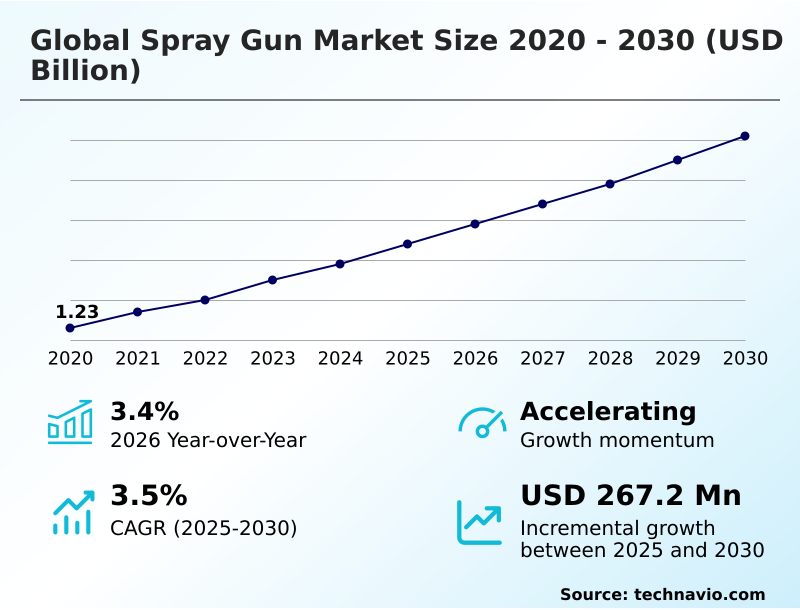
The spray gun market size is valued to increase by USD 267.2 million, at a CAGR of 3.5% from 2025 to 2030. Sustainable materiality and industrialization of low-VOC high-efficiency coating architectures will drive the spray gun market.
Major Market Trends & Insights
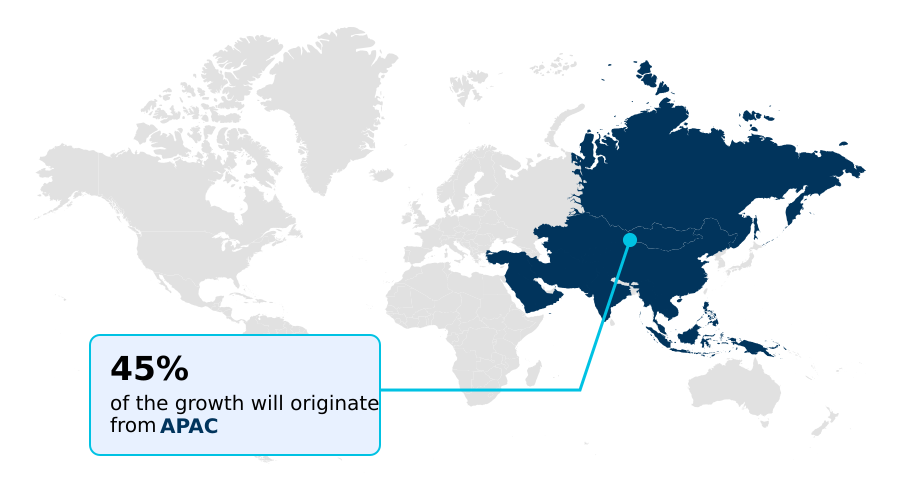
- APAC dominated the market and accounted for a 44.6% growth during the forecast period.
- By Product Type - HVLP segment was valued at USD 634.4 million in 2024
- By Type - Manual segment accounted for the largest market revenue share in 2024
Market Size & Forecast
- Market Opportunities: USD 478.1 million
- Market Future Opportunities: USD 267.2 million
- CAGR from 2025 to 2030 : 3.5%
Market Summary
- The spray gun market is undergoing a significant technological transformation, moving beyond basic pneumatic tools toward intelligent, high-efficiency systems. This evolution is driven by the dual pressures of stringent environmental regulations, which mandate a reduction in volatile organic compound (VOC) emissions, and the industrial demand for greater productivity. Consequently, technologies that enhance transfer efficiency are becoming standard.
- In a key business scenario, an automotive OEM integrates robotic coating systems to ensure uniform application of water-borne coatings, achieving a 30% reduction in material waste and enhancing compliance with air quality standards. This shift toward automation is also a response to a persistent shortage of skilled labor.
- Concurrently, the proliferation of cordless, battery-powered spray gun models is empowering the construction and DIY segments, making professional-grade finishing more accessible. However, the industry grapples with supply chain vulnerabilities for high-precision components and the high capital cost associated with upgrading to automated, eco-compliant systems. The market's trajectory is defined by the balance between performance, sustainability, and operational intelligence.
What will be the Size of the Spray Gun Market during the forecast period?
Get Key Insights on Market Forecast (PDF) Get Free Sample
How is the Spray Gun Market Segmented?
The spray gun industry research report provides comprehensive data (region-wise segment analysis), with forecasts and estimates in "USD million" for the period 2026-2030, as well as historical data from 2020-2024 for the following segments.
- Product type
- HVLP
- Airless
- Pneumatic
- Electrostatic
- LVLP
- Type
- Manual
- Automatic
- Application
- Automotive
- Construction
- Woodworking
- Aerospace
- Industrial
- Geography
- APAC
- China
- Japan
- India
- North America
- US
- Canada
- Mexico
- Europe
- Germany
- UK
- France
- South America
- Brazil
- Argentina
- Middle East and Africa
- UAE
- Saudi Arabia
- South Africa
- Rest of World (ROW)
- APAC
By Product Type Insights
The hvlp segment is estimated to witness significant growth during the forecast period.
The high-volume low-pressure (HVLP) segment is pivotal, driven by its alignment with sustainable coating technologies and stringent environmental mandates. These systems, which utilize advanced atomization chambers and precision nozzles, are crucial for low-voc high-efficiency coating strategies.
Their design is optimized for modern water-borne coatings, ensuring superior material transfer efficiency. In fact, HVLP systems now represent approximately 55% of all units used globally, a testament to their effectiveness in reducing waste and operational costs.
This technology is fundamental in sectors requiring flawless finishes, where the ability to minimize overspray and comply with regulations is a primary procurement driver. The integration of such high-transfer efficiency systems is transforming professional finishing processes across various industries.
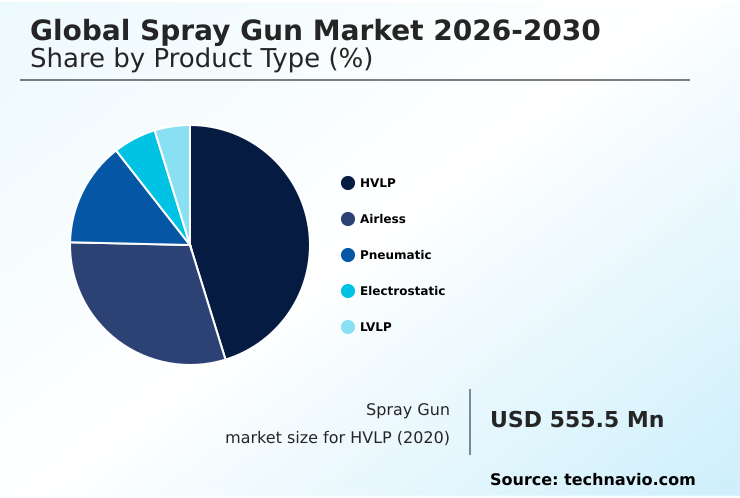
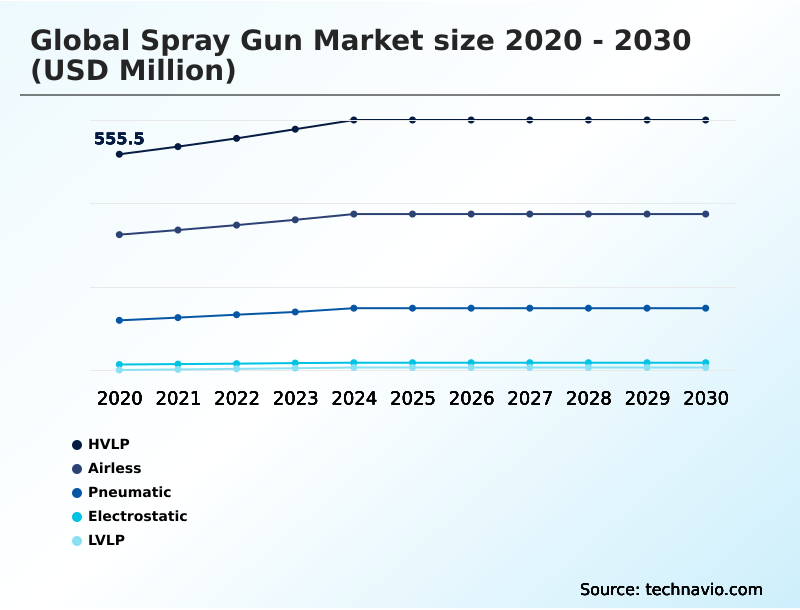
The HVLP segment was valued at USD 634.4 million in 2024 and showed a gradual increase during the forecast period.
Regional Analysis
APAC is estimated to contribute 44.6% to the growth of the global market during the forecast period.Technavio’s analysts have elaborately explained the regional trends and drivers that shape the market during the forecast period.
See How Spray Gun Market Demand is Rising in APAC Get Free Sample
The geographic landscape is led by APAC, which is projected to expand at a rate of 3.8%, outpacing North America's 3.1% growth.
This is fueled by massive industrialization and the expansion of automotive personalization and manufacturing in countries like China and India. The adoption of cordless electric innovations and fluid dynamics expertise is accelerating in this price-sensitive yet technologically advancing region.
In contrast, North America and Europe are mature markets where stringent regulations on volatile organic compounds (VOCs) drive the demand for equipment compatible with high-solid coatings.
The focus here is on regulatory compliance and achieving superior finishes, with a strong uptake of automated systems using advanced ceramic solutions to improve durability and performance.
Market Dynamics
Our researchers analyzed the data with 2025 as the base year, along with the key drivers, trends, and challenges. A holistic analysis of drivers will help companies refine their marketing strategies to gain a competitive advantage.
- Strategic decision-making in the finishing industry increasingly involves a detailed cost-benefit analysis of automated coating technologies versus traditional manual methods. When evaluating equipment, facility managers scrutinize the hvlp vs lvlp transfer efficiency to optimize material usage and reduce operational expenses.
- For specialized sectors, finding the best spray gun for automotive refinishing is a critical choice that impacts both quality and cycle time. As facilities upgrade, implementing a robust robotic spray gun system maintenance plan is essential to prevent downtime. A primary corporate objective is reducing voc emissions spray technology, which often requires a complete overhaul of existing lines.
- This includes adhering to electrostatic spray gun safety protocols, particularly when transitioning to automated systems. The successful implementation of water-based coating application methods depends heavily on equipment compatibility. For mobile operations, a cordless spray gun battery life comparison is a key purchasing factor. Technicians rely on a detailed spray gun nozzle selection guide to handle diverse materials.
- The choice between airless vs air-assisted airless finishing can determine the quality on large-scale projects. Proper automated spray system calibration process ensures consistency, which is a significant advantage over manual applications that see performance vary by over 15% between operators. For fabricators, selecting the right powder coating gun for metal fabrication is crucial for durability.
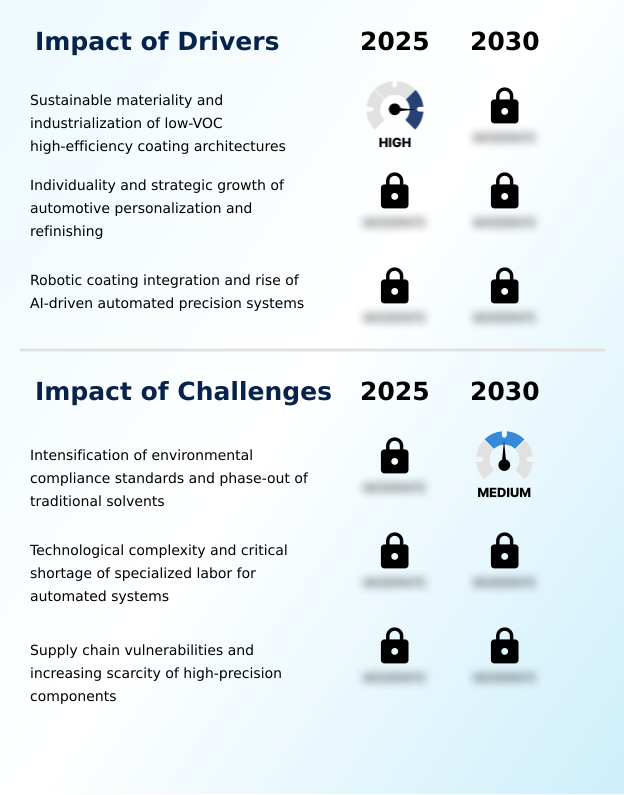
What are the key market drivers leading to the rise in the adoption of Spray Gun Industry?
- The industrialization of low-VOC, high-efficiency coating architectures, coupled with a strategic focus on sustainable materiality, serves as a key driver for market expansion.
- Market growth is significantly driven by robotic coating integration and the industrialization of low-voc high-efficiency coating architectures.
- The adoption of AI-driven automated precision systems, which leverage machine learning computer vision, allows for real-time adjustments that reduce material waste by nearly 30%. This shift is critical in competitive manufacturing sectors, where flawless finishes are paramount.
- Innovations like split nozzle technology and the use of corrosion-resistant materials are essential for handling modern eco-certified coatings.
- Furthermore, the rise of automotive personalization and the demand for complex finishes are pushing the development of advanced pneumatic regulators and fluid dynamics.
- The move toward sustainable coating technologies is not just a regulatory requirement but a core competitive advantage, enhancing both efficiency and corporate ESG profiles.
What are the market trends shaping the Spray Gun Industry?
- A primary market trend is the institutionalization of high-transfer efficiency systems. This shift is propelled by the widespread adoption of sustainable coating technologies to meet environmental and cost-saving objectives.
- Key market trends are centered on the adoption of high-transfer efficiency systems and the proliferation of cordless electric innovations, which together address demands for sustainability and portability.
- The push for environmental compliance standards has accelerated the use of equipment that reduces paint consumption by up to 30%, driven by advanced technologies like electrostatic charging and the use of durable tungsten carbide nozzles. Concurrently, the development of battery-powered portability has revolutionized on-site applications, with brushless motor efficiency enabling performance comparable to traditional pneumatic tools.
- This move toward digital-first hardware includes smartcontrol pressure management and predictive maintenance alerts, significantly improving operational uptime. These trends are democratizing professional-grade finishing capabilities for a wider global demographic.
What challenges does the Spray Gun Industry face during its growth?
- The intensification of environmental compliance standards and the mandated phase-out of traditional solvents present a significant challenge to industry growth and product development.
- The market faces significant challenges from technological complexity and persistent supply chain vulnerabilities. A critical shortage of skilled labor capable of operating and maintaining sophisticated robotic spray technology is a primary restraint, with nearly 51% of industrial users reporting high maintenance complexity.
- This issue is compounded by supply chain disruptions, where approximately 48% of manufacturers experience difficulties sourcing high-precision components like modular nozzle design elements and parts made from lightweight ergonomic materials. This instability leads to extended lead times and cost inflation.
- The inability to secure a resilient supply of critical parts, such as those needed for air-assisted airless systems and overspray containment, erodes the competitiveness of high-end solutions against rudimentary alternatives.
Exclusive Technavio Analysis on Customer Landscape
The spray gun market forecasting report includes the adoption lifecycle of the market, covering from the innovator’s stage to the laggard’s stage. It focuses on adoption rates in different regions based on penetration. Furthermore, the spray gun market report also includes key purchase criteria and drivers of price sensitivity to help companies evaluate and develop their market growth analysis strategies.
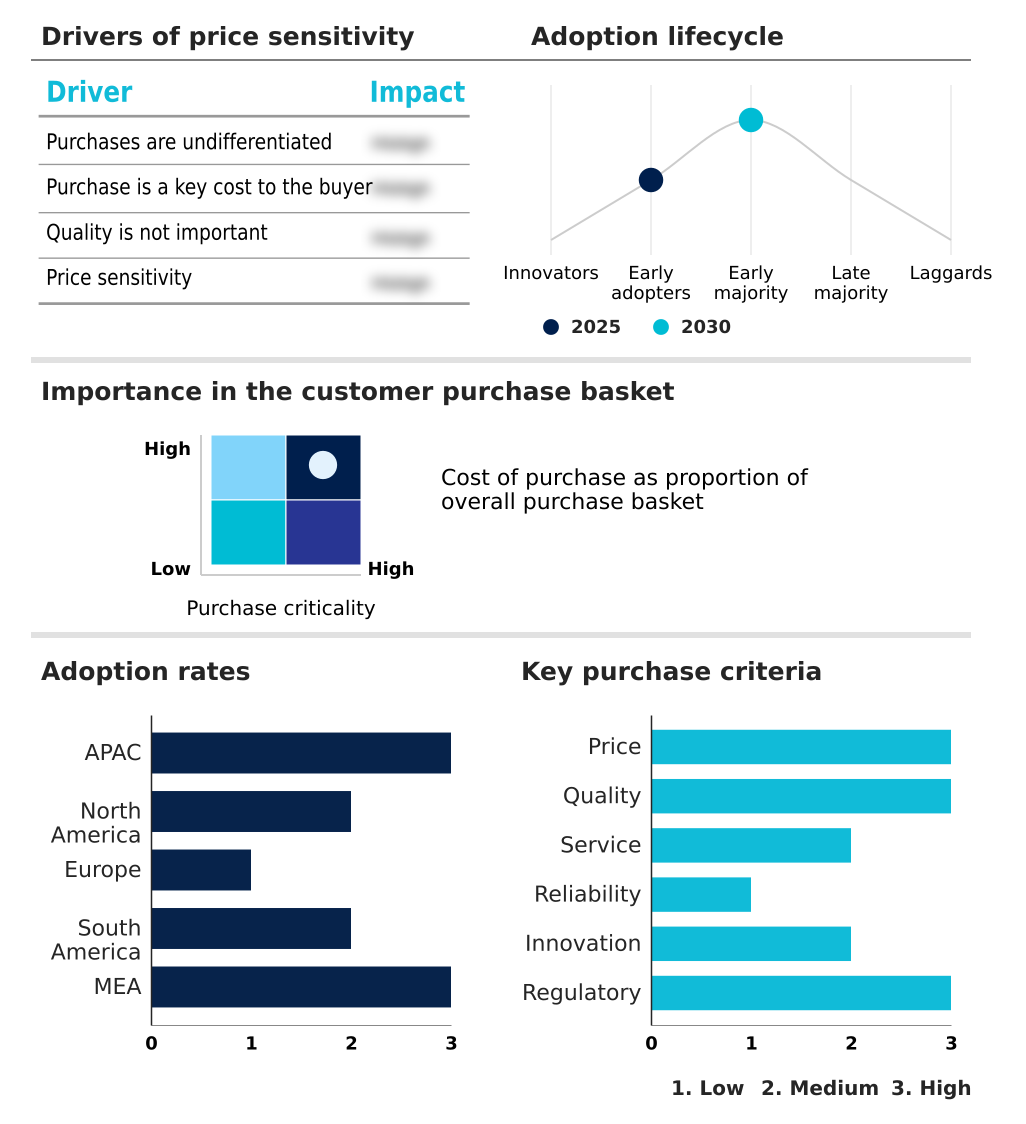
Customer Landscape of Spray Gun Industry
Competitive Landscape
Companies are implementing various strategies, such as strategic alliances, spray gun market forecast, partnerships, mergers and acquisitions, geographical expansion, and product/service launches, to enhance their presence in the industry.
3M Co. - Provides lightweight, precision-engineered spray gun models featuring replaceable nozzles and advanced atomization technology for specialized industrial and automotive coating applications.
The industry research and growth report includes detailed analyses of the competitive landscape of the market and information about key companies, including:
- 3M Co.
- Anest Iwata Corp.
- Apollo Sprayers Intl. Inc.
- Astro Pneumatic Tool Co.
- Badger Air Brush Co.
- Binks
- Campbell Hausfeld
- Earlex Ltd.
- Fuji Industrial Spray Ltd.
- Graco Inc.
- J. Wagner GmbH
- Krautzberger GmbH
- Nordson Corp.
- Paasche Airbrush Co.
- Prona Air Tools Inc.
- Rongpeng Air Tools Co. Ltd.
- Sagola SA
- Sames Kremlin SAS
- SATA GmbH and Co. KG
- TCP Global Corp.
Qualitative and quantitative analysis of companies has been conducted to help clients understand the wider business environment as well as the strengths and weaknesses of key industry players. Data is qualitatively analyzed to categorize companies as pure play, category-focused, industry-focused, and diversified; it is quantitatively analyzed to categorize companies as dominant, leading, strong, tentative, and weak.
Recent Development and News in Spray gun market
- In August 2024, 3M Co. introduced its next-generation performance spray gun, featuring an ultra-lightweight carbon fiber frame and a modular quick-change nozzle system designed to significantly reduce cleaning time for collision repair professionals.
- In November 2024, Graco Inc. announced a strategic collaboration with a leading automation provider to develop and deploy autonomous airless spraying robots for large-scale infrastructure and commercial construction projects.
- In January 2025, the US Environmental Protection Agency implemented updated National VOC Emission Standards for Aerosol Coatings, compelling manufacturers to re-engineer spray gun internals to accommodate water-based and high-solid coatings.
- In April 2025, Carlisle Fluid Technologies completed its new 120,000-square-foot global center of excellence in Minnesota, dedicated to advancing research and manufacturing of automated and precision-sprayed material systems.
Dive into Technavio’s robust research methodology, blending expert interviews, extensive data synthesis, and validated models for unparalleled Spray Gun Market insights. See full methodology.
| Market Scope | |
|---|---|
| Page number | 301 |
| Base year | 2025 |
| Historic period | 2020-2024 |
| Forecast period | 2026-2030 |
| Growth momentum & CAGR | Accelerate at a CAGR of 3.5% |
| Market growth 2026-2030 | USD 267.2 million |
| Market structure | Fragmented |
| YoY growth 2025-2026(%) | 3.4% |
| Key countries | China, Japan, India, South Korea, Thailand, Australia, US, Canada, Mexico, Germany, UK, France, Italy, Spain, The Netherlands, Brazil, Argentina, Chile, UAE, Saudi Arabia, South Africa, Egypt and Nigeria |
| Competitive landscape | Leading Companies, Market Positioning of Companies, Competitive Strategies, and Industry Risks |
Research Analyst Overview
- The market is advancing beyond conventional tools, defined by a pivot to integrated, intelligent systems where material transfer rates are paramount. The institutionalization of high-volume low-pressure (HVLP) and low-volume low-pressure (LVLP) hardware, which now accounts for approximately 55% of all units, reflects a strategic response to environmental and economic pressures.
- This transition requires sophisticated fluid handling systems and advanced air-cap engineering to manage modern water-borne coatings and high-solid coatings. Innovations in split nozzle technology and modular nozzle design are enhancing performance, while digital pressure gauges offer unprecedented control. Key components like tungsten carbide nozzles, stainless steel needles, and advanced pneumatic regulators are critical for durability.
- In boardroom discussions, the decision to invest in robotic coating integration and automated precision systems, often featuring multi-axis industrial robots and agentic AI interfaces, is weighed against long-term ROI from reduced labor costs and improved quality. Technologies such as electrostatic charging, air-assisted airless systems, and high-speed rotation atomizers are becoming standard in high-throughput environments.
- The focus on ergonomic composite bodies, micro-atomization technology, and overspray containment reflects a commitment to both operator welfare and material efficiency.
What are the Key Data Covered in this Spray Gun Market Research and Growth Report?
-
What is the expected growth of the Spray Gun Market between 2026 and 2030?
-
USD 267.2 million, at a CAGR of 3.5%
-
-
What segmentation does the market report cover?
-
The report is segmented by Product Type (HVLP, Airless, Pneumatic, Electrostatic, and LVLP), Type (Manual, and Automatic), Application (Automotive, Construction, Woodworking, Aerospace, and Industrial) and Geography (APAC, North America, Europe, South America, Middle East and Africa)
-
-
Which regions are analyzed in the report?
-
APAC, North America, Europe, South America and Middle East and Africa
-
-
What are the key growth drivers and market challenges?
-
Sustainable materiality and industrialization of low-VOC high-efficiency coating architectures, Intensification of environmental compliance standards and phase-out of traditional solvents
-
-
Who are the major players in the Spray Gun Market?
-
3M Co., Anest Iwata Corp., Apollo Sprayers Intl. Inc., Astro Pneumatic Tool Co., Badger Air Brush Co., Binks, Campbell Hausfeld, Earlex Ltd., Fuji Industrial Spray Ltd., Graco Inc., J. Wagner GmbH, Krautzberger GmbH, Nordson Corp., Paasche Airbrush Co., Prona Air Tools Inc., Rongpeng Air Tools Co. Ltd., Sagola SA, Sames Kremlin SAS, SATA GmbH and Co. KG and TCP Global Corp.
-
Market Research Insights
- Market dynamics are shaped by a strategic pivot toward digital-first hardware and automated precision systems. The adoption of robotic spray technology, driven by the need to mitigate labor shortages, can reduce finishing times by up to 70% compared to manual methods.
- This move toward automation is complemented by the rise of cordless electric innovations, where advancements in battery-powered portability have increased contractor efficiency on job sites. Furthermore, the focus on high-transfer efficiency systems allows industrial facilities to reduce material waste by nearly 30%, directly aligning with both cost-reduction goals and stringent environmental compliance standards.
- The integration of self-diagnostic features and custom nozzle geometries is enhancing equipment performance and lowering maintenance complexity for end-users.
We can help! Our analysts can customize this spray gun market research report to meet your requirements.
 RIA -
RIA - 
