

Automotive Paints and Coatings Market Analysis APAC, Europe, North America, South America, Middle East and Africa - US, China, India, Germany, France - Size and Forecast 2024-2028

Automotive Paints and Coatings Market Analysis APAC, Europe, North America, South America, Middle East and Africa - US, China, India, Germany, France - Size and Forecast 2024-2028

Published: Feb 2024 184 Pages SKU: IRTNTR43769

Market Overview at a Glance

$4.02 B
Market Opportunity
3.88%
CAGR
3.33
YoY growth 2023-2024(%)

Automotive Paints and Coatings Market Size 2024-2028 

The automotive paints and coatings market size is forecast to increase by USD 4.02 billion at a CAGR of 3.88% between 2023 and 2028.

  • The market is experiencing significant growth due to the increasing demand for innovative and specialty coatings. Coating additives offer superior protection and unique features such as self-healing and self-cleaning capabilities. 
  • Additionally, stringent environmental regulations are driving the market towards the development of eco-friendly coatings. These regulations aim to reduce the amount of volatile organic compounds (VOCs) in paints and coatings, making them more sustainable and environmentally friendly. 
  • The market is expected to continue growing as automakers and consumers prioritize the use of advanced coatings to enhance the aesthetic appeal and durability of vehicles.

What will be the  Automotive Paints and Coatings Market Size During the Forecast Period?
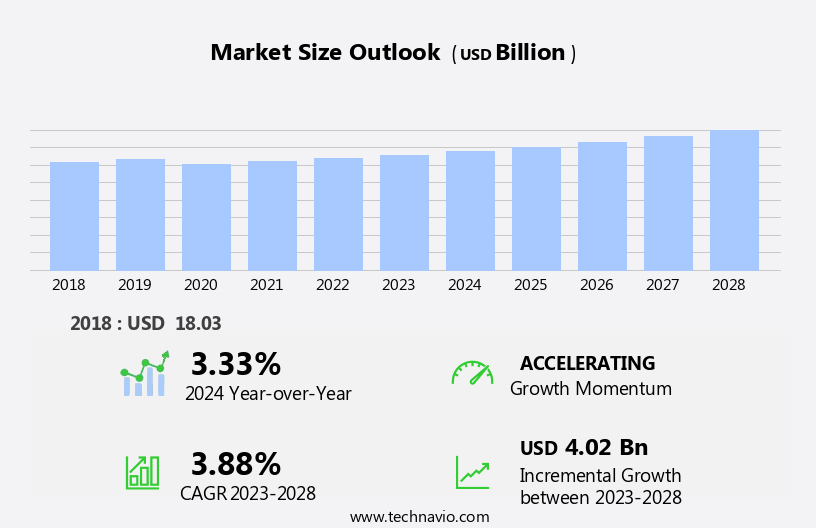
Automotive Paints and Coatings Market Size

 Request Free Sample

  • The market encompasses a diverse range of products used in the production and refinishing of passenger cars, light commercial vehicles, and electric vehicles. Key market drivers include advancements in technology, such as the adoption of powder coating and UV protection for enhanced color retention and durability. However, increasing focus on reducing VOC emissions and air pollution has led to the proliferation of waterborne paints and water-soluble paints
  • Furthermore, the integration of autonomous technologies in vehicle production necessitates coatings that can withstand varying temperatures, acid rains, and dust. The OEM segment dominates the market, with auto manufacturers continually seeking high-performance coatings for improved vehicle quality and consumer appeal.
  • Automotive clearcoats, a critical component of the coating type, ensure superior UV protection and resistance to scratches and chips. VOC regulations continue to shape the market, with stringent norms driving innovation in low-emission coatings. The refinish industries also contribute significantly to market growth, as the need for high-quality, long-lasting coatings remains paramount in maintaining the appearance and value of vehicles.

How is this Automotive Paints and Coatings Industry segmented and which is the largest segment?

The automotive paints and coatings industry research report provides comprehensive data (region-wise segment analysis), with forecasts and estimates in "USD billion" for the period 2024-2028, as well as historical data from 2018-2022 for the following segments.

  • Application
    • Passenger cars
    • Commercial vehicles
    • Heavy commercial vehicles
  • Product
    • Solvent-based products
    • Water-based products
    • Other technology-based products
  • Geography
    • APAC
      • China
      • India
    • Europe
      • Germany
      • France
    • North America
      • US
    • South America
    • Middle East and Africa

By Application Insights

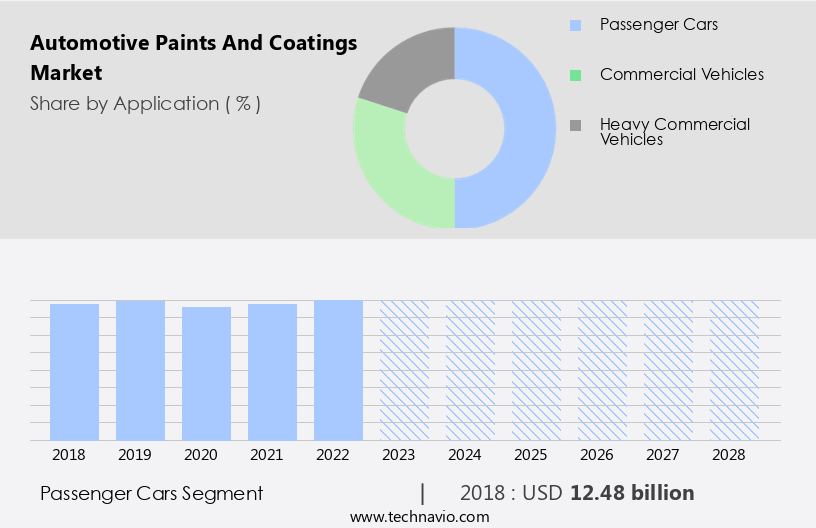
  • The passenger cars segment is estimated to witness significant growth during the forecast period.

Automotive paints and coatings play a crucial role in enhancing the appearance and protecting the exterior surfaces of passenger cars. Manufacturers provide various color options and finishes, catering to consumers' preferences and enabling personalization. Brands use unique paint colors as a marketing strategy to distinguish their vehicles. Specialty coatings, such as clearcoats and protective films, ensure scratch and chip resistance, preserving the vehicle's appearance and resale value. Clearcoats offer an extra layer of defense against minor damages caused by road debris. Additionally, environmental concerns have led to the increasing popularity of waterborne paints, which emit fewer volatile organic compounds (VOCs) compared to solvent-borne paints, contributing to reduced air pollution.

Epoxy resin and polyurethane-based coatings provide improved performance and longer durability. Key players In the market include AkzoNobel, Axalta, Berger Paints, and Sherwin-Williams. The automotive industry's growing production, particularly in light commercial vehicles, and the rising demand for sustainable refinish services further fuel the market's growth.
Automotive Paints and Coatings Market Size

Get a glance at the  Automotive Paints and Coatings Industry report of share of various segments Request Free Sample

The Passenger cars segment was valued at USD 12.48 billion in 2018 and showed a gradual increase during the forecast period.

Regional Analysis

  • APAC is estimated to contribute 51% to the growth of the global market during the forecast period.

Technavio's analysts have elaborately explained the regional trends and drivers that shape the market during the forecast period.
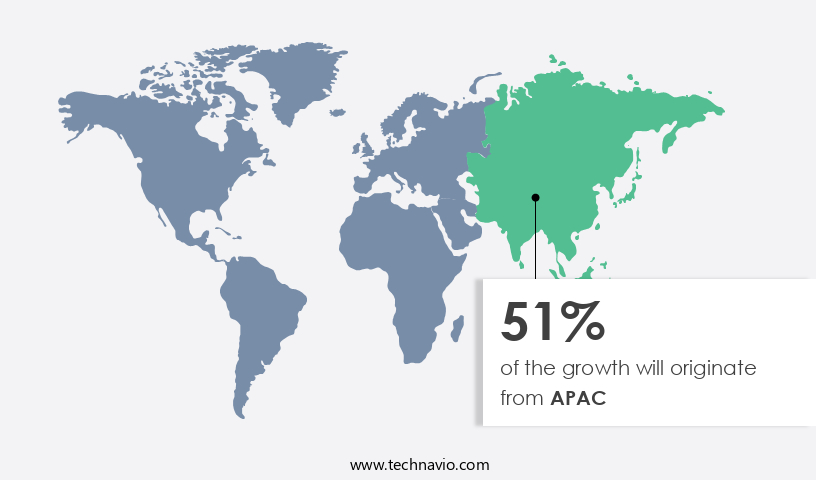
Automotive Paints and Coatings Market Share by Geography

For more insights on the market share of various regions, Request Free Sample

The market in Asia Pacific (APAC) is experiencing significant growth due to the expanding automotive industry in countries like China, India, Japan, and South Korea. Increased urbanization, rising disposable incomes, and infrastructure development are driving the demand for passenger cars, commercial vehicles, and two-wheelers, leading to increased consumption of paints and coatings for vehicle assembly and finishing. Moreover, the region is witnessing a shift towards electric vehicles (EVs) as governments and consumers prioritize sustainability. In the automotive OEM segment, there is a growing trend towards waterborne paints, epoxy resins, and polyurethane-based coatings for their improved appearance, high gloss, longer period, and environmental benefits.

The automotive production sector, including auto manufacturers and refinish industries, is also adopting sustainable practices such as digital color-matching solutions, training programs, and VOC regulations to minimize environmental impact. Additionally, the market is witnessing a rising demand for advanced and luxury vehicles, requiring automotive clearcoats for UV protection, color retention, and a gloss finish to ensure an excellent exterior appearance. The automotive production sector's growth is expected to continue due to increasing vehicle production and the need for lighter, more durable coatings that can withstand environmental factors such as acid rains, dust, and water.

Market Dynamics

Our  researchers analyzed the data with 2023 as the base year, along with the key drivers, trends, and challenges. A holistic analysis of drivers will help companies refine their marketing strategies to gain a competitive advantage.

What are the key market drivers leading to the rise In the adoption of Automotive Paints and Coatings Industry?

Increasing demand for innovative and specialty automotive paints and coatings is the key driver of the market.

  • The market is experiencing significant growth due to the increasing production of passenger cars and light commercial vehicles. Automakers are focusing on enhancing the aesthetics and performance of vehicles by introducing advanced technologies in coatings, such as waterborne paints, powder coating, and epoxy resin systems. These coatings offer improved appearance, longer period durability, and better UV protection and color retention. Environmental concerns have led to stricter regulations on VOC emissions and air pollution, driving the demand for waterborne coatings. Lead-free and low VOC epoxy-based coatings, such as those offered by PPG Industries Inc, are gaining popularity. High-tech polymer-based coatings, applied using air guns and high-volume, low-pressure guns, are used in modern vehicles to ensure a glossy finish and longer-lasting exterior appearance.
  • Moreover, the rise in automotive production, particularly In the premium segment, is fueling the demand for coatings. Auto manufacturers are partnering with coating companies to develop sustainable refinish services and digital color-matching solutions. These collaborations also include training programs to ensure the highest quality standards are maintained. The market for automotive clearcoats is expected to grow significantly due to the increasing demand for luxurious vehicles. Polyurethane-based coatings and polyester-based coatings are popular choices for their high gloss finish and improved resistance to environmental factors. Acrylic-based coatings are also gaining popularity due to their cost-effectiveness and ease of application.
  • In summary, the market is witnessing a rising demand due to the increasing production of passenger cars and light commercial vehicles, the need for sustainable and environmentally-friendly coatings, and the growing popularity of advanced technologies in coatings. The market is expected to continue growing as automakers focus on enhancing the appearance and performance of their vehicles while reducing their environmental impact.

What are the market trends shaping the Automotive Paints and Coatings Industry?

Emergence of self-healing and self-cleaning coatings is the upcoming market trend.

  • The market encompasses various types of coatings used In the production and refinishing of passenger cars, including electric vehicles (EVs). Two prominent coating types are powder coating and electrocoats, which cater to the unique requirements of EVs and advanced vehicles. Environmental concerns, such as VOC emissions and air pollution, have led to the increasing popularity of waterborne paints, which contain fewer solvents than solvent-borne paints. Self-healing and self-cleaning coatings are gaining traction due to their ability to maintaIn the aesthetics and performance of vehicles. Axalta, AkzoNobel, Sherwin-Williams, Berger Paints, and other market players offer a range of coatings, including epoxy resin, polyurethane-based, acrylic-based, and polyester-based coatings.
  • Vehicle production is on the rise, driven by increasing demand for automobiles and light commercial vehicles. Self-healing coatings help restore scratched areas, while self-cleaning coatings repel dirt and other contaminants, ensuring a longer lifespan for the paintwork. Waterborne coatings, such as those based on epoxy resin systems and acrylic-based coatings, are increasingly being adopted due to their environmental benefits and improved appearance with high gloss finishes. The market is expected to continue growing, driven by the rising demand for automotive production, sustainable refinish services, and digital color-matching solutions. Eastman Chemical and other key players are investing in research and development to create advanced coatings with enhanced UV protection, color retention, and longer periods of protection.
  • The market dynamics are influenced by factors such as VOC regulations, auto manufacturers' preferences, and consumer trends. Self-healing and self-cleaning coatings offer significant benefits for both OEM and refinish industries, ensuring a glossy finish and longer-lasting exterior appearance for vehicles.

What challenges does the Automotive Paints and Coatings Industry face during its growth?

Stringent environmental regulations for automotive paints and coatings is a key challenge affecting the industry growth.

  • In the automotive industry, coatings manufacturers face the challenge of meeting stringent environmental regulations while maintaining the performance, durability, and aesthetic properties of their products. Compliance with regulations, such as those related to VOC emissions and air pollution, can result in significant costs for manufacturers. These costs may include investments in research and development, process improvements, and emissions control technologies. To comply with regulatory limits, coatings manufacturers are reformulating their products using alternative solvents and raw materials. For instance, waterborne paints are increasingly popular due to their lower VOC emissions compared to solvent-borne paints. Epoxy resin systems and polyurethane-based coatings are also gaining popularity due to their improved performance and longer period of protection.
  • Moreover, the rise in automotive production, particularly In the OEM segment for passenger cars and light commercial vehicles, is driving the demand for automotive paints and coatings. Advanced vehicles, including electric vehicles (EVs), require specialized coatings for UV protection, color retention, and gloss finish. Coating types, such as electrocoats and automotive clearcoats, are essential for vehicle production. Manufacturers must also consider the environmental impact of coatings beyond VOC emissions. Coatings can contribute to air pollution during application and curing, and waterborne paints may contain heavy metals that can harm aquatic life if not disposed of properly. Sustainable refinish services and digital color-matching solutions can help mitigate these issues.
  • Training and education are crucial for coatings manufacturers and refinish industries to stay informed of the latest regulatory requirements and technological advancements. Companies like Axalta, AkzoNobel, Berger Paints, Sherwin-Williams, and Chemetell are investing in research and development to create innovative, eco-friendly coatings that meet the evolving needs of the automotive industry. In summary, the market is undergoing significant changes due to environmental regulations and the rising demand for sustainable coatings. Manufacturers must invest in research and development, process improvements, and emissions control technologies to meet regulatory requirements while maintaining performance and aesthetics. The use of alternative solvents, raw materials, and coating technologies is essential to create eco-friendly coatings that meet the evolving needs of the automotive industry.

Exclusive Customer Landscape

The automotive paints and coatings market forecasting report includes the adoption lifecycle of the market, covering from the innovator's stage to the laggard's stage. It focuses on adoption rates in different regions based on penetration. Furthermore, the automotive paints and coatings market report also includes key purchase criteria and drivers of price sensitivity to help companies evaluate and develop their market growth analysis strategies.
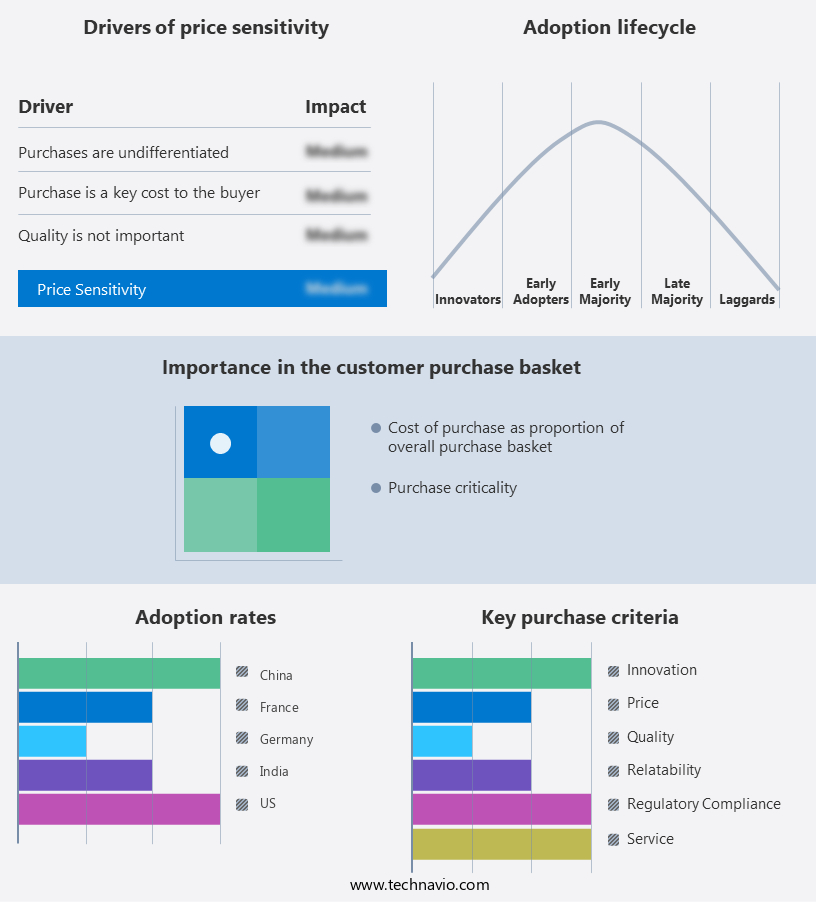
Automotive Paints and Coatings Market Share by Geography

 Customer Landscape

Key Companies & Market Insights

Companies are implementing various strategies, such as strategic alliances, automotive paints and coatings market forecast, partnerships, mergers and acquisitions, geographical expansion, and product/service launches, to enhance their presence In the industry.

3M Co. - The automotive paint and coatings market encompasses a range of products designed to enhance and protect vehicle surfaces. Among these offerings are solutions from leading industry innovators, such as 3M's polyester thinner, rust preventer spray, and dry guide coat. These advanced coatings optimize paint application and adhesion, ensuring a flawless finish. Additionally, 3M's Scotchcast electrical resin provides superior electrical insulation for automotive wiring systems.

The industry research and growth report includes detailed analyses of the competitive landscape of the market and information about key companies, including:

  • 3M Co.
  • Akzo Nobel NV
  • Arkema Group
  • Axalta Coating Systems Ltd.
  • Clariant International Ltd.
  • Colors Co. for Paints
  • Covestro AG
  • Diamond Vogel
  • Durr AG
  • Jotun AS
  • Kansai Paint Co. Ltd.
  • KCC Co. Ltd.
  • Nippon Paint Holdings Co. Ltd.
  • PPG Industries Inc.
  • RPM International Inc.
  • Sika AG
  • The Sherwin Williams Co.
  • WEG Equipamentos Eletricos S.A.
  • YATU ADVANCED MATERIALS CO., LTD.
  • Henkel AG and Co. KGaA
  • BASF SE

Qualitative and quantitative analysis of companies has been conducted to help clients understand the wider business environment as well as the strengths and weaknesses of key industry players. Data is qualitatively analyzed to categorize companies as pure play, category-focused, industry-focused, and diversified; it is quantitatively analyzed to categorize companies as dominant, leading, strong, tentative, and weak.

Research Analyst Overview

The market encompasses a broad range of products utilized In the manufacturing and refinishing of vehicles. These coatings serve multiple purposes, including enhancing the aesthetic appeal, providing protection against environmental elements, and ensuring durability. Coatings play a crucial role in automotive production, with various types catering to distinct requirements. For instance, solvent-borne paints have traditionally been popular due to their high gloss finish and excellent color retention. However, the shift towards more sustainable production methods has led to the increasing adoption of waterborne paints, which offer several advantages. Environmental concerns have been a significant driving force In the evolution of the market.

VOC (Volatile Organic Compound) emissions from solvent-borne paints contribute to air pollution and are detrimental to human health. In response, regulatory bodies have imposed stringent VOC regulations, compelling manufacturers to explore alternatives. Waterborne paints, on the other hand, offer a more eco-friendly solution. They emit fewer VOCs, making them a preferred choice for automotive OEMs (Original Equipment Manufacturers) and refinish industries. Furthermore, they are less susceptible to dust and water, ensuring better UV protection and longer periods of color retention. The market is diverse, with various types catering to different segments. For instance, epoxy resin systems are commonly used for primers due to their excellent adhesion properties.

Polyurethane-based coatings are popular for their improved appearance and longer durability. Acrylic- and polyester-based coatings offer cost-effective solutions with good color retention and UV protection. The market dynamics are influenced by several factors, including the rising demand for advanced and luxurious vehicles, the increasing automotive production, and the need for sustainable refinish services. Digital color-matching solutions and training programs have become essential tools for ensuring consistent and high-quality finishes. Moreover, the market is witnessing the emergence of innovative technologies, such as electrocoats and powder coatings. Electrocoats offer superior corrosion protection, while powder coatings provide a durable, uniform finish with minimal environmental impact.

The market is a dynamic and evolving landscape, driven by technological advancements, regulatory requirements, and consumer preferences. Manufacturers must continually innovate to meet the changing demands and expectations of the industry. In conclusion, the market plays a vital role In the production and refinishing of vehicles. With a focus on sustainability, performance, and aesthetics, the market is poised for continued growth and innovation.

Automotive Paints and Coatings Market Scope

Report Coverage

Details

Page number

184

Base year

2023

Historic period

2018-2022

Forecast period

2024-2028

Growth momentum & CAGR

Accelerate at a CAGR of 3.88%

Market growth 2024-2028

USD 4.02 billion

Market structure

Fragmented

YoY growth 2023-2024(%)

3.33

Key countries

US, China, India, Germany, and France

Competitive landscape

Leading Companies, Market Positioning of Companies, Competitive Strategies, and Industry Risks

Request Free Sample

What are the Key Data Covered in this Automotive Paints and Coatings Market Research and Growth Report?

  • CAGR of the Automotive Paints and Coatings industry during the forecast period
  • Detailed information on factors that will drive the growth and forecasting between 2024 and 2028
  • Precise estimation of the size of the market and its contribution of the industry in focus to the parent market
  • Accurate predictions about upcoming growth and trends and changes in consumer behaviour
  • Growth of the market across APAC, Europe, North America, South America, and Middle East and Africa
  • Thorough analysis of the market's competitive landscape and detailed information about companies
  • Comprehensive analysis of factors that will challenge the automotive paints and coatings market growth of industry companies

We can help! Our analysts can customize this automotive paints and coatings market research report to meet your requirements.

Get in touch

1 Executive Summary

  • 1.1 Market overview
    • Exhibit 01: Executive Summary – Chart on Market Overview
    • Exhibit 02: Executive Summary – Data Table on Market Overview
    • Exhibit 03: Executive Summary – Chart on Global Market Characteristics
    • Exhibit 04: Executive Summary – Chart on Market by Geography
    • Exhibit 05: Executive Summary – Chart on Market Segmentation by Application
    • Exhibit 06: Executive Summary – Chart on Market Segmentation by Product
    • Exhibit 07: Executive Summary – Chart on Incremental Growth
    • Exhibit 08: Executive Summary – Data Table on Incremental Growth
    • Exhibit 09: Executive Summary – Chart on Vendor Market Positioning

2 Market Landscape

  • 2.1 Market ecosystem
    • Exhibit 10: Parent market
    • Exhibit 11: Market Characteristics

3 Market Sizing

  • 3.1 Market definition
    • Exhibit 12: Offerings of vendors included in the market definition
  • 3.2 Market segment analysis
    • Exhibit 13: Market segments
  • 3.3 Market size 2023
    • 3.4 Market outlook: Forecast for 2023-2028
      • Exhibit 14: Chart on Global - Market size and forecast 2023-2028 ($ billion)
      • Exhibit 15: Data Table on Global - Market size and forecast 2023-2028 ($ billion)
      • Exhibit 16: Chart on Global Market: Year-over-year growth 2023-2028 (%)
      • Exhibit 17: Data Table on Global Market: Year-over-year growth 2023-2028 (%)

    4 Historic Market Size

    • 4.1 Global automotive paints and coatings market 2018 - 2022
      • Exhibit 18: Historic Market Size – Data Table on global automotive paints and coatings market 2018 - 2022 ($ billion)
    • 4.2 Application Segment Analysis 2018 - 2022
      • Exhibit 19: Historic Market Size – Application Segment 2018 - 2022 ($ billion)
    • 4.3 Product Segment Analysis 2018 - 2022
      • Exhibit 20: Historic Market Size – Product Segment 2018 - 2022 ($ billion)
    • 4.4 Geography Segment Analysis 2018 - 2022
      • Exhibit 21: Historic Market Size – Geography Segment 2018 - 2022 ($ billion)
    • 4.5 Country Segment Analysis 2018 - 2022
      • Exhibit 22: Historic Market Size – Country Segment 2018 - 2022 ($ billion)

    5 Five Forces Analysis

    • 5.1 Five forces summary
      • Exhibit 23: Five forces analysis - Comparison between 2023 and 2028
    • 5.2 Bargaining power of buyers
      • Exhibit 24: Chart on Bargaining power of buyers – Impact of key factors 2023 and 2028
    • 5.3 Bargaining power of suppliers
      • Exhibit 25: Bargaining power of suppliers – Impact of key factors in 2023 and 2028
    • 5.4 Threat of new entrants
      • Exhibit 26: Threat of new entrants – Impact of key factors in 2023 and 2028
    • 5.5 Threat of substitutes
      • Exhibit 27: Threat of substitutes – Impact of key factors in 2023 and 2028
    • 5.6 Threat of rivalry
      • Exhibit 28: Threat of rivalry – Impact of key factors in 2023 and 2028
    • 5.7 Market condition
      • Exhibit 29: Chart on Market condition - Five forces 2023 and 2028

    6 Market Segmentation by Application

    • 6.1 Market segments
      • Exhibit 30: Chart on Application - Market share 2023-2028 (%)
      • Exhibit 31: Data Table on Application - Market share 2023-2028 (%)
    • 6.2 Comparison by Application
      • Exhibit 32: Chart on Comparison by Application
      • Exhibit 33: Data Table on Comparison by Application
    • 6.3 Passenger cars - Market size and forecast 2023-2028
      • Exhibit 34: Chart on Passenger cars - Market size and forecast 2023-2028 ($ billion)
      • Exhibit 35: Data Table on Passenger cars - Market size and forecast 2023-2028 ($ billion)
      • Exhibit 36: Chart on Passenger cars - Year-over-year growth 2023-2028 (%)
      • Exhibit 37: Data Table on Passenger cars - Year-over-year growth 2023-2028 (%)
    • 6.4 Commercial vehicles - Market size and forecast 2023-2028
      • Exhibit 38: Chart on Commercial vehicles - Market size and forecast 2023-2028 ($ billion)
      • Exhibit 39: Data Table on Commercial vehicles - Market size and forecast 2023-2028 ($ billion)
      • Exhibit 40: Chart on Commercial vehicles - Year-over-year growth 2023-2028 (%)
      • Exhibit 41: Data Table on Commercial vehicles - Year-over-year growth 2023-2028 (%)
    • 6.5 Heavy commercial vehicles - Market size and forecast 2023-2028
      • Exhibit 42: Chart on Heavy commercial vehicles - Market size and forecast 2023-2028 ($ billion)
      • Exhibit 43: Data Table on Heavy commercial vehicles - Market size and forecast 2023-2028 ($ billion)
      • Exhibit 44: Chart on Heavy commercial vehicles - Year-over-year growth 2023-2028 (%)
      • Exhibit 45: Data Table on Heavy commercial vehicles - Year-over-year growth 2023-2028 (%)
    • 6.6 Market opportunity by Application
      • Exhibit 46: Market opportunity by Application ($ billion)
      • Exhibit 47: Data Table on Market opportunity by Application ($ billion)

    7 Market Segmentation by Product

    • 7.1 Market segments
      • Exhibit 48: Chart on Product - Market share 2023-2028 (%)
      • Exhibit 49: Data Table on Product - Market share 2023-2028 (%)
    • 7.2 Comparison by Product
      • Exhibit 50: Chart on Comparison by Product
      • Exhibit 51: Data Table on Comparison by Product
    • 7.3 Solvent-based products - Market size and forecast 2023-2028
      • Exhibit 52: Chart on Solvent-based products - Market size and forecast 2023-2028 ($ billion)
      • Exhibit 53: Data Table on Solvent-based products - Market size and forecast 2023-2028 ($ billion)
      • Exhibit 54: Chart on Solvent-based products - Year-over-year growth 2023-2028 (%)
      • Exhibit 55: Data Table on Solvent-based products - Year-over-year growth 2023-2028 (%)
    • 7.4 Water-based products - Market size and forecast 2023-2028
      • Exhibit 56: Chart on Water-based products - Market size and forecast 2023-2028 ($ billion)
      • Exhibit 57: Data Table on Water-based products - Market size and forecast 2023-2028 ($ billion)
      • Exhibit 58: Chart on Water-based products - Year-over-year growth 2023-2028 (%)
      • Exhibit 59: Data Table on Water-based products - Year-over-year growth 2023-2028 (%)
    • 7.5 Other technology-based products - Market size and forecast 2023-2028
      • Exhibit 60: Chart on Other technology-based products - Market size and forecast 2023-2028 ($ billion)
      • Exhibit 61: Data Table on Other technology-based products - Market size and forecast 2023-2028 ($ billion)
      • Exhibit 62: Chart on Other technology-based products - Year-over-year growth 2023-2028 (%)
      • Exhibit 63: Data Table on Other technology-based products - Year-over-year growth 2023-2028 (%)
    • 7.6 Market opportunity by Product
      • Exhibit 64: Market opportunity by Product ($ billion)
      • Exhibit 65: Data Table on Market opportunity by Product ($ billion)

    8 Customer Landscape

    • 8.1 Customer landscape overview
      • Exhibit 66: Analysis of price sensitivity, lifecycle, customer purchase basket, adoption rates, and purchase criteria

    9 Geographic Landscape

    • 9.1 Geographic segmentation
      • Exhibit 67: Chart on Market share by geography 2023-2028 (%)
      • Exhibit 68: Data Table on Market share by geography 2023-2028 (%)
    • 9.2 Geographic comparison
      • Exhibit 69: Chart on Geographic comparison
      • Exhibit 70: Data Table on Geographic comparison
    • 9.3 APAC - Market size and forecast 2023-2028
      • Exhibit 71: Chart on APAC - Market size and forecast 2023-2028 ($ billion)
      • Exhibit 72: Data Table on APAC - Market size and forecast 2023-2028 ($ billion)
      • Exhibit 73: Chart on APAC - Year-over-year growth 2023-2028 (%)
      • Exhibit 74: Data Table on APAC - Year-over-year growth 2023-2028 (%)
    • 9.4 Europe - Market size and forecast 2023-2028
      • Exhibit 75: Chart on Europe - Market size and forecast 2023-2028 ($ billion)
      • Exhibit 76: Data Table on Europe - Market size and forecast 2023-2028 ($ billion)
      • Exhibit 77: Chart on Europe - Year-over-year growth 2023-2028 (%)
      • Exhibit 78: Data Table on Europe - Year-over-year growth 2023-2028 (%)
    • 9.5 North America - Market size and forecast 2023-2028
      • Exhibit 79: Chart on North America - Market size and forecast 2023-2028 ($ billion)
      • Exhibit 80: Data Table on North America - Market size and forecast 2023-2028 ($ billion)
      • Exhibit 81: Chart on North America - Year-over-year growth 2023-2028 (%)
      • Exhibit 82: Data Table on North America - Year-over-year growth 2023-2028 (%)
    • 9.6 South America - Market size and forecast 2023-2028
      • Exhibit 83: Chart on South America - Market size and forecast 2023-2028 ($ billion)
      • Exhibit 84: Data Table on South America - Market size and forecast 2023-2028 ($ billion)
      • Exhibit 85: Chart on South America - Year-over-year growth 2023-2028 (%)
      • Exhibit 86: Data Table on South America - Year-over-year growth 2023-2028 (%)
    • 9.7 Middle East and Africa - Market size and forecast 2023-2028
      • Exhibit 87: Chart on Middle East and Africa - Market size and forecast 2023-2028 ($ billion)
      • Exhibit 88: Data Table on Middle East and Africa - Market size and forecast 2023-2028 ($ billion)
      • Exhibit 89: Chart on Middle East and Africa - Year-over-year growth 2023-2028 (%)
      • Exhibit 90: Data Table on Middle East and Africa - Year-over-year growth 2023-2028 (%)
    • 9.8 China - Market size and forecast 2023-2028
      • Exhibit 91: Chart on China - Market size and forecast 2023-2028 ($ billion)
      • Exhibit 92: Data Table on China - Market size and forecast 2023-2028 ($ billion)
      • Exhibit 93: Chart on China - Year-over-year growth 2023-2028 (%)
      • Exhibit 94: Data Table on China - Year-over-year growth 2023-2028 (%)
    • 9.9 US - Market size and forecast 2023-2028
      • Exhibit 95: Chart on US - Market size and forecast 2023-2028 ($ billion)
      • Exhibit 96: Data Table on US - Market size and forecast 2023-2028 ($ billion)
      • Exhibit 97: Chart on US - Year-over-year growth 2023-2028 (%)
      • Exhibit 98: Data Table on US - Year-over-year growth 2023-2028 (%)
    • 9.10 India - Market size and forecast 2023-2028
      • Exhibit 99: Chart on India - Market size and forecast 2023-2028 ($ billion)
      • Exhibit 100: Data Table on India - Market size and forecast 2023-2028 ($ billion)
      • Exhibit 101: Chart on India - Year-over-year growth 2023-2028 (%)
      • Exhibit 102: Data Table on India - Year-over-year growth 2023-2028 (%)
    • 9.11 Germany - Market size and forecast 2023-2028
      • Exhibit 103: Chart on Germany - Market size and forecast 2023-2028 ($ billion)
      • Exhibit 104: Data Table on Germany - Market size and forecast 2023-2028 ($ billion)
      • Exhibit 105: Chart on Germany - Year-over-year growth 2023-2028 (%)
      • Exhibit 106: Data Table on Germany - Year-over-year growth 2023-2028 (%)
    • 9.12 France - Market size and forecast 2023-2028
      • Exhibit 107: Chart on France - Market size and forecast 2023-2028 ($ billion)
      • Exhibit 108: Data Table on France - Market size and forecast 2023-2028 ($ billion)
      • Exhibit 109: Chart on France - Year-over-year growth 2023-2028 (%)
      • Exhibit 110: Data Table on France - Year-over-year growth 2023-2028 (%)
    • 9.13 Market opportunity by geography
      • Exhibit 111: Market opportunity by geography ($ billion)
      • Exhibit 112: Data Tables on Market opportunity by geography ($ billion)

    10 Drivers, Challenges, and Trends

    • 10.1 Market drivers
      • 10.2 Market challenges
        • 10.3 Impact of drivers and challenges
          • Exhibit 113: Impact of drivers and challenges in 2023 and 2028
        • 10.4 Market trends

          11 Vendor Landscape

          • 11.1 Overview
            • 11.2 Vendor landscape
              • Exhibit 114: Overview on Criticality of inputs and Factors of differentiation
            • 11.3 Landscape disruption
              • Exhibit 115: Overview on factors of disruption
            • 11.4 Industry risks
              • Exhibit 116: Impact of key risks on business

            12 Vendor Analysis

            • 12.1 Vendors covered
              • Exhibit 117: Vendors covered
            • 12.2 Market positioning of vendors
              • Exhibit 118: Matrix on vendor position and classification
            • 12.3 3M Co.
              • Exhibit 119: 3M Co. - Overview
              • Exhibit 120: 3M Co. - Business segments
              • Exhibit 121: 3M Co. - Key news
              • Exhibit 122: 3M Co. - Key offerings
              • Exhibit 123: 3M Co. - Segment focus
            • 12.4 Akzo Nobel NV
              • Exhibit 124: Akzo Nobel NV - Overview
              • Exhibit 125: Akzo Nobel NV - Business segments
              • Exhibit 126: Akzo Nobel NV - Key news
              • Exhibit 127: Akzo Nobel NV - Key offerings
              • Exhibit 128: Akzo Nobel NV - Segment focus
            • 12.5 Arkema Group
              • Exhibit 129: Arkema Group - Overview
              • Exhibit 130: Arkema Group - Business segments
              • Exhibit 131: Arkema Group - Key news
              • Exhibit 132: Arkema Group - Key offerings
              • Exhibit 133: Arkema Group - Segment focus
            • 12.6 Axalta Coating Systems Ltd.
              • Exhibit 134: Axalta Coating Systems Ltd. - Overview
              • Exhibit 135: Axalta Coating Systems Ltd. - Business segments
              • Exhibit 136: Axalta Coating Systems Ltd. - Key offerings
              • Exhibit 137: Axalta Coating Systems Ltd. - Segment focus
            • 12.7 BASF SE
              • Exhibit 138: BASF SE - Overview
              • Exhibit 139: BASF SE - Business segments
              • Exhibit 140: BASF SE - Key news
              • Exhibit 141: BASF SE - Key offerings
              • Exhibit 142: BASF SE - Segment focus
            • 12.8 Clariant International Ltd.
              • Exhibit 143: Clariant International Ltd. - Overview
              • Exhibit 144: Clariant International Ltd. - Business segments
              • Exhibit 145: Clariant International Ltd. - Key news
              • Exhibit 146: Clariant International Ltd. - Key offerings
              • Exhibit 147: Clariant International Ltd. - Segment focus
            • 12.9 Covestro AG
              • Exhibit 148: Covestro AG - Overview
              • Exhibit 149: Covestro AG - Business segments
              • Exhibit 150: Covestro AG - Key news
              • Exhibit 151: Covestro AG - Key offerings
              • Exhibit 152: Covestro AG - Segment focus
            • 12.10 Henkel AG and Co. KGaA
              • Exhibit 153: Henkel AG and Co. KGaA - Overview
              • Exhibit 154: Henkel AG and Co. KGaA - Business segments
              • Exhibit 155: Henkel AG and Co. KGaA - Key news
              • Exhibit 156: Henkel AG and Co. KGaA - Key offerings
              • Exhibit 157: Henkel AG and Co. KGaA - Segment focus
            • 12.11 Jotun AS
              • Exhibit 158: Jotun AS - Overview
              • Exhibit 159: Jotun AS - Business segments
              • Exhibit 160: Jotun AS - Key offerings
              • Exhibit 161: Jotun AS - Segment focus
            • 12.12 Nippon Paint Holdings Co. Ltd.
              • Exhibit 162: Nippon Paint Holdings Co. Ltd. - Overview
              • Exhibit 163: Nippon Paint Holdings Co. Ltd. - Business segments
              • Exhibit 164: Nippon Paint Holdings Co. Ltd. - Key offerings
              • Exhibit 165: Nippon Paint Holdings Co. Ltd. - Segment focus
            • 12.13 PPG Industries Inc.
              • Exhibit 166: PPG Industries Inc. - Overview
              • Exhibit 167: PPG Industries Inc. - Business segments
              • Exhibit 168: PPG Industries Inc. - Key offerings
              • Exhibit 169: PPG Industries Inc. - Segment focus
            • 12.14 RPM International Inc.
              • Exhibit 170: RPM International Inc. - Overview
              • Exhibit 171: RPM International Inc. - Business segments
              • Exhibit 172: RPM International Inc. - Key offerings
              • Exhibit 173: RPM International Inc. - Segment focus
            • 12.15 Sika AG
              • Exhibit 174: Sika AG - Overview
              • Exhibit 175: Sika AG - Business segments
              • Exhibit 176: Sika AG - Key news
              • Exhibit 177: Sika AG - Key offerings
              • Exhibit 178: Sika AG - Segment focus
            • 12.16 The Sherwin Williams Co.
              • Exhibit 179: The Sherwin Williams Co. - Overview
              • Exhibit 180: The Sherwin Williams Co. - Business segments
              • Exhibit 181: The Sherwin Williams Co. - Key news
              • Exhibit 182: The Sherwin Williams Co. - Key offerings
              • Exhibit 183: The Sherwin Williams Co. - Segment focus
            • 12.17 WEG Equipamentos Eletricos S.A.
              • Exhibit 184: WEG Equipamentos Eletricos S.A. - Overview
              • Exhibit 185: WEG Equipamentos Eletricos S.A. - Business segments
              • Exhibit 186: WEG Equipamentos Eletricos S.A. - Key offerings
              • Exhibit 187: WEG Equipamentos Eletricos S.A. - Segment focus

            13 Appendix

            • 13.1 Scope of the report
              • 13.2 Inclusions and exclusions checklist
                • Exhibit 188: Inclusions checklist
                • Exhibit 189: Exclusions checklist
              • 13.3 Currency conversion rates for US$
                • Exhibit 190: Currency conversion rates for US$
              • 13.4 Research methodology
                • Exhibit 191: Research methodology
                • Exhibit 192: Validation techniques employed for market sizing
                • Exhibit 193: Information sources
              • 13.5 List of abbreviations
                • Exhibit 194: List of abbreviations

              Research Methodology

              Technavio presents a detailed picture of the market by way of study, synthesis, and summation of data from multiple sources. The analysts have presented the various facets of the market with a particular focus on identifying the key industry influencers. The data thus presented is comprehensive, reliable, and the result of extensive research, both primary and secondary.

              INFORMATION SOURCES

              Primary sources

              • Manufacturers and suppliers
              • Channel partners
              • Industry experts
              • Strategic decision makers

              Secondary sources

              • Industry journals and periodicals
              • Government data
              • Financial reports of key industry players
              • Historical data
              • Press releases

              DATA ANALYSIS

              Data Synthesis

              • Collation of data
              • Estimation of key figures
              • Analysis of derived insights

              Data Validation

              • Triangulation with data models
              • Reference against proprietary databases
              • Corroboration with industry experts

              REPORT WRITING

              Qualitative

              • Market drivers
              • Market challenges
              • Market trends
              • Five forces analysis

              Quantitative

              • Market size and forecast
              • Market segmentation
              • Geographical insights
              • Competitive landscape

              Interested in this report?

              Get your sample now to see our research methodology and insights!

              Download Now

              Frequently Asked Questions

              Automotive Paints and Coatings market growth will increase by $ 4.02 bn during 2024-2028 .

              The Automotive Paints and Coatings market is expected to grow at a CAGR of 3.88% during 2024-2028 .

              Automotive Paints and Coatings market is segmented by Application( Passenger cars, Commercial vehicles, Heavy commercial vehicles) Product( Solvent-based products, Water-based products, Other technology-based products, clearcoat)

              3M Co., Akzo Nobel NV, Arkema Group, Axalta Coating Systems Ltd., Clariant International Ltd., Colors Co. for Paints, Covestro AG, Diamond Vogel, Durr AG, Jotun AS, Kansai Paint Co. Ltd., KCC Co. Ltd., Nippon Paint Holdings Co. Ltd., PPG Industries Inc., RPM International Inc., Sika AG, The Sherwin Williams Co., WEG Equipamentos Eletricos S.A., YATU ADVANCED MATERIALS CO., LTD., Henkel AG and Co. KGaA, BASF SE are a few of the key vendors in the Automotive Paints and Coatings market.

              APAC will register the highest growth rate of 51% among the other regions. Therefore, the Automotive Paints and Coatings market in APAC is expected to garner significant business opportunities for the vendors during the forecast period.

              US, China, India, Germany, France

              • Increasing demand for innovative and specialty automotive paints and coatingsAutomotive OEMs are increasingly focusing on cost-reduction strategies is the driving factor this market.
              • which include procurement of products at low costs and enhancing manufacturing efficiency. Manufacturers of coatings are also introducing unique color schemes for premium-segment cars. As a result is the driving factor this market.
              • automakers have gained greater leverage in increasing the prices of such cars. Several product lines for coating segments is the driving factor this market.
              • such as electrocoats is the driving factor this market.
              • basecoats is the driving factor this market.
              • primers is the driving factor this market.
              • and clear coats is the driving factor this market.
              • along with different product technologies is the driving factor this market.
              • such as UV-curable and nanotechnology-based paints and coatings is the driving factor this market.
              • are being introduced. The OEM cathodic epoxy-based coatings by PPG Industries Inc have no content of lead is the driving factor this market.
              • low VOCs is the driving factor this market.
              • and low hazardous air pollutants. High-tech polymer-based coatings are used in modern automotive vehicles is the driving factor this market.
              • which are coated using air guns and high-volume is the driving factor this market.
              • low-pressure guns. Concerns regarding the environmental impact of coatings are also driving the demand for polyurethane-based coatings is the driving factor this market.
              • leading to the launch of many polyurethane-based coating systems across the world. Moreover is the driving factor this market.
              • Covestro AG offers two-component polyurethane systems that emit fewer VOCs. Low-viscosity polyisocyanates offer the benefits of high-performance is the driving factor this market.
              • solvent-based coatings while they consume very little amount of solvent. In addition is the driving factor this market.
              • bio-based hardeners for polyurethane coatings have also been developed. These hardeners are the first products in the industry that are based on pentamethylene diisocyanate. These bio-based hardeners add value to the coatings by making them weather- is the driving factor this market.
              • scratch- is the driving factor this market.
              • and chemical-resistant. Thus is the driving factor this market.
              • the increasing demand for innovative and specialty automotive paints and coatings will propel the growth of the global automotive paints and coatings market during the forecast period. is the driving factor this market.

              The Automotive Paints and Coatings market vendors should focus on grabbing business opportunities from the Passenger cars segment as it accounted for the largest market share in the base year.
