
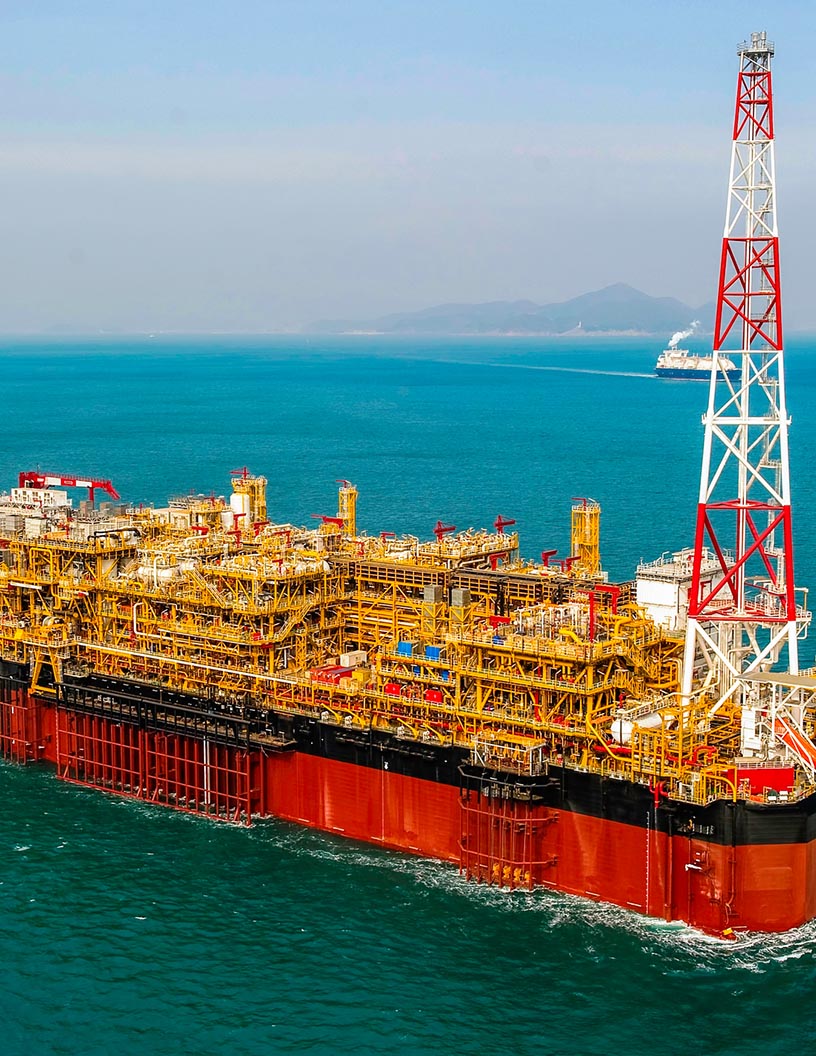


Subsea Production And Processing Market Size 2024-2028
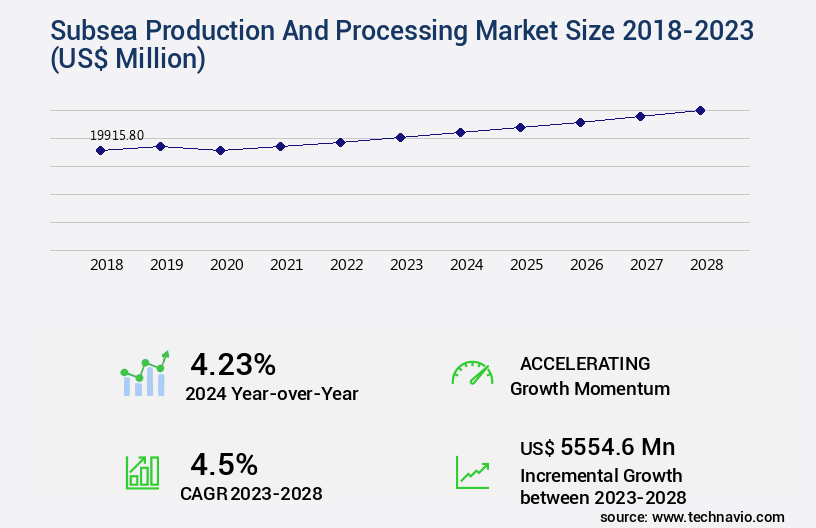
The subsea production and processing market size is forecast to increase by USD 5.55 billion, at a CAGR of 4.5% between 2023 and 2028. Growing consumption of oil and natural gas will drive the subsea production and processing market.
Major Market Trends & Insights
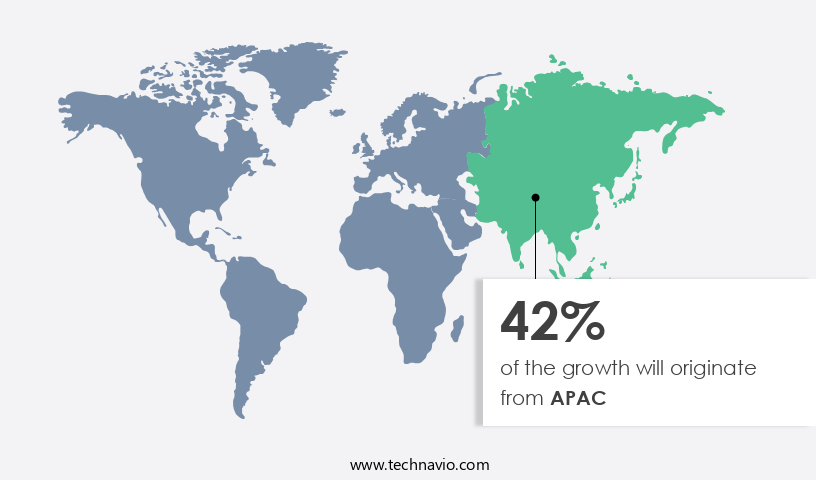
- APAC dominated the market and accounted for a 42% growth during the forecast period.
- By the Application, the Shallow water sub-segment was valued at USD 12.85 billion in 2022
Market Size & Forecast
- Market Opportunities: USD 41.28 billion
- Future Opportunities: USD 5.55 billion
- CAGR : 4.5%
- APAC: Largest market in 2022
Market Summary
- The market is poised for significant growth during the forecast period, driven by the increasing consumption of oil and natural gas and advances in subsea processing technology. Core technologies such as subsea compression, gas lift, and water injection systems are playing a crucial role in enhancing the efficiency of offshore oil and gas production. The market comprises various service types and product categories, including subsea trees, subsea pumps, and subsea control systems. Key companies in the market include Schneider Electric, Aker Solutions, and TechnipFMC. Regulations, such as the Oil and Gas Industry Guidance on Emissions (OGIGE), are shaping the market's landscape by imposing stricter environmental standards on offshore E&P activities.
- The evolving nature of the market presents both challenges and opportunities, with rising operational costs and technological advancements being major factors. According to a recent study, the market size was valued at USD 40.5 billion in 2020 and is projected to reach USD 62.3 billion by 2026, growing at a CAGR of 7.1% during the forecast period. Related markets such as the offshore wind energy sector and the subsea mining industry are also experiencing similar trends and offer potential opportunities for collaboration and growth.
What will be the Size of the Subsea Production And Processing Market during the forecast period?
Get Key Insights on Market Forecast (PDF) Request Free Sample
How is the Subsea Production And Processing Market Segmented and what are the key trends of market segmentation?
The subsea production and processing industry research report provides comprehensive data (region-wise segment analysis), with forecasts and estimates in "USD million" for the period 2024-2028, as well as historical data from 2018-2022 for the following segments.
- Application
- Shallow water
- Deepwater
- Ultra-deepwater
- Geography
- North America
- US
- Europe
- France
- UK
- South America
- Brazil
- Rest of World (ROW)
- North America
By Application Insights
The shallow water segment is estimated to witness significant growth during the forecast period.
Subsea production and processing systems have gained significant traction in the oil and gas industry, particularly in shallow water projects. Currently, approximately 35% of global offshore oil and gas production comes from shallow waters, with adoption projected to reach 40% by 2025. This growth can be attributed to the safety, economic viability, and ease of operation compared to deepwater and ultra-deepwater drilling. Subsea tree designs, subsea wellheads, and subsea separation technology are integral components of these systems. Pipeline monitoring systems, subsea control systems, underwater production facilities, and subsea power distribution are also essential elements that ensure efficient and reliable operations.
Subsea corrosion protection, reservoir simulation models, and flow assurance technologies are crucial for optimizing production and maintaining equipment reliability. Hydraulic subsea actuators, multiphase flow metering, offshore gas compression, and production optimization are other advanced technologies that enhance subsea production and processing capabilities. Underwater intervention methods, automated underwater inspection, high-pressure pipelines, fluid dynamics modeling, subsea boosting systems, subsea processing systems, underwater robotics, pressure vessel design, subsea manifolds, gas hydrate prevention, underwater pipeline integrity, deepwater oil extraction, and underwater structural integrity are all integral parts of the evolving subsea production and processing landscape. The future of the market is promising, with expectations of a 25% increase in demand by 2027.
This growth can be attributed to advancements in technology, increasing exploration activities, and the shift towards more sustainable and cost-effective energy solutions.
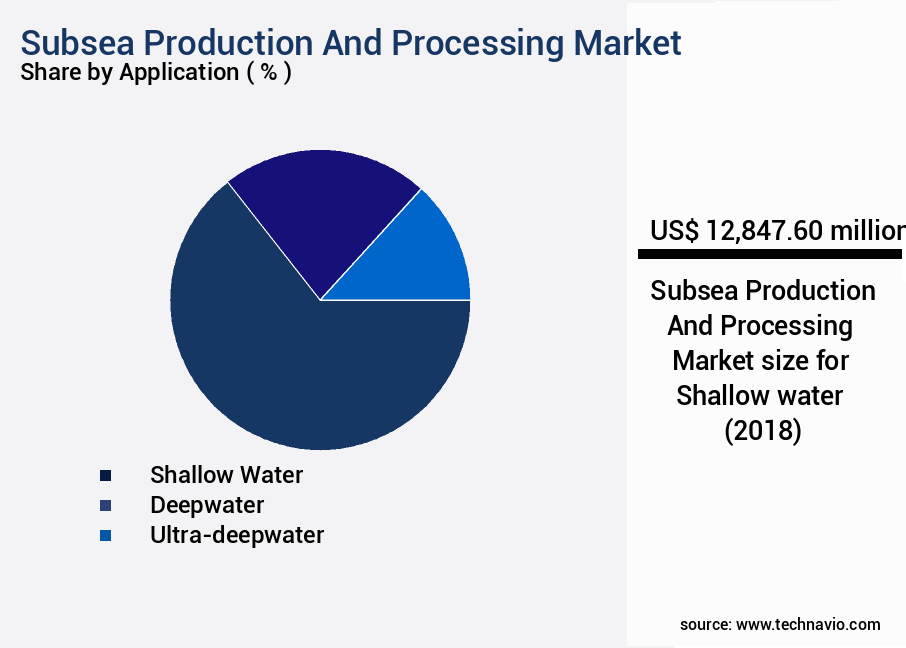
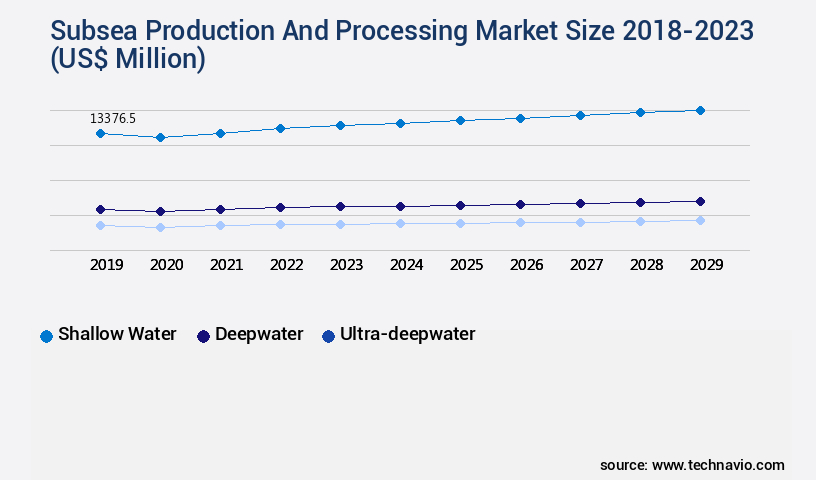
The Shallow water segment was valued at USD 12.85 billion in 2018 and showed a gradual increase during the forecast period.
Regional Analysis
APAC is estimated to contribute 42% to the growth of the global market during the forecast period. Technavio's analysts have elaborately explained the regional trends and drivers that shape the market during the forecast period.
See How Subsea Production And Processing Market Demand is Rising in APAC Request Free Sample
In Europe, Norway and the UK led the market in 2023. The market experienced moderate growth due to the commissioning of offshore projects in the North Sea. Economic recovery, industrial activities, and cold weather conditions fueled the demand for oil and gas in Europe. Despite a low growth period in Norway's oil and gas industry during the 2022 oil price slump, the sector rebounded in 2023. The European market is expected to continue evolving, influenced by ongoing offshore projects and shifting energy demands.
For instance, the UK's Hornsea Two offshore wind farm, the largest in the world, is set to contribute significantly to the region's energy landscape. The market's dynamics are further shaped by advancements in technology, such as subsea compression and digitalization, enhancing operational efficiency and reducing costs.
Market Dynamics
Our researchers analyzed the data with 2023 as the base year, along with the key drivers, trends, and challenges. A holistic analysis of drivers will help companies refine their marketing strategies to gain a competitive advantage.
The market is a critical segment of the oil and gas industry, characterized by complex deepwater production systems and intricate underwater infrastructure. One of the key challenges in this market is ensuring the reliable and efficient operation of subsea wellhead pressure monitoring systems, which require advanced technology for deepwater production optimization techniques. Industry leaders are investing in underwater pipeline integrity management solutions to mitigate risks and enhance the performance of high-pressure pipelines, adhering to stringent design regulations. Remotely operated vehicle intervention systems enable efficient intervention in subsea processing systems, reducing the need for costly and time-consuming manned intervention.
Multiphase flow metering accuracy improvements are essential for optimizing subsea boosting system efficiency enhancements and minimizing deepwater oil extraction environmental impact. Advanced subsea separation technology advancements and flow assurance technologies for deepwater wells contribute to increased production and improved operational efficiency. Subsea corrosion protection techniques for pipelines, such as advanced coatings and cathodic protection systems, ensure reliability and longevity. Hydraulic subsea actuator reliability analysis and underwater robotics for inspection and repair play a crucial role in subsea equipment reliability improvement strategies. Offshore platform maintenance optimization procedures and gas hydrate prevention techniques for subsea pipelines are essential for maintaining production and ensuring safety.
Subsea xmas tree design and maintenance requirements are critical for maintaining well integrity and preventing leaks. Compared to traditional onshore production methods, the market offers numerous advantages, including reduced environmental impact, extended reservoir life, and increased production efficiency. However, the unique challenges of deepwater production and underwater infrastructure require continuous innovation and investment in advanced technologies and maintenance strategies.
The market continues to evolve, driven by advancements in technology and increasing demand for oil and gas resources. According to recent research, the subsea industry is experiencing significant growth compared to traditional onshore production methods. In 2020, subsea production accounted for approximately 25% of global oil and gas production, up from 15% in 2010. Subsea production and processing offer numerous advantages over traditional methods, including lower operational costs, increased safety, and reduced environmental impact. The use of subsea processing facilities allows for the separation and treatment of oil and gas mixtures at the source, reducing the need for costly offshore platforms and onshore processing facilities.
Furthermore, subsea production and processing enable the exploitation of reserves that were previously uneconomical to extract. Compared to other industries, the market demonstrates a high level of innovation and investment. In 2021, global spending on subsea projects was estimated to reach USD 65 billion, a significant increase from USD 45 billion in 2016. This growth is expected to continue, with several major projects scheduled for completion in the coming years. Despite these positive trends, the market faces challenges, including high upfront costs, complex engineering requirements, and operational risks. However, ongoing technological advancements, such as the development of smaller, more efficient subsea systems and the integration of renewable energy sources, are helping to mitigate these challenges and drive growth in the market.
In conclusion, the market is a dynamic and evolving industry, characterized by significant growth, innovation, and investment. The advantages of subsea production and processing, including lower operational costs, increased safety, and reduced environmental impact, are driving demand and encouraging the development of new technologies and projects. Despite challenges, the future of the subsea industry looks bright, with numerous opportunities for growth and innovation.
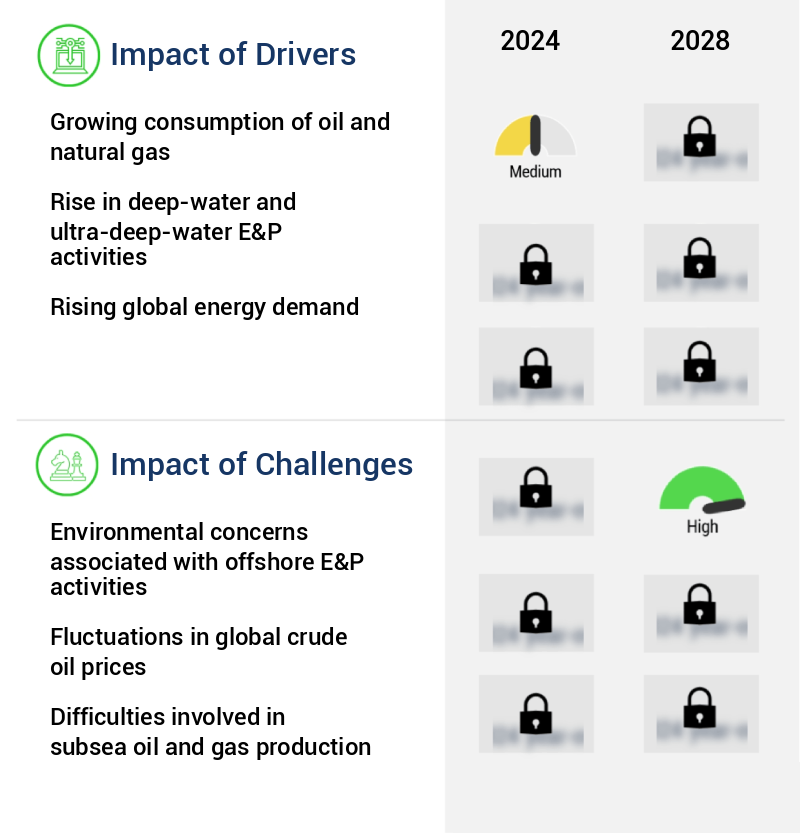
What are the key market drivers leading to the rise in the adoption of Subsea Production And Processing Industry?
- The increasing demand for oil and natural gas serves as the primary catalyst for market growth.
- The oil and gas upstream sector experiences significant investments due to the increasing consumption of these resources. According to the US Energy Information Administration (EIA), China is a major player in both oil consumption and production. In 2020, China accounted for approximately 14% of the global oil consumption, making it the second-largest consumer after the United States. Simultaneously, China held around 5% of the global oil production that year. The growing demand for oil and natural gas has resulted in a surge in exploration and production (E&P) activities, particularly offshore.
- This trend is observed worldwide as countries seek to meet their energy needs. The oil and gas upstream sector continues to evolve, with China's role as a significant consumer and producer shaping its development.
What are the market trends shaping the Subsea Production And Processing Industry?
- Advances in subsea processing represent the current market trend. This innovation is shaping the future of offshore oil and gas production.
- Offshore oil and gas production entails substantial investments for operations and infrastructure establishment. To remain competitive, the industry is innovating with optimized systems and equipment, focusing on cost reduction. Subsea processing systems offer advantages for both greenfield and brownfield projects. These systems reduce operational and capital expenses related to topside facilities, enhance production and recovery rates, provide design flexibility, prolong field life, alleviate water treatment constraints, minimize topside flow assurance issues, decrease manned operations, and lower energy consumption for produced water.
- By implementing subsea processing systems, offshore oil and gas companies can streamline their operations and improve overall efficiency.
What challenges does the Subsea Production And Processing Industry face during its growth?
- Offshore oil and gas exploration and production (E&P) activities pose significant environmental challenges that can hinder industry growth. These concerns encompass potential negative impacts on marine ecosystems, including habitat destruction, water and air pollution, and the risk of oil spills. Addressing these environmental issues is essential for ensuring the sustainability and long-term success of the offshore E&P industry.
- Subsea oil and gas exploration and production (E&P) activities present unique safety challenges due to the complexities involved in underwater operations. Ensuring reliable and safe installation of subsea equipment is crucial for the development of a subsea oil and gas well. However, these activities come with environmental concerns. Oil spills, air and water pollution from toxic chemical emissions, and methane emissions are among the environmental issues associated with oil and gas drilling. In the deep-water drilling process, drilling fluids are essential for cooling and lubricating drill bits and pipes. These fluids, however, release toxic chemicals into the water, impacting marine life.
- The continuous unfolding of subsea oil and gas market activities necessitates the exploration of alternative, eco-friendly drilling fluids and technologies to mitigate these environmental concerns. The subsea oil and gas market is characterized by ongoing innovation and the adoption of advanced technologies. For instance, companies are investing in the development of biodegradable drilling fluids and drones for underwater inspections. These advancements aim to enhance operational efficiency while reducing environmental impact. In contrast, traditional drilling methods have faced increasing scrutiny due to their environmental footprint. The shift towards sustainable drilling practices is gaining momentum as stakeholders demand more responsible and eco-friendly approaches.
- This evolving market landscape underscores the importance of staying informed about the latest trends and advancements in the subsea oil and gas sector.
Exclusive Customer Landscape
The subsea production and processing market forecasting report includes the adoption lifecycle of the market, covering from the innovator's stage to the laggard's stage. It focuses on adoption rates in different regions based on penetration. Furthermore, the subsea production and processing market report also includes key purchase criteria and drivers of price sensitivity to help companies evaluate and develop their market growth analysis strategies.
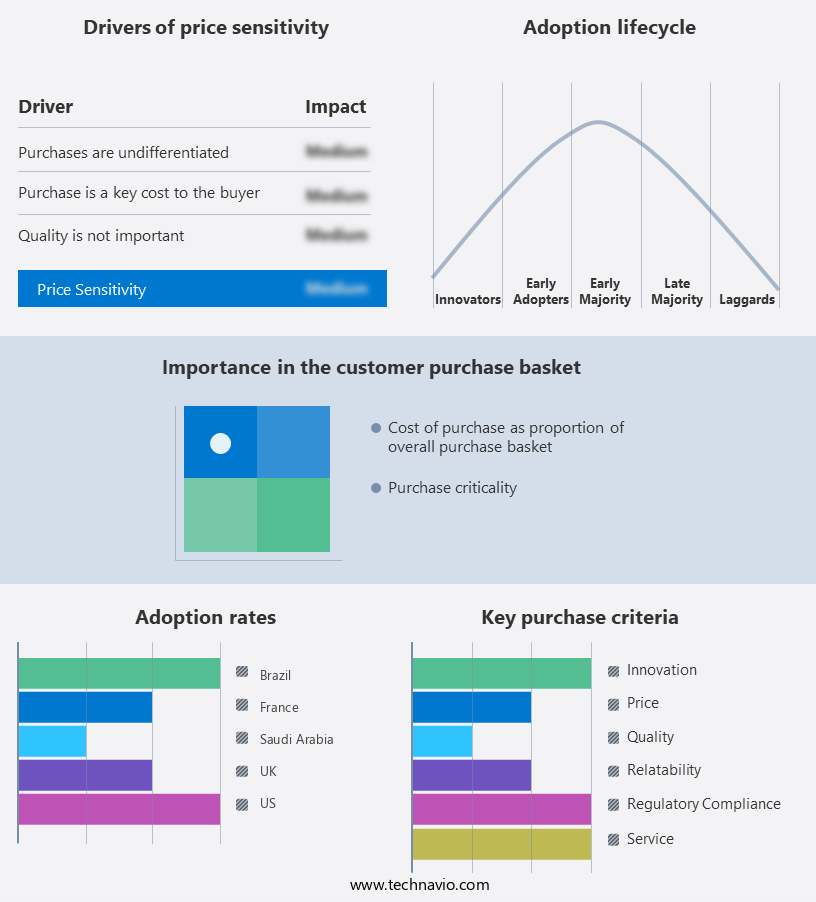
Customer Landscape of Subsea Production And Processing Industry
Competitive Landscape & Market Insights
Companies are implementing various strategies, such as strategic alliances, subsea production and processing market forecast, partnerships, mergers and acquisitions, geographical expansion, and product/service launches, to enhance their presence in the industry.
Aker Solutions ASA - This company specializes in subsea production and processing solutions, enhancing hydrocarbon output in an economical manner for new field developments, tie-backs, and existing facilities.
The industry research and growth report includes detailed analyses of the competitive landscape of the market and information about key companies, including:
- Aker Solutions ASA
- Baker Hughes Co.
- Dril Quip Inc.
- Forum Energy Technologies Inc.
- Halliburton Co.
- HMH
- Hunting Plc
- NOV Inc.
- Oceaneering International Inc.
- Optime Subsea
- Parker Hannifin Corp.
- Plexus Holdings Plc
- Proserv UK Ltd.
- Saipem S.p.A.
- Schlumberger Ltd.
- Subsea 7 SA
- TechnipFMC plc
- Tenaris SA
- Trendsetter Engineering Inc.
- Worldwide Oilfield Machine Inc.
Qualitative and quantitative analysis of companies has been conducted to help clients understand the wider business environment as well as the strengths and weaknesses of key industry players. Data is qualitatively analyzed to categorize companies as pure play, category-focused, industry-focused, and diversified; it is quantitatively analyzed to categorize companies as dominant, leading, strong, tentative, and weak.
Recent Development and News in Subsea Production And Processing Market
- In January 2024, Aker Solutions, a leading provider of engineering and technology solutions for the oil and gas industry, announced the launch of its new subsea production system, 'AkerStream', designed to increase oil recovery from subsea fields by up to 20%. This innovative solution was showcased at the Offshore Technology Conference in Houston (Source: Aker Solutions Press Release).
- In March 2024, TechnipFMC, a global leader in subsea, onshore, and offshore engineering, and TotalEnergies, a major international oil and gas company, signed a strategic collaboration agreement to jointly develop and commercialize new technologies for subsea production and processing. This partnership aimed to reduce costs and improve efficiency in deepwater oil and gas production (Source: TechnipFMC Press Release).
- In May 2024, Equinor, a Norwegian energy company, secured regulatory approval from the Norwegian Ministry of Petroleum and Energy to proceed with the development of the Johan Castberg field, which will include the world's largest subsea production system. The project is expected to produce 150,000 barrels of oil per day and will be completed in several phases between 2025 and 2032 (Source: Equinor Press Release).
- In April 2025, Saipem, an Italian multinational company specializing in engineering and construction, announced a significant investment of €1.5 billion in its new Subsea Business Unit. This investment will focus on expanding its capabilities in subsea production and processing, including the development of new technologies and the acquisition of specialized vessels (Source: Saipem Press Release).
Dive into Technavio's robust research methodology, blending expert interviews, extensive data synthesis, and validated models for unparalleled Subsea Production And Processing Market insights. See full methodology.
|
Market Scope |
|
|
Report Coverage |
Details |
|
Page number |
154 |
|
Base year |
2023 |
|
Historic period |
2018-2022 |
|
Forecast period |
2024-2028 |
|
Growth momentum & CAGR |
Accelerate at a CAGR of 4.5% |
|
Market growth 2024-2028 |
USD 5554.6 million |
|
Market structure |
Fragmented |
|
YoY growth 2023-2024(%) |
4.23 |
|
Key countries |
US, Brazil, France, UK, and Saudi Arabia |
|
Competitive landscape |
Leading Companies, Market Positioning of Companies, Competitive Strategies, and Industry Risks |
Research Analyst Overview
ai_gpt_research_analysis.multili
What are the Key Data Covered in this Subsea Production And Processing Market Research and Growth Report?
-
What is the expected growth of the fertility services market between 2024 and 2028?
-
USD 5.55 billion, at a CAGR of 4.5%
-
-
What segmentation does the market report cover?
-
The report segmented by Application (Shallow water, Deepwater, and Ultra-deepwater) and Geography (Europe, APAC, Middle East and Africa, South America, and North America)
-
-
Which regions are analyzed in the report?
-
Europe, APAC, Middle East and Africa, South America, and North America
-
-
What are the key growth drivers and market challenges?
-
Growing consumption of oil and natural gas, Environmental concerns associated with offshore E&P activities
-
-
Who are the major players in the fertility services market?
-
Key Companies Aker Solutions ASA, Baker Hughes Co., Dril Quip Inc., Forum Energy Technologies Inc., Halliburton Co., HMH, Hunting Plc, NOV Inc., Oceaneering International Inc., Optime Subsea, Parker Hannifin Corp., Plexus Holdings Plc, Proserv UK Ltd., Saipem S.p.A., Schlumberger Ltd., Subsea 7 SA, TechnipFMC plc, Tenaris SA, Trendsetter Engineering Inc., and Worldwide Oilfield Machine Inc.
-
We can help! Our analysts can customize this subsea production and processing market research report to meet your requirements.
Market Research Insights
- The market exhibits consistent growth, with current installations accounting for approximately 25% of the global oil and gas production. Looking ahead, this sector is anticipated to expand by over 10% annually, driven by advancements in technology and increasing demand for offshore resources. Comparatively, subsea umbilicals and control systems represent a significant portion of subsea production and processing infrastructure. These systems facilitate communication, power, and control between offshore installations and underwater equipment, accounting for around 30% of the total market value.
- In contrast, high-pressure hydraulics and pipeline leak detection systems account for roughly 15% and 10% of the market, respectively. The integration of advanced technologies, such as underwater communication, flowline monitoring, and process safety management, contributes to enhanced production optimization and remote operations. These innovations enable the efficient management of subsea assets and minimize downtime, further driving market expansion.
 RIA -
RIA - 
