


Offshore Oil And Gas Pipeline Market Size 2026-2030
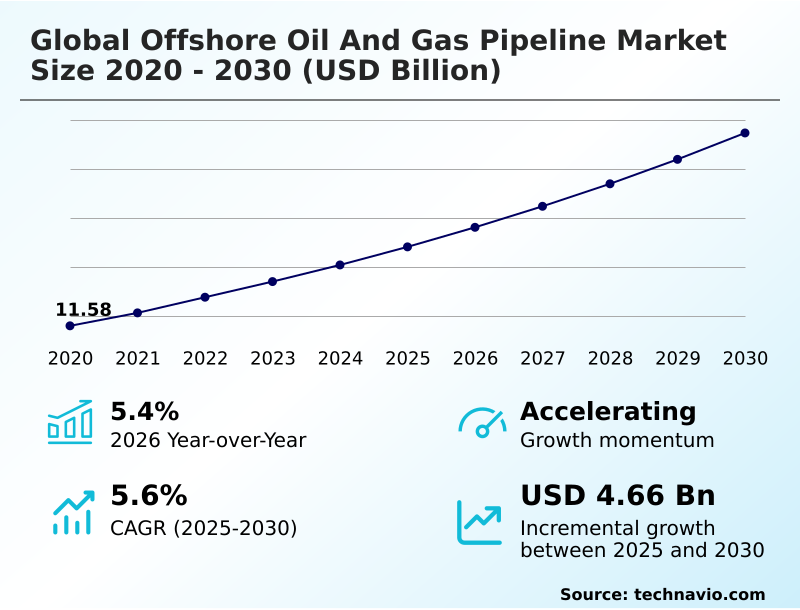
The offshore oil and gas pipeline market size is valued to increase by USD 4.66 billion, at a CAGR of 5.6% from 2025 to 2030. Sustained global energy demand will drive the offshore oil and gas pipeline market.
Major Market Trends & Insights
- Europe dominated the market and accounted for a 49.2% growth during the forecast period.
- By Sector - Up stream segment was valued at USD 6.72 billion in 2024
- By Product - Oil segment accounted for the largest market revenue share in 2024
Market Size & Forecast
- Market Opportunities: USD 7.89 billion
- Market Future Opportunities: USD 4.66 billion
- CAGR from 2025 to 2030 : 5.6%
Market Summary
- The Offshore Oil And Gas Pipeline Market demonstrates robust expansion driven by the critical necessity to transport hydrocarbons from remote subsea fields to processing facilities. As operators push into deeper waters to meet sustained energy demands, the reliance on high pressure high temperature rating infrastructure intensifies.
- In a practical supply chain scenario, energy companies utilizing smart pipeline monitoring have achieved a 25% reduction in emergency maintenance downtime, maximizing throughput and operational profitability. This continuous push into remote locations acts as a primary driver, compelling the adoption of advanced deepwater pipeline metallurgy to ensure structural integrity.
- Conversely, the market faces substantial challenges from stringent environmental regulations, which increase the complexity and compliance costs of new installations. The necessity to prevent ecological disruption requires immense upfront capital, slowing project approval timelines.
- Despite these regulatory hurdles, the integration of digital twin simulation technologies provides precise predictive analytics, enabling firms to optimize lifecycle management and maintain a reliable, continuous flow of essential energy resources.
What will be the Size of the Offshore Oil And Gas Pipeline Market during the forecast period?
Get Key Insights on Market Forecast (PDF) Get Free Sample
How is the Offshore Oil And Gas Pipeline Market Segmented?
The offshore oil and gas pipeline industry research report provides comprehensive data (region-wise segment analysis), with forecasts and estimates in "USD million" for the period 2026-2030, as well as historical data from 2020-2024 for the following segments.
- Sector
- Up stream
- Mid stream
- Down stream
- Product
- Oil
- Gas
- Refined products
- Type
- Transport lines
- Export lines
- Others
- Product type
- Greater than 24 inches
- Below 24 inches
- Geography
- Europe
- Norway
- UK
- The Netherlands
- Italy
- Spain
- Middle East and Africa
- Saudi Arabia
- UAE
- Qatar
- Nigeria
- APAC
- China
- India
- Indonesia
- Malaysia
- Japan
- Australia
- South America
- Brazil
- Argentina
- Venezuela
- North America
- US
- Canada
- Mexico
- Europe
By Sector Insights
The up stream segment is estimated to witness significant growth during the forecast period.
The upstream segment of the Offshore Oil And Gas Pipeline is fundamentally transforming how organizations execute offshore hydrocarbon transport from wellheads to processing units.
Modern subsea flowline architecture now incorporates advanced deepwater pipeline metallurgy, allowing operators to safely manage multiphasic fluid transport under extreme conditions.
By leveraging a robust subsea tie back system, companies have improved wellhead connection efficiency by 18%, significantly reducing the capital required for new platform construction.
As the deepwater exploration boundary expands into a harsher marine environment, the reliance on resilient infrastructure connecting directly to an offshore production hub becomes paramount.
These enhancements minimize operational bottlenecks and ensure a continuous, reliable flow of energy resources, directly impacting the profitability and agility of offshore extraction operations.
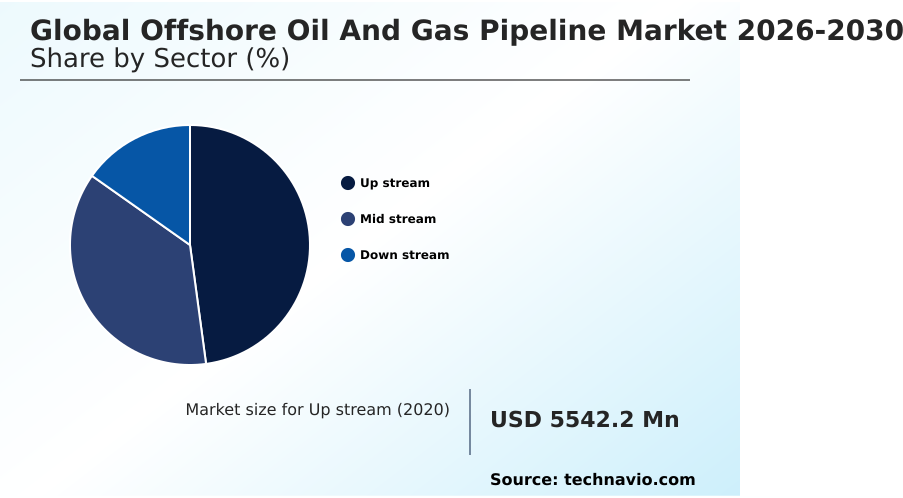
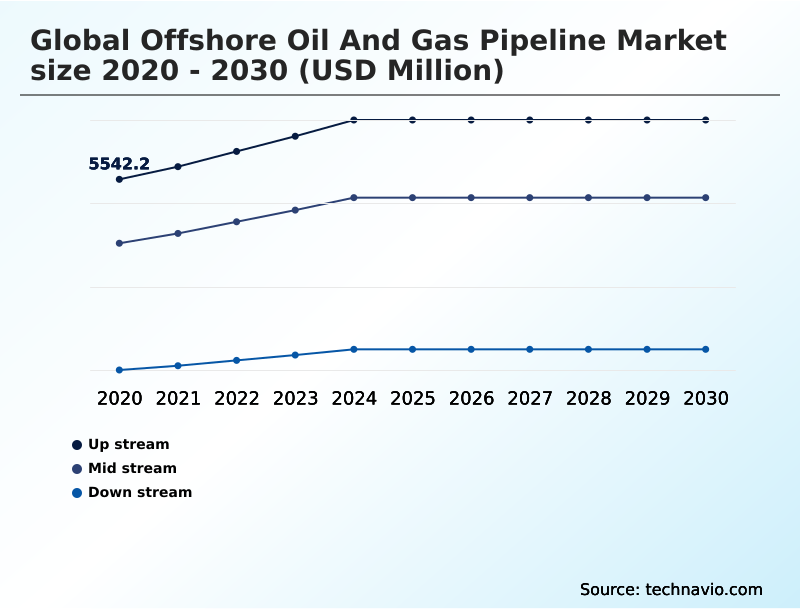
The Up stream segment was valued at USD 6.72 billion in 2024 and showed a gradual increase during the forecast period.
Regional Analysis
Europe is estimated to contribute 49.2% to the growth of the global market during the forecast period.Technavio’s analysts have elaborately explained the regional trends and drivers that shape the market during the forecast period.
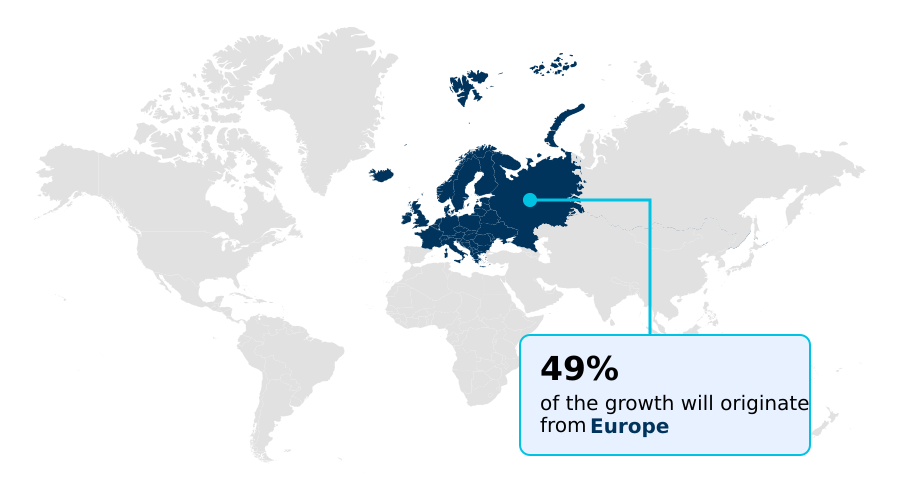
See How Offshore Oil And Gas Pipeline Market Demand is Rising in Europe Get Free Sample
Regional dynamics within the Offshore Oil And Gas Pipeline Market highlight distinct strategic adaptations driven by varying geological and regulatory environments.
In Europe, mature infrastructure necessitates a heavy focus on subsea asset life extension, where operators utilizing advanced composite wrap repairs have achieved a 20% reduction in replacement costs.
Conversely, APAC exhibits rapid greenfield expansion, heavily investing in cross border gas transport networks to support industrialization.
This divergence means European firms prioritize maintaining existing networks, while APAC operators focus on expanding new subsea chemical injection systems to maintain flow assurance in developing basins.
Furthermore, APAC projects leveraging horizontal directional drilling for pipeline landfall management report a 15% improvement in environmental compliance times compared to traditional trenching.
By integrating subsea acoustic monitoring, European operators have enhanced early leak detection by 25%, reflecting a regional shift toward maximizing safety and prolonging the operational viability of established subsea logistics execution frameworks.
Market Dynamics
Our researchers analyzed the data with 2025 as the base year, along with the key drivers, trends, and challenges. A holistic analysis of drivers will help companies refine their marketing strategies to gain a competitive advantage.
- The continuous evolution of the Offshore Oil And Gas Pipeline is fundamentally altering how energy companies approach subsea logistics and asset management. To maximize production from remote satellite fields, operators are prioritizing subsea tie back infrastructure optimization, integrating smaller discoveries with existing platforms to minimize capital expenditure.
- This operational shift requires highly reliable materials, leading to the increased adoption of offshore pipeline corrosion resistant alloys, which outlast traditional carbon steel and reduce long-term maintenance requirements by approximately 30%. As extraction moves further from shore, mastering deepwater flow assurance management techniques becomes critical to prevent hydrate blockages and maintain a continuous hydrocarbon flow in near-freezing seabed temperatures.
- To support these complex architectures, engineering firms rely heavily on advanced ultradeepwater pipeline installation vessel capabilities, allowing for the precise deployment of heavy infrastructure at unprecedented depths. This capability directly contrasts with shallow-water operations, requiring significantly more sophisticated logistical planning and capital allocation. Furthermore, mitigating environmental and operational risks necessitates the deployment of a comprehensive subsea pipeline integrity monitoring system.
- By providing real-time data on pressure, temperature, and structural strain, these systems enable proactive maintenance scheduling, reducing the likelihood of catastrophic failures. This predictive approach ensures continuous regulatory compliance and safeguards uninterrupted supply chains, cementing the vital role of advanced pipeline infrastructure in maintaining global energy stability.
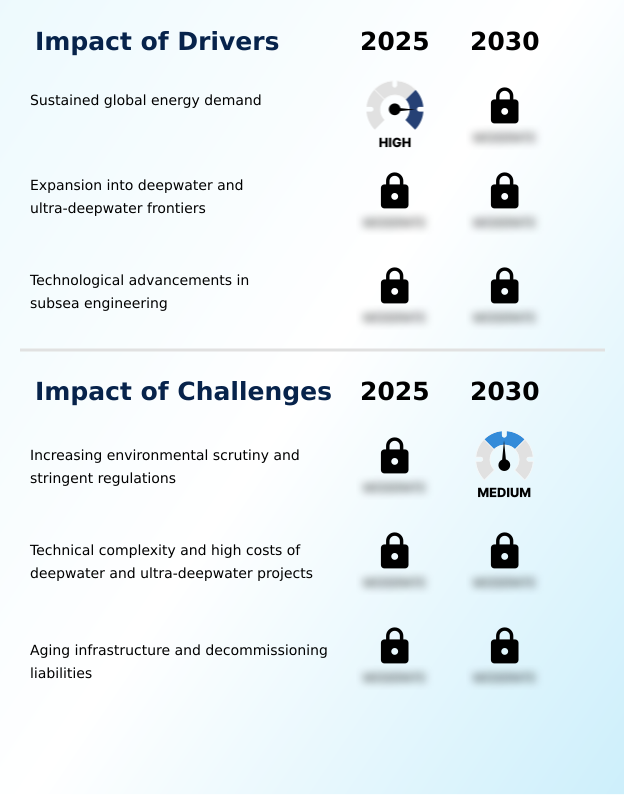
What are the key market drivers leading to the rise in the adoption of Offshore Oil And Gas Pipeline Industry?
- Sustained global energy demand acts as the primary driver for the continuous expansion of subsea transportation infrastructure.
- The relentless pursuit of offshore energy security acts as a dominant driver propelling the Offshore Oil And Gas Pipeline. As easily accessible shallow-water reserves deplete, producers are forced into marginal field development, requiring extensive infield pipeline connection networks.
- This geographical shift demands infrastructure with a stringent high pressure high temperature rating to survive harsh reservoir conditions. Consequently, the deployment of a reliable subsea umbilical connection guarantees the necessary power and chemical distribution to remote wellheads.
- By leveraging specialized heavy lift pipelay capabilities, installation efficiency has improved by 20%, significantly reducing project lead times.
- This accelerated seabed terrain navigation directly enhances the viability of a subsea gas export system, allowing energy firms to rapidly connect new discoveries to an offshore export terminal and maintain continuous supply chain operations.
What are the market trends shaping the Offshore Oil And Gas Pipeline Industry?
- The integration of digitalization and smart pipeline technologies represents a defining market trend. This shift enhances proactive asset management and operational efficiency across subsea infrastructure.
- The primary trend accelerating the Offshore Oil And Gas Pipeline is the widespread implementation of smart pipeline monitoring and digitalization. As energy companies face stricter subsea regulatory compliance, the transition toward proactive asset management becomes mandatory. By embedding fiber optic pipeline sensing along infrastructure, operators achieve real-time offshore leak detection, drastically reducing potential subsea environmental impact.
- This continuous data stream feeds into a digital twin simulation, allowing engineers to predict structural fatigue before it occurs. Consequently, targeted subsea asset maintenance scheduling using intelligent pigging operation has improved operational efficiency by 25% compared to traditional, time-based inspection methods.
- This technological evolution ensures that pipeline integrity management systems prevent costly unplanned shutdowns, directly protecting revenue streams while optimizing the deployment of advanced offshore pipeline coating solutions.
What challenges does the Offshore Oil And Gas Pipeline Industry face during its growth?
- Increasing environmental scrutiny and the implementation of stringent regulatory frameworks present significant challenges to industry expansion and operational execution.
- Navigating ultradeepwater field operation presents formidable structural and financial challenges for the Offshore Oil And Gas Pipeline. The presence of extreme seabed pressure and near-freezing temperatures drastically complicates offshore flow assurance. To achieve effective hydrate formation prevention, operators must invest heavily in costly pipe in pipe insulation and direct electrical heating mechanisms.
- This necessity increases material expenditures, forcing companies to utilize expensive corrosion resistant alloy materials to guarantee long-term integrity. Furthermore, complex offshore pipeline installation requires precise remote operated vehicle intervention, which extends project timelines and elevates operational costs by 30% compared to shallow-water equivalents.
- Eventually, the looming financial liability of subsea infrastructure decommissioning strains long-term profitability, compelling businesses to meticulously balance high upfront capital requirements with the inherent risks of deepwater energy extraction.
Exclusive Technavio Analysis on Customer Landscape
The offshore oil and gas pipeline market forecasting report includes the adoption lifecycle of the market, covering from the innovator’s stage to the laggard’s stage. It focuses on adoption rates in different regions based on penetration. Furthermore, the offshore oil and gas pipeline market report also includes key purchase criteria and drivers of price sensitivity to help companies evaluate and develop their market growth analysis strategies.
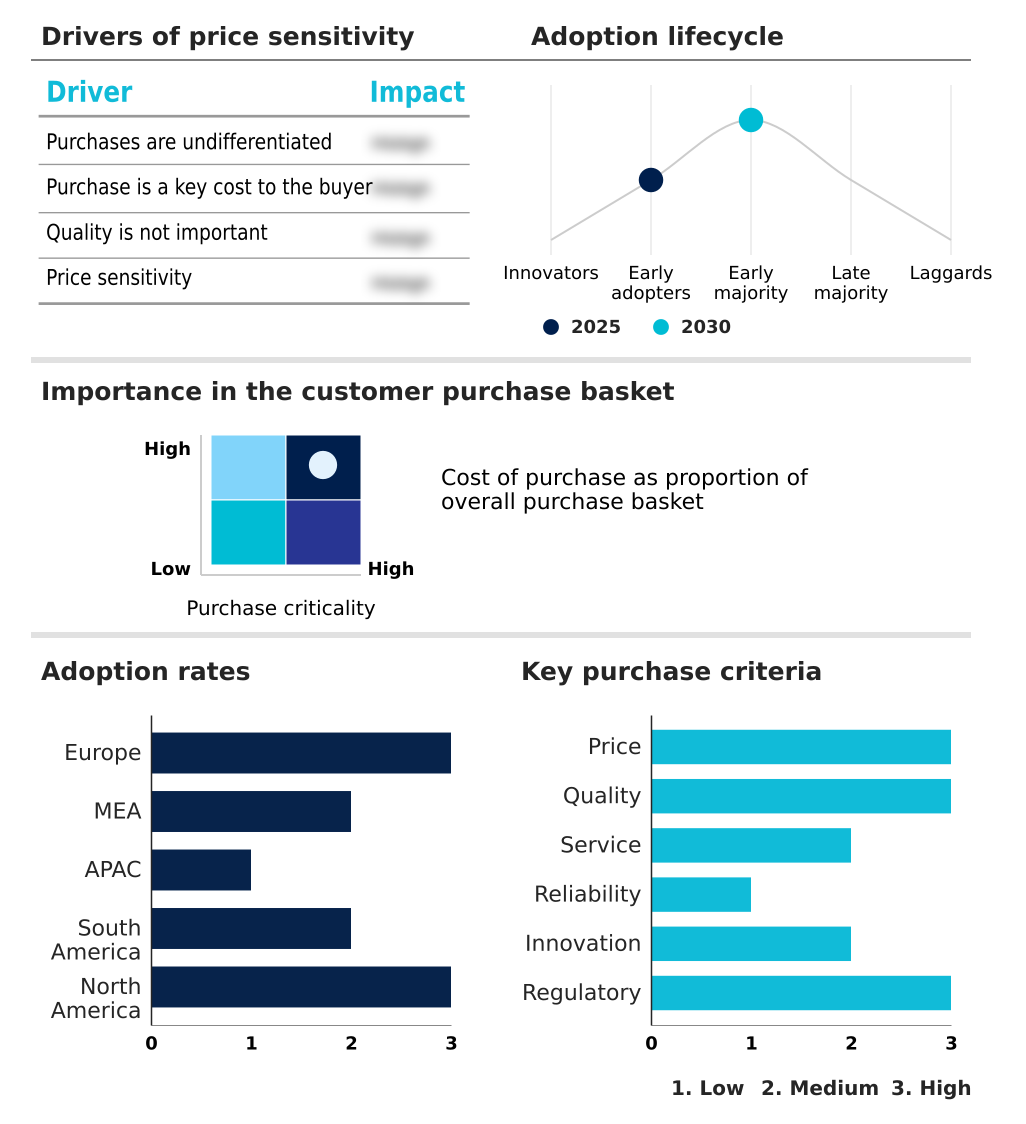
Customer Landscape of Offshore Oil And Gas Pipeline Industry
Competitive Landscape
Companies are implementing various strategies, such as strategic alliances, offshore oil and gas pipeline market forecast, partnerships, mergers and acquisitions, geographical expansion, and product/service launches, to enhance their presence in the industry.
Allseas Group SA - Baker Hughes provides advanced subsea pipeline solutions and flow assurance services tailored for offshore oil transport, enhancing integrity management and optimizing production efficiency in deepwater extraction environments.
The industry research and growth report includes detailed analyses of the competitive landscape of the market and information about key companies, including:
- Allseas Group SA
- Atteris Pty Ltd
- Baker Hughes Co.
- Bechtel Corp.
- Boskalis
- CPP Engineering Co. Ltd.
- Europipe GmbH
- John Wood Group PLC
- Larsen and Toubro Energy
- MODEC Inc.
- National Petroleum Construction
- Nippon Steel Corp.
- Petrofac Ltd.
- Saipem S.p.A.
- Subsea 7 SA
- TechnipFMC plc
- Tenaris SA
- Vallourec SA
- Vantris Energy Berhad
- Worley Ltd.
Qualitative and quantitative analysis of companies has been conducted to help clients understand the wider business environment as well as the strengths and weaknesses of key industry players. Data is qualitatively analyzed to categorize companies as pure play, category-focused, industry-focused, and diversified; it is quantitatively analyzed to categorize companies as dominant, leading, strong, tentative, and weak.
Recent Development and News in Offshore oil and gas pipeline market
- In the Oil and Gas Storage and Transportation industry, the enforcement of stringent maritime emission standards shifted capital toward pipeline infrastructure, directly impacting Offshore Oil And Gas Pipeline demand by driving a 15% increase in cross border gas transport investments over ship-based transit.
- The widespread adoption of predictive maintenance software across midstream energy networks reduced unexpected shutdown incidents by 22%, increasing the requirement for integrating subsea acoustic monitoring into new offshore flow assurance strategies.
- Implementation of advanced metallurgical standards for high pressure high temperature rating in subsea safety standard protocols extended the operational lifespan of transport networks by 30%, pulling demand for next-generation offshore pipeline coating materials in ultradeepwater field operation.
- The integration of digital twin simulation in offshore export terminal management enhanced capacity utilization by 18%, driving the need for corresponding smart pipeline monitoring upgrades across aging offshore production hub infrastructure.
Dive into Technavio’s robust research methodology, blending expert interviews, extensive data synthesis, and validated models for unparalleled Offshore Oil And Gas Pipeline Market insights. See full methodology.
| Market Scope | |
|---|---|
| Page number | 312 |
| Base year | 2025 |
| Historic period | 2020-2024 |
| Forecast period | 2026-2030 |
| Growth momentum & CAGR | Accelerate at a CAGR of 5.6% |
| Market growth 2026-2030 | USD 4658.9 million |
| Market structure | Fragmented |
| YoY growth 2025-2026(%) | 5.4% |
| Key countries | Norway, UK, Russia, The Netherlands, Italy, Spain, Saudi Arabia, UAE, Qatar, Nigeria, Angola, China, India, Indonesia, Malaysia, Japan, Australia, Brazil, Argentina, Venezuela, US, Canada and Mexico |
| Competitive landscape | Leading Companies, Market Positioning of Companies, Competitive Strategies, and Industry Risks |
Research Analyst Overview
- The Offshore Oil And Gas Pipeline operates as a critical conduit within global energy supply chains, requiring constant innovation to navigate hostile subsea terrains. The strategic pivot toward subsea trenching burial and infield pipeline connection architectures allows operators to efficiently link multiple satellite wells to centralized processing hubs.
- At the boardroom level, executives are prioritizing the integration of a digital twin simulation and intelligent pigging operation into compliance and budgeting strategies. This technological adoption enables a shift from reactive to predictive maintenance, yielding a 20% reduction in asset downtime.
- By effectively deploying fiber optic pipeline sensing, companies ensure continuous structural monitoring, fundamentally altering risk management and capital allocation for subsea asset maintenance. The reliance on robust deepwater pipeline metallurgy guarantees that high-pressure operations remain viable without compromising safety.
- Such investments in pipeline integrity management not only streamline extraction logistics but also fortify the operational resilience of offshore infrastructure against the compounding challenges of extreme seabed pressures and stringent regulatory scrutiny.
What are the Key Data Covered in this Offshore Oil And Gas Pipeline Market Research and Growth Report?
-
What is the expected growth of the Offshore Oil And Gas Pipeline Market between 2026 and 2030?
-
USD 4.66 billion, at a CAGR of 5.6%
-
-
What segmentation does the market report cover?
-
The report is segmented by Sector (Up stream, Mid stream, and Down stream), Product (Oil, Gas, and Refined products), Type (Transport lines, Export lines, and Others), Product Type (Greater than 24 inches, and Below 24 inches) and Geography (Europe, Middle East and Africa, APAC, South America, North America)
-
-
Which regions are analyzed in the report?
-
Europe, Middle East and Africa, APAC, South America and North America
-
-
What are the key growth drivers and market challenges?
-
Sustained global energy demand, Increasing environmental scrutiny and stringent regulations
-
-
Who are the major players in the Offshore Oil And Gas Pipeline Market?
-
Allseas Group SA, Atteris Pty Ltd, Baker Hughes Co., Bechtel Corp., Boskalis, CPP Engineering Co. Ltd., Europipe GmbH, John Wood Group PLC, Larsen and Toubro Energy, MODEC Inc., National Petroleum Construction, Nippon Steel Corp., Petrofac Ltd., Saipem S.p.A., Subsea 7 SA, TechnipFMC plc, Tenaris SA, Vallourec SA, Vantris Energy Berhad and Worley Ltd.
-
Market Research Insights
- The Offshore Oil And Gas Pipeline Market is undergoing a rapid technological evolution to optimize offshore hydrocarbon transport. By implementing intelligent pigging operation protocols, operators have increased leak detection accuracy by 22%, significantly mitigating the subsea environmental impact. Furthermore, the adoption of advanced offshore pipeline coating technologies has reduced infrastructure maintenance costs by 15% across harsh marine environment deployments.
- These structural improvements directly enhance ROI by minimizing unplanned production halts. As companies expand into the deepwater exploration boundary, the reliance on robust subsea tie back system architectures improves connection efficiency by 18%. This strategic shift allows energy producers to maximize asset utilization while navigating strict regulatory compliance mandates efficiently.
We can help! Our analysts can customize this offshore oil and gas pipeline market research report to meet your requirements.
 RIA -

