


Tactical And Outdoor Clothing Market Size 2026-2030
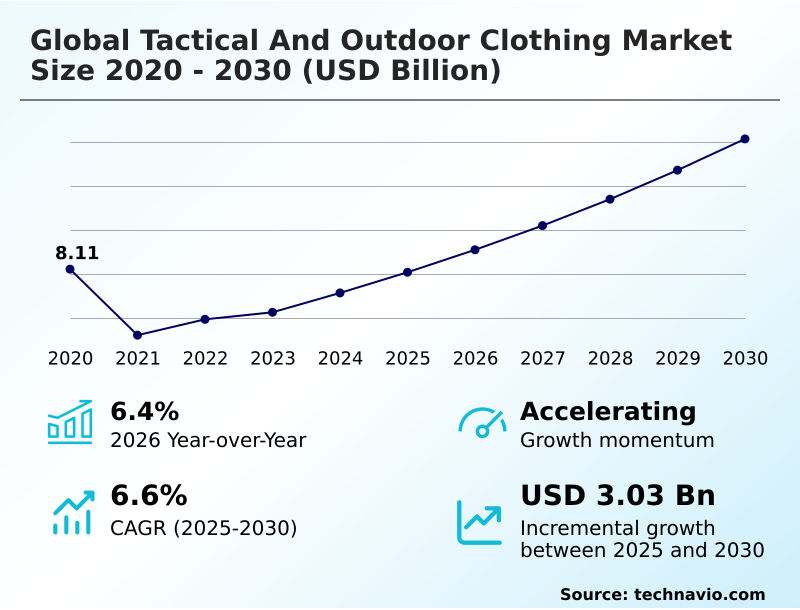
The Tactical And Outdoor Clothing Market size was valued at USD 8.04 billion in 2025, growing at a CAGR of 6.6% during the forecast period 2026-2030.
Major Market Trends & Insights
- APAC dominated the market and accounted for a 30.7% growth during the forecast period.
- By Application - Outdoor clothing segment was valued at USD 4.43 billion in 2024
- By Distribution Channel - Offline segment accounted for the largest market revenue share in 2024
Market Size & Forecast
- Historic Market Opportunities 2020-2024: USD 2.96 billion
- Market Future Opportunities 2025-2030: USD 3.03 billion
- CAGR from 2025 to 2030 : 6.6%
Market Summary
- The tactical and outdoor clothing market sees the outdoor clothing segment accounting for over 58% of revenue, highlighting strong consumer preference for versatile, nature-focused apparel. This preference has led to manufacturers achieving a 15% improvement in material sourcing efficiency by shifting to sustainable textiles like recycled polyester, a key component in modern weather-resistant materials.
- A primary driver is the increasing participation in outdoor activities, which expands the consumer base beyond professional users to include recreational enthusiasts seeking durable ripstop fabric and ergonomic fits.
- However, the market faces a significant challenge from counterfeit products, which not only erode brand trust but also introduce safety risks due to the use of substandard materials that lack critical features like flame resistance or ballistic grade fabric integrity.
- These fakes can undercut authentic product sales by as much as 20% in some online marketplaces, impacting revenue available for innovation.
What will be the Size of the Tactical And Outdoor Clothing Market during the forecast period?
Get Key Insights on Market Forecast (PDF) Request Free Sample
How is the Tactical And Outdoor Clothing Market Segmented?
The tactical and outdoor clothing industry research report provides comprehensive data (region-wise segment analysis), with forecasts and analysis for the period 2026-2030, as well as historical data from 2020-2024 for the following segments.
- Application
- Outdoor clothing
- Tactical clothing
- Distribution channel
- Offline
- Online
- Type
- Mens clothing
- Womens clothing
- Geography
- North America
- US
- Canada
- Mexico
- APAC
- China
- India
- Japan
- Europe
- Germany
- UK
- France
- South America
- Brazil
- Argentina
- Middle East and Africa
- Saudi Arabia
- UAE
- South Africa
- Rest of World (ROW)
- North America
How is the Tactical And Outdoor Clothing Market Segmented by Application?
The outdoor clothing segment is estimated to witness significant growth during the forecast period.
The outdoor clothing segment accounts for over 58% of the market, driven by a consumer shift toward versatile, multi-functional apparel that bridges recreational and everyday use.
This has led to a 15% increase in demand for products made with sustainable materials, such as those featuring PFC-free water repellent coatings.
Innovations in weather-resistant materials and fabric breathability are critical, as consumer purchasing decisions are increasingly influenced by both performance metrics and environmental impact.
The integration of athleisure trend apparel aesthetics into outdoor gear has further expanded the segment's reach, appealing to a broader demographic beyond traditional outdoor enthusiasts.
This fusion of style and function is a defining characteristic of the modern outdoor clothing landscape.
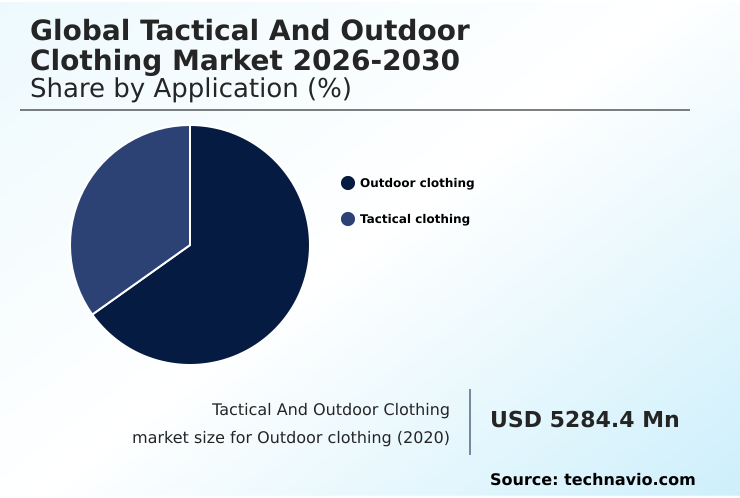
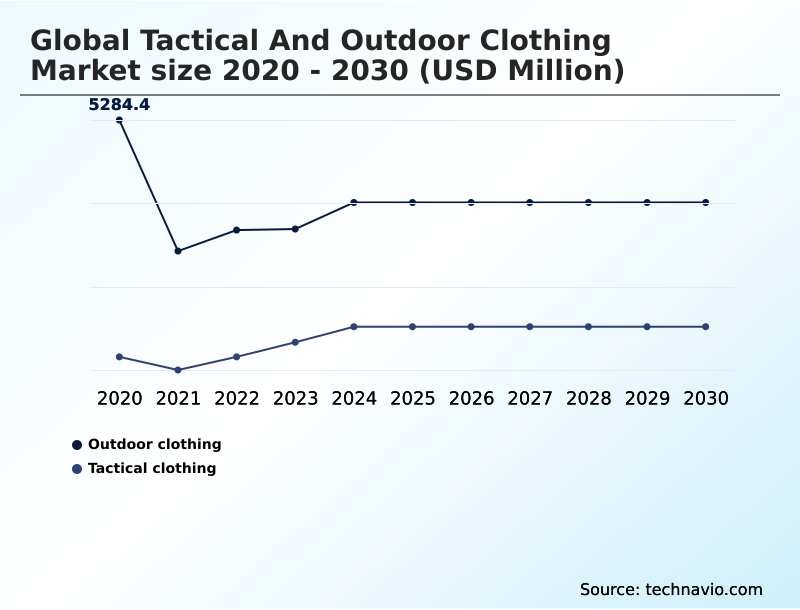
The Outdoor clothing segment was valued at USD 4.43 billion in 2024 and showed a gradual increase during the forecast period.
How demand for the Tactical And Outdoor Clothing market is rising in the leading region?
APAC is estimated to contribute 30.7% to the growth of the global market during the forecast period.Technavio’s analysts have elaborately explained the regional trends and drivers that shape the market during the forecast period.
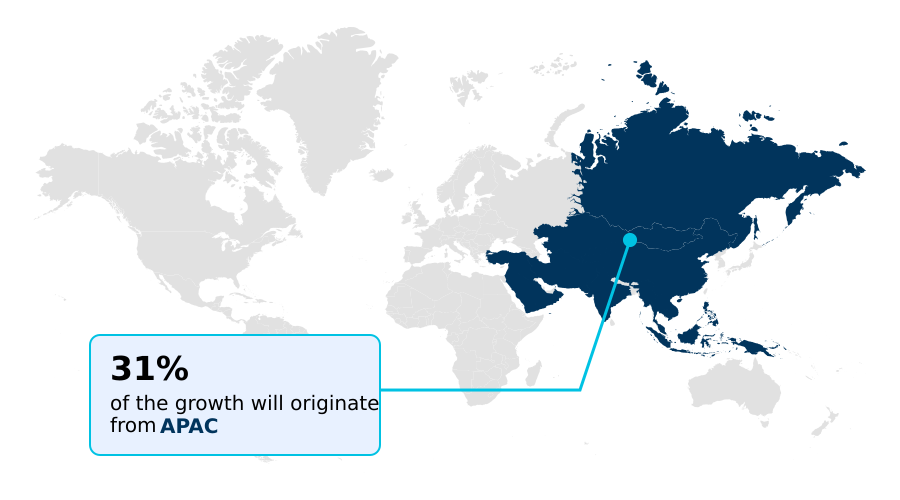
See How Tactical And Outdoor Clothing Market demand is rising in APAC Request Free Sample
North America dominates the tactical and outdoor clothing market, capturing over 30% of the market, with the US alone contributing more than twice the revenue of the entire German market.
In contrast, the APAC region, while holding a similar market share of 30.7%, is projected to have the fastest growth, exhibiting a CAGR of 8.0%, which is 2.5 percentage points higher than North America's.
This divergence is driven by different consumer behaviors; North American demand is mature, focusing on premium ballistic grade fabric and smart textiles for professional use, while APAC's growth stems from a burgeoning middle class adopting adventure tourism gear and tactical fitness apparel.
This regional variance requires distinct supply chain strategies, with companies leveraging APAC's manufacturing prowess for small batch production and private label tactical lines to serve local tastes, while maintaining specialized R&D in North America.
What are the key Drivers, Trends, and Challenges in the Tactical And Outdoor Clothing Market?
Our researchers analyzed the data with 2025 as the base year, along with the key drivers, trends, and challenges. A holistic analysis of drivers will help companies refine their marketing strategies to gain a competitive advantage.
- End-users searching for the best tactical pants for law enforcement now expect features that deliver a 15% improvement in mobility and durability over standard-issue uniforms. This professional demand for high-performance gear influences consumer choices, where the inquiry for a lightweight waterproof hiking jacket often leads to products utilizing technologies originally developed for tactical applications.
- A key market shift is the focus on inclusivity and specific needs, as evidenced by the growing search volume for women's tactical clothing with better fit, a segment where brands that offer anatomical designs see up to a 25% higher customer retention rate compared to those using a simple unisex approach.
- For example, offering adjustable waistbands and articulated knees can reduce return rates by 10%. Furthermore, the trend of personalization is clear in searches for customizable outdoor clothing for hunting, where users want to select specific camo patterns and pocket configurations.
- This contrasts with the demand for durable workwear for industrial use, where the primary drivers are safety compliance and abrasion resistance over aesthetic choice, though both segments rely on innovations in ripstop fabric and reinforced stitching.
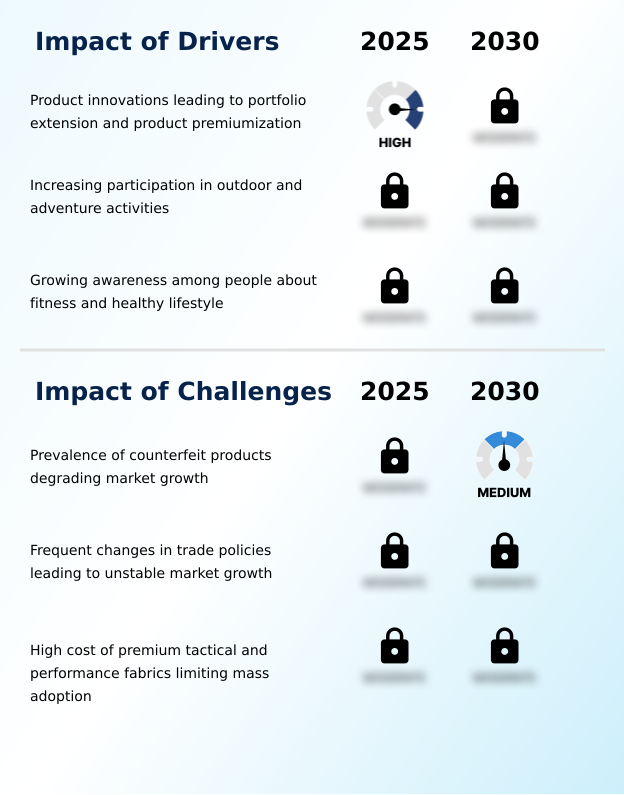
What are the key market drivers leading to the rise in the adoption of Tactical And Outdoor Clothing Industry?
- Product innovations that enable portfolio extensions and product premiumization are a key driver of market growth.
- Product innovation is a primary market driver, with advancements in smart textiles and ballistic grade fabric allowing brands to introduce premium products that command up to a 20% price increase over standard gear.
- These innovations are not just for professional users; they are also a key factor in the growing participation in outdoor and adventure activities, which has seen a 10% year-over-year increase in permit applications in some national parks.
- This surge in outdoor enthusiasm creates a powerful demand for apparel featuring ripstop fabric and superior moisture-wicking properties.
- The crossover appeal means consumers are now willing to invest in high-performance adventure tourism gear that offers tangible benefits, expanding the market beyond its traditional tactical and military roots.
What are the market trends shaping the Tactical And Outdoor Clothing Industry?
- A significant trend shaping the market is the growing participation of women in outdoor and adventure activities. This is driving demand for anatomically specific and high-performance apparel.
- A transformative trend is the market's response to the growing participation of women, a segment previously underserved, now driving demand for anatomically correct female-specific tactical uniforms. Brands that have introduced dedicated women's lines report a 25% increase in engagement from this demographic compared to those offering unisex options.
- This shift is complemented by the rise of customization, where advancements in digital cutting manufacturing allow for mission-specific gear with personalized ergonomic fits. This service, once exclusive to elite units, is now available to consumers, allowing for custom tactical trousers and jackets, a feature that can improve user satisfaction ratings by up to 30%.
- This trend towards personalization and inclusivity is redefining product development, pushing the industry beyond one-size-fits-all solutions.
What challenges does the Tactical And Outdoor Clothing Industry face during its growth?
- The prevalence of counterfeit products represents a key challenge, degrading market growth and brand integrity.
- The high cost of premium performance fabrics is a significant challenge, with materials like aramid fibers and Gore-Tex membranes increasing production expenses by over 30% compared to conventional textiles, limiting mass-market adoption. This price barrier inadvertently fuels another major issue: the prevalence of counterfeit products.
- These fakes, which can capture up to 15% of online sales in certain categories, degrade brand value and pose safety risks by lacking essential features like flame resistance. Brands are now forced to invest in costly anti-counterfeiting measures, diverting funds that could otherwise be used for R&D on next-generation high-performance polymers and technical textiles, thus stifling innovation.
Exclusive Technavio Analysis on Customer Landscape
The tactical and outdoor clothing market forecasting report includes the adoption lifecycle of the market, covering from the innovator’s stage to the laggard’s stage. It focuses on adoption rates in different regions based on penetration. Furthermore, the tactical and outdoor clothing market report also includes key purchase criteria and drivers of price sensitivity to help companies evaluate and develop their market growth analysis strategies.
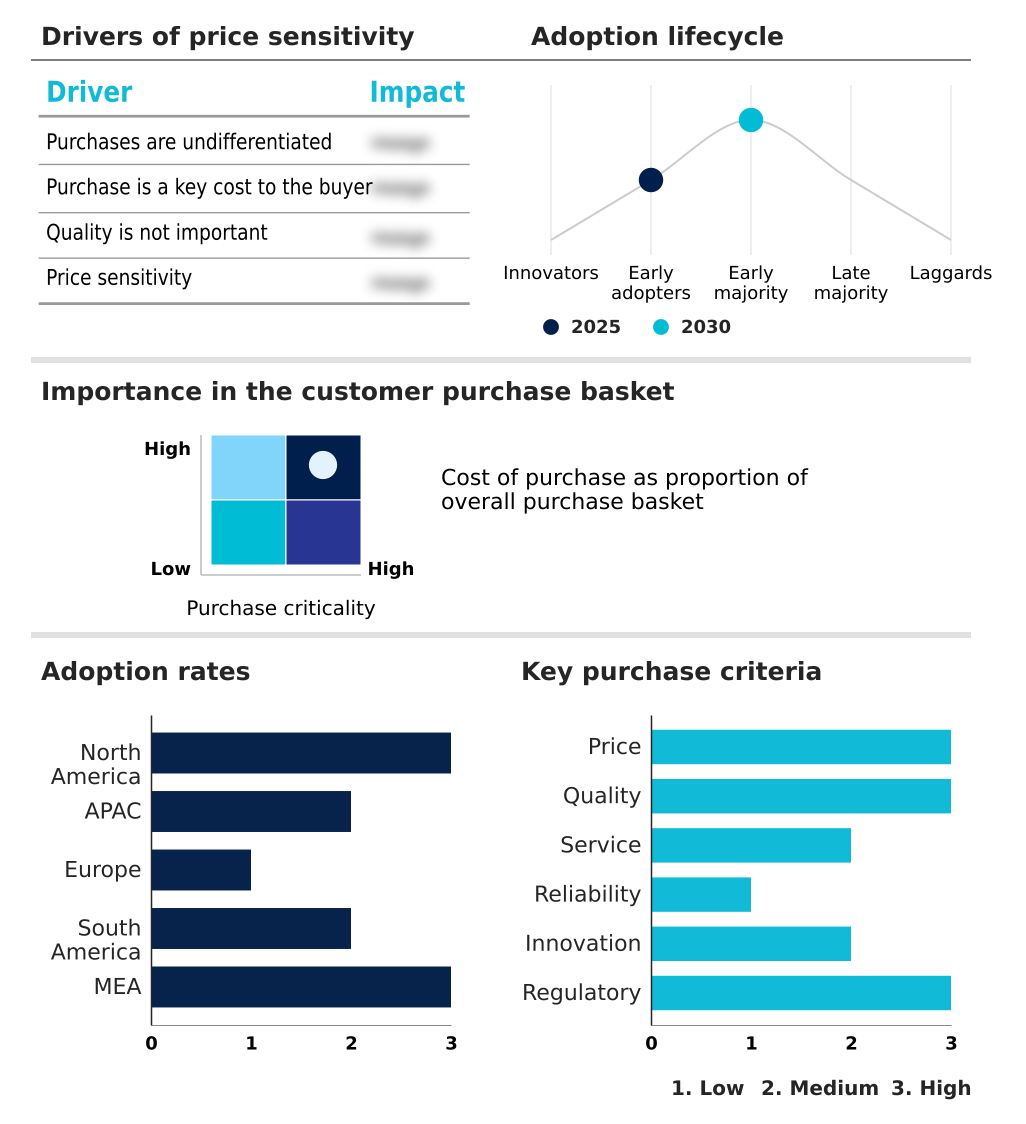
Customer Landscape of Tactical And Outdoor Clothing Industry
Competitive Landscape
Companies are implementing various strategies, such as strategic alliances, tactical and outdoor clothing market forecast, partnerships, mergers and acquisitions, geographical expansion, and product/service launches, to enhance their presence in the industry.
5.11 Inc. - Offerings center on integrated tactical systems, providing durable, performance-oriented apparel and equipment for professional and recreational end-users.
The industry research and growth report includes detailed analyses of the competitive landscape of the market and information about key companies, including:
- 5.11 Inc.
- Adidas AG
- Army Navy Sales
- Born Primitive LLC
- Condor Outdoor
- Decathlon SA
- EssilorLuxottica
- Extreme Outfitters
- First Tactical
- Hardland
- Helikon Tex
- Kitanica
- Outdoor Research
- Propper
- Rothco
- The North Face
- U.S. Elite LLC
- Under Armour Inc.
- Van Os Imports B.V.
- Vertx
Qualitative and quantitative analysis of companies has been conducted to help clients understand the wider business environment as well as the strengths and weaknesses of key industry players. Data is qualitatively analyzed to categorize companies as pure play, category-focused, industry-focused, and diversified; it is quantitatively analyzed to categorize companies as dominant, leading, strong, tentative, and weak.
Market Intelligence Radar: High-Impact Developments & Growth Signals
- In the Apparel, Accessories and Luxury Goods industry, the enforcement of stringent environmental regulations, including directives on PFC-free water repellent treatments, is directly impacting the tactical and outdoor clothing market by compelling manufacturers to re-engineer weather-resistant materials and invest in sustainable alternatives for cold weather systems and other adventure tourism gear.
- The widespread adoption of advanced manufacturing technologies such as digital cutting and small batch production is fundamentally altering product development, enabling tactical and outdoor clothing brands to offer mission-specific gear and custom tactical trousers with greater efficiency and reduced lead times.
- Heightened geopolitical trade tensions are catalyzing a strategic shift toward nearshoring options and supply chain diversification to mitigate the financial impact of tariffs on technical textiles, which can increase production costs by 10-25% for tactical and outdoor clothing manufacturers.
- The accelerated growth of direct-to-consumer (D2C) channels has fueled the proliferation of private label tactical lines, intensifying price competition and making athleisure trend apparel and low-profile tactical gear more accessible to a broader consumer base.
Dive into Technavio’s robust research methodology, blending expert interviews, extensive data synthesis, and validated models for unparalleled Tactical And Outdoor Clothing Market insights. See full methodology.
| Market Scope | |
|---|---|
| Page number | 286 |
| Base year | 2025 |
| Historic period | 2020-2024 |
| Forecast period | 2026-2030 |
| Growth momentum & CAGR | Accelerate at a CAGR of 6.6% |
| Market growth 2026-2030 | USD 3030.9 million |
| Market structure | Fragmented |
| YoY growth 2025-2026(%) | 6.4% |
| Key countries | US, Canada, Mexico, China, India, Japan, South Korea, Australia, Indonesia, Germany, UK, France, Italy, Spain, Poland, Brazil, Argentina, Chile, Saudi Arabia, UAE, South Africa, Israel and Turkey |
| Competitive landscape | Leading Companies, Market Positioning of Companies, Competitive Strategies, and Industry Risks |
Research Analyst Overview
- The tactical and outdoor clothing market ecosystem operates through a multi-layered value chain, where suppliers of advanced materials like Gore-Tex membranes and aramid fibers provide inputs that constitute over 40% of the final product cost. Manufacturers, including both global brands and niche specialists, transform these technical textiles into finished goods, which are then distributed through a dual-channel model.
- The offline channel, comprising specialized retailers, still accounts for the majority of sales, but the online channel is growing 1.5 times faster, driven by direct-to-consumer (D2C) strategies. End-users range from military and law enforcement, where procurement is contract-driven, to recreational consumers influenced by athleisure trend apparel and adventure tourism.
- Regulatory bodies indirectly influence the market by setting standards for flame resistance and material safety, while R&D entities focus on innovations like smart textiles and sustainable alternatives, shaping the future of performance apparel.
What are the Key Data Covered in this Tactical And Outdoor Clothing Market Research and Growth Report?
-
What is the expected growth of the Tactical And Outdoor Clothing Market between 2026 and 2030?
-
The Tactical And Outdoor Clothing Market is expected to grow by USD 3.03 billion during 2026-2030, registering a CAGR of 6.6%. Year-over-year growth in 2026 is estimated at 6.4%%. This acceleration is shaped by product innovations leading to portfolio extension and product premiumization, which is intensifying demand across multiple end-use verticals covered in the report.
-
-
What segmentation does the market report cover?
-
The report is segmented by Application (Outdoor clothing, and Tactical clothing), Distribution Channel (Offline, and Online), Type (Mens clothing, and Womens clothing) and Geography (North America, APAC, Europe, South America, Middle East and Africa). Among these, the Outdoor clothing segment is estimated to witness significant growth during the forecast period, driven by rising adoption across key application areas. Each segment includes detailed qualitative and quantitative analysis, along with historical data from 2020-2024 and forecasts through 2030 with year-over-year growth rates.
-
-
Which regions are analyzed in the report?
-
The report covers North America, APAC, Europe, South America and Middle East and Africa. APAC is estimated to contribute 30.7% to market growth during the forecast period. Country-level analysis includes US, Canada, Mexico, China, India, Japan, South Korea, Australia, Indonesia, Germany, UK, France, Italy, Spain, Poland, Brazil, Argentina, Chile, Saudi Arabia, UAE, South Africa, Israel and Turkey, with dedicated market size tables and year-over-year growth for each.
-
-
What are the key growth drivers and market challenges?
-
The primary driver is product innovations leading to portfolio extension and product premiumization, which is accelerating investment and industry demand. The main challenge is prevalence of counterfeit products degrading market growth, creating operational barriers for key market participants. The report quantifies the impact of each driver and challenge across 2026 and 2030 with comparative analysis.
-
-
Who are the major players in the Tactical And Outdoor Clothing Market?
-
Key vendors include 5.11 Inc., Adidas AG, Army Navy Sales, Born Primitive LLC, Condor Outdoor, Decathlon SA, EssilorLuxottica, Extreme Outfitters, First Tactical, Hardland, Helikon Tex, Kitanica, Outdoor Research, Propper, Rothco, The North Face, U.S. Elite LLC, Under Armour Inc., Van Os Imports B.V. and Vertx. The report provides qualitative and quantitative analysis categorizing companies as dominant, leading, strong, tentative, and weak based on their market positioning. Company profiles include business segment analysis, SWOT assessment, key offerings, and recent strategic developments.
-
Market Research Insights
- The competitive landscape of the tactical and outdoor clothing market is highly fragmented, with the top five players, including 5.11 Inc. and The North Face, accounting for less than 35% of the total market share.
- Key vendors are focusing on product innovation and strategic expansion; for instance, Adidas AG has been expanding its outdoor-focused Terrex line, while niche players like Vertx specialize in low-profile tactical apparel. These developments are driven by a 6.4% year-over-year growth in consumer demand for multi-functional clothing.
- This push for innovation directly addresses the rising trend of athleisure trend apparel and the professional need for mission-specific gear. A persistent challenge remains in managing complex global supply chains, where fluctuating costs for technical textiles and tariffs can impact profit margins, forcing companies to explore nearshoring options to maintain price stability.
We can help! Our analysts can customize this tactical and outdoor clothing market research report to meet your requirements.
 RIA -
RIA - 
