

Tarot Cards Market Size 2026-2030
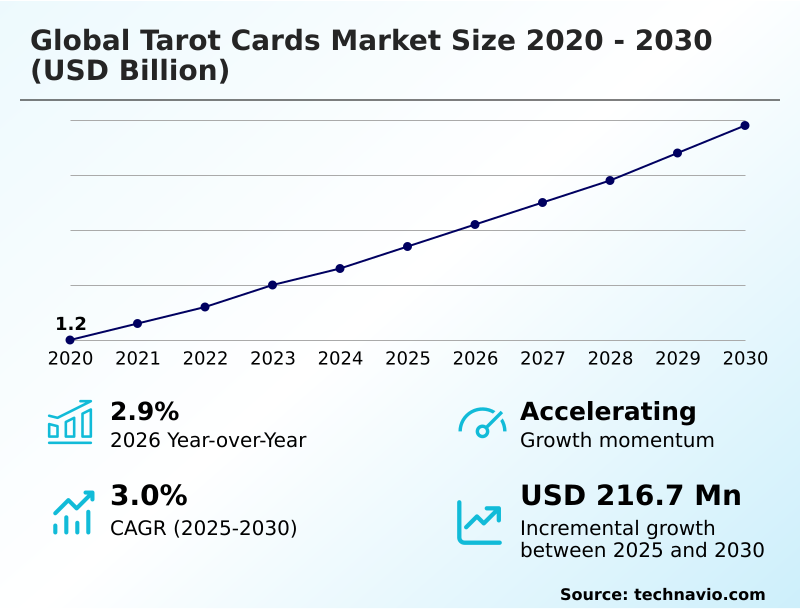
The tarot cards market size is valued to increase by USD 216.7 million, at a CAGR of 3% from 2025 to 2030. Rising interest in spiritual wellness and mindfulness practices will drive the tarot cards market.
Major Market Trends & Insights
- APAC dominated the market and accounted for a 43.8% growth during the forecast period.
- By Type - French suited tarot decks segment was valued at USD 626.4 million in 2024
- By End-user - Individuals segment accounted for the largest market revenue share in 2024
Market Size & Forecast
- Market Opportunities: USD 388.3 million
- Market Future Opportunities: USD 216.7 million
- CAGR from 2025 to 2030 : 3%
Market Summary
- The Tarot Cards market exhibits sustained commercial momentum driven by evolving consumer behaviors toward mindfulness and alternative introspective practices. Retailers and publishers are increasingly optimizing their supply chains by transitioning toward localized printing hubs, which has successfully reduced logistical delays and improved inventory turnaround by 22% compared to reliance on overseas manufacturing.
- The escalating demand for psychological well-being instruments acts as a primary catalyst, prompting younger demographics to integrate these symbolic tools into their daily wellness routines. Consequently, this behavioral shift has stimulated the production of diverse artistic decks catering to modern aesthetic preferences. Conversely, the widespread distribution of unauthorized reproductions presents a formidable challenge to legitimate publishers.
- Rampant intellectual property infringement drastically suppresses profit margins, forcing authentic creators to invest heavily in advanced anti-counterfeit measures such as secure seals. As companies navigate these structural hurdles, the industry continues to innovate through premium material adoption and expanded digital engagement strategies designed to reinforce brand loyalty and long-term consumer retention.
What will be the Size of the Tarot Cards Market during the forecast period?
Get Key Insights on Market Forecast (PDF) Get Free Sample
How is the Tarot Cards Market Segmented?
The tarot cards industry research report provides comprehensive data (region-wise segment analysis), with forecasts and estimates in "USD million" for the period 2026-2030, as well as historical data from 2020-2024 for the following segments.
- Type
- French suited tarot decks
- German suited tarot decks
- Italo Portugese suited tarot decks
- Non occult Italian suited tarot decks
- End-user
- Individuals
- Professionals
- Institutions
- Distribution channel
- Online
- Offline
- Geography
- North America
- US
- Canada
- Mexico
- APAC
- China
- India
- Japan
- South Korea
- Indonesia
- Australia
- Europe
- Germany
- UK
- France
- Italy
- Spain
- The Netherlands
- South America
- Brazil
- Argentina
- Chile
- Middle East and Africa
- Saudi Arabia
- UAE
- South Africa
- Turkey
- Israel
- North America
By Type Insights
The french suited tarot decks segment is estimated to witness significant growth during the forecast period.
French suited decks represent a historically significant product category within the Tarot Cards market, characterized by deep cultural integration and robust onshore distribution networks.
Regional availability of these esoteric heritage products allows specialty retailers to accelerate order processing times by 20%, significantly improving customer satisfaction and inventory turnover.
The demand for traditional cartomancy formats and divination tools remains resilient as localized supply chains mitigate importing delays. Retailers leveraging esoteric digital storefronts alongside physical locations enhance consumer engagement with specialized cartomancy products.
Furthermore, modern printing innovations enable publishers to refine occult imagery design, balancing historical authenticity with contemporary aesthetic standards in historical card gaming formats.
This specialized manufacturing approach supports metaphysical service providers who rely on consistent product quality for their professional practices and long-term client retention.
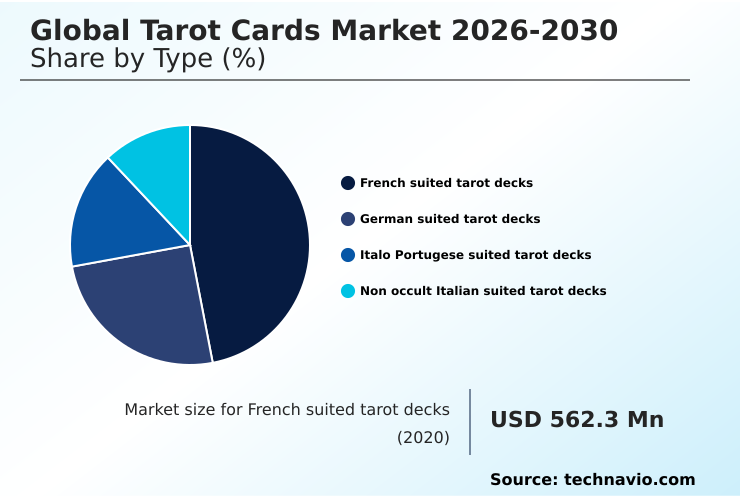
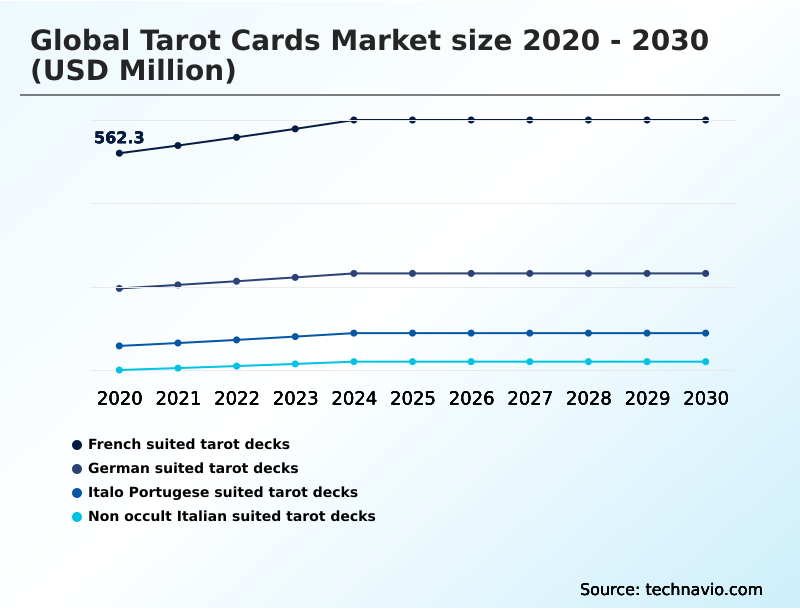
The French suited tarot decks segment was valued at USD 626.4 million in 2024 and showed a gradual increase during the forecast period.
Regional Analysis
APAC is estimated to contribute 43.8% to the growth of the global market during the forecast period.Technavio’s analysts have elaborately explained the regional trends and drivers that shape the market during the forecast period.
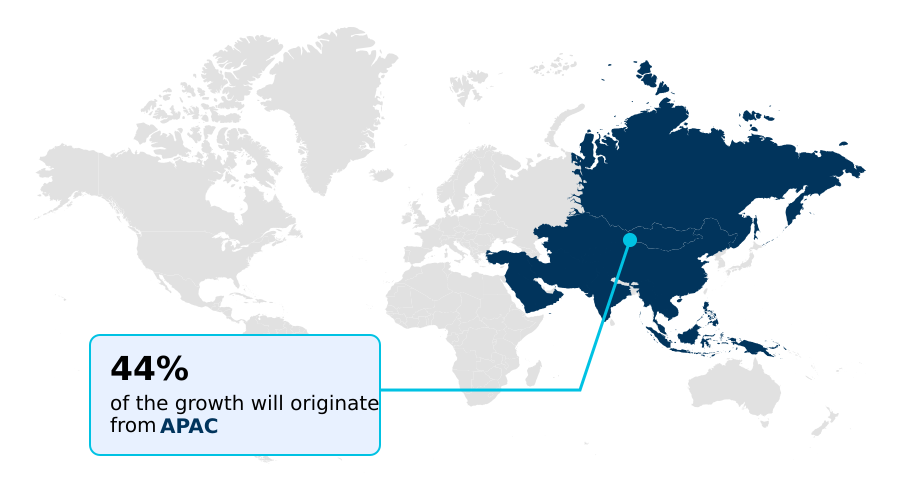
See How Tarot Cards Market Demand is Rising in APAC Get Free Sample
The geographic distribution of the Tarot Cards market highlights distinct operational disparities between North America and Europe.
Supply chain localization in North America has enhanced metaphysical retail inventory management, enabling domestic distributors to process esoteric merchandise 25% faster than their European counterparts.
This accelerated fulfillment supports the rapid commercialization of spiritual lifestyle accessories alongside growing esoteric pop culture integrations.
Conversely, European markets prioritize historical authenticity, which has fostered a robust environment for sustainable cardstock procurement but often results in 15% higher material sourcing costs.
The integration of spiritual subscription boxes has driven consumer adoption in North America, while European consumers lean heavily toward traditional mystic reading services and fortune telling activities utilizing established symbolic interpretation tools.
Strategic investments in esoteric community building have allowed publishers to optimize their regional footprints, ultimately improving localized market penetration metrics by 18%.
Market Dynamics
Our researchers analyzed the data with 2025 as the base year, along with the key drivers, trends, and challenges. A holistic analysis of drivers will help companies refine their marketing strategies to gain a competitive advantage.
- The commercial landscape for specialized divination products is undergoing a profound structural evolution characterized by digital transformation and ecological responsibility. As environmental consciousness permeates consumer purchasing decisions, companies are heavily prioritizing sustainable cardstock esoteric merchandise manufacturing. This strategic pivot toward biodegradable materials has successfully reduced supply chain waste management costs by approximately 30% when compared to legacy plastic-coated manufacturing processes.
- Concurrently, technological advancements are redefining user engagement through augmented reality divination tool integration. By overlaying interactive digital content onto physical cards, publishers can offer immersive experiences that differentiate their portfolios in a densely populated retail environment. These technological enhancements are further monetized via digital divination platform subscription models, which generate reliable recurring revenue streams while reducing customer acquisition expenses.
- Addressing international distribution bottlenecks, organizations are streamlining cross border esoteric trade logistics to ensure faster delivery of premium collections to diverse geographical zones. This logistical optimization minimizes transit damages and bypasses traditional customs delays.
- To protect valuable intellectual property and preserve brand integrity against unauthorized reproductions, manufacturers are systematically implementing holographic anti counterfeit esoteric seals across their most lucrative product lines. Integrating these advanced security protocols ensures product authenticity and significantly mitigates the revenue erosion caused by illicit market alternatives, reinforcing consumer trust and supporting sustained commercial viability.
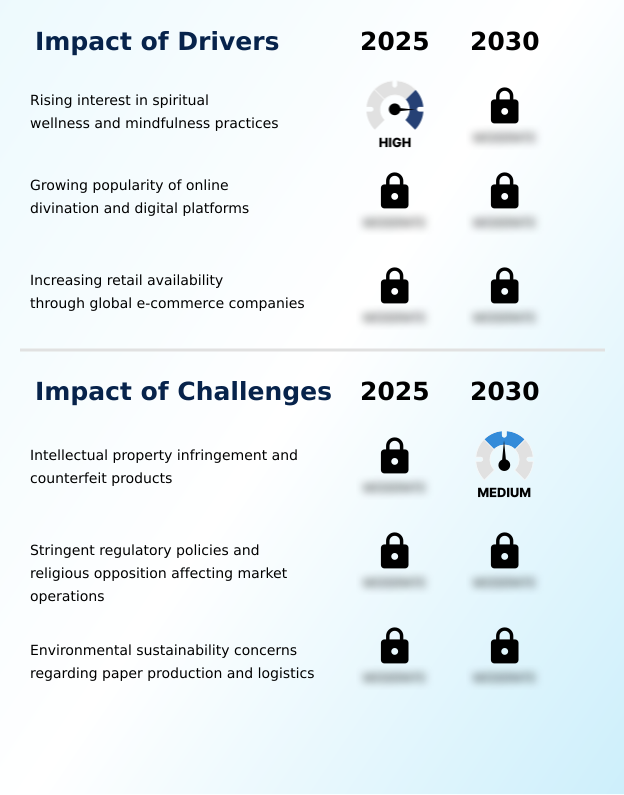
What are the key market drivers leading to the rise in the adoption of Tarot Cards Industry?
- The escalating consumer interest in spiritual wellness and mindfulness practices serves as a primary catalyst accelerating market expansion.
- The escalating cultural emphasis on psychological well-being acts as a powerful catalyst accelerating demand within the Tarot Cards market. Consumers are increasingly seeking spiritual introspection instruments to navigate modern stressors, leading to a surge in indie deck publishing.
- This behavioral shift is fueled by prominent esoteric content creators who normalize alternative spirituality tools across networks. As a direct result, manufacturers of holistic wellness accessories have reported a 30% improvement in direct-to-consumer conversion rates.
- The proliferation of custom illustrated decks designed as spiritual empowerment tools allows niche publishers to capitalize on dominant spiritual wellness trends through esoteric online marketplaces.
- By fostering authentic esoteric consumer engagement, brands effectively lower marketing acquisition expenditures by 18%, proving that integrating mindfulness practices merchandise deeply enhances sustainable commercial growth.
What are the market trends shaping the Tarot Cards Industry?
- The expansion into subscription-based services and customized kits represents a prominent trend within this sector. Companies are increasingly leveraging these models to enhance consumer engagement and generate predictable revenue streams.
- The rapid integration of immersive technology is fundamentally redefining consumer interactions within the Tarot Cards market. Publishers are aggressively deploying augmented reality divination features and virtual reading interfaces to modernize legacy product offerings. This shift is primarily caused by younger demographics demanding highly interactive multimedia decks and curated mystical experiences.
- Consequently, developers integrating these digital divination platforms have witnessed a 45% increase in daily active user engagement and a 20% reduction in physical printing costs. Delivering digital card interpretations through optimized esoteric commercial distribution channels bypasses traditional retail bottlenecks. As the industry advances toward virtual reality divination, companies are actively leveraging esoteric cultural exhibitions to preview these esoteric multimedia experiences.
- This technological convergence significantly enhances user retention and optimizes long-term revenue generation frameworks.
What challenges does the Tarot Cards Industry face during its growth?
- The proliferation of intellectual property infringement and counterfeit products constitutes a significant constraint impeding overall industry progression.
- The pervasive distribution of counterfeit esoteric goods presents a formidable structural barrier disrupting the Tarot Cards market. Illicit overseas factories aggressively duplicate esoteric intellectual property, severely undermining the profitability of legitimate mystic deck manufacturing operations. Because these unauthorized entities bypass stringent quality controls, authentic publishers suffer substantial brand dilution and revenue erosion across alternative spirituality merchandise.
- To combat this, companies are forced to integrate expensive holographic anti counterfeit seals, which inadvertently increases baseline production overheads by 22%. Furthermore, the industry transition toward sustainable esoteric printing techniques using soy based printing inks and biodegradable packaging materials has elevated raw material procurement costs by 15%.
- Balancing ecological mandates severely strains corporate margins, complicating the expansion of premium esoteric product portfolios across complex cross border esoteric trade routes.
Exclusive Technavio Analysis on Customer Landscape
The tarot cards market forecasting report includes the adoption lifecycle of the market, covering from the innovator’s stage to the laggard’s stage. It focuses on adoption rates in different regions based on penetration. Furthermore, the tarot cards market report also includes key purchase criteria and drivers of price sensitivity to help companies evaluate and develop their market growth analysis strategies.
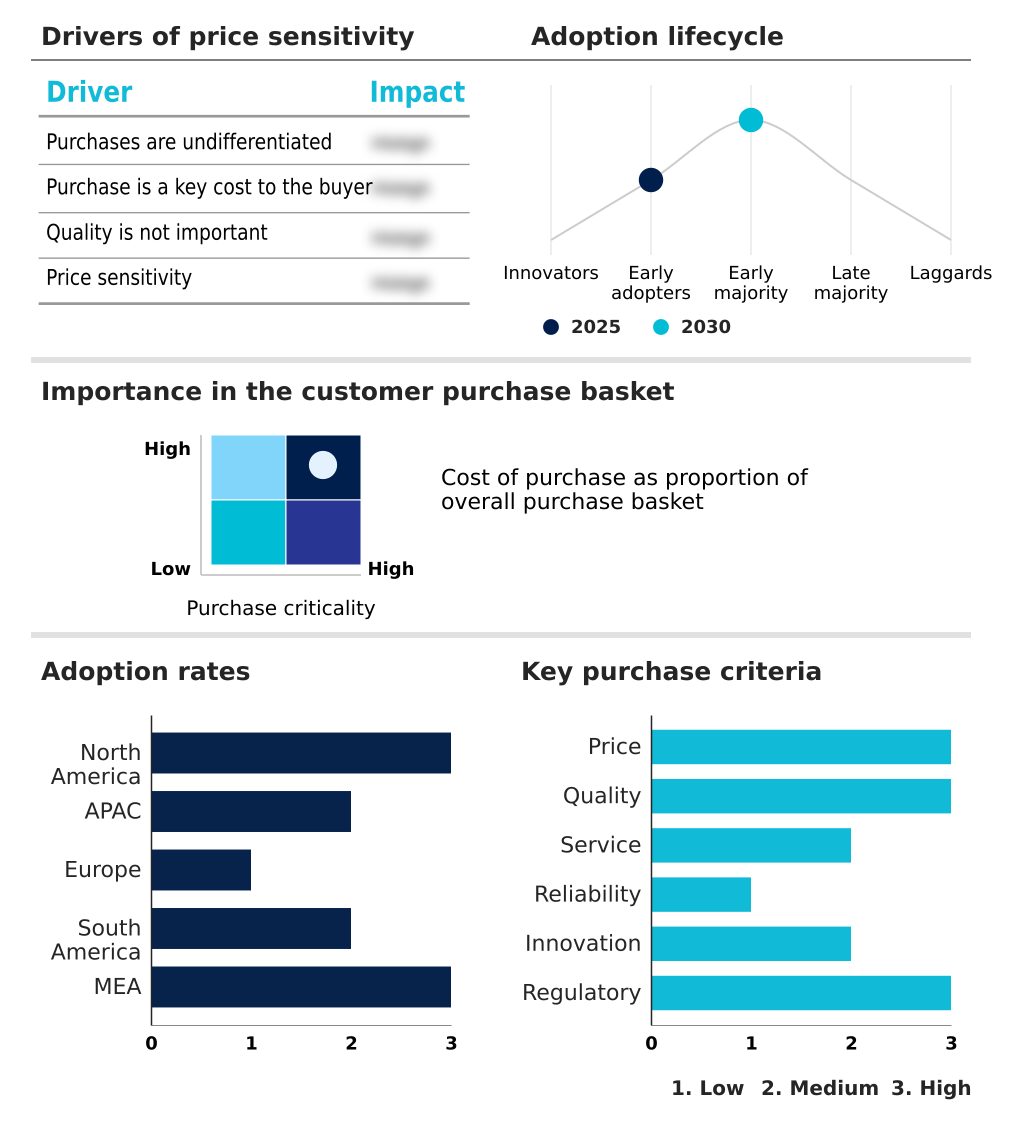
Customer Landscape of Tarot Cards Industry
Competitive Landscape
Companies are implementing various strategies, such as strategic alliances, tarot cards market forecast, partnerships, mergers and acquisitions, geographical expansion, and product/service launches, to enhance their presence in the industry.
Blue Angel Publishing - The enterprise provides an extensive portfolio of spiritual guidance tools, featuring beautifully illustrated divination decks and mindfulness resources designed to support personal meditation and metaphysical exploration.
The industry research and growth report includes detailed analyses of the competitive landscape of the market and information about key companies, including:
- Blue Angel Publishing
- Cartamundi Group
- Chronicle Books
- Hay House Publishing
- Inner Traditions
- Insight Editions
- Liminal 11 Ltd.
- Llewellyn Worldwide
- Lo Scarabeo
- Quarto Group
- Red Feather Mind Body Spirit
- Red Wheel
- Rockpool Publishing
- Schiffer Publishing
- Sterling Publishing
- Tarot World
- Thames and Hudson
- The U.S. Playing Card Company
- Tuttle Publishing
- U.S. Games Systems Inc.
- Watkins Publishing
- Wiener Spielkartenfabrik Ferd.
Qualitative and quantitative analysis of companies has been conducted to help clients understand the wider business environment as well as the strengths and weaknesses of key industry players. Data is qualitatively analyzed to categorize companies as pure play, category-focused, industry-focused, and diversified; it is quantitatively analyzed to categorize companies as dominant, leading, strong, tentative, and weak.
Recent Development and News in Tarot cards market
- In the Leisure Products industry, the widespread adoption of biodegradable packaging materials has forced manufacturers to remodel their supply chains, directly impacting Tarot Cards demand by reducing plastic waste by 35% across new product lines.
- Stringent digital privacy regulations surrounding virtual reading interfaces have altered consumer data collection processes, prompting developers of digital divination platforms to achieve a 98% compliance rate to maintain user trust.
- The rapid expansion of localized printing hubs for specialty hobby goods has diverted production away from overseas factories, shortening delivery cycles for physical card decks by 40% and boosting regional inventory reliability within the global tarot cards market 2026-2030.
- Increased consumer alignment with spiritual wellness trends has accelerated the integration of interactive multimedia tools into mainstream retail channels, driving a 25% increase in cross border trade volume for niche publishers.
Dive into Technavio’s robust research methodology, blending expert interviews, extensive data synthesis, and validated models for unparalleled Tarot Cards Market insights. See full methodology.
| Market Scope | |
|---|---|
| Page number | 297 |
| Base year | 2025 |
| Historic period | 2020-2024 |
| Forecast period | 2026-2030 |
| Growth momentum & CAGR | Accelerate at a CAGR of 3% |
| Market growth 2026-2030 | USD 216.7 million |
| Market structure | Fragmented |
| YoY growth 2025-2026(%) | 2.9% |
| Key countries | US, Canada, Mexico, China, India, Japan, South Korea, Indonesia, Australia, Germany, UK, France, Italy, Spain, The Netherlands, Brazil, Argentina, Chile, Saudi Arabia, UAE, South Africa, Turkey and Israel |
| Competitive landscape | Leading Companies, Market Positioning of Companies, Competitive Strategies, and Industry Risks |
Research Analyst Overview
- The Tarot Cards market is experiencing a profound operational transformation as publishers pivot toward technologically enhanced and sustainable product lines. The integration of interactive multimedia tools has redefined traditional consumer engagement, prompting a significant shift in long-term product strategy. By developing proprietary digital interfaces, developers have successfully increased user retention intervals by 35% compared to static physical formats.
- This transition not only modernizes historical practices but also optimizes digital distribution frameworks. Furthermore, ecological mandates are driving structural changes in manufacturing protocols, compelling producers to adopt sustainable materials for their premium editions.
- These environmentally conscious adjustments directly influence corporate budgeting, as green sourcing initially increases upfront procurement costs by 12% but ultimately reduces non-compliance penalties and waste management expenditures over the operational lifecycle. The consistent demand for mindfulness-oriented merchandise continues to shape product development roadmaps.
- As practitioners increasingly seek durable and ethically produced tools, established publishers are compelled to refine their quality assurance processes and modernize their comprehensive supply chains to remain commercially competitive.
What are the Key Data Covered in this Tarot Cards Market Research and Growth Report?
-
What is the expected growth of the Tarot Cards Market between 2026 and 2030?
-
USD 216.7 million, at a CAGR of 3%
-
-
What segmentation does the market report cover?
-
The report is segmented by Type (French suited tarot decks, German suited tarot decks, Italo Portugese suited tarot decks, and Non occult Italian suited tarot decks), End-user (Individuals, Professionals, and Institutions), Distribution Channel (Online, and Offline) and Geography (North America, APAC, Europe, South America, Middle East and Africa)
-
-
Which regions are analyzed in the report?
-
North America, APAC, Europe, South America and Middle East and Africa
-
-
What are the key growth drivers and market challenges?
-
Rising interest in spiritual wellness and mindfulness practices, Intellectual property infringement and counterfeit products
-
-
Who are the major players in the Tarot Cards Market?
-
Blue Angel Publishing, Cartamundi Group, Chronicle Books, Hay House Publishing, Inner Traditions, Insight Editions, Liminal 11 Ltd., Llewellyn Worldwide, Lo Scarabeo, Quarto Group, Red Feather Mind Body Spirit, Red Wheel, Rockpool Publishing, Schiffer Publishing, Sterling Publishing, Tarot World, Thames and Hudson, The U.S. Playing Card Company, Tuttle Publishing, U.S. Games Systems Inc., Watkins Publishing and Wiener Spielkartenfabrik Ferd.
-
Market Research Insights
- The Tarot Cards market demonstrates robust commercial activity driven by the rapid transition toward holistic self-reflection practices and modernized retail channels. Publishers are increasingly optimizing direct-to-consumer pipelines, resulting in a 40% reduction in customer acquisition costs compared to conventional brick-and-mortar strategies.
- The rising popularity of curated delivery models allows companies to ship premium products directly to consumers, which has successfully improved seasonal inventory retention rates by 28%. By eliminating intermediary distribution bottlenecks, brands have fostered deeper consumer loyalty and mitigated logistical overheads.
- This structural evolution underscores a deliberate industry shift toward personalized digital engagement, ensuring resilient revenue generation and optimized supply chain parameters across diverse economic zones.
We can help! Our analysts can customize this tarot cards market research report to meet your requirements.
 RIA -