


Teleradiology Market Size 2024-2028
The teleradiology market size is forecast to increase by USD 3.83 billion, at a CAGR of 17.55% between 2023 and 2028.
- The market is witnessing significant growth, driven by the increasing prevalence of diseases and the growing geriatric population. This demographic shift, coupled with advancements in technology, is fueling the demand for remote diagnostic solutions. Furthermore, the market is experiencing an uptick in collaborations and new product launches, as industry players seek to expand their offerings and cater to the evolving needs of healthcare providers and patients. However, challenges persist, including concerns related to the lack of early diagnosis due to image quality and interpretation issues.
- Ensuring accurate and timely diagnoses remains a critical priority for market participants, necessitating ongoing investments in technology and training. As the market continues to evolve, companies must navigate these challenges and capitalize on opportunities to deliver high-quality, efficient, and accessible diagnostic services.
What will be the Size of the Teleradiology Market during the forecast period?
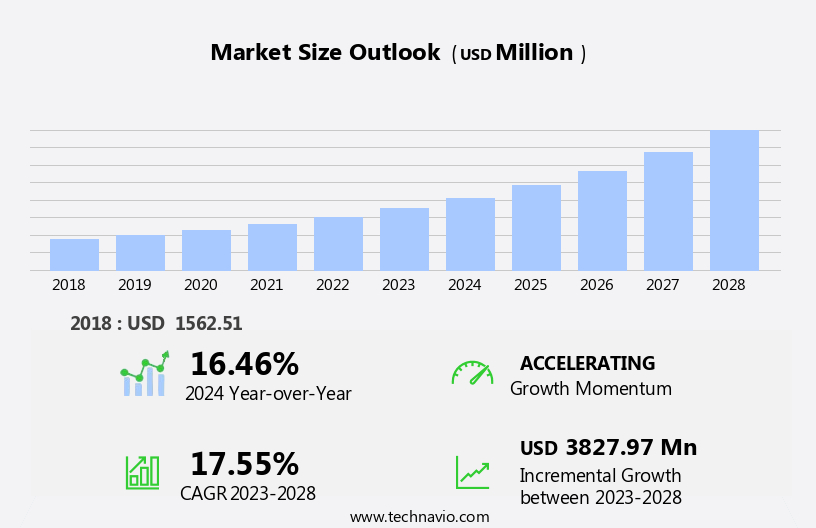
Explore in-depth regional segment analysis with market size data - historical 2018-2022 and forecasts 2024-2028 - in the full report.
Request Free Sample
The market continues to evolve, driven by advancements in technology and the increasing demand for remote diagnostic services. High-resolution image viewing, regulatory compliance, image quality assessment, electronic health records, and various diagnostic imaging modalities are seamlessly integrated into the teleradiology workflow. Pacs integration and telemedicine integration enable radiologists to access and interpret images from multiple locations, enhancing efficiency and improving patient care. Network bandwidth requirements and data privacy regulations pose challenges, necessitating the adoption of image compression techniques, secure data transmission protocols, and cybersecurity measures. AI-powered image analysis and clinical decision support tools contribute to more accurate diagnoses and radiation dose optimization.
Remote collaboration tools and cloud-based image storage facilitate seamless communication and access to medical images, enabling radiologists to work together and share expertise. Continuous innovation in image annotation tools, DICOM image transfer, and video conferencing technologies further enhance the teleradiology landscape, ensuring that the market remains dynamic and responsive to the evolving needs of the healthcare industry. The ongoing integration of these technologies and regulatory compliance ensures that teleradiology services remain a valuable and essential component of modern healthcare delivery.
How is this Teleradiology Industry segmented?
The teleradiology industry research report provides comprehensive data (region-wise segment analysis), with forecasts and estimates in "USD million" for the period 2024-2028, as well as historical data from 2018-2022 for the following segments.
- Modality
- CT
- X-ray
- Ultrasound
- MRI
- Nuclear imaging
- Component
- Hardware
- Software
- Telecom and networking
- End Use
- Hospital
- Radiology Clinics
- Ambulatory Imaging Center
- Hospital
- Radiology Clinics
- Ambulatory Imaging Center
- Geography
- North America
- US
- Canada
- Europe
- Germany
- UK
- APAC
- China
- Rest of World (ROW)
- North America
By Modality Insights
The ct segment is estimated to witness significant growth during the forecast period.
In the dynamic the market, CT scanners play a pivotal role in delivering high-quality diagnostic imaging remotely. These scanners, available in various modalities, each offer unique advantages for teleradiology services. Conventional CT scanners, utilizing X-ray beams, create precise cross-sectional images of the body, making them essential for evaluating conditions like trauma, cancer, and cardiovascular diseases. Widely used for routine diagnostic imaging, they remain the primary modality in teleradiology. The multi-detector CT (MDCT) scanner is another significant modality, employing multiple detector rows to acquire images more swiftly and with higher resolution. This expedited image acquisition process enhances diagnostic accuracy and efficiency in teleconsultation platforms.
HIPAA compliance ensures secure data transmission and patient privacy during remote image interpretation. Clinical decision support and image annotation tools facilitate radiologist workflow optimization. Network bandwidth requirements and data privacy regulations necessitate robust image compression techniques and secure image sharing protocols. Cybersecurity protocols and AI-powered image analysis further enhance the security and diagnostic capabilities of teleradiology. High-resolution image viewing and video conferencing enable real-time collaboration between radiologists and healthcare providers. Integration of telemedicine, PACS workflow, and electronic health records streamlines the diagnostic process, ensuring seamless healthcare information exchange. Radiation dose optimization and diagnostic accuracy metrics are crucial considerations in teleradiology, as is the implementation of regulatory compliance and image quality assessment.
Medical image archiving, remote image diagnostics, and cloud-based image storage provide long-term access to critical patient data. Remote collaboration tools and image viewing software further optimize radiologist workflows, enabling efficient and effective remote reporting. The evolving trends in teleradiology reflect a commitment to enhancing diagnostic capabilities, improving patient care, and ensuring data security and privacy.
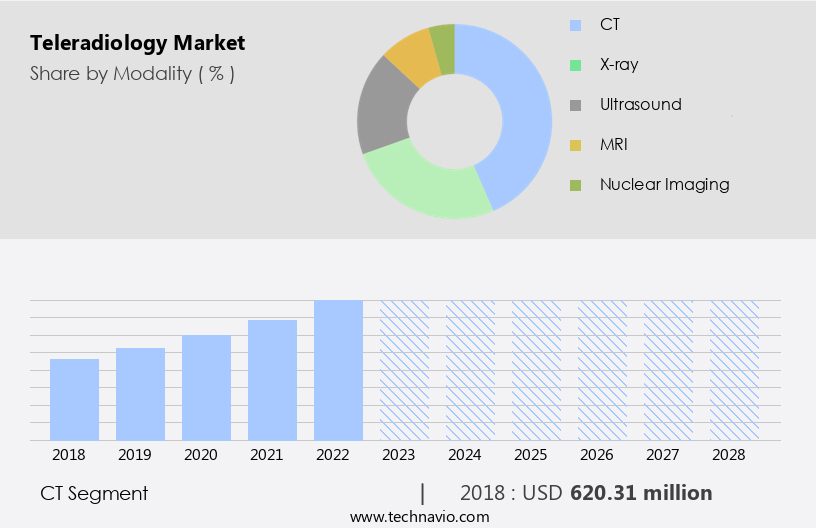
The CT segment was valued at USD 620.31 billion in 2018 and showed a gradual increase during the forecast period.
Regional Analysis
North America is estimated to contribute 40% to the growth of the global market during the forecast period.Technavio’s analysts have elaborately explained the regional trends and drivers that shape the market during the forecast period.
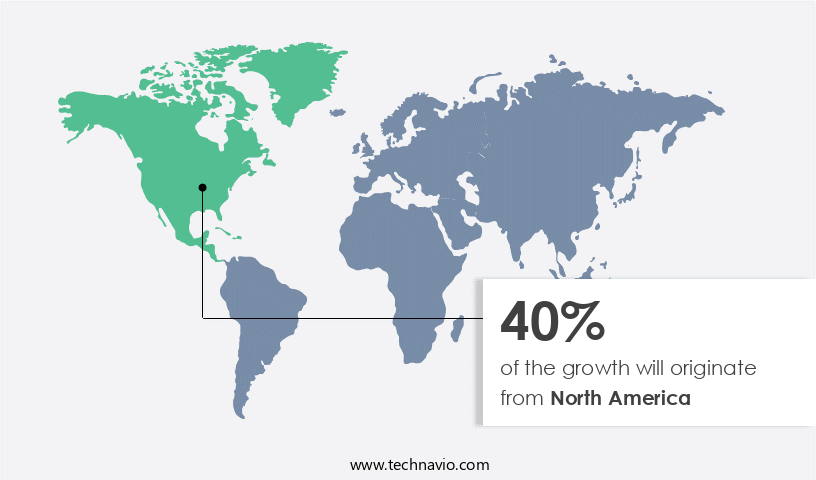
The market in North America is experiencing steady expansion, driven by several key factors. The increasing prevalence of chronic diseases and the subsequent rise in diagnostic imaging procedures are primary growth catalysts. companies are responding to this trend by launching new products and forming strategic partnerships to expand their reach. Regulatory approvals for advanced imaging technologies and teleconsultation platforms are also fueling market growth. Technological advancements, such as AI-powered image analysis, high-resolution image viewing, and radiation dose optimization, are enhancing diagnostic accuracy and improving patient outcomes. HIPAA compliance, data privacy regulations, and cybersecurity protocols ensure secure data transmission and protect patient confidentiality.
Teleconsultation platforms facilitate remote radiology reporting and clinical decision support, enabling efficient workflow optimization and healthcare information exchange. Network bandwidth requirements and image compression techniques are essential considerations for the seamless transfer of large diagnostic images. Image annotation tools and image quality assessment algorithms further refine the diagnostic process. Medical image archiving and remote image diagnostics offer cost-effective solutions for managing vast amounts of data. Cloud-based image storage and remote collaboration tools enable radiologists to collaborate effectively and make informed decisions in real-time. The integration of teleradiology with PACS workflow, telemedicine, and electronic health records streamlines the diagnostic process and improves patient care.
Diagnostic imaging modalities, such as MRI, CT, and X-ray, continue to evolve, driving the demand for advanced teleradiology solutions. The market's growth is further propelled by the increasing adoption of remote radiology reporting and the integration of video conferencing for real-time consultations. Overall, the market in North America is poised for significant growth, driven by technological advancements, regulatory approvals, and the increasing need for efficient and accurate diagnostic solutions.
Market Dynamics
Our researchers analyzed the data with 2023 as the base year, along with the key drivers, trends, and challenges. A holistic analysis of drivers will help companies refine their marketing strategies to gain a competitive advantage.
What are the key market drivers leading to the rise in the adoption of Teleradiology Industry?
- The rising prevalence of diseases and the concurrent expansion of the geriatric population serve as the primary drivers for market growth.
- Teleradiology, a critical component of telemedicine, enables remote image interpretation and consultation through advanced technologies. The increasing prevalence of chronic conditions such as cardiovascular diseases (CVDs), neurological disorders, and orthopedic issues necessitates early and accurate diagnosis. MRI scans are essential for examining the central nervous system, orthopedic, and cardiovascular health conditions, including breast cancer. The global rise in these health conditions necessitates advanced diagnostic solutions. Teleradiology optimizes latency and utilizes image compression techniques to facilitate seamless DICOM image transfer. Image enhancement algorithms improve diagnostic accuracy, while teleconsultation platforms enable real-time collaboration between radiologists and clinicians.
- HIPAA compliance ensures secure data transfer and patient privacy. The demand for remote image interpretation and clinical decision support continues to grow as healthcare systems seek to reduce costs and improve patient outcomes. The market dynamics are driven by the need for efficient and accurate diagnosis, the increasing prevalence of chronic conditions, and the growing adoption of telemedicine. The integration of AI and machine learning in teleradiology further enhances diagnostic accuracy and efficiency.
What are the market trends shaping the Teleradiology Industry?
- Teleradiology is experiencing an upward trend with an increase in the number of launches and collaborations. This growth is driven by the increasing demand for remote diagnostic solutions in healthcare.
- The market is experiencing notable growth due to the increasing demand for remote diagnostic solutions. Companies are responding by launching innovative platforms that integrate advanced technologies, such as artificial intelligence and real-time communication tools, to improve diagnostic accuracy and efficiency. These solutions enable radiologists to access and annotate medical images using image annotation tools, regardless of their physical location. However, network bandwidth requirements and data privacy regulations pose challenges. To address these concerns, industry players are implementing secure data transmission protocols, including cybersecurity measures, to ensure the confidentiality and integrity of patient data during image sharing.
- Video conferencing is also becoming increasingly popular for remote consultations, allowing radiologists to collaborate with other healthcare professionals in real-time. Overall, these advancements are transforming the diagnostic process, making it more accessible and efficient for healthcare providers and patients alike.
What challenges does the Teleradiology Industry face during its growth?
- The lack of early diagnosis poses a significant challenge to the industry's growth, as concerns surrounding this issue can negatively impact its development.
- In the realm of healthcare, early diagnosis plays a pivotal role in improving patient outcomes and reducing healthcare costs. However, the lack of awareness about symptoms and accessibility to diagnostic services can hinder early detection of chronic diseases, such as cancer. This situation poses a challenge to the growth of the market. Teleradiology, which enables high-resolution image viewing and remote radiology reporting, offers a solution to this issue by enabling quick and accurate diagnosis. With regulatory compliance and electronic health record integration, teleradiology facilitates seamless workflow between diagnostic imaging modalities, PACS, and telemedicine. By enabling radiologists to assess image quality and provide reports remotely, teleradiology improves access to diagnostic services and enhances the overall efficiency of healthcare delivery.
- Despite these benefits, the market growth is limited by the need for reliable internet connectivity and concerns around data security. Nonetheless, the potential for cost savings and improved patient outcomes make teleradiology a promising area for innovation in healthcare.
Exclusive Customer Landscape
The teleradiology market forecasting report includes the adoption lifecycle of the market, covering from the innovator’s stage to the laggard’s stage. It focuses on adoption rates in different regions based on penetration. Furthermore, the teleradiology market report also includes key purchase criteria and drivers of price sensitivity to help companies evaluate and develop their market growth analysis strategies.
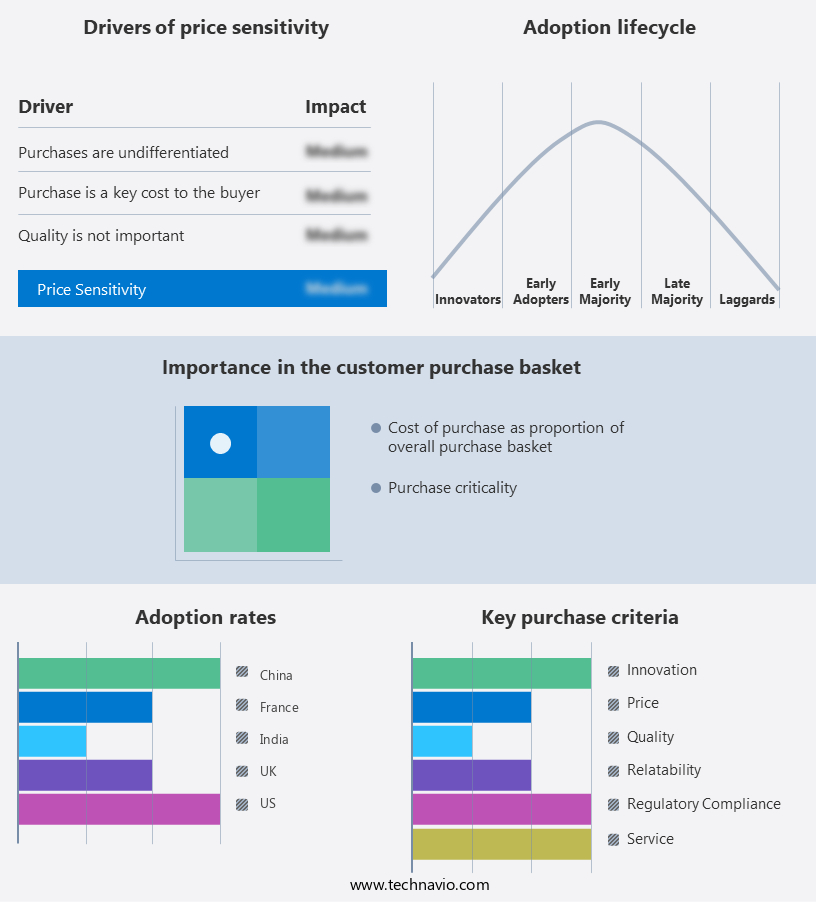
Customer Landscape
Key Companies & Market Insights
Companies are implementing various strategies, such as strategic alliances, teleradiology market forecast, partnerships, mergers and acquisitions, geographical expansion, and product/service launches, to enhance their presence in the industry.
4ways Healthcare Ltd. - This company specializes in the provision of advanced computed radiography solutions, including CR 10X, CR 12X, and CR 15X systems. These teleradiology products enable efficient and accurate image acquisition and transmission for effective diagnostic analysis. The company's offerings cater to healthcare institutions seeking to enhance their diagnostic capabilities and improve patient care.
The industry research and growth report includes detailed analyses of the competitive landscape of the market and information about key companies, including:
- 4ways Healthcare Ltd.
- Agfa Gevaert Group
- Aster Medical Imaging LLC
- Carestream Health Inc.
- Everlight Radiology
- FUJIFILM Corp.
- General Electric Co.
- Koninklijke Philips N.V.
- McKesson Corp.
- Medica Group PLC
- MedWeb
- Mirada Medical Ltd.
- Nano X Imaging Ltd.
- NovaRad Enterprise Healthcare Solutions
- Oracle Corp.
- Radiology Partners
- RamSoft Inc.
- Shanghai United Imaging Healthcare Co. Ltd.
- Siemens AG
- StatRad
- TeleDiagnostic Solutions Pvt. Ltd.
- Telerad Tech
- Teleradiology Solutions
- WebRad
Qualitative and quantitative analysis of companies has been conducted to help clients understand the wider business environment as well as the strengths and weaknesses of key industry players. Data is qualitatively analyzed to categorize companies as pure play, category-focused, industry-focused, and diversified; it is quantitatively analyzed to categorize companies as dominant, leading, strong, tentative, and weak.
Recent Development and News in Teleradiology Market
- In January 2024, Philips Healthcare announced the launch of its new teleradiology solution, "IntelliSpace Portal for Tele radiology," designed to enhance diagnostic efficiency and collaboration among radiologists. This cloud-based platform enables real-time image sharing and interpretation, aiming to improve patient care and reduce turnaround times (Philips Healthcare Press Release).
- In March 2024, IBM Watson Health and Agfa Healthcare entered into a strategic partnership to integrate IBM Watson's AI capabilities into Agfa's imaging IT solutions. This collaboration aims to improve diagnostic accuracy and streamline workflows in radiology departments (IBM Watson Health Press Release).
- In May 2024, GE Healthcare completed the acquisition of Zionexa, a French medical imaging company specializing in AI-powered diagnostic solutions. This acquisition strengthened GE Healthcare's position in the market by expanding its AI capabilities and enhancing its diagnostic offerings (GE Healthcare Press Release).
- In February 2025, the U.S. Food and Drug Administration (FDA) granted clearance for the commercial use of Siemens Healthineers' AI-radiology solution, "Syngo.Via VB30." This solution enables automated analysis of radiology images, improving diagnostic accuracy and efficiency for radiologists (Siemens Healthineers Press Release).
Research Analyst Overview
- In the dynamic the market, image storage capacity and healthcare IT infrastructure play crucial roles. Regulatory requirements mandate robust network infrastructure and bandwidth optimization for secure data transfer. DICOM conformance testing ensures seamless integration of image processing tools and PACS systems. Clinical decision support and AI-assisted diagnostics enhance diagnostic reporting systems, while clinical workflow efficiency is optimized through image sharing platforms and remote consultation platforms. Healthcare data security is paramount, with data encryption methods safeguarding sensitive information. Tele radiology consultation enables remote diagnostics, enabling physicians to access medical image analysis and digital image processing from anywhere.
- Remote image reading and image quality control are essential for maintaining diagnostic accuracy. PACS system integration and secure data transfer facilitate healthcare interoperability, enabling efficient communication between healthcare providers.
Dive into Technavio’s robust research methodology, blending expert interviews, extensive data synthesis, and validated models for unparalleled Teleradiology Market insights. See full methodology.
|
Market Scope |
|
|
Report Coverage |
Details |
|
Page number |
170 |
|
Base year |
2023 |
|
Historic period |
2018-2022 |
|
Forecast period |
2024-2028 |
|
Growth momentum & CAGR |
Accelerate at a CAGR of 17.55% |
|
Market growth 2024-2028 |
USD 3827.97 million |
|
Market structure |
Fragmented |
|
YoY growth 2023-2024(%) |
16.46 |
|
Key countries |
US, Canada, UK, Germany, and China |
|
Competitive landscape |
Leading Companies, Market Positioning of Companies, Competitive Strategies, and Industry Risks |
What are the Key Data Covered in this Teleradiology Market Research and Growth Report?
- CAGR of the Teleradiology industry during the forecast period
- Detailed information on factors that will drive the growth and forecasting between 2024 and 2028
- Precise estimation of the size of the market and its contribution of the industry in focus to the parent market
- Accurate predictions about upcoming growth and trends and changes in consumer behaviour
- Growth of the market across North America, Europe, Asia, and Rest of World (ROW)
- Thorough analysis of the market’s competitive landscape and detailed information about companies
- Comprehensive analysis of factors that will challenge the teleradiology market growth of industry companies
We can help! Our analysts can customize this teleradiology market research report to meet your requirements.
 RIA -
RIA - 
