



Vascular Grafts Market Size 2024-2028
The vascular grafts market size is forecast to increase by USD 1.52 billion at a CAGR of 7.08% between 2023 and 2028.
- The market is experiencing significant growth due to the introduction of technologically advanced products and the emergence of next-generation Tissue Engineered Vascular Grafts (TEVGs). These advanced grafts offer improved patient outcomes and reduced risks and complications associated with traditional vascular grafting methods. The market is driven by the increasing prevalence of cardiovascular diseases, which necessitates the use of vascular grafts for surgical interventions.
- Additionally, the growing geriatric population and rising healthcare expenditures are further fueling market growth. However, challenges such as high costs and potential complications from the use of synthetic grafts persist. Despite these challenges, the market is expected to continue its growth trajectory due to the ongoing research and development in the field of vascular grafts technology.
What will be the Size of the Market During the Forecast Period?
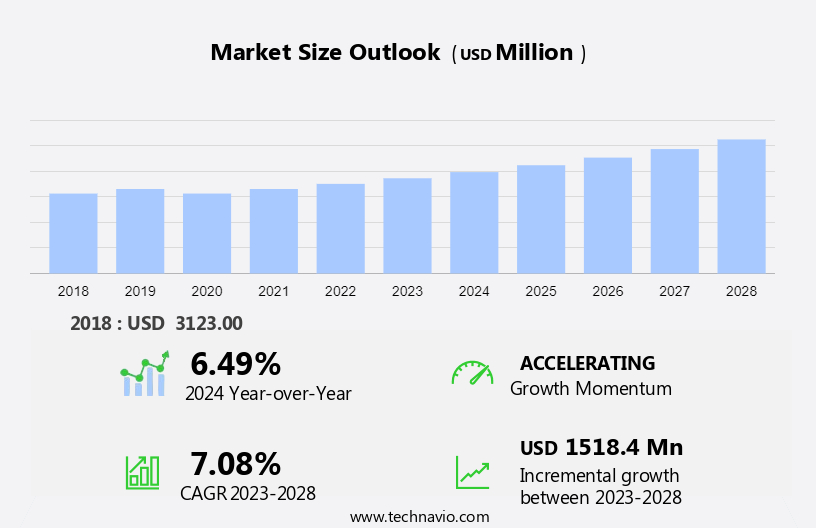
- The market encompasses a range of surgical solutions designed to address various vascular obstacles, including abdominal aneurysms and diseased arteries. The global population's aging trend and the prevalence of chronic conditions, such as diabetes and smoking, contribute significantly to the market's growth. Geriatric populations are at a higher risk of developing vascular diseases due to age-related deterioration and comorbidities. As a result, the demand for vascular grafts in surgical procedures to repair or replace damaged arteries is increasing. Vascular grafts play a crucial role in restoring blood flow in patients undergoing hemodialysis for kidney failure. The growing number of patients requiring hemodialysis due to chronic diseases and the increasing prevalence of corona virus infections are expected to fuel market growth.
- Additionally, raw materials used in manufacturing vascular grafts, such as polytetrafluoroethylene (PTFE) and expanded polytetrafluoroethylene (ePTFE), are subject to ongoing research and development to improve graft performance and reduce complications like intimal hyperplasia and thrombosis. The market is also influenced by government funding for healthcare initiatives and the increasing adoption of minimally invasive procedures, such as midcab and endovascular grafting, which offer reduced recovery time and fewer complications compared to traditional surgical procedures like aortic cross clamp.
- In conclusion, despite these opportunities, challenges persist, including the high cost of vascular grafts and the risk of constructive graft remodeling. The emergence of emerging economies and their growing healthcare expenditure, however, presents new opportunities for market expansion. In conclusion, the market is driven by demographic trends, chronic diseases, and technological advancements, while facing challenges related to cost and complications. Ongoing research and development efforts and government initiatives are expected to shape the market's future growth trajectory.
How is this market segmented and which is the largest segment?
The market research report provides comprehensive data (region-wise segment analysis), with forecasts and estimates in "USD billion" for the period 2024-2028, as well as historical data from 2018-2022 for the following segments.
- Product
- Endovascular grafts
- Bypass grafts
- Hemodialysis grafts
- Peripheral grafts
- Geography
- North America
- Canada
- US
- Europe
- Germany
- UK
- Asia
- China
- Rest of World (ROW)
- North America
By Product Insights
- The endovascular grafts segment is estimated to witness significant growth during the forecast period.
The endovascular market is experiencing notable growth due to its extensive applications in treating Abdominal Aortic Aneurysms (AAA) and the increasing preference for Minimally Invasive Endovascular Aneurysm Repair (MI EVAR). According to the Centers for Disease Control and Prevention (CDC), aortic aneurysms accounted for approximately 15,000 deaths in the US in 2021, with 9,863 deaths reported in 2014. Aortic aneurysms necessitate surgical procedures, including open surgical repair and MI EVAR. The US government's initiatives have also contributed to market expansion. Endovascular grafting is a widely adopted clinical practice, consistently delivering favorable outcomes. Hospitals and cardiac centers are significant end-users, with dialysis centers also utilizing these grafts during hemodialysis treatment for patients undergoing kidney transplantation. The healthcare reforms in the US are expected to further fuel market growth.
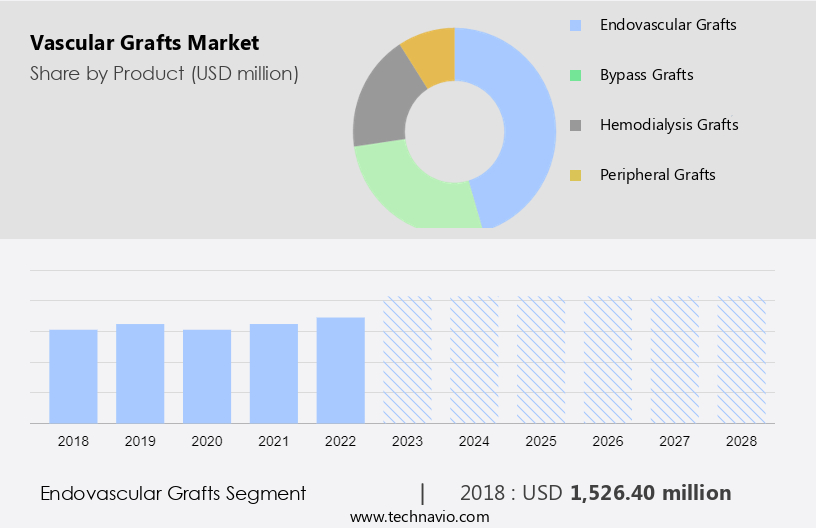
Get a glance at the market report of share of various segments Request Free Sample
The endovascular grafts segment was valued at USD 1.53 billion in 2018 and showed a gradual increase during the forecast period.
Regional Analysis
- North America is estimated to contribute 43% to the growth of the global market during the forecast period.
Technavio's analysts have elaborately explained the regional trends and drivers that shape the market during the forecast period.
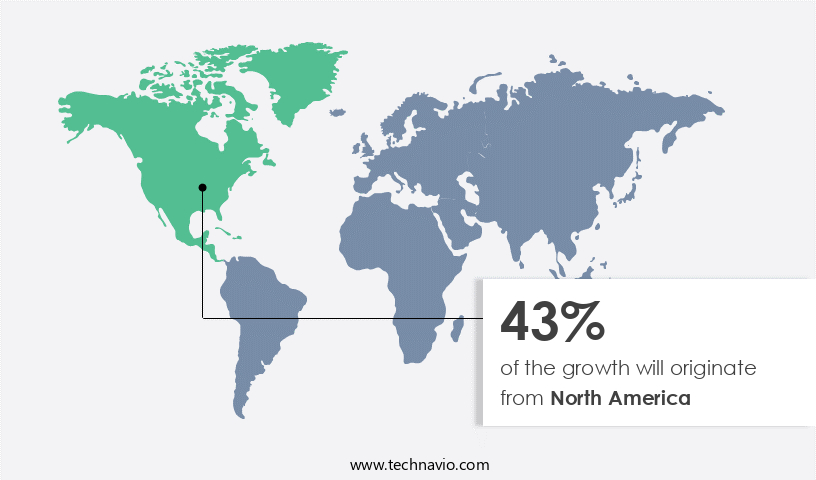
For more insights on the market share of various regions Request Free Sample
The North American vascular graft market is experiencing notable growth due to the high prevalence of cardiovascular diseases, particularly abdominal aortic aneurysms (AAA), among the aging population. According to the CDC, heart diseases and strokes are the leading causes of death in the US and Canada, with an estimated 1.3 million heart attacks and 735,000 heart failure cases in the US annually. Favorable reimbursement policies and an aging population will increase the demand for minimally invasive endovascular aortic repair (EVAR) procedures and affordable vascular grafts.
Additionally, companies are expanding their market presence in Latin America, particularly Brazil, through strategic partnerships with local companies to distribute their products. Key players in the market focus on developing advanced vascular grafts using materials such as PTFE, Polyester, and Biomaterials, including Polyurethane, to cater to the growing demand for effective and durable grafts. The market is driven by the increasing healthcare expenditure and the rising incidence of vascular diseases.
Market Dynamics
Our researchers analyzed the data with 2023 as the base year, along with the key drivers, trends, and challenges. A holistic analysis of drivers will help companies refine their marketing strategies to gain a competitive advantage.
What are the key market drivers leading to the rise in adoption of Vascular Grafts Market?
The introduction of technologically advanced products is the key driver of the market.
- The market encompasses the production and distribution of artificial blood vessels used to replace diseased arteries in various surgical procedures. Abdominal aneurysms, a common condition among the geriatric population and those with smoking history, are a significant driver for this market. Vascular grafts are essential in surgeries for aneurysm repair, hemodialysis vascular access, and cardiac aneurysms. Raw materials such as polyester, PTFE, and polyurethane are used in the manufacturing of vascular grafts. Surgical techniques like endovascular aneurysm repair and minimally invasive procedures, such as the MIDCAB procedure, have gained popularity due to reduced recovery time and minimal invasiveness. Hospitals and cardiac centers are the primary end-users, with healthcare reforms and reimbursement schemes playing a crucial role in market growth.
- Additionally, chronic diseases like diabetes and heart attacks, vascular obstacles, and corona virus infections increase the demand for vascular grafts. Government funding and healthcare expenditure have been instrumental in driving market growth. Constructive graft remodeling and the development of cutting-edge grafts, such as synthetic vascular grafts and hybrid vascular grafts, are ongoing trends. Peripheral vascular grafts are another segment of the market that is gaining traction due to the increasing prevalence of peripheral artery diseases. Intimal hyperplasia and thrombosis are common complications in vascular grafts, necessitating ongoing research and development to address these challenges. The market is expected to grow significantly due to the increasing burden of vascular diseases and the aging population.
What are the market trends shaping the Vascular Grafts Market?
The emergence of next-generation TEVGs is the upcoming trend in the market.
- The market has witnessed significant growth due to the increasing prevalence of cardiovascular diseases (CVDs), which are the leading cause of deaths worldwide. CVDs often involve the stenosis or occlusion of blood vessels, necessitating surgical interventions such as abdominal aneurysm repairs and vascular bypass procedures. While autologous vessels like saphenous veins and internal thoracic arteries have traditionally been used, their availability and suitability are limited. The development of tissue-engineered vascular grafts (TEVGs) has addressed these challenges, providing alternatives with comparable performance and durability to autologous vessels. In the last decade, TEVGs have gained acceptance, with the first implantation demonstrating promising results. The geriatric population, smokers, and those with chronic conditions like diabetes, hemodialysis vascular access, and hemodialysis treatment are major consumers of vascular grafts. The market is influenced by healthcare reforms, emerging economies, and government funding.
- Additionally, vascular diseases, including aneurysms, occlusions, and heart attacks, drive the demand for vascular grafts. Raw materials like polyester, PTFE, and polyurethane, as well as biomaterial grafts, are used in the production of synthetic vascular grafts. Minimally invasive procedures, such as endovascular aneurysm repair and the MIDCAB procedure, have gained popularity due to their reduced complications and faster recovery times. The market is also influenced by reimbursement schemes, endovascular stent grafts, and constructive graft remodeling. Despite advancements, challenges like intimal hyperplasia, thrombosis, and blood clot formation persist. Cutting-edge grafts, such as hybrid vascular grafts, continue to be researched and developed to address these challenges. The market's growth is further influenced by healthcare expenditure and the increasing prevalence of vascular diseases in the US population.
What challenges does Vascular Grafts Market face during the growth?
Risks and complications associated with vascular grafting are key challenges affecting the market growth.
- Vascular grafts are essential medical devices used in surgical procedures to restore blood flow in diseased arteries, particularly in cases of abdominal aneurysms. The market caters to various patient populations, including the geriatric population, who are more susceptible to vascular diseases due to aging and lifestyle factors like smoking. Complications from vascular grafts surgery, such as infected grafts, pseudoaneurysms, and aortoenteric fistulas, can lead to significant morbidity and mortality. Infections are the most common complications, contributing to higher mortality rates due to delayed diagnosis and treatment. The infections can result in graft thrombosis, hemorrhage, and overwhelming sepsis. The complications from endovascular aneurysm repair (EVAR) are less invasive in nature but still pose risks such as endoleaks, which are classified into three types: Type I, Type II, and Type III. The market encompasses various raw materials, including polyester grafts, PTFE, and biomaterial grafts, used in surgical procedures in hospitals and cardiac centers.
- However, healthcare reforms, chronic diseases like diabetes, heart attacks, and vascular obstacles, government funding, and emerging economies are significant factors driving the market's growth. The market's dynamics include the development of cutting-edge grafts, synthetic vascular grafts, hybrid vascular grafts, and peripheral vascular grafts, as well as the increasing prevalence of cardiac aneurysms and vascular occlusion. Additionally, the market is influenced by hemodialysis, kidney transplantation, and reimbursement schemes. The market's future growth is expected to be impacted by advances in minimally invasive procedures, such as the MIDCAB procedure, and surgical techniques, including the minimization of aortic cross clamp and cardiopulmonary bypass. However, graft-related complications, including intimal hyperplasia, thrombosis, and constructive graft remodeling, remain significant challenges for the market.
Exclusive Customer Landscape
The market forecasting report includes the adoption lifecycle of the market, covering from the innovator's stage to the laggard's stage. It focuses on adoption rates in different regions based on penetration. Furthermore, the market report also includes key purchase criteria and drivers of price sensitivity to help companies evaluate and develop their market growth analysis strategies.
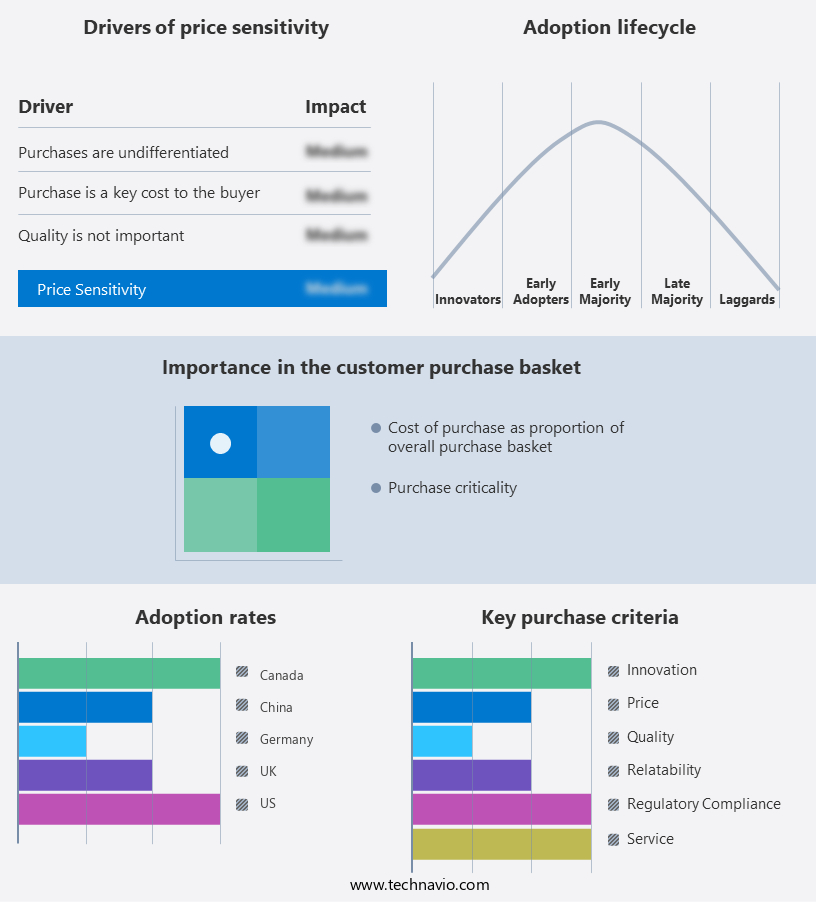
Customer Landscape
Key Companies & Market Insights
Companies are implementing various strategies, such as strategic alliances, market forecast, partnerships, mergers and acquisitions, geographical expansion, and product/service launches, to enhance their presence in the market. The market research and growth report includes detailed analyses of the competitive landscape of the market and information about key companies, including:
- Abbott Laboratories
- Artivion Inc.
- Aruga Technologies
- B.Braun SE
- Becton Dickinson and Co.
- Bentley InnoMed GmbH
- BIOTRONIK SE and Co. KG
- BIOVIC Sdn Bhd
- Cardinal Health Inc.
- Cook Group Inc.
- Endologix LLC
- Getinge AB
- Heart Medical Europe BV
- InnAVasc Medical Inc.
- Japan Lifeline Co. Ltd.
- LeMaitre Vascular Inc.
- Lombard Medical Ltd.
- Medtronic Plc
- MicroPort Scientific Corp.
- Terumo Corp.
- Vascular Graft Solutions Ltd.
- W. L. Gore and Associates Inc.
Qualitative and quantitative analysis of companies has been conducted to help clients understand the wider business environment as well as the strengths and weaknesses of key market players. Data is qualitatively analyzed to categorize companies as pure play, category-focused, industry-focused, and diversified; it is quantitatively analyzed to categorize companies as dominant, leading, strong, tentative, and weak.
Research Analyst Overview
The market encompasses a range of medical devices used to replace damaged or diseased arteries and veins. These grafts are essential in addressing various vascular diseases, including abdominal aneurysms, which pose significant health risks to the global population. The aging population is a major contributing factor to the growth of the market. With an increasing number of elderly individuals, the prevalence of vascular diseases, such as those caused by smoking and diabetes, is on the rise. These conditions can lead to a need for surgical procedures involving vascular grafts.
Additionally, vascular grafts are also utilized in hemodialysis vascular access procedures, allowing for efficient blood flow during the treatment process. Furthermore, they play a crucial role in endovascular aneurysm repair, a minimally invasive alternative to traditional surgical procedures. The raw materials used in the production of vascular grafts include polyester, PTFE, and polyurethane. These biomaterials offer benefits such as improved blood compatibility and reduced risk of intimal hyperplasia and thrombosis. The healthcare sector, including hospitals and cardiac centers, is a significant consumer of vascular grafts. Government funding and healthcare reforms have contributed to increased access to healthcare services and procedures, further driving market growth.
In summary, chronic diseases, such as diabetes and heart attacks, are major vascular obstacles that contribute to the demand for vascular grafts. Coronavirus infections have also highlighted the importance of vascular health and the role of vascular grafts in saving lives. Reimbursement schemes and insurance coverage are essential factors influencing the adoption of vascular grafts. Endovascular stent grafts, a type of vascular graft, have gained popularity due to their minimally invasive nature and cost-effectiveness compared to traditional surgical procedures. Constructive graft remodeling is a critical aspect of vascular graft technology, ensuring the grafts adapt to the body and maintain optimal blood flow. Innovations in synthetic vascular grafts, such as hybrid grafts and peripheral vascular grafts, offer promising solutions to address the challenges of vascular diseases. The midcab procedure, a minimally invasive approach to coronary artery bypass grafting, is gaining traction in the cardiac surgery field. This procedure utilizes vascular grafts to bypass blocked arteries, reducing the need for aortic cross clamp and cardiopulmonary bypass. In conclusion, the market is experiencing significant growth due to the increasing prevalence of vascular diseases, an aging population, and advancements in vascular graft technology. The market is expected to continue expanding, driven by the need for effective solutions to address vascular obstacles and improve patient outcomes.
|
Market Scope |
|
|
Report Coverage |
Details |
|
Page number |
156 |
|
Base year |
2023 |
|
Historic period |
2018-2022 |
|
Forecast period |
2024-2028 |
|
Growth momentum & CAGR |
Accelerate at a CAGR of 7.08% |
|
Market growth 2024-2028 |
USD 1.52 billion |
|
Market structure |
Fragmented |
|
YoY growth 2023-2024(%) |
6.49 |
|
Key countries |
US, Germany, UK, Canada, and China |
|
Competitive landscape |
Leading Companies, Market Positioning of Companies, Competitive Strategies, and Industry Risks |
What are the Key Data Covered in this Market Research and Growth Report?
- CAGR of the market during the forecast period
- Detailed information on factors that will drive the market growth and forecasting between 2024 and 2028
- Precise estimation of the size of the market and its contribution of the market in focus to the parent market
- Accurate predictions about upcoming market growth and trends and changes in consumer behaviour
- Growth of the market across North America, Europe, Asia, and Rest of World (ROW)
- Thorough analysis of the market's competitive landscape and detailed information about companies
- Comprehensive analysis of factors that will challenge the growth of market companies
We can help! Our analysts can customize this market research report to meet your requirements. Get in touch
 RIA -
RIA - 
