



Video Processing Platform Market Size 2026-2030
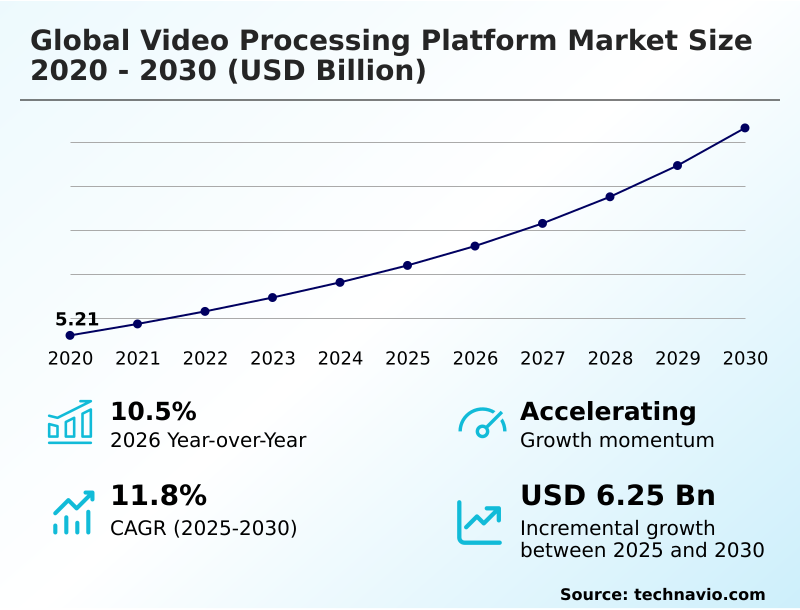
The video processing platform market size is valued to increase by USD 6.25 billion, at a CAGR of 11.8% from 2025 to 2030. Demand for ultra-low latency live streaming will drive the video processing platform market.
Major Market Trends & Insights
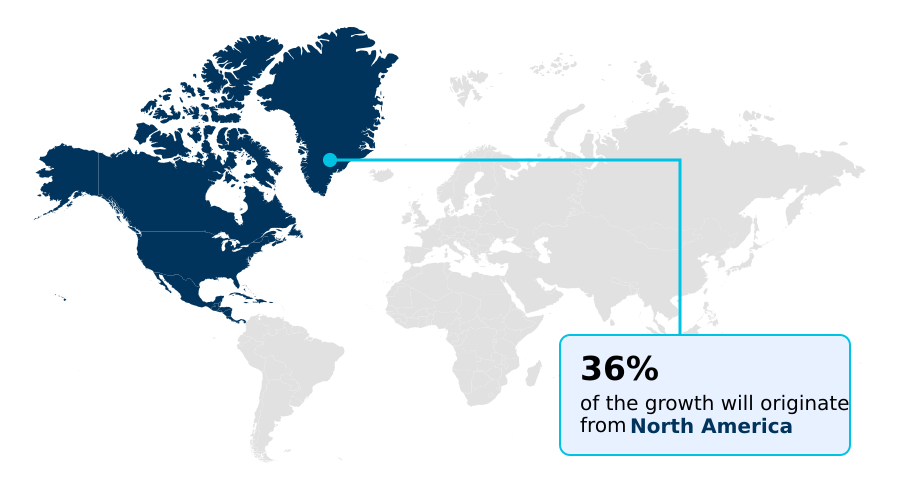
- North America dominated the market and accounted for a 36.4% growth during the forecast period.
- By Deployment - Cloud based segment was valued at USD 4.84 billion in 2024
- By Type - Real time segment accounted for the largest market revenue share in 2024
Market Size & Forecast
- Market Opportunities: USD 9.42 billion
- Market Future Opportunities: USD 6.25 billion
- CAGR from 2025 to 2030 : 11.8%
Market Summary
- The video processing platform market is undergoing a significant transformation, driven by the shift from on-premise hardware to scalable, cloud-native workflows. This evolution is essential for handling the explosive growth in video content and meeting consumer demand for high-quality, low-latency experiences on any device.
- A core dynamic is the integration of artificial intelligence, which moves platforms beyond simple transcoding to become intelligent hubs for media supply chain automation. For instance, a media organization launching a new FAST channel can leverage AI to automatically generate metadata, create compliance edits, and optimize video for different platforms, drastically reducing manual labor and accelerating time-to-market.
- These platforms are crucial for dynamic ad insertion, content personalization, and ensuring a seamless quality of experience. However, the industry also grapples with challenges such as multi-codec fragmentation, rising cybersecurity threats from sophisticated piracy, and the escalating infrastructure costs associated with processing high-resolution formats like 4K and 8K.
- Balancing innovation with cost control and security remains a central focus for all stakeholders.
What will be the Size of the Video Processing Platform Market during the forecast period?
Get Key Insights on Market Forecast (PDF) Get Free Sample
How is the Video Processing Platform Market Segmented?
The video processing platform industry research report provides comprehensive data (region-wise segment analysis), with forecasts and estimates in "USD million" for the period 2026-2030, as well as historical data from 2020-2024 for the following segments.
- Deployment
- Cloud based
- On premises
- Type
- Real time
- On demand
- Application
- Video transcoding and processing
- Dynamic ad insertion
- Video upload and ingestion
- Video hosting
- Others
- Geography
- North America
- US
- Canada
- Mexico
- APAC
- China
- Japan
- South Korea
- Europe
- UK
- Germany
- France
- Middle East and Africa
- Saudi Arabia
- UAE
- South Africa
- South America
- Brazil
- Argentina
- Colombia
- Rest of World (ROW)
- North America
By Deployment Insights
The cloud based segment is estimated to witness significant growth during the forecast period.
The market is fundamentally shaped by deployment choices, with cloud-based models dominating due to their elasticity and OpEx advantages. Enterprises are adopting a hybrid cloud video workflow to balance security and scalability, particularly for low-latency live streaming.
The transition to cloud-native architecture is critical for managing complex tasks like video transcoding and processing and enabling advanced capabilities such as AI-driven video compression and 8K video processing.
These platforms facilitate adaptive bitrate streaming and video manifest manipulation at scale. However, this migration is not without its difficulties; unoptimized serverless video processing workflows can erode profit margins by as much as 15%.
This pressure forces a focus on efficient context-aware encoding and green coding to manage costs while countering persistent cybersecurity threats.
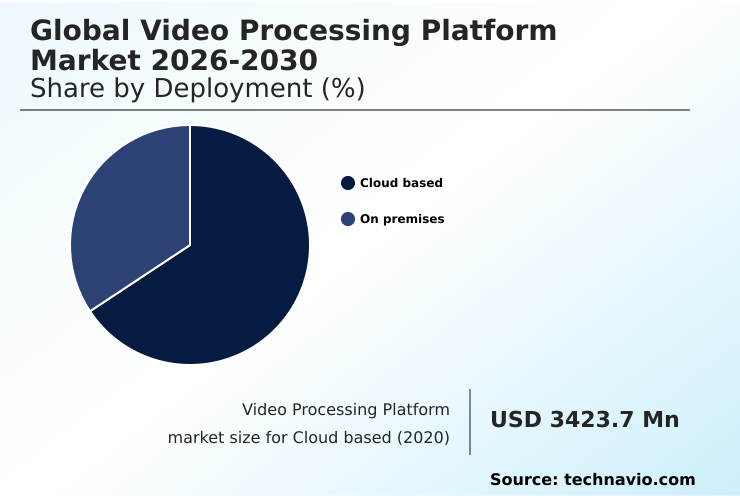
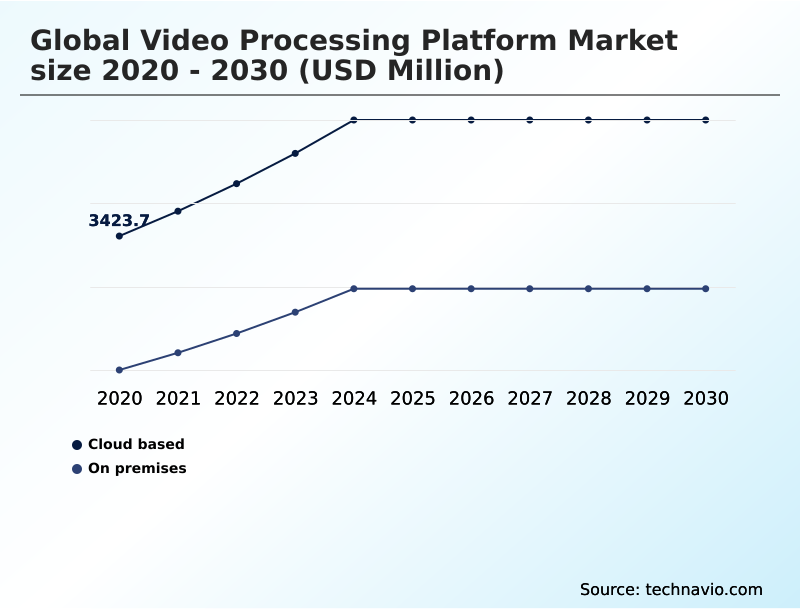
The Cloud based segment was valued at USD 4.84 billion in 2024 and showed a gradual increase during the forecast period.
Regional Analysis
North America is estimated to contribute 36.4% to the growth of the global market during the forecast period.Technavio’s analysts have elaborately explained the regional trends and drivers that shape the market during the forecast period.
See How Video Processing Platform Market Demand is Rising in North America Get Free Sample
The geographic landscape reveals distinct regional priorities. North America leads with 36.4% of incremental growth, focusing on monetizing content through sophisticated server-side ad insertion within cloud-native workflows. The region is a hub for 8K video processing and advanced manifest manipulation.
In contrast, Europe emphasizes sustainability and regulatory compliance, driving the adoption of green coding and carbon-aware processing. European broadcasters mandate energy reporting, compelling providers to prove efficiency gains, such as a 40% reduction in power consumption for live portfolios.
APAC, the fastest-growing region, prioritizes mobile delivery over congested networks, necessitating superior content-aware encoding and adaptive bitrate streaming to maintain perceptual quality. The adoption of multi-access edge computing nodes is also expanding in APAC to support low-latency applications.
Market Dynamics
Our researchers analyzed the data with 2025 as the base year, along with the key drivers, trends, and challenges. A holistic analysis of drivers will help companies refine their marketing strategies to gain a competitive advantage.
- The evolution of the video processing platform market is evident in the specialized solutions addressing complex, high-value use cases. The demand for low latency streaming for sports betting is driving innovations in real-time delivery, while the need for efficient FAST channel monetization is making server-side ad insertion (SSAI) a standard feature.
- AI for automated compliance editing is becoming critical for global broadcasters navigating diverse regulations, reducing manual review times by over 70% compared to traditional methods. Similarly, generative AI for video metadata automates content tagging, enhancing discoverability.
- On the technical front, the adoption of the VVC codec for 8K video delivery and adaptive bitrate for mobile networks ensures quality across all endpoints. Green coding for sustainable streaming and carbon-aware video processing workloads are addressing ESG mandates. The SRT protocol for remote production and the use of a cloud-native ingestion gateway streamline contribution workflows.
- For immersive experiences, edge computing for interactive events and MEC for cloud gaming video streams are essential. Security is paramount, with forensic watermarking to combat piracy becoming deeply integrated. Platforms now offer multi-codec support for device fragmentation, dynamic logic at the edge, and AI-driven ad-marker detection, all managed through a virtualized headend infrastructure.
What are the key market drivers leading to the rise in the adoption of Video Processing Platform Industry?
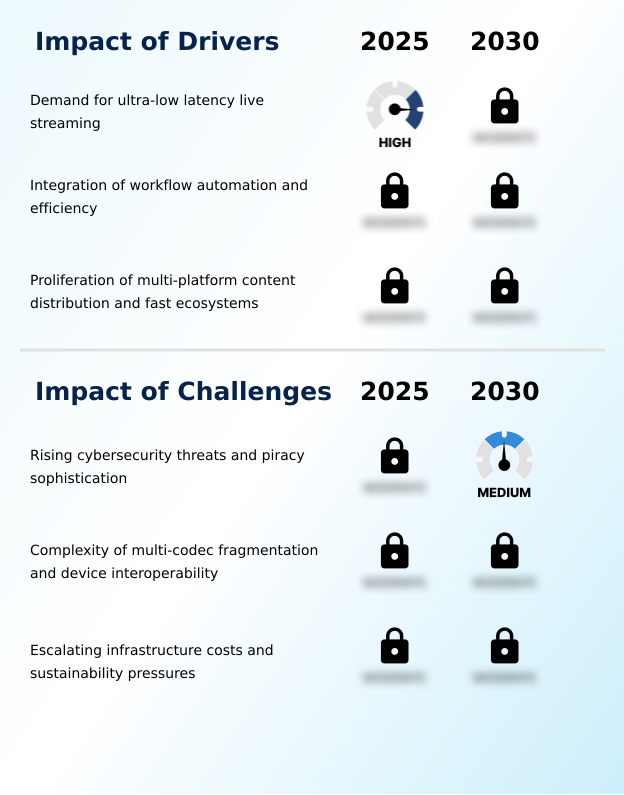
- The growing demand for ultra-low latency live streaming is a primary driver propelling market expansion.
- Market expansion is fueled by an insatiable demand for ultra-low latency streaming and the necessity for operational efficiency. The proliferation of multi-platform content distribution, especially FAST channels, necessitates robust platforms capable of high-volume transcoding and dynamic ad insertion.
- AI is a core driver, enabling automated content tagging and dynamic bitrate encoding, which can reduce bandwidth needs by up to 50% without impacting perceptual quality.
- This efficiency is critical for managing massive content libraries and enabling intelligent tiering of assets.
- Furthermore, the adoption of advanced codecs like high efficiency video coding and versatile video coding is lowering barriers for delivering 8K content and immersive cloud gaming experiences.
- The move towards IP-based video contribution further streamlines workflows, ensuring better device interoperability across the content delivery network.
What are the market trends shaping the Video Processing Platform Industry?
- The proliferation of generative AI is reshaping media supply chains into cognitive systems. This evolution automates and enriches content workflows from creation to delivery.
- Key trends are reshaping the market, led by the integration of generative AI into cognitive media supply chains. This AI-powered media supply chain moves beyond automation to enable complex tasks like real-time content modification, improving time-to-market for cloud playout systems by over 40%.
- Concurrently, green coding and carbon-aware processing are becoming institutionalized, with some vendors reducing the energy requirements of their portfolios by up to 40%. A third major trend is the architectural shift toward edge computing and 5G distributed processing, which is essential for volumetric video processing and other immersive applications.
- This migration addresses the need for decentralized processing to enhance quality of experience and support advanced remote production solutions, mitigating the complexities of multi-codec fragmentation.
What challenges does the Video Processing Platform Industry face during its growth?
- Increasingly sophisticated cybersecurity threats and advanced piracy techniques present a significant challenge to industry growth.
- Significant challenges constrain the market, led by escalating piracy sophistication and cybersecurity vulnerabilities, with token theft incidents spiking by 300% in some regions. This forces the integration of forensic watermarking and video fingerprinting technology directly into workflows, increasing computational overhead.
- Another major hurdle is multi-codec fragmentation; over 60% of developers cite device interoperability with standards like the AV1 codec as a primary obstacle, complicating support for both new and legacy systems. This complexity drives up infrastructure costs and the need for a real-time observability suite.
- The reliance on digital rights management and secure protocols like real-time messaging protocol adds further complexity. Integrating advanced standards such as SMPTE ST 2110 with software-defined storage while managing cost and sustainability pressures remains a critical balancing act for platform providers.
Exclusive Technavio Analysis on Customer Landscape
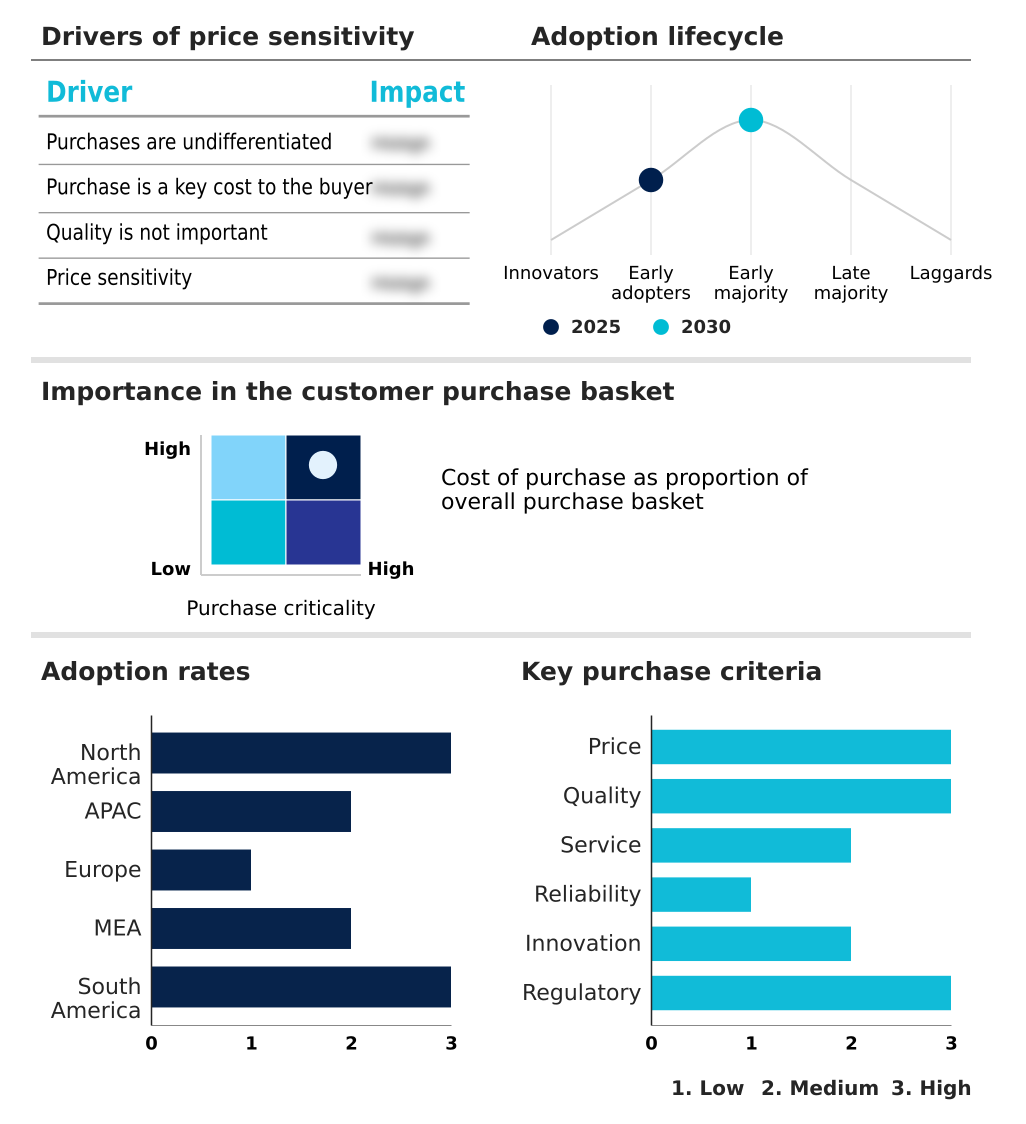
The video processing platform market forecasting report includes the adoption lifecycle of the market, covering from the innovator’s stage to the laggard’s stage. It focuses on adoption rates in different regions based on penetration. Furthermore, the video processing platform market report also includes key purchase criteria and drivers of price sensitivity to help companies evaluate and develop their market growth analysis strategies.
Customer Landscape of Video Processing Platform Industry
Competitive Landscape
Companies are implementing various strategies, such as strategic alliances, video processing platform market forecast, partnerships, mergers and acquisitions, geographical expansion, and product/service launches, to enhance their presence in the industry.
Adobe Inc. - Provides professional-grade platforms for video editing, transcoding, and content delivery, focusing on comprehensive creative and distribution workflows.
The industry research and growth report includes detailed analyses of the competitive landscape of the market and information about key companies, including:
- Adobe Inc.
- Akamai Technologies Inc.
- Amazon Web Services Inc.
- Ateme SA
- Brightcove Inc.
- Cisco Systems Inc.
- Evertz Technologies Ltd.
- Google LLC
- Haivision Systems Inc.
- Harmonic Inc.
- Imagine Communications.
- Kaltura Inc.
- MK Systems USA Inc
- Mux Inc.
- Pixel Power Ltd.
- Wowza Media Systems LLC
- Zixi
Qualitative and quantitative analysis of companies has been conducted to help clients understand the wider business environment as well as the strengths and weaknesses of key industry players. Data is qualitatively analyzed to categorize companies as pure play, category-focused, industry-focused, and diversified; it is quantitatively analyzed to categorize companies as dominant, leading, strong, tentative, and weak.
Recent Development and News in Video processing platform market
- In May 2025, Brightcove Inc. launched a comprehensive FAST Channel Launchpad, integrating cloud playout and ad monetization to simplify linear channel creation.
- In April 2025, Haivision Systems Inc. unveiled its Makito X4 video encoder, which integrates 5G network slicing capabilities to support secure, low-latency remote productions.
- In February 2025, Ateme SA released an update for its TITAN encoder, featuring an AI engine designed to optimize Versatile Video Coding (VVC) for 8K content delivery.
- In February 2025, Akamai Technologies Inc. enhanced its EdgeWorkers platform to support video manifest manipulation and lightweight transcoding directly at the network edge.
Dive into Technavio’s robust research methodology, blending expert interviews, extensive data synthesis, and validated models for unparalleled Video Processing Platform Market insights. See full methodology.
| Market Scope | |
|---|---|
| Page number | 294 |
| Base year | 2025 |
| Historic period | 2020-2024 |
| Forecast period | 2026-2030 |
| Growth momentum & CAGR | Accelerate at a CAGR of 11.8% |
| Market growth 2026-2030 | USD 6249.6 million |
| Market structure | Fragmented |
| YoY growth 2025-2026(%) | 10.5% |
| Key countries | US, Canada, Mexico, China, Japan, South Korea, India, Australia, Indonesia, UK, Germany, France, Italy, Spain, The Netherlands, Saudi Arabia, UAE, South Africa, Israel, Turkey, Brazil, Argentina and Colombia |
| Competitive landscape | Leading Companies, Market Positioning of Companies, Competitive Strategies, and Industry Risks |
Research Analyst Overview
- The video processing platform market is defined by a strategic pivot towards intelligent automation and operational efficiency, driven by the transition to cloud-native workflows.
- Core functions like video transcoding and processing, dynamic ad insertion, and video hosting are now deeply integrated with generative AI, creating cognitive media supply chains that optimize everything from multi-platform content distribution to video upload and ingestion. This shift addresses the intense demand for low-latency live streaming, cloud gaming, and volumetric video experiences.
- Key technologies such as adaptive bitrate streaming, versatile video coding, and the AV1 codec are crucial for managing device interoperability and ensuring perceptual quality. Boardroom decisions are increasingly influenced by ESG goals, making green coding and carbon-aware processing critical differentiators, with some firms achieving a 40% reduction in energy use.
- However, persistent cybersecurity threats and piracy sophistication require robust digital rights management, secure reliable transport protocols, and forensic watermarking. The complexity of multi-codec fragmentation and rising infrastructure costs are significant challenges, pushing innovation in areas like context-aware encoding, manifest manipulation at the network edge, and the use of multi-access edge computing for 5G distributed processing to maintain quality of experience.
What are the Key Data Covered in this Video Processing Platform Market Research and Growth Report?
-
What is the expected growth of the Video Processing Platform Market between 2026 and 2030?
-
USD 6.25 billion, at a CAGR of 11.8%
-
-
What segmentation does the market report cover?
-
The report is segmented by Deployment (Cloud based, and On premises), Type (Real time, and On demand), Application (Video transcoding and processing, Dynamic ad insertion, Video upload and ingestion, Video Hosting, and Others) and Geography (North America, APAC, Europe, Middle East and Africa, South America)
-
-
Which regions are analyzed in the report?
-
North America, APAC, Europe, Middle East and Africa and South America
-
-
What are the key growth drivers and market challenges?
-
Demand for ultra-low latency live streaming, Rising cybersecurity threats and piracy sophistication
-
-
Who are the major players in the Video Processing Platform Market?
-
Adobe Inc., Akamai Technologies Inc., Amazon Web Services Inc., Ateme SA, Brightcove Inc., Cisco Systems Inc., Evertz Technologies Ltd., Google LLC, Haivision Systems Inc., Harmonic Inc., Imagine Communications., Kaltura Inc., MK Systems USA Inc, Mux Inc., Pixel Power Ltd., Wowza Media Systems LLC and Zixi
-
Market Research Insights
- The market's dynamics are increasingly defined by the dual pressures of enhancing viewer experience and optimizing operational costs. The adoption of an AI-powered media supply chain is central to this shift, with AI-driven video compression and automated metadata generation improving efficiency.
- Innovations in serverless video processing allow for greater scalability, though unoptimized workflows can erode profit margins by up to 15%. Meanwhile, over 60% of developers cite device fragmentation as a key technical hurdle, making multi-codec support essential. In response, platforms are integrating real-time video analytics to monitor performance and employing dynamic bitrate encoding to deliver consistent quality across variable networks.
- The focus is on creating agile, intelligent systems that can automate complex tasks, from content-aware encoding to frame-accurate ad insertion, driving both revenue and viewer retention.
We can help! Our analysts can customize this video processing platform market research report to meet your requirements.
 RIA -
RIA - 
