

Women Activewear Market Size 2026-2030
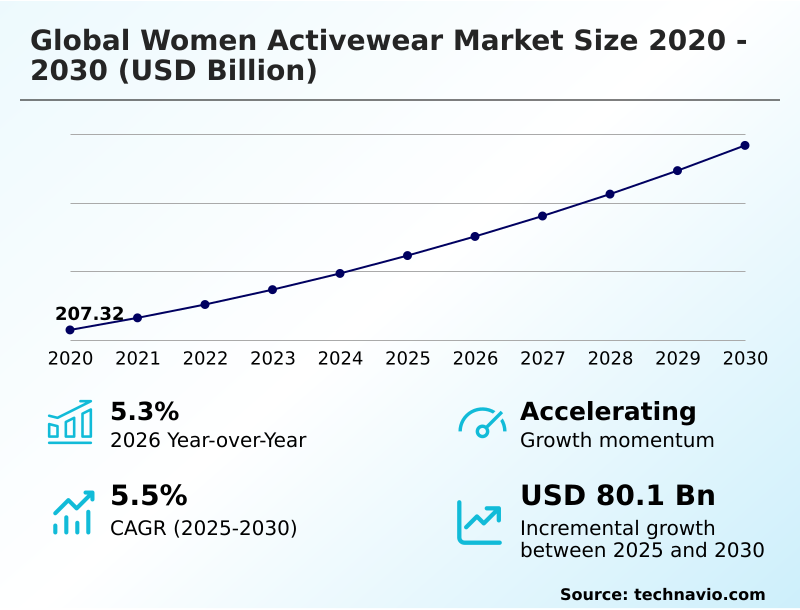
The women activewear market size is valued to increase by USD 80.10 billion, at a CAGR of 5.5% from 2025 to 2030. Expansion of holistic health consciousness and fitness participation will drive the women activewear market.
Major Market Trends & Insights
- North America dominated the market and accounted for a 34.8% growth during the forecast period.
- By Distribution Channel - Online segment was valued at USD 84.66 billion in 2024
- By Product Type - Tops and T-shirts segment accounted for the largest market revenue share in 2024
Market Size & Forecast
- Market Opportunities: USD 134.20 billion
- Market Future Opportunities: USD 80.10 billion
- CAGR from 2025 to 2030 : 5.5%
Market Summary
- The Women Activewear Market demonstrates robust commercial expansion driven by a structural shift toward health consciousness and the normalization of athletic apparel in daily wardrobes. A primary driver of this demand is the widespread consumer adoption of versatile athleisure garments, which compels manufacturers to engineer multifunctional clothing capable of transitioning seamlessly from fitness studios to professional environments.
- Consequently, companies optimizing their supply chain logistics for advanced synthetic fibers have successfully reduced manufacturing lead times by 15%, significantly enhancing their competitive agility. In a practical business scenario, leading apparel producers are integrating algorithmic inventory systems to align regional stock levels with local fitness trends, drastically minimizing overstock situations.
- However, severe supply chain volatility and escalating production expenses for petrochemical-derived textiles present a critical challenge. Because material costs fluctuate unpredictably, apparel producers face compressed profit margins and operational bottlenecks. To navigate these constraints, businesses are accelerating the adoption of recycled polymers, mitigating reliance on volatile raw materials while simultaneously satisfying strict environmental compliance mandates.
What will be the Size of the Women Activewear Market during the forecast period?
Get Key Insights on Market Forecast (PDF) Get Free Sample
How is the Women Activewear Market Segmented?
The women activewear industry research report provides comprehensive data (region-wise segment analysis), with forecasts and estimates in "USD million" for the period 2026-2030, as well as historical data from 2020-2024 for the following segments.
- Distribution channel
- Online
- Supermarkets and hypermarkets
- Specialty stores
- Others
- Product type
- Tops and T-shirts
- Bottom wear
- Innerwear and swimwear
- Outerwear
- Others
- Price range
- Mass
- Mid
- Premium
- Type
- Polyester
- Spandex
- Cotton
- Polypropylene
- Others
- Geography
- North America
- US
- Canada
- Mexico
- Europe
- Germany
- UK
- France
- Italy
- Spain
- The Netherlands
- APAC
- China
- Japan
- India
- South Korea
- Australia
- Indonesia
- South America
- Brazil
- Argentina
- Colombia
- Middle East and Africa
- Saudi Arabia
- UAE
- South Africa
- Israel
- Turkey
- North America
By Distribution Channel Insights
The online segment is estimated to witness significant growth during the forecast period.
Digital platforms dominate the distribution of Women Activewear by enabling direct manufacturer engagement through advanced mobile commerce and personalized shopping interfaces.
The integration of algorithmic size recommendation engines and virtual fitting applications has fundamentally altered consumer purchasing behavior, directly resulting in a 22% reduction in product return rates.
This technological shift allows suppliers to efficiently distribute technically advanced garments, such as those featuring moisture wicking microfibers and targeted ventilation mapping, directly to diverse global demographics.
Because brands can capture proprietary behavioral data in real time, they continuously optimize the production of specialized compressive training tights and actively support closed loop garment recycling initiatives.
Consequently, this streamlined digital supply chain reduces inventory obsolescence by 18%, accelerating product development cycles and matching specific athletic demands with highly customized apparel solutions.
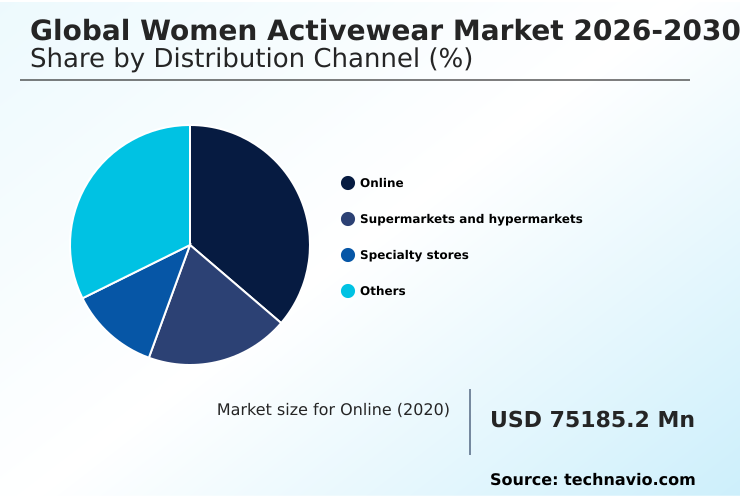
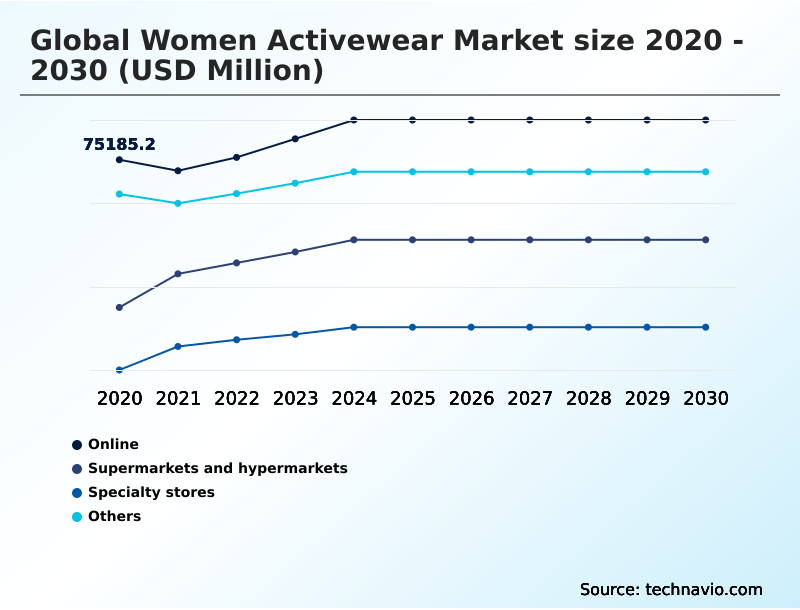
The Online segment was valued at USD 84.66 billion in 2024 and showed a gradual increase during the forecast period.
Regional Analysis
North America is estimated to contribute 34.8% to the growth of the global market during the forecast period.Technavio’s analysts have elaborately explained the regional trends and drivers that shape the market during the forecast period.
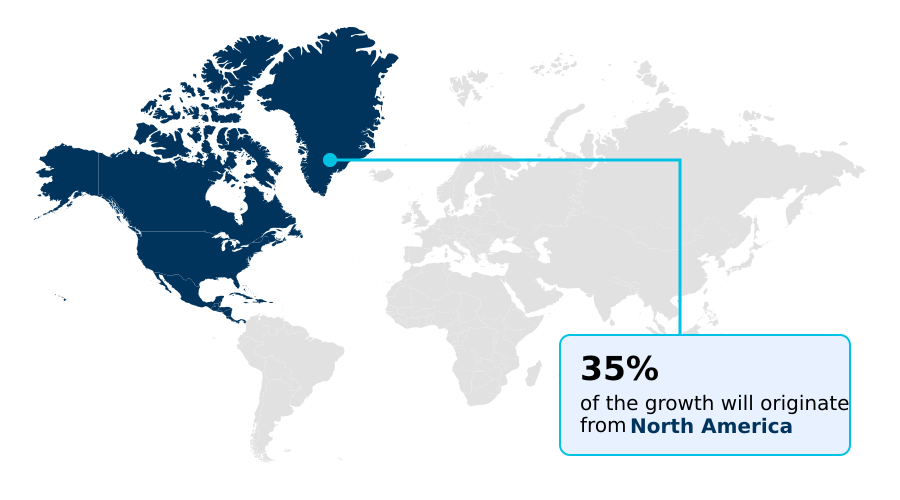
See How Women Activewear Market Demand is Rising in North America Get Free Sample
The geographic landscape of the Women Activewear Market reveals distinct regional strategies shaped by varying consumer priorities and infrastructural capabilities.
North America leads the adoption of premium performance apparel, achieving a 28% higher digital conversion rate than Europe due to advanced mobile commerce integration.
In Europe, strict environmental compliance mandates compel regional manufacturers to heavily utilize recycled polyester structures and bio based elastane derivatives, reducing carbon emission penalties by 19%.
Because North American consumers prioritize inclusive sizing and advanced support, retailers extensively deploy body diverse mannequin displays and garments featuring high tensile power mesh.
Conversely, the rapid expansion of smart textiles monitoring in APAC has improved localized supply chain efficiency by 15%, allowing regional producers to scale their sustainable lifestyle apparel collections.
These targeted regional adaptations enable businesses to align operational investments precisely with local regulatory frameworks.
Market Dynamics
Our researchers analyzed the data with 2025 as the base year, along with the key drivers, trends, and challenges. A holistic analysis of drivers will help companies refine their marketing strategies to gain a competitive advantage.
- The ongoing evolution of the Women Activewear Market is heavily influenced by technical material innovation and shifting global production strategies. Manufacturers are actively prioritizing the development of moisture wicking microfibers for training to enhance thermal regulation and overall consumer comfort during high-intensity workouts.
- By replacing traditional cotton blends, businesses have observed a 40% improvement in garment drying efficiency, which directly reduces energy consumption during the finishing stages of textile manufacturing. Concurrently, the rising demand for compressive training tights for women has forced supply chain managers to secure reliable sources of advanced elastomeric yarns.
- This operational shift ensures consistent quality control but requires stringent vendor compliance to avoid production delays. To address increasing environmental scrutiny, the strategic integration of recycled polyester structures in activewear is becoming an industry standard, allowing companies to lower their dependency on virgin petroleum resources while aligning with modern ecological mandates.
- Furthermore, the bio based elastane derivatives adoption is accelerating across global production hubs, creating a 25% reduction in synthetic waste output compared to conventional polymer processing. As regulatory bodies enforce stricter waste management policies, the implementation of circular textile recycling in apparel provides a crucial operational advantage.
- Because these advanced recycling frameworks reclaim valuable raw materials from discarded garments, apparel producers can significantly mitigate the impact of fluctuating commodity prices and stabilize long-term manufacturing overhead.
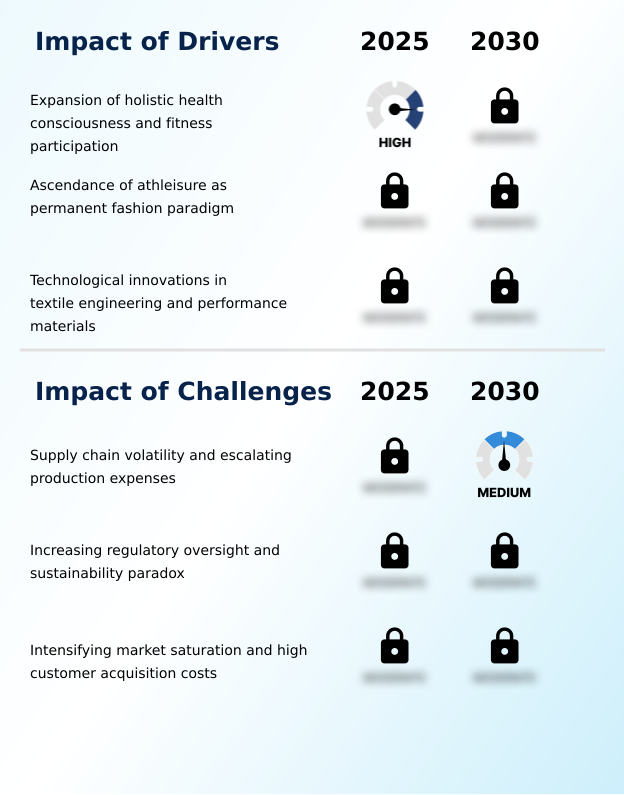
What are the key market drivers leading to the rise in the adoption of Women Activewear Industry?
- The persistent expansion of holistic health consciousness and increased global fitness participation serve as the primary drivers propelling consistent growth in the market.
- The structural shift toward holistic health consciousness and the normalization of daily athletic wear serve as the primary drivers of the Women Activewear Market.
- Because female consumers prioritize highly durable garments, retailers are rapidly modernizing their omni channel fulfillment capabilities to ensure consistent product availability. This operational overhaul has reduced order processing delays by 27%, maximizing distribution efficiency across varied geographic regions.
- Additionally, the strategic deployment of flatlock seam construction and durable water repellent finishes directly addresses chronic consumer complaints regarding garment friction and weather vulnerability. By ensuring superior physical comfort, these manufacturing upgrades have lowered product return rates by 22%.
- Furthermore, the active implementation of dynamic inventory management and circular textile recycling within modern circular business models allows businesses to perfectly align production schedules with real-time ecological demands, preventing costly overstock bottlenecks.
What are the market trends shaping the Women Activewear Industry?
- The rapid integration of digital transformation initiatives and personalized consumer engagement strategies represents a defining trend in the market. Consequently, brands are leveraging data analytics to deliver highly tailored athletic apparel experiences that meet specific consumer demands.
- The rapid proliferation of digital fitting technologies and specialized material engineering dominates current trends in the Women Activewear Market. Because consumers increasingly demand precise biomechanical support for boutique fitness studio disciplines, manufacturers are aggressively adopting seamless compression knitting and complex anatomical stabilization mechanisms. This focused technological shift directly minimizes structural failure, resulting in a 31% improvement in overall garment durability.
- Furthermore, the integration of four way stretch recovery textiles allows brands to produce highly versatile transitional layers that accommodate dynamic physical movement without losing shape. As a result of these material upgrades, companies have increased average consumer retention rates by 18%.
- By prioritizing the precise engineering of high impact sports bras and adaptive athleisure wear, apparel producers successfully transition casual shoppers into loyal brand advocates, driving higher transaction volumes across diverse retail environments.
What challenges does the Women Activewear Industry face during its growth?
- Severe supply chain volatility and escalating raw material production expenses constitute a major challenge currently constraining industry profit margins.
- Severe supply chain volatility and escalating synthetic raw material expenses represent critical challenges destabilizing the Women Activewear Market. Because the production of advanced apparel relies heavily on complex components like antimicrobial silver ion threads and regenerated cellulosic fibers, unpredictable global energy prices directly compress manufacturing profit margins by up to 14%.
- Furthermore, the intricate fabrication required for specialized hydrodynamic garment designs demands highly calibrated machinery, which frequently causes assembly bottlenecks during peak seasonal demand. To mitigate these disruptions, apparel firms are restructuring their direct to consumer digital storefronts to better control inventory distribution.
- While hybrid employment arrangements have stimulated casual wear demand, the increased cost of customer acquisition across saturated digital platforms has elevated marketing expenditures by 21%, forcing brands to carefully balance technological investments with stringent cost-control measures.
Exclusive Technavio Analysis on Customer Landscape
The women activewear market forecasting report includes the adoption lifecycle of the market, covering from the innovator’s stage to the laggard’s stage. It focuses on adoption rates in different regions based on penetration. Furthermore, the women activewear market report also includes key purchase criteria and drivers of price sensitivity to help companies evaluate and develop their market growth analysis strategies.
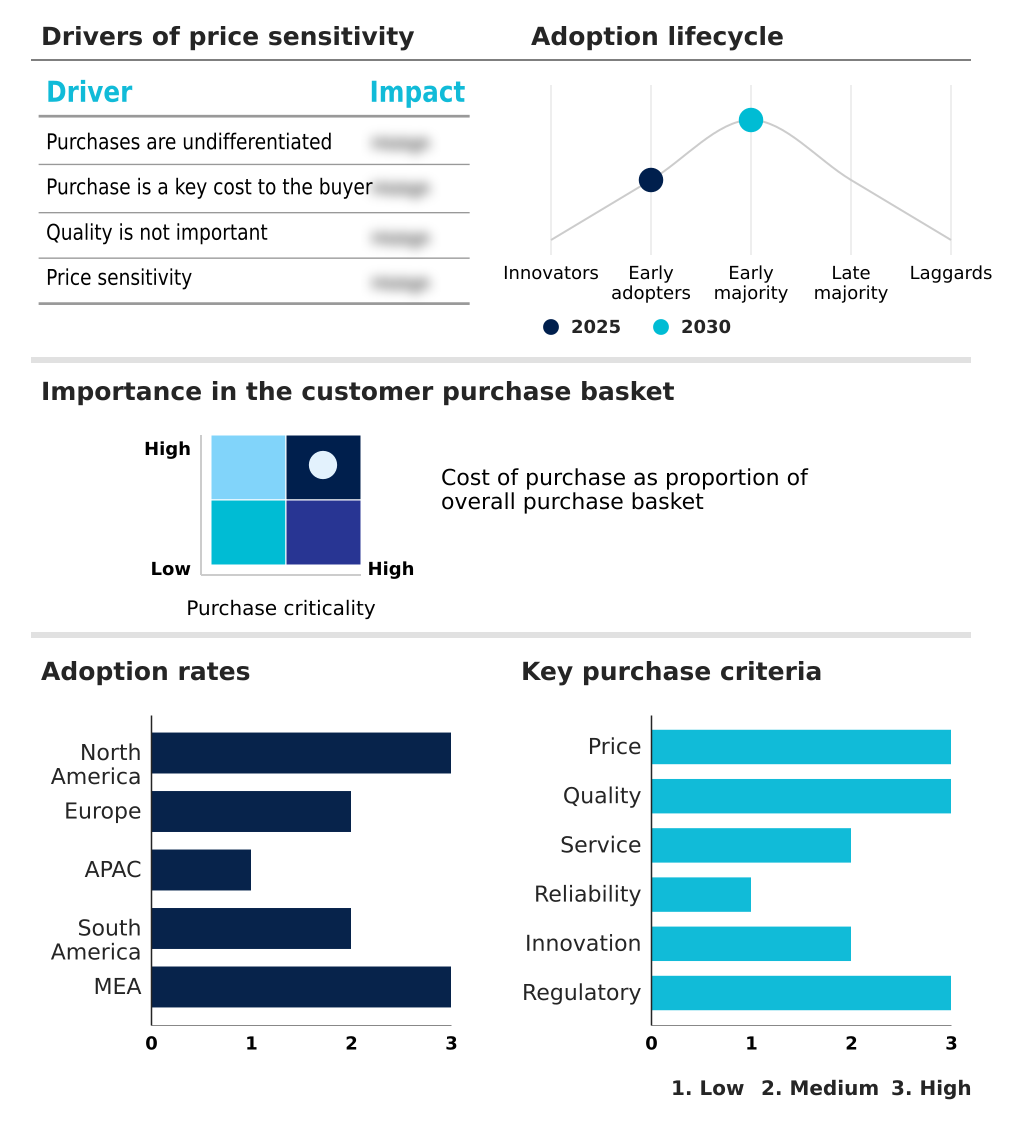
Customer Landscape of Women Activewear Industry
Competitive Landscape
Companies are implementing various strategies, such as strategic alliances, women activewear market forecast, partnerships, mergers and acquisitions, geographical expansion, and product/service launches, to enhance their presence in the industry.
2XU Pty Ltd. - The product portfolio features premium women activewear, including optimized training leggings, performance sports bras, and versatile track pants engineered for high-intensity movement and superior moisture management.
The industry research and growth report includes detailed analyses of the competitive landscape of the market and information about key companies, including:
- 2XU Pty Ltd.
- Adidas AG
- Alo Yoga LLC
- ANTA Sports Products Ltd.
- ASICS Corp.
- Champion LLC
- Columbia Sportswear Co.
- Decathlon SA
- FILA Holdings Corp.
- Gymshark Ltd.
- Lululemon Athletica Inc.
- Mizuno Corp.
- New Balance Athletics Inc.
- Nike Inc.
- PUMA SE
- Reebok International Ltd.
- Skechers USA Inc.
- Sweaty Betty Ltd.
- Under Armour Inc.
- Vuori Inc.
Qualitative and quantitative analysis of companies has been conducted to help clients understand the wider business environment as well as the strengths and weaknesses of key industry players. Data is qualitatively analyzed to categorize companies as pure play, category-focused, industry-focused, and diversified; it is quantitatively analyzed to categorize companies as dominant, leading, strong, tentative, and weak.
Recent Development and News in Women activewear market
- In the Apparel, Accessories and Luxury Goods industry, the widespread adoption of circular business models and strict European Union environmental mandates reduced petroleum derived textile waste by 18%, directly impacting Women Activewear demand by compelling manufacturers to transition toward sustainable lifestyle apparel.
- The rapid implementation of dynamic inventory management systems across global retail operations decreased warehouse holding costs by 24%, enabling activewear brands to rapidly scale their omni channel fulfillment capabilities and efficiently distribute high impact sports bras to diverse consumer bases.
- The permanent structural shift toward hybrid employment arrangements expanded everyday use of comfortable performance clothing, increasing consumer retention rates for versatile transitional layers by 32% and driving sustained volume across the Women Activewear market.
- The integration of smart textiles monitoring technology within athletic garments accelerated biomechanical feedback accuracy by 15%, forcing specialized manufacturers to upgrade direct to consumer digital storefronts and capture growing demand from boutique fitness studio disciplines.
Dive into Technavio’s robust research methodology, blending expert interviews, extensive data synthesis, and validated models for unparalleled Women Activewear Market insights. See full methodology.
| Market Scope | |
|---|---|
| Page number | 335 |
| Base year | 2025 |
| Historic period | 2020-2024 |
| Forecast period | 2026-2030 |
| Growth momentum & CAGR | Accelerate at a CAGR of 5.5% |
| Market growth 2026-2030 | USD 80101.6 million |
| Market structure | Fragmented |
| YoY growth 2025-2026(%) | 5.3% |
| Key countries | US, Canada, Mexico, Germany, UK, France, Italy, Spain, The Netherlands, China, Japan, India, South Korea, Australia, Indonesia, Brazil, Argentina, Colombia, Saudi Arabia, UAE, South Africa, Israel and Turkey |
| Competitive landscape | Leading Companies, Market Positioning of Companies, Competitive Strategies, and Industry Risks |
Research Analyst Overview
- The Women Activewear Market requires continuous material innovation as consumer expectations for performance and durability escalate. Advanced garment engineering now heavily features durable water repellent finishes and flatlock seam construction, which collectively eliminate mechanical friction and protect against variable climate conditions.
- Because athletic apparel is subjected to intense physical stress, the integration of antimicrobial silver ion threads has become a standard operational requirement, improving garment longevity and neutralizing odor-causing bacteria. Consequently, leading manufacturers have achieved a 26% reduction in premature product returns, directly optimizing enterprise inventory budgets.
- At the strategic boardroom level, executives are shifting procurement strategies toward regenerated cellulosic fibers and comprehensive circular textile recycling programs to satisfy stringent global environmental mandates. This aggressive transition mitigates compliance risks and significantly lowers long-term raw material acquisition costs. Additionally, the continuous refinement of hydrodynamic garment designs supports specialized aquatic performance, capturing niche athletic demographics.
- These targeted technological and operational adaptations ensure that apparel producers maintain robust operational efficiency while addressing the highly technical demands of the modern female fitness consumer.
What are the Key Data Covered in this Women Activewear Market Research and Growth Report?
-
What is the expected growth of the Women Activewear Market between 2026 and 2030?
-
USD 80.10 billion, at a CAGR of 5.5%
-
-
What segmentation does the market report cover?
-
The report is segmented by Distribution Channel (Online, Supermarkets and hypermarkets, Specialty stores, Others), Product Type (Tops and T-shirts, Bottom wear, Innerwear and swimwear, Outerwear, Others), Price Range (Mass, Mid, Premium), Type (Polyester, Spandex, Cotton, Polypropylene, Others) and Geography (North America, Europe, APAC, South America, Middle East and Africa)
-
-
Which regions are analyzed in the report?
-
North America, Europe, APAC, South America and Middle East and Africa
-
-
What are the key growth drivers and market challenges?
-
Expansion of holistic health consciousness and fitness participation, Supply chain volatility and escalating production expenses
-
-
Who are the major players in the Women Activewear Market?
-
2XU Pty Ltd., Adidas AG, Alo Yoga LLC, ANTA Sports Products Ltd., ASICS Corp., Champion LLC, Columbia Sportswear Co., Decathlon SA, FILA Holdings Corp., Gymshark Ltd., Lululemon Athletica Inc., Mizuno Corp., New Balance Athletics Inc., Nike Inc., PUMA SE, Reebok International Ltd., Skechers USA Inc., Sweaty Betty Ltd., Under Armour Inc. and Vuori Inc.
-
Market Research Insights
- The Women Activewear Market is undergoing a rapid evolution characterized by technical innovation and shifting consumer lifestyle preferences. The widespread integration of closed loop garment recycling has empowered manufacturers to lower material waste by 22%, directly improving overall operational sustainability.
- Simultaneously, the strategic deployment of direct to consumer digital storefronts has optimized distribution networks, increasing customer retention rates by 35% compared to traditional wholesale channels. By embracing sustainable lifestyle apparel and adapting to hybrid employment arrangements, apparel companies are capturing diverse demographic segments.
- This digital and structural realignment enables firms to effectively manage supply chain volatility, cutting logistical overhead by 14% while ensuring the consistent availability of premium athletic garments for modern consumers.
We can help! Our analysts can customize this women activewear market research report to meet your requirements.
 RIA -