
AI For Supply Chain Risk Intelligence Platforms Market Analysis, Size, and Forecast 2026-2030: North America (US, Canada, and Mexico), Europe (Germany, UK, and France), APAC (China, Japan, and India), Middle East and Africa (UAE, Saudi Arabia, and South Africa), South America (Brazil, Argentina, and Colombia), and Rest of World (ROW)

AI For Supply Chain Risk Intelligence Platforms Market Analysis, Size, and Forecast 2026-2030:
North America (US, Canada, and Mexico), Europe (Germany, UK, and France), APAC (China, Japan, and India), Middle East and Africa (UAE, Saudi Arabia, and South Africa), South America (Brazil, Argentina, and Colombia), and Rest of World (ROW)

Published: Apr 2026 307 Pages SKU: IRTNTR81390

Market Overview at a Glance

$1.21 B
Market Opportunity
20.5%
CAGR 2025 - 2030
39.7%
North America Growth
$482.5 Mn
Software segment 2024

AI For Supply Chain Risk Intelligence Platforms Market Size 2026-2030

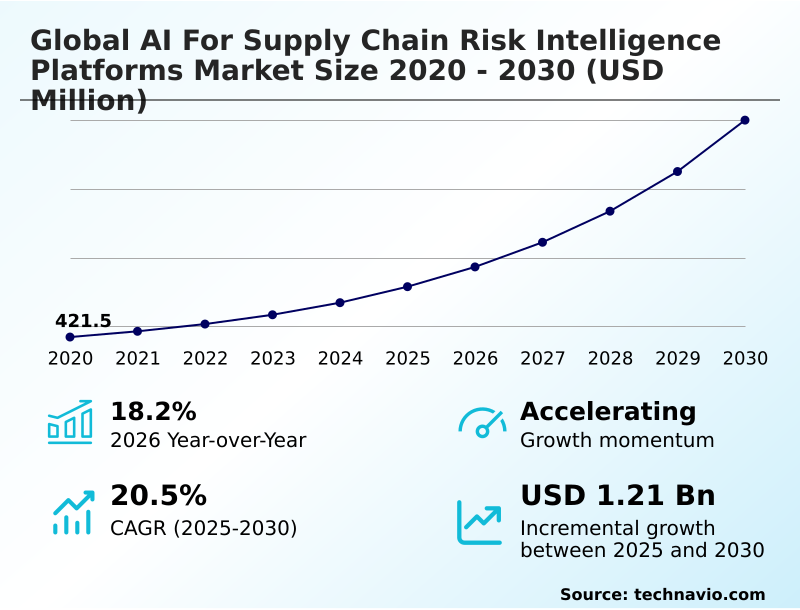
The ai for supply chain risk intelligence platforms market size is valued to increase by USD 1.21 billion, at a CAGR of 20.5% from 2025 to 2030. Increasing geopolitical volatility and the fragmentation of global trade routes will drive the ai for supply chain risk intelligence platforms market.

Major Market Trends & Insights

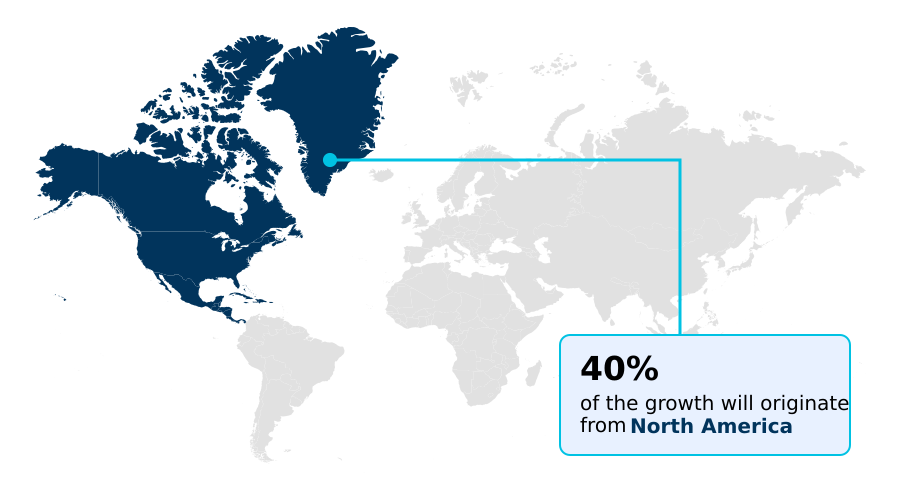
  • North America dominated the market and accounted for a 39.7% growth during the forecast period.
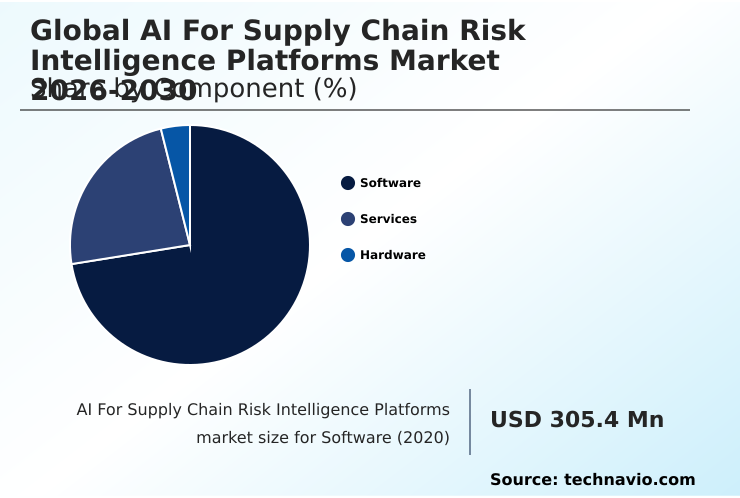
  • By Component - Software segment was valued at USD 482.5 million in 2024
  • By Technology - Machine learning segment accounted for the largest market revenue share in 2024

Market Size & Forecast

  • Market Opportunities: USD 1.58 billion
  • Market Future Opportunities: USD 1.21 billion
  • CAGR from 2025 to 2030 : 20.5%

Market Summary

  • The AI for supply chain risk intelligence platforms market is defined by sophisticated software solutions designed to bolster organizational resilience. These platforms leverage machine learning for risk and predictive analytics to process vast amounts of unstructured data from diverse global sources, including geopolitical news, climate data, and real-time logistics feeds.
  • By applying advanced algorithms for a holistic risk view and real-time risk scoring, the technology identifies potential vulnerabilities and predicts disruptions before they impact physical operations.
  • A key application is proactive inventory management, where a firm can use AI-driven demand forecasting to anticipate a potential raw material shortage due to a port strike and automatically re-route incoming shipments to an alternative port, thus avoiding production downtime.
  • This transition from reactive problem-solving to a predictive posture, using tools for supply chain vulnerability mapping, allows stakeholders to mitigate risks with high precision. In a volatile global economy, these platforms provide essential end-to-end visibility and strategic foresight, ensuring businesses maintain continuity and a competitive advantage.

What will be the Size of the AI For Supply Chain Risk Intelligence Platforms Market during the forecast period?

Get Key Insights on Market Forecast (PDF) Request Free Sample

How is the AI For Supply Chain Risk Intelligence Platforms Market Segmented?

The ai for supply chain risk intelligence platforms industry research report provides comprehensive data (region-wise segment analysis), with forecasts and estimates in "USD million" for the period 2026-2030, as well as historical data from 2020-2024 for the following segments.

  • Component
    • Software
    • Services
    • Hardware
  • Technology
    • Machine learning
    • NLP
    • Computer vision
    • Context-aware computing
    • Others
  • End-user
    • Manufacturing
    • Retail and e-commerce
    • Healthcare and pharma
    • Others
  • Geography
    • North America
      • US
      • Canada
      • Mexico
    • Europe
      • Germany
      • UK
      • France
    • APAC
      • China
      • Japan
      • India
    • Middle East and Africa
      • UAE
      • Saudi Arabia
      • South Africa
    • South America
      • Brazil
      • Argentina
      • Colombia
    • Rest of World (ROW)

By Component Insights

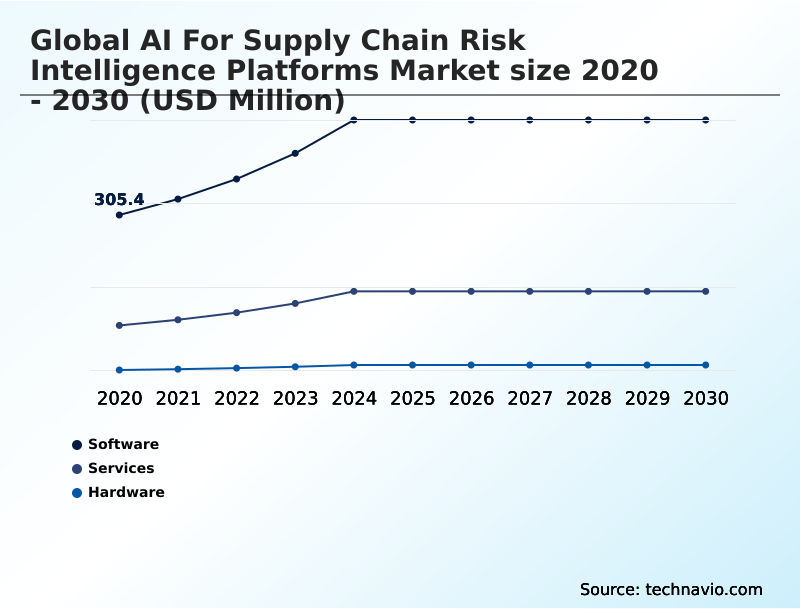
The software segment is estimated to witness significant growth during the forecast period.

The software segment is the core of the global AI for supply chain risk intelligence platforms market, providing the architecture for intelligence generation.

These solutions, from SaaS applications to integrated APIs, are crucial for aggregating global data and applying machine learning for risk. Through natural language processing, they interpret unstructured data to identify threats.

The evolution toward generative AI models allows users to query complex data, democratizing access to insights. Advanced platforms with a predictive analytics engine can now reduce false-positive disruption alerts by over 15%, improving the focus on genuine threats.

This move toward cognitive automation and prescriptive risk analytics enables self-healing supply networks, where software not only identifies risk but also executes mitigation strategies with minimal human intervention, leveraging procurement intelligence and supply chain orchestration.

Request Free Sample

The Software segment was valued at USD 482.5 million in 2024 and showed a gradual increase during the forecast period.
Request Free Sample

Regional Analysis

North America is estimated to contribute 39.7% to the growth of the global market during the forecast period.Technavio’s analysts have elaborately explained the regional trends and drivers that shape the market during the forecast period.

See How AI For Supply Chain Risk Intelligence Platforms Market Demand is Rising in North America Request Free Sample

The geographic landscape of the global AI for supply chain risk intelligence platforms market is diverse, with adoption driven by regional priorities.

In North America, a focus on cybersecurity and geopolitical risk assessment has led to platforms that improve logistics network optimization by over 20%.

Meanwhile, Europe's stringent ESG compliance standards are a major factor, with firms implementing sustainability intelligence platforms to achieve 95% adherence to regulations like the German Supply Chain Due Diligence Act.

In the APAC region, the emphasis is on managing manufacturing complexity and maritime risk, using real-time supply chain visibility tools to navigate disruptions.

This regional specialization fosters innovation in supply network analytics and demand sensing, creating a global ecosystem where AI for procurement risk solutions are tailored to meet specific regulatory and operational challenges, such as those addressed by compliance verification systems and risk-aware procurement.

Market Dynamics

Our researchers analyzed the data with 2025 as the base year, along with the key drivers, trends, and challenges. A holistic analysis of drivers will help companies refine their marketing strategies to gain a competitive advantage.

  • The evolution of the global AI for supply chain risk intelligence platforms market is marked by the deployment of highly specialized applications. Organizations are increasingly using NLP for geopolitical risk alerts to get ahead of trade policy shifts.
  • The use of a digital twin for supply chain stress testing has become standard, with advanced systems identifying over 30% more vulnerabilities than traditional checklist-based assessments. Real-time logistics disruption prediction models are essential for managing transit volatility.
  • In parallel, a significant focus is on automated ESG compliance in supply chains and mitigating algorithmic bias in procurement AI to ensure fair and ethical operations. Technologically, the use of a graph database for sub-tier supplier visibility and integrating AI with legacy ERP systems are key priorities.
  • Further applications include prescriptive analytics for route optimization and context-aware computing for logistics safety. Platforms can now offer specialized modules, such as an AI platform for detecting supplier insolvency or using machine learning for port congestion prediction.
  • The automation extends to using smart contracts for automated freight booking, robotic process automation for supplier audits, and leveraging satellite imagery for supply chain monitoring.
  • Finally, generative AI for creating contingency plans is empowering a new level of proactive response, enabling autonomous mitigation of transportation delays and using graph analytics to uncover hidden dependencies, predict raw material shortages, and improve third-party risk assessment using AI for managing environmental compliance.

What are the key market drivers leading to the rise in the adoption of AI For Supply Chain Risk Intelligence Platforms Industry?

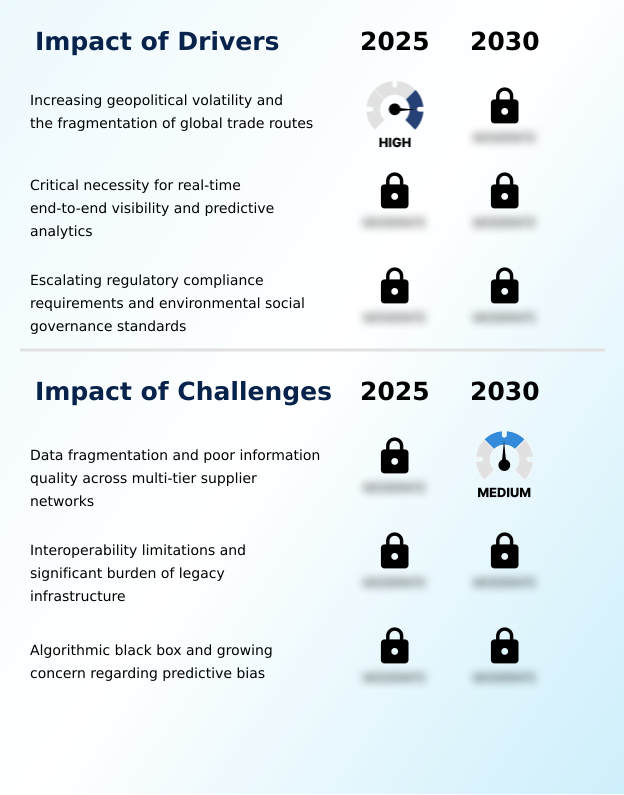
  • Increasing geopolitical volatility and the fragmentation of global trade routes are key drivers fueling growth in the AI for supply chain risk intelligence platforms market.

  • The primary driver for the global AI for supply chain risk intelligence platforms market is the imperative for businesses to navigate escalating geopolitical volatility and achieve end-to-end visibility.
  • Modern platforms leverage a predictive analytics engine to transform reactive processes into proactive strategies, improving risk detection by over 50%.
  • The critical need for real-time monitoring of deep-tier supplier networks is pushing organizations to adopt solutions that provide a holistic risk view.
  • Furthermore, escalating ESG compliance standards are compelling firms to use third-party risk management (TPRM) tools for continuous supplier stability assessment and ethical risk management. These systems automate compliance verification, ensuring adherence to complex international regulations.
  • This push is amplified by the adoption of cognitive supply chain management and global trade intelligence, which are now fundamental for maintaining a resilient and competitive supply chain.

What are the market trends shaping the AI For Supply Chain Risk Intelligence Platforms Industry?

  • The integration of generative AI marks a significant market trend, enabling a shift from predictive to prescriptive risk analytics for more actionable insights.

  • Key trends are transforming the global AI for supply chain risk intelligence platforms market, shifting it from predictive to prescriptive capabilities. The rise of high-fidelity digital twins enables comprehensive multi-tier supply chain mapping, allowing organizations to simulate disruptions and test resilience, with some users reporting a 25% improvement in identifying hidden vulnerabilities.
  • The integration of generative AI models facilitates prescriptive risk analytics, providing actionable, natural language recommendations that can reduce decision-making time by up to 40%. This transition toward autonomous mitigation and self-healing supply networks, powered by smart contract execution and robotic process automation, represents the next frontier.
  • These trends are supported by logistics disruption management and proactive risk management strategies, making supply chain resilience platforms essential for modern enterprises aiming for a competitive edge through superior supply chain orchestration.

What challenges does the AI For Supply Chain Risk Intelligence Platforms Industry face during its growth?

  • Data fragmentation and poor information quality across multi-tier supplier networks present a key challenge affecting industry growth.

  • Significant challenges constrain the full potential of the global AI for supply chain risk intelligence platforms market, led by data fragmentation and poor information quality from deep-tier supplier networks. This issue, cited by over 60% of procurement leaders as a primary barrier, compromises the accuracy of machine learning models.
  • Interoperability is another major hurdle, as legacy infrastructure integration with modern AI platforms can increase project costs by up to 50%. The algorithmic black box problem, coupled with concerns over predictive bias, creates a trust deficit, as stakeholders demand transparency and explainable AI (XAI).
  • Overcoming these challenges requires not just technological solutions but also a cultural shift toward data standardization and collaboration across the multi-enterprise collaboration network to build effective supply chain digital twin technology and autonomous logistics operations.

Exclusive Technavio Analysis on Customer Landscape

The ai for supply chain risk intelligence platforms market forecasting report includes the adoption lifecycle of the market, covering from the innovator’s stage to the laggard’s stage. It focuses on adoption rates in different regions based on penetration. Furthermore, the ai for supply chain risk intelligence platforms market report also includes key purchase criteria and drivers of price sensitivity to help companies evaluate and develop their market growth analysis strategies.
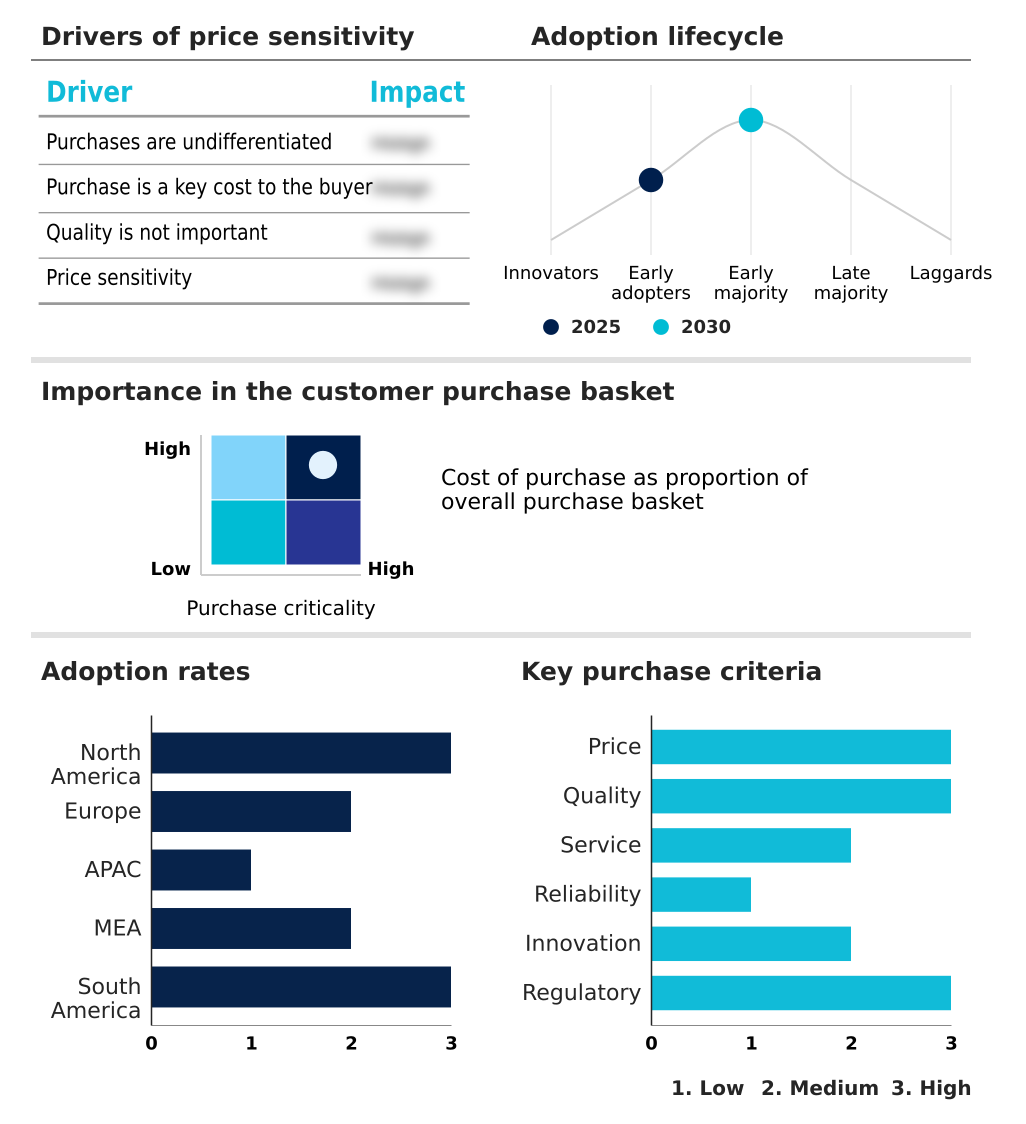
Customer Landscape of AI For Supply Chain Risk Intelligence Platforms Industry

Competitive Landscape

Companies are implementing various strategies, such as strategic alliances, ai for supply chain risk intelligence platforms market forecast, partnerships, mergers and acquisitions, geographical expansion, and product/service launches, to enhance their presence in the industry.

Altana AI - Providers deliver AI-powered solutions for supply chain risk intelligence, specializing in predictive analytics, multi-tier visibility, and compliance monitoring to enhance global trade resilience.

The industry research and growth report includes detailed analyses of the competitive landscape of the market and information about key companies, including:

  • Altana AI
  • Avetta LLC
  • Blue Yonder Group Inc.
  • Coupa Software Inc.
  • Dun and Bradstreet Holdings Inc
  • EcoVadis SAS
  • Everstream Analytics
  • Exiger
  • IBM Corp.
  • Interos Inc.
  • Kinaxis Inc.
  • Kodiak Hub
  • Moodys Corp.
  • Oracle Corp.
  • project44
  • Resilinc Corp.
  • SAP SE
  • Sayari Labs Inc
  • Sphera Solutions Inc.

Qualitative and quantitative analysis of companies has been conducted to help clients understand the wider business environment as well as the strengths and weaknesses of key industry players. Data is qualitatively analyzed to categorize companies as pure play, category-focused, industry-focused, and diversified; it is quantitatively analyzed to categorize companies as dominant, leading, strong, tentative, and weak.

Recent Development and News in Ai for supply chain risk intelligence platforms market

  • In August 2025, a global logistics technology developer released an updated version of its core intelligence engine, which incorporates generative AI to provide natural language alerts and automated contingency suggestions for users facing unforeseen transportation delays.
  • In October 2025, a leading international certification body introduced an automated compliance verification system that utilizes satellite imagery and machine learning to audit the land-use practices of agricultural suppliers in South America.
  • In February 2025, a leading enterprise software provider integrated a specialized large language model into its core procurement suite to allow users to conduct real-time stress tests on their supplier contracts using natural language queries regarding regional labor laws and environmental regulations.
  • In May 2025, a prominent international trade consortium launched a digital monitoring framework that utilizes machine learning to assess the impact of regional security shifts on the flow of critical raw materials through Southeast Asian maritime routes.

Dive into Technavio’s robust research methodology, blending expert interviews, extensive data synthesis, and validated models for unparalleled AI For Supply Chain Risk Intelligence Platforms Market insights. See full methodology.

Market Scope
Page number 307
Base year 2025
Historic period 2020-2024
Forecast period 2026-2030
Growth momentum & CAGR Accelerate at a CAGR of 20.5%
Market growth 2026-2030 USD 1211.2 million
Market structure Fragmented
YoY growth 2025-2026(%) 18.2%
Key countries US, Canada, Mexico, Germany, UK, France, Italy, Spain, The Netherlands, China, Japan, India, South Korea, Australia, Indonesia, UAE, Saudi Arabia, South Africa, Israel, Egypt, Brazil, Argentina and Colombia
Competitive landscape Leading Companies, Market Positioning of Companies, Competitive Strategies, and Industry Risks

Request Free Sample

Research Analyst Overview

  • The global AI for supply chain risk intelligence platforms market is rapidly advancing, driven by the critical need for resilience in volatile global trade environments. The core of this market lies in advanced software leveraging machine learning for risk, natural language processing, and computer vision analysis to provide a predictive edge.
  • These platforms are not merely analytical tools but are becoming operational command centers that enable autonomous mitigation and self-healing supply networks. By using graph database technology and context-aware computing, firms achieve unprecedented multi-tier supply chain mapping and sub-tier visibility.
  • The integration of prescriptive risk analytics and generative AI models is a key trend, allowing for automated contingency planning and proactive decision-making. Companies adopting these technologies report a 30% reduction in crisis resolution time, a metric that directly impacts boardroom discussions on operational continuity and profitability.
  • As data fragmentation and predictive bias remain challenges, the focus is shifting toward explainable AI (XAI) and robust ethical risk management frameworks to ensure trust and transparency in cognitive automation and real-time disruption monitoring, which are crucial for effective procurement risk analysis and resilience modeling.

What are the Key Data Covered in this AI For Supply Chain Risk Intelligence Platforms Market Research and Growth Report?

  • What is the expected growth of the AI For Supply Chain Risk Intelligence Platforms Market between 2026 and 2030?

    • USD 1.21 billion, at a CAGR of 20.5%

  • What segmentation does the market report cover?

    • The report is segmented by Component (Software, Services, and Hardware), Technology (Machine learning, NLP, Computer vision, Context-aware computing, and Others), End-user (Manufacturing, Retail and e-commerce, Healthcare and pharma, and Others) and Geography (North America, Europe, APAC, Middle East and Africa, South America)

  • Which regions are analyzed in the report?

    • North America, Europe, APAC, Middle East and Africa and South America

  • What are the key growth drivers and market challenges?

    • Increasing geopolitical volatility and the fragmentation of global trade routes, Data fragmentation and poor information quality across multi-tier supplier networks

  • Who are the major players in the AI For Supply Chain Risk Intelligence Platforms Market?

    • Altana AI, Avetta LLC, Blue Yonder Group Inc., Coupa Software Inc., Dun and Bradstreet Holdings Inc, EcoVadis SAS, Everstream Analytics, Exiger, IBM Corp., Interos Inc., Kinaxis Inc., Kodiak Hub, Moodys Corp., Oracle Corp., project44, Resilinc Corp., SAP SE, Sayari Labs Inc and Sphera Solutions Inc.

Market Research Insights

  • The dynamics of the AI for supply chain risk intelligence platforms market are shaped by the tangible value of proactive risk management. Organizations deploying AI-driven demand forecasting and transportation visibility achieve up to 20% greater accuracy in delivery estimates compared to legacy methods.
  • The adoption of supply chain control tower solutions is accelerating, with early adopters reporting a 15% reduction in disruption-related financial losses. Furthermore, integrating AI for procurement risk and automated supplier vetting streamlines operations, cutting supplier onboarding time by an average of 30%.
  • This shift from reactive to predictive strategies, supported by a cognitive supply chain management approach, is proving essential for navigating global complexities and securing a competitive edge through enhanced resilience and efficiency.

We can help! Our analysts can customize this ai for supply chain risk intelligence platforms market research report to meet your requirements.

Get in touch

1. Executive Summary

1.1 Market overview

Executive Summary - Chart on Market Overview
Executive Summary - Data Table on Market Overview
Executive Summary - Chart on Global Market Characteristics
Executive Summary - Chart on Market by Geography
Executive Summary - Chart on Market Segmentation by Component
Executive Summary - Chart on Market Segmentation by Technology
Executive Summary - Chart on Market Segmentation by End-user
Executive Summary - Chart on Incremental Growth
Executive Summary - Data Table on Incremental Growth
Executive Summary - Chart on Company Market Positioning

2. Technavio Analysis

2.1 Analysis of price sensitivity, lifecycle, customer purchase basket, adoption rates, and purchase criteria

2.2 Criticality of inputs and Factors of differentiation

Chart on Overview on criticality of inputs and factors of differentiation

2.3 Factors of disruption

Chart on Overview on factors of disruption

2.4 Impact of drivers and challenges

Chart on Impact of drivers and challenges in 2025 and 2030

3. Market Landscape

3.1 Market ecosystem

Chart on Parent Market
Data Table on - Parent Market

3.2 Market characteristics

Chart on Market characteristics analysis

3.3 Value chain analysis

Chart on Value chain analysis

4. Market Sizing

4.1 Market definition

Data Table on Offerings of companies included in the market definition

4.2 Market segment analysis

Market segments

4.3 Market size 2025

4.4 Market outlook: Forecast for 2025-2030

Chart on Global - Market size and forecast 2025-2030 ($ million)
Data Table on Global - Market size and forecast 2025-2030 ($ million)
Chart on Global Market: Year-over-year growth 2025-2030 (%)
Data Table on Global Market: Year-over-year growth 2025-2030 (%)

5. Historic Market Size

5.1 Global AI For Supply Chain Risk Intelligence Platforms Market 2020 - 2024

Historic Market Size - Data Table on Global AI For Supply Chain Risk Intelligence Platforms Market 2020 - 2024 ($ million)

5.2 Component segment analysis 2020 - 2024

Historic Market Size - Component Segment 2020 - 2024 ($ million)

5.3 Technology segment analysis 2020 - 2024

Historic Market Size - Technology Segment 2020 - 2024 ($ million)

5.4 End-user segment analysis 2020 - 2024

Historic Market Size - End-user Segment 2020 - 2024 ($ million)

5.5 Geography segment analysis 2020 - 2024

Historic Market Size - Geography Segment 2020 - 2024 ($ million)

5.6 Country segment analysis 2020 - 2024

Historic Market Size - Country Segment 2020 - 2024 ($ million)

6. Qualitative Analysis

6.1 Impact of geopolitical conflicts on Global AI for Supply Chain Risk Intelligence Platforms Market

7. Five Forces Analysis

7.1 Five forces summary

Five forces analysis - Comparison between 2025 and 2030

7.2 Bargaining power of buyers

Bargaining power of buyers - Impact of key factors 2025 and 2030

7.3 Bargaining power of suppliers

Bargaining power of suppliers - Impact of key factors in 2025 and 2030

7.4 Threat of new entrants

Threat of new entrants - Impact of key factors in 2025 and 2030

7.5 Threat of substitutes

Threat of substitutes - Impact of key factors in 2025 and 2030

7.6 Threat of rivalry

Threat of rivalry - Impact of key factors in 2025 and 2030

7.7 Market condition

Chart on Market condition - Five forces 2025 and 2030

8. Market Segmentation by Component

8.1 Market segments

Chart on Component - Market share 2025-2030 (%)
Data Table on Component - Market share 2025-2030 (%)

8.2 Comparison by Component

Chart on Comparison by Component
Data Table on Comparison by Component

8.3 Software - Market size and forecast 2025-2030

Chart on Software - Market size and forecast 2025-2030 ($ million)
Data Table on Software - Market size and forecast 2025-2030 ($ million)
Chart on Software - Year-over-year growth 2025-2030 (%)
Data Table on Software - Year-over-year growth 2025-2030 (%)

8.4 Services - Market size and forecast 2025-2030

Chart on Services - Market size and forecast 2025-2030 ($ million)
Data Table on Services - Market size and forecast 2025-2030 ($ million)
Chart on Services - Year-over-year growth 2025-2030 (%)
Data Table on Services - Year-over-year growth 2025-2030 (%)

8.5 Hardware - Market size and forecast 2025-2030

Chart on Hardware - Market size and forecast 2025-2030 ($ million)
Data Table on Hardware - Market size and forecast 2025-2030 ($ million)
Chart on Hardware - Year-over-year growth 2025-2030 (%)
Data Table on Hardware - Year-over-year growth 2025-2030 (%)

8.6 Market opportunity by Component

Market opportunity by Component ($ million)
Data Table on Market opportunity by Component ($ million)

9. Market Segmentation by Technology

9.1 Market segments

Chart on Technology - Market share 2025-2030 (%)
Data Table on Technology - Market share 2025-2030 (%)

9.2 Comparison by Technology

Chart on Comparison by Technology
Data Table on Comparison by Technology

9.3 Machine learning - Market size and forecast 2025-2030

Chart on Machine learning - Market size and forecast 2025-2030 ($ million)
Data Table on Machine learning - Market size and forecast 2025-2030 ($ million)
Chart on Machine learning - Year-over-year growth 2025-2030 (%)
Data Table on Machine learning - Year-over-year growth 2025-2030 (%)

9.4 NLP - Market size and forecast 2025-2030

Chart on NLP - Market size and forecast 2025-2030 ($ million)
Data Table on NLP - Market size and forecast 2025-2030 ($ million)
Chart on NLP - Year-over-year growth 2025-2030 (%)
Data Table on NLP - Year-over-year growth 2025-2030 (%)

9.5 Computer vision - Market size and forecast 2025-2030

Chart on Computer vision - Market size and forecast 2025-2030 ($ million)
Data Table on Computer vision - Market size and forecast 2025-2030 ($ million)
Chart on Computer vision - Year-over-year growth 2025-2030 (%)
Data Table on Computer vision - Year-over-year growth 2025-2030 (%)

9.6 Context-aware computing - Market size and forecast 2025-2030

Chart on Context-aware computing - Market size and forecast 2025-2030 ($ million)
Data Table on Context-aware computing - Market size and forecast 2025-2030 ($ million)
Chart on Context-aware computing - Year-over-year growth 2025-2030 (%)
Data Table on Context-aware computing - Year-over-year growth 2025-2030 (%)

9.7 Others - Market size and forecast 2025-2030

Chart on Others - Market size and forecast 2025-2030 ($ million)
Data Table on Others - Market size and forecast 2025-2030 ($ million)
Chart on Others - Year-over-year growth 2025-2030 (%)
Data Table on Others - Year-over-year growth 2025-2030 (%)

9.8 Market opportunity by Technology

Market opportunity by Technology ($ million)
Data Table on Market opportunity by Technology ($ million)

10. Market Segmentation by End-user

10.1 Market segments

Chart on End-user - Market share 2025-2030 (%)
Data Table on End-user - Market share 2025-2030 (%)

10.2 Comparison by End-user

Chart on Comparison by End-user
Data Table on Comparison by End-user

10.3 Manufacturing - Market size and forecast 2025-2030

Chart on Manufacturing - Market size and forecast 2025-2030 ($ million)
Data Table on Manufacturing - Market size and forecast 2025-2030 ($ million)
Chart on Manufacturing - Year-over-year growth 2025-2030 (%)
Data Table on Manufacturing - Year-over-year growth 2025-2030 (%)

10.4 Retail and e-commerce - Market size and forecast 2025-2030

Chart on Retail and e-commerce - Market size and forecast 2025-2030 ($ million)
Data Table on Retail and e-commerce - Market size and forecast 2025-2030 ($ million)
Chart on Retail and e-commerce - Year-over-year growth 2025-2030 (%)
Data Table on Retail and e-commerce - Year-over-year growth 2025-2030 (%)

10.5 Healthcare and pharma - Market size and forecast 2025-2030

Chart on Healthcare and pharma - Market size and forecast 2025-2030 ($ million)
Data Table on Healthcare and pharma - Market size and forecast 2025-2030 ($ million)
Chart on Healthcare and pharma - Year-over-year growth 2025-2030 (%)
Data Table on Healthcare and pharma - Year-over-year growth 2025-2030 (%)

10.6 Others - Market size and forecast 2025-2030

Chart on Others - Market size and forecast 2025-2030 ($ million)
Data Table on Others - Market size and forecast 2025-2030 ($ million)
Chart on Others - Year-over-year growth 2025-2030 (%)
Data Table on Others - Year-over-year growth 2025-2030 (%)

10.7 Market opportunity by End-user

Market opportunity by End-user ($ million)
Data Table on Market opportunity by End-user ($ million)

11. Customer Landscape

11.1 Customer landscape overview

Analysis of price sensitivity, lifecycle, customer purchase basket, adoption rates, and purchase criteria

12. Geographic Landscape

12.1 Geographic segmentation

Chart on Market share by geography 2025-2030 (%)
Data Table on Market share by geography 2025-2030 (%)

12.2 Geographic comparison

Chart on Geographic comparison
Data Table on Geographic comparison

12.3 North America - Market size and forecast 2025-2030

Chart on North America - Market size and forecast 2025-2030 ($ million)
Data Table on North America - Market size and forecast 2025-2030 ($ million)
Chart on North America - Year-over-year growth 2025-2030 (%)
Data Table on North America - Year-over-year growth 2025-2030 (%)
Chart on Regional Comparison - North America
Data Table on Regional Comparison - North America

12.3.1 US - Market size and forecast 2025-2030

Chart on US - Market size and forecast 2025-2030 ($ million)
Data Table on US - Market size and forecast 2025-2030 ($ million)
Chart on US - Year-over-year growth 2025-2030 (%)
Data Table on US - Year-over-year growth 2025-2030 (%)

12.3.2 Canada - Market size and forecast 2025-2030

Chart on Canada - Market size and forecast 2025-2030 ($ million)
Data Table on Canada - Market size and forecast 2025-2030 ($ million)
Chart on Canada - Year-over-year growth 2025-2030 (%)
Data Table on Canada - Year-over-year growth 2025-2030 (%)

12.3.3 Mexico - Market size and forecast 2025-2030

Chart on Mexico - Market size and forecast 2025-2030 ($ million)
Data Table on Mexico - Market size and forecast 2025-2030 ($ million)
Chart on Mexico - Year-over-year growth 2025-2030 (%)
Data Table on Mexico - Year-over-year growth 2025-2030 (%)

12.4 Europe - Market size and forecast 2025-2030

Chart on Europe - Market size and forecast 2025-2030 ($ million)
Data Table on Europe - Market size and forecast 2025-2030 ($ million)
Chart on Europe - Year-over-year growth 2025-2030 (%)
Data Table on Europe - Year-over-year growth 2025-2030 (%)
Chart on Regional Comparison - Europe
Data Table on Regional Comparison - Europe

12.4.1 Germany - Market size and forecast 2025-2030

Chart on Germany - Market size and forecast 2025-2030 ($ million)
Data Table on Germany - Market size and forecast 2025-2030 ($ million)
Chart on Germany - Year-over-year growth 2025-2030 (%)
Data Table on Germany - Year-over-year growth 2025-2030 (%)

12.4.2 UK - Market size and forecast 2025-2030

Chart on UK - Market size and forecast 2025-2030 ($ million)
Data Table on UK - Market size and forecast 2025-2030 ($ million)
Chart on UK - Year-over-year growth 2025-2030 (%)
Data Table on UK - Year-over-year growth 2025-2030 (%)

12.4.3 France - Market size and forecast 2025-2030

Chart on France - Market size and forecast 2025-2030 ($ million)
Data Table on France - Market size and forecast 2025-2030 ($ million)
Chart on France - Year-over-year growth 2025-2030 (%)
Data Table on France - Year-over-year growth 2025-2030 (%)

12.4.4 Italy - Market size and forecast 2025-2030

Chart on Italy - Market size and forecast 2025-2030 ($ million)
Data Table on Italy - Market size and forecast 2025-2030 ($ million)
Chart on Italy - Year-over-year growth 2025-2030 (%)
Data Table on Italy - Year-over-year growth 2025-2030 (%)

12.4.5 Spain - Market size and forecast 2025-2030

Chart on Spain - Market size and forecast 2025-2030 ($ million)
Data Table on Spain - Market size and forecast 2025-2030 ($ million)
Chart on Spain - Year-over-year growth 2025-2030 (%)
Data Table on Spain - Year-over-year growth 2025-2030 (%)

12.4.6 The Netherlands - Market size and forecast 2025-2030

Chart on The Netherlands - Market size and forecast 2025-2030 ($ million)
Data Table on The Netherlands - Market size and forecast 2025-2030 ($ million)
Chart on The Netherlands - Year-over-year growth 2025-2030 (%)
Data Table on The Netherlands - Year-over-year growth 2025-2030 (%)

12.5 APAC - Market size and forecast 2025-2030

Chart on APAC - Market size and forecast 2025-2030 ($ million)
Data Table on APAC - Market size and forecast 2025-2030 ($ million)
Chart on APAC - Year-over-year growth 2025-2030 (%)
Data Table on APAC - Year-over-year growth 2025-2030 (%)
Chart on Regional Comparison - APAC
Data Table on Regional Comparison - APAC

12.5.1 China - Market size and forecast 2025-2030

Chart on China - Market size and forecast 2025-2030 ($ million)
Data Table on China - Market size and forecast 2025-2030 ($ million)
Chart on China - Year-over-year growth 2025-2030 (%)
Data Table on China - Year-over-year growth 2025-2030 (%)

12.5.2 Japan - Market size and forecast 2025-2030

Chart on Japan - Market size and forecast 2025-2030 ($ million)
Data Table on Japan - Market size and forecast 2025-2030 ($ million)
Chart on Japan - Year-over-year growth 2025-2030 (%)
Data Table on Japan - Year-over-year growth 2025-2030 (%)

12.5.3 India - Market size and forecast 2025-2030

Chart on India - Market size and forecast 2025-2030 ($ million)
Data Table on India - Market size and forecast 2025-2030 ($ million)
Chart on India - Year-over-year growth 2025-2030 (%)
Data Table on India - Year-over-year growth 2025-2030 (%)

12.5.4 South Korea - Market size and forecast 2025-2030

Chart on South Korea - Market size and forecast 2025-2030 ($ million)
Data Table on South Korea - Market size and forecast 2025-2030 ($ million)
Chart on South Korea - Year-over-year growth 2025-2030 (%)
Data Table on South Korea - Year-over-year growth 2025-2030 (%)

12.5.5 Australia - Market size and forecast 2025-2030

Chart on Australia - Market size and forecast 2025-2030 ($ million)
Data Table on Australia - Market size and forecast 2025-2030 ($ million)
Chart on Australia - Year-over-year growth 2025-2030 (%)
Data Table on Australia - Year-over-year growth 2025-2030 (%)

12.5.6 Indonesia - Market size and forecast 2025-2030

Chart on Indonesia - Market size and forecast 2025-2030 ($ million)
Data Table on Indonesia - Market size and forecast 2025-2030 ($ million)
Chart on Indonesia - Year-over-year growth 2025-2030 (%)
Data Table on Indonesia - Year-over-year growth 2025-2030 (%)

12.6 Middle East and Africa - Market size and forecast 2025-2030

Chart on Middle East and Africa - Market size and forecast 2025-2030 ($ million)
Data Table on Middle East and Africa - Market size and forecast 2025-2030 ($ million)
Chart on Middle East and Africa - Year-over-year growth 2025-2030 (%)
Data Table on Middle East and Africa - Year-over-year growth 2025-2030 (%)
Chart on Regional Comparison - Middle East and Africa
Data Table on Regional Comparison - Middle East and Africa

12.6.1 UAE - Market size and forecast 2025-2030

Chart on UAE - Market size and forecast 2025-2030 ($ million)
Data Table on UAE - Market size and forecast 2025-2030 ($ million)
Chart on UAE - Year-over-year growth 2025-2030 (%)
Data Table on UAE - Year-over-year growth 2025-2030 (%)

12.6.2 Saudi Arabia - Market size and forecast 2025-2030

Chart on Saudi Arabia - Market size and forecast 2025-2030 ($ million)
Data Table on Saudi Arabia - Market size and forecast 2025-2030 ($ million)
Chart on Saudi Arabia - Year-over-year growth 2025-2030 (%)
Data Table on Saudi Arabia - Year-over-year growth 2025-2030 (%)

12.6.3 South Africa - Market size and forecast 2025-2030

Chart on South Africa - Market size and forecast 2025-2030 ($ million)
Data Table on South Africa - Market size and forecast 2025-2030 ($ million)
Chart on South Africa - Year-over-year growth 2025-2030 (%)
Data Table on South Africa - Year-over-year growth 2025-2030 (%)

12.6.4 Israel - Market size and forecast 2025-2030

Chart on Israel - Market size and forecast 2025-2030 ($ million)
Data Table on Israel - Market size and forecast 2025-2030 ($ million)
Chart on Israel - Year-over-year growth 2025-2030 (%)
Data Table on Israel - Year-over-year growth 2025-2030 (%)

12.6.5 Egypt - Market size and forecast 2025-2030

Chart on Egypt - Market size and forecast 2025-2030 ($ million)
Data Table on Egypt - Market size and forecast 2025-2030 ($ million)
Chart on Egypt - Year-over-year growth 2025-2030 (%)
Data Table on Egypt - Year-over-year growth 2025-2030 (%)

12.7 South America - Market size and forecast 2025-2030

Chart on South America - Market size and forecast 2025-2030 ($ million)
Data Table on South America - Market size and forecast 2025-2030 ($ million)
Chart on South America - Year-over-year growth 2025-2030 (%)
Data Table on South America - Year-over-year growth 2025-2030 (%)
Chart on Regional Comparison - South America
Data Table on Regional Comparison - South America

12.7.1 Brazil - Market size and forecast 2025-2030

Chart on Brazil - Market size and forecast 2025-2030 ($ million)
Data Table on Brazil - Market size and forecast 2025-2030 ($ million)
Chart on Brazil - Year-over-year growth 2025-2030 (%)
Data Table on Brazil - Year-over-year growth 2025-2030 (%)

12.7.2 Argentina - Market size and forecast 2025-2030

Chart on Argentina - Market size and forecast 2025-2030 ($ million)
Data Table on Argentina - Market size and forecast 2025-2030 ($ million)
Chart on Argentina - Year-over-year growth 2025-2030 (%)
Data Table on Argentina - Year-over-year growth 2025-2030 (%)

12.7.3 Colombia - Market size and forecast 2025-2030

Chart on Colombia - Market size and forecast 2025-2030 ($ million)
Data Table on Colombia - Market size and forecast 2025-2030 ($ million)
Chart on Colombia - Year-over-year growth 2025-2030 (%)
Data Table on Colombia - Year-over-year growth 2025-2030 (%)

12.8 Market opportunity by geography

Market opportunity by geography ($ million)
Data Tables on Market opportunity by geography ($ million)

13. Drivers, Challenges, and Opportunity

13.1 Market drivers

Increasing geopolitical volatility and the fragmentation of global trade routes
Critical necessity for real-time end-to-end visibility and predictive analytics
Escalating regulatory compliance requirements and environmental social governance standards

13.2 Market challenges

Data fragmentation and poor information quality across multi-tier supplier networks
Interoperability limitations and significant burden of legacy infrastructure
Algorithmic black box and growing concern regarding predictive bias

13.3 Impact of drivers and challenges

Impact of drivers and challenges in 2025 and 2030

13.4 Market opportunities

Integration of generative AI for prescriptive risk analytics
Rise of high-fidelity digital twins for multi-tier supply chain mapping
Transition toward autonomous mitigation and self-healing supply networks

14. Competitive Landscape

14.1 Overview

14.2

Overview on criticality of inputs and factors of differentiation

14.3 Landscape disruption

Overview on factors of disruption

14.4 Industry risks

Impact of key risks on business

15. Competitive Analysis

15.1 Companies profiled

Companies covered

15.2 Company ranking index

15.3 Market positioning of companies

Matrix on companies position and classification

15.4 Altana AI

Altana AI - Overview
Altana AI - Product / Service
Altana AI - Key offerings
SWOT

15.5 Avetta LLC

Avetta LLC - Overview
Avetta LLC - Product / Service
Avetta LLC - Key offerings
SWOT

15.6 Blue Yonder Group Inc.

Blue Yonder Group Inc. - Overview
Blue Yonder Group Inc. - Product / Service
Blue Yonder Group Inc. - Key offerings
SWOT

15.7 Coupa Software Inc.

Coupa Software Inc. - Overview
Coupa Software Inc. - Product / Service
Coupa Software Inc. - Key offerings
SWOT

15.8 Dun and Bradstreet Holdings Inc

Dun and Bradstreet Holdings Inc - Overview
Dun and Bradstreet Holdings Inc - Business segments
Dun and Bradstreet Holdings Inc - Key offerings
Dun and Bradstreet Holdings Inc - Segment focus
SWOT

15.9 EcoVadis SAS

EcoVadis SAS - Overview
EcoVadis SAS - Product / Service
EcoVadis SAS - Key offerings
SWOT

15.10 Everstream Analytics

Everstream Analytics - Overview
Everstream Analytics - Product / Service
Everstream Analytics - Key offerings
SWOT

15.11 Exiger

Exiger - Overview
Exiger - Product / Service
Exiger - Key offerings
SWOT

15.12 IBM Corp.

IBM Corp. - Overview
IBM Corp. - Business segments
IBM Corp. - Key news
IBM Corp. - Key offerings
IBM Corp. - Segment focus
SWOT

15.13 Interos Inc.

Interos Inc. - Overview
Interos Inc. - Product / Service
Interos Inc. - Key offerings
SWOT

15.14 Kinaxis Inc.

Kinaxis Inc. - Overview
Kinaxis Inc. - Product / Service
Kinaxis Inc. - Key news
Kinaxis Inc. - Key offerings
SWOT

15.15 Kodiak Hub

Kodiak Hub - Overview
Kodiak Hub - Product / Service
Kodiak Hub - Key offerings
SWOT

15.16 Moodys Corp.

Moodys Corp. - Overview
Moodys Corp. - Business segments
Moodys Corp. - Key offerings
Moodys Corp. - Segment focus
SWOT

15.17 Oracle Corp.

Oracle Corp. - Overview
Oracle Corp. - Business segments
Oracle Corp. - Key news
Oracle Corp. - Key offerings
Oracle Corp. - Segment focus
SWOT

15.18 project44

project44 - Overview
project44 - Product / Service
project44 - Key offerings
SWOT

16. Appendix

16.1 Scope of the report

Market definition
Objectives
Notes and caveats

16.2 Inclusions and exclusions checklist

Inclusions checklist
Exclusions checklist

16.3 Currency conversion rates for US$

16.4 Research methodology

16.5 Data procurement

Information sources

16.6 Data validation

16.7 Validation techniques employed for market sizing

16.8 Data synthesis

16.9 360 degree market analysis

16.10 List of abbreviations

Research Methodology

Technavio presents a detailed picture of the market by way of study, synthesis, and summation of data from multiple sources. The analysts have presented the various facets of the market with a particular focus on identifying the key industry influencers. The data thus presented is comprehensive, reliable, and the result of extensive research, both primary and secondary.

INFORMATION SOURCES

Primary sources

  • Manufacturers and suppliers
  • Channel partners
  • Industry experts
  • Strategic decision makers

Secondary sources

  • Industry journals and periodicals
  • Government data
  • Financial reports of key industry players
  • Historical data
  • Press releases

DATA ANALYSIS

Data Synthesis

  • Collation of data
  • Estimation of key figures
  • Analysis of derived insights

Data Validation

  • Triangulation with data models
  • Reference against proprietary databases
  • Corroboration with industry experts

REPORT WRITING

Qualitative

  • Market drivers
  • Market challenges
  • Market trends
  • Five forces analysis

Quantitative

  • Market size and forecast
  • Market segmentation
  • Geographical insights
  • Competitive landscape

Interested in this report?

Get your sample now to see our research methodology and insights!

Download Now

Frequently Asked Questions

AI For Supply Chain Risk Intelligence Platforms market growth will increase by USD 1211.2 million during 2026-2030.

The AI For Supply Chain Risk Intelligence Platforms market is expected to grow at a CAGR of 20.5% during 2026-2030.

AI For Supply Chain Risk Intelligence Platforms market is segmented by Component (Software, Services, Hardware) Technology (Machine learning, NLP, Computer vision, Context-aware computing, Others) End-user (Manufacturing, Retail and e-commerce, Healthcare and pharma, Others)

Altana AI, Avetta LLC, Blue Yonder Group Inc., Coupa Software Inc., Dun and Bradstreet Holdings Inc, EcoVadis SAS, Everstream Analytics, Exiger, IBM Corp., Interos Inc., Kinaxis Inc., Kodiak Hub, Moodys Corp., Oracle Corp., project44, Resilinc Corp., SAP SE, Sayari Labs Inc, Sphera Solutions Inc. are a few of the key vendors in the AI For Supply Chain Risk Intelligence Platforms market.

North America will register the highest growth rate of 39.7% among the other regions. Therefore, the AI For Supply Chain Risk Intelligence Platforms market in North America is expected to garner significant business opportunities for the vendors during the forecast period.

US, Canada, Mexico, Germany, UK, France, Italy, Spain, The Netherlands, China, Japan, India, South Korea, Australia, Indonesia, UAE, Saudi Arabia, South Africa, Israel, Egypt, Brazil, Argentina, Colombia

  • Increasing geopolitical volatility and the fragmentation of global trade routes is the driving factor this market.

The AI For Supply Chain Risk Intelligence Platforms market vendors should focus on grabbing business opportunities from the Component segment as it accounted for the largest market share in the base year.
RIA - Research AI Assistant
Ask RIA