



Alarm Monitoring Market Size 2024-2028
The alarm monitoring market size is forecast to increase by USD 11.25 billion, at a CAGR of 4.5% between 2023 and 2028.
- The market is witnessing significant growth due to the escalating global crime rates, which has led to a heightened demand for robust security solutions. This trend is further fueled by the continuous advancements in technology, resulting in innovative alarm monitoring systems. However, the market faces challenges with the increasing prevalence of fraudulent and counterfeit alarm monitoring systems, which undermines consumer trust and poses a significant threat to market growth. Companies in this market must prioritize measures to combat counterfeit products and ensure the authenticity and reliability of their offerings to maintain market credibility and customer loyalty. Additionally, staying abreast of emerging technologies and consumer preferences will be crucial for businesses seeking to capitalize on market opportunities and navigate challenges effectively.
What will be the Size of the Alarm Monitoring Market during the forecast period?
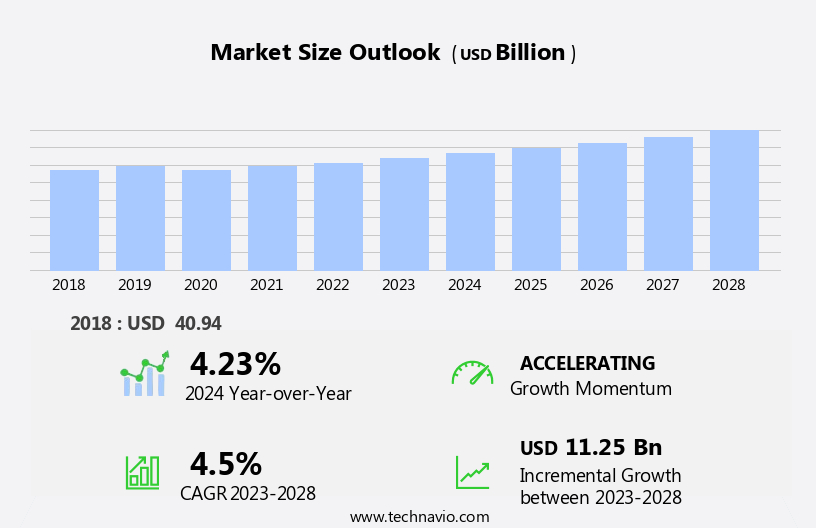
The market continues to evolve, with dynamic market activities shaping its landscape. Entities seek advanced security solutions, leading to the integration of various technologies such as biometric authentication, data encryption, and face recognition into access control systems and security consulting services. The adoption of IP cameras and night vision cameras expands the scope of video surveillance, while mobile app monitoring ensures remote access and false alarm reduction. Industry regulations and security compliance mandates drive the implementation of intrusion detection systems, control panels, and perimeter security measures. False alarm fees and incident response plans necessitate the use of motion sensors, smoke detectors, and carbon monoxide detectors.
Service level agreements and emergency response systems ensure prompt threat assessment and incident management. Security awareness training and password management are essential components of business security, alongside security hardening, network security, and disaster recovery strategies. The integration of smart home technology and two-factor authentication adds an extra layer of protection for residential security. The market's continuous evolution is reflected in the emergence of cloud-based monitoring, cellular monitoring, and wireless monitoring solutions. Penetration testing and security services further strengthen security postures, while security lighting and panic buttons provide additional layers of protection. The market's ongoing dynamism is evident in the adoption of new technologies, evolving industry regulations, and the ever-growing demand for robust security solutions across various sectors.
How is this Alarm Monitoring Industry segmented?
The alarm monitoring industry research report provides comprehensive data (region-wise segment analysis), with forecasts and estimates in "USD billion" for the period 2024-2028, as well as historical data from 2018-2022 for the following segments.
- Technology
- Wired telecommunication network
- Cellular wireless network
- Wireless radio network
- IP network
- Geography
- North America
- US
- Europe
- Germany
- UK
- APAC
- China
- Japan
- Rest of World (ROW)
- North America
By Technology Insights
The wired telecommunication network segment is estimated to witness significant growth during the forecast period.
Wired alarm systems represent a traditional approach to securing commercial and residential premises, utilizing a wired telecommunication network for seamless communication between control panels and monitoring centers. Wired systems are physically connected, ensuring a reliable transmission of data and minimizing interference. Every sensor is hardwired to the control panel, which in turn communicates with the monitoring service via a landline. Access control, intrusion detection systems, door sensors, motion sensors, and glass break sensors are integral components of wired alarm systems. Security training, threat assessment, and emergency response are essential services complementing these systems. Video analytics, license plate recognition, and facial recognition can be integrated for enhanced security.
Wired networks offer a higher level of security compared to wireless systems due to their lack of susceptibility to interference and hacking attempts. Additionally, wired systems can support advanced features such as two-factor authentication, data backup, and password management. Monitoring contracts, service level agreements, and incident response plans ensure optimal system performance and reliability. Wired alarm systems are subject to industry regulations and security compliance requirements, reducing false alarm fees and ensuring a swift police dispatch in case of an emergency. Wired security systems continue to evolve, integrating with smart home technology, biometric authentication, and disaster recovery solutions.
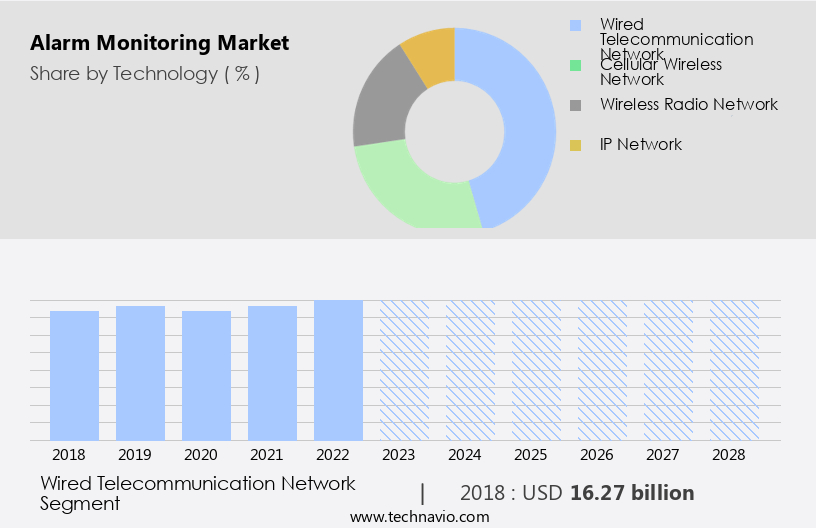
The Wired telecommunication network segment was valued at USD 16.27 billion in 2018 and showed a gradual increase during the forecast period.
Regional Analysis
North America is estimated to contribute 48% to the growth of the global market during the forecast period.Technavio’s analysts have elaborately explained the regional trends and drivers that shape the market during the forecast period.
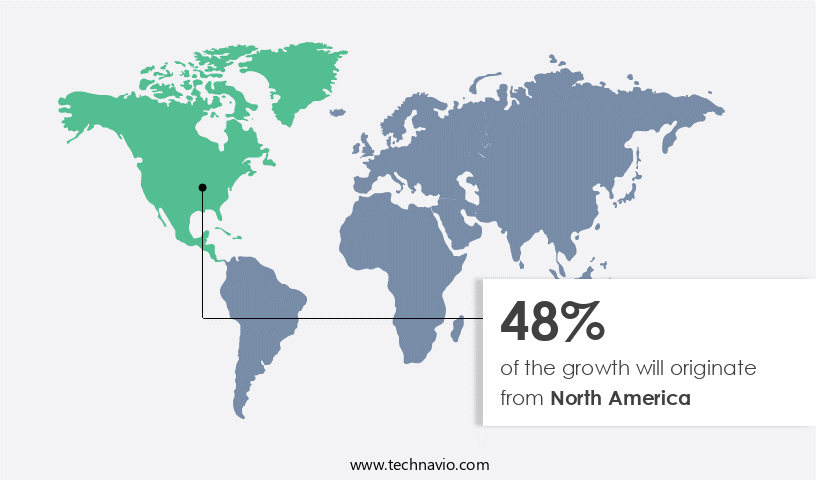
The market in North America is currently leading the global landscape, holding the largest share in 2023. Key factors fueling this growth include the early adoption of advanced security technologies, a growing need to prevent crimes, and the rapid urbanization and industrialization that has increased the demand for alarm monitoring systems among various end-users, such as homes, banks, and financial institutions. The region's high product awareness level further propels market expansion. In North America, the US, Canada, and Mexico are the major contributors to the market's growth. Security systems, including door sensors, access control, intrusion detection systems, control panels, and security cameras, are increasingly popular among consumers and businesses in the region.
Additionally, emerging technologies like video analytics, facial recognition, and license plate recognition are gaining traction, adding value to the market. Remote monitoring, cellular monitoring, and cloud-based monitoring solutions are becoming increasingly common, enabling real-time threat assessment and incident response. Two-factor authentication, data backup, and password management are essential security measures that are being integrated into alarm monitoring systems to enhance security and reduce false alarms. Businesses are investing in security services, such as security consulting, security testing, and vulnerability assessments, to ensure compliance with industry regulations and protect against cyber threats. Perimeter security, security lighting, emergency response, and panic buttons are other essential components of comprehensive alarm monitoring systems.
The market is also witnessing the integration of smart home technology, allowing for seamless integration with door locks, window sensors, and carbon monoxide detectors, among others. The adoption of multi-factor authentication, smoke detectors, and security automation further strengthens the market's position. In conclusion, the market in North America is experiencing significant growth, driven by the early adoption of advanced security technologies, the increasing need for crime prevention, and the region's high degree of product awareness. The integration of emerging technologies and the adoption of comprehensive security solutions are further enhancing the market's value proposition.
Market Dynamics
Our researchers analyzed the data with 2023 as the base year, along with the key drivers, trends, and challenges. A holistic analysis of drivers will help companies refine their marketing strategies to gain a competitive advantage.
What are the key market drivers leading to the rise in the adoption of Alarm Monitoring Industry?
- The escalating global trend of crime prevalence serves as the primary market driver.
- The market is experiencing significant growth due to the increasing prevalence of crimes worldwide. Criminal activities, such as robbery, theft, house break-ins, and dacoity, continue to rise, leading to a heightened demand for advanced alarm monitoring systems. For instance, in 2022, Los Cabos, Mexico, reported the highest murder rate globally, with 111.3 murders per 100,000 people. In the US, the FBI reported a 30% increase in murders in 2020, marking the largest annual jump in six decades. These trends are not limited to large cities but also impact small towns and suburban areas. To mitigate these risks, businesses are investing in various security measures, including alarm monitoring contracts, two-factor authentication, data backup, panic buttons, cloud-based monitoring, penetration testing, security services, door locks, security hardening, business security, alarm sirens, window sensors, police dispatch, wireless security, network security, security cameras, and fire alarms.
- Intrusion detection systems are also becoming increasingly popular to provide early warning of potential threats. Moreover, advanced technologies such as artificial intelligence and machine learning are being integrated into alarm monitoring systems to enhance their capabilities. For example, facial recognition technology can be used to identify intruders, while predictive analytics can help prevent potential crimes before they occur. These advancements are expected to further drive the growth of the market.
What are the market trends shaping the Alarm Monitoring Industry?
- Product innovations are gaining significant momentum in the market, becoming a mandatory trend for businesses aiming to stay competitive.
- The market is experiencing significant growth due to innovative product developments by companies. These innovations include advanced technologies such as biometric authentication, IP cameras with face recognition, and motion sensors. companies are also focusing on enhancing security compliance and reducing false alarms through service level agreements and mobile app monitoring. Access control systems with password management and night vision cameras are becoming increasingly popular for both residential and commercial security applications. Moreover, carbon monoxide detectors are essential for ensuring safety and regulatory compliance. Allied Universal, for instance, offers video monitoring as a service, providing comprehensive security solutions that include cameras, access control, traditional alarms, and remote audio features.
- When a fire alarm is triggered, all installed detectors sound an alarm, and users receive an emergency notification on their mobile phones, indicating whether the alarm is due to fire or carbon monoxide. companies' emphasis on incident response, data encryption, and false alarm reduction strategies will further fuel market growth.
What challenges does the Alarm Monitoring Industry face during its growth?
- The increasing prevalence of fraudulent and counterfeit alarm monitoring systems poses a significant challenge to the industry's growth. This issue requires continuous vigilance and robust measures to ensure the integrity and reliability of security systems.
- The market experiences significant growth due to increasing security concerns worldwide. This market is characterized by a variety of offerings, including keycard access, smart home integration, and burglar alarms. Security audits, vulnerability assessments, and data security are essential considerations for businesses and homeowners. Innovative technologies, such as HD cameras, alarm panels, and security testing, enhance the functionality and reliability of security systems. However, the market faces challenges from counterfeit products and unethical sales practices. Some companies mislead consumers by using false crime statistics to promote their products. These practices undermine trust in the industry and can result in the adoption of defective or counterfeit products.
- To mitigate these risks, it's crucial to prioritize security automation, disaster recovery, and security incident management. Multi-factor authentication, smoke detectors, and video surveillance are essential components of a comprehensive security strategy. By focusing on these areas, businesses and homeowners can ensure the effectiveness and reliability of their security systems. In conclusion, the market offers innovative solutions to address growing security concerns. However, it's essential to be vigilant against counterfeit products and unethical sales practices. By prioritizing security automation, disaster recovery, and incident management, businesses and homeowners can protect their assets and maintain peace of mind.
- Recent research emphasizes the importance of these strategies in the ever-evolving security landscape.
Exclusive Customer Landscape
The alarm monitoring market forecasting report includes the adoption lifecycle of the market, covering from the innovator’s stage to the laggard’s stage. It focuses on adoption rates in different regions based on penetration. Furthermore, the alarm monitoring market report also includes key purchase criteria and drivers of price sensitivity to help companies evaluate and develop their market growth analysis strategies.
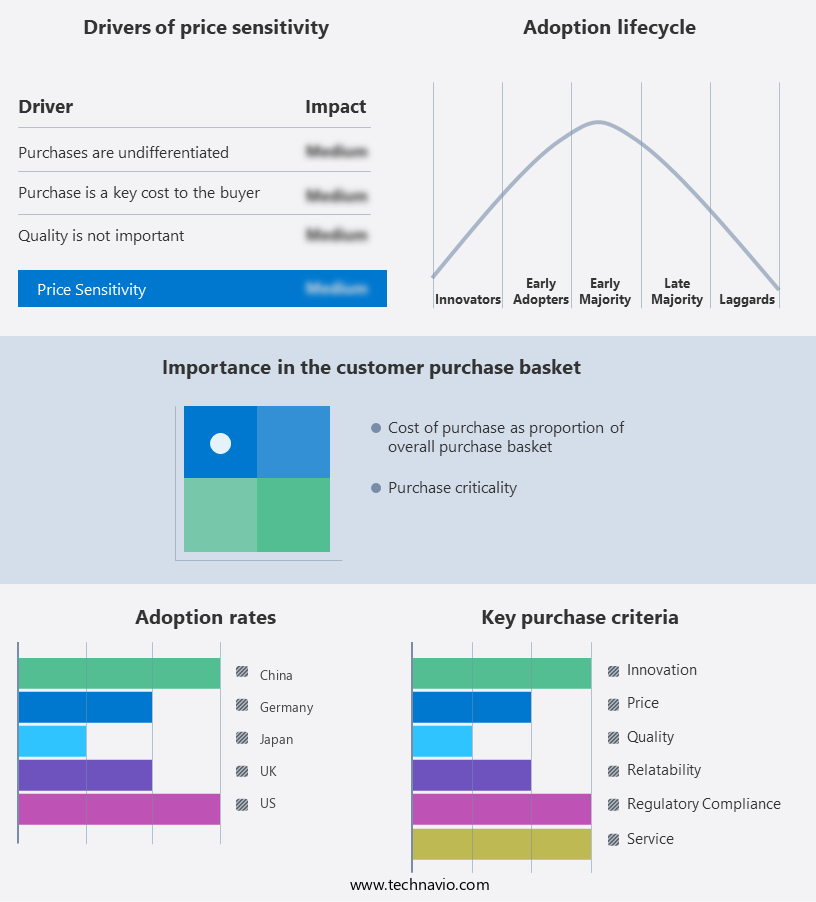
Customer Landscape
Key Companies & Market Insights
Companies are implementing various strategies, such as strategic alliances, alarm monitoring market forecast, partnerships, mergers and acquisitions, geographical expansion, and product/service launches, to enhance their presence in the industry.
Ademco Security Group Pte Ltd. - This company specializes in advanced security solutions, providing real-time threat detection, video surveillance, and identity access control for emergency situations, particularly focusing on fire incidents. Our offerings ensure uninterrupted monitoring and swift response to potential risks, enhancing safety and security for clients. By leveraging cutting-edge technology, we deliver reliable and efficient services, empowering businesses and organizations to safeguard their assets and maintain peace of mind.
The industry research and growth report includes detailed analyses of the competitive landscape of the market and information about key companies, including:
- Ademco Security Group Pte Ltd.
- ADT Inc.
- Allegion Public Ltd. Co.
- Allied Universal
- API Group Corp.
- Global Security Solutions WLL
- Guardian Protection Services Inc.
- Honeywell International Inc.
- Johnson Controls International Plc.
- Monitronics International Inc.
- Prosegur Compania de Seguridad SA
- Robert Bosch GmbH
- Secom Co. Ltd.
- Securitas AB
- Slomins Inc.
- Securitas Technology
- Swann Communications Ltd.
- Vector Security Inc.
- Vivint Inc.
Qualitative and quantitative analysis of companies has been conducted to help clients understand the wider business environment as well as the strengths and weaknesses of key industry players. Data is qualitatively analyzed to categorize companies as pure play, category-focused, industry-focused, and diversified; it is quantitatively analyzed to categorize companies as dominant, leading, strong, tentative, and weak.
Recent Development and News in Alarm Monitoring Market
- In January 2024, Tyco International Ltd., a leading provider of security products and services, announced the launch of its new cloud-based alarm monitoring platform, which allows customers to manage their security systems remotely and receive real-time notifications (Tyco International Press Release, 2024). This innovation caters to the growing demand for remote monitoring solutions in the wake of the COVID-19 pandemic and the increasing trend towards smart homes and buildings.
- In March 2025, Honeywell International Inc. And Amazon Web Services (AWS) entered into a strategic partnership to integrate Honeywell's security and fire systems with AWS's cloud services. This collaboration enables seamless data sharing and analysis for enhanced security and improved response times (Honeywell Press Release, 2025). This partnership underscores the importance of cloud technologies and data analytics in the evolving the market.
- In May 2025, ADT LLC, a leading provider of security and automation solutions, completed the acquisition of LifeShield, a DIY home security company. This acquisition expands ADT's product offerings and customer base, particularly in the growing DIY segment (ADT Press Release, 2025). The deal highlights the ongoing consolidation in the market as companies seek to broaden their offerings and reach a wider customer base.
- In August 2025, the European Union (EU) published new regulations on cybersecurity for Internet of Things (IoT) devices, including those used in alarm monitoring systems. The regulations aim to enhance security and protect consumer privacy, requiring manufacturers to implement robust security measures and provide regular updates (European Commission, 2025). This policy change underscores the growing importance of cybersecurity in the market and the need for continuous innovation to address evolving threats.
Research Analyst Overview
- The market is experiencing significant growth, driven by the increasing demand for smart security solutions and security system upgrades. Scalability and cost-effectiveness are key factors influencing the decision-making process for security system installation. Cloud computing and IoT security are revolutionizing the industry, enabling real-time alarm response and integration with home automation systems. Security system reliability and ROI are critical considerations for businesses, leading to a focus on security system optimization and programming. Behavioral analytics and machine learning are enhancing alarm management systems, reducing false alarms and improving alarm verification. Alarm system testing and maintenance are essential for ensuring certification and compliance with security system standards.
- Predictive analytics and edge computing are also gaining traction, offering improved alarm system performance and faster alarm response times. Security system integration and troubleshooting are ongoing challenges, requiring continuous effort to ensure seamless system functionality. Regulations and standards continue to evolve, necessitating ongoing adaptation and optimization.
Dive into Technavio’s robust research methodology, blending expert interviews, extensive data synthesis, and validated models for unparalleled Alarm Monitoring Market insights. See full methodology.
|
Market Scope |
|
|
Report Coverage |
Details |
|
Page number |
140 |
|
Base year |
2023 |
|
Historic period |
2018-2022 |
|
Forecast period |
2024-2028 |
|
Growth momentum & CAGR |
Accelerate at a CAGR of 4.5% |
|
Market growth 2024-2028 |
USD 11.25 billion |
|
Market structure |
Fragmented |
|
YoY growth 2023-2024(%) |
4.23 |
|
Key countries |
US, Germany, UK, China, and Japan |
|
Competitive landscape |
Leading Companies, Market Positioning of Companies, Competitive Strategies, and Industry Risks |
What are the Key Data Covered in this Alarm Monitoring Market Research and Growth Report?
- CAGR of the Alarm Monitoring industry during the forecast period
- Detailed information on factors that will drive the growth and forecasting between 2024 and 2028
- Precise estimation of the size of the market and its contribution of the industry in focus to the parent market
- Accurate predictions about upcoming growth and trends and changes in consumer behaviour
- Growth of the market across North America, Europe, APAC, Middle East and Africa, and South America
- Thorough analysis of the market’s competitive landscape and detailed information about companies
- Comprehensive analysis of factors that will challenge the alarm monitoring market growth of industry companies
We can help! Our analysts can customize this alarm monitoring market research report to meet your requirements.
 RIA -
RIA - 
