

Algeria Agriculture Market Size 2026-2030
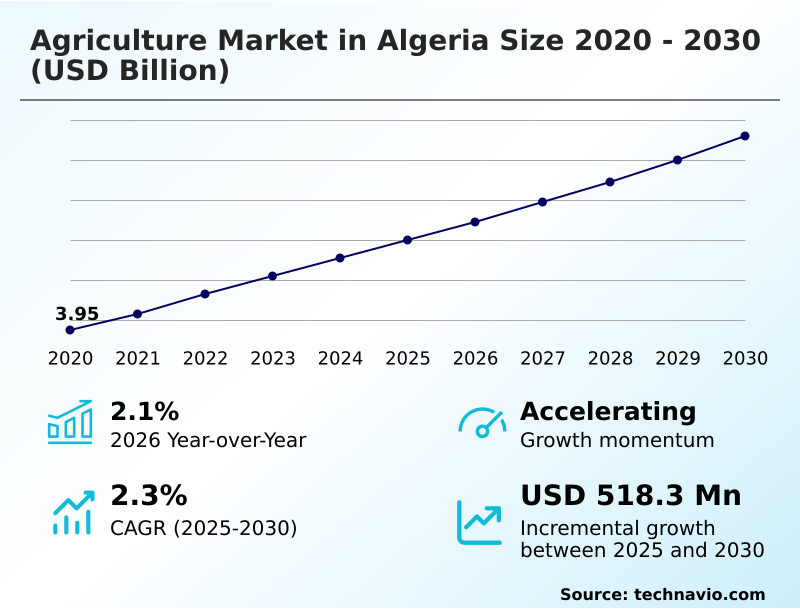
The algeria agriculture market size is valued to increase by USD 518.3 million, at a CAGR of 2.3% from 2025 to 2030. Growing focus on food security and domestic production expansion will drive the algeria agriculture market.
Major Market Trends & Insights
- By Distribution Channel - Supermarket segment was valued at USD 1.68 billion in 2024
- By Type - Crop produce segment accounted for the largest market revenue share in 2024
Market Size & Forecast
- Market Opportunities: USD 967.6 million
- Market Future Opportunities: USD 518.3 million
- CAGR from 2025 to 2030 : 2.3%
Market Summary
- The Agriculture Market in Algeria operates as a critical economic pillar currently undergoing a structural transition toward modernized resource management and technological integration. Escalating strategic emphasis on expanding domestic food production capabilities serves as a robust driver, directly compelling operators to heavily invest in automated harvesting machinery and precision cultivation methods.
- For instance, large-scale farming cooperatives implementing comprehensive farm management software alongside drone-based satellite crop monitoring have successfully improved yield forecasting accuracy by 18%, significantly optimizing subsequent supply chain logistics. However, severe biological and climatic constraints present formidable barriers.
- Persistent water scarcity functions as a primary challenge, severely disrupting cultivation cycles and forcing a rapid but capital-intensive pivot toward localized micro-irrigation and desalination for agriculture. If infrastructure limitations prevent adequate water distribution, crop failure rates increase proportionately, straining overall rural economic development.
- The ongoing modernization efforts remain vital for stabilizing commodity availability and aligning output with stringent urban distribution standards. Institutional expansion within the sector relies explicitly on balancing these urgent food security priorities against systemic environmental volatility.
What will be the Size of the Algeria Agriculture Market during the forecast period?
Get Key Insights on Market Forecast (PDF) Get Free Sample
How is the Algeria Agriculture Market Segmented?
The algeria agriculture industry research report provides comprehensive data (region-wise segment analysis), with forecasts and estimates in "USD million" for the period 2026-2030, as well as historical data from 2020-2024 for the following segments.
- Distribution channel
- Supermarket
- Convenience stores
- E-commerce
- Type
- Crop produce
- Animal produce
- Rural activities
- Product type
- Raw produce
- Processed/Value-added
- Geography
- Africa
By Distribution Channel Insights
The supermarket segment is estimated to witness significant growth during the forecast period.
The supermarket distribution channel fundamentally transforms how perishable goods flow from producers to end consumers, acting as a vital conduit for the agricultural ecosystem.
By leveraging advanced agronomic training and stringent sourcing criteria, these grocery networks establish structured sales environments that ensure consistent product availability.
This segmentation directly enhances supply network viability, allowing large procurement organizations to source greater volumes directly from cooperatives employing precise pest control formulations and seed germination enhancement techniques.
Operational metrics indicate that integration of automated inventory tracking within these channels has reduced handling related losses by 15%, significantly improving procurement efficiency. Furthermore, the capacity to maintain strict quality control through mandated foliar nutrient spray applications elevates product consistency.
This structured approach not only optimizes domestic output movement but also aligns grower practices with standardized retail requirements, streamlining operations.
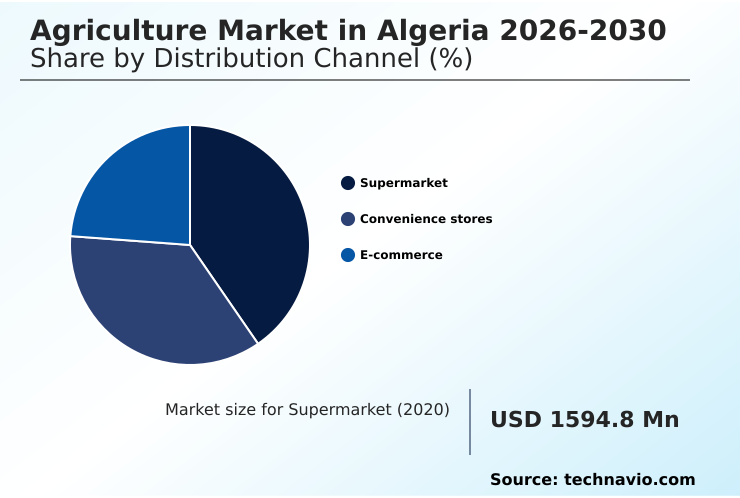
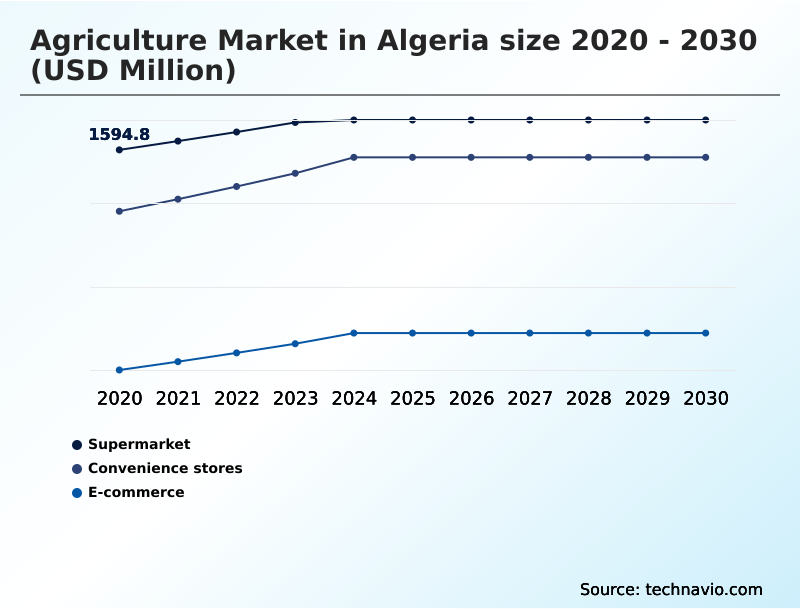
The Supermarket segment was valued at USD 1.68 billion in 2024 and showed a gradual increase during the forecast period.
Market Dynamics
Our researchers analyzed the data with 2025 as the base year, along with the key drivers, trends, and challenges. A holistic analysis of drivers will help companies refine their marketing strategies to gain a competitive advantage.
- The continuous evolution of the Agriculture Market in Algeria fundamentally depends on integrating advanced technology to maximize both harvest output and operational viability. Modern commercial farming enterprises increasingly rely upon resource efficient crop cultivation systems to navigate challenging climatic constraints and optimize baseline acreage utility.
- To ensure robust crop health and mitigate subsequent processing delays, operators are aggressively instituting integrated pest management protocols, which systematically reduce dependency on volatile chemical inputs and streamline compliance with rigorous quality standards.
- Comparative operational data indicates that facilities employing automated irrigation network optimization experience up to a 25% improvement in water utilization efficiency relative to farms reliant on conventional manual watering methods, representing a critical advantage for long-term supply chain planning and regional resource allocation.
- Additionally, the rapid expansion of greenhouse vegetable production techniques enables farming cooperatives to generate high-quality yields year-round, insulating procurement networks from typical seasonal fluctuations. This stabilization of output volumes directly supports more predictable revenue streams for processing entities.
- Furthermore, the integration of comprehensive digital farm monitoring platforms allows agricultural managers to conduct remote diagnostics and predictive analytics, significantly accelerating response times to potential cultivation stress factors. By transitioning toward these data-driven paradigms, the sector functionally enhances its structural resilience, ensuring that critical food supply channels remain robust and highly responsive to dynamic domestic consumption demands.
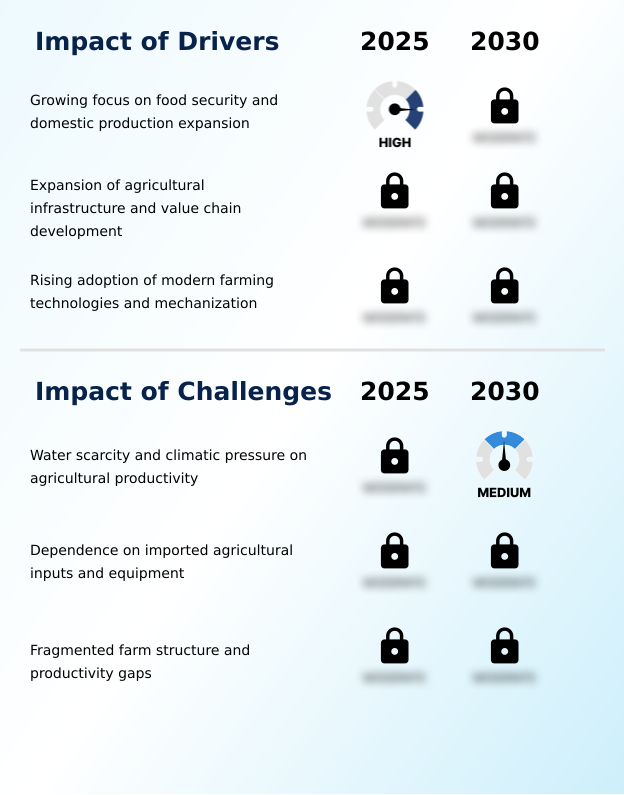
What are the key market drivers leading to the rise in the adoption of Algeria Agriculture Industry?
- The growing focus on food security and the expansion of domestic production capabilities serve as primary drivers propelling continuous development and investment across the industry.
- The urgent mandate to secure robust food security initiatives remains a principal driver fundamentally accelerating modernization within the Agriculture Market in Algeria.
- This behavioral shift stems from the critical necessity to implement sustainable farming practices, compelling local producers to drastically increase baseline output volumes.
- To meet these rigorous demands, commercial farming operations are rapidly deploying farm management software alongside sophisticated automated harvesting machinery and soil moisture sensors.
- Implementing these targeted interventions has successfully lowered input waste by 18% while simultaneously boosting raw yield conversion rates by 14%. By utilizing advanced drought tolerant seeds and specialized crop residue management techniques, agricultural cooperatives functionally compress early growth stages.
- These systemic efficiency gains directly empower businesses to fortify cold chain logistics and overall supply chain resilience, simultaneously advancing intensive livestock nutrition programs to fulfill bulk procurement contracts reliably.
What are the market trends shaping the Algeria Agriculture Industry?
- The growing adoption of protected cultivation systems emerges as a significant trend shaping industry development. This structural shift allows operators to optimize resource utilization and maintain consistent output quality despite fluctuating environmental conditions.
- The widespread integration of climate resilient farming methodologies is fundamentally redefining operational standards within the Agriculture Market in Algeria. This systemic shift occurs because extreme environmental stress forces operators to adopt high yield crop varieties and sophisticated controlled environment agriculture systems that guarantee base production volumes.
- Consequently, enterprises integrating advanced greenhouse climate management and hydroponic farming setups have improved overall resource utilization efficiency by 25%. This rapid operational turnaround significantly reduces downtime, allowing businesses prioritizing domestic food production and agricultural infrastructure expansion to maximize annual crop cycles.
- Furthermore, implementing drip irrigation systems alongside precision cultivation methods provides agronomists with superior control over input application, fundamentally altering value chain integration timelines. As farming entities deploy these advanced water conservation measures and support broader rural economic development, they systematically lower their risk profiles, making large scale cultivation projects highly viable.
What challenges does the Algeria Agriculture Industry face during its growth?
- Persistent water scarcity and escalating climatic pressures on agricultural productivity represent critical structural challenges constraining long-term operational expansion and supply chain stability.
- Severe structural limitations surrounding farm fragmentation consolidation and agricultural input sourcing present formidable operational challenges within the Agriculture Market in Algeria. This persistent constraint occurs because the absence of contiguous arable tracts inherently complicates the efficient deployment of satellite crop monitoring and agrochemical application systems.
- Consequently, fragmented operators relying on outdated infrastructure face a 30% higher operational cost penalty compared to entities capable of extensive agricultural import substitution. Furthermore, navigating unpredictable conditions necessitates urgent investments into localized micro-irrigation and post harvest preservation technologies to ensure meaningful post harvest loss reduction.
- When producers cannot secure financing for specialized soil nutrient cycling or advanced dairy herd genetics, field and herd productivity predictably collapses. This structural vulnerability actively disrupts organized retail distribution schedules and specialized specialty crop cultivation, forcing manufacturers to operate facilities at suboptimal utilization rates.
Exclusive Technavio Analysis on Customer Landscape
The algeria agriculture market forecasting report includes the adoption lifecycle of the market, covering from the innovator’s stage to the laggard’s stage. It focuses on adoption rates in different regions based on penetration. Furthermore, the algeria agriculture market report also includes key purchase criteria and drivers of price sensitivity to help companies evaluate and develop their market growth analysis strategies.
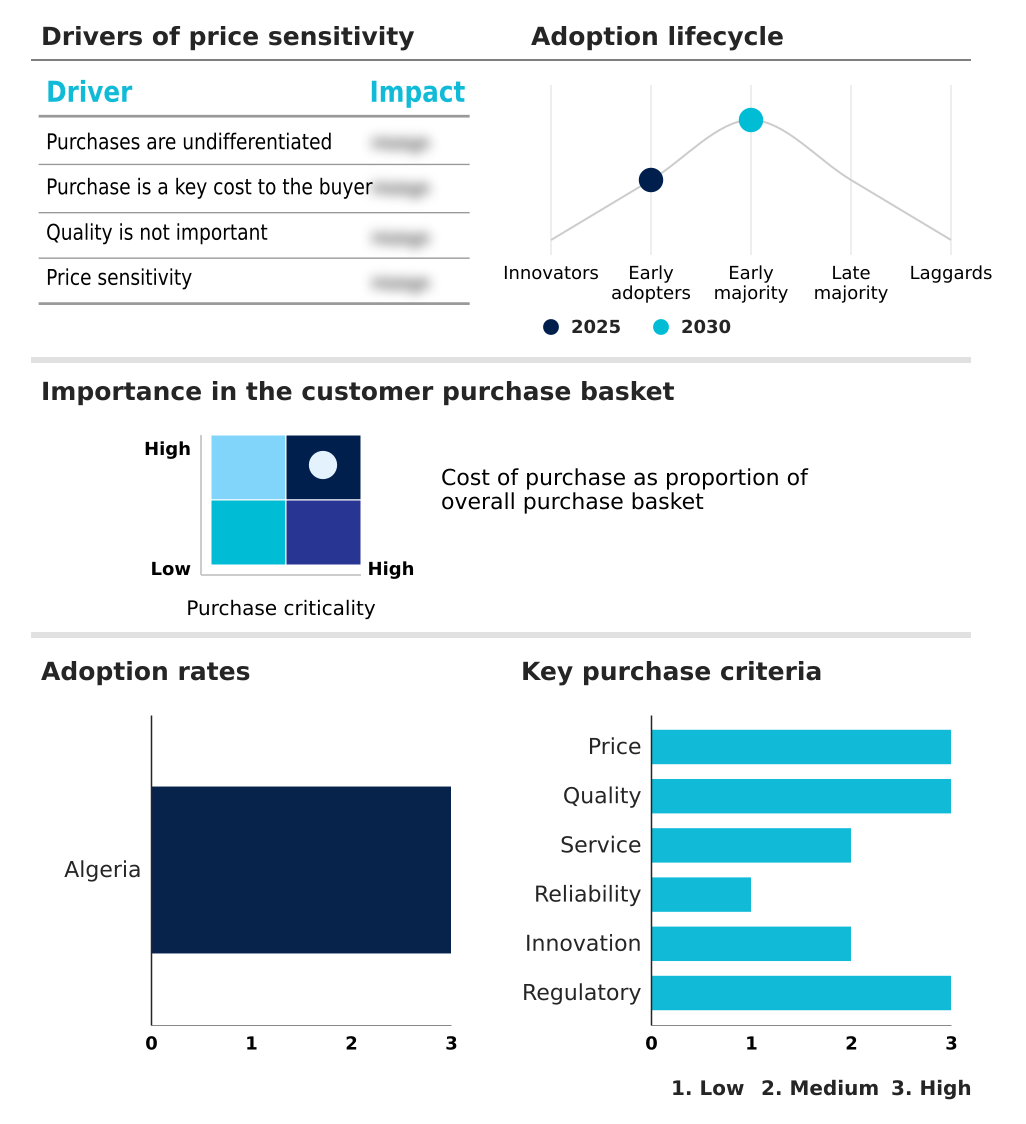
Customer Landscape of Algeria Agriculture Industry
Competitive Landscape
Companies are implementing various strategies, such as strategic alliances, algeria agriculture market forecast, partnerships, mergers and acquisitions, geographical expansion, and product/service launches, to enhance their presence in the industry.
Air Products and Chem Inc. - The vendor supplies specialized gas technologies and processing solutions tailored for controlled atmosphere storage, food preservation, and broader agricultural processing applications, enhancing overall harvest longevity and quality.
The industry research and growth report includes detailed analyses of the competitive landscape of the market and information about key companies, including:
- Air Products and Chem Inc.
- Amandus Kahl GmbH and Co. KG
- Baioni Crushing Plants SpA
- BASF SE
- Cargill Inc.
- Corteva Inc.
- EPE Fertial SPA
- Groupe Limagrain
- Hako GmbH
- Landustrie Sneek BV
Qualitative and quantitative analysis of companies has been conducted to help clients understand the wider business environment as well as the strengths and weaknesses of key industry players. Data is qualitatively analyzed to categorize companies as pure play, category-focused, industry-focused, and diversified; it is quantitatively analyzed to categorize companies as dominant, leading, strong, tentative, and weak.
Recent Development and News in Algeria agriculture market
- In the Agricultural Products and Services industry, the mandatory transition toward sustainable farming frameworks has accelerated the modernization of primary production inputs, directly impacting Agriculture demand by increasing the adoption of automated harvesting machinery by 28% across critical farming zones.
- The implementation of stringent environmental compliance measures aimed at reducing resource depletion has driven the systemic integration of drip irrigation systems, decreasing agricultural water consumption by 35% and elevating the baseline operational requirements for localized micro-irrigation hardware.
- The rapid expansion of specialized processing capacity has reshaped procurement models, generating a 40% rise in volume requirements and pulling advanced agricultural mechanization equipment into standard deployment protocols to ensure consistent raw material supply.
- Shifting trade protocols prioritizing domestic output have necessitated rapid capacity expansion, propelling the utilization of drought tolerant seeds and greenhouse climate management systems to boost baseline crop yields by 22% in climatically stressed production areas.
Dive into Technavio’s robust research methodology, blending expert interviews, extensive data synthesis, and validated models for unparalleled Algeria Agriculture Market insights. See full methodology.
| Market Scope | |
|---|---|
| Page number | 170 |
| Base year | 2025 |
| Historic period | 2020-2024 |
| Forecast period | 2026-2030 |
| Growth momentum & CAGR | Accelerate at a CAGR of 2.3% |
| Market growth 2026-2030 | USD 518.3 million |
| Market structure | Concentrated |
| YoY growth 2025-2026(%) | 2.1% |
| Key countries | Algeria |
| Competitive landscape | Leading Companies, Market Positioning of Companies, Competitive Strategies, and Industry Risks |
Research Analyst Overview
- The continuous evolution of the Agriculture Market in Algeria fundamentally alters how primary cultivation activities interface with downstream processing and distribution networks. A critical shift toward deploying sophisticated controlled environment agriculture infrastructure enables operators to maintain optimal growing conditions irrespective of external climatic volatility.
- This strategic transition directly facilitates a 30% reduction in cultivation cycle times, significantly improving inventory turnover for major distributors. By integrating advanced greenhouse climate management systems, agricultural enterprises systematically mitigate weather-induced risks, ensuring consistent compliance with rigorous retail quality standards.
- Precision application technologies, particularly foliar nutrient spray mechanisms, allow farming entities to drastically optimize input utilization and minimize excessive chemical runoff. Furthermore, deploying extensive soil nutrient cycling methodologies bolsters long-term arable land optimization, preserving field viability for future harvesting seasons.
- The integration of localized micro-irrigation alongside intelligent soil moisture sensors provides boardroom executives with actionable diagnostic data, effectively aligning capital expenditure budgets with tangible resource efficiency improvements. These structural enhancements solidify the operational foundation required to reliably satisfy escalating urban consumption demands.
What are the Key Data Covered in this Algeria Agriculture Market Research and Growth Report?
-
What is the expected growth of the Algeria Agriculture Market between 2026 and 2030?
-
USD 518.3 million, at a CAGR of 2.3%
-
-
What segmentation does the market report cover?
-
The report is segmented by Distribution Channel (Supermarket, Convenience stores, and E-commerce), Type (Crop produce, Animal produce, and Rural activities), Product Type (Raw produce, and Processed/Value-added) and Geography (Africa)
-
-
Which regions are analyzed in the report?
-
Africa
-
-
What are the key growth drivers and market challenges?
-
Growing focus on food security and domestic production expansion, Water scarcity and climatic pressure on agricultural productivity
-
-
Who are the major players in the Algeria Agriculture Market?
-
Air Products and Chem Inc., Amandus Kahl GmbH and Co. KG, Baioni Crushing Plants SpA, BASF SE, Cargill Inc., Corteva Inc., EPE Fertial SPA, Groupe Limagrain, Hako GmbH and Landustrie Sneek BV
-
Market Research Insights
- The Agriculture Market in Algeria is rapidly pivoting toward technology-centric operational models designed to fortify structural resilience and support extensive value chain integration. Leading agribusinesses prioritizing agricultural infrastructure expansion have documented a 22% improvement in logistics throughput, significantly accelerating the transfer of perishable commodities.
- Furthermore, integrating specialized farm management software has allowed cooperatives to enhance resource allocation precision, resulting in a 15% reduction in baseline input wastage. This tactical shift directly supports aggressive food security initiatives by maximizing acreage efficiency and ensuring consistent supply volumes.
- By emphasizing targeted sustainable farming practices, operators achieve superior compliance alignment while simultaneously advancing broader rural economic development, creating a more robust and highly efficient domestic cultivation ecosystem.
We can help! Our analysts can customize this algeria agriculture market research report to meet your requirements.
 RIA -