
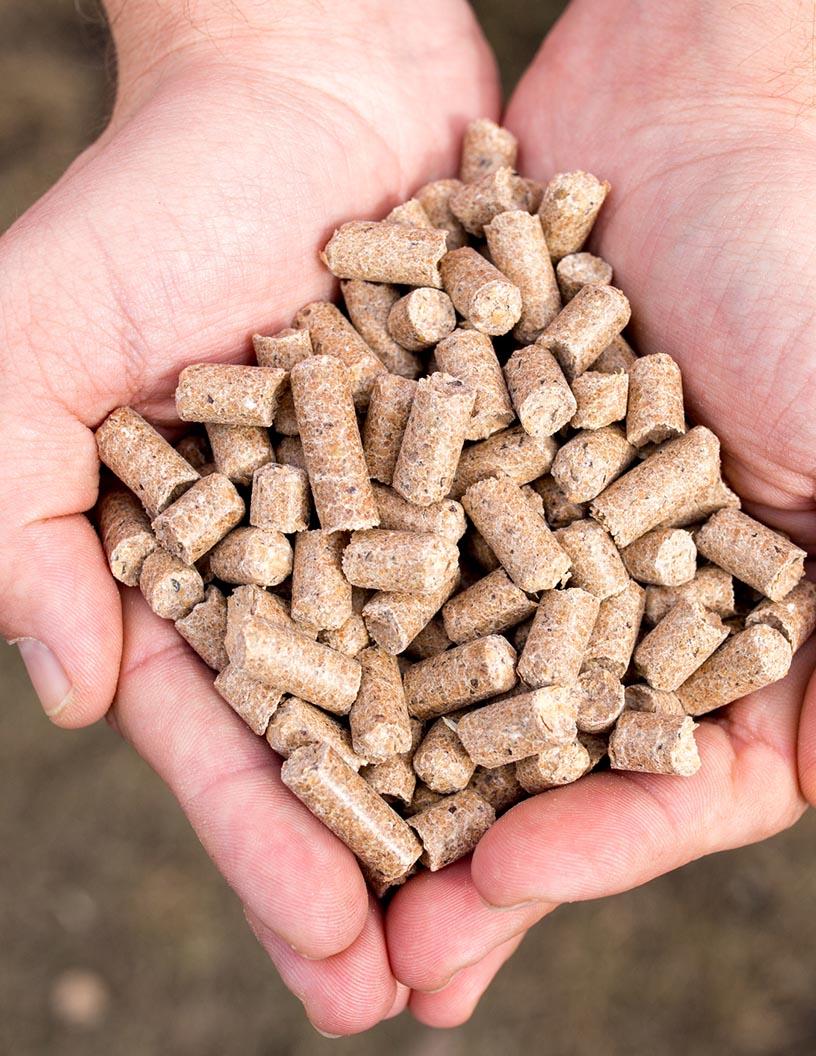


Animal Feed Market Size 2025-2029
The animal feed market size is forecast to increase by USD 145.9 billion at a CAGR of 4.9% between 2024 and 2029.
- The market is experiencing significant growth, driven by increasing investments and expansion of production capabilities in response to the rising global demand for meat. This trend is fueled by population growth and changing consumer preferences for a steady supply of affordable protein sources. However, the market faces challenges, including the high price of non-GMO animal feed, which limits production costs for some farmers. This dynamic creates an opportunity for feed manufacturers to innovate and offer cost-effective, high-quality feed solutions that meet the evolving needs of the industry. Feed additives, such as amino acids, play a crucial role in animal health and growth promotion. The feed industry is also expanding into areas such as precision livestock farming, digital agriculture, and aquaculture feed.
- Additionally, the adoption of technology and automation in feed production is expected to improve efficiency and reduce costs, making it a strategic area of investment for market participants. Companies seeking to capitalize on these opportunities must stay informed of regulatory requirements, consumer preferences, and technological advancements to remain competitive and navigate challenges effectively.
What will be the Size of the Animal Feed Market during the forecast period?
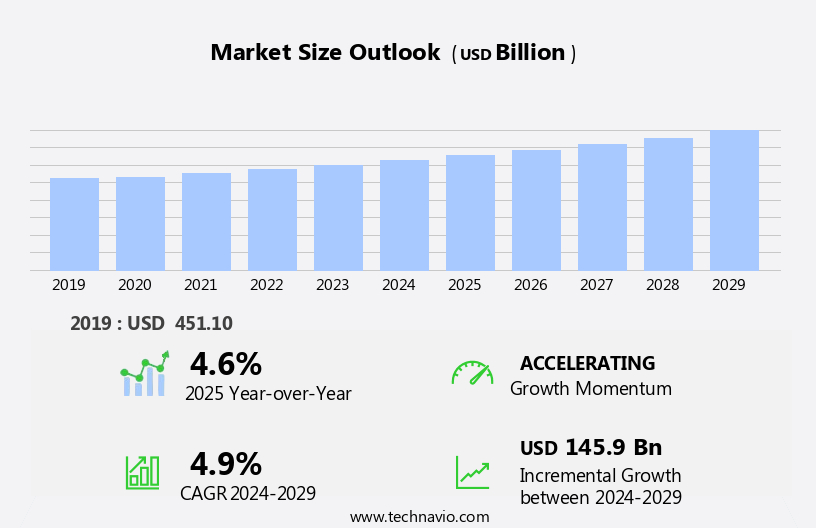
- The market is a dynamic and expansive industry, encompassing the production and distribution of nutritious feed for livestock and aquaculture. Market growth is driven by various factors, including the demand for sustainable feed production, precision feeding technologies, and alternative feed sources such as microbial and insect proteins. Sustainability is a key focus, with an increasing emphasis on feed certification programs and the adoption of farm data management systems for improved feed intake and animal performance. Food safety regulations and animal welfare certification are essential considerations, ensuring the highest standards of feed quality, biosecurity, and traceability.
- Feed innovation continues to advance, with developments in feed technology, feed ingredient sourcing, and feed industry automation. Animal health management, nutritional value, and animal welfare monitoring are also critical areas of focus. Feed industry publications, conferences, and research provide valuable insights into market trends and emerging technologies. Challenges such as feed adulteration, contamination, and cost analysis are addressed through rigorous quality assurance measures and industry standards. The feed industry is experiencing consolidation, with ongoing competition and innovation shaping the market landscape. Overall, the animal feed industry is a vital sector, continually adapting to meet the evolving needs of animal agriculture and food production.
How is this Animal Feed Industry segmented?
The animal feed industry research report provides comprehensive data (region-wise segment analysis), with forecasts and estimates in "USD billion" for the period 2025-2029, as well as historical data from 2019-2023 for the following segments.
- Type
- Poultry
- Swine
- Ruminant
- Aquaculture
- Others
- Product
- Pellets
- Mash
- Crumbles
- Source
- Cereals
- Protein sources
- Additives
- Geography
- APAC
- Australia
- China
- India
- Japan
- South Korea
- Europe
- Germany
- UK
- North America
- US
- Canada
- South America
- Brazil
- Middle East and Africa
- APAC
By Type Insights
The poultry segment is estimated to witness significant growth during the forecast period. The feed market is witnessing significant growth due to the increasing consumption of poultry meat, which is driving the demand for poultry feed. With the expanding poultry production to meet this demand, the poultry feed segment is dominating the market. The importance of animal welfare, feed safety, and sustainability practices are key considerations for farm management in the production of poultry feed. Grain processing, feed formulation software, and precision feeding are essential elements of modern poultry farming. Organic feed, non-GMO feed, and feed traceability are becoming increasingly important for consumers and farmers alike. The circular economy is a focus for the feed industry, with a growing emphasis on feed quality control, energy sources, and feed cost optimization.
Feed manufacturing, feed distribution, and feed testing are critical components of the feed supply chain. Feed cost optimization, breeding programs, and animal genetics are essential for production efficiency and disease prevention. The feed industry is subject to various regulations and standards, including feed safety, environmental footprint, and sustainability practices. Feed retailers and complete feeds are essential for animal nutrition, and feed processing and feed formulations are crucial for feed efficiency and animal health.
The use of data analytics and feed management software is becoming increasingly common for optimizing feed costs and improving overall feed efficiency.
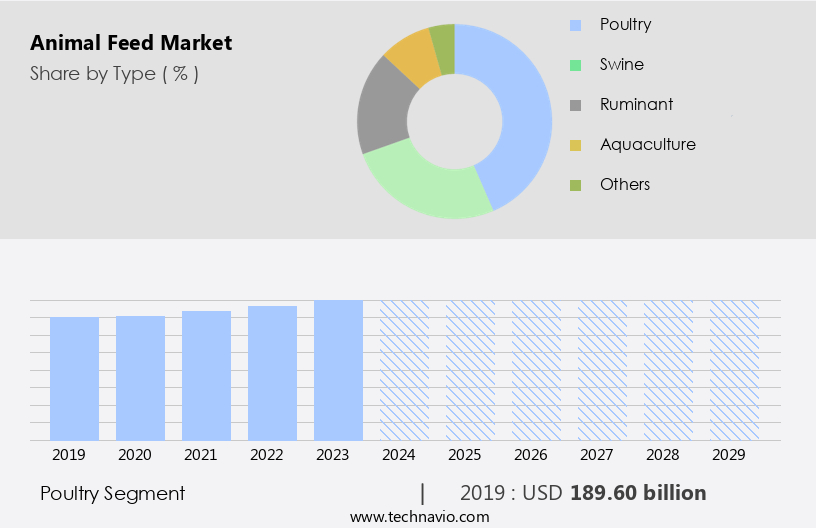
Get a glance at the market report of share of various segments Request Free Sample
The Poultry segment was valued at USD 189.60 billion in 2019 and showed a gradual increase during the forecast period.
Regional Analysis
APAC is estimated to contribute 50% to the growth of the global market during the forecast period.Technavio's analysts have elaborately explained the regional trends and drivers that shape the market during the forecast period.
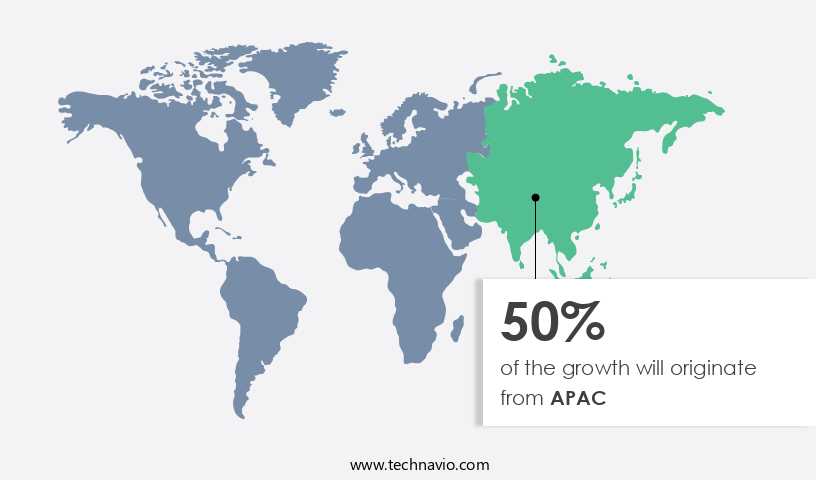
For more insights on the market size of various regions, Request Free Sample
The market in Asia Pacific (APAC) is experiencing significant growth due to the increasing production of meat products, particularly beef, veal, and chicken. This expansion is driven by the rising demand for meat in the region, as well as the large livestock population and numerous feed mills, particularly in countries like India. Feed safety and quality control are essential priorities for farmers and feed manufacturers, leading to advancements in technology such as remote monitoring, precision livestock farming, and feed traceability. Additionally, there is a growing trend towards organic feed, non-GMO feed, and sustainable feed sources, reflecting a greater focus on environmental footprint and sustainability practices.
Feed formulation software, precision feeding, and feed manufacturing are also becoming increasingly important, as are feed additives like amino acids and energy sources. The feed industry is also embracing digital agriculture and data analytics to optimize feed cost and improve production efficiency, animal health, and breeding programs. Furthermore, there is a growing demand for feed in the aquaculture sector, as well as for pet food, dairy feed, and feed for horses. Disease prevention, animal welfare, and feed regulation are also key considerations for the industry. Overall, the market in APAC is expected to continue growing due to these market dynamics and the increasing importance of animal nutrition and feed processing, distribution, and testing.
Market Dynamics
Our researchers analyzed the data with 2024 as the base year, along with the key drivers, trends, and challenges. A holistic analysis of drivers will help companies refine their marketing strategies to gain a competitive advantage.
What are the key market drivers leading to the rise in the adoption of Animal Feed Industry?
- Increasing investments and expansion of production capabilities is the key driver of the market. The market experiences significant growth due to the increasing demand for meat products worldwide. Manufacturers are responding by expanding their production capabilities to meet this demand, ensuring they remain competitive in the industry. In October 2023, De Heus, a subsidiary of Koudijs, showcased their commitment to this growth by continuing operations at their feed additive plant in Ukraine. Established with a USD5.3 million investment, the facility produces high-quality mineral and vitamin mixtures for animal feed, catering to both local and export industries. This investment underscores the market's potential for continued expansion and growth opportunities in various industries.
What are the market trends shaping the Animal Feed Industry?
- Rise in global meat consumption is the upcoming market trend. The market is experiencing significant growth due to the increasing consumption of meat worldwide. According to the Organisation for Economic Co-operation and Development (OECD), global meat production, including beef, poultry, and pork, reached 340 million tons in 2023, up from nearly 248 million tons in 2021. The poultry segment has shown the most notable growth, increasing by approximately 16% between 2013 and 2023.
- The population's rise has fueled the global meat industry's expansion, increasing production capacity and supply. Furthermore, people are becoming more health-conscious and prioritizing protein intake in their diets, contributing to the market's growth. This trend is expected to continue as the global population grows and consumers seek nutritious and sustainable food sources.
What challenges does the Animal Feed Industry face during its growth?
- High price of non-GMO animal feed is a key challenge affecting the industry growth. The market faces a significant challenge due to the price disparity between non-GMO and GMO animal feed products. Non-GMO feed commands a higher price due to its perceived health benefits, with profit margins ranging from 40% to 50%. This trend is driven by consumers' increasing preference for non-GMO products. Despite the higher profits, the high cost of non-GMO feed may hinder market growth during the forecast period.
- Companies are capitalizing on this trend by catering to consumers willing to pay a premium for non-GMO feed. This dynamic underscores the importance of market trends and consumer preferences in optimizing business strategies in the animal feed industry.
Exclusive Customer Landscape
The animal feed market forecasting report includes the market's adoption lifecycle, covering the innovator's stage to the laggard's stage. It focuses on adoption rates in different regions based on penetration. Furthermore, the animal feed market report also includes key purchase criteria and drivers of price sensitivity to help companies evaluate and develop their market growth analysis strategies.
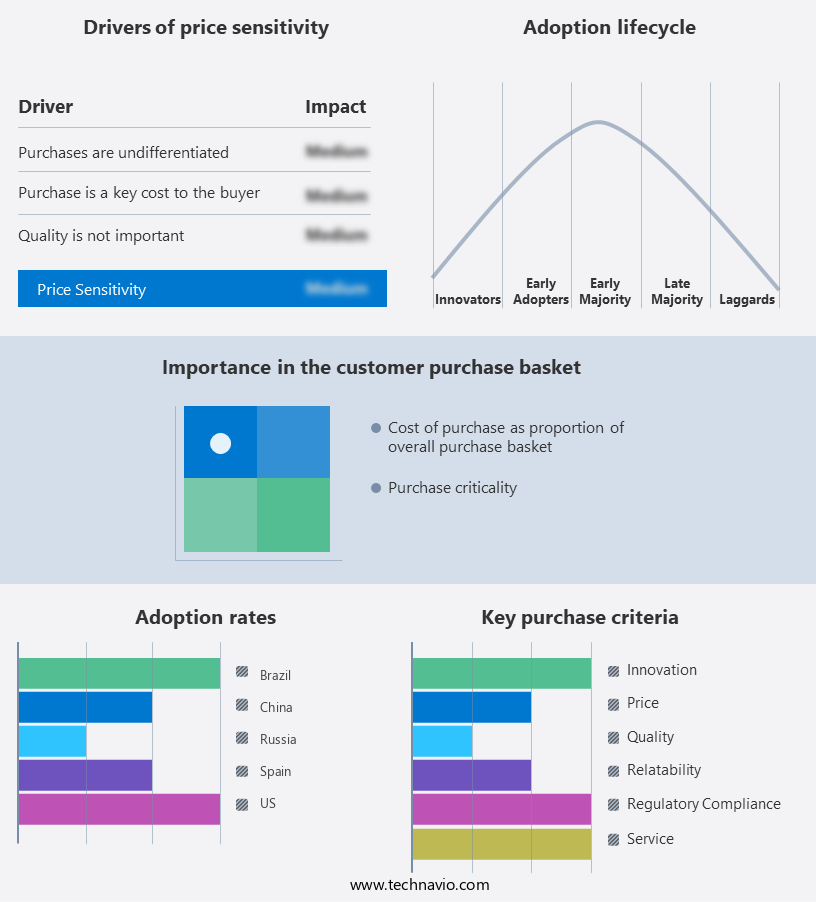
Customer Landscape
Key Companies & Market Insights
Companies are implementing various strategies, such as strategic alliances, animal feed market forecast, partnerships, mergers and acquisitions, geographical expansion, and product/service launches, to enhance their presence in the industry.
Adis France SAS - The company offers ruminant meat animal feed, which is built with an excellent source of high-quality protein, vitamin B, and minerals, thus used to boost the immune system in animals.
The industry research and growth report includes detailed analyses of the competitive landscape of the market and information about key companies, including:
- Adis France SAS
- Alltech Inc.
- Archer Daniels Midland Co.
- Associated British Foods Plc
- BASF SE
- Biochem additives and product mbH
- BRF
- Cargill Inc.
- Charoen Pokphand Foods PCL
- Chr Hansen AS
- Corbion nv
- Evonik Industries AG
- International Flavors and Fragrances Inc.
- Jefo
- Kemin Industries Inc.
- Kent Nutrition Group Inc.
- Land O Lakes Inc.
- New Hope Group Co. Ltd.
- Trouw Nutrition
- Tyson Foods Inc.
Qualitative and quantitative analysis of companies has been conducted to help clients understand the wider business environment as well as the strengths and weaknesses of key industry players. Data is qualitatively analyzed to categorize companies as pure play, category-focused, industry-focused, and diversified; it is quantitatively analyzed to categorize companies as dominant, leading, strong, tentative, and weak.
Research Analyst Overview
The market encompasses a broad spectrum of products and processes, from the production of grains and the implementation of farm management practices to the formulation and manufacturing of feed for various livestock and animal species. At the heart of this industry lies the commitment to providing high-quality, safe, and efficient feed solutions to ensure optimal animal health and productivity. Grain processing plays a crucial role in the feed value chain, with the transformation of raw agricultural materials into nutrient-rich feed ingredients. The importance of food safety in this context cannot be overstated, as it is essential to protect both animal health and human consumption.
Feed safety protocols are rigorously enforced to minimize the risk of contamination and ensure the integrity of the feed supply. Farm management practices, such as precision livestock farming and remote monitoring, are increasingly adopted to optimize feed efficiency and reduce waste. These technologies enable farmers to closely monitor animal performance and adjust feed formulations accordingly, leading to improved production efficiency and reduced costs. Feed traceability is another critical aspect of the market, as it allows for the tracking of feed ingredients from their origin to the final product. This is particularly important for ensuring the authenticity and safety of feed, as well as for meeting regulatory requirements and consumer demands for transparency.
The circular economy is gaining traction in the animal feed industry, with a growing emphasis on sustainable feed production and the reduction of environmental footprint. This includes the exploration of alternative protein sources, such as non-GMO feed and plant-based ingredients, as well as the implementation of sustainable farming practices and the optimization of feed cost. Animal welfare is a key consideration in the production and distribution of animal feed. Feed manufacturers and retailers are increasingly focusing on the ethical treatment of animals and the implementation of animal welfare standards to ensure the health and well-being of livestock. Digital agriculture and data analytics are transforming the animal feed industry, enabling more precise and efficient feed formulation and delivery.
Feed manufacturing and distribution are also being optimized through the use of advanced technologies, such as feed formulation software and feed testing services, to ensure the highest possible feed quality and consistency. Feed additives, such as amino acids and energy sources, play a vital role in enhancing the nutritional value of animal feed and promoting growth. Feed regulation is a critical aspect of the industry, with strict standards in place to ensure the safety and efficacy of feed additives and their impact on animal health and productivity. The market is characterized by ongoing trends and innovations, including the adoption of precision feeding, the integration of animal genetics into breeding programs, and the expansion of feed offerings into new markets, such as pet food and aquaculture feed.
These developments reflect the industry's commitment to meeting the evolving needs of farmers, livestock producers, and consumers, while maintaining the highest standards of animal health, welfare, and sustainability.
|
Market Scope |
|
|
Report Coverage |
Details |
|
Page number |
227 |
|
Base year |
2024 |
|
Historic period |
2019-2023 |
|
Forecast period |
2025-2029 |
|
Growth momentum & CAGR |
Accelerate at a CAGR of 4.9% |
|
Market growth 2025-2029 |
USD 145.9 billion |
|
Market structure |
Fragmented |
|
YoY growth 2024-2025(%) |
4.6 |
|
Key countries |
US, China, Japan, India, Canada, UK, South Korea, Germany, Brazil, and Australia |
|
Competitive landscape |
Leading Companies, Market Positioning of Companies, Competitive Strategies, and Industry Risks |
What are the Key Data Covered in this Animal Feed Market Research and Growth Report?
- CAGR of the Animal Feed industry during the forecast period
- Detailed information on factors that will drive the growth and forecasting between 2025 and 2029
- Precise estimation of the size of the market and its contribution of the industry in focus to the parent market
- Accurate predictions about upcoming growth and trends and changes in consumer behaviour
- Growth of the market across APAC, Europe, North America, South America, and Middle East and Africa
- Thorough analysis of the market's competitive landscape and detailed information about companies
- Comprehensive analysis of factors that will challenge the animal feed market growth and forecasting
We can help! Our analysts can customize this animal feed market research report to meet your requirements.
 RIA -
RIA - 
