



Antibacterial Drugs Market Size 2024-2028
The antibacterial drugs market size is forecast to increase by USD 7.63 billion at a CAGR of 3.2% between 2023 and 2028.
- The market is experiencing significant growth due to the increasing prevalence of bacterial infections, particularly in North America. The rising potential of nanotechnology in combating infectious diseases is also driving market growth. Nanotechnology enables the development of antibacterial drugs with enhanced efficacy and reduced side effects.
- Additionally, the emergence of antibiotic-resistant strains poses a major challenge to the market, necessitating the development of new and innovative antibacterial drugs. For instance, Lupin Limited, a leading pharmaceutical company, is focusing on research and development of antibiotics to address the growing threat of antibiotic resistance. Penicillin and other antibiotics continue to dominate the market, but the use of enzymes in antibacterial drug production is gaining popularity due to their specificity and efficiency.
- Overall, the market is expected to grow steadily in the coming years, driven by these trends and challenges.
What will be the Size of the Antibacterial Drugs Market During the Forecast Period?

- The market encompasses a diverse range of pharmaceutical products designed to combat bacterial infections. This market continues to experience significant activity due to the persistent threat posed by bacteria to public health. Antibacterial agents, including gentamicin, cephalexin, ertapenem, erythromycin, ciprofloxacin, metronidazole, and others, are employed to treat various bacterial diseases, distinguishing them from generic drugs used for viral infections, colds, or fungal infections. Antibiotic resistance, a growing concern, fuels the demand for new antibacterial drugs. Enterobacterales and Escherichia coli, among other aerobic bacteria, are increasingly developing resistance to common antibiotics like CRE and carbapenem. This resistance can lead to more severe infections, prolonged hospital stays, and increased healthcare costs.
- Broad-spectrum antibiotics, which can treat a wide range of bacterial infections, dominate the market. However, the rising awareness of antibiotic resistance and potential side effects, such as rash, upset stomach, sensitivity to sunlight, hearing loss, low platelet count, and low granulocyte count, have led to a growing interest in narrow-spectrum antibiotics. These drugs target specific bacterial strains, reducing the risk of resistance and minimizing side effects. The market is expected to maintain its growth trajectory, driven by the ongoing need to address bacterial infections and the development of new, effective antibiotics.
How is this Antibacterial Drugs Industry segmented and which is the largest segment?
The antibacterial drugs industry research report provides comprehensive data (region-wise segment analysis), with forecasts and estimates in "USD billion" for the period 2024-2028, as well as historical data from 2018-2022 for the following segments.
- Route Of Administration
- Intravenous
- Oral
- Others
- Drug Class
- B-lactam
- Quinolones
- Macrolids
- Tetracyclins
- Others
- Geography
- Asia
- China
- Japan
- North America
- US
- Europe
- Germany
- UK
- Rest of World (ROW)
- Asia
By Route Of Administration Insights
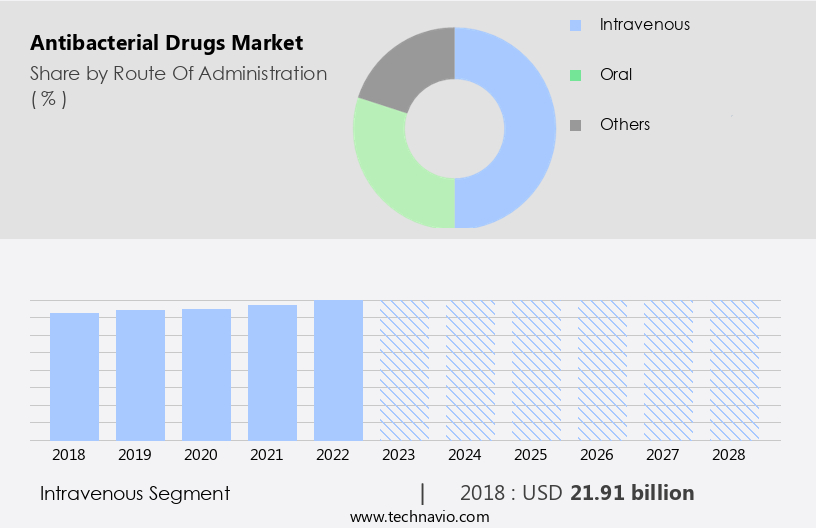
The intravenous segment is estimated to witness significant growth during the forecast period.
Get a glance at the market report of various segments Request Free Sample
The Intravenous segment was valued at USD 21.91 billion in 2018 and showed a gradual increase during the forecast period.
Regional Analysis
Asia is estimated to contribute 36% to the growth of the global market during the forecast period. Technavio's analysts have elaborately explained the regional trends and drivers that shape the market during the forecast period.

For more insights on the market size of various regions, Request Free Sample
The market is witnessing significant growth, with Asia leading the market in 2023 due to the increasing demand for enhanced healthcare infrastructure and an aging population. India and China are the primary contributors to the market in this region. The geriatric population, which is more susceptible to infections due to weakened immune systems, is a significant factor driving market growth. Asia accounts for over half of the world's population, with more than 4.5 billion people as of 2020, according to the US Census Bureau.
Antibacterial drugs are essential in treating various bacterial infections, including those caused by aerobic and anaerobic bacteria. However, antibiotic resistance is a significant concern, with Enterobacterales, including Escherichia coli, and Carbapenem-resistant Enterobacterales (CRE) being major contributors. Broad-spectrum antibiotics, such as Cephalosporins and Fluoroquinolones, are increasingly being used to treat multi-drug resistant infections. However, they come with side effects, including diarrhea, nausea, vomiting, rash, upset stomach, sensitivity to sunlight, fungal infections, low platelet count, hearing loss, and low granulocyte count. C difficile infection, allergic reactions, hives, swelling, coughing, wheezing, difficulty breathing, anaphylactic reactions, and epinephrine pens are other potential side effects.
The immune system, including white blood cells (WBCs), plays a crucial role in fighting bacterial infections. Antibiotics work by inhibiting the growth of bacteria or killing them. They can be administered orally or topically. The market for antibacterial drugs is segmented into classes of antibiotics, including aminoglycosides, cephalosporins, fluoroquinolones, macrolides, penicillin, sulfonamides, tetracyclines, and others. In conclusion, The market is expected to grow significantly due to the increasing demand for improved healthcare infrastructure, an aging population, and the rising incidence of bacterial infections. However, the growing concern of antibiotic resistance and the potential side effects of antibiotics pose significant challenges to market growth. It is crucial to continue research and development efforts to address these challenges and ensure the availability of effective and safe antibacterial drugs.
Market Dynamics
Our researchers analyzed the data with 2023 as the base year, along with the key drivers, trends, and challenges. A holistic analysis of drivers will help companies refine their marketing strategies to gain a competitive advantage.
What are the key market drivers leading to the rise In the adoption of Antibacterial Drugs Industry?
- Increasing prevalence of bacterial infections is the key driver of the market.Bacterial infections pose a significant health challenge worldwide, causing a substantial burden of morbidity and mortality. These infections encompass a wide spectrum of diseases, from common ailments like colds, flu, and coughs, to severe conditions that can be life-threatening. Bacteria such as Enterobacterales, including Escherichia coli, and multidrug-resistant strains like Carbapenem-resistant Enterobacterales (CRE), are a growing concern. Antibiotics are used to treat various bacterial infections. However, the emergence of antibiotic resistance is a major challenge, necessitating the development of new classes of antibiotics.
White blood cells (WBCs) and the immune system play a crucial role in fighting bacterial infections. However, bacterial infections can cause various side effects, including diarrhea, nausea, vomiting, rash, upset stomach, sensitivity to sunlight, fungal infections, low platelet count, hearing loss, and low granulocyte count. Severe reactions include C. Difficile infection, allergic reactions with hives, swelling, coughing, wheezing, difficulty breathing, anaphylactic reactions, and in extreme cases, may require emergency services and epinephrine pens. The antibiotic resistance trend is a public health concern, necessitating the development of broad-spectrum antibiotics to combat aerobic and anaerobic bacteria.
What are the market trends shaping the Antibacterial Drugs market?
- Rising potential of nanotechnology in combating infectious diseases is the upcoming market trend.Infectious diseases, fueled by the rise of antibiotic-resistant bacteria, pose a significant challenge to the healthcare industry. The emergence of multidrug-resistant (MDR) microorganisms renders existing antibiotics ineffective, necessitating the development of new medications. This process is resource-intensive and time-consuming. The overuse of antibiotics has accelerated the development and spread of MDR bacteria, including Enterobacterales, Escherichia coli, and Carbapenem-resistant Enterobacterales (CRE), which carry resistance to broad-spectrum antibiotics like Gentamicin, Cephalexin, Ertapenem, and Ciprofloxacin. To combat antibiotic resistance, innovative methods are being explored, with nanotechnology offering a promising solution. Nanoparticles can be used to deliver antibiotics directly to the site of infection, minimizing the impact on beneficial bacteria In the body and reducing the risk of side effects.
Classes of antibiotics are being researched for their potential in nanomedicine. Despite the benefits, the use of antibiotics is not without risks. Side effects include diarrhea, nausea, vomiting, rash, upset stomach, sensitivity to sunlight, fungal infections, low platelet count, hearing loss, and low granulocyte count. Severe side effects include C difficile infection, allergic reactions, hives, swelling, coughing, wheezing, difficulty breathing, anaphylactic reactions, and, in extreme cases, anaphylactic shock. It is essential to be aware of these risks and consult a healthcare professional if symptoms arise.
-
The development of antibiotic resistance is a significant public health concern, with aerobic and anaerobic bacteria, such as Staphylococcus aureus and Clostridioides difficile, posing a threat. The misuse and overuse of antibiotics contribute to the emergence and spread of antibiotic-resistant bacteria. It is crucial to preserve the effectiveness of existing antibiotics by using them responsibly and seeking alternative treatments for viral infections, such as the common cold, flu, and coughs, which are not treated with antibiotics. In conclusion, the development of antibiotic resistance is a pressing issue in healthcare services, necessitating the exploration of innovative solutions. Nanotechnology offers a promising approach to addressing this challenge by delivering antibiotics directly to the site of infection and minimizing the impact on beneficial bacteria.
-
However, the use of antibiotics carries risks, and it is essential to be aware of potential side effects and use them responsibly. The misuse and overuse of antibiotics contribute to the emergence and spread of antibiotic-resistant bacteria, making it crucial to seek alternative treatments for viral infections.
What challenges does the Antibacterial Drugs Industry face during its growth?
- Development of antibiotic-resistant strains is a key challenge affecting the industry growth.Antibiotic resistance poses a significant threat to global health as bacteria evolve mechanisms to resist the effects of antibiotics, compromising their ability to treat infections effectively. This phenomenon arises naturally but is accelerated by improper antibiotic usage in humans, animals, and agriculture. Consequences of antibiotic-resistant infections include longer hospital stays, increased treatment costs, and higher mortality rates. The implications of antibiotic resistance extend beyond healthcare, affecting agriculture, food safety, and the environment. Antibiotic resistance undermines the efficacy of routine medical procedures, such as surgeries and chemotherapy, and treatments for diseases like tuberculosis and urinary tract infections. Gentamicin, Cephalexin, Ertapenem, Erythromycin, Ciprofloxacin, Metronidazole, Azithromycin, Cefdinir, Levofloxacin, Amoxicillin/clavulanate, Nitrofurantoin, Clindamycin, Minocycline, Sulfamethoxazole, Vancomycin, Teicoplanin, Telavancin, Ramoplanin, Amikacin, and Tobramycin are among the classes of antibiotics used to combat various bacterial infections.
- However, antibiotic resistance has led to the emergence of strains such as Enterobacterales, Escherichia coli, and Carbapenem-resistant Enterobacterales (CRE), which are resistant to broad-spectrum antibiotics like Carbapenems. Antibiotic resistance is a pressing public health concern that necessitates continued research and development of new antibiotics and alternative treatments. Side effects of antibiotics, such as diarrhea, nausea, vomiting, rash, upset stomach, sensitivity to sunlight, fungal infections, low platelet count, hearing loss, and low granulocyte count, can also complicate treatment. Additionally, antibiotics can cause allergic reactions, manifesting as hives, swelling, coughing, wheezing, difficulty breathing, and anaphylactic reactions. In case of severe allergic reactions, emergency services and epinephrine pens may be required. It is crucial to use antibiotics responsibly to minimize the risk of antibiotic resistance and its associated complications.
Exclusive Customer Landscape
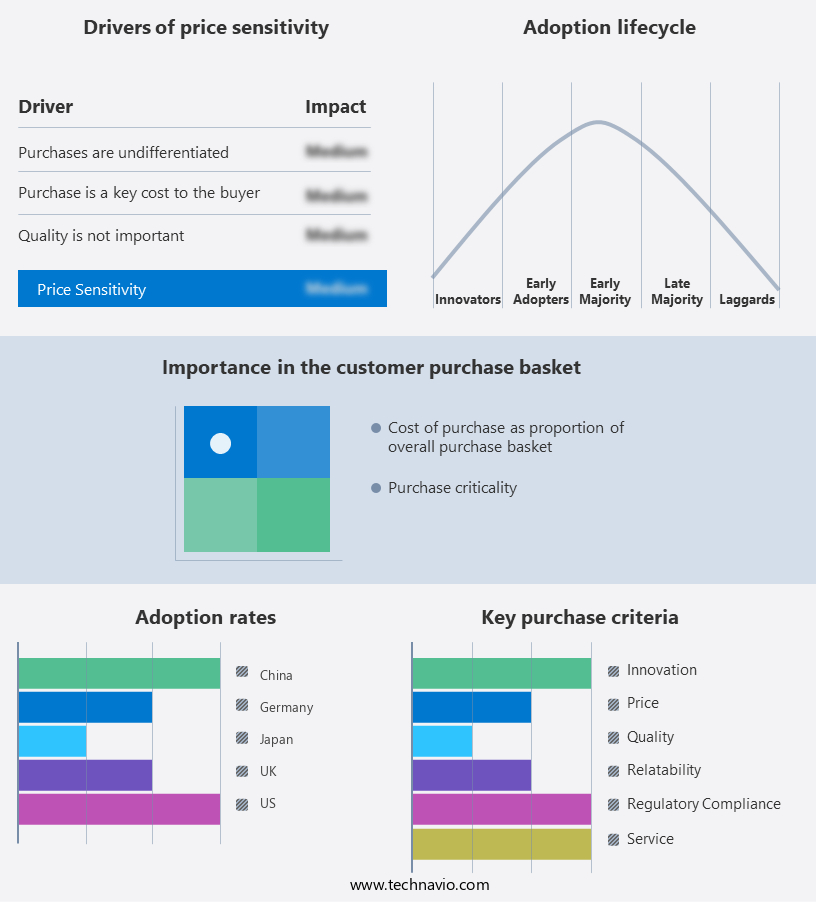
The antibacterial drugs market forecasting report includes the adoption lifecycle of the market, covering from the innovator's stage to the laggard's stage. It focuses on adoption rates in different regions based on penetration. Furthermore, the antibacterial drugs market report also includes key purchase criteria and drivers of price sensitivity to help companies evaluate and develop their market growth analysis strategies.
Customer Landscape
Key Companies & Market Insights
Companies are implementing various strategies, such as strategic alliances, antibacterial drugs market forecast, partnerships, mergers and acquisitions, geographical expansion, and product/service launches, to enhance their presence in the industry.
The industry research and growth report includes detailed analyses of the competitive landscape of the market and information about key companies, including:
- Basilea Pharmaceutica Ltd.
- Bayer AG
- Binnopharm Group LLC
- Bristol Myers Squibb Co.
- Cipla Inc.
- Eli Lilly and Co.
- F. Hoffmann La Roche Ltd.
- GlaxoSmithKline Plc
- Kyorin Pharmaceutical Co. Ltd.
- Lupin Ltd.
- Melinta Therapeutics LLC
- Merck KGaA
- Novartis AG
- Paratek Pharmaceuticals Inc.
- Pfizer Inc.
- Sanofi SA
- SHIONOGI Co. Ltd.
- STADA Arzneimittel AG
- Sun Pharmaceutical Industries Ltd.
- Teva Pharmaceutical Industries Ltd.
Qualitative and quantitative analysis of companies has been conducted to help clients understand the wider business environment as well as the strengths and weaknesses of key industry players. Data is qualitatively analyzed to categorize companies as pure play, category-focused, industry-focused, and diversified; it is quantitatively analyzed to categorize companies as dominant, leading, strong, tentative, and weak.
Research Analyst Overview
The antibacterial drug market encompasses a wide range of pharmaceutical products designed to combat bacterial infections. These drugs play a crucial role In the healthcare industry, as bacterial diseases continue to pose a significant threat to public health. The market for antibacterial drugs is driven by several factors, including the increasing prevalence of bacterial infections, the growing antibiotic resistance, and the rising demand for effective and safe treatments. Bacteria are single-celled microorganisms that can cause various infections in humans. These infections can manifest in various forms, from mild conditions such as coughs and colds, to more severe diseases like pneumonia and sepsis.
The discovery of antibiotics revolutionized the medical field, providing effective treatments for bacterial infections. Antibiotics work by inhibiting the growth of bacteria or killing them outright. The antibacterial drug market includes various classes of antibiotics, each with unique mechanisms of action. For instance, aminoglycosides, such as gentamicin and neomycin, inhibit bacterial protein synthesis. Cephalosporins, like cephalexin and cefdinir, inhibit the formation of the bacterial cell wall. Macrolides, such as erythromycin and azithromycin, interfere with bacterial protein synthesis by binding to the 50S subunit of the bacterial ribosome. Fluoroquinolones, including ciprofloxacin and levofloxacin, inhibit bacterial DNA gyrase and topoisomerase IV.
Despite the availability of various antibacterial drugs, the issue of antibiotic resistance continues to be a major concern. Antibiotic resistance occurs when bacteria develop the ability to resist the effects of antibiotics, making infections harder to treat. Enterobacterales, including Escherichia coli, are among the bacteria that have developed resistance to multiple antibiotics. Carbapenem resistance, for instance, is a significant concern, as carbapenems are considered last-resort antibiotics for treating infections caused by antibiotic-resistant bacteria. The immune system, comprised of white blood cells (WBCs), plays a crucial role in fighting bacterial infections. WBCs engulf and destroy bacteria through a process called phagocytosis.
However, in some cases, bacterial infections can overwhelm the immune system, leading to severe illness or even death. In such cases, antibacterial drugs are essential for effective treatment. Topical antibiotics are commonly used for treating bacterial infections In the skin, such as acne and wounds. Broad-spectrum antibiotics, like ciprofloxacin and clindamycin, are often used for systemic infections, as they can target a wide range of bacteria. Narrow-spectrum antibiotics, on the other hand, are effective against specific types of bacteria and are often used to minimize the risk of antibiotic resistance. The use of antibacterial drugs is not without risks.
Side effects, such as diarrhea, nausea, vomiting, rash, upset stomach, sensitivity to sunlight, fungal infections, low platelet count, hearing loss, and low granulocyte count, can occur. In some cases, more severe side effects, such as c difficile infection, allergic reactions, hives, swelling, coughing, wheezing, difficulty breathing, anaphylactic reactions, and anaphylactic shock, can occur. In such cases, emergency services and epinephrine pens may be necessary. The antibacterial drug market plays a vital role In the healthcare industry, providing effective treatments for bacterial infections. The market is driven by several factors, including the increasing prevalence of bacterial infections, the growing antibiotic resistance, and the rising demand for effective and safe treatments. The use of antibacterial drugs, however, comes with risks, and proper use and monitoring are essential to minimize adverse effects.
|
Market Scope |
|
|
Report Coverage |
Details |
|
Page number |
189 |
|
Base year |
2023 |
|
Historic period |
2018-2022 |
|
Forecast period |
2024-2028 |
|
Growth momentum & CAGR |
Accelerate at a CAGR of 3.2% |
|
Market growth 2024-2028 |
USD 7.63 billion |
|
Market structure |
Fragmented |
|
YoY growth 2023-2024(%) |
3.06 |
|
Key countries |
US, China, Germany, Japan, and UK |
|
Competitive landscape |
Leading Companies, Market Positioning of Companies, Competitive Strategies, and Industry Risks |
What are the Key Data Covered in this Antibacterial Drugs Market Research and Growth Report?
- CAGR of the Antibacterial Drugs industry during the forecast period
- Detailed information on factors that will drive the growth and forecasting between 2024 and 2028
- Precise estimation of the size of the market and its contribution of the industry in focus to the parent market
- Accurate predictions about upcoming growth and trends and changes in consumer behaviour
- Growth of the market across Asia, North America, Europe, and Rest of World (ROW)
- Thorough analysis of the market's competitive landscape and detailed information about companies
- Comprehensive analysis of factors that will challenge the antibacterial drugs market growth of industry companies
We can help! Our analysts can customize this antibacterial drugs market research report to meet your requirements.
 RIA -
RIA - 
