
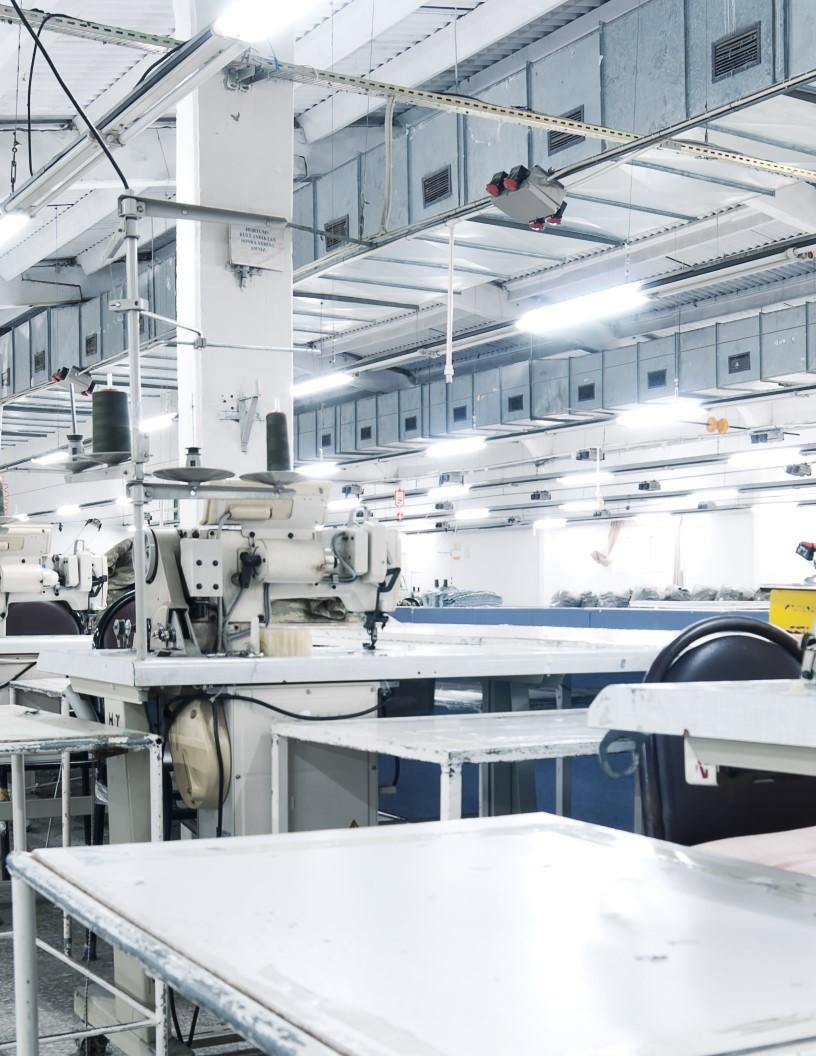


Apparel Manufacturing Market Size 2025-2029
The apparel manufacturing market size is forecast to increase by USD 127.9 billion, at a CAGR of 4.4% between 2024 and 2029.
Major Market Trends & Insights
- APAC dominated the market and accounted for a 59% growth during the forecast period.
- By the Product - Women apparel segment was valued at USD 230.90 billion in 2023
- By the Type - Casual wear segment accounted for the largest market revenue share in 2023
Market Size & Forecast
- Market Opportunities: USD 41.39 billion
- Market Future Opportunities: USD 127.90 billion
- CAGR : 4.4%
- APAC: Largest market in 2023
Market Summary
- The market is a dynamic and evolving industry, characterized by continuous shifts and adaptations to meet the changing demands of consumers and businesses. According to recent reports, the global apparel industry is expected to reach a value of USD 3 trillion by 2024, growing at a steady pace. This growth can be attributed to several factors, including the increasing popularity of e-commerce platforms and the shift toward sustainable and ethical fashion. However, the market also faces challenges, such as fluctuations in the prices of raw materials used in apparel production. For instance, cotton prices have seen significant volatility in recent years, impacting the profitability of apparel manufacturers.
- Despite these challenges, the industry continues to innovate and adapt, with a focus on sustainability, technology, and efficiency. For example, the use of recycled materials and digital textile printing is on the rise, reducing the environmental impact of apparel production while also improving production speeds and quality. Overall, the market is a complex and intriguing industry, with numerous opportunities and challenges for businesses looking to succeed in this space.
What will be the Size of the Apparel Manufacturing Market during the forecast period?
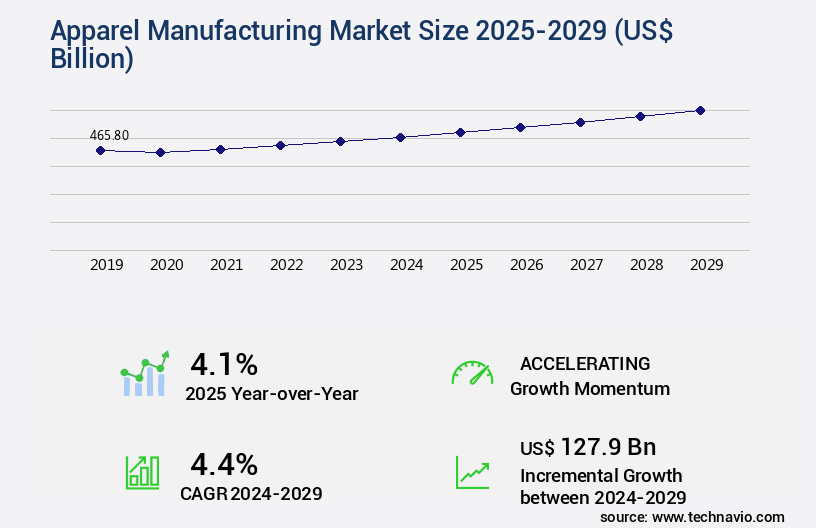
Explore market size, adoption trends, and growth potential for apparel manufacturing market Request Free Sample
- The apparel manufacturing industry continues to evolve, driven by advancements in technology and shifting consumer preferences. Currently, approximately 80% of global apparel production occurs outside of the US, with Asia accounting for over 60% of this output. Looking ahead, industry growth is projected to exceed 5% annually, fueled by increasing demand for sustainable and technologically advanced clothing. Production efficiency improvements, such as digital pattern making and automated cutting, are reducing lead times and lowering costs. Additionally, the integration of wearable technology and smart clothing is transforming the industry, with environmental impact and social responsibility becoming increasingly important considerations. Comparatively, textile machinery and garment manufacturing have seen significant advancements, with lean manufacturing and size grading streamlining processes and improving quality assurance.
- Compliance standards, waste management systems, and worker safety are also key areas of focus, as companies strive to minimize their environmental footprint and enhance overall sustainability. In the realm of fashion technology and sewing technology, process improvement and fit optimization are critical, with virtual prototyping and automated production scheduling enabling more accurate forecasting and better supply chain visibility. Furthermore, recycling programs and waste management systems are essential components of a circular economy, helping to minimize the industry's carbon footprint and reduce waste.
How is this Apparel Manufacturing Industry segmented?
The apparel manufacturing industry research report provides comprehensive data (region-wise segment analysis), with forecasts and estimates in "USD billion" for the period 2025-2029, as well as historical data from 2019-2023 for the following segments.
- Product
- Women apparel
- Men apparel
- Children apparel
- Type
- Casual wear
- Formal wear
- Sport wear
- Night wear
- Distribution Channel
- Offline
- Online
- Geography
- North America
- US
- Mexico
- Europe
- Germany
- UK
- Middle East and Africa
- Turkey
- APAC
- Bangladesh
- China
- India
- Indonesia
- Vietnam
- Rest of World (ROW)
- North America
By Product Insights
The women apparel segment is estimated to witness significant growth during the forecast period.
The women's apparel segment in the global manufacturing industry encompasses a significant and varied market, addressing an extensive range of styles and preferences. This segment consists of various categories, including formal wear, casual wear, activewear, and outerwear, each tailored to cater to women's unique requirements across various occasions and activities. In the realm of ethical sourcing and sustainability, the apparel manufacturing industry is witnessing substantial advancements. For instance, 3D body scanning technology is gaining traction, enabling more accurate production planning and reducing fabric waste. Sustainable manufacturing practices, such as water management and energy consumption reduction, are increasingly being adopted to minimize environmental impact.
Dyeing processes are undergoing transformation, with digital printing and circular economy practices becoming more prevalent. Inventory management, production planning, and order management systems are being automated through the integration of data analytics platforms, CAD software, and robotic systems. Moreover, waste reduction strategies, predictive maintenance, labor compliance, and knitting technology are crucial elements shaping the industry's future. Smart factories, logistics optimization, and factory automation are also transforming the production landscape. According to recent studies, The market is expected to grow by 15% in the next two years, driven by the increasing demand for sustainable and customized clothing. Additionally, the market is projected to expand by 18% in the coming five years, fueled by advancements in technology and the rising preference for ethical and eco-friendly manufacturing practices.
In the realm of apparel design, finishing techniques, and garment construction, there is a growing emphasis on quality control systems and supply chain management. Innovations in weaving technology, fabric cutting systems, and sewing automation are further revolutionizing the industry. Overall, the market is undergoing continuous transformation, with a focus on ethical sourcing, sustainability, and technology-driven innovations. These trends are shaping the industry's future and providing opportunities for growth across various sectors.
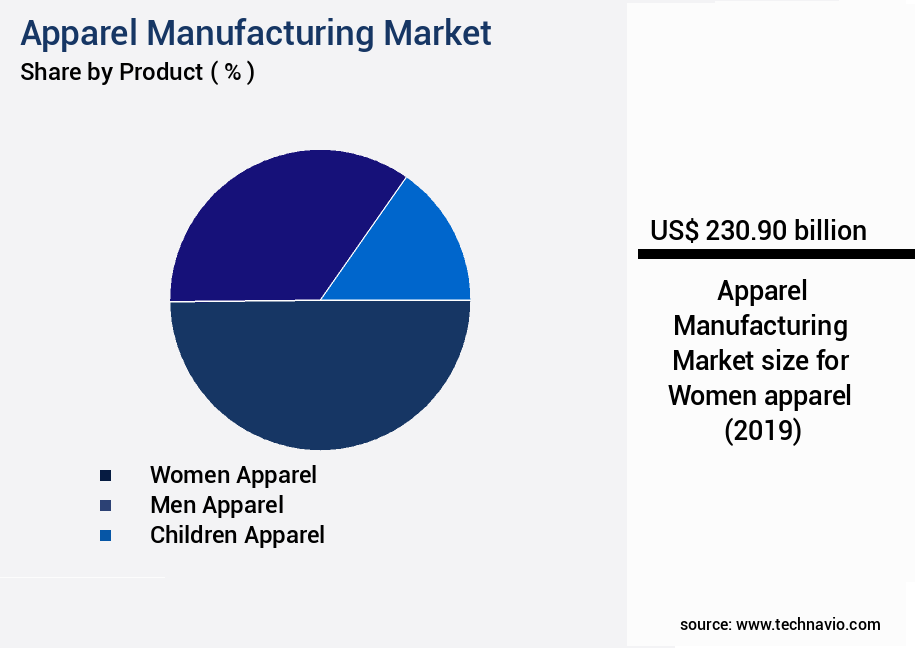
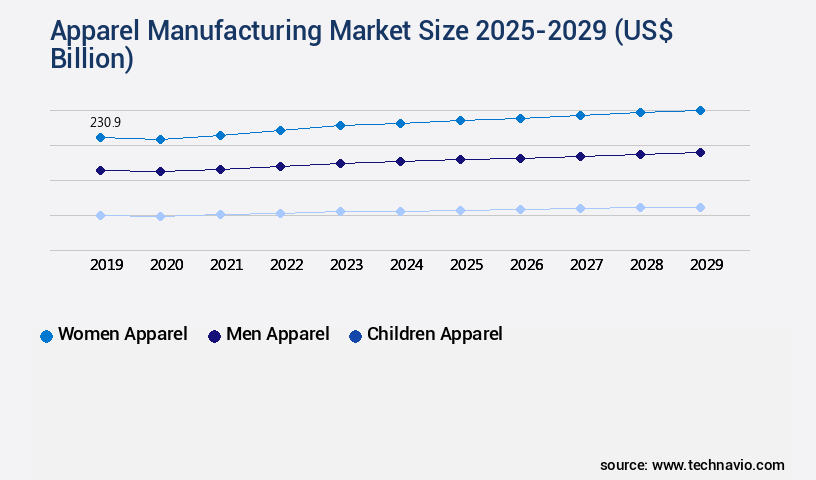
The Women apparel segment was valued at USD 230.90 billion in 2019 and showed a gradual increase during the forecast period.
Regional Analysis
APAC is estimated to contribute 59% to the growth of the global market during the forecast period.Technavio’s analysts have elaborately explained the regional trends and drivers that shape the market during the forecast period.
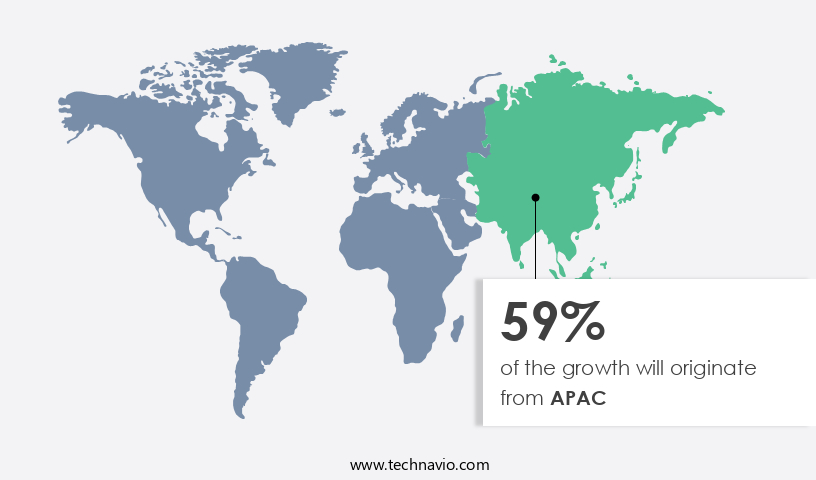
See How Apparel Manufacturing Market Demand is Rising in APAC Request Free Sample
The Asia-Pacific (APAC) region holds a significant position in the global apparel manufacturing industry, accounting for a considerable portion of worldwide clothing production. Key contributors to this dominance include countries like India, China, and Bangladesh, renowned for their robust textile and garment industries. Recently, Arvind Ltd., a prominent textile company headquartered in Ahmedabad, India, revealed plans to invest approximately 1 billion Indian Rupees (USD12 million USD) to establish a new apparel manufacturing facility in Varanasi, Uttar Pradesh. This investment underscores the ongoing growth and development within the APAC apparel manufacturing sector, emphasizing its strategic importance in the global market.
According to recent industry reports, the APAC apparel manufacturing sector is experiencing a steady increase in production, with a projected growth of around 5% in 2023 and an anticipated expansion of around 7% by 2026. Meanwhile, global apparel manufacturing is expected to grow by approximately 3% in 2023 and 4% by 2026. This comparison highlights the relatively faster growth rate in the APAC region compared to the global market. These trends demonstrate the continuous expansion and evolution of the apparel manufacturing sector in the APAC region, with India and China leading the charge. The strategic importance of this region in The market is further underscored by these growth figures.
Market Dynamics
Our researchers analyzed the data with 2024 as the base year, along with the key drivers, trends, and challenges. A holistic analysis of drivers will help companies refine their marketing strategies to gain a competitive advantage.
In the dynamic the market, innovation and sustainability are driving the industry forward. Automated guided vehicles streamline production, while 3D body scanning technology enhances design accuracy and customization. Sustainable textile dyeing processes, such as those using reduced water usage in garment finishing, are increasingly important. Supply chain traceability, implemented through digital technologies, ensures ethical sourcing of raw materials and transparency for consumers. Lean manufacturing principles, factory automation, and the adoption of robotic systems in garment construction boost efficiency and productivity.
Moreover, reducing energy consumption in textile production through predictive maintenance for textile machinery and implementing circular economy models contribute to a greener industry. Advanced sewing technologies and innovative fabric cutting techniques further optimize production. Improving quality control systems through data analytics enables real-time monitoring and correction. Compared to traditional methods, these technological advancements lead to significant improvements. For instance, automated guided vehicles can increase production capacity by up to 30%, while sustainable dyeing processes can save up to 50% of water usage. These advancements not only enhance efficiency but also help reduce the carbon footprint of apparel production by up to 25%. Additionally, implementing ethical sourcing practices and improving worker safety standards are essential components of a responsible and sustainable the market.
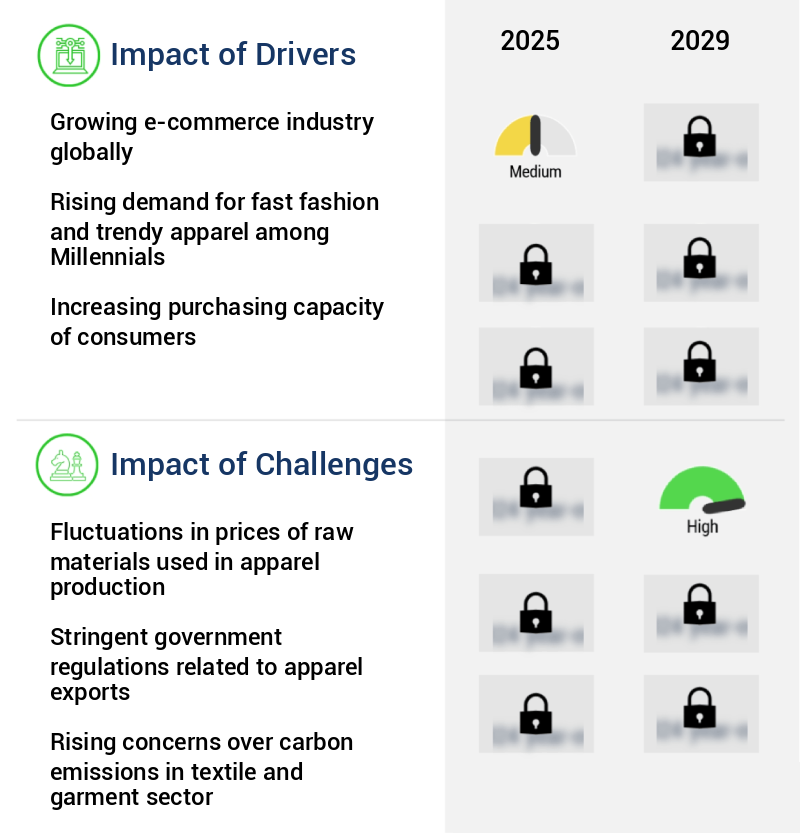
What are the key market drivers leading to the rise in the adoption of Apparel Manufacturing Industry?
- The global e-commerce industry's continuous growth serves as the primary market driver.
- The market is experiencing significant evolution, driven primarily by the escalating influence of the e-commerce sector. In the current business landscape, e-commerce platforms have emerged as the go-to destination for consumers initiating product searches. By 2027, global B2C e-commerce revenue is projected to reach an astounding USD5.5 trillion, marking a substantial shift in retail dynamics. This growth trajectory underscores the transformative impact of e-commerce on the apparel manufacturing industry. The convenience, variety, and accessibility offered by e-commerce have redefined consumer expectations, making it a critical growth engine for the apparel sector. As digital shopping continues to gain traction, apparel manufacturers must adapt to meet the unique demands of this dynamic market.
- This includes optimizing production processes, enhancing product offerings, and improving supply chain efficiency to cater to the evolving needs of e-commerce customers. Moreover, the rise of e-commerce has led to increased competition, as brands and retailers vie for a share of the growing market. To stay competitive, apparel manufacturers must focus on innovation, quality, and speed to market. This may involve investing in advanced technologies, such as automation and data analytics, to streamline operations and improve product development. In summary, the market is undergoing profound changes as a result of the e-commerce revolution. The industry's ongoing transformation requires manufacturers to adapt and innovate to meet the evolving needs of digital consumers and stay competitive in a rapidly changing market.
What are the market trends shaping the Apparel Manufacturing Industry?
- Shifting toward sustainable and ethical fashion is becoming a mandated market trend. This movement prioritizes eco-friendly and morally sound practices in the fashion industry.
- The global apparel manufacturing industry is undergoing transformative changes, with a growing emphasis on sustainable and ethical practices. This shift is in response to escalating consumer awareness and industry initiatives. In May 2024, SU.RE (Sustainable Resolution), a collaborative effort led by Reliance Brands, the United Nations India, the Ministry of Textiles, and the Clothing Manufacturers Association of India, joined forces with the British Council. The objective is to convert SU.RE signatories into sustainable brands and foster partnerships with international organizations in the UK, Denmark, and other countries. Launched in 2019, SU.RE represents a significant commitment from the Indian apparel industry to sustainability, with 16 major brands pledging to establish sustainable supply chains by 2030.
- This collaboration underscores the evolving nature of the market, where sustainability and ethical production are increasingly becoming essential considerations. The industry is adapting to these changing consumer preferences and regulatory requirements, with a focus on reducing environmental impact, improving labor conditions, and promoting transparency. The shift towards sustainable fashion is not limited to the Indian market but is a global trend, with numerous brands and retailers worldwide making similar commitments. The apparel manufacturing sector continues to evolve, presenting both opportunities and challenges for businesses and stakeholders alike.
What challenges does the Apparel Manufacturing Industry face during its growth?
- The apparel industry faces significant challenges due to the volatile pricing of raw materials utilized in production, which can negatively impact industry growth.
- The market experiences continuous evolution, with raw material prices playing a significant role in shaping its dynamics. In the first quarter of 2024, cotton prices saw a substantial increase of over 15% worldwide and over 75% domestically. This surge poses challenges for apparel manufacturers, disrupting their cost structures and leading to higher production costs. The Southern India Mills Association (SIMA) reported widespread concerns regarding these price fluctuations. Similarly, the second quarter of 2024 witnessed a notable rise in Polyester Staple Fiber (PSF) prices in the APAC region. This increase was driven by various factors, including supply chain disruptions, increased demand, and geopolitical tensions.
- These price fluctuations can lead to potential pricing pressures on end products and impact the overall profitability of apparel manufacturers. The market's ongoing challenges underscore the importance of adaptability and resilience in the face of market volatility. Manufacturers must continually monitor raw material prices and adjust their strategies accordingly to maintain profitability and competitiveness. This includes exploring alternative raw materials, optimizing production processes, and implementing pricing strategies that account for market fluctuations. In conclusion, the market is characterized by continuous change and evolving patterns. Raw material price fluctuations, such as the recent increases in cotton and PSF prices, can significantly impact the market's dynamics.
- Manufacturers must remain agile and responsive to these changes to maintain profitability and competitiveness.
Exclusive Customer Landscape
The apparel manufacturing market forecasting report includes the adoption lifecycle of the market, covering from the innovator’s stage to the laggard’s stage. It focuses on adoption rates in different regions based on penetration. Furthermore, the apparel manufacturing market report also includes key purchase criteria and drivers of price sensitivity to help companies evaluate and develop their market growth analysis strategies.
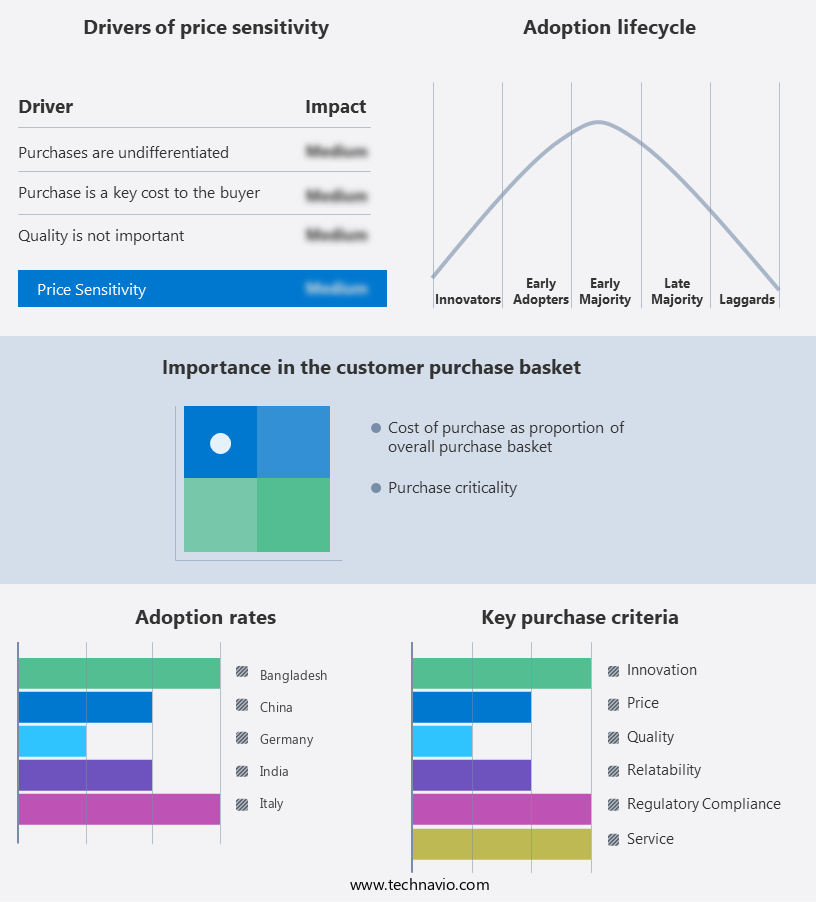
Customer Landscape of Apparel Manufacturing Industry
Key Companies & Market Insights
Companies are implementing various strategies, such as strategic alliances, apparel manufacturing market forecast, partnerships, mergers and acquisitions, geographical expansion, and product/service launches, to enhance their presence in the industry.
Aditya Birla Fashion and Retail Ltd. - This company showcases an extensive range of apparel offerings through its proprietary brands, including Louis Philippe, Jaypore, Pantaloons, and Marigold Lane. These brands cater to diverse consumer preferences, positioning the company as a leading player in the global fashion industry.
The industry research and growth report includes detailed analyses of the competitive landscape of the market and information about key companies, including:
- Aditya Birla Fashion and Retail Ltd.
- Arvind Ltd.
- Asian Apparels Ltd.
- Beximco Apparels Ltd.
- Crystal International Group Ltd.
- Epyllion Group.
- Fakir Apparels Ltd.
- Gokaldas Exports Ltd.
- Hongyu Apparel
- Jay Dee Exports
- Jiangsu Lianfa Textile Co. Ltd.
- Kitex Garments Ltd.
- KPR Mill Ltd.
- Luen Thai Holdings Ltd.
- MAS Holdings Pvt. Ltd.
- Plummy Fashions Ltd.
- Reliance Industries Ltd.
- Shahi Exports Pvt. Ltd.
- Vardhman Textile Ltd.
- Youngor Group Co., Ltd.
Qualitative and quantitative analysis of companies has been conducted to help clients understand the wider business environment as well as the strengths and weaknesses of key industry players. Data is qualitatively analyzed to categorize companies as pure play, category-focused, industry-focused, and diversified; it is quantitatively analyzed to categorize companies as dominant, leading, strong, tentative, and weak.
Recent Development and News in Apparel Manufacturing Market
- In January 2024, H&M, the Swedish multinational clothing retailer, announced a strategic partnership with the leading Indian textile manufacturer, Arvind Limited, to boost its production capacity and enhance its product offerings in the Asian market (H&M Press Release, 2024).
- In March 2024, Adidas and Allbirds, two major apparel brands, joined forces to launch a new line of sustainable footwear, marking a significant step towards sustainable manufacturing in the industry (Adidas Press Release, 2024).
- In April 2025, American Eagle Outfitters, Inc., a leading apparel retailer, completed the acquisition of Quicksilver, a California-based clothing brand, for approximately USD300 million, expanding its portfolio and market reach (American Eagle Outfitters SEC Filing, 2025).
- In May 2025, the European Union passed the Sustainable Textiles Regulation, setting strict rules for the use of hazardous chemicals in textiles and apparel manufacturing, aiming to promote sustainable production and reduce environmental impact (European Parliament Press Release, 2025).
Research Analyst Overview
- The market is a dynamic and evolving industry, characterized by continuous innovation and adaptation to emerging trends. Material sourcing remains a critical aspect, with increasing emphasis on ethical and sustainable practices. Robotic systems and factory automation are transforming production processes, enhancing efficiency and reducing energy consumption. Digital printing technology is revolutionizing the industry, enabling on-demand production and reducing waste. The circular economy is gaining traction, with weaving technology and fabric cutting systems being optimized for recycled materials. Energy consumption is a significant concern, with production optimization strategies and quality control systems being employed to minimize waste and improve efficiency.
- Industry growth is expected to remain robust, with a projected CAGR of 5.5% between 2021 and 2026. One notable example of market evolution is the integration of data analytics platforms, CAD software, and order management systems to streamline production planning and demand forecasting. Sewing automation, knitting technology, and predictive maintenance are also becoming increasingly common, reducing labor requirements and enhancing product consistency. Waste reduction strategies, such as water management and inventory optimization, are essential components of sustainable manufacturing practices. Smart factories, incorporating automation, digitalization, and data analytics, are becoming the norm, enabling real-time monitoring and optimization of production processes.
- Circular economy practices, including recycling, upcycling, and closed-loop production, are gaining momentum. Weaving technology and digital printing are being adapted to work with recycled materials, while fabric cutting systems are optimized for minimal waste. Energy consumption is being addressed through the use of renewable energy sources and energy-efficient machinery. Quality control systems, supply chain management, finishing techniques, apparel design software, and logistics optimization are all critical components of the market, ensuring the delivery of high-quality, on-time products to consumers.
Dive into Technavio’s robust research methodology, blending expert interviews, extensive data synthesis, and validated models for unparalleled Apparel Manufacturing Market insights. See full methodology.
|
Market Scope |
|
|
Report Coverage |
Details |
|
Page number |
224 |
|
Base year |
2024 |
|
Historic period |
2019-2023 |
|
Forecast period |
2025-2029 |
|
Growth momentum & CAGR |
Accelerate at a CAGR of 4.4% |
|
Market growth 2025-2029 |
USD 127.9 billion |
|
Market structure |
Fragmented |
|
YoY growth 2024-2025(%) |
4.1 |
|
Key countries |
China, Bangladesh, Vietnam, US, India, Indonesia, Germany, UK, Mexico, and Turkey |
|
Competitive landscape |
Leading Companies, Market Positioning of Companies, Competitive Strategies, and Industry Risks |
What are the Key Data Covered in this Apparel Manufacturing Market Research and Growth Report?
- CAGR of the Apparel Manufacturing industry during the forecast period
- Detailed information on factors that will drive the growth and forecasting between 2025 and 2029
- Precise estimation of the size of the market and its contribution of the industry in focus to the parent market
- Accurate predictions about upcoming growth and trends and changes in consumer behaviour
- Growth of the market across APAC, Europe, North America, Middle East and Africa, and South America
- Thorough analysis of the market’s competitive landscape and detailed information about companies
- Comprehensive analysis of factors that will challenge the apparel manufacturing market growth of industry companies
We can help! Our analysts can customize this apparel manufacturing market research report to meet your requirements.
 RIA -
RIA - 
