


Smart Clothing Market Size 2024-2028
The smart clothing market size is forecast to increase by USD 5.12 billion, at a CAGR of 20.62% between 2023 and 2028.
- The market is witnessing significant growth, driven by the increasing product innovation in the sector. Advanced technologies such as wearable sensors, Bluetooth, and Wi-Fi connectivity are being integrated into clothing to monitor health, fitness, and environmental conditions. This integration offers consumers personalized comfort and convenience, making smart clothing an attractive proposition. Moreover, the market is experiencing a surge in strategic partnerships and mergers and acquisitions (M&A) activities. Collaborations between clothing brands, technology companies, and startups are paving the way for the development of advanced smart clothing solutions. These partnerships are expected to bring about technological advancements, expand market reach, and strengthen the competitive landscape.
- However, the market faces challenges in the form of growing concerns over data security and privacy. With the increasing integration of technology into clothing, there is a risk of sensitive user data being compromised. Addressing these concerns through robust data protection measures and transparent data handling policies will be crucial for market players to gain consumer trust and ensure the long-term success of smart clothing solutions.
What will be the Size of the Smart Clothing Market during the forecast period?
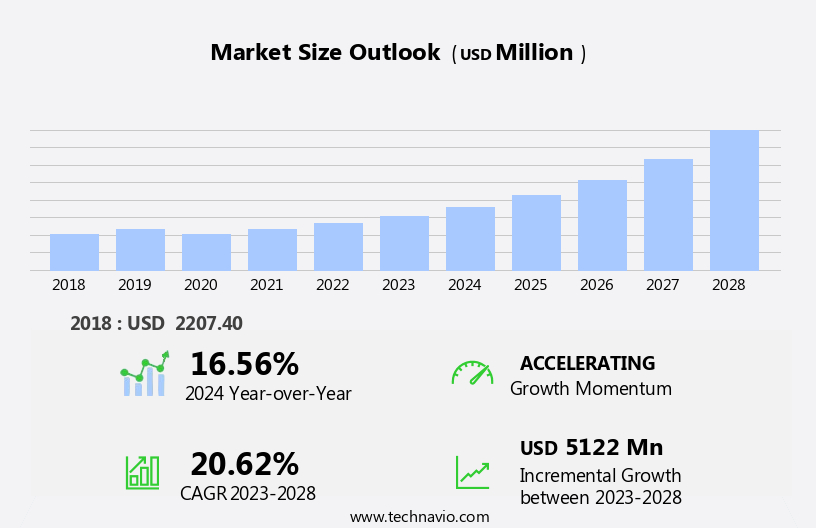
Explore in-depth regional segment analysis with market size data - historical 2018-2022 and forecasts 2024-2028 - in the full report.
Request Free Sample
The market continues to evolve, with innovative technologies and applications emerging across various sectors. Flexible displays and virtual reality integration enhance user experience, while body temperature regulation and AI enable personalized comfort. Textile manufacturing advances with conductive inks and smart fabrics, integrating wearable sensors for muscle activity tracking, heart rate monitoring, and biometric monitoring. User interface design and data visualization facilitate seamless interaction, with data integration and machine learning powering health data analytics and personalization. Wearable sensors and GPS tracking enable industrial safety and emergency response systems, while smart textiles offer moisture management and adaptive clothing solutions. Augmented reality integration and fall detection offer new possibilities in healthcare applications and military and defense.
Sustainability and ethics are increasingly important, with energy harvesting and wearable payment systems addressing environmental concerns. The competition landscape remains dynamic, with ongoing regulatory compliance and power management challenges. Supply chain management and washability and durability are critical considerations for consumer adoption. Business models continue to evolve, with edge computing and cloud computing enabling new revenue streams. The ongoing unfolding of market activities and evolving patterns offers significant growth opportunities in this exciting and continuously evolving market.
How is this Smart Clothing Industry segmented?
The smart clothing industry research report provides comprehensive data (region-wise segment analysis), with forecasts and estimates in "USD million" for the period 2024-2028, as well as historical data from 2018-2022 for the following segments.
- End-user
- Healthcare
- Sports
- Defence
- Others
- Geography
- North America
- US
- Europe
- France
- Germany
- APAC
- China
- India
- Rest of World (ROW)
- North America
By End-user Insights
The healthcare segment is estimated to witness significant growth during the forecast period.
The market is experiencing significant growth, driven by the integration of advanced technologies such as deep learning, machine learning, and artificial intelligence (AI) in clothing. These technologies enable various functionalities, including sleep monitoring, stress level monitoring, muscle activity tracking, heart rate monitoring, and body temperature regulation. The sports and fitness industry is a major adopter of smart clothing, with sensors integrated into sports bras, heated underwear, and other athletic wear to optimize performance and prevent injuries. In the healthcare sector, smart clothing is gaining popularity for patient monitoring and care, particularly in hospitals.
The use of smart clothing for fall detection, biometric monitoring, and interactive clothing enhances patient safety and comfort. Regulatory compliance and power management are crucial considerations in the market, with companies focusing on energy harvesting, battery life, and wearable payment systems. The competition landscape is diverse, with players investing in textile electronics, wireless communication, edge computing, and cloud computing. Sustainability and ethics are also essential factors, with a focus on conductive inks, energy harvesting, and smart textiles. The market is further expected to expand with the integration of augmented reality, virtual reality, and wearable sensors for environmental monitoring and industrial safety.
Overall, The market presents numerous growth opportunities, with a focus on user experience, health data analytics, personalization, and customization.
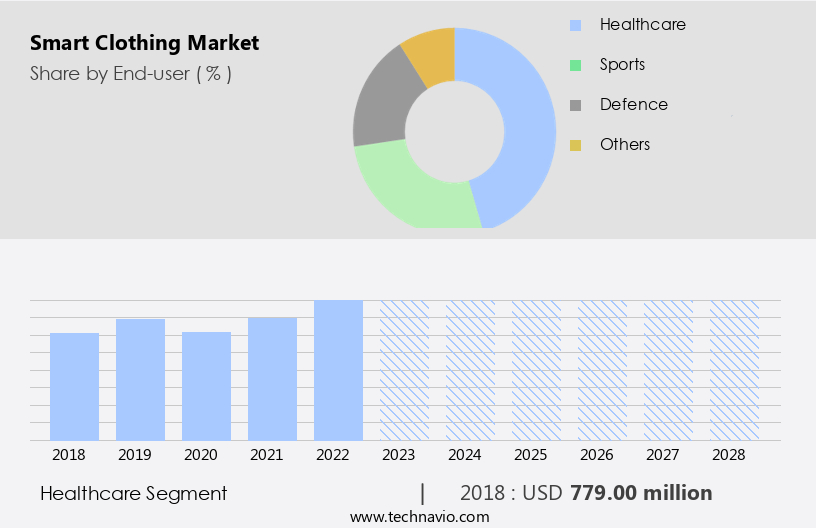
The Healthcare segment was valued at USD 779.00 billion in 2018 and showed a gradual increase during the forecast period.
Regional Analysis
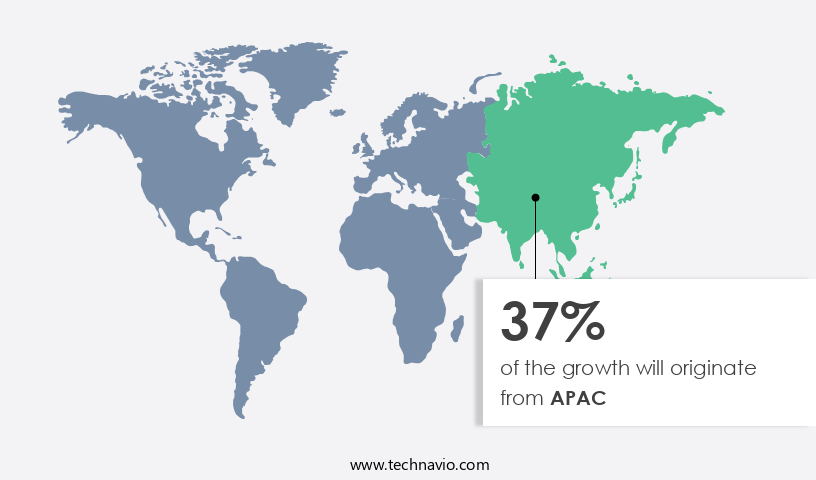
APAC is estimated to contribute 37% to the growth of the global market during the forecast period.Technavio’s analysts have elaborately explained the regional trends and drivers that shape the market during the forecast period.
The market in North America is experiencing significant growth due to increasing consumer adoption of technology, rising disposable income, and heightened product awareness. This region's population demonstrates a strong interest in fashion, lifestyle, fitness, sports, and athletics, leading to a high acceptance of premium smart clothing. Health consciousness and engagement in sports and fitness activities further fuel the market's expansion. Power management, regulatory compliance, and supply chain management are crucial considerations in the competitive landscape. Smart footwear, textile electronics, and wireless communication are key technologies driving innovation. Deep learning, sleep monitoring, stress level monitoring, and fall detection are among the functionalities gaining popularity.
Sustainability and ethics, industrial safety, and healthcare applications are emerging growth opportunities. Smart apparel, adaptive clothing, and fashion design integrate human-computer interaction and user experience. Machine learning, cloud computing, and smart fabrics facilitate data visualization and health data analytics. Personalization and customization, energy harvesting, and wearable sensors enhance comfort and fit. The market's future trends include body temperature regulation, artificial intelligence, textile manufacturing, and virtual reality integration.
Market Dynamics
Our researchers analyzed the data with 2023 as the base year, along with the key drivers, trends, and challenges. A holistic analysis of drivers will help companies refine their marketing strategies to gain a competitive advantage.
What are the key market drivers leading to the rise in the adoption of Smart Clothing Industry?
- Product innovation is the primary catalyst for market growth, driving industry advancements through the development and introduction of new and improved offerings.
- The market is experiencing significant growth due to the increasing demand for wearable technology that integrates data from various sensors to monitor bodily activities. companies in this market must invest in continuous innovation to remain competitive. Advanced smart fitness products, such as shoes with step-counting sensors, are popular among consumers engaged in athletic and fitness activities. These smart clothes not only help users monitor their daily workouts but also alert them to incorrect steps and activities. Furthermore, the integration of conductive inks, machine learning, cloud computing, and health data analytics enables personalization and customization of the user experience.
- Additionally, wearable payment systems, emergency response systems, smart accessories, wearable technology standards, and energy harvesting are other key features driving market growth. The use of smart fabrics and battery life management are also crucial considerations for companies in this market. In conclusion, the market is poised for continued growth as consumers seek innovative and technologically advanced solutions for health monitoring, fitness tracking, and convenience.
What are the market trends shaping the Smart Clothing Industry?
- The trend in the market is characterized by an escalating number of strategic partnerships and mergers and acquisitions (M&A) activities. Two significant market developments include the increasing prevalence of strategic alliances and a heightened M&A activity pace.
- The market is experiencing significant growth as companies collaborate and merge with technology companies to create innovative wearable devices. These strategic partnerships and mergers and acquisitions (M&A) enable companies to incorporate advanced technologies such as flexible displays, virtual reality integration, body temperature regulation, artificial intelligence (AI), textile manufacturing, and biometric monitoring into their smart clothing offerings. For example, Sensoria Inc. Has partnered with MYZONE for over five years to produce comfortable and precise heart rate monitoring garments, including the Sensoria T-Shirt and MYZONE Powered Sports Bra. Other companies are integrating wearable sensors for muscle activity tracking, moisture management, GPS tracking, and user interface design to enhance the functionality and user experience of smart clothing.
- This wearable device ecosystem is expected to drive the adoption of smart clothing during the forecast period, with technologies such as wearable sensors, biometric monitoring, and AI playing key roles in creating immersive, harmonious, and interactive clothing solutions.
What challenges does the Smart Clothing Industry face during its growth?
- The expansion of the industry is being significantly impacted by escalating concerns regarding data security and privacy. This challenge, which is of great importance and demands immediate attention, necessitates the implementation of robust security measures and adherence to stringent privacy regulations.
- The market is experiencing significant growth as technology continues to merge with fashion. Power management and regulatory compliance are crucial market penetration strategies for companies in this industry. Advanced features, such as deep learning for sleep and stress level monitoring, environmental monitoring, and textile electronics, are driving innovation in smart footwear, sports and fitness, military and defense, and other sectors. However, concerns over data privacy and security are hindering market expansion. With smart clothing items, such as shirts and shoes, incorporating sensors and other technologies, large volumes of sensitive data are generated and stored.
- Ensuring security standards and privacy protection is essential to mitigate potential risks and maintain customer trust. Additionally, washability and durability are important considerations for consumers. Blockchain technology and supply chain management are also being explored to enhance the functionality and transparency of smart clothing products.
Exclusive Customer Landscape
The smart clothing market forecasting report includes the adoption lifecycle of the market, covering from the innovator’s stage to the laggard’s stage. It focuses on adoption rates in different regions based on penetration. Furthermore, the smart clothing market report also includes key purchase criteria and drivers of price sensitivity to help companies evaluate and develop their market growth analysis strategies.
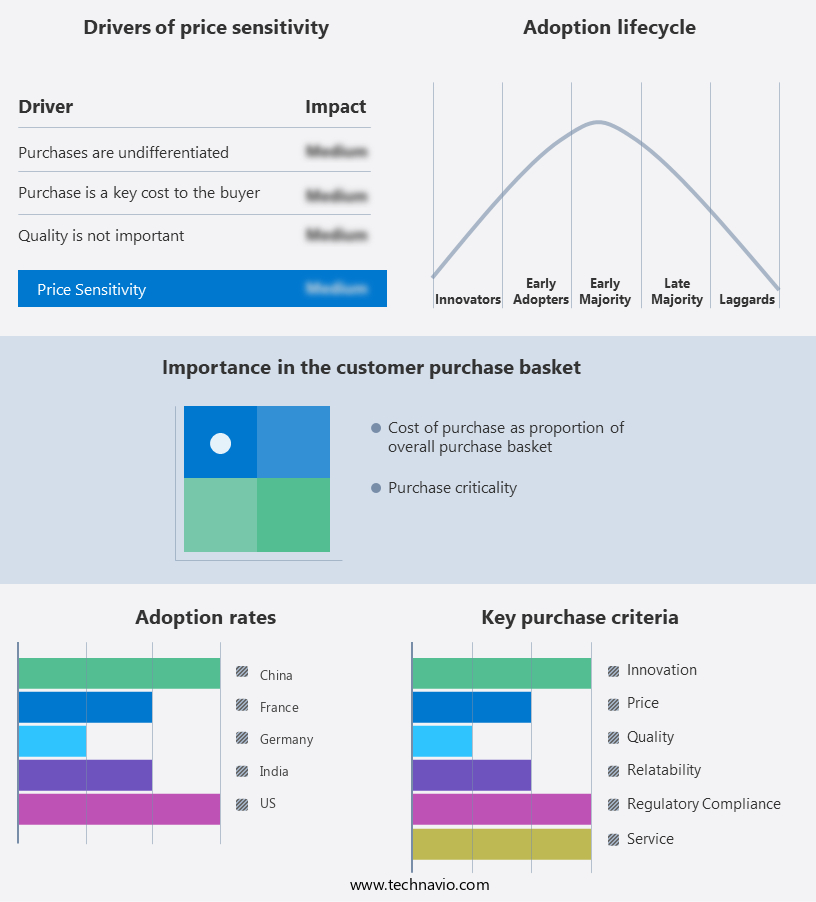
Customer Landscape
Key Companies & Market Insights
Companies are implementing various strategies, such as strategic alliances, smart clothing market forecast, partnerships, mergers and acquisitions, geographical expansion, and product/service launches, to enhance their presence in the industry.
AiQ Smart Clothing Inc. - This company specializes in innovative smart clothing solutions, including Bioman and AiQ Synertial. Our offerings integrate advanced biometric and artificial intelligence technologies to enhance wearers' comfort and performance. By merging fashion with functionality, we aim to elevate everyday attire, providing a unique and original approach to the apparel industry. These cutting-edge garments adapt to the user's body and environment, optimizing temperature control, moisture management, and overall well-being. Our commitment to research and development ensures continuous improvement, setting us apart from competitors and driving exceptional customer value.
The industry research and growth report includes detailed analyses of the competitive landscape of the market and information about key companies, including:
- AiQ Smart Clothing Inc.
- Alphabet Inc.
- Applycon S.R.O.
- CuteCircuit Ltd.
- Hexoskin
- IoT Central LLC
- Komodo Technologies Inc
- Myontec Oy
- Noble Biomaterials Inc.
- Owlet Inc.
- Polar Electro Oy
- Propel LLC
- Sensatex Inc.
- Sensoria Inc.
- Siren Care Inc.
- Tex Ray Industrial Co. Ltd.
- Under Armour Inc.
- Vulpes Electronics GmbH
- Wearable X
- Xenoma Inc.
Qualitative and quantitative analysis of companies has been conducted to help clients understand the wider business environment as well as the strengths and weaknesses of key industry players. Data is qualitatively analyzed to categorize companies as pure play, category-focused, industry-focused, and diversified; it is quantitatively analyzed to categorize companies as dominant, leading, strong, tentative, and weak.
Recent Development and News in Smart Clothing Market
- In March 2024, Samsung Electronics unveiled its latest innovation in the market with the launch of its "Samsung Serene UVP" line, which integrates air conditioning technology into clothing fabric (Samsung Press Release, 2024). This development marks a significant leap in the integration of advanced technology into clothing, offering wearers temperature control and enhanced comfort.
- In July 2024, Google and Levi's announced a strategic partnership to develop smart denim jeans, integrating Google's Project Jacquard technology, enabling users to control various smart devices using simple gestures (Google Blog, 2024). This collaboration showcases the potential for fashion and technology to merge, offering consumers functional and stylish clothing.
- In November 2024, Intel Capital invested USD20 million in the Israeli startup Wearable Intelligence, a leading provider of AI-powered wearable solutions for the healthcare industry (Intel Capital Press Release, 2024). This investment signifies the growing interest and potential of smart clothing in the healthcare sector, with a focus on applications such as remote patient monitoring and data analysis.
- In February 2025, Adidas and Microsoft announced a collaboration to develop smart shoes with built-in sensors and AI capabilities, aiming to provide personalized training and performance insights for athletes (Adidas Press Release, 2025). This strategic partnership represents a significant step forward in the application of smart clothing technology in the sports industry, offering enhanced training and performance benefits.
Research Analyst Overview
- The market is experiencing significant advancements, integrating various technologies to enhance functionality and user experience. Predictive analytics and data analytics are driving personalized healthcare applications, allowing real-time monitoring and analysis of vital signs. Organic electronics and printed electronics are revolutionizing the industry with flexible, lightweight, and wearable components. Bluetooth connectivity, near-field communication (NFC), and cellular connectivity enable seamless integration with smartphones and smart homes. Wearable computing is merging with advanced UI/UX designs, creating comfortable and stylish garments. Innovations like carbon nanotubes, silver nanoparticles, and bio-compatible materials offer improved breathability, moisture management, and odor control. Thermoelectric generators, fiber optics, solar cells, and power-over-ethernet (PoE) are exploring energy harvesting possibilities for self-sustaining clothing.
- Sports performance enhancement is a growing trend, with smart clothing incorporating UWB, NFC technology, and biofuel cells to monitor and optimize athletes' performance. The integration of Wi-Fi connectivity and smart home systems further enhances the convenience and functionality of these garments. Overall, the market is evolving rapidly, offering numerous opportunities for businesses to explore and innovate.
Dive into Technavio’s robust research methodology, blending expert interviews, extensive data synthesis, and validated models for unparalleled Smart Clothing Market insights. See full methodology.
|
Market Scope |
|
|
Report Coverage |
Details |
|
Page number |
136 |
|
Base year |
2023 |
|
Historic period |
2018-2022 |
|
Forecast period |
2024-2028 |
|
Growth momentum & CAGR |
Accelerate at a CAGR of 20.62% |
|
Market growth 2024-2028 |
USD 5122 million |
|
Market structure |
Fragmented |
|
YoY growth 2023-2024(%) |
16.56 |
|
Key countries |
US, China, India, Germany, and France |
|
Competitive landscape |
Leading Companies, Market Positioning of Companies, Competitive Strategies, and Industry Risks |
What are the Key Data Covered in this Smart Clothing Market Research and Growth Report?
- CAGR of the Smart Clothing industry during the forecast period
- Detailed information on factors that will drive the growth and forecasting between 2024 and 2028
- Precise estimation of the size of the market and its contribution of the industry in focus to the parent market
- Accurate predictions about upcoming growth and trends and changes in consumer behaviour
- Growth of the market across North America, APAC, Europe, South America, and Middle East and Africa
- Thorough analysis of the market’s competitive landscape and detailed information about companies
- Comprehensive analysis of factors that will challenge the smart clothing market growth of industry companies
We can help! Our analysts can customize this smart clothing market research report to meet your requirements.
 RIA -
RIA - 
