


Arachidonic Acid Market Size 2025-2029
The arachidonic acid market size is forecast to increase by USD 196.1 million at a CAGR of 9% between 2024 and 2029.
- The market is experiencing significant growth driven by the rising awareness about preventative healthcare and the increasing demand for baby food products. Arachidonic acid, an essential fatty acid, plays a crucial role in various physiological functions, including brain development and immune response. With the growing emphasis on maintaining optimal health, the demand for arachidonic acid supplements and fortified foods is on the rise. Moreover, the baby food industry is a major contributor to the market's growth. Arachidonic acid is an essential nutrient for infants, and its deficiency can lead to developmental delays. Consequently, baby food manufacturers are incorporating arachidonic acid into their products to cater to the nutritional needs of infants and toddlers.
- However, the market's growth is not without challenges. The availability of substitutes for arachidonic acid, such as docosahexaenoic acid (DHA) and eicosapentaenoic acid (EPA), poses a significant threat. These substitutes offer similar health benefits and are often more cost-effective. As a result, market players need to differentiate themselves by focusing on product innovation, quality, and pricing strategies to remain competitive. In , the market is poised for growth due to the increasing demand for preventative healthcare and baby food products. However, the availability of substitutes presents a significant challenge. Companies seeking to capitalize on market opportunities and navigate challenges effectively must focus on product innovation, quality, and pricing strategies.
What will be the Size of the Arachidonic Acid Market during the forecast period?
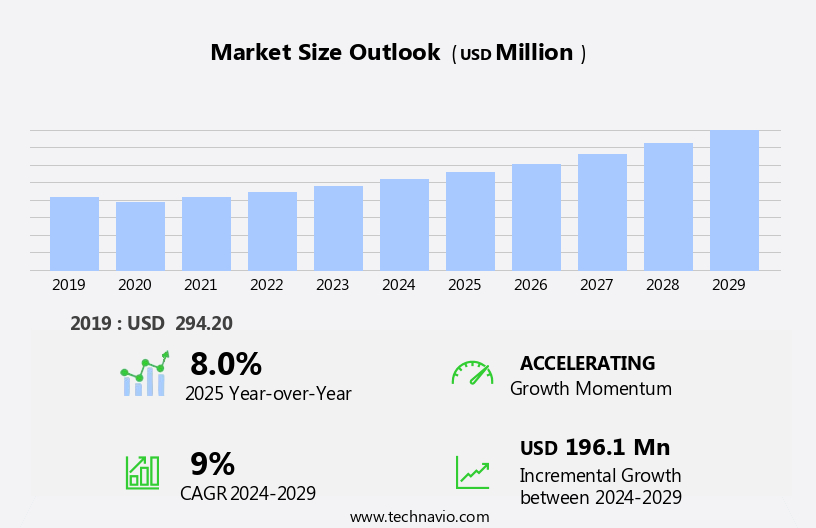
- The market in the US is experiencing significant growth due to increasing demand from various end-users, including the healthcare industry and the food and beverage sector. Arachidonic acid, a key fatty acid in the omega-6 group, is sourced from various origins, including Mortierella alpine, seaweed, and animal-based sources. Its applications span from brain diseases treatment and neuron growth promotion to infant formula production and sports supplements. The market's size is substantial, driven by the rising income growth and awareness of the benefits of arachidonic acid. Innovative technologies, such as in-house manufacturing techniques and the development of plant-based arachidonic acid, are contributing to production cost reduction and expanding the market's reach.
- End-users, including product manufacturers and consumers, are influenced by educational campaigns promoting the importance of arachidonic acid in various applications, such as depression treatment, physical injuries healing, and infant brain development. Global standards ensure product quality and safety, further fueling market growth. Arachidonic acid is available in both solvent and solid forms, catering to diverse application requirements. The market's direction remains positive, with population growth and increasing demand for arachidonic acid-rich products, such as baby care products and visual acuity enhancers, driving future expansion.
How is this Arachidonic Acid Industry segmented?
The arachidonic acid industry research report provides comprehensive data (region-wise segment analysis), with forecasts and estimates in "USD million" for the period 2025-2029, as well as historical data from 2019-2023 for the following segments.
- Source
- Plant source
- Animal source
- Form Factor
- Liquid
- Powder
- Capsule
- Application
- Pharmaceuticals
- Dietary supplements
- Others
- Geography
- APAC
- Australia
- China
- India
- Japan
- South Korea
- North America
- US
- Canada
- Europe
- France
- Germany
- UK
- South America
- Middle East and Africa
- APAC
By Source Insights
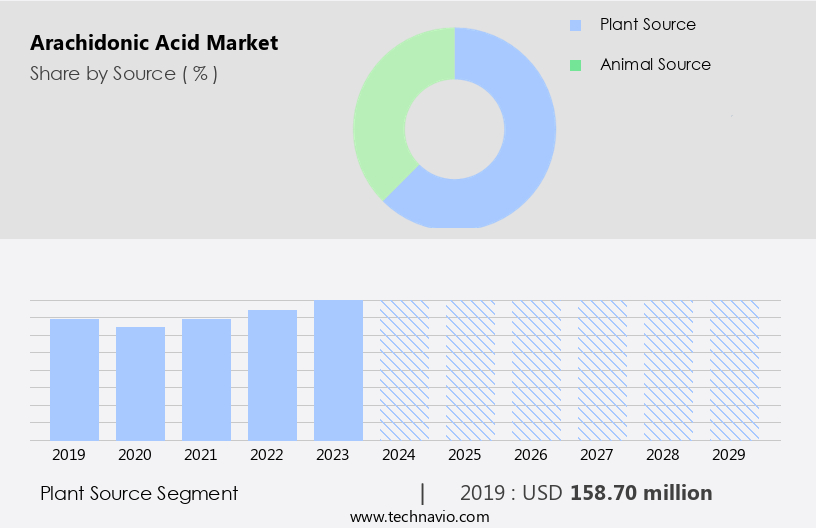
The plant source segment is estimated to witness significant growth during the forecast period.
Arachidonic acid, a crucial fatty acid in the Omega-6 group, plays a significant role in physical injuries healing and overall well-being. The global market for arachidonic acid witnessed the plant source segment's dominance in 2024, driven by increasing consumer interest in vegetarian or vegan products. Arachidonic acid is naturally found in various plant sources like nuts, seeds, legumes, grains, and seaweed. The growing preference for natural products and the health benefits associated with arachidonic acid will fuel the demand for plant-source arachidonic acid in various applications, including health supplements, infant formula, sports drinks, and baby care products.
Arachidonic acid contributes to neuron growth, skeletal system improvement, and cognitive function improvement. Its anti-inflammatory properties make it an essential component in treating muscle inflammation and muscle gain processes. Furthermore, it has applications in treating brain diseases like depression and visual acuity issues. The market's growth is influenced by the population growth, urbanization, and the increasing awareness of arachidonic acid's health benefits. Product manufacturers are focusing on innovative technologies and R&D development to produce arachidonic acid in various forms, such as solid form, oil-based, and solvent form, to cater to diverse end-users, including athletes, bodybuilders, and individuals seeking improved immune and nervous system functions.
The regulatory acceptance of arachidonic acid supplements and the reduction in production costs will further boost the industry's income growth.
Get a glance at the market report of share of various segments Request Free Sample
The Plant source segment was valued at USD 158.70 million in 2019 and showed a gradual increase during the forecast period.
Regional Analysis
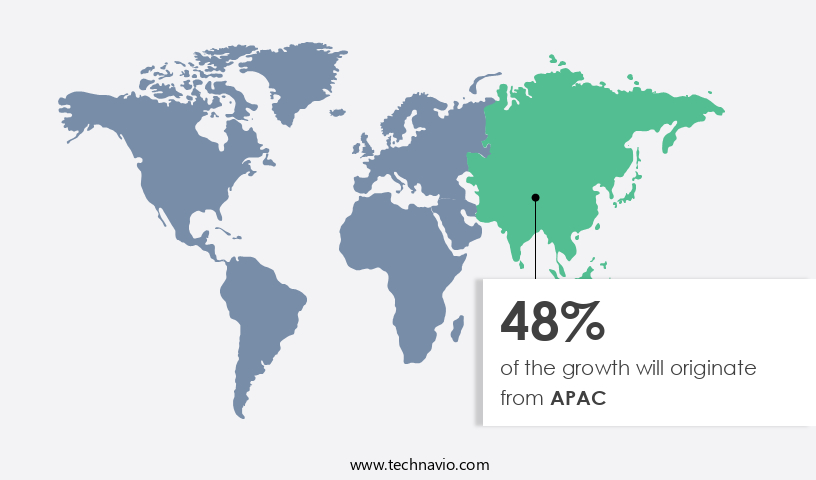
APAC is estimated to contribute 48% to the growth of the global market during the forecast period.Technavio’s analysts have elaborately explained the regional trends and drivers that shape the market during the forecast period.
For more insights on the market size of various regions, Request Free Sample
Arachidonic acid, a vital fatty acid belonging to the Omega-6 group, plays a significant role in physical injuries healing and supports the growth and development of the nervous and skeletal systems. This essential nutrient is found in various sources, including animal-based and plant-based products, such as meat, dairy, fish, and certain nuts and grains. Arachidonic acid is also used in the production of health supplements, infant formula, and baby care products. The market for arachidonic acid is driven by the increasing demand for functional food supplements and the rise in consumer awareness about its health benefits.
In-house manufacturing techniques have led to the production of solid form arachidonic acid, making it more accessible to end-users in urban areas. Product applications extend to sports drinks, neuron growth, muscle hypertrophy, visual acuity, and depression treatment. The industry growth is further fueled by innovative technologies and R&D development, leading to the production of oil-based and solvent form arachidonic acid products. Sources of arachidonic acid include Mortierella alpine, seaweed, and animal-derived sources. The market is expected to experience income growth due to the increasing population and the regulatory acceptance of arachidonic acid supplements for infant brain development, cognitive function improvement, and immune system improvement.
Global standards ensure the production cost reduction, making arachidonic acid accessible to a larger consumer base. Educational campaigns and awareness programs are being initiated to promote the benefits of arachidonic acid for overall well-being, muscle gain process, and nervous system improvement. The market is projected to grow at a steady pace during the forecast period.
Market Dynamics
Our researchers analyzed the data with 2024 as the base year, along with the key drivers, trends, and challenges. A holistic analysis of drivers will help companies refine their marketing strategies to gain a competitive advantage.
What are the key market drivers leading to the rise in the adoption of Arachidonic Acid Industry?
- Rising awareness about preventative healthcare is the key driver of the market.
- The market growth is driven by the rising consumer awareness towards preventative healthcare. The global population is projected to increase by an estimated 2.5 billion people, with most of this growth occurring in urban and semi-urban areas. This demographic shift will directly impact the demand for dietary supplements, as urban populations have a higher consumption rate. In response, dietary supplement manufacturers are forming strategic alliances and making acquisitions to capitalize on this trend.
- Urbanization, changing lifestyles, and increasing internet penetration are also contributing factors to the market's expansion. As consumers become more health-conscious, the demand for arachidonic acid, a key component of many dietary supplements, is expected to grow.
What are the market trends shaping the Arachidonic Acid Industry?
- Increasing demand for baby food products is the upcoming market trend.
- Parents' perception of baby foods as healthy and free of harmful ingredients is driving the market growth. With an increasing number of parents preferring packaged baby foods that contain minimal pesticide residue, the demand for organic baby food products is on the rise. The awareness regarding the potential health risks of chemicals, preservatives, hormones, and antibiotics in baby food has led to a significant shift towards organic options.
- Organic baby food is perceived as a healthier alternative due to its absence of these substances. This trend is expected to continue, contributing to the market expansion during the forecast period. Parents' concerns for their children's health and wellbeing are the primary market drivers.
What challenges does the Arachidonic Acid Industry face during its growth?
- Availability of substitutes for arachidonic acid is a key challenge affecting the industry growth.
- Arachidonic acid, a polyunsaturated omega-6 fatty acid, faces competition from various substitutes in the market. These alternatives, such as linoleic acid, alpha-linolenic acid, Y-linolenic acid, leukotriene, and docosapentaenoic acid, can replace arachidonic acid in various applications, including foods and beverages and pharmaceuticals. Unlike arachidonic acid, these substitutes are widely available and easily accessible. For instance, linoleic acid, a common polyunsaturated fatty acid in Western diets, is extensively used in food product preparation.
- In the human body, arachidonic acid is synthesized from linoleic acid. Omega-6 fatty acids, including arachidonic acid, are primarily produced during and after physical activities. The availability and accessibility of these substitutes may impact the growth of the market.
Exclusive Customer Landscape
The arachidonic acid market forecasting report includes the adoption lifecycle of the market, covering from the innovator’s stage to the laggard’s stage. It focuses on adoption rates in different regions based on penetration. Furthermore, the arachidonic acid market report also includes key purchase criteria and drivers of price sensitivity to help companies evaluate and develop their market growth analysis strategies.

Customer Landscape
Key Companies & Market Insights
Companies are implementing various strategies, such as strategic alliances, arachidonic acid market forecast, partnerships, mergers and acquisitions, geographical expansion, and product/service launches, to enhance their presence in the industry.
Avantor Inc. - The company specializes in providing arachidonic acid, an essential fatty acid, for the biosynthesis of prostaglandins, thromboxanes, and leukotrienes. These bioactive lipids play crucial roles in various physiological processes, including inflammation, pain perception, and platelet aggregation. By offering arachidonic acid, the company caters to the research needs of scientists and institutions, enabling them to advance their studies in these areas.
The industry research and growth report includes detailed analyses of the competitive landscape of the market and information about key companies, including:
- Avantor Inc.
- BASF SE
- Bio Techne Corp.
- Cargill Inc.
- Cayman Chemical Co
- Croda International Plc
- Kingdomway Nutrition Inc.
- dsm-firmenich
- Merck KGaA
- Parchem Fine and Specialty Chemicals Inc.
- Perkin Elmer Inc.
- Selleck Chemicals LLC
- Sisco Research Laboratories Pvt. Ltd.
- Spectrum Laboratory Products Inc.
- Thermo Fisher Scientific Inc.
- Tokyo Chemical Industry Co. Ltd.
- Van Eeghen International B.V
- Wanrun Co. Ltd.
- Glister Industrial Development Co. Ltd.
- Zhejiang Tianhecheng Bio technology Shares Co. Ltd.
Qualitative and quantitative analysis of companies has been conducted to help clients understand the wider business environment as well as the strengths and weaknesses of key industry players. Data is qualitatively analyzed to categorize companies as pure play, category-focused, industry-focused, and diversified; it is quantitatively analyzed to categorize companies as dominant, leading, strong, tentative, and weak.
Research Analyst Overview
Arachidonic acid (AA), a crucial member of the omega-6 fatty acid family, plays a significant role in various physiological processes. Its primary functions include promoting neuron growth, improving the skeletal system, and contributing to overall well-being. This essential nutrient is found in both animal and plant sources, making it accessible to a wide range of consumers. In-house manufacturing techniques have been instrumental in the production of arachidonic acid, enabling product manufacturers to maintain quality control and ensure adherence to global standards. The versatility of arachidonic acid has led to its application in various industries, including health supplements, sports drinks, and baby care products.
The demand for arachidonic acid continues to grow due to increasing awareness of its health benefits. Neuron growth and nervous system improvement are among the primary benefits associated with arachidonic acid consumption. Moreover, its role in muscle hypertrophy and muscle gain processes has made it a popular ingredient in bodybuilding and sports supplements. The market is driven by income growth and population growth, particularly in urban areas. Innovative technologies and R&D development have led to the creation of new products, such as oil-based arachidonic acid products and plant-based arachidonic acid, catering to diverse consumer preferences.
The use of arachidonic acid extends beyond health and wellness applications. It is also being explored for its potential in treating brain diseases, including depression, and improving visual acuity. Regulatory acceptance of arachidonic acid as a safe and effective ingredient is crucial for the industry's growth. Sources of arachidonic acid include Mortierella alpine, a type of fungus, and various animal and plant-based sources. Seaweed is a promising plant-based source of arachidonic acid, offering potential for sustainable production. The production cost reduction and income growth in the market have made it an attractive investment opportunity for businesses. However, the industry faces challenges such as increasing competition and the need for continuous innovation to meet evolving consumer demands.
End-users of arachidonic acid products include individuals seeking to improve their overall health, athletes looking to enhance their performance, and parents providing nutrition for their infants. Educational campaigns and awareness initiatives are essential to inform consumers about the benefits of arachidonic acid and its various applications. In summary, the market is a dynamic and growing industry driven by increasing awareness, regulatory acceptance, and innovative technologies. Its applications span various industries, including health supplements, sports drinks, and baby care products, making it a versatile and valuable ingredient for businesses and consumers alike.
|
Market Scope |
|
|
Report Coverage |
Details |
|
Page number |
224 |
|
Base year |
2024 |
|
Historic period |
2019-2023 |
|
Forecast period |
2025-2029 |
|
Growth momentum & CAGR |
Accelerate at a CAGR of 9% |
|
Market growth 2025-2029 |
USD 196.1 million |
|
Market structure |
Fragmented |
|
YoY growth 2024-2025(%) |
8.0 |
|
Key countries |
US, China, Japan, India, South Korea, Australia, Canada, Germany, UK, and France |
|
Competitive landscape |
Leading Companies, Market Positioning of Companies, Competitive Strategies, and Industry Risks |
What are the Key Data Covered in this Arachidonic Acid Market Research and Growth Report?
- CAGR of the Arachidonic Acid industry during the forecast period
- Detailed information on factors that will drive the growth and forecasting between 2025 and 2029
- Precise estimation of the size of the market and its contribution of the industry in focus to the parent market
- Accurate predictions about upcoming growth and trends and changes in consumer behaviour
- Growth of the market across APAC, North America, Europe, South America, and Middle East and Africa
- Thorough analysis of the market’s competitive landscape and detailed information about companies
- Comprehensive analysis of factors that will challenge the arachidonic acid market growth of industry companies
We can help! Our analysts can customize this arachidonic acid market research report to meet your requirements.
 RIA -
RIA - 
