


Art Tourism Market Size 2026-2030
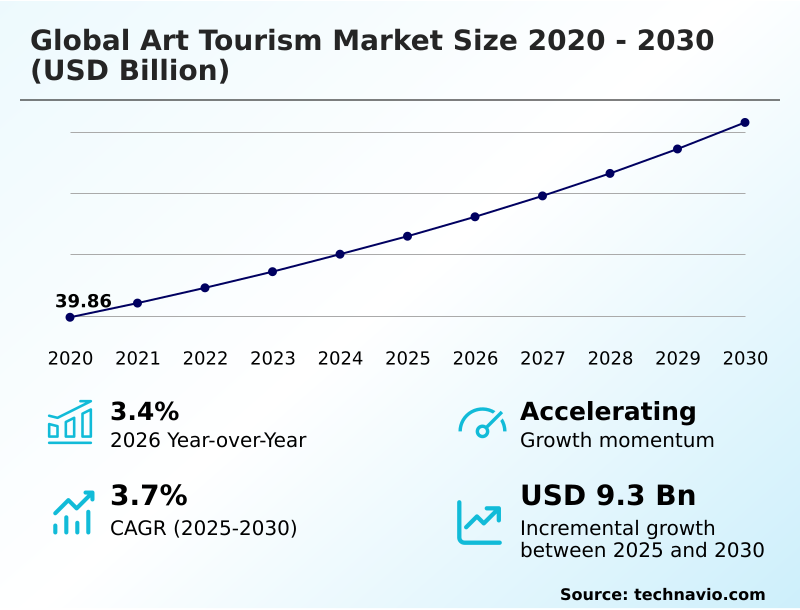
The art tourism market size is valued to increase by USD 9.30 billion, at a CAGR of 3.7% from 2025 to 2030. Increasing interest in cultural experiences and heritage exploration will drive the art tourism market.
Major Market Trends & Insights
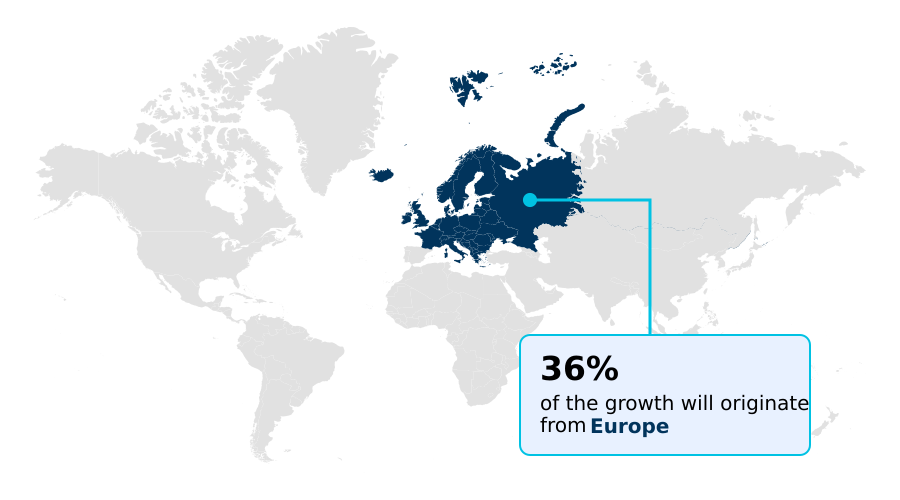
- Europe dominated the market and accounted for a 36% growth during the forecast period.
- By Type - Events and exhibitions segment was valued at USD 22.04 billion in 2024
- By Consumer - International segment accounted for the largest market revenue share in 2024
Market Size & Forecast
- Market Opportunities: USD 15.93 billion
- Market Future Opportunities: USD 9.30 billion
- CAGR from 2025 to 2030 : 3.7%
Market Summary
- The art tourism market is undergoing a significant transformation, driven by a global demand for authentic, educational, and immersive travel. This shift moves beyond simple sightseeing toward deep engagement with a destination's creative identity and history.
- Key drivers include a rising interest in cultural heritage and the pursuit of unique experiences, which are now more accessible through digital platforms and specialized tour operators. Trends such as the development of large-scale digital art installations and virtual reality museum tours are redefining visitor engagement, making art more interactive and appealing to younger, tech-savvy demographics.
- For instance, a cultural institution can leverage data analytics to optimize visitor flow during a major exhibition, reducing wait times and enhancing the overall experience, which directly impacts satisfaction and repeat visits. However, the market faces challenges from high travel costs and the need for sustainable practices to protect heritage sites from overtourism.
- As the industry evolves, success hinges on balancing accessibility, authenticity, and preservation, creating a vibrant ecosystem that supports both cultural exchange and local economies. This dynamic environment encourages innovation in how cultural narratives are presented and consumed globally.
What will be the Size of the Art Tourism Market during the forecast period?
Get Key Insights on Market Forecast (PDF) Get Free Sample
How is the Art Tourism Market Segmented?
The art tourism industry research report provides comprehensive data (region-wise segment analysis), with forecasts and estimates in "USD million" for the period 2026-2030, as well as historical data from 2020-2024 for the following segments.
- Type
- Events and exhibitions
- Art galleries and museums
- Others
- Consumer
- International
- Domestic
- Mode of booking
- Offline
- Online
- Geography
- Europe
- UK
- France
- Germany
- North America
- US
- Canada
- Mexico
- APAC
- China
- Japan
- India
- South America
- Brazil
- Argentina
- Colombia
- Middle East and Africa
- Saudi Arabia
- UAE
- South Africa
- Rest of World (ROW)
- Europe
By Type Insights
The events and exhibitions segment is estimated to witness significant growth during the forecast period.
The events and exhibitions segment is a primary driver for the global art tourism market, focusing on short-term art fairs, biennales, and large-scale curated displays. These gatherings, central to cultural diplomacy programs, attract a global audience, creating seasonal travel spikes.
The success of this segment hinges on its ability to generate significant media attention and cultural prestige for host cities, motivating travel for unique installations and performances.
The temporary nature of these events, including art biennales and public art walks, creates a sense of urgency.
Host regions often invest in temporary infrastructure, supported by cultural event logistics, to manage an influx of visitors who contribute substantially to the local economy.
For instance, well-promoted art festival circuits have been shown to increase local hospitality spending by over 25% during event periods, attracting both art vacation packages and student art trips.
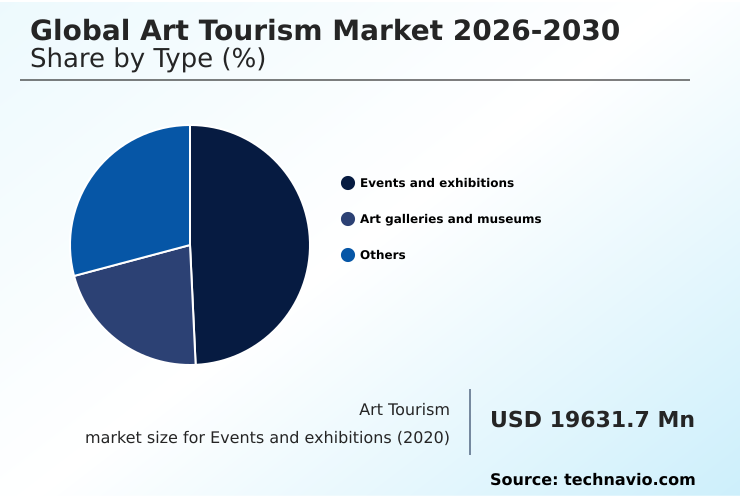
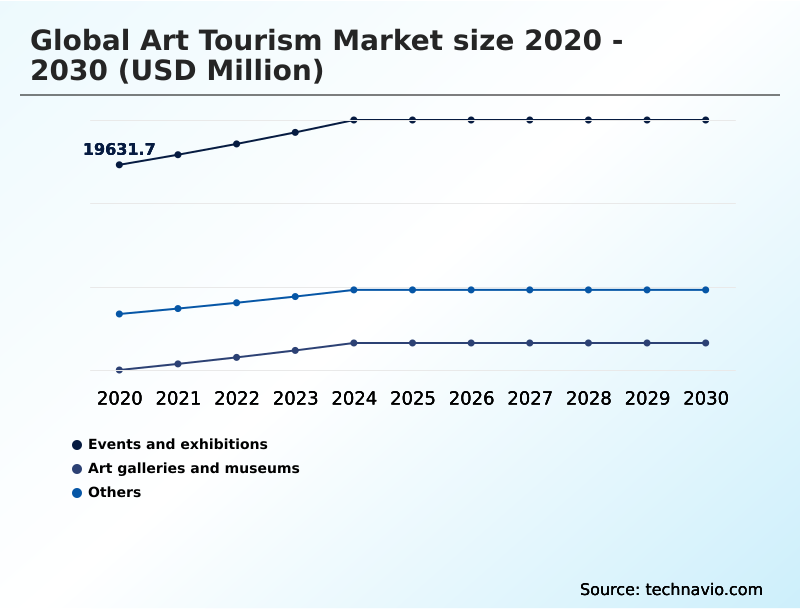
The Events and exhibitions segment was valued at USD 22.04 billion in 2024 and showed a gradual increase during the forecast period.
Regional Analysis
Europe is estimated to contribute 36% to the growth of the global market during the forecast period.Technavio’s analysts have elaborately explained the regional trends and drivers that shape the market during the forecast period.
See How Art Tourism Market Demand is Rising in Europe Get Free Sample
The geographic landscape of the art tourism market is characterized by a mix of established and emerging destinations, each contributing to the industry's dynamic growth.
Europe remains a dominant region, accounting for approximately 36% of the market's incremental growth, driven by its rich density of historical assets and world-renowned institutions.
Cities in countries like Italy and France leverage centuries of artistic legacy, supported by a sophisticated tourism infrastructure that facilitates culinary art travel and literary tourism.
North America follows, with a strong market in the US and Canada focused on contemporary art fairs and vibrant urban art scenes.
Meanwhile, the APAC region is the fastest-growing, with its growth rate outpacing Europe's by more than a full percentage point, fueled by government investment in cultural district development and a rising middle class interested in cultural consumption.
This global distribution underscores the importance of both cultural heritage preservation and innovation in performing arts tourism to attract diverse traveler segments.
Market Dynamics
Our researchers analyzed the data with 2025 as the base year, along with the key drivers, trends, and challenges. A holistic analysis of drivers will help companies refine their marketing strategies to gain a competitive advantage.
- The global art tourism market is undergoing a strategic evolution, influenced heavily by the impact of digital media on art tourism. An in-depth analysis of marketing strategies for cultural destinations reveals a significant pivot toward online engagement.
- The role of social media in cultural travel is no longer supplemental but central to attracting visitors, with platforms shaping itineraries and creating viral interest in specific sites. A key area of focus is promoting sustainable practices in heritage tourism to mitigate the challenges of overtourism at heritage sites.
- The rise of booking platforms for specialized art tours has democratized access, allowing travelers to compare private vs group museum tour benefits and find niche offerings. For operators, creating authentic cultural travel experiences is paramount. This involves integrating technology in cultural heritage, such as virtual reality applications in museums, which offer new narrative forms.
- The economic impact of art festivals is substantial, prompting exploration into developing art tourism in emerging markets. This expansion must consider accessibility in art tourism for disabled travelers and cater to niche art tourism market segments, such as art therapy and wellness travel. For high-value segments, luxury art travel for collectors remains a lucrative focus.
- Success is increasingly defined by how well providers meet diverse needs, from art tour packages for senior travelers to programs for art tourism for educational institutions. Measuring success in cultural tourism now requires sophisticated analytics, moving beyond visitor numbers to gauge engagement and satisfaction, with leading operators reporting a 20% higher retention rate when personalized digital content is integrated.
- Finally, comparing art biennales globally provides benchmarks for innovation and quality.
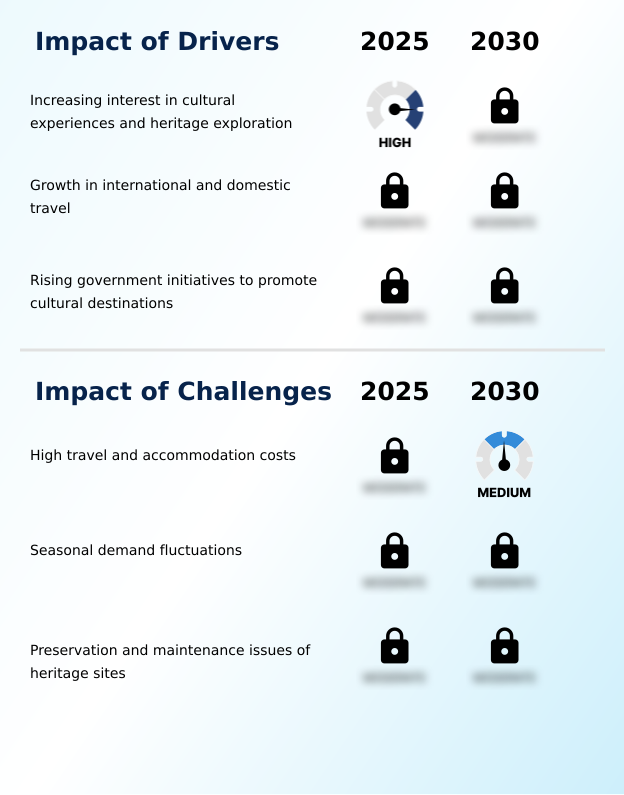
What are the key market drivers leading to the rise in the adoption of Art Tourism Industry?
- A growing interest in cultural experiences and heritage exploration is a key driver for market growth.
- The market is propelled by an increasing consumer interest in cultural experiences and heritage exploration, reflecting a move toward more meaningful travel. Modern travelers are actively seeking authentic cultural experiences through heritage site tourism and educational travel programs.
- This intellectual curiosity supports the development of curated tours, including art history education tours and architectural tours, which offer deeper engagement with a destination's creative identity.
- This demand for authenticity is a primary motivator for long-haul travel, with culturally motivated trips accounting for a 30% longer average stay than general leisure trips.
- This driver also fuels growth in niche segments such as film-induced tourism, which leverages storytelling to attract visitors.
- As cultural literacy becomes a priority, destinations offering rich, narrative-driven experiences are gaining a significant competitive edge, with some reporting a 25% increase in bookings for small group art tours.
What are the market trends shaping the Art Tourism Industry?
- The increasing development of immersive and experiential art events represents a significant upcoming trend shaping the market.
- A significant trend transforming the art tourism market is the rapid development of immersive art events, which are redefining visitor engagement. Utilizing digital art installations and advanced projection mapping, these experiences shift the paradigm from passive observation to active participation, a model that resonates strongly with younger demographics. These events often achieve visitor engagement rates 40% higher than traditional exhibits.
- Furthermore, the use of unconventional venues like repurposed industrial spaces makes the artistic experience more accessible and shareable, amplifying destination visibility through social media. This trend is fostering innovation within the creative economy tourism sector, as seen with the expansion of art residency programs and culinary art travel.
- The ability to create traveling exhibitions also democratizes access to art, a strategy that has proven to increase audience reach by over 60% compared to stationary collections, promoting both art gallery hopping and urban exploration tours.
What challenges does the Art Tourism Industry face during its growth?
- High travel and accommodation costs pose a significant challenge to the industry's growth trajectory.
- A primary restraint on the art tourism market is the high cost of travel and accommodation, which creates a significant barrier to entry for many potential visitors. Escalating prices in major art capitals can lead to a concentration of visitors in the luxury cultural travel segment, while pricing out budget-conscious travelers.
- International flights and premium lodging can inflate the cost of a trip by over 50% compared to domestic travel options. This economic pressure also affects the sustainability of smaller, regional galleries that struggle to attract visitors who are already facing high expenses.
- Moreover, economic volatility and fluctuating exchange rates introduce uncertainty into travel planning, impacting both solo traveler art tours and family art travel. These high fixed costs, combined with a 15% rise in operational expenses for hospitality providers in key cities, challenge the sector's goal of fostering inclusive and accessible cultural engagement through offerings like cultural heritage tours.
Exclusive Technavio Analysis on Customer Landscape
The art tourism market forecasting report includes the adoption lifecycle of the market, covering from the innovator’s stage to the laggard’s stage. It focuses on adoption rates in different regions based on penetration. Furthermore, the art tourism market report also includes key purchase criteria and drivers of price sensitivity to help companies evaluate and develop their market growth analysis strategies.
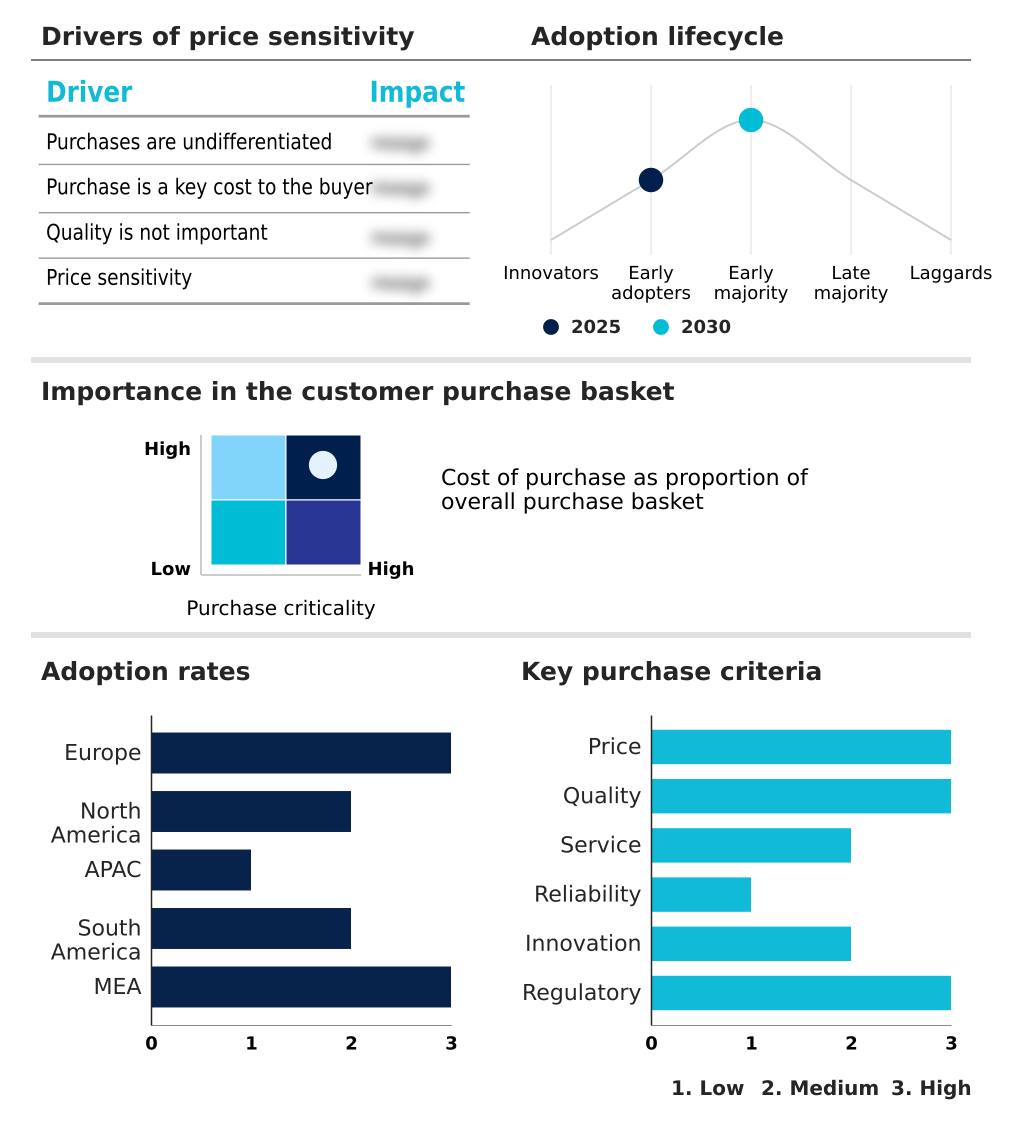
Customer Landscape of Art Tourism Industry
Competitive Landscape
Companies are implementing various strategies, such as strategic alliances, art tourism market forecast, partnerships, mergers and acquisitions, geographical expansion, and product/service launches, to enhance their presence in the industry.
A and K Travel Group Ltd. - Specializes in curated museum tours and luxury culture-focused travel itineraries, offering bespoke package holidays, cruises, and exclusive villas for discerning individuals and groups.
The industry research and growth report includes detailed analyses of the competitive landscape of the market and information about key companies, including:
- A and K Travel Group Ltd.
- Art of Travel
- Arts and Leisure Tours.
- ArtSmart
- Bookmundi ApS
- Context Travel LLC
- Imago Artis Travel Srl
- Intrepid Group Pty Ltd.
- Juma Art Tours
- Martin Randall Travel Ltd.
- Paint Away Tours LLC
- Reality Tours and Travel
- Shearings Holidays
- The Blue Walk
- The Travel Corp.
- Thomas Cook India Ltd.
- TourRadar GmbH
- TripAdvisor Inc.
- Ultimate Travel Company Ltd.
- WorldStrides Inc.
Qualitative and quantitative analysis of companies has been conducted to help clients understand the wider business environment as well as the strengths and weaknesses of key industry players. Data is qualitatively analyzed to categorize companies as pure play, category-focused, industry-focused, and diversified; it is quantitatively analyzed to categorize companies as dominant, leading, strong, tentative, and weak.
Recent Development and News in Art tourism market
- In August 2024, Context Travel LLC announced the launch of a new series of scholar-led digital tours, utilizing augmented reality to provide immersive historical context for major European art collections, as detailed in their quarterly investor briefing.
- In March 2025, The UNESCO World Conference on Cultural Policies and Sustainable Development released a report highlighting that over 40% of all international travel arrivals are motivated by cultural heritage exploration and artistic engagement, according to a UNESCO press release.
- In April 2025, The opening of the Expo 2025 in Osaka, Japan, featured a massive, dedicated Art Pavilion showcasing high-resolution immersive installations that merged traditional Japanese aesthetics with cutting-edge digital projections, reported by the Expo's official media channels.
- In May 2025, The European Travel Commission noted in its seasonal outlook report that hotel prices in major artistic cities like Paris and Venice have risen by over 15% due to increased operating costs and high demand from international art enthusiasts.
Dive into Technavio’s robust research methodology, blending expert interviews, extensive data synthesis, and validated models for unparalleled Art Tourism Market insights. See full methodology.
| Market Scope | |
|---|---|
| Page number | 279 |
| Base year | 2025 |
| Historic period | 2020-2024 |
| Forecast period | 2026-2030 |
| Growth momentum & CAGR | Accelerate at a CAGR of 3.7% |
| Market growth 2026-2030 | USD 9304.7 million |
| Market structure | Fragmented |
| YoY growth 2025-2026(%) | 3.4% |
| Key countries | UK, France, Germany, Italy, Spain, The Netherlands, US, Canada, Mexico, China, Japan, India, South Korea, Australia, Indonesia, Brazil, Argentina, Colombia, Saudi Arabia, UAE, South Africa, Israel and Turkey |
| Competitive landscape | Leading Companies, Market Positioning of Companies, Competitive Strategies, and Industry Risks |
Research Analyst Overview
- The art tourism market is defined by a dynamic interplay between heritage and innovation, where cultural immersion travel is increasingly sought after by a global audience. This sector's growth is supported by a diverse ecosystem offering everything from archeological art tours to contemporary art fairs, with a notable shift towards bespoke art itineraries and experiential engagement.
- The integration of technologies like virtual reality museum experience and augmented reality art guide is revolutionizing how consumers interact with cultural content, making private gallery access and artist studio visits more accessible. As a boardroom-level concern, sustainable cultural tourism is now a critical factor in long-term strategy, influencing decisions on investment in cultural heritage preservation.
- Data indicates that destinations integrating robust sustainability and digital engagement strategies see visitor satisfaction scores improve by up to 30%. This reflects a market where curated digital content and authentic experiences, such as craft and artisan workshops and thematic cultural routes, are paramount for competitive differentiation and achieving strategic growth objectives.
What are the Key Data Covered in this Art Tourism Market Research and Growth Report?
-
What is the expected growth of the Art Tourism Market between 2026 and 2030?
-
USD 9.30 billion, at a CAGR of 3.7%
-
-
What segmentation does the market report cover?
-
The report is segmented by Type (Events and exhibitions, Art galleries and museums, and Others), Consumer (International, and Domestic), Mode of Booking (Offline, and Online) and Geography (Europe, North America, APAC, South America, Middle East and Africa)
-
-
Which regions are analyzed in the report?
-
Europe, North America, APAC, South America and Middle East and Africa
-
-
What are the key growth drivers and market challenges?
-
Increasing interest in cultural experiences and heritage exploration, High travel and accommodation costs
-
-
Who are the major players in the Art Tourism Market?
-
A and K Travel Group Ltd., Art of Travel, Arts and Leisure Tours., ArtSmart, Bookmundi ApS, Context Travel LLC, Imago Artis Travel Srl, Intrepid Group Pty Ltd., Juma Art Tours, Martin Randall Travel Ltd., Paint Away Tours LLC, Reality Tours and Travel, Shearings Holidays, The Blue Walk, The Travel Corp., Thomas Cook India Ltd., TourRadar GmbH, TripAdvisor Inc., Ultimate Travel Company Ltd. and WorldStrides Inc.
-
Market Research Insights
- The dynamics of the art tourism market are increasingly shaped by evolving consumer preferences for authenticity and experiential depth. Travelers are actively seeking out curated travel experiences that offer more than passive observation, a trend substantiated by data showing that over 40% of international arrivals are now motivated by cultural and heritage interests.
- This demand has spurred a diversification of offerings, from art and design tours to behind-the-scenes museum access. However, operators face significant economic pressures. For example, a 15% year-over-year increase in accommodation costs in prime cultural hubs directly impacts pricing strategies and accessibility for budget-conscious segments.
- This tension between premium demand and cost barriers is forcing providers to innovate with tiered pricing and digital-first engagement models to maintain competitiveness and broaden their audience base.
We can help! Our analysts can customize this art tourism market research report to meet your requirements.
 RIA -
RIA - 
