


Automated Waste Collection System Market Size 2026-2030
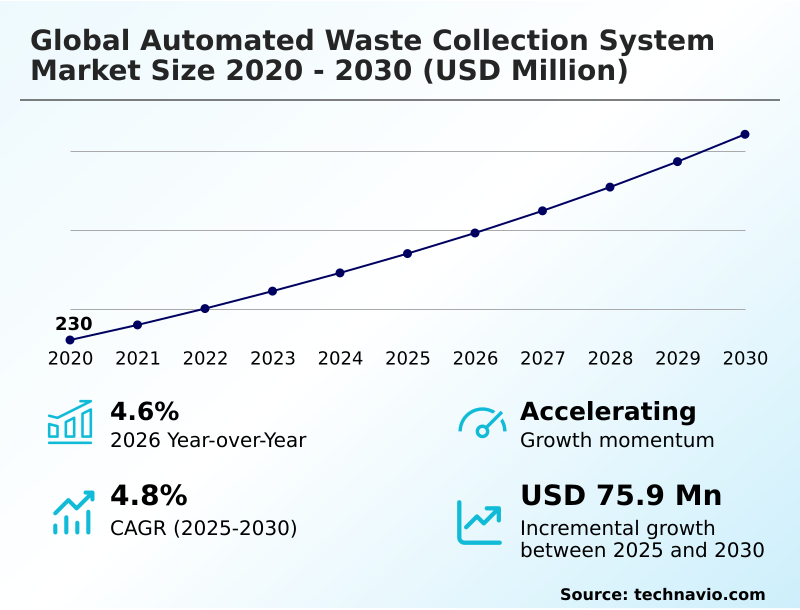
The automated waste collection system market size is valued to increase by USD 75.9 million, at a CAGR of 4.8% from 2025 to 2030. Use of robots to ensure safety in waste sorting process will drive the automated waste collection system market.
Major Market Trends & Insights
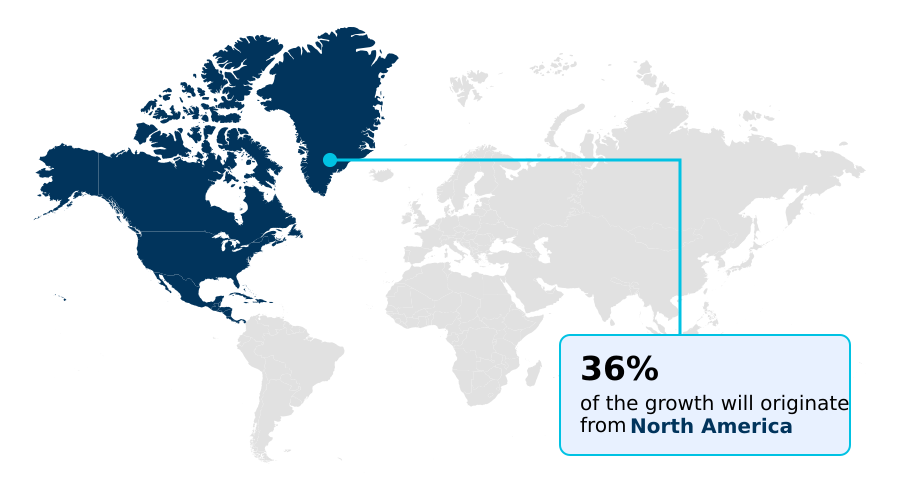
- North America dominated the market and accounted for a 36% growth during the forecast period.
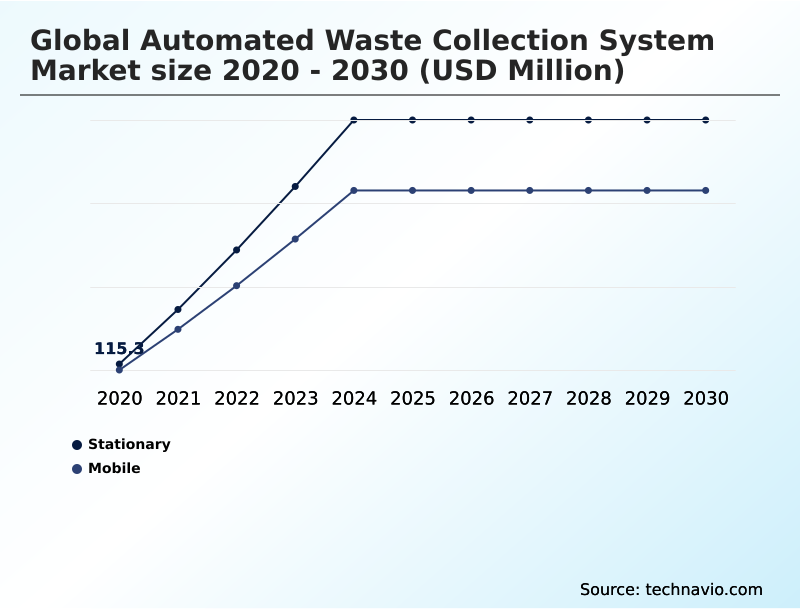
- By Product - Stationary segment was valued at USD 139.9 million in 2024
- By End-user - Hospitals segment accounted for the largest market revenue share in 2024
Market Size & Forecast
- Market Opportunities: USD 130.9 million
- Market Future Opportunities: USD 75.9 million
- CAGR from 2025 to 2030 : 4.8%
Market Summary
- The automated waste collection system market is evolving beyond simple conveyance to become a cornerstone of smart urban development and sustainable resource management. Driven by the need for greater waste handling efficiency and emission reduction technology, cities and developers are increasingly adopting solutions like underground pipeline networks and pneumatic vacuum units.
- A key trend is the integration of automated sorting robots equipped with computer vision in waste sorting, which promises to revolutionize material recovery facility operations. However, waste stream heterogeneity remains a significant challenge, often necessitating a hybrid approach where human oversight complements robotic precision.
- For example, a large-scale residential development might implement a full vacuum system for general waste while using IoT fill-level monitoring in smart bins for recyclables to optimize collection routes and reduce operational costs. This addresses the dual goals of enhancing public hygiene and aligning with stringent waste diversion targets.
- The market's trajectory is shaped by the interplay between high initial waste infrastructure investment costs and the compelling long-term ROI derived from reduced labor, fuel consumption, and improved environmental compliance. This shift toward data-driven, automated logistics underscores a fundamental change in how urban waste is perceived and managed.
What will be the Size of the Automated Waste Collection System Market during the forecast period?
Get Key Insights on Market Forecast (PDF) Get Free Sample
How is the Automated Waste Collection System Market Segmented?
The automated waste collection system industry research report provides comprehensive data (region-wise segment analysis), with forecasts and estimates in "USD million" for the period 2026-2030, as well as historical data from 2020-2024 for the following segments.
- Product
- Stationary
- Mobile
- End-user
- Hospitals
- Airports
- Educational institutions
- Hotels and restaurants
- Others
- Type
- Full vacuum system
- Gravity vacuum system
- Geography
- North America
- US
- Canada
- Mexico
- Europe
- Germany
- UK
- France
- APAC
- China
- Japan
- India
- Middle East and Africa
- Saudi Arabia
- UAE
- South Africa
- South America
- Brazil
- Argentina
- Rest of World (ROW)
- North America
By Product Insights
The stationary segment is estimated to witness significant growth during the forecast period.
The stationary segment is defined by fixed solutions, such as an underground pipeline network and pneumatic waste collection systems, integral to modern urban waste infrastructure.
These systems use pneumatic transport and full vacuum systems to move refuse from smart waste inlets to a centralized collection terminal, improving waste handling efficiency. This waste segregation automation is critical for high-density residential waste solutions.
While costly upfront, the long-term benefits include operational cost reduction and enhanced public health.
These systems provide crucial circular economy support, improving recovery rates by over 15% compared to manual methods, making them a cornerstone of smart city waste management frameworks.

The Stationary segment was valued at USD 139.9 million in 2024 and showed a gradual increase during the forecast period.
Regional Analysis
North America is estimated to contribute 36% to the growth of the global market during the forecast period.Technavio’s analysts have elaborately explained the regional trends and drivers that shape the market during the forecast period.
See How Automated Waste Collection System Market Demand is Rising in North America Get Free Sample
The geographic landscape is led by developed regions implementing strict waste diversion targets and emission reduction technology. These markets widely use robotic sorting systems with computer vision in waste sorting to enable hands-free waste transport and hygienic waste disposal.
North America will contribute over 36% of market growth, driven by smart city infrastructure projects that specify automated waste logistics from the outset.
These projects feature extensive underground piping networks with numerous waste inlet points and rely on a pneumatic conveyance system using both gravity vacuum systems and automated vacuum systems to optimize performance and reduce urban disruption.
Market Dynamics
Our researchers analyzed the data with 2025 as the base year, along with the key drivers, trends, and challenges. A holistic analysis of drivers will help companies refine their marketing strategies to gain a competitive advantage.
- Strategic decisions in the market hinge on understanding the nuances between stationary vs mobile automated waste collection solutions and the technical differences between full vacuum vs gravity vacuum systems. For urban planners, calculating the ROI of pneumatic waste collection systems is a critical step, especially when designing automated waste collection for smart cities.
- The future of urban waste management is increasingly tied to integrating AI with waste sorting robots, which addresses the complexities of modern waste streams. A key consideration for municipalities is the cost of underground waste collection, which, although significant, can lead to long-term operational savings and help in improving recycling rates with automation.
- Specific applications, such as automated waste systems in hospitals and automated waste collection in airports, demand high reliability and hygiene, showcasing the environmental benefits of automated waste collection. The challenge of human-robot collaboration in waste sorting is being met by upgrading software for waste collection systems to enhance coordination.
- The successful deployment of these systems requires meticulous pneumatic waste collection system design and ongoing automated waste collection system maintenance. Businesses evaluating these technologies must weigh the benefits of automated waste collection against the challenges of retrofitting automated waste systems.
- For instance, facilities with optimized IoT sensor applications in waste bins report a collection efficiency improvement that is twice that of systems without real-time data integration. This data-driven approach is also being applied in automated waste solutions for educational institutions, demonstrating the technology's versatility.
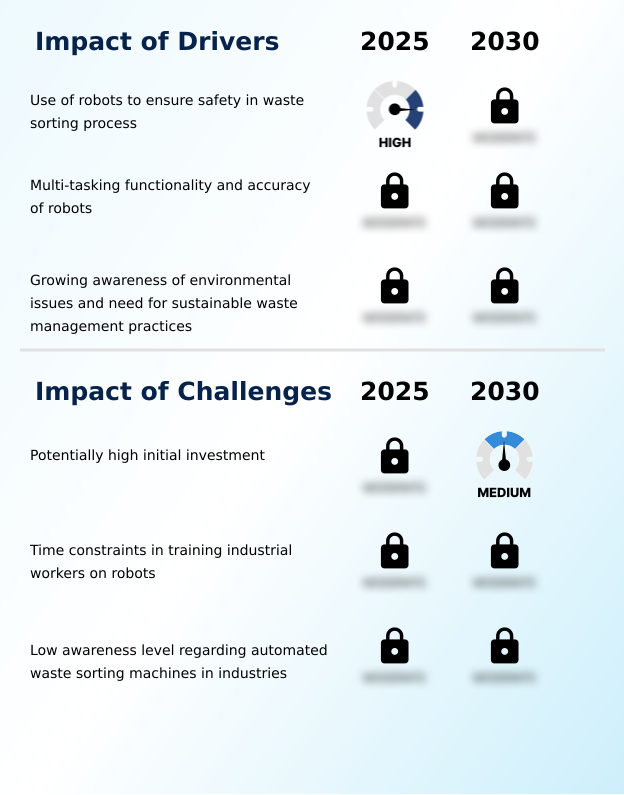
What are the key market drivers leading to the rise in the adoption of Automated Waste Collection System Industry?
- The adoption of robotics to enhance safety in the hazardous waste sorting process is a key driver for market growth.
- Key drivers include the adoption of automated recycling systems and robotic sorting systems at a material recovery facility to manage waste stream heterogeneity. These systems are driven by the need to improve efficiency.
- Smart infrastructure integration with pneumatic vacuum units and automated control software enables data-driven waste services. For example, systems incorporating predictive maintenance analytics and IoT fill-level monitoring can reduce unscheduled downtime by 30%.
- The move towards solid waste conveyance is also propelled by the desire for cleaner urban environments and supports regulatory compliance for waste. Furthermore, improving workforce safety in waste sorting by removing humans from hazardous tasks is a powerful driver.
What are the market trends shaping the Automated Waste Collection System Industry?
- The integration of human oversight with robotic systems for effective waste sorting is an emerging market trend. This collaborative approach aims to balance automation's speed with human cognitive abilities for complex tasks.
- Key trends focus on maximizing waste collection automation ROI, especially through hybrid models. Effective human-robot collaboration in waste sorting is critical, as robotic waste sorting accuracy reaches 95% for standard materials but still requires human intervention. This is vital in sensitive areas like airport waste management systems and hospital automated waste disposal.
- The development of next-generation waste vehicles supports a major waste collection truck reduction. Addressing AWCS implementation challenges and the complexities of retrofitting automated waste systems is paramount. A comprehensive lifecycle cost analysis helps justify projects by highlighting the positive environmental impact of AWCS and public health improvements.
- Integrating IoT in waste management through technologies like a pneumatic tube system for waste is also a significant trend.
What challenges does the Automated Waste Collection System Industry face during its growth?
- The high initial investment required for infrastructure deployment presents a significant challenge to market expansion.
- The primary challenge remains the significant waste infrastructure investment and high automated waste collection cost. This is acute for mixed-use development waste systems where planning for underground waste system benefits like land use efficiency is complex.
- Integrating advanced sensor technology and smart bin technology adds to the upfront expense, while ensuring infection control in hospitals and safe waste handling in public venues with automated sorting robots requires sophisticated operational workflow optimization. A core difficulty is establishing reliable remote system monitoring for a pneumatic tube system for waste, which can delay projects by up to 20%.
Exclusive Technavio Analysis on Customer Landscape
The automated waste collection system market forecasting report includes the adoption lifecycle of the market, covering from the innovator’s stage to the laggard’s stage. It focuses on adoption rates in different regions based on penetration. Furthermore, the automated waste collection system market report also includes key purchase criteria and drivers of price sensitivity to help companies evaluate and develop their market growth analysis strategies.
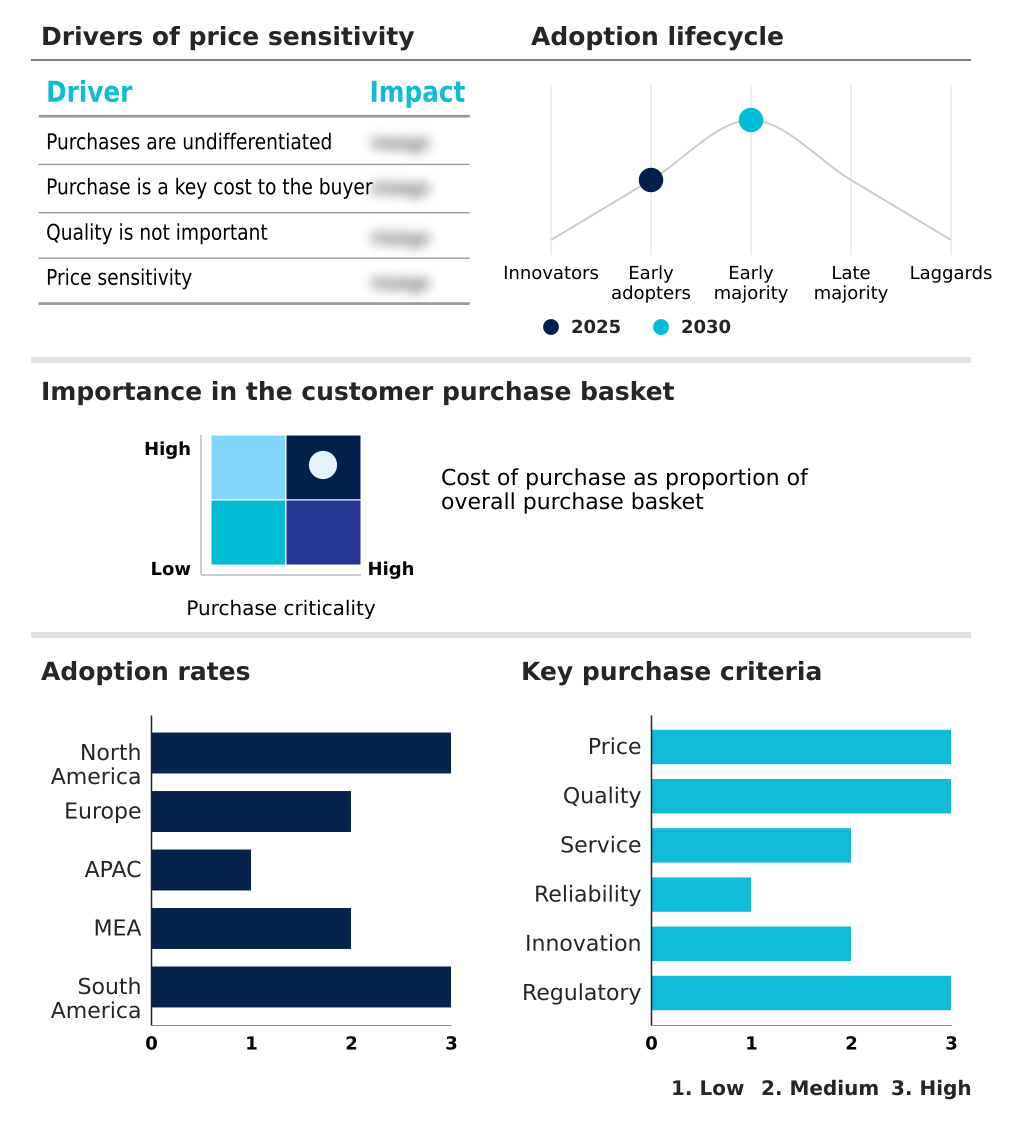
Customer Landscape of Automated Waste Collection System Industry
Competitive Landscape
Companies are implementing various strategies, such as strategic alliances, automated waste collection system market forecast, partnerships, mergers and acquisitions, geographical expansion, and product/service launches, to enhance their presence in the industry.
AMCS Group - Offers unified software solutions empowering waste and recycling firms to enhance operational intelligence and implement smarter, more efficient collection and management strategies.
The industry research and growth report includes detailed analyses of the competitive landscape of the market and information about key companies, including:
- AMCS Group
- Atreo
- AWC Berhad
- Bondtech Corp.
- Caverion Corp.
- Ecosir Group
- Envac AB
- Evac Oy
- Green Wave Solutions
- Impact Air Systems
- Logiwaste AB
- MABAT Ltd.
- MariMatic Oy
- Meiko Clean Solutions
- Nord Engineering Spa
- Precision AirConvey Corp.
- Terberg RosRoca Group
- Tomra Systems ASA
Qualitative and quantitative analysis of companies has been conducted to help clients understand the wider business environment as well as the strengths and weaknesses of key industry players. Data is qualitatively analyzed to categorize companies as pure play, category-focused, industry-focused, and diversified; it is quantitatively analyzed to categorize companies as dominant, leading, strong, tentative, and weak.
Recent Development and News in Automated waste collection system market
- In April 2025, AMCS Group introduced its Spring 2025 platform update, integrating AI-powered sustainability dashboards and automated routing engines to support more cost-effective waste collection operations.
- In March 2025, AWC Berhad secured a USD 4.5 million build-operate-transfer concession to design, build, and operate an automated waste collection system at a major transport terminal in Kuala Lumpur for ten years.
- In February 2025, Tomra Recycling deployed advanced AI-enabled sorting robots at a European materials waste recovery facility, where human operators were retained to supervise system performance and conduct quality audits.
- In April 2025, Envac, in partnership with Gruppo SAVE, launched a new pneumatic waste collection system at Marco Polo Airport in Venice, Italy, to enhance sustainability and operational efficiency.
Dive into Technavio’s robust research methodology, blending expert interviews, extensive data synthesis, and validated models for unparalleled Automated Waste Collection System Market insights. See full methodology.
| Market Scope | |
|---|---|
| Page number | 285 |
| Base year | 2025 |
| Historic period | 2020-2024 |
| Forecast period | 2026-2030 |
| Growth momentum & CAGR | Accelerate at a CAGR of 4.8% |
| Market growth 2026-2030 | USD 75.9 million |
| Market structure | Fragmented |
| YoY growth 2025-2026(%) | 4.6% |
| Key countries | US, Canada, Mexico, Germany, UK, France, Italy, Spain, The Netherlands, China, Japan, India, South Korea, Australia, Indonesia, Saudi Arabia, UAE, South Africa, Israel, Turkey, Brazil, Argentina and Chile |
| Competitive landscape | Leading Companies, Market Positioning of Companies, Competitive Strategies, and Industry Risks |
Research Analyst Overview
- The market is transforming through advanced automated vacuum systems and pneumatic waste collection. Boardroom decisions now leverage this smart city waste management technology for sustainability, making the underground pipeline network, with its underground piping network and smart waste inlets, a strategic investment in urban waste infrastructure.
- Core technologies like a pneumatic conveyance system and pneumatic transport are fundamental, with full vacuum systems and gravity vacuum systems offering distinct advantages. A key trend is using automated sorting robots and robotic sorting systems in a material recovery facility, which employ computer vision in waste sorting to manage waste stream heterogeneity. This waste segregation automation improves waste handling efficiency.
- Facilities using predictive maintenance analytics alongside real-time system diagnostics have cut downtime by 30%. The automated waste logistics chain, from waste inlet points to the centralized collection terminal, is optimized with automated control software and IoT fill-level monitoring.
- This push for hands-free waste transport enhances hygienic waste disposal, supports circular economy support, helps meet waste diversion targets, and enables operational cost reduction through emission reduction technology. The shift toward solid waste conveyance and data-driven waste services, powered by pneumatic vacuum units and smart infrastructure integration, is redefining the industry.
What are the Key Data Covered in this Automated Waste Collection System Market Research and Growth Report?
-
What is the expected growth of the Automated Waste Collection System Market between 2026 and 2030?
-
USD 75.9 million, at a CAGR of 4.8%
-
-
What segmentation does the market report cover?
-
The report is segmented by Product (Stationary, and Mobile), End-user (Hospitals, Airports, Educational institutions, Hotels and restaurants, and Others), Type (Full vacuum system, and Gravity vacuum system) and Geography (North America, Europe, APAC, Middle East and Africa, South America)
-
-
Which regions are analyzed in the report?
-
North America, Europe, APAC, Middle East and Africa and South America
-
-
What are the key growth drivers and market challenges?
-
Use of robots to ensure safety in waste sorting process, Potentially high initial investment
-
-
Who are the major players in the Automated Waste Collection System Market?
-
AMCS Group, Atreo, AWC Berhad, Bondtech Corp., Caverion Corp., Ecosir Group, Envac AB, Evac Oy, Green Wave Solutions, Impact Air Systems, Logiwaste AB, MABAT Ltd., MariMatic Oy, Meiko Clean Solutions, Nord Engineering Spa, Precision AirConvey Corp., Terberg RosRoca Group and Tomra Systems ASA
-
Market Research Insights
- The market's dynamics are shaped by a push for operational workflow optimization and tangible returns on infrastructure investment. Adoption of cost-effective models is gaining traction, with some municipalities reporting up to a 30% reduction in collection vehicle traffic, directly impacting urban congestion.
- The focus on public health improvements and workforce safety is driving investment in smart bin technology and systems for infection control in hospitals. Projects that integrate implementation challenges into planning from the outset show a 20% faster deployment time compared to retrofits.
- The ROI of these systems is further enhanced by land use efficiency gains in dense urban areas, reshaping municipal service delivery.
We can help! Our analysts can customize this automated waste collection system market research report to meet your requirements.
 RIA -
RIA - 
