
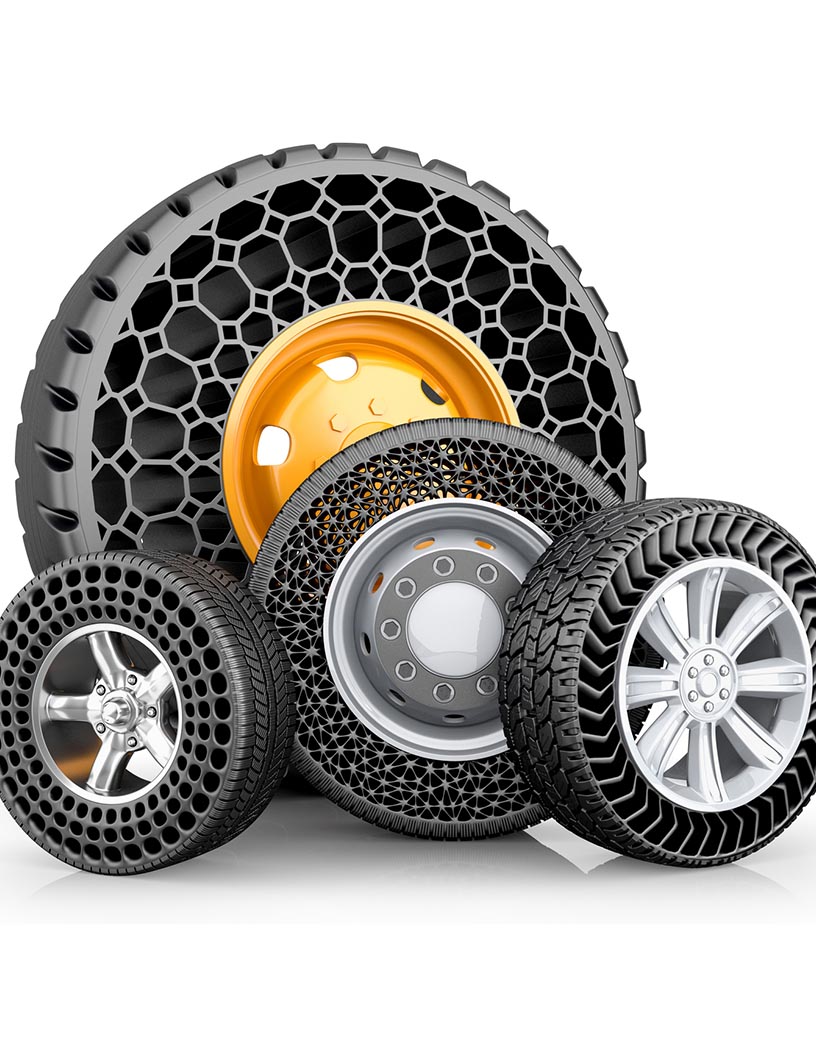


Automotive Airless Tire Market Size 2024-2028
The automotive airless tire market size is forecast to increase by USD 281.3 million at a CAGR of 4.83% between 2023 and 2028.
- The market is experiencing significant growth due to the performance benefits it offers over traditional pneumatic tires. Airless tires, which utilize a solid, reinforced structure instead of an inner tube and air pressure, provide several advantages. These include increased durability, reduced risk of punctures or blowouts, and improved fuel efficiency. Moreover, the adoption of advanced technologies such as 3-dimensional (3D) printing in the production of airless tires is driving innovation and cost savings. However, the market is not without challenges. Price fluctuations of rubber, a key raw material, can impact the cost structure of tire manufacturers. Companies seeking to capitalize on this market's opportunities must closely monitor raw material prices and explore alternative sourcing strategies.
- Additionally, investments in research and development to improve the performance and aesthetics of airless tires will be essential to meet evolving consumer demands and stay competitive. Overall, the market presents a compelling growth opportunity for companies able to navigate these challenges and deliver innovative, high-performing products to consumers.
What will be the Size of the Automotive Airless Tire Market during the forecast period?
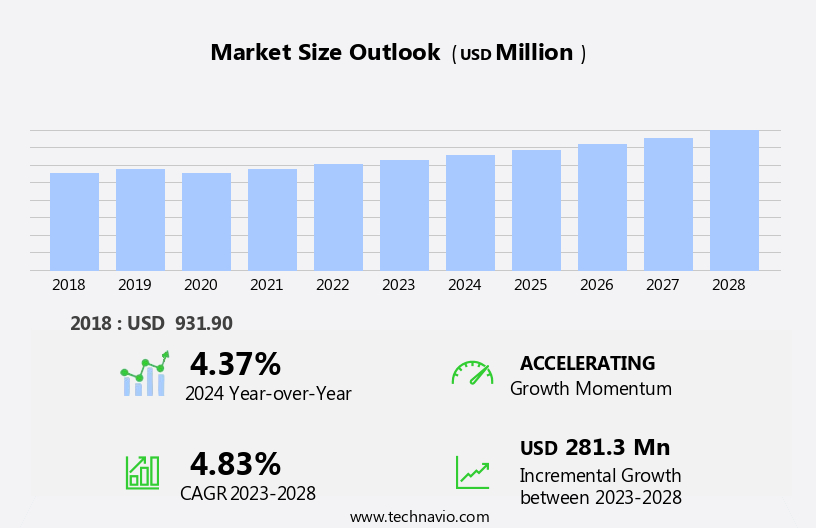
- The automotive tire market encompasses a diverse range of tire types, including airless and pneumatic options, catering to various vehicle types, including passenger vehicles, light commercial vehicles, heavy commercial vehicles, and off-road vehicles. Raw material prices, particularly those of crude oil, significantly impact the market's dynamics. Fuel-efficient tires, which prioritize low rolling resistance, are gaining traction due to increasing emission norms and vehicle sales. Tire labelling, a regulatory requirement, influences consumer preferences towards eco-friendly, puncture-resistant, and heat-dissipating tires. Suspension systems and tire technology advancements, such as 3D printing and solid tires, further shape the market.
- Market growth is driven by the demand for improved vehicle mileage, passenger safety, and the shift towards non-pneumatic, radially-designed airless tires. OPEC's oil supply and crude oil prices also influence the market's direction.
How is this Automotive Airless Tire Industry segmented?
The automotive airless tire industry research report provides comprehensive data (region-wise segment analysis), with forecasts and estimates in "USD million" for the period 2024-2028, as well as historical data from 2018-2022 for the following segments.
- Material
- Rubber
- Plastic
- Geography
- APAC
- China
- Japan
- Europe
- Germany
- UK
- North America
- US
- South America
- Middle East and Africa
- APAC
By Material Insights
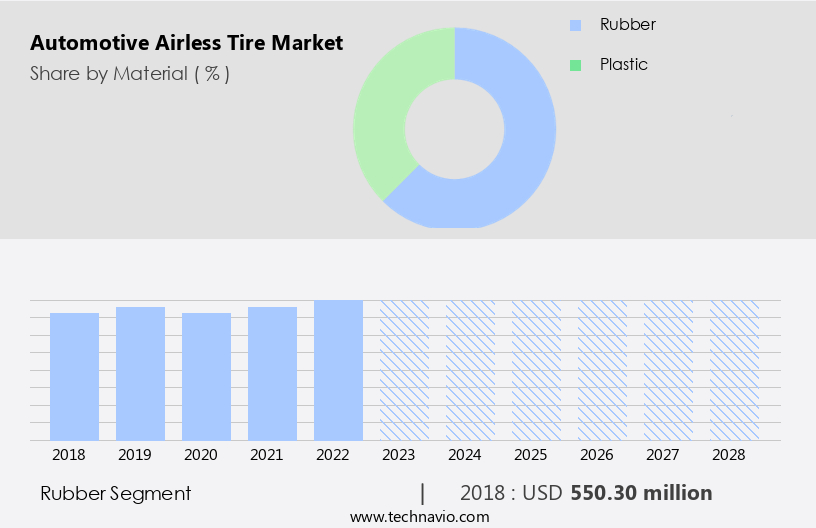
The rubber segment is estimated to witness significant growth during the forecast period.
Airless tires, an alternative to traditional pneumatic tires, are gaining traction in the automotive industry due to their unique benefits. Made primarily of plastic and rubber, airless tires offer puncture resistance, eliminating the need for spare tires and reducing inventory handling costs. They are particularly suitable for heavy commercial vehicles, construction applications in agriculture, and military uses. The fuel economy of airless tires is another significant advantage, as they have lower rolling resistance and weight reduction compared to pneumatic tires. However, the raw material prices, specifically for rubber compounds, can impact the cost-effectiveness of airless tires. Despite this, the market dynamics are favorable, with increasing demand for fuel-efficient tires and tire labeling regulations driving growth.
The tire size and performance of airless tires are comparable to pneumatic tires, ensuring passenger safety and adequate heat dissipation. Infrastructure development and the expanding automotive tire market, especially in the areas of construction, passenger cars, and light commercial vehicles, are also contributing to the market's growth. Airless tires' ecofriendly nature, improved fuel economy, and enhanced tire performance make them an attractive alternative to pneumatic tires, especially in the context of fluctuating crude oil prices and emission norms.
Get a glance at the market report of share of various segments Request Free Sample
The Rubber segment was valued at USD 550.30 million in 2018 and showed a gradual increase during the forecast period.
Regional Analysis
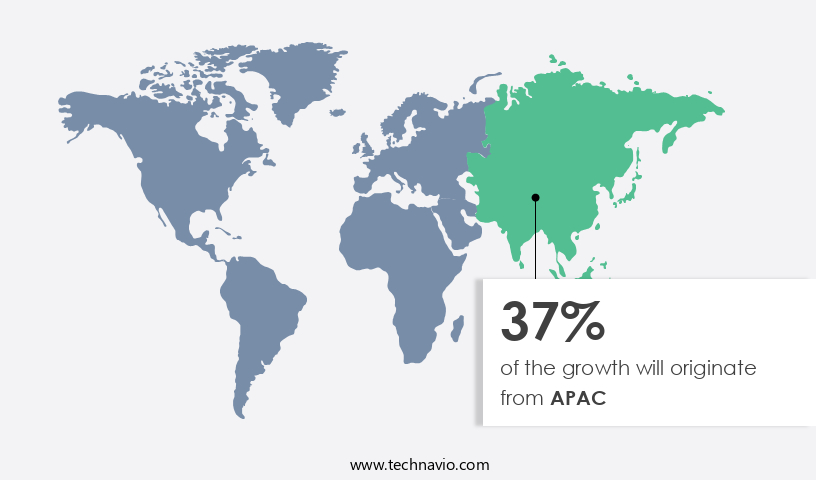
APAC is estimated to contribute 37% to the growth of the global market during the forecast period.Technavio’s analysts have elaborately explained the regional trends and drivers that shape the market during the forecast period.
For more insights on the market size of various regions, Request Free Sample
The market in Asia Pacific (APAC) is experiencing growth due to rising sales of passenger and commercial vehicles in countries like China, South Korea, Japan, Malaysia, and Australia. This trend is driven by improving socio-economic conditions in these regions. India and Indonesia are also anticipated to contribute significantly to the market during the forecast period. The adoption of high net-worth individuals (HNWIs) and the increasing penetration of electric vehicles (EVs) in APAC are major factors fueling the demand for automotive airless tires. With the highest adoption rate of EVs globally, APAC offers substantial opportunities for airless tire manufacturers.
These tires offer advantages such as puncture resistance, improved fuel economy, and enhanced safety features, making them suitable for various vehicle types, including passenger cars, heavy commercial vehicles, construction applications in agriculture, military, and off-road vehicles. Airless tires also provide benefits like weight reduction, better heat dissipation, and reduced rolling resistance, making them an eco-friendly and cost-effective alternative to pneumatic tires. Additionally, the market is witnessing innovation in tire technology, with advancements in tire size, tire labelling, and infrastructure development, including the potential application of 3D printing. Despite raw material price fluctuations, the market is expected to maintain its momentum due to the increasing focus on tire performance, fuel economy, and tire safety in response to emission norms and infrastructure development.
Market Dynamics
Our researchers analyzed the data with 2023 as the base year, along with the key drivers, trends, and challenges. A holistic analysis of drivers will help companies refine their marketing strategies to gain a competitive advantage.
What are the key market drivers leading to the rise in the adoption of Automotive Airless Tire Industry?
- Performance benefits of using airless tires is the key driver of the market.
- Airless tires, an innovative solution in the automotive industry, are engineered with safety and performance in mind. These tires offer several benefits that positively impact The market. The tires' design ensures maximum wet braking and performance optimization. Airless tires are typically made of a soft rubber compound, enhancing road grip, even at high speeds. This feature enables vehicles to navigate sharp turns with ease and provides a shorter stopping distance for increased confidence during sudden braking.
- Airless tires are particularly advantageous for high-speed driving and off-roading, offering superior responses and better traction for optimum control. The performance benefits of airless tires contribute significantly to their growing popularity in the automotive sector.
What are the market trends shaping the Automotive Airless Tire Industry?
- Use of 3-dimensional (3D) printing is the upcoming market trend.
- Airless tires, an innovative development in the automotive industry, are being pursued by automakers and component manufacturers to address manufacturing cost concerns and environmental issues. One such advancement is the Unique Puncture-proof Tire System (UPTIS) by MICHELIN, which utilizes 3D printing technology and biodegradable materials for production. Scheduled for launch in the market by 2024, UPTIS is a significant step towards reducing pollution levels and manufacturing costs.
- The Michelin VISION concept, another 3D printed tire, employs eco-friendly materials like natural rubber, wood, molasses, bamboo, and orange peel zest to create a hybrid tire-wheel component called "tweels." This tire type offers the advantage of complete recyclability, making it a sustainable choice for the future.
What challenges does the Automotive Airless Tire Industry face during its growth?
- Price fluctuations of rubber is a key challenge affecting the industry growth.
- The automotive industry relies heavily on rubber as a primary raw material, particularly for tire manufacturing. However, price instability in the global rubber market can create volatility for stakeholders in the automotive airless tire industry. As rubber is a key component in tire production, any price fluctuations can negatively impact the growth trajectory of the market. The rubber industry's market dynamics significantly influence the market's development.
- These price fluctuations can stem from various factors, including supply and demand imbalances, production costs, and economic conditions. It is crucial for industry players to closely monitor and adapt to these market trends to mitigate potential risks and capitalize on opportunities.
Exclusive Customer Landscape
The automotive airless tire market forecasting report includes the adoption lifecycle of the market, covering from the innovator’s stage to the laggard’s stage. It focuses on adoption rates in different regions based on penetration. Furthermore, the automotive airless tire market report also includes key purchase criteria and drivers of price sensitivity to help companies evaluate and develop their market growth analysis strategies.

Customer Landscape
Key Companies & Market Insights
Companies are implementing various strategies, such as strategic alliances, automotive airless tire market forecast, partnerships, mergers and acquisitions, geographical expansion, and product/service launches, to enhance their presence in the industry.
Amerityre Corp - The company specializes in airless tire solutions, including Scissor Lift Tires and Hay Baler Tires. These innovative tires, engineered for various applications, offer enhanced durability and reduced maintenance requirements compared to traditional pneumatic tires. Airless tires ensure consistent performance and reliability, making them a preferred choice for industries seeking optimal efficiency and cost savings.
The industry research and growth report includes detailed analyses of the competitive landscape of the market and information about key companies, including:
- Amerityre Corp
- Bridgestone Corp.
- Continental AG
- Marathon Industries inc.
- Michelin Group
- SciTech Specialities Pvt Ltd.
- Sentry Tire and Rubber LLC.
- Sumitomo Rubber Industries Ltd.
- The Goodyear Tire and Rubber Co.
- Toyo Tire Corp.
- Yokohama Rubber Co. Ltd.
Qualitative and quantitative analysis of companies has been conducted to help clients understand the wider business environment as well as the strengths and weaknesses of key industry players. Data is qualitatively analyzed to categorize companies as pure play, category-focused, industry-focused, and diversified; it is quantitatively analyzed to categorize companies as dominant, leading, strong, tentative, and weak.
Research Analyst Overview
The automotive tire industry has witnessed significant advancements in recent years, with a growing emphasis on innovation and sustainability. One such development gaining traction is the airless tire, a non-pneumatic alternative to traditional radial and bias tires. This type of tire offers several advantages, including puncture resistance, improved fuel economy, and enhanced durability. Airless tires are particularly appealing for applications in construction and agriculture, where the risk of tire damage from heavy machinery and rough terrain is high. These tires are also suitable for military and off-road vehicles, as they can withstand extreme conditions and provide superior traction.
Furthermore, airless tires offer benefits for passenger vehicles, such as reduced rolling resistance, improved weight reduction, and increased safety. The manufacturing process for airless tires involves the use of advanced plastic compounds and raw material prices play a significant role in the production costs. The tires are typically produced in large warehouses and distributed through machinery sales channels. The infrastructure development required for the production and distribution of airless tires is substantial, including ports and specialized equipment for handling and curing the tires. The adoption of airless tires is influenced by several market dynamics. Fuel economy is a key consideration, as these tires offer improved mileage compared to their pneumatic counterparts.
Additionally, the increasing focus on eco-friendly technologies and the reduction of tire-related issues, such as flat tires and tire blowouts, are driving demand for airless tires. The automotive tire market is a significant industry, with a wide range of applications and vehicle types. The market is influenced by various factors, including emission norms, infrastructure development, and crude oil prices. The shift towards non-pneumatic tires, such as airless and solid tires, is expected to continue as technology advances and the benefits become more apparent. The adoption of airless tires is also influenced by tire performance and safety considerations.
These tires offer improved tear strength and heat dissipation, making them a safer option for passengers. Furthermore, the use of 3D printing technology in the production of airless tires is expected to further enhance their durability and reduce manufacturing costs. In , the airless tire market is an exciting and dynamic industry, offering numerous benefits for various applications and vehicle types. The adoption of these tires is influenced by a range of market dynamics, including fuel economy, safety, and environmental considerations. As technology continues to advance, airless tires are poised to become an increasingly important part of the automotive tire market.
|
Market Scope |
|
|
Report Coverage |
Details |
|
Page number |
139 |
|
Base year |
2023 |
|
Historic period |
2018-2022 |
|
Forecast period |
2024-2028 |
|
Growth momentum & CAGR |
Accelerate at a CAGR of 4.83% |
|
Market growth 2024-2028 |
USD 281.3 million |
|
Market structure |
Concentrated |
|
YoY growth 2023-2024(%) |
4.37 |
|
Key countries |
US, China, Germany, UK, and Japan |
|
Competitive landscape |
Leading Companies, Market Positioning of Companies, Competitive Strategies, and Industry Risks |
What are the Key Data Covered in this Automotive Airless Tire Market Research and Growth Report?
- CAGR of the Automotive Airless Tire industry during the forecast period
- Detailed information on factors that will drive the growth and forecasting between 2024 and 2028
- Precise estimation of the size of the market and its contribution of the industry in focus to the parent market
- Accurate predictions about upcoming growth and trends and changes in consumer behaviour
- Growth of the market across APAC, Europe, North America, South America, and Middle East and Africa
- Thorough analysis of the market’s competitive landscape and detailed information about companies
- Comprehensive analysis of factors that will challenge the automotive airless tire market growth of industry companies
We can help! Our analysts can customize this automotive airless tire market research report to meet your requirements.
 RIA -
RIA - 
