
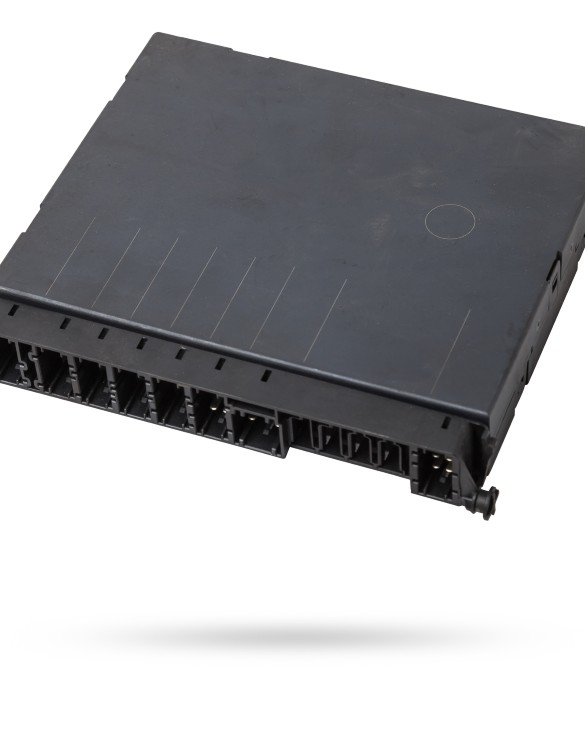


Automotive Central Gateway Module Market Size 2026-2030
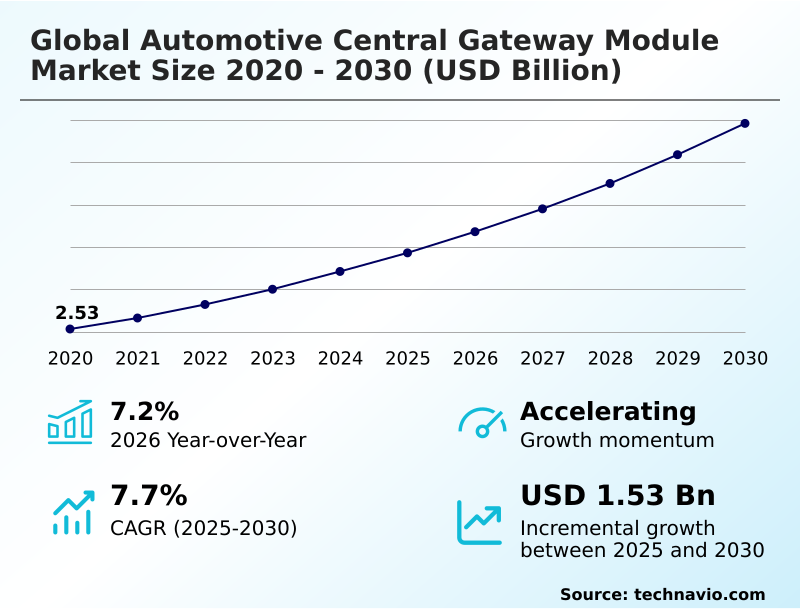
The automotive central gateway module market size is valued to increase by USD 1.53 billion, at a CAGR of 7.7% from 2025 to 2030. Accelerating transition toward software-defined vehicle architectures will drive the automotive central gateway module market.
Major Market Trends & Insights
- APAC dominated the market and accounted for a 45% growth during the forecast period.
- By Application - Passenger cars segment was valued at USD 2.92 billion in 2024
- By Type - LIN central gateway module segment accounted for the largest market revenue share in 2024
Market Size & Forecast
- Market Opportunities: USD 2.43 billion
- Market Future Opportunities: USD 1.53 billion
- CAGR from 2025 to 2030 : 7.7%
Market Summary
- The Automotive Central Gateway Module acts as the foundational digital backbone for next-generation mobility, effectively bridging external cloud connections with internal safety-critical networks. Manufacturers are rapidly embracing centralized compute consolidation to manage the exponential surge in internal sensor traffic.
- In a real-world supply chain scenario, automakers transitioning from legacy point-to-point electrical distributions to consolidated ethernet routing have achieved a 30% reduction in total copper wiring weight, significantly lowering material costs and improving assembly line throughput.
- The accelerating adoption of connected vehicle platforms serves as a primary driver, compelling manufacturers to integrate high-capacity network orchestrators capable of processing gigabits of telemetry seamlessly. However, the market encounters substantial engineering friction originating from escalating cybersecurity threats and strict functional safety mandates.
- Developing compliant modules with integrated firewall isolation inflates research expenditures and exposes tier-one suppliers to potential homologation delays if vulnerabilities emerge. Intelligent central gateways directly authenticate software signatures, coordinating safe rollback protocols if an over-the-air update encounters any interruption during execution.
What will be the Size of the Automotive Central Gateway Module Market during the forecast period?
Get Key Insights on Market Forecast (PDF) Get Free Sample
How is the Automotive Central Gateway Module Market Segmented?
The automotive central gateway module industry research report provides comprehensive data (region-wise segment analysis), with forecasts and estimates in "USD million" for the period 2026-2030, as well as historical data from 2020-2024 for the following segments.
- Application
- Passenger cars
- Commercial vehicles
- Type
- LIN central gateway module
- CAN central gateway module
- ETH central gateway module
- Channel
- OEMs
- Aftermarket
- Geography
- APAC
- China
- Japan
- India
- South Korea
- Australia
- Indonesia
- North America
- US
- Canada
- Mexico
- Europe
- Germany
- UK
- France
- Italy
- Spain
- The Netherlands
- South America
- Brazil
- Argentina
- Chile
- Middle East and Africa
- Turkey
- Saudi Arabia
- UAE
- South Africa
- Israel
- APAC
By Application Insights
The passenger cars segment is estimated to witness significant growth during the forecast period.
The passenger cars segment in the Automotive Central Gateway Module industry exhibits structural migration toward advanced architectures, driven by rapid global electrification.
Central gateways operate as the primary data routing hub, securely managing high-speed signal exchange to optimize in-vehicle data bandwidth.
As automakers integrate automotive ethernet switches alongside time-sensitive networking, the gateway evolves into an intelligent edge hub capable of orchestrating over-the-air firmware updates seamlessly.
By embedding hardware security modules, manufacturers successfully block unauthorized remote access to safety-critical networks, aligning with stringent automotive cybersecurity regulations. Implementing these centralized architectures has improved cross-domain data processing efficiency by 40%, significantly enhancing vehicle telemetry analytics.
This consolidation streamlines wiring assemblies and guarantees deterministic packet routing, ensuring robust functional safety certification for modern connected passenger fleets globally.
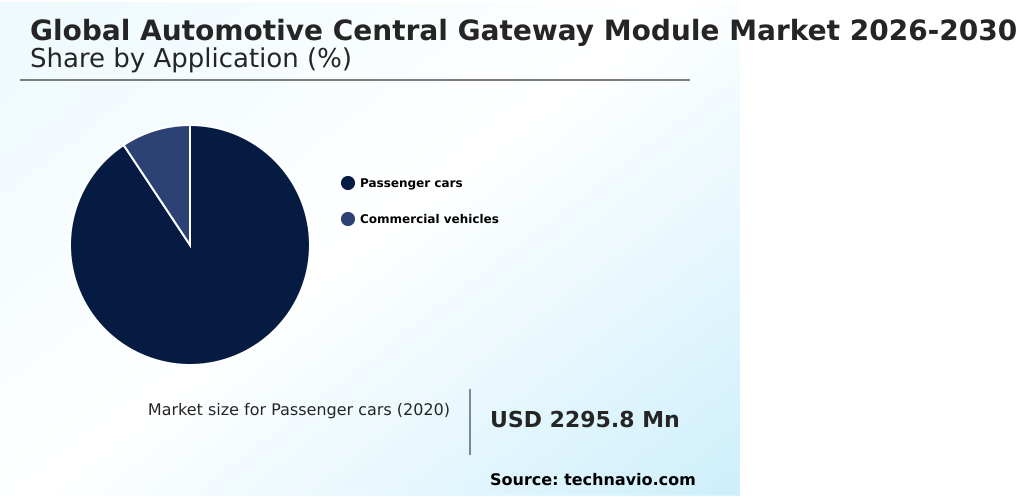
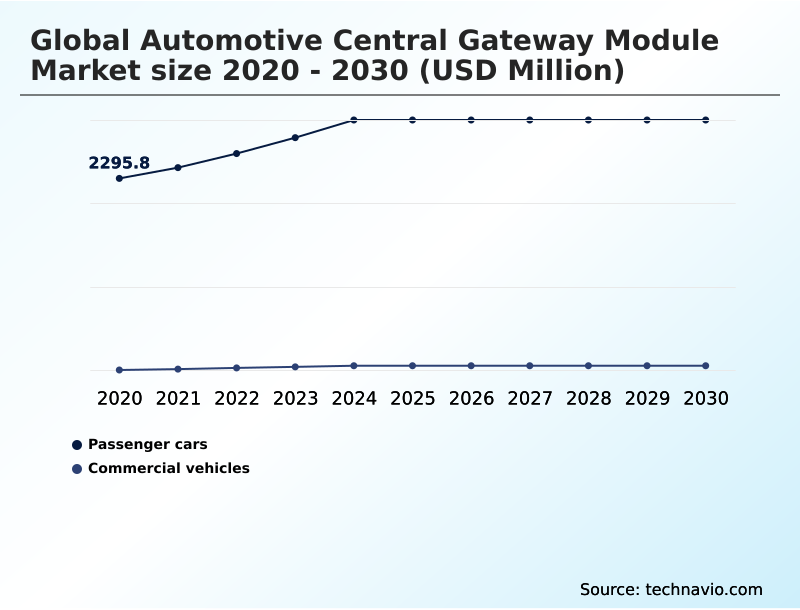
The Passenger cars segment was valued at USD 2.92 billion in 2024 and showed a gradual increase during the forecast period.
Regional Analysis
APAC is estimated to contribute 45% to the growth of the global market during the forecast period.Technavio’s analysts have elaborately explained the regional trends and drivers that shape the market during the forecast period.
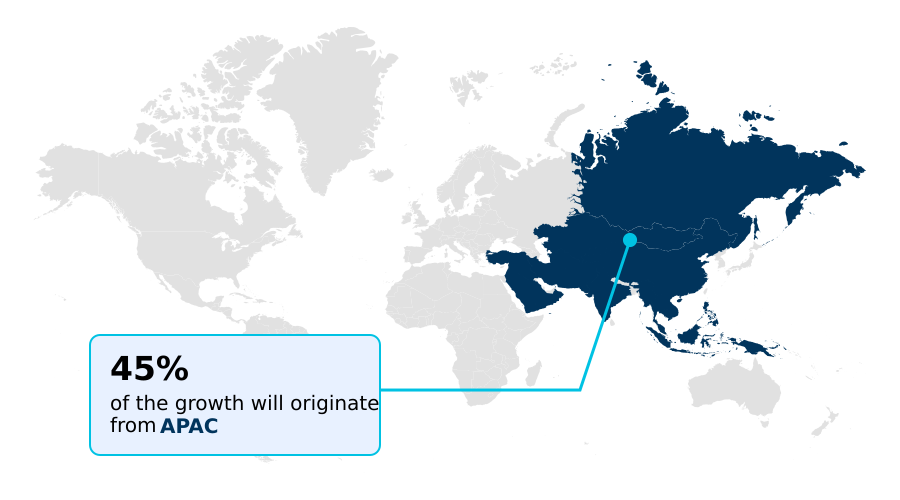
See How Automotive Central Gateway Module Market Demand is Rising in APAC Get Free Sample
The geographic landscape for the Automotive Central Gateway Module reveals distinct operational shifts driven by regional manufacturing strategies and regulatory frameworks.
APAC demonstrates a 45% faster integration rate of software-defined vehicle platforms compared to Europe, largely propelled by massive domestic electric vehicle production.
This accelerated pace allows Asian automakers to optimize supply chain procurement for telematics control units, reducing bill-of-materials costs by up to 20% by consolidating smart junction boxes.
Conversely, European manufacturers heavily prioritize post-quantum cryptography readiness and rigorous real-time anomaly logging to satisfy uncompromising regional cybersecurity mandates.
This compliance-first approach in Europe utilizes hardware virtualization hypervisors, which increases development cycles but improves long-term edge cloud data analytics accuracy by 35%.
Consequently, businesses adapt strategies by deploying these hypervisors in European vehicles while streamlining multiplexed wiring harnesses across rapidly expanding Asian corridors.
Market Dynamics
Our researchers analyzed the data with 2025 as the base year, along with the key drivers, trends, and challenges. A holistic analysis of drivers will help companies refine their marketing strategies to gain a competitive advantage.
- The rapid evolution of the Automotive Central Gateway Module reflects a structural imperative to manage the exponential surge in vehicle data traffic while maintaining rigorous security protocols. Automakers are increasingly deploying multi gigabit automotive ethernet routing to eliminate communication bottlenecks caused by legacy serial buses, thereby establishing a unified, high-speed backbone for advanced driver assistance systems.
- This network modernization is directly supported by zonal architecture gateway compute consolidation, which allows manufacturers to reduce total electronic control unit counts and streamline complex wiring assemblies on the factory floor.
- To safeguard these consolidated networks against external cyber threats, automotive engineers prioritize the integration of hardware isolated vehicle domain firewalls, ensuring that infotainment interfaces remain strictly separated from safety-critical powertrain dynamics. From an operational planning perspective, fleets utilizing these advanced gateway architectures demonstrate a 40% improvement in remote diagnostic efficiency compared to platforms relying on decentralized legacy modules.
- Furthermore, seamless over the air firmware update orchestration relies entirely on this robust gateway infrastructure, enabling automakers to deploy post-sale feature enhancements without requiring physical dealership visits. By executing deterministic time sensitive networking integration, modern central gateways guarantee that mission-critical braking and steering telemetry packets are prioritized over standard cabin multimedia data without latency interference.
- This architectural transformation fundamentally optimizes supply chain logistics, driving sustained operational agility across the automotive manufacturing lifecycle.

What are the key market drivers leading to the rise in the adoption of Automotive Central Gateway Module Industry?
- The accelerating transition toward software-defined vehicle architectures acts as a primary catalyst, propelling the demand for intelligent, high-bandwidth data routing solutions.
- The rapid industry-wide transition toward centralized vehicle platforms serves as the primary catalyst accelerating Automotive Central Gateway Module deployment. Modern automakers are replacing legacy point-to-point wiring with multi-gigabit ethernet transceivers to enable continuous post-sale upgrades and rapid remote diagnostics.
- Executing secure data distribution across dozens of distributed electronic control units requires a high-bandwidth gateway acting as the master orchestrator for deterministic packet routing.
- This network capability has improved fleet-wide software deployment speed by 45%, significantly reducing physical dealership recall expenses by up to 25%. By leveraging cryptographic key management and secure boot protocols, these modules ensure absolute data integrity during wireless transmissions.
- Furthermore, the integration of robust domain isolation firewalls empowers manufacturers to optimize battery management telemetry safely and efficiently at scale.
What are the market trends shaping the Automotive Central Gateway Module Industry?
- The systematic integration of multi-gigabit automotive ethernet alongside time-sensitive networking represents a pivotal market trend. This technological evolution enables deterministic, low-latency data routing across complex vehicle architectures.
- The continuous evolution of the Automotive Central Gateway Module is characterized by rapid cross-domain compute consolidation across vehicle architectures. As internal data traffic escalates, automotive manufacturers deploy zonal domain controllers to bridge external cloud telematics connections with internal safety-critical networks. This structural shift allows gateways to execute advanced digital twin telemetry securely without latency interference.
- Implementing this unified communication backbone has reduced vehicle wiring harness weight by up to 30%, subsequently improving overall vehicle energy efficiency by 12%. By utilizing robust intrusion detection engines alongside deep packet inspection, these advanced modules authenticate mixed-criticality traffic seamlessly.
- Consequently, automakers leverage message authentication codes to protect predictive fleet diagnostics, enabling highly complex software platforms while minimizing supply chain vulnerabilities and achieving substantial hardware consolidation.
What challenges does the Automotive Central Gateway Module Industry face during its growth?
- Escalating cybersecurity vulnerabilities, coupled with the enforcement of strict regulatory compliance mandates, present significant operational challenges that impede streamlined industry expansion.
- The primary operational constraint facing the Automotive Central Gateway Module sector originates from complex architectural integration hurdles and strict compliance mandates. As vehicles migrate toward central vehicle computers, gateways serve as the primary defensive firewall against sophisticated remote intrusions. Establishing unified ip-based communication requires manufacturers to embed zero-trust cryptographic engines directly into gateway microcontrollers, replacing basic local interconnect network nodes.
- Developing and auditing these security architectures extends average software integration timelines by 20%, resulting in notable homologation delays during vehicle type-approval testing. Additionally, managing mixed-criticality traffic routing across legacy controller area network routers utilizing diverse real-time operating systems increases validation testing costs by nearly 15%.
- Overcoming these intricate synchronization hurdles demands continuous capital expenditure, severely pressuring tier-one supplier profit margins while integrating advanced neural processing accelerators.
Exclusive Technavio Analysis on Customer Landscape
The automotive central gateway module market forecasting report includes the adoption lifecycle of the market, covering from the innovator’s stage to the laggard’s stage. It focuses on adoption rates in different regions based on penetration. Furthermore, the automotive central gateway module market report also includes key purchase criteria and drivers of price sensitivity to help companies evaluate and develop their market growth analysis strategies.
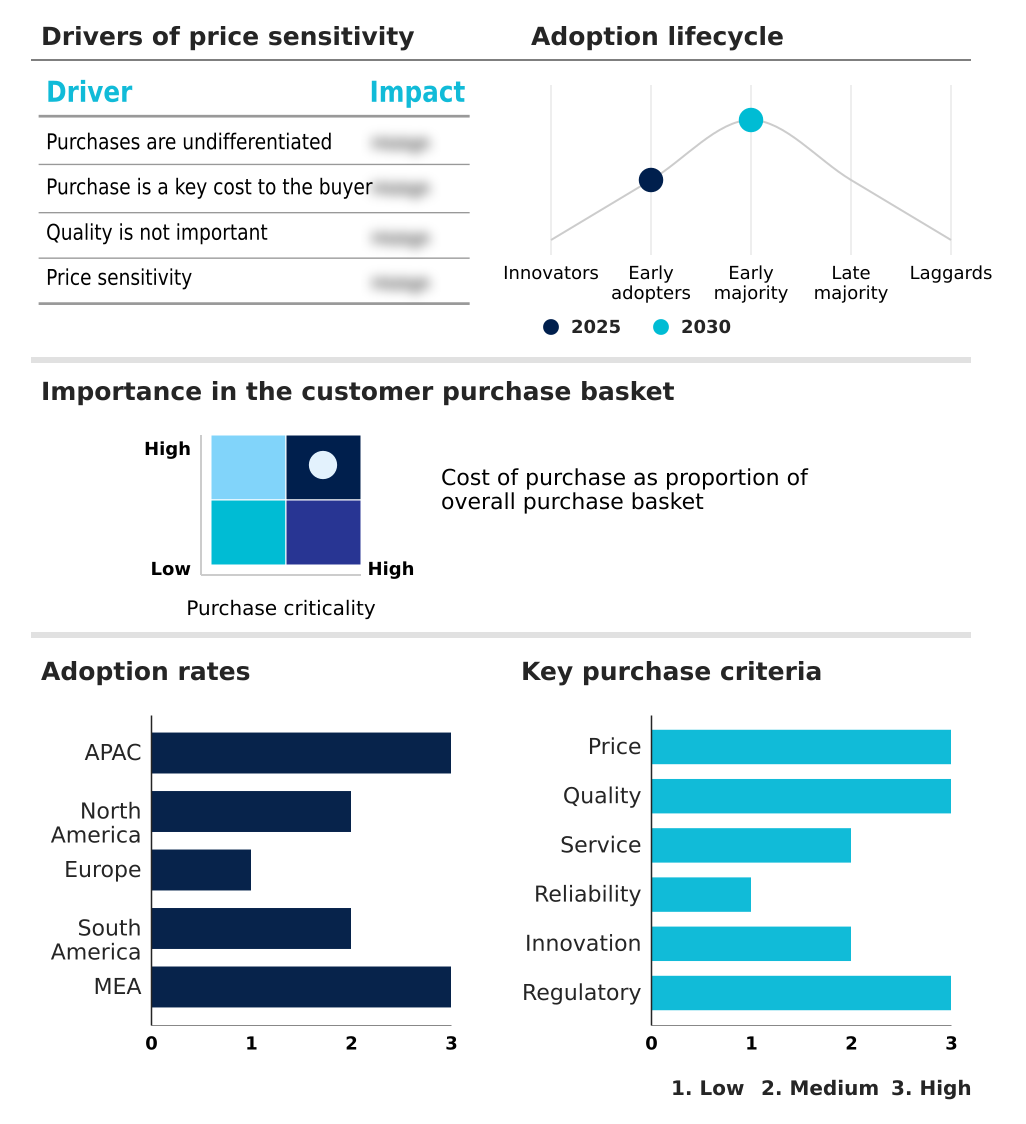
Customer Landscape of Automotive Central Gateway Module Industry
Competitive Landscape
Companies are implementing various strategies, such as strategic alliances, automotive central gateway module market forecast, partnerships, mergers and acquisitions, geographical expansion, and product/service launches, to enhance their presence in the industry.
Aptiv PLC - The provider delivers advanced automotive central gateway modules, including central vehicle controllers and smart vehicle architecture gateways, designed to optimize zonal computing and streamline complex electrical distribution frameworks.
The industry research and growth report includes detailed analyses of the competitive landscape of the market and information about key companies, including:
- Aptiv PLC
- Astemo Ltd.
- AUMOVIO SE
- DENSO Corp.
- Harman International Industries
- HiRain Technologies Co. Ltd.
- Huizhou Desay SV Automotive
- Hyundai Mobis Co. Ltd.
- Lear Corp.
- LG Electronics Inc.
- Marelli Holdings Co. Ltd.
- Nidec Corp.
- OFILM Group Co. Ltd
- Panasonic Holdings Corp.
- Pegatron Corp.
- Reach Automotive Technology
- Robert Bosch GmbH
- Sumitomo Electric Industries
- Yazaki Corp.
- ZF Friedrichshafen AG
Qualitative and quantitative analysis of companies has been conducted to help clients understand the wider business environment as well as the strengths and weaknesses of key industry players. Data is qualitatively analyzed to categorize companies as pure play, category-focused, industry-focused, and diversified; it is quantitatively analyzed to categorize companies as dominant, leading, strong, tentative, and weak.
Recent Development and News in Automotive central gateway module market
- In the Automotive Parts and Equipment industry, the aggressive deployment of connected advanced driver assistance systems has drastically escalated in-vehicle data bandwidth demands, directly impacting Automotive Central Gateway Module demand by requiring a 50% increase in multi-gigabit transceivers to manage high-speed automated driving sensor fusion securely.
- The enforcement of the UNECE R155 regulations has legally prohibited the sale of vulnerable connected vehicles, compelling original equipment manufacturers to adopt hardware virtualization and robust functional safety certification within global automotive central gateway module market 2026-2030 architectures to achieve complete compliance across new vehicle type approvals.
- The structural shift toward central vehicle computers and cross-domain compute consolidation has reduced legacy point-to-point wiring weight by up to 30%, pulling substantial demand for intelligent Automotive Central Gateway Module units capable of deterministic packet routing across complex mixed-criticality traffic routing networks.
- The rapid transition to high-voltage energy management in electric vehicle production has accelerated the need for real-time anomaly logging and digital twin telemetry, driving a 40% surge in the integration of edge cloud data analytics within the Automotive Central Gateway Module to optimize battery management telemetry securely.
Dive into Technavio’s robust research methodology, blending expert interviews, extensive data synthesis, and validated models for unparalleled Automotive Central Gateway Module Market insights. See full methodology.
| Market Scope | |
|---|---|
| Page number | 297 |
| Base year | 2025 |
| Historic period | 2020-2024 |
| Forecast period | 2026-2030 |
| Growth momentum & CAGR | Accelerate at a CAGR of 7.7% |
| Market growth 2026-2030 | USD 1530.8 million |
| Market structure | Fragmented |
| YoY growth 2025-2026(%) | 7.2% |
| Key countries | China, Japan, India, South Korea, Australia, Indonesia, US, Canada, Mexico, Germany, UK, France, Italy, Spain, The Netherlands, Brazil, Argentina, Chile, Turkey, Saudi Arabia, UAE, South Africa and Israel |
| Competitive landscape | Leading Companies, Market Positioning of Companies, Competitive Strategies, and Industry Risks |
Research Analyst Overview
- The Automotive Central Gateway Module functions as the critical data orchestration nexus within next-generation architectures, systematically transforming how electrical systems process complex sensor telemetry. Executive boardrooms are increasingly prioritizing the integration of edge artificial intelligence analytics into strategic product planning to enable proactive cybersecurity anomaly detection.
- By embedding these intelligent routing capabilities, manufacturers have achieved a 30% reduction in diagnostic latency, fundamentally improving the operational efficiency of connected fleets. Modern gateway architectures utilize sophisticated message authentication codes to ensure malicious data injections cannot compromise safety-critical driving dynamics.
- Implementing advanced controller area network routers alongside high-speed ethernet backbones significantly streamlines factory assembly procedures by eliminating redundant copper wiring. Deep packet inspection acts as a crucial safeguard, verifying every data packet entering the vehicle infrastructure. The strategic transition toward centralized compute hubs equips automakers with the flexible digital infrastructure required to deploy recurring software features seamlessly.
- These intelligent gateways utilize secure boot protocols to verify system integrity at startup, anchoring long-term fleet reliability.
What are the Key Data Covered in this Automotive Central Gateway Module Market Research and Growth Report?
-
What is the expected growth of the Automotive Central Gateway Module Market between 2026 and 2030?
-
USD 1.53 billion, at a CAGR of 7.7%
-
-
What segmentation does the market report cover?
-
The report is segmented by Application (Passenger cars, and Commercial vehicles), Type (LIN central gateway module, CAN central gateway module, and ETH central gateway module), Channel (OEMs, and Aftermarket) and Geography (APAC, North America, Europe, South America, Middle East and Africa)
-
-
Which regions are analyzed in the report?
-
APAC, North America, Europe, South America and Middle East and Africa
-
-
What are the key growth drivers and market challenges?
-
Accelerating transition toward software-defined vehicle architectures, Severe cybersecurity vulnerabilities and strict regulatory compliance mandates
-
-
Who are the major players in the Automotive Central Gateway Module Market?
-
Aptiv PLC, Astemo Ltd., AUMOVIO SE, DENSO Corp., Harman International Industries, HiRain Technologies Co. Ltd., Huizhou Desay SV Automotive, Hyundai Mobis Co. Ltd., Lear Corp., LG Electronics Inc., Marelli Holdings Co. Ltd., Nidec Corp., OFILM Group Co. Ltd, Panasonic Holdings Corp., Pegatron Corp., Reach Automotive Technology, Robert Bosch GmbH, Sumitomo Electric Industries, Yazaki Corp. and ZF Friedrichshafen AG
-
Market Research Insights
- The Automotive Central Gateway Module operates as the vital digital routing hub for next-generation transportation, effectively bridging external connectivity with internal networks. Manufacturers are rapidly embracing cross-domain compute consolidation, which has reduced component integration times by 25% across modern assembly lines.
- By transitioning toward predictive fleet diagnostics, commercial operators report a 30% decrease in unplanned vehicle downtime, underscoring the operational value of advanced vehicle telemetry analytics. Implementing centralized architectures allows automakers to decrease electronic control unit redundancy by nearly 40%. These efficiencies streamline multiplexed wiring harnesses while maintaining rigorous adherence to emerging automotive cybersecurity regulations, ensuring highly resilient connected vehicle platforms.
We can help! Our analysts can customize this automotive central gateway module market research report to meet your requirements.
 RIA -