


Baby Clothing Market Analysis, Size, and Forecast 2026-2030: APAC (China, Japan, and India), North America (US, Canada, and Mexico), Europe (Germany, UK, and France), Middle East and Africa (Saudi Arabia, UAE, and South Africa), South America (Brazil and Argentina), and Rest of World (ROW)

Baby Clothing Market Analysis, Size, and Forecast 2026-2030:
APAC (China, Japan, and India), North America (US, Canada, and Mexico), Europe (Germany, UK, and France), Middle East and Africa (Saudi Arabia, UAE, and South Africa), South America (Brazil and Argentina), and Rest of World (ROW)

Published: Mar 2026 296 Pages SKU: IRTNTR71073

Market Overview at a Glance

$38.71 B
Market Opportunity
8.1%
CAGR 2025 - 2030
33%
APAC Growth
$50.40 B
Outerwear segment 2024

Baby Clothing Market Size 2026-2030

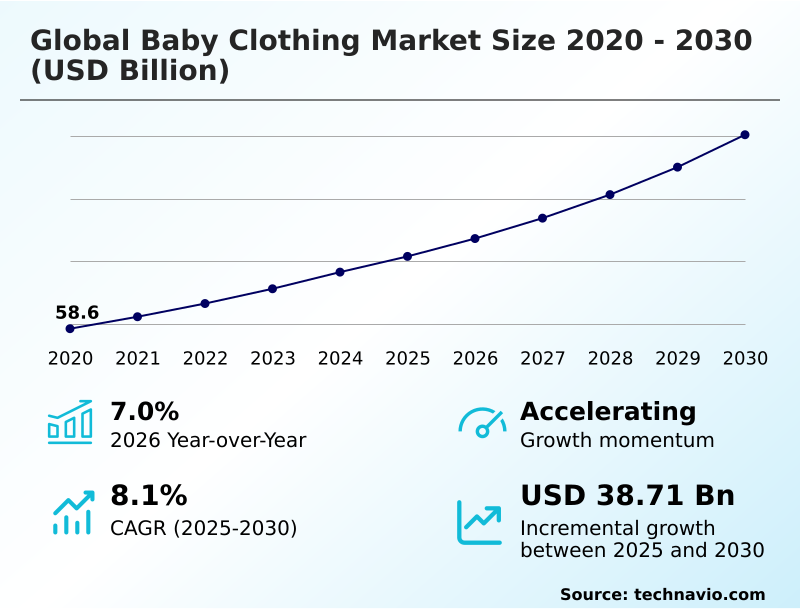
The baby clothing market size is valued to increase by USD 38.71 billion, at a CAGR of 8.1% from 2025 to 2030. Increasing demand for organic and sustainable infant apparel will drive the baby clothing market.

Major Market Trends & Insights

  • APAC dominated the market and accounted for a 33% growth during the forecast period.
  • By Product - Outerwear segment was valued at USD 50.40 billion in 2024
  • By Distribution Channel - Offline segment accounted for the largest market revenue share in 2024

Market Size & Forecast

  • Market Opportunities: USD 61.71 billion
  • Market Future Opportunities: USD 38.71 billion
  • CAGR from 2025 to 2030 : 8.1%

Market Summary

  • The baby clothing market is evolving beyond simple garments, increasingly shaped by a focus on safety, sustainability, and technological integration. Key drivers include rising parental demand for sustainable infant apparel, which prioritizes organic cotton fabric and materials with hypoallergenic properties to address infant skin sensitivity.
  • This trend has spurred innovation in non-toxic dyes and led to the adoption of circular business model frameworks, such as pre-loved programs. Concurrently, the expansion of digital retail is transforming distribution through direct-to-consumer sales and sophisticated omni-channel retail strategy.
  • For instance, a company implementing a digital supply chain to manage its global inventory must navigate intense competitive pressure while ensuring garment safety standards and brand consistency across all platforms.
  • This scenario highlights the complexity of balancing fluctuating raw material prices with the high consumer expectations for eco-friendly manufacturing and supply chain transparency, all while adhering to stringent chemical safety standards. Success hinges on integrating digital sizing tools and maintaining brand prestige in a fragmented market.

What will be the Size of the Baby Clothing Market during the forecast period?
Get Key Insights on Market Forecast (PDF) Request Free Sample

How is the Baby Clothing Market Segmented?

The baby clothing industry research report provides comprehensive data (region-wise segment analysis), with forecasts and estimates in "USD million" for the period 2026-2030, as well as historical data from 2020-2024 for the following segments.

  • Product
    • Outerwear
    • Underwear
  • Distribution channel
    • Offline
    • Online
  • Material
    • Cotton
    • Wool
    • Nylon
    • Others
  • Geography
    • APAC
      • China
      • Japan
      • India
    • North America
      • US
      • Canada
      • Mexico
    • Europe
      • Germany
      • UK
      • France
    • Middle East and Africa
      • Saudi Arabia
      • UAE
      • South Africa
    • South America
      • Brazil
      • Argentina
    • Rest of World (ROW)

By Product Insights

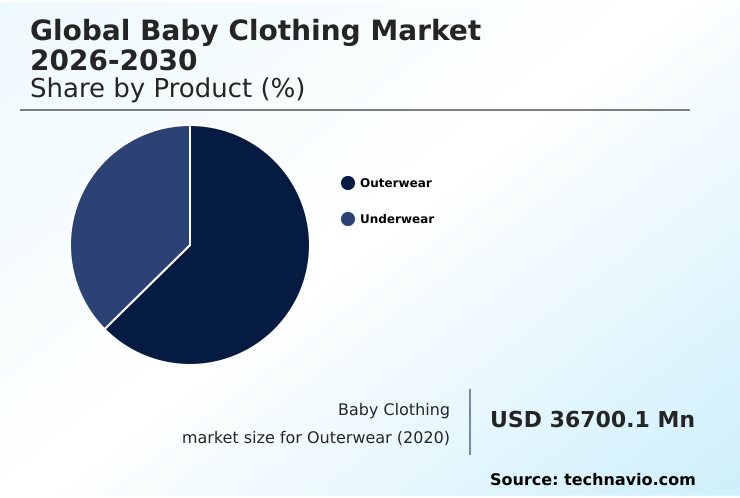
The outerwear segment is estimated to witness significant growth during the forecast period.

The outerwear segment is defined by products offering protection from environmental elements, where sustainable manufacturing and brand consistency are paramount.

This category is seeing a shift toward high-performance infant activewear and the use of recycled polyester fabric, reflecting broader consumer fashion preferences. Companies are leveraging digital supply chain enhancements and moisture-wicking technology to improve product functionality.

The adoption of synthetic down alternatives and other eco-friendly materials is critical, with some firms reporting a 20% increase in the use of recycled content in their seasonal infant collections.

This focus on durable baby clothing, artisanal smocked clothing, and toddler-friendly clothing features shapes a competitive environment where omni-channel retail strategy is essential for market penetration.
Request Free Sample

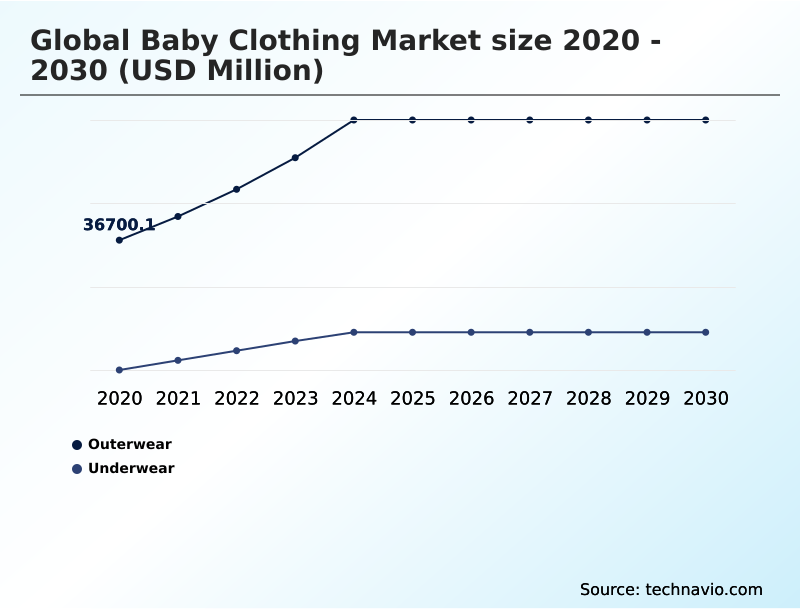
The Outerwear segment was valued at USD 50.40 billion in 2024 and showed a gradual increase during the forecast period.
Request Free Sample

Regional Analysis

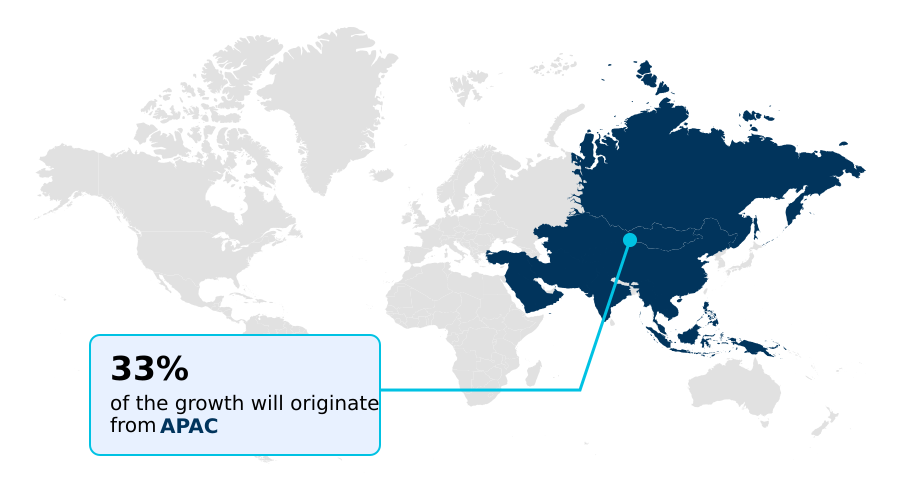
APAC is estimated to contribute 33% to the growth of the global market during the forecast period.Technavio’s analysts have elaborately explained the regional trends and drivers that shape the market during the forecast period.
See How Baby Clothing Market Demand is Rising in APAC Request Free Sample

The geographic landscape of the baby clothing market is highly varied, with distinct regional drivers shaping demand.

In APAC, high birth rates and the expansion of digital retail create a high-volume market where localized manufacturing has reduced production lead times by up to 25%.

North America and Europe are characterized by a strong consumer focus on regulatory compliance and sustainable manufacturing, with a preference for organic textiles and products that meet stringent chemical safety standards.

Europe leads in adopting the circular economy, with take-back schemes now comprising over 10% of post-sale activity for some premium brands.

This premiumization of babywear and focus on brand identity are global phenomena, but their execution depends heavily on regional consumer behaviors, from the fast fashion cycles in some Asian markets to the demand for luxury infant fashion and gender-neutral clothing in Western countries.

Market Dynamics

Our researchers analyzed the data with 2025 as the base year, along with the key drivers, trends, and challenges. A holistic analysis of drivers will help companies refine their marketing strategies to gain a competitive advantage.

  • Strategic decision-making in the global baby clothing market 2026-2030 is increasingly complex, shaped by nuanced consumer inquiries and operational challenges. The debate over organic cotton vs bamboo baby clothes reflects a broader demand for the best baby clothes for sensitive skin, pushing manufacturers toward transparent and sustainable manufacturing in the textile industry.
  • An eco-friendly baby clothing brands comparison reveals that the importance of brand identity in fashion is paramount for differentiation. Success requires navigating chemical regulations in clothing and adhering to strict safety standards for infant textiles.
  • Operationally, the impact of supply chain on apparel costs is critical; firms that nearshore production report up to 30% fewer shipping delays than those with extended global supply chains, affecting the final price. This addresses one of the core challenges of market fragmentation.
  • The growth of direct-to-consumer baby brands is fueled by digital retail trends in baby apparel, where the role of social media in fashion and technologies like ar and vr in online shopping are transforming customer engagement. Key considerations now include how to choose durable baby clothes, the benefits of gender-neutral baby clothing, and premiumization strategies in apparel.
  • A luxury baby apparel market analysis shows that even high-end segments must manage fluctuating material costs while exploring the future of omni-channel baby retail and implementing strategies for building brand loyalty.
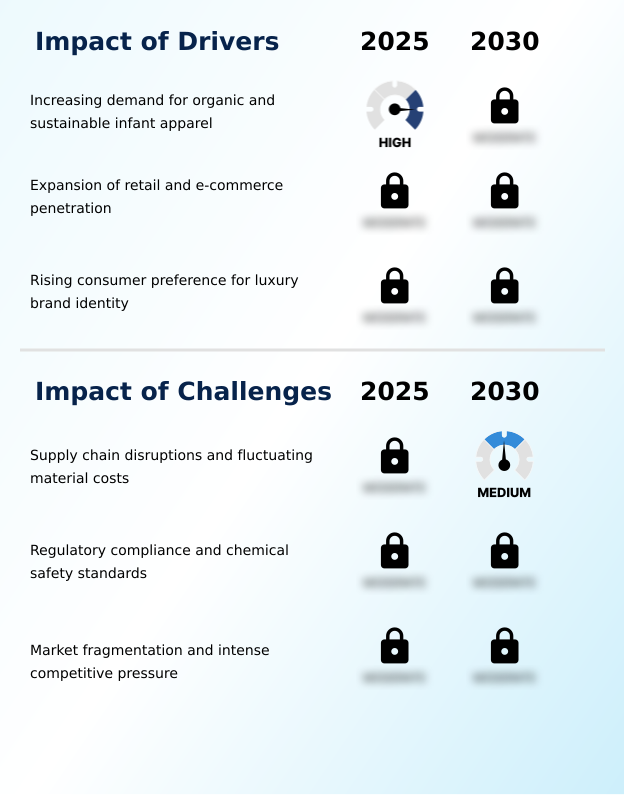
What are the key market drivers leading to the rise in the adoption of Baby Clothing Industry?

  • The increasing demand for organic and sustainable infant apparel is a key driver propelling market growth.

  • Market growth is significantly driven by rising consumer demand for premium, sustainable, and digitally accessible products. The premium knitwear segment and high-performance infant activewear are expanding as parents prioritize quality and functionality.
  • This demand is amplified by the mini-me fashion trend, driving sales of stylish apparel. The expansion of baby apparel e-commerce, supported by secure payment gateways and flexible return policies, has improved profit margins by over 10% for some digital-first brands.
  • Moreover, a focus on ethical sourcing practices and the use of materials with natural antibacterial properties are key differentiators, with certified products showing a 25% higher repeat purchase rate.
  • The convenience of omni-channel capabilities, including digital membership programs, further propels the market forward.

What are the market trends shaping the Baby Clothing Industry?

  • The adoption of sustainable practices and the use of organic materials are emerging as a significant trend. This shift is reshaping manufacturing processes and influencing consumer purchasing decisions in the market.

  • Key trends are reshaping the market, with a strong emphasis on sustainability and digital integration. The adoption of Cradle to Cradle Certified materials and GOTS-certified organic cotton is becoming mainstream, reflecting a push toward a circular economy. Companies embracing a pre-loved program and flat-lock seam bodysuits are enhancing product lifecycle and comfort.
  • Digitally, the use of an augmented reality feature and virtual reality showrooms is improving the online shopping experience, with some platforms reporting an 18% reduction in returns. Furthermore, the integration of blockchain for supply chain transparency meets consumer demands for ethical oversight.
  • These trends, including the move to renewable energy operations, are setting new benchmarks for the industry, where fine-yarn knitwear and hand-finished baby garments also signify a move toward premium quality.

What challenges does the Baby Clothing Industry face during its growth?

  • Supply chain disruptions and fluctuating material costs represent a key challenge affecting the industry's growth trajectory.

  • Navigating operational and competitive challenges is critical for sustained growth. Persistent supply chain disruptions and fluctuating raw material prices have driven production cost increases of up to 30% for some manufacturers. Adherence to complex anti-choking standards and other regulatory compliance requirements across multiple jurisdictions adds an estimated 15% to operational overhead.
  • The market also faces intense competitive pressure and market fragmentation from the rise of digital-native brands with fast fashion cycles. This environment demands constant innovation in areas like temperature-regulating fabrics and pilling and durability testing. Simultaneously, companies must manage consumer fashion preferences while investing in technologies like moisture-wicking polyester fibers, regenerated nylon, and plant-based dyes to stay competitive.

Exclusive Technavio Analysis on Customer Landscape

The baby clothing market forecasting report includes the adoption lifecycle of the market, covering from the innovator’s stage to the laggard’s stage. It focuses on adoption rates in different regions based on penetration. Furthermore, the baby clothing market report also includes key purchase criteria and drivers of price sensitivity to help companies evaluate and develop their market growth analysis strategies.
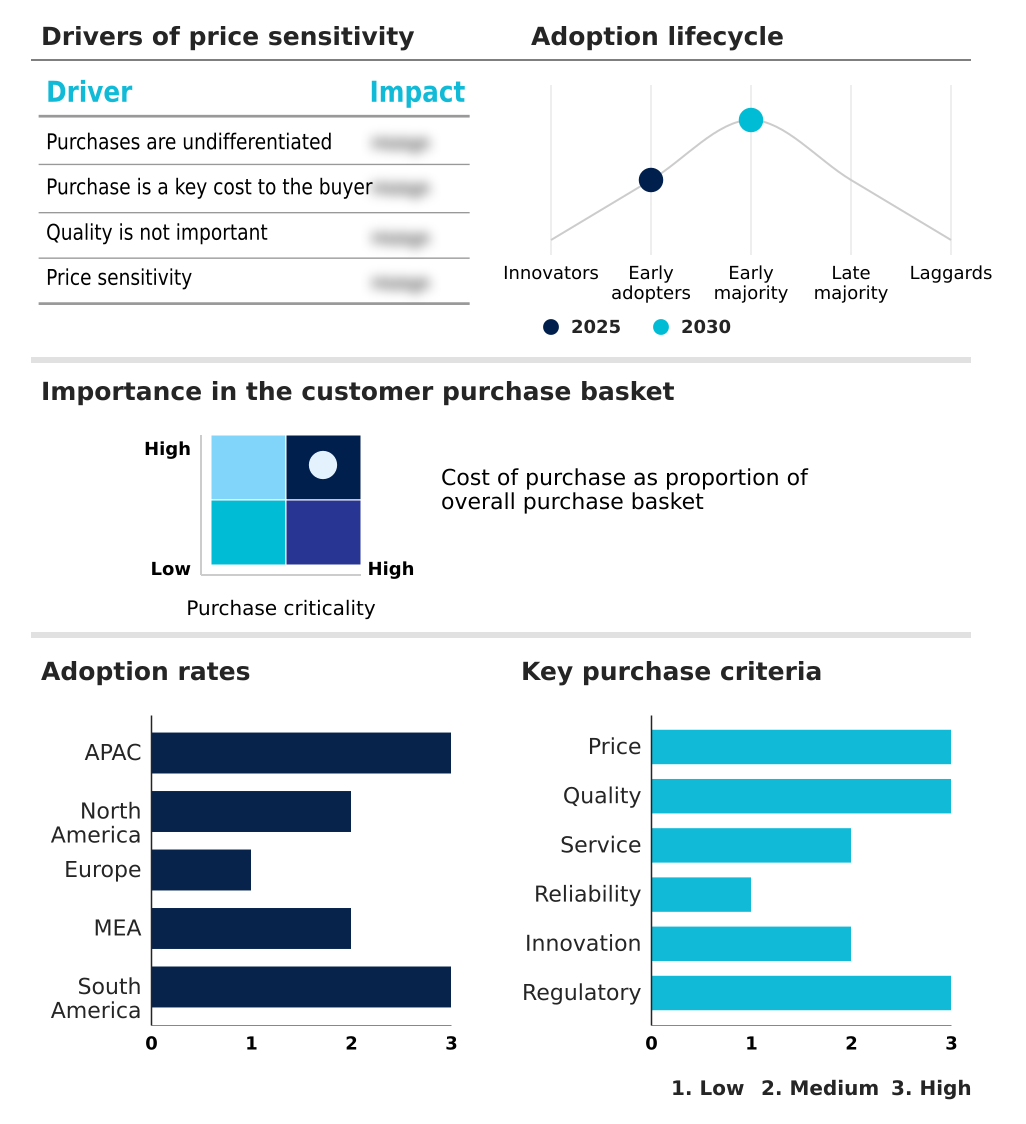
Customer Landscape of Baby Clothing Industry

Competitive Landscape

Companies are implementing various strategies, such as strategic alliances, baby clothing market forecast, partnerships, mergers and acquisitions, geographical expansion, and product/service launches, to enhance their presence in the industry.

Adidas AG - Analysis indicates a focus on sporty activewear and lifestyle apparel for infants and toddlers, extending brand identity into the baby clothing category.

The industry research and growth report includes detailed analyses of the competitive landscape of the market and information about key companies, including:

  • Adidas AG
  • Beyond Inc.
  • Brainbees Solutions Pvt. Ltd.
  • Burberry Group Plc
  • Burts Bees Baby
  • Capri Holdings Ltd.
  • Carters Inc.
  • Cotton on group
  • Gerber Childrenswear
  • Hanesbrands Inc.
  • Hanna Andersson LLC
  • Hennes and Mauritz AB
  • Katif Apparel
  • Mothercare Plc
  • NG Apparels
  • Nike Inc.
  • Royal Apparel
  • Sudarshaan Impex
  • The Childrens Place Inc.
  • The Walt Disney Co.

Qualitative and quantitative analysis of companies has been conducted to help clients understand the wider business environment as well as the strengths and weaknesses of key industry players. Data is qualitatively analyzed to categorize companies as pure play, category-focused, industry-focused, and diversified; it is quantitatively analyzed to categorize companies as dominant, leading, strong, tentative, and weak.

Recent Development and News in Baby clothing market

  • In August 2024, Firstcry implemented a new logistics network in the Middle East to provide same-day delivery for its wide range of infant apparel and accessories, using advanced data analytics to offer personalized discounts.
  • In October 2024, Carters announced a USD 150 million investment in its digital infrastructure to enhance its omni-channel capabilities, aiming to integrate its physical stores with its online platform for a consistent brand experience.
  • In January 2025, Gerber Childrenswear debuted a series of bamboo and organic cotton blends designed to offer enhanced breathability and hypoallergenic properties for infants with sensitive skin, adapting its legacy products to include modern sustainable materials.
  • In February 2025, Nike introduced an augmented reality feature on its website that allows parents to visualize how different infant outfits will fit based on growth projections, a technology aimed at reducing return rates and increasing online customer satisfaction.

Dive into Technavio’s robust research methodology, blending expert interviews, extensive data synthesis, and validated models for unparalleled Baby Clothing Market insights. See full methodology.

Market Scope
Page number 296
Base year 2025
Historic period 2020-2024
Forecast period 2026-2030
Growth momentum & CAGR Accelerate at a CAGR of 8.1%
Market growth 2026-2030 USD 38706.5 million
Market structure Fragmented
YoY growth 2025-2026(%) 7.0%
Key countries China, Japan, India, South Korea, Australia, Indonesia, US, Canada, Mexico, Germany, UK, France, Italy, Spain, The Netherlands, Saudi Arabia, UAE, South Africa, Turkey, Israel, Brazil, Argentina and Chile
Competitive landscape Leading Companies, Market Positioning of Companies, Competitive Strategies, and Industry Risks

Request Free Sample

Research Analyst Overview

  • The baby clothing market is undergoing a significant transformation, driven by a convergence of sustainability mandates and digital innovation. The emphasis on a circular business model is no longer a niche strategy but a central pillar for maintaining brand consistency and meeting consumer demand for sustainable infant apparel.
  • This forces boardroom-level decisions on R&D for materials like recycled polyester fabric and capital investment in eco-friendly manufacturing. A key performance indicator shows firms that have invested in full supply chain transparency have achieved a 25% improvement in consumer trust metrics.
  • Adherence to garment safety standards and chemical safety standards is non-negotiable, particularly for products with hypoallergenic properties made from organic cotton fabric. The market is also defined by the premiumization of babywear and the adoption of an omni-channel retail strategy, where digital sizing tools and direct-to-consumer sales channels are critical for navigating market fragmentation and intense competitive pressure.
  • Success depends on mastering this blend of ethical production and digital agility, from using non-toxic dyes to leveraging moisture-wicking technology.

What are the Key Data Covered in this Baby Clothing Market Research and Growth Report?

  • What is the expected growth of the Baby Clothing Market between 2026 and 2030?

    • USD 38.71 billion, at a CAGR of 8.1%

  • What segmentation does the market report cover?

    • The report is segmented by Product (Outerwear, and Underwear), Distribution Channel (Offline, and Online), Material (Cotton, Wool, Nylon, and Others) and Geography (APAC, North America, Europe, Middle East and Africa, South America)

  • Which regions are analyzed in the report?

    • APAC, North America, Europe, Middle East and Africa and South America

  • What are the key growth drivers and market challenges?

    • Increasing demand for organic and sustainable infant apparel, Supply chain disruptions and fluctuating material costs

  • Who are the major players in the Baby Clothing Market?

    • Adidas AG, Beyond Inc., Brainbees Solutions Pvt. Ltd., Burberry Group Plc, Burts Bees Baby, Capri Holdings Ltd., Carters Inc., Cotton on group, Gerber Childrenswear, Hanesbrands Inc., Hanna Andersson LLC, Hennes and Mauritz AB, Katif Apparel, Mothercare Plc, NG Apparels, Nike Inc., Royal Apparel, Sudarshaan Impex, The Childrens Place Inc. and The Walt Disney Co.

Market Research Insights

  • Market dynamics are increasingly influenced by a convergence of consumer values and digital transformation. The emphasis on ethical sourcing practices and addressing infant skin sensitivity has elevated the importance of brand prestige. The rapid expansion of baby apparel e-commerce, which now accounts for over 30% of sales in some developed regions, is reshaping retail landscapes.
  • Innovations like virtual registries and integrated social commerce integration enhance the mobile-first shopping experience. Furthermore, companies that prioritize eco-friendly manufacturing and durable baby clothing report customer loyalty rates up to 20% higher than competitors.
  • This shift toward sustainability and digital convenience is a defining feature of the competitive environment, where newborn layette essentials and seasonal infant collections are marketed through sophisticated digital loyalty programs.

We can help! Our analysts can customize this baby clothing market research report to meet your requirements.

Get in touch

1. Executive Summary

1.1 Market overview

Executive Summary - Chart on Market Overview
Executive Summary - Data Table on Market Overview
Executive Summary - Chart on Global Market Characteristics
Executive Summary - Chart on Market by Geography
Executive Summary - Chart on Market Segmentation by Product
Executive Summary - Chart on Market Segmentation by Distribution Channel
Executive Summary - Chart on Market Segmentation by Material
Executive Summary - Chart on Incremental Growth
Executive Summary - Data Table on Incremental Growth
Executive Summary - Chart on Company Market Positioning

2. Technavio Analysis

2.1 Analysis of price sensitivity, lifecycle, customer purchase basket, adoption rates, and purchase criteria

2.2 Criticality of inputs and Factors of differentiation

Chart on Overview on criticality of inputs and factors of differentiation

2.3 Factors of disruption

Chart on Overview on factors of disruption

2.4 Impact of drivers and challenges

Chart on Impact of drivers and challenges in 2025 and 2030

3. Market Landscape

3.1 Market ecosystem

Chart on Parent Market
Data Table on - Parent Market

3.2 Market characteristics

Chart on Market characteristics analysis

3.3 Value chain analysis

Chart on Value chain analysis

4. Market Sizing

4.1 Market definition

Data Table on Offerings of companies included in the market definition

4.2 Market segment analysis

Market segments

4.3 Market size 2025

4.4 Market outlook: Forecast for 2025-2030

Chart on Global - Market size and forecast 2025-2030 ($ million)
Data Table on Global - Market size and forecast 2025-2030 ($ million)
Chart on Global Market: Year-over-year growth 2025-2030 (%)
Data Table on Global Market: Year-over-year growth 2025-2030 (%)

5. Historic Market Size

5.1 Global Baby Clothing Market 2020 - 2024

Historic Market Size - Data Table on Global Baby Clothing Market 2020 - 2024 ($ million)

5.2 Product segment analysis 2020 - 2024

Historic Market Size - Product Segment 2020 - 2024 ($ million)

5.3 Distribution Channel segment analysis 2020 - 2024

Historic Market Size - Distribution Channel Segment 2020 - 2024 ($ million)

5.4 Material segment analysis 2020 - 2024

Historic Market Size - Material Segment 2020 - 2024 ($ million)

5.5 Geography segment analysis 2020 - 2024

Historic Market Size - Geography Segment 2020 - 2024 ($ million)

5.6 Country segment analysis 2020 - 2024

Historic Market Size - Country Segment 2020 - 2024 ($ million)

6. Qualitative Analysis

6.1 Impact of AI on Global Baby Clothing Market

7. Five Forces Analysis

7.1 Five forces summary

Five forces analysis - Comparison between 2025 and 2030

7.2 Bargaining power of buyers

Bargaining power of buyers - Impact of key factors 2025 and 2030

7.3 Bargaining power of suppliers

Bargaining power of suppliers - Impact of key factors in 2025 and 2030

7.4 Threat of new entrants

Threat of new entrants - Impact of key factors in 2025 and 2030

7.5 Threat of substitutes

Threat of substitutes - Impact of key factors in 2025 and 2030

7.6 Threat of rivalry

Threat of rivalry - Impact of key factors in 2025 and 2030

7.7 Market condition

Chart on Market condition - Five forces 2025 and 2030

8. Market Segmentation by Product

8.1 Market segments

Chart on Product - Market share 2025-2030 (%)
Data Table on Product - Market share 2025-2030 (%)

8.2 Comparison by Product

Chart on Comparison by Product
Data Table on Comparison by Product

8.3 Outerwear - Market size and forecast 2025-2030

Chart on Outerwear - Market size and forecast 2025-2030 ($ million)
Data Table on Outerwear - Market size and forecast 2025-2030 ($ million)
Chart on Outerwear - Year-over-year growth 2025-2030 (%)
Data Table on Outerwear - Year-over-year growth 2025-2030 (%)

8.4 Underwear - Market size and forecast 2025-2030

Chart on Underwear - Market size and forecast 2025-2030 ($ million)
Data Table on Underwear - Market size and forecast 2025-2030 ($ million)
Chart on Underwear - Year-over-year growth 2025-2030 (%)
Data Table on Underwear - Year-over-year growth 2025-2030 (%)

8.5 Market opportunity by Product

Market opportunity by Product ($ million)
Data Table on Market opportunity by Product ($ million)

9. Market Segmentation by Distribution Channel

9.1 Market segments

Chart on Distribution Channel - Market share 2025-2030 (%)
Data Table on Distribution Channel - Market share 2025-2030 (%)

9.2 Comparison by Distribution Channel

Chart on Comparison by Distribution Channel
Data Table on Comparison by Distribution Channel

9.3 Offline - Market size and forecast 2025-2030

Chart on Offline - Market size and forecast 2025-2030 ($ million)
Data Table on Offline - Market size and forecast 2025-2030 ($ million)
Chart on Offline - Year-over-year growth 2025-2030 (%)
Data Table on Offline - Year-over-year growth 2025-2030 (%)

9.4 Online - Market size and forecast 2025-2030

Chart on Online - Market size and forecast 2025-2030 ($ million)
Data Table on Online - Market size and forecast 2025-2030 ($ million)
Chart on Online - Year-over-year growth 2025-2030 (%)
Data Table on Online - Year-over-year growth 2025-2030 (%)

9.5 Market opportunity by Distribution Channel

Market opportunity by Distribution Channel ($ million)
Data Table on Market opportunity by Distribution Channel ($ million)

10. Market Segmentation by Material

10.1 Market segments

Chart on Material - Market share 2025-2030 (%)
Data Table on Material - Market share 2025-2030 (%)

10.2 Comparison by Material

Chart on Comparison by Material
Data Table on Comparison by Material

10.3 Cotton - Market size and forecast 2025-2030

Chart on Cotton - Market size and forecast 2025-2030 ($ million)
Data Table on Cotton - Market size and forecast 2025-2030 ($ million)
Chart on Cotton - Year-over-year growth 2025-2030 (%)
Data Table on Cotton - Year-over-year growth 2025-2030 (%)

10.4 Wool - Market size and forecast 2025-2030

Chart on Wool - Market size and forecast 2025-2030 ($ million)
Data Table on Wool - Market size and forecast 2025-2030 ($ million)
Chart on Wool - Year-over-year growth 2025-2030 (%)
Data Table on Wool - Year-over-year growth 2025-2030 (%)

10.5 Nylon - Market size and forecast 2025-2030

Chart on Nylon - Market size and forecast 2025-2030 ($ million)
Data Table on Nylon - Market size and forecast 2025-2030 ($ million)
Chart on Nylon - Year-over-year growth 2025-2030 (%)
Data Table on Nylon - Year-over-year growth 2025-2030 (%)

10.6 Others - Market size and forecast 2025-2030

Chart on Others - Market size and forecast 2025-2030 ($ million)
Data Table on Others - Market size and forecast 2025-2030 ($ million)
Chart on Others - Year-over-year growth 2025-2030 (%)
Data Table on Others - Year-over-year growth 2025-2030 (%)

10.7 Market opportunity by Material

Market opportunity by Material ($ million)
Data Table on Market opportunity by Material ($ million)

11. Customer Landscape

11.1 Customer landscape overview

Analysis of price sensitivity, lifecycle, customer purchase basket, adoption rates, and purchase criteria

12. Geographic Landscape

12.1 Geographic segmentation

Chart on Market share by geography 2025-2030 (%)
Data Table on Market share by geography 2025-2030 (%)

12.2 Geographic comparison

Chart on Geographic comparison
Data Table on Geographic comparison

12.3 APAC - Market size and forecast 2025-2030

Chart on APAC - Market size and forecast 2025-2030 ($ million)
Data Table on APAC - Market size and forecast 2025-2030 ($ million)
Chart on APAC - Year-over-year growth 2025-2030 (%)
Data Table on APAC - Year-over-year growth 2025-2030 (%)
Chart on Regional Comparison - APAC
Data Table on Regional Comparison - APAC

12.3.1 China - Market size and forecast 2025-2030

Chart on China - Market size and forecast 2025-2030 ($ million)
Data Table on China - Market size and forecast 2025-2030 ($ million)
Chart on China - Year-over-year growth 2025-2030 (%)
Data Table on China - Year-over-year growth 2025-2030 (%)

12.3.2 Japan - Market size and forecast 2025-2030

Chart on Japan - Market size and forecast 2025-2030 ($ million)
Data Table on Japan - Market size and forecast 2025-2030 ($ million)
Chart on Japan - Year-over-year growth 2025-2030 (%)
Data Table on Japan - Year-over-year growth 2025-2030 (%)

12.3.3 India - Market size and forecast 2025-2030

Chart on India - Market size and forecast 2025-2030 ($ million)
Data Table on India - Market size and forecast 2025-2030 ($ million)
Chart on India - Year-over-year growth 2025-2030 (%)
Data Table on India - Year-over-year growth 2025-2030 (%)

12.3.4 South Korea - Market size and forecast 2025-2030

Chart on South Korea - Market size and forecast 2025-2030 ($ million)
Data Table on South Korea - Market size and forecast 2025-2030 ($ million)
Chart on South Korea - Year-over-year growth 2025-2030 (%)
Data Table on South Korea - Year-over-year growth 2025-2030 (%)

12.3.5 Australia - Market size and forecast 2025-2030

Chart on Australia - Market size and forecast 2025-2030 ($ million)
Data Table on Australia - Market size and forecast 2025-2030 ($ million)
Chart on Australia - Year-over-year growth 2025-2030 (%)
Data Table on Australia - Year-over-year growth 2025-2030 (%)

12.3.6 Indonesia - Market size and forecast 2025-2030

Chart on Indonesia - Market size and forecast 2025-2030 ($ million)
Data Table on Indonesia - Market size and forecast 2025-2030 ($ million)
Chart on Indonesia - Year-over-year growth 2025-2030 (%)
Data Table on Indonesia - Year-over-year growth 2025-2030 (%)

12.4 North America - Market size and forecast 2025-2030

Chart on North America - Market size and forecast 2025-2030 ($ million)
Data Table on North America - Market size and forecast 2025-2030 ($ million)
Chart on North America - Year-over-year growth 2025-2030 (%)
Data Table on North America - Year-over-year growth 2025-2030 (%)
Chart on Regional Comparison - North America
Data Table on Regional Comparison - North America

12.4.1 US - Market size and forecast 2025-2030

Chart on US - Market size and forecast 2025-2030 ($ million)
Data Table on US - Market size and forecast 2025-2030 ($ million)
Chart on US - Year-over-year growth 2025-2030 (%)
Data Table on US - Year-over-year growth 2025-2030 (%)

12.4.2 Canada - Market size and forecast 2025-2030

Chart on Canada - Market size and forecast 2025-2030 ($ million)
Data Table on Canada - Market size and forecast 2025-2030 ($ million)
Chart on Canada - Year-over-year growth 2025-2030 (%)
Data Table on Canada - Year-over-year growth 2025-2030 (%)

12.4.3 Mexico - Market size and forecast 2025-2030

Chart on Mexico - Market size and forecast 2025-2030 ($ million)
Data Table on Mexico - Market size and forecast 2025-2030 ($ million)
Chart on Mexico - Year-over-year growth 2025-2030 (%)
Data Table on Mexico - Year-over-year growth 2025-2030 (%)

12.5 Europe - Market size and forecast 2025-2030

Chart on Europe - Market size and forecast 2025-2030 ($ million)
Data Table on Europe - Market size and forecast 2025-2030 ($ million)
Chart on Europe - Year-over-year growth 2025-2030 (%)
Data Table on Europe - Year-over-year growth 2025-2030 (%)
Chart on Regional Comparison - Europe
Data Table on Regional Comparison - Europe

12.5.1 Germany - Market size and forecast 2025-2030

Chart on Germany - Market size and forecast 2025-2030 ($ million)
Data Table on Germany - Market size and forecast 2025-2030 ($ million)
Chart on Germany - Year-over-year growth 2025-2030 (%)
Data Table on Germany - Year-over-year growth 2025-2030 (%)

12.5.2 UK - Market size and forecast 2025-2030

Chart on UK - Market size and forecast 2025-2030 ($ million)
Data Table on UK - Market size and forecast 2025-2030 ($ million)
Chart on UK - Year-over-year growth 2025-2030 (%)
Data Table on UK - Year-over-year growth 2025-2030 (%)

12.5.3 France - Market size and forecast 2025-2030

Chart on France - Market size and forecast 2025-2030 ($ million)
Data Table on France - Market size and forecast 2025-2030 ($ million)
Chart on France - Year-over-year growth 2025-2030 (%)
Data Table on France - Year-over-year growth 2025-2030 (%)

12.5.4 Italy - Market size and forecast 2025-2030

Chart on Italy - Market size and forecast 2025-2030 ($ million)
Data Table on Italy - Market size and forecast 2025-2030 ($ million)
Chart on Italy - Year-over-year growth 2025-2030 (%)
Data Table on Italy - Year-over-year growth 2025-2030 (%)

12.5.5 Spain - Market size and forecast 2025-2030

Chart on Spain - Market size and forecast 2025-2030 ($ million)
Data Table on Spain - Market size and forecast 2025-2030 ($ million)
Chart on Spain - Year-over-year growth 2025-2030 (%)
Data Table on Spain - Year-over-year growth 2025-2030 (%)

12.5.6 The Netherlands - Market size and forecast 2025-2030

Chart on The Netherlands - Market size and forecast 2025-2030 ($ million)
Data Table on The Netherlands - Market size and forecast 2025-2030 ($ million)
Chart on The Netherlands - Year-over-year growth 2025-2030 (%)
Data Table on The Netherlands - Year-over-year growth 2025-2030 (%)

12.6 Middle East and Africa - Market size and forecast 2025-2030

Chart on Middle East and Africa - Market size and forecast 2025-2030 ($ million)
Data Table on Middle East and Africa - Market size and forecast 2025-2030 ($ million)
Chart on Middle East and Africa - Year-over-year growth 2025-2030 (%)
Data Table on Middle East and Africa - Year-over-year growth 2025-2030 (%)
Chart on Regional Comparison - Middle East and Africa
Data Table on Regional Comparison - Middle East and Africa

12.6.1 Saudi Arabia - Market size and forecast 2025-2030

Chart on Saudi Arabia - Market size and forecast 2025-2030 ($ million)
Data Table on Saudi Arabia - Market size and forecast 2025-2030 ($ million)
Chart on Saudi Arabia - Year-over-year growth 2025-2030 (%)
Data Table on Saudi Arabia - Year-over-year growth 2025-2030 (%)

12.6.2 UAE - Market size and forecast 2025-2030

Chart on UAE - Market size and forecast 2025-2030 ($ million)
Data Table on UAE - Market size and forecast 2025-2030 ($ million)
Chart on UAE - Year-over-year growth 2025-2030 (%)
Data Table on UAE - Year-over-year growth 2025-2030 (%)

12.6.3 South Africa - Market size and forecast 2025-2030

Chart on South Africa - Market size and forecast 2025-2030 ($ million)
Data Table on South Africa - Market size and forecast 2025-2030 ($ million)
Chart on South Africa - Year-over-year growth 2025-2030 (%)
Data Table on South Africa - Year-over-year growth 2025-2030 (%)

12.6.4 Turkey - Market size and forecast 2025-2030

Chart on Turkey - Market size and forecast 2025-2030 ($ million)
Data Table on Turkey - Market size and forecast 2025-2030 ($ million)
Chart on Turkey - Year-over-year growth 2025-2030 (%)
Data Table on Turkey - Year-over-year growth 2025-2030 (%)

12.6.5 Israel - Market size and forecast 2025-2030

Chart on Israel - Market size and forecast 2025-2030 ($ million)
Data Table on Israel - Market size and forecast 2025-2030 ($ million)
Chart on Israel - Year-over-year growth 2025-2030 (%)
Data Table on Israel - Year-over-year growth 2025-2030 (%)

12.7 South America - Market size and forecast 2025-2030

Chart on South America - Market size and forecast 2025-2030 ($ million)
Data Table on South America - Market size and forecast 2025-2030 ($ million)
Chart on South America - Year-over-year growth 2025-2030 (%)
Data Table on South America - Year-over-year growth 2025-2030 (%)
Chart on Regional Comparison - South America
Data Table on Regional Comparison - South America

12.7.1 Brazil - Market size and forecast 2025-2030

Chart on Brazil - Market size and forecast 2025-2030 ($ million)
Data Table on Brazil - Market size and forecast 2025-2030 ($ million)
Chart on Brazil - Year-over-year growth 2025-2030 (%)
Data Table on Brazil - Year-over-year growth 2025-2030 (%)

12.7.2 Argentina - Market size and forecast 2025-2030

Chart on Argentina - Market size and forecast 2025-2030 ($ million)
Data Table on Argentina - Market size and forecast 2025-2030 ($ million)
Chart on Argentina - Year-over-year growth 2025-2030 (%)
Data Table on Argentina - Year-over-year growth 2025-2030 (%)

12.7.3 Chile - Market size and forecast 2025-2030

Chart on Chile - Market size and forecast 2025-2030 ($ million)
Data Table on Chile - Market size and forecast 2025-2030 ($ million)
Chart on Chile - Year-over-year growth 2025-2030 (%)
Data Table on Chile - Year-over-year growth 2025-2030 (%)

12.8 Market opportunity by geography

Market opportunity by geography ($ million)
Data Tables on Market opportunity by geography ($ million)

13. Drivers, Challenges, and Opportunity

13.1 Market drivers

Increasing demand for organic and sustainable infant apparel
Expansion of retail and e-commerce penetration
Rising consumer preference for luxury brand identity

13.2 Market challenges

Supply chain disruptions and fluctuating material costs
Regulatory compliance and chemical safety standards
Market fragmentation and intense competitive pressure

13.3 Impact of drivers and challenges

Impact of drivers and challenges in 2025 and 2030

13.4 Market opportunities

Adoption of sustainable practices and organic materials
Integration of digital innovation and omni channel strategies
Premiumization and strategic brand licensing

14. Competitive Landscape

14.1 Overview

14.2

Overview on criticality of inputs and factors of differentiation

14.3 Landscape disruption

Overview on factors of disruption

14.4 Industry risks

Impact of key risks on business

15. Competitive Analysis

15.1 Companies profiled

Companies covered

15.2 Company ranking index

15.3 Market positioning of companies

Matrix on companies position and classification

15.4 Adidas AG

Adidas AG - Overview
Adidas AG - Business segments
Adidas AG - Key news
Adidas AG - Key offerings
Adidas AG - Segment focus
SWOT

15.5 Beyond Inc.

Beyond Inc. - Overview
Beyond Inc. - Product / Service
Beyond Inc. - Key offerings
SWOT

15.6 Brainbees Solutions Pvt. Ltd.

Brainbees Solutions Pvt. Ltd. - Overview
Brainbees Solutions Pvt. Ltd. - Product / Service
Brainbees Solutions Pvt. Ltd. - Key offerings
SWOT

15.7 Burberry Group Plc

Burberry Group Plc - Overview
Burberry Group Plc - Business segments
Burberry Group Plc - Key news
Burberry Group Plc - Key offerings
Burberry Group Plc - Segment focus
SWOT

15.8 Burts Bees Baby

Burts Bees Baby - Overview
Burts Bees Baby - Product / Service
Burts Bees Baby - Key offerings
SWOT

15.9 Capri Holdings Ltd.

Capri Holdings Ltd. - Overview
Capri Holdings Ltd. - Business segments
Capri Holdings Ltd. - Key offerings
Capri Holdings Ltd. - Segment focus
SWOT

15.10 Carters Inc.

Carters Inc. - Overview
Carters Inc. - Business segments
Carters Inc. - Key news
Carters Inc. - Key offerings
Carters Inc. - Segment focus
SWOT

15.11 Cotton on group

Cotton on group - Overview
Cotton on group - Product / Service
Cotton on group - Key offerings
SWOT

15.12 Gerber Childrenswear

Gerber Childrenswear - Overview
Gerber Childrenswear - Product / Service
Gerber Childrenswear - Key offerings
SWOT

15.13 Hanna Andersson LLC

Hanna Andersson LLC - Overview
Hanna Andersson LLC - Product / Service
Hanna Andersson LLC - Key offerings
SWOT

15.14 Hennes and Mauritz AB

Hennes and Mauritz AB - Overview
Hennes and Mauritz AB - Product / Service
Hennes and Mauritz AB - Key news
Hennes and Mauritz AB - Key offerings
SWOT

15.15 Mothercare Plc

Mothercare Plc - Overview
Mothercare Plc - Product / Service
Mothercare Plc - Key offerings
SWOT

15.16 Nike Inc.

Nike Inc. - Overview
Nike Inc. - Business segments
Nike Inc. - Key news
Nike Inc. - Key offerings
Nike Inc. - Segment focus
SWOT

15.17 The Childrens Place Inc.

The Childrens Place Inc. - Overview
The Childrens Place Inc. - Product / Service
The Childrens Place Inc. - Key offerings
SWOT

15.18 The Walt Disney Co.

The Walt Disney Co. - Overview
The Walt Disney Co. - Business segments
The Walt Disney Co. - Key offerings
The Walt Disney Co. - Segment focus
SWOT

16. Appendix

16.1 Scope of the report

Market definition
Objectives
Notes and caveats

16.2 Inclusions and exclusions checklist

Inclusions checklist
Exclusions checklist

16.3 Currency conversion rates for US$

16.4 Research methodology

16.5 Data procurement

Information sources

16.6 Data validation

16.7 Validation techniques employed for market sizing

16.8 Data synthesis

16.9 360 degree market analysis

16.10 List of abbreviations

Research Methodology

Technavio presents a detailed picture of the market by way of study, synthesis, and summation of data from multiple sources. The analysts have presented the various facets of the market with a particular focus on identifying the key industry influencers. The data thus presented is comprehensive, reliable, and the result of extensive research, both primary and secondary.

INFORMATION SOURCES

Primary sources

  • Manufacturers and suppliers
  • Channel partners
  • Industry experts
  • Strategic decision makers

Secondary sources

  • Industry journals and periodicals
  • Government data
  • Financial reports of key industry players
  • Historical data
  • Press releases

DATA ANALYSIS

Data Synthesis

  • Collation of data
  • Estimation of key figures
  • Analysis of derived insights

Data Validation

  • Triangulation with data models
  • Reference against proprietary databases
  • Corroboration with industry experts

REPORT WRITING

Qualitative

  • Market drivers
  • Market challenges
  • Market trends
  • Five forces analysis

Quantitative

  • Market size and forecast
  • Market segmentation
  • Geographical insights
  • Competitive landscape

Interested in this report?

Get your sample now to see our research methodology and insights!

Download Now

Frequently Asked Questions

Baby Clothing market growth will increase by USD 38706.5 million during 2026-2030.

The Baby Clothing market is expected to grow at a CAGR of 8.1% during 2026-2030.

Baby Clothing market is segmented by Product (Outerwear, Underwear) Distribution channel (Offline, Online) Material (Cotton, Wool, Nylon, Others)

Adidas AG, Beyond Inc., Brainbees Solutions Pvt. Ltd., Burberry Group Plc, Burts Bees Baby, Capri Holdings Ltd., Carters Inc., Cotton on group, Gerber Childrenswear, Hanesbrands Inc., Hanna Andersson LLC, Hennes and Mauritz AB, Katif Apparel, Mothercare Plc, NG Apparels, Nike Inc., Royal Apparel, Sudarshaan Impex, The Childrens Place Inc., The Walt Disney Co. are a few of the key vendors in the Baby Clothing market.

APAC will register the highest growth rate of 33% among the other regions. Therefore, the Baby Clothing market in APAC is expected to garner significant business opportunities for the vendors during the forecast period.

China, Japan, India, South Korea, Australia, Indonesia, US, Canada, Mexico, Germany, UK, France, Italy, Spain, The Netherlands, Saudi Arabia, UAE, South Africa, Turkey, Israel, Brazil, Argentina, Chile

  • Increasing demand for organic and sustainable infant apparel is the driving factor this market.

The Baby Clothing market vendors should focus on grabbing business opportunities from the Product segment as it accounted for the largest market share in the base year.
RIA - Research AI Assistant
Ask RIA
