
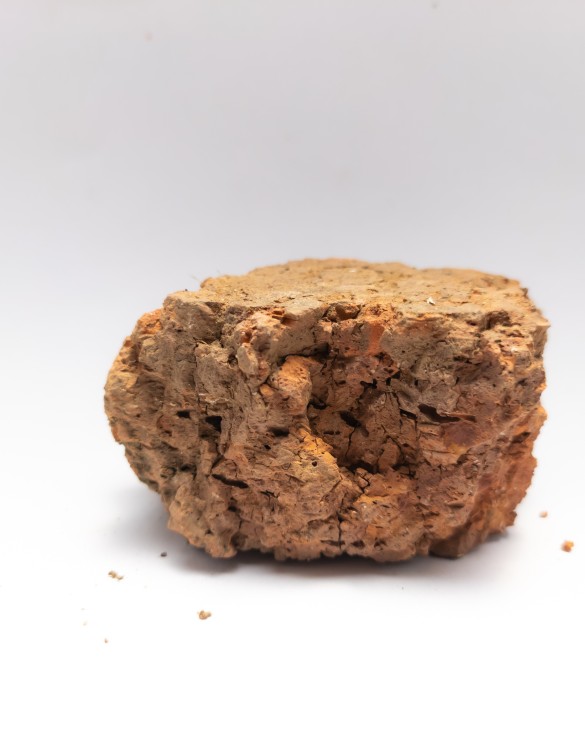


Bauxite Market Size 2026-2030
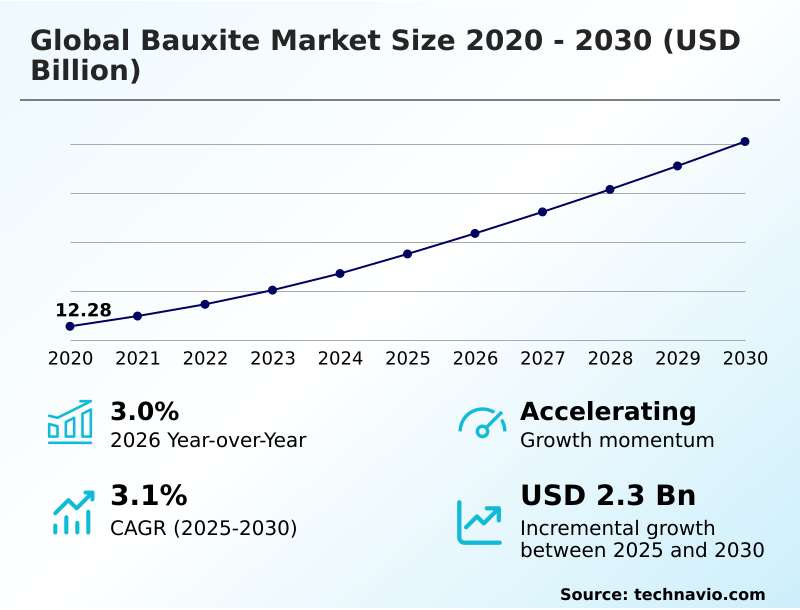
The bauxite market size is valued to increase by USD 2.30 billion, at a CAGR of 3.1% from 2025 to 2030. Accelerated adoption of aluminium in clean mobility applications will drive the bauxite market.
Major Market Trends & Insights
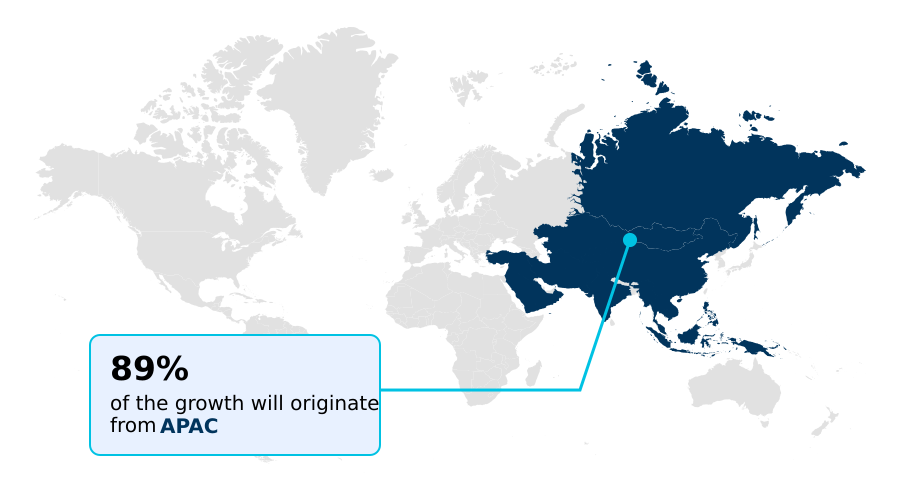
- APAC dominated the market and accounted for a 89% growth during the forecast period.
- By Type - Metallurgical grade segment was valued at USD 11.85 billion in 2024
- By End-user - Building and construction segment accounted for the largest market revenue share in 2024
Market Size & Forecast
- Market Opportunities: USD 3.79 billion
- Market Future Opportunities: USD 2.30 billion
- CAGR from 2025 to 2030 : 3.1%
Market Summary
- The Bauxite Market exhibits dynamic structural evolution driven by the relentless industrial requirement for primary aluminum across modern infrastructure and transportation networks. The rapid transition toward electric vehicle architectures functions as a critical market driver, as automakers replace heavy ferrous components with lightweight structural aluminum to optimize battery range and structural integrity.
- This engineering shift forces procurement teams to secure long-term offtake agreements for high-grade metallurgical bauxite to sustain uninterrupted smelting operations. Conversely, the rise of sovereign beneficiation mandates presents a formidable operational challenge, as producing nations restrict raw ore exports to force localized alumina refining.
- Supply chain managers are adapting to these regulatory pressures by heavily investing in domestic processing mandates and reconfiguring ocean freight logistics. Strategic implementation of automated dry stacking technology has enabled mining consortiums to decrease environmental compliance costs by 18% compared to traditional tailings management.
- Secure access to stable bauxite extraction corridors remains an essential prerequisite for fulfilling the escalating demand for sustainable residue remediation and advanced metallurgical processing globally.
What will be the Size of the Bauxite Market during the forecast period?
Get Key Insights on Market Forecast (PDF) Get Free Sample
How is the Bauxite Market Segmented?
The bauxite industry research report provides comprehensive data (region-wise segment analysis), with forecasts and estimates in "USD million" for the period 2026-2030, as well as historical data from 2020-2024 for the following segments.
- Type
- Metallurgical grade
- Non-metallurgical grade
- End-user
- Building and construction
- Automotive and transportation
- Electrical and electronics
- Iron and steel
- Others
- Application
- Alumina production
- Refractory manufacturing
- Cement production
- Abrasive manufacturing
- Others
- Geography
- APAC
- China
- India
- Indonesia
- Australia
- Japan
- South Korea
- Europe
- Germany
- France
- Spain
- Italy
- UK
- The Netherlands
- North America
- US
- Canada
- Mexico
- Middle East and Africa
- Turkey
- UAE
- South Africa
- Israel
- Saudi Arabia
- South America
- Brazil
- Argentina
- Colombia
- APAC
By Type Insights
The metallurgical grade segment is estimated to witness significant growth during the forecast period.
Metallurgical grade bauxite dominates mining extraction volumes, functioning as the foundational feedstock for the bayer process. Processing facilities utilize this ore for alumina refining through chemical digestion with caustic soda, eventually yielding primary aluminum production via electrolytic reduction.
The presence of gibbsitic bauxite enables low-temperature processing, whereas high reactive silica requires intense desilication techniques. The ongoing transition toward vehicle lightweighting and electric vehicle architectures has increased demand for structural aluminum, directly influencing smelting operations.
Refining efficiency improved by 15% when utilizing uniform physical sizing and consistent mineralogical composition. Elevated caustic soda consumption remains a persistent operational challenge, compelling managers to optimize extraction protocols.
This continuous requirement ensures that extraction corridors maintain high utilization rates to support downstream manufacturing networks.
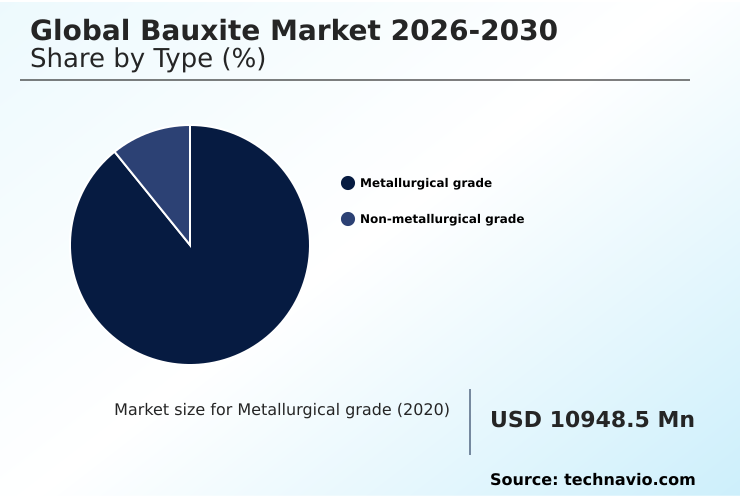
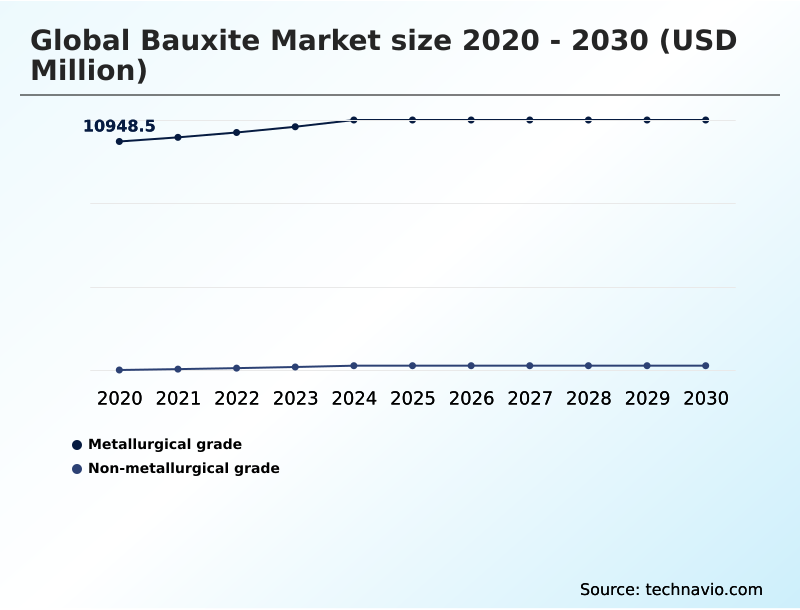
The Metallurgical grade segment was valued at USD 11.85 billion in 2024 and showed a gradual increase during the forecast period.
Regional Analysis
APAC is estimated to contribute 89% to the growth of the global market during the forecast period.Technavio’s analysts have elaborately explained the regional trends and drivers that shape the market during the forecast period.
See How Bauxite Market Demand is Rising in APAC Get Free Sample
Regional dynamics within the Bauxite Market highlight a stark contrast between processing hubs in APAC and extraction centers in South America.
Manufacturing facilities in APAC rely heavily on imported gibbsitic bauxite delivered via capesize bulk carriers to sustain massive alumina refining networks, achieving a 25% higher processing throughput compared to older domestic operations.
In contrast, South America leverages abundant domestic reserves and hydroelectric power to refine bauxite locally, lowering indirect carbon emissions by 30% relative to fossil-fuel-dependent regions.
The implementation of energy efficient calcination in South American plants has further decreased thermal energy consumption by 12%.
This geographic divergence forces multinational enterprises to adapt their mineral supply security strategies, balancing the low-cost extraction benefits of the Amazon basin against the high-volume smelting capacity concentrated across Asian industrial corridors.
Market Dynamics
Our researchers analyzed the data with 2025 as the base year, along with the key drivers, trends, and challenges. A holistic analysis of drivers will help companies refine their marketing strategies to gain a competitive advantage.
- The evolving landscape of the Bauxite Market requires stakeholders to meticulously balance production efficiency with stringent ecological mandates. Procuring high grade metallurgical bauxite procurement remains the absolute priority for processing facilities aiming to maintain maximum operational uptime and output quality.
- To support the automotive lightweighting structural aluminum demand, upstream mining consortiums must guarantee a steady flow of raw materials that meet strict chemical specifications. Engineers focusing on bayer process alumina refining efficiency have successfully optimized low-temperature digestion phases, enabling plants to process varied ore grades while consuming 15% less caustic soda than previous historical benchmarks.
- This operational optimization directly impacts procurement budgets and enhances supply chain predictability. Simultaneously, the adoption of sustainable bauxite mining extraction processes mitigates the ecological footprint associated with heavy earth-moving activities. Operators are increasingly integrating dry stacking red mud management solutions, drastically reducing the risks tied to traditional wet tailings dams.
- The shift toward dry residue disposal increases land reclamation speed and minimizes groundwater contamination vulnerabilities, providing a distinct compliance advantage. By aligning extraction capabilities with advanced refining techniques, the industry ensures a resilient material pipeline capable of supporting the escalating requirements of modern infrastructure and clean energy manufacturing networks.
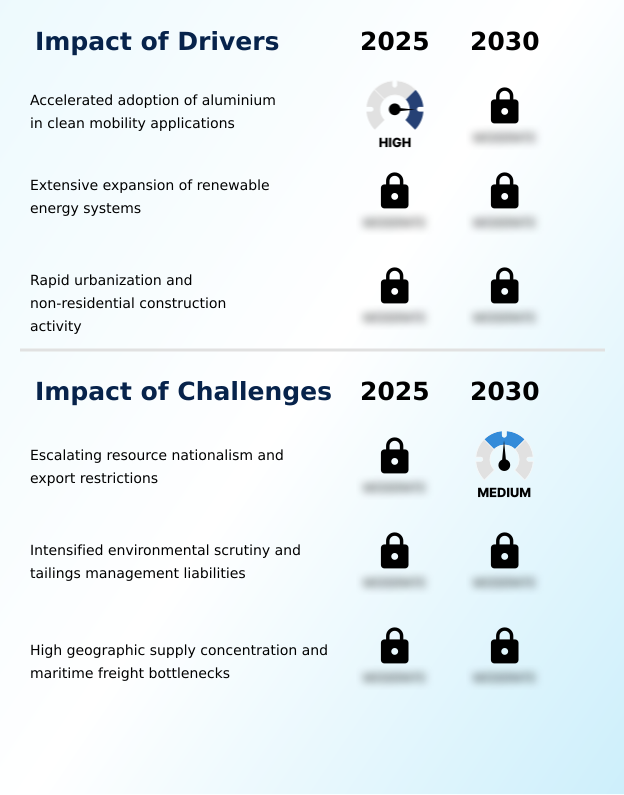
What are the key market drivers leading to the rise in the adoption of Bauxite Industry?
- The rapid integration of structural aluminum into clean mobility applications serves as a primary catalyst accelerating market expansion.
- The aggressive global transition toward vehicle lightweighting acts as a primary catalyst accelerating Bauxite Market momentum.
- Automakers utilizing advanced structural aluminum have improved overall vehicle energy efficiency by 20%, necessitating immense volumes of metallurgical grade bauxite to sustain primary metal supply chains.
- This continuous demand forces mining consortiums to optimize open cast mining operations and deploy high-capacity capesize bulk carriers to ensure uninterrupted feedstock delivery. Furthermore, the expanding utilization of calcium aluminate cements in rapid-setting infrastructure projects has increased specific mineral consumption.
- Refining complexes have subsequently enhanced bayer process alumina refining efficiency, lowering chemical reagent costs by 12%. These demand triggers compel upstream resource managers to aggressively secure long-term mining concessions across premier geological basins.
What are the market trends shaping the Bauxite Industry?
- The accelerated transition toward vehicle lightweighting and electric mobility represents a defining trend reshaping market dynamics.
- The Bauxite Market is experiencing a structural paradigm shift driven by the rapid expansion of renewable power generation and electrification networks. Utility operators increasingly require high-strength aluminum for photovoltaic module framing and power transmission lines, compelling upstream suppliers to optimize mineral extraction protocols. Facilities implementing automated desilication techniques have improved alumina recovery rates by 14%, simultaneously decreasing processing cycle times.
- The rising demand for specialized refractory aggregate in industrial furnaces has forced manufacturers to refine high-temperature calcination methods. By transitioning to advanced sensor-driven kiln controls, plant operators have reduced thermal energy waste by 18%. This technological evolution ensures that the continuous supply of specialized bauxite residue derivatives and high-purity chemical grades remains economically viable for advanced material science applications.
What challenges does the Bauxite Industry face during its growth?
- Escalating resource nationalism and the imposition of stringent export restrictions pose significant operational challenges for international supply chains.
- The implementation of stringent sovereign beneficiation mandates presents a formidable structural barrier within the Bauxite Market. Producing nations increasingly restrict raw ore exports, forcing international conglomerates to construct localized alumina refining infrastructure. This regulatory shift has increased baseline capital expenditure requirements for new projects by 35%, complicating long-term investment models.
- Additionally, the technical burden of managing elevated reactive silica in depleting geological reserves directly inflates caustic soda consumption during chemical digestion. Operating expenses for waste management have surged by 22% as environmental authorities mandate the transition toward sustainable residue remediation.
- These operational constraints compel supply chain managers to critically evaluate alternative mineral supply security frameworks to shield downstream smelting operations from unpredictable maritime disruptions and localized production bottlenecks.
Exclusive Technavio Analysis on Customer Landscape
The bauxite market forecasting report includes the adoption lifecycle of the market, covering from the innovator’s stage to the laggard’s stage. It focuses on adoption rates in different regions based on penetration. Furthermore, the bauxite market report also includes key purchase criteria and drivers of price sensitivity to help companies evaluate and develop their market growth analysis strategies.
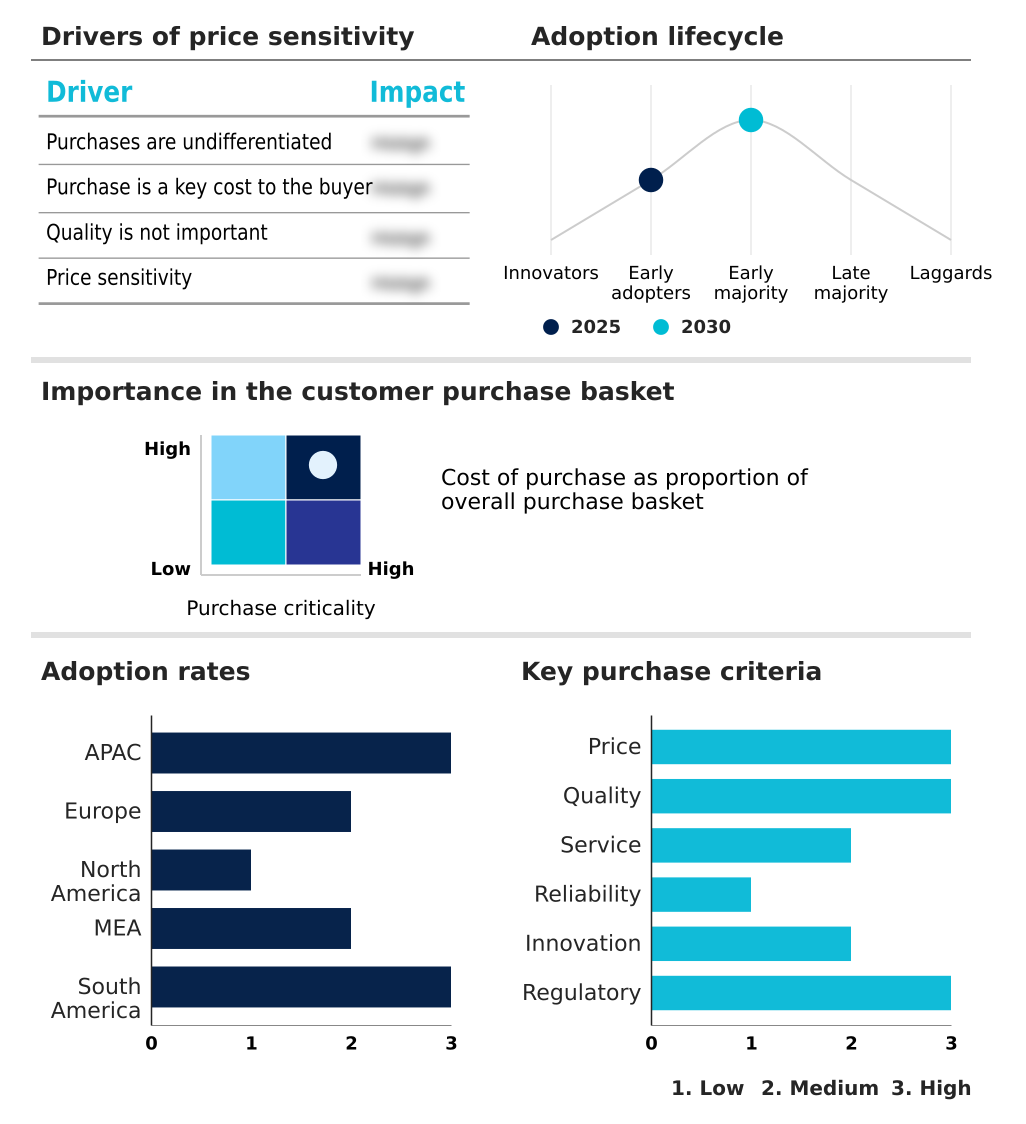
Customer Landscape of Bauxite Industry
Competitive Landscape
Companies are implementing various strategies, such as strategic alliances, bauxite market forecast, partnerships, mergers and acquisitions, geographical expansion, and product/service launches, to enhance their presence in the industry.
Alcoa Corp. - The enterprise provides high-quality metallurgical grade bauxite sourced from integrated extraction operations, supplying essential feedstock to alumina refineries and supporting primary aluminum production networks.
The industry research and growth report includes detailed analyses of the competitive landscape of the market and information about key companies, including:
- Alcoa Corp.
- Aluminum Corp. of China Ltd.
- Ashapura Group of Industries
- Bharat Aluminium Co
- Bosai Minerals Group Co. Ltd.
- China Hongqiao Group Ltd.
- Compagnie des Bauxites de Guinee
- Dadco Alumina and Chemicals Ltd.
- Emirates Global Aluminium PJSC
- Gujarat Mineral Development Corp
- Mineracao Rio do Norte
- National Aluminium Co. Ltd.
- Norsk Hydro ASA
- PT Aneka Tambang Tbk
- PT Cita Mineral Investindo Tbk
- Rio Tinto Ltd.
- Societe Miniere de Boke
- South32 Ltd.
- United Co. RUSAL
- Vedanta Ltd.
Qualitative and quantitative analysis of companies has been conducted to help clients understand the wider business environment as well as the strengths and weaknesses of key industry players. Data is qualitatively analyzed to categorize companies as pure play, category-focused, industry-focused, and diversified; it is quantitatively analyzed to categorize companies as dominant, leading, strong, tentative, and weak.
Recent Development and News in Bauxite market
- In the Aluminum industry, the accelerating adoption of electric vehicle architectures has increased requirements for lightweight crash management systems, directly impacting Bauxite Market demand by necessitating higher volumes of metallurgical grade bauxite for primary metal synthesis.
- The implementation of the European Union Carbon Border Adjustment Mechanism has mandated strict carbon tracking for imported metals, compelling smelters to prioritize sustainable bauxite mining extraction processes to lower indirect emissions.
- Sovereign beneficiation mandates in Southeast Asia have restricted raw ore shipments, fundamentally reshaping ocean freight logistics and driving massive capital investments into localized bayer process alumina refining infrastructure.
- Advancements in dry stacking technology have revolutionized red mud management at major processing facilities, reducing operational water consumption by 30% and facilitating faster environmental permitting for new extraction concessions.
Dive into Technavio’s robust research methodology, blending expert interviews, extensive data synthesis, and validated models for unparalleled Bauxite Market insights. See full methodology.
| Market Scope | |
|---|---|
| Page number | 314 |
| Base year | 2025 |
| Historic period | 2020-2024 |
| Forecast period | 2026-2030 |
| Growth momentum & CAGR | Accelerate at a CAGR of 3.1% |
| Market growth 2026-2030 | USD 2301.3 million |
| Market structure | Fragmented |
| YoY growth 2025-2026(%) | 3.0% |
| Key countries | China, India, Indonesia, Australia, Japan, South Korea, Germany, France, Spain, Italy, UK, The Netherlands, US, Canada, Mexico, Turkey, UAE, South Africa, Israel, Saudi Arabia, Brazil, Argentina and Colombia |
| Competitive landscape | Leading Companies, Market Positioning of Companies, Competitive Strategies, and Industry Risks |
Research Analyst Overview
- The Bauxite Market demonstrates persistent resilience as industrial manufacturers rapidly adapt to complex regulatory environments and shifting material specifications. Metallurgical grade bauxite remains an indispensable asset for primary metal synthesis, prompting heavy investments in advanced bauxite beneficiation techniques.
- Strategic implementation of dry stacking technology has allowed leading extraction facilities to enhance land recovery rates by 28% compared to conventional wet pond disposal methods. This transition directly addresses boardroom-level compliance mandates focusing on sustainable red mud management and environmental liability reduction. Furthermore, the rising requirement for calcined bauxite in heavy infrastructure projects drives continuous improvements in gas suspension calciners.
- By optimizing the hall heroult process and standardizing alumina refining parameters, facility operators ensure superior consistency in primary metal output. The precise control of reactive silica during the digestion phase significantly minimizes caustic soda consumption, preserving tight operational margins.
- These integrated technological advancements ensure that industrial processing complexes can meet expanding material requirements without compromising long-term ecological stewardship or supply chain reliability.
What are the Key Data Covered in this Bauxite Market Research and Growth Report?
-
What is the expected growth of the Bauxite Market between 2026 and 2030?
-
USD 2.30 billion, at a CAGR of 3.1%
-
-
What segmentation does the market report cover?
-
The report is segmented by Type (Metallurgical grade, and Non-metallurgical grade), End-user (Building and construction, Automotive and transportation, Electrical and electronics, Iron and steel, and Others), Application (Alumina production, Refractory manufacturing, Cement production, Abrasive manufacturing, and Others) and Geography (APAC, Europe, North America, Middle East and Africa, South America)
-
-
Which regions are analyzed in the report?
-
APAC, Europe, North America, Middle East and Africa and South America
-
-
What are the key growth drivers and market challenges?
-
Accelerated adoption of aluminium in clean mobility applications, Escalating resource nationalism and export restrictions
-
-
Who are the major players in the Bauxite Market?
-
Alcoa Corp., Aluminum Corp. of China Ltd., Ashapura Group of Industries, Bharat Aluminium Co, Bosai Minerals Group Co. Ltd., China Hongqiao Group Ltd., Compagnie des Bauxites de Guinee, Dadco Alumina and Chemicals Ltd., Emirates Global Aluminium PJSC, Gujarat Mineral Development Corp, Mineracao Rio do Norte, National Aluminium Co. Ltd., Norsk Hydro ASA, PT Aneka Tambang Tbk, PT Cita Mineral Investindo Tbk, Rio Tinto Ltd., Societe Miniere de Boke, South32 Ltd., United Co. RUSAL and Vedanta Ltd.
-
Market Research Insights
- The Bauxite Market continues to transform rapidly as industrial consumers prioritize mineral supply security and resilient supply chain diversification. Manufacturers have reduced operational downtime by 22% by implementing advanced bauxite procurement frameworks tailored for high-quality primary aluminum production.
- Furthermore, the adoption of closed loop water recycling systems within alumina refining has improved resource efficiency by 15%, aligning with stringent environmental compliance mandates. The integration of structural aluminum in renewable power generation infrastructure requires uninterrupted material flow, prompting facility operators to optimize ocean freight logistics.
- These strategic realignments allow processing entities to mitigate maritime vulnerabilities while ensuring consistent feedstock delivery to coastal smelters.
We can help! Our analysts can customize this bauxite market research report to meet your requirements.
 RIA -

