


Bioactive Wound Dressing Market Size 2026-2030
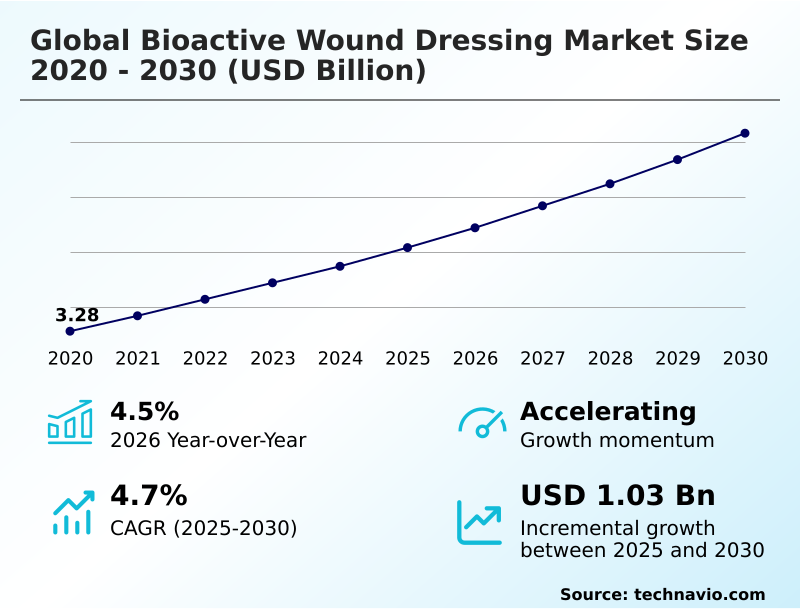
The bioactive wound dressing market size is valued to increase by USD 1.03 billion, at a CAGR of 4.7% from 2025 to 2030. Increasing prevalence of acute and chronic wounds will drive the bioactive wound dressing market.
Major Market Trends & Insights
- North America dominated the market and accounted for a 43.5% growth during the forecast period.
- By Type - Moist wound care segment was valued at USD 1.78 billion in 2024
- By Application - General surgery segment accounted for the largest market revenue share in 2024
Market Size & Forecast
- Market Opportunities: USD 1.80 billion
- Market Future Opportunities: USD 1.03 billion
- CAGR from 2025 to 2030 : 4.7%
Market Summary
- The bioactive wound dressing market is defined by a fundamental shift from passive wound coverage to active therapeutic intervention. This evolution is driven by the increasing incidence of complex wounds that require advanced solutions to accelerate healing and prevent complications.
- The market addresses the need for materials that interact with the wound environment to stimulate cellular activity, manage exudate, and reduce bacterial load. Key trends include the development of combination therapies that pair bioactive materials with medical devices and the growing adoption of dressings with antimicrobial properties to combat biofilm formation.
- In a typical business scenario, hospital procurement teams analyze clinical data to balance the higher acquisition cost of advanced dressings against long-term savings from reduced patient stays and lower readmission rates. For instance, selecting an appropriate collagen-based dressing for chronic ulcers can significantly shorten healing times.
- However, challenges such as navigating complex reimbursement landscapes and addressing the high cost of development for novel biologics continue to shape the competitive environment. The demand for more effective management of diabetic foot ulcers and surgical site infections continues to fuel innovation in tissue regeneration technologies.
What will be the Size of the Bioactive Wound Dressing Market during the forecast period?
Get Key Insights on Market Forecast (PDF) Get Free Sample
How is the Bioactive Wound Dressing Market Segmented?
The bioactive wound dressing industry research report provides comprehensive data (region-wise segment analysis), with forecasts and estimates in "USD million" for the period 2026-2030, as well as historical data from 2020-2024 for the following segments.
- Type
- Moist wound care
- Active wound care
- Antimicrobial care
- Application
- General surgery
- Minimally invasive surgery
- End-user
- Hospitals
- Clinics
- Others
- Geography
- North America
- US
- Canada
- Mexico
- Europe
- Germany
- UK
- France
- Asia
- Rest of World (ROW)
- North America
By Type Insights
The moist wound care segment is estimated to witness significant growth during the forecast period.
The moist wound care segment is integral to the bioactive wound dressing market, centered on the principle that an optimal moisture balance accelerates tissue regeneration.
This category includes advanced materials like hydrocolloids, gelling fiber, and foams, which promote autolytic debridement and minimize pain. Innovations in superabsorbent dressings are addressing challenges in exudate management, particularly for chronic wounds.
A key business driver is the extended wear time of these dressings, which reduces the frequency of changes and lowers overall treatment costs, improving operational efficiency in clinical settings.
With North America representing over 43% of the incremental growth opportunity, the demand for effective moist wound care solutions like amniotic membrane allografts is set to expand, particularly for managing conditions such as venous leg ulcers.
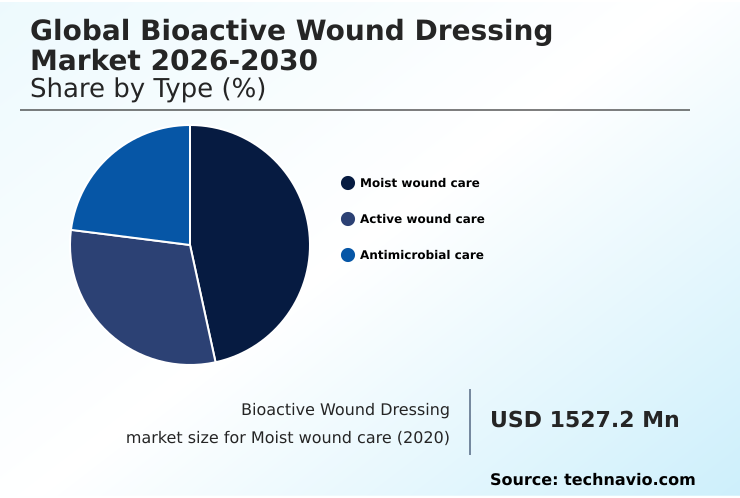
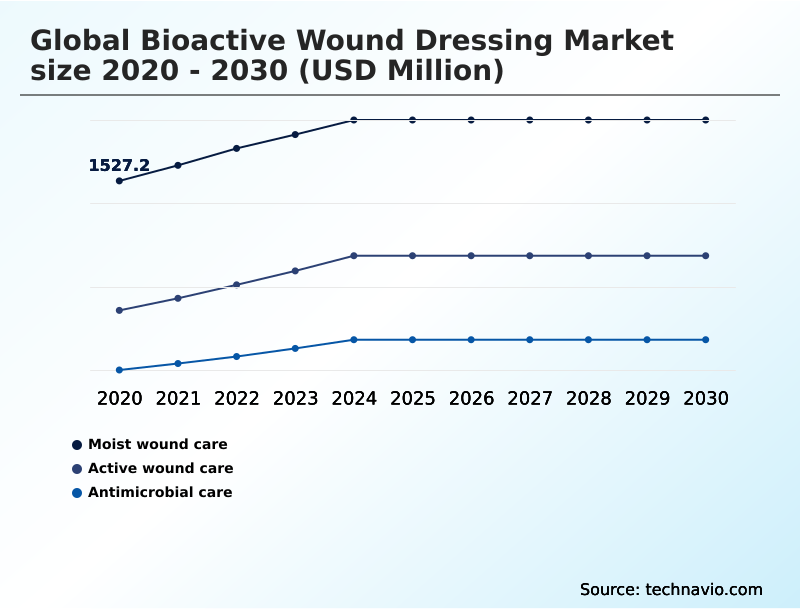
The Moist wound care segment was valued at USD 1.78 billion in 2024 and showed a gradual increase during the forecast period.
Regional Analysis
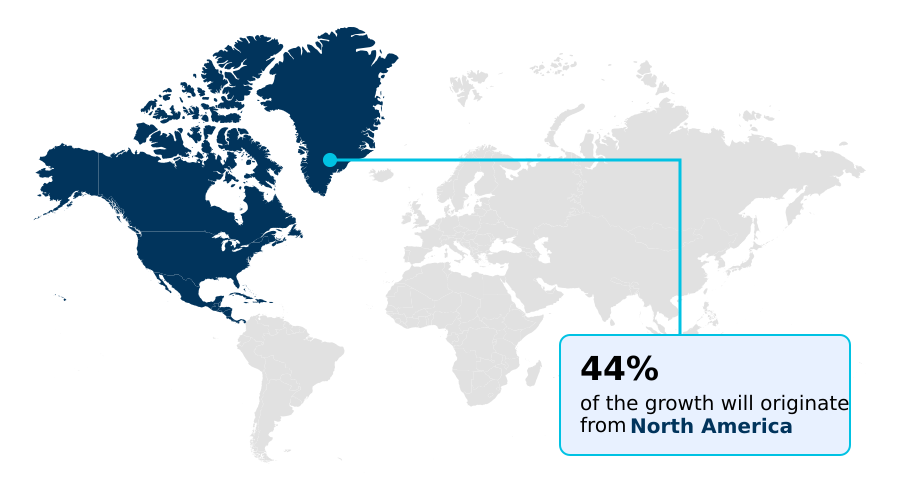
North America is estimated to contribute 43.5% to the growth of the global market during the forecast period.Technavio’s analysts have elaborately explained the regional trends and drivers that shape the market during the forecast period.
See How Bioactive Wound Dressing Market Demand is Rising in North America Get Free Sample
The geographic landscape of the bioactive wound dressing market is characterized by significant regional disparities in adoption and growth.
North America, representing over 43% of the incremental opportunity, leads the market due to its advanced healthcare infrastructure, high prevalence of chronic conditions, and favorable reimbursement policies that support the use of premium products like hydrofiber technology and silver alginate dressings.
This focus is driven by the operational goal of reducing hospital readmission rates. Europe follows as a mature market with a strong emphasis on cost-effective solutions for exudate management.
Meanwhile, Asia is an emerging market where improving healthcare access is driving demand for advanced treatments, including growth factors and synthetic skin substitutes, to manage an increasing number of surgical and chronic wounds effectively.
Market Dynamics
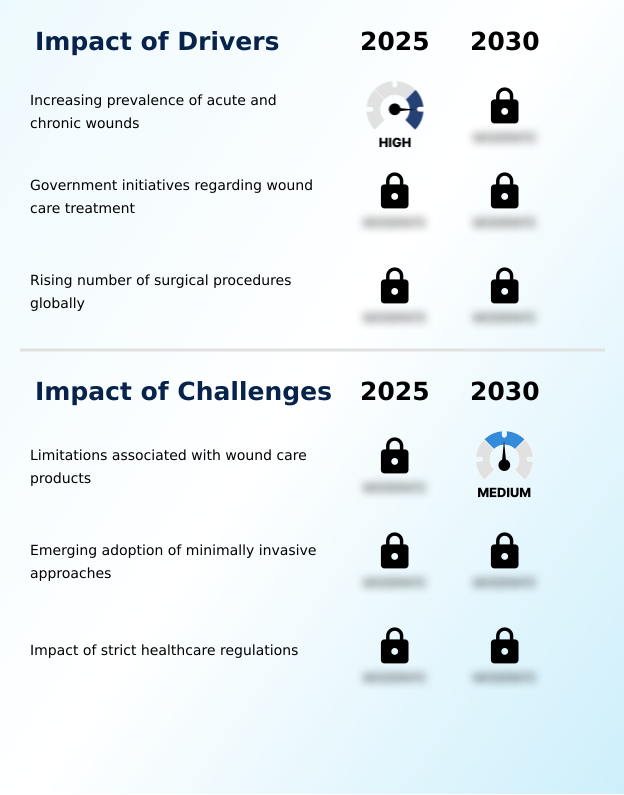
Our researchers analyzed the data with 2025 as the base year, along with the key drivers, trends, and challenges. A holistic analysis of drivers will help companies refine their marketing strategies to gain a competitive advantage.
- Strategic decision-making in the bioactive wound dressing market is increasingly complex, requiring a nuanced understanding of product efficacy across diverse clinical scenarios. For instance, selecting bioactive dressings for diabetic ulcers involves different considerations than choosing hemostatic dressings in trauma care. Clinicians frequently evaluate collagen vs.
- alginate wound care based on wound type and exudate levels, while also being mindful of the hydrocolloid dressing infection risk. The benefits of silver-impregnated dressings in preventing infection must be weighed against their cost. The market is also seeing specialization, with a focus on advanced wound care for geriatric patients and the development of pediatric bioactive wound care solutions.
- Furthermore, the role of bioactive dressings in home healthcare is expanding, driven by the need for cost-effectiveness of hydrocolloid dressings and other advanced products outside of traditional hospital settings. This trend is particularly relevant for pressure ulcer prevention with bioactive dressings and managing post-operative wounds with antimicrobial dressings for surgical wounds.
- Supply chain planning must adapt to this diversification, as market growth, which has accelerated from a rate below 4.2%, demands efficient distribution of advanced wound care for venous ulcers and other chronic conditions.
What are the key market drivers leading to the rise in the adoption of Bioactive Wound Dressing Industry?
- The increasing prevalence of acute and chronic wounds is a key driver fueling the growth of the market.
- The primary driver for the bioactive wound dressing market is the rising global prevalence of chronic wounds and an increasing volume of surgical procedures. Conditions like diabetic foot ulcers necessitate advanced solutions for effective tissue regeneration and biofilm disruption.
- In surgical settings, the focus on surgical site infection prevention is critical for reducing hospital stays and associated costs.
- The general surgery application segment is more than double the size of the minimally invasive segment, underscoring its role as a core driver for products like silver alginate dressings.
- This sustained demand, contributing to a steady year-over-year market expansion of 4.5%, encourages continuous innovation in materials such as hemostatic agents and combination dressings that improve clinical outcomes.
What are the market trends shaping the Bioactive Wound Dressing Industry?
- A significant upcoming market trend is the rising demand for advanced wound care solutions, driven by the needs of the growing geriatric population.
- Key trends in the bioactive wound dressing market are centered on personalization and technological convergence. There is a growing emphasis on developing smart wound dressings and leveraging nanotechnology in wound dressings to enhance therapeutic delivery and monitoring. This is driven by demand from an aging population requiring more sophisticated chronic wound management.
- The development of medical-grade honey and iodine-based dressings offers alternatives to traditional antimicrobials. As a result, certain advanced material segments are expanding at a rate nearly 10% faster than conventional ones.
- Furthermore, with two regions accounting for over 70% of the global opportunity, market players are tailoring their product portfolios, including synthetic skin substitutes, to meet specific regional healthcare priorities and reimbursement structures.
What challenges does the Bioactive Wound Dressing Industry face during its growth?
- Limitations associated with existing wound care products present a key challenge that could affect industry growth.
- Key challenges in the bioactive wound dressing market stem from clinical limitations, regulatory hurdles, and cost pressures. While advanced materials like collagen matrix and amniotic membrane allografts offer significant benefits, their high cost can limit adoption in markets with less favorable reimbursement policies. Strict regulatory pathways for novel products containing growth factors slow the pace of innovation.
- Furthermore, clinical issues such as skin maceration and the potential for hydrocolloid dressing infection risk remain concerns. Market fragmentation also poses a challenge, with growth rates between the most and least developed regions differing by as much as 20%, complicating global strategy and supply chain management for specialized products.
Exclusive Technavio Analysis on Customer Landscape
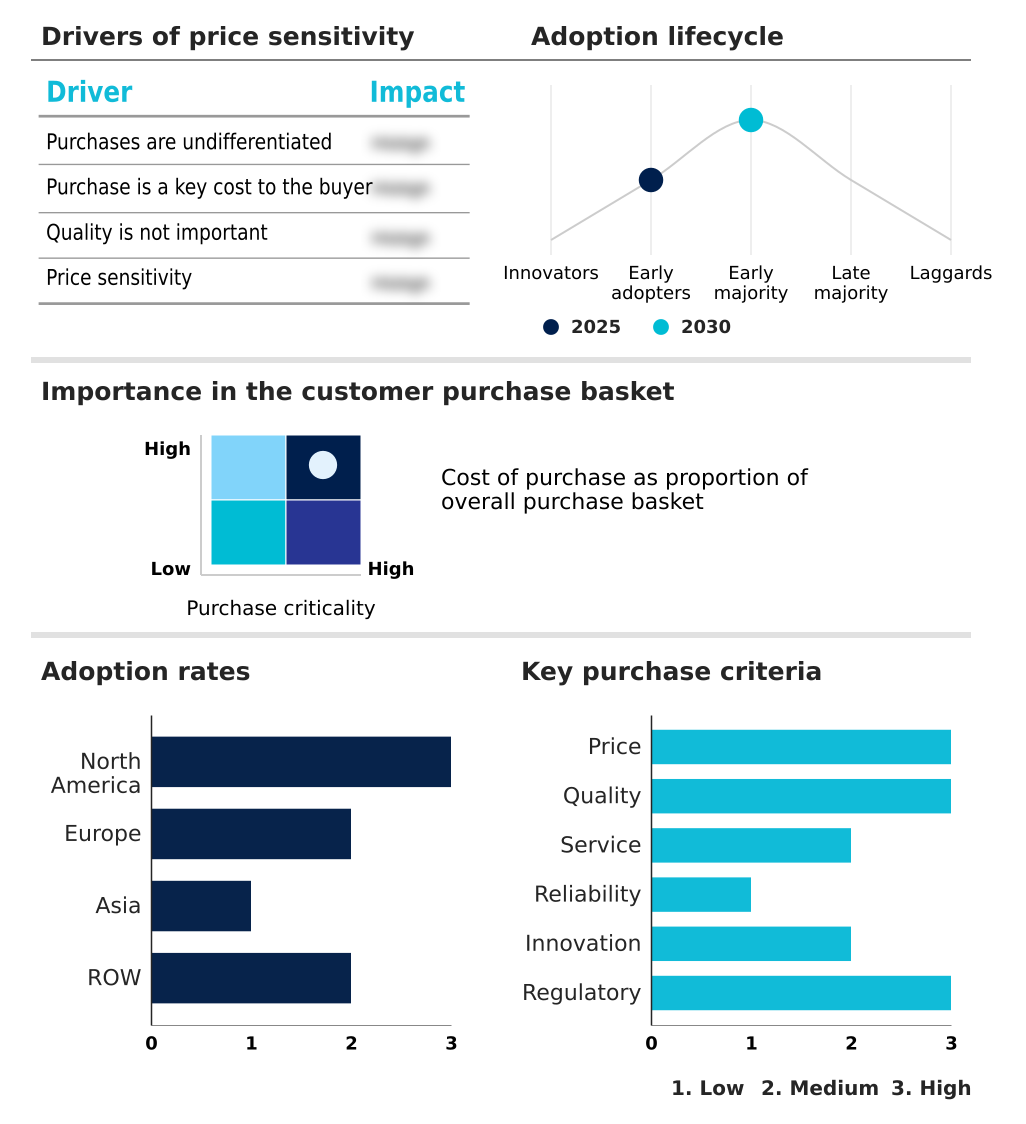
The bioactive wound dressing market forecasting report includes the adoption lifecycle of the market, covering from the innovator’s stage to the laggard’s stage. It focuses on adoption rates in different regions based on penetration. Furthermore, the bioactive wound dressing market report also includes key purchase criteria and drivers of price sensitivity to help companies evaluate and develop their market growth analysis strategies.
Customer Landscape of Bioactive Wound Dressing Industry
Competitive Landscape
Companies are implementing various strategies, such as strategic alliances, bioactive wound dressing market forecast, partnerships, mergers and acquisitions, geographical expansion, and product/service launches, to enhance their presence in the industry.
3M Co. - The company provides chitosan-based dressings designed for rapid bleeding control and effective wound management in various clinical and emergency settings.
The industry research and growth report includes detailed analyses of the competitive landscape of the market and information about key companies, including:
- 3M Co.
- Axio Biosolutions Pvt. Ltd.
- B.Braun SE
- Coloplast AS
- ConvaTec Group Plc
- Covalon Technologies Ltd.
- DermaRite Industries LLC
- ETS Tech Holdings LLC
- Hollister Inc.
- Integra LifeSciences Corp.
- Johnson and Johnson Services
- Medline Industries LP
- Medtronic Plc
- MiMedx Group Inc.
- Molnlycke Health Care AB
- Organogenesis Holdings Inc.
- Paul Hartmann AG
- Smith and Nephew plc
- Urgo Medical
Qualitative and quantitative analysis of companies has been conducted to help clients understand the wider business environment as well as the strengths and weaknesses of key industry players. Data is qualitatively analyzed to categorize companies as pure play, category-focused, industry-focused, and diversified; it is quantitatively analyzed to categorize companies as dominant, leading, strong, tentative, and weak.
Recent Development and News in Bioactive wound dressing market
- In July, 2025, MiMedx Group Inc. announced a strategic collaboration with Vaporox, Inc. to co-promote their respective wound care offerings, integrating placental allografts with hyperoxia therapy.
- In July, 2025, ConvaTec Group Plc received regulatory clearance for Aquacel ConvaFiber, a next-generation gelling fiber dressing designed for enhanced structural integrity and absorption in acute surgical wounds.
- In May, 2025, Summit Products Group launched its operations with a strategic partnership to distribute NovaForm Wound Matrix, a bioactive synthetic wound dressing for surgical and wound care markets.
- In April, 2025, ConvaTec Group Plc announced the initial market launch of ConvaNiox, a novel nitric oxide-generating multimodal dressing designed to manage hard-to-heal wounds.
Dive into Technavio’s robust research methodology, blending expert interviews, extensive data synthesis, and validated models for unparalleled Bioactive Wound Dressing Market insights. See full methodology.
| Market Scope | |
|---|---|
| Page number | 278 |
| Base year | 2025 |
| Historic period | 2020-2024 |
| Forecast period | 2026-2030 |
| Growth momentum & CAGR | Accelerate at a CAGR of 4.7% |
| Market growth 2026-2030 | USD 1033.8 million |
| Market structure | Fragmented |
| YoY growth 2025-2026(%) | 4.5% |
| Key countries | US, Canada, Mexico, Germany, UK, France, Italy, Spain, The Netherlands, China, India, Japan, South Korea, Thailand, Indonesia, Brazil, Argentina, Saudi Arabia, Colombia, UAE, Turkey, South Africa and Israel |
| Competitive landscape | Leading Companies, Market Positioning of Companies, Competitive Strategies, and Industry Risks |
Research Analyst Overview
- The bioactive wound dressing market is evolving beyond simple wound coverage toward active therapeutic solutions that directly influence tissue repair. This progression is powered by advancements in materials such as collagen matrix, alginate dressings, and chitosan-based dressing options, which are integrated with antimicrobial agents and growth factors. The development of hydrofiber technology and innovative gelling fiber products exemplifies this trend.
- Boardroom-level product strategy is increasingly shaped by the challenge of antimicrobial resistance, pushing for new investments in bioactive synthetic wound dressing technologies and solutions for biofilm disruption. Hemostatic agents are critical for surgical applications, while placental allograft and synthetic skin substitutes offer regenerative pathways for complex wounds. Medical-grade honey and iodine-based dressings provide natural antimicrobial alternatives.
- The market's incremental growth is heavily concentrated, with North America contributing over 40% of the expansion, a key data point for strategic resource allocation. Innovations like nanotechnology in wound dressings and smart wound dressings are paving the way for the next generation of care, moving toward more personalized and effective treatments.
What are the Key Data Covered in this Bioactive Wound Dressing Market Research and Growth Report?
-
What is the expected growth of the Bioactive Wound Dressing Market between 2026 and 2030?
-
USD 1.03 billion, at a CAGR of 4.7%
-
-
What segmentation does the market report cover?
-
The report is segmented by Type (Moist wound care, Active wound care, and Antimicrobial care), Application (General surgery, and Minimally invasive surgery), End-user (Hospitals, Clinics, and Others) and Geography (North America, Europe, Asia, Rest of World (ROW))
-
-
Which regions are analyzed in the report?
-
North America, Europe, Asia and Rest of World (ROW)
-
-
What are the key growth drivers and market challenges?
-
Increasing prevalence of acute and chronic wounds, Limitations associated with wound care products
-
-
Who are the major players in the Bioactive Wound Dressing Market?
-
3M Co., Axio Biosolutions Pvt. Ltd., B.Braun SE, Coloplast AS, ConvaTec Group Plc, Covalon Technologies Ltd., DermaRite Industries LLC, ETS Tech Holdings LLC, Hollister Inc., Integra LifeSciences Corp., Johnson and Johnson Services, Medline Industries LP, Medtronic Plc, MiMedx Group Inc., Molnlycke Health Care AB, Organogenesis Holdings Inc., Paul Hartmann AG, Smith and Nephew plc and Urgo Medical
-
Market Research Insights
- The bioactive wound dressing market is characterized by a rapid shift toward value-based healthcare, where clinical outcomes directly influence product adoption. The focus on active chronic wound management and tissue regeneration has intensified, with technologies that enable biofilm disruption and superior exudate management gaining significant traction. This is creating a highly competitive environment where product innovation is critical.
- The market's incremental growth is highly concentrated, with the two leading global regions accounting for over 70% of the opportunity, compelling businesses to adopt targeted strategies.
- This dynamic underscores the importance of solutions that not only promote moist wound healing but also offer tangible benefits like surgical site infection prevention, which are crucial for improving hospital performance metrics and securing favorable reimbursement.
We can help! Our analysts can customize this bioactive wound dressing market research report to meet your requirements.
 RIA -
RIA - 
