

Biodegradable Polymers Market Analysis, Size, and Forecast 2025-2029: North America (US), Europe (Belgium, France, Germany, and The Netherlands), APAC (China, Japan, South Korea, and Thailand), South America (Brazil), and Rest of World (ROW)

Biodegradable Polymers Market Analysis, Size, and Forecast 2025-2029:
North America (US), Europe (Belgium, France, Germany, and The Netherlands), APAC (China, Japan, South Korea, and Thailand), South America (Brazil), and Rest of World (ROW)

Published: May 2025 253 Pages SKU: IRTNTR44384

Market Overview at a Glance

$3.39 B
Market Opportunity
8.2%
CAGR
7.0
YoY growth 2024-2025(%)

Biodegradable Polymers Market Size 2025-2029

The biodegradable polymers market size is forecast to increase by USD 3.39 billion, at a CAGR of 8.2% between 2024 and 2029.

  • The market is driven by the increasing global focus on environmental sustainability, leading to a rise in demand for eco-friendly alternatives to traditional plastics. Key players in this market, such as BASF SE, Corbion, and Novamont, are responding to this trend by launching innovative biodegradable polymer solutions. For instance, BASF SE's Ecoflex brand offers polylactide (PLA) for various applications, including packaging, while Corbion's Luminy PLA is used in food packaging and automotive industries. However, performance limitations pose a significant challenge to the market's growth. Biodegradable polymers often struggle to match the strength, durability, and cost-effectiveness of conventional plastics. Addressing these performance issues will require ongoing research and development efforts.
  • Additionally, the market faces challenges related to scalability and affordability, as producing biodegradable polymers on a large scale can be complex and costly. Despite these challenges, the potential for biodegradable polymers to reduce plastic waste and minimize environmental impact makes them an attractive alternative for businesses seeking to align with sustainability initiatives. Companies that can successfully address performance limitations and scale up production will be well-positioned to capitalize on this growing market opportunity. Biodegradable plastics derived from renewable resources, like PLA and PBS, are gaining traction in various sectors, including food packaging and consumer goods.

What will be the Size of the Biodegradable Polymers Market during the forecast period?
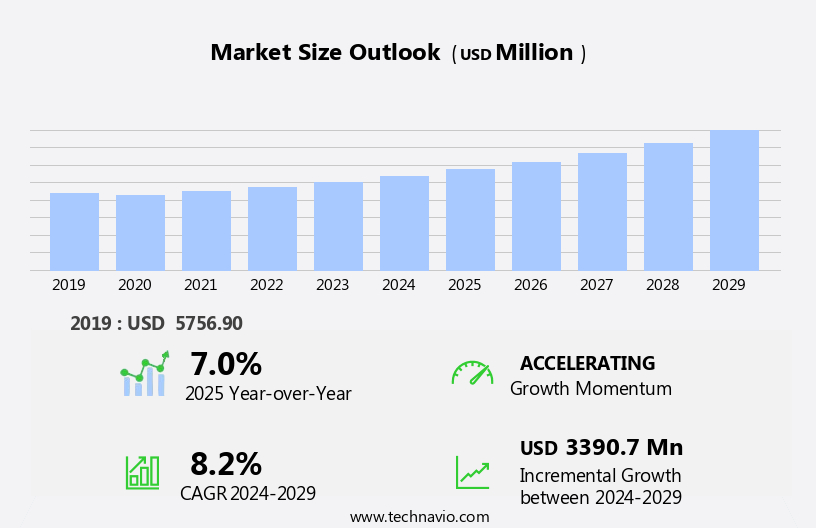
Biodegradable Polymers Market Size

Explore in-depth regional segment analysis with market size data - historical 2019-2023 and forecasts 2025-2029 - in the full report.  
 Request Free Sample

  • The market is experiencing significant growth, driven by increasing sustainability standards and consumer perception towards eco-friendly alternatives. The competitive landscape analysis reveals a diverse range of players, including those specializing in bio-based resins, such as polyvinyl chloride (PVC), polyamide (PA), polyethylene (PE), and polyester (PET). Government regulations are also playing a crucial role in boosting bioplastic adoption, particularly in industries like blow molding and injection molding. Bio-based colorants, lubricants, fillers, and processing technologies are key innovation areas, offering investment opportunities for businesses.
  • However, market restraints include higher production costs compared to conventional plastics. The bioplastic market is segmented by industry applications and regions, with the future outlook showing promising growth in various sectors. Polypropylene (PP) and PVC are prominent traditional plastic markets facing increasing competition from bioplastics. The applications of bioplastics extend beyond packaging, with potential in textiles, automotive, and construction industries.

How is this Biodegradable Polymers Industry segmented?

The biodegradable polymers industry research report provides comprehensive data (region-wise segment analysis), with forecasts and estimates in "USD million" for the period 2025-2029, as well as historical data from 2019-2023 for the following segments.

  • Method
    • Injection molding
    • Extrusion
    • Blow molding
    • Thermoforming
    • Others
  • Industry Application
    • Packaging
    • Agriculture
    • Biomedical
    • Textiles
    • Others
  • Type
    • PLA
    • Starch-based polymers
    • PHA
    • PBS
    • Others
  • Geography
    • North America
      • US
    • Europe
      • Belgium
      • France
      • Germany
      • The Netherlands
    • APAC
      • China
      • Japan
      • South Korea
      • Thailand
    • South America
      • Brazil
    • Rest of World (ROW)

By Method Insights

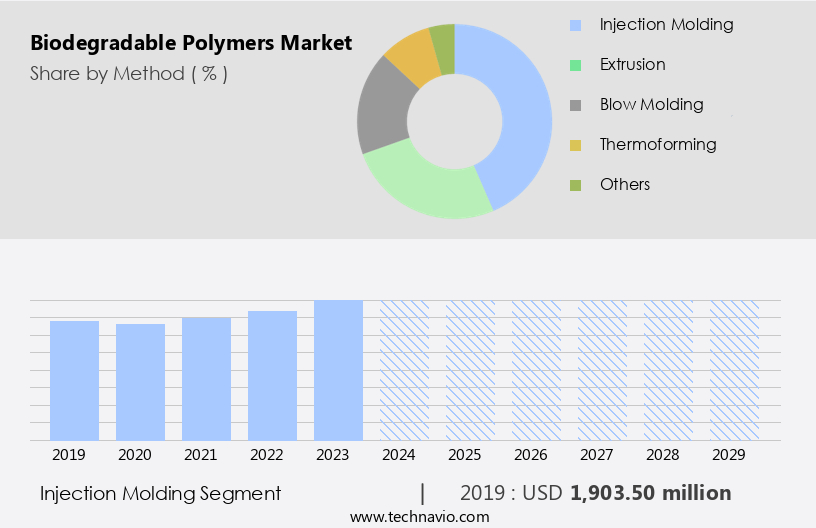
The injection molding segment is estimated to witness significant growth during the forecast period. Injection molding is a prominent process in the market, known for producing complex, high-precision components at scale. This method involves injecting molten biodegradable polymer into a mold cavity, where it cools and solidifies into the desired shape. Suitable for high-volume production, injection molding ensures consistent quality and dimensional accuracy. Biodegradable polymers, such as polylactic acid (PLA) and polybutylene succinate (PBS), are frequently utilized due to their favorable flow characteristics and thermal behavior. These materials can be efficiently molded into intricate geometries, making them suitable for applications demanding both aesthetic and functional precision.

Biopolymer synthesis through microbial fermentation and polymer blends are key trends driving market growth. Biodegradable polymers offer improved mechanical properties, such as impact strength and flexural modulus, and can be recycled through mechanical, chemical, or composting processes. PLA, for instance, has a relatively low carbon footprint and is compostable under specific conditions, making it a popular choice for biodegradable bottles and films. PBS, on the other hand, exhibits excellent barrier properties, making it suitable for use in biodegradable bags and mulch films. Biodegradable coatings and bioplastic certification schemes ensure consumer trust and compliance with bioplastic standards.

The industry's focus on reducing waste, improving biodegradation rates, and enhancing the mechanical and thermal properties of biodegradable polymers is expected to further fuel market expansion.
Biodegradable Polymers Market Size

Request Free Sample

The Injection molding segment was valued at USD 1.9 billion in 2019 and showed a gradual increase during the forecast period.

The Biodegradable Polymers Market is expanding with the integration of biobased fillers that enhance material strength while maintaining sustainability. The use of biobased lubricants improves processing efficiency in bioplastic processing, optimizing manufacturing techniques. Addressing bioplastic production costs is critical for wider adoption, with advancements reducing expenses and increasing feasibility. Detailed bioplastic market segmentation provides insights into demand across various sectors. The market's applications by industry include packaging, automotive, and healthcare, driving innovation and eco-friendly solutions. Regional demand variations influence applications by region, with Europe and North America leading in sustainability initiatives.

The Biodegradable Polymers Market is growing with increased focus on polyhydroxyalkanoates (PHAs), which offer eco-friendly alternatives in packaging and medical applications. Innovations in plant-based polymers drive sustainability, reducing reliance on traditional petrochemicals. Advanced chemical recycling methods enhance polymer recovery and reuse, minimizing environmental impact.

The circular economy concept is increasingly influencing the bioplastics industry, with a focus on reducing waste and promoting sustainable packaging. Innovations in bioplastics, such as biodegradable films and biodegradable plastics with enhanced oxygen permeability, are driving market expansion. Bioplastics in agriculture, particularly biodegradable mulch films, are also gaining attention due to their potential to reduce plastic waste and improve crop yields. In summary, the market is witnessing significant growth, driven by advancements in biopolymer synthesis, recycling technologies, and the increasing demand for sustainable packaging solutions. Injection molding remains a crucial processing method for manufacturing high-quality, biodegradable components, while PLA and PBS continue to dominate the market due to their favorable properties.

Regional Analysis

APAC is estimated to contribute 46% to the growth of the global market during the forecast period. Technavio's analysts have elaborately explained the regional trends and drivers that shape the market during the forecast period.
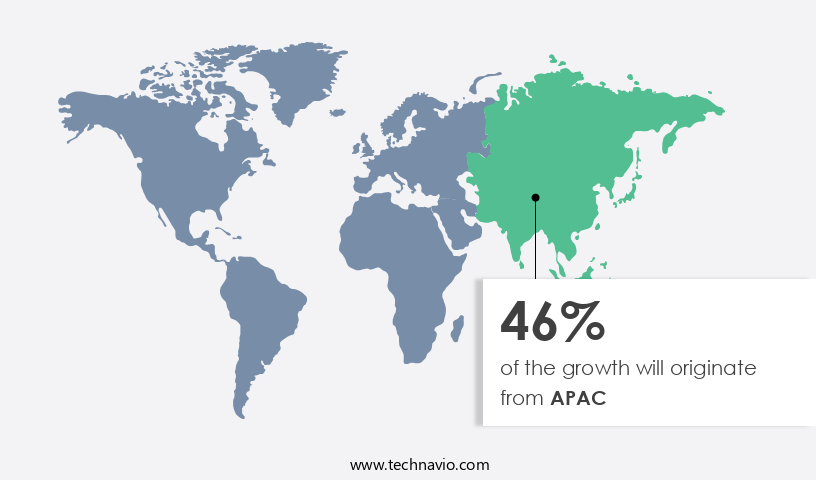
Biodegradable Polymers Market Share by Geography

Download Free Sample Report

The Asia-Pacific region is leading the global bioplastics market, driven by strategic initiatives and innovations in sustainable materials. India, in particular, is taking a prominent role in this transition. On October 16, 2024, India inaugurated its first Biopolymer Demonstration Facility in Jejuri, Pune, developed by Praj Industries. This facility focuses on producing biodegradable polylactic acid (PLA) bioplastics, supported by the national government. This initiative aligns with India's ambition to expand its bioeconomy, which reached a significant valuation milestone in 2023. The APAC market is witnessing a strong commitment to environmental stewardship, with several countries advancing policies and technologies to reduce plastic pollution and foster a circular economy.

Bio-based polymers, such as PLA, are gaining popularity due to their lower carbon footprint and biodegradable properties. These polymers are used in various applications, including food packaging, consumer goods, and biodegradable bottles. Innovations in biodegradable films, biodegradable coatings, and bioplastics in agriculture are also contributing to the market's evolution. The use of renewable resources in bioplastic production is a key trend, as is the focus on improving mechanical properties, such as impact strength, flexural modulus, and tensile strength, as well as thermal properties and barrier properties.

The market is also witnessing the emergence of chemical and mechanical recycling, composting, and compostability certification. ASTM D6400 and other bioplastic standards play a crucial role in ensuring product quality and consistency. The market's future looks promising, with ongoing research and development efforts aimed at enhancing the performance and sustainability of bioplastics. Polybutylene succinate (PBS) and other biodegradable polymers are expected to gain traction due to their unique properties and potential applications. Overall, the bioplastics market is an exciting and dynamic space, driven by a growing demand for sustainable alternatives to fossil-based plastics.

Market Dynamics

Our researchers analyzed the data with 2024 as the base year, along with the key drivers, trends, and challenges. A holistic analysis of drivers will help companies refine their marketing strategies to gain a competitive advantage.

What are the Biodegradable Polymers market drivers leading to the rise in the adoption of Industry?

  • The increasing awareness and concern for environmental issues serve as the primary catalyst for market growth. The market is driven by growing environmental concerns over plastic waste and its long-term impact on ecosystems. In 2024, an estimated 220 million tonnes of plastic waste were generated worldwide, with around one-third, equivalent to 69.5 million tonnes, being mismanaged. This has led to significant pollution of land, marine, and atmospheric environments. The low global recycling rate, which remains at approximately 9 percent, exacerbates the issue, resulting in the accumulation of plastics in ecosystems where they persist for centuries. Biodegradable polymers offer a sustainable alternative to conventional plastics, with the ability to decompose naturally through mechanical recycling or composting.
  • Two common biodegradable polymers are polybutylene succinate (PBS) and biodegradable films. PBS, with a melting point of 115-125°C, is a biodegradable aliphatic polyester derived from renewable resources. Biodegradable films, on the other hand, are used for various applications, including agricultural mulch films. Innovation in bioplastics continues to advance, with research focusing on improving the biodegradation rate and reducing the composting time of these materials. As businesses and consumers increasingly prioritize sustainability, the demand for biodegradable polymers in applications such as packaging is expected to grow.

What are the Biodegradable Polymers market trends shaping the Industry?

  • The focus on new product launches is a prevailing market trend. It is essential for businesses to prioritize this area to stay competitive and innovative. The market is witnessing significant growth due to the increasing demand for eco-friendly and sustainable solutions. One key trend in this market is the development of high-performance biodegradable polymers that offer superior properties such as impact strength and oxygen permeability. Fiber reinforcement and bioplastic additives are being used to enhance the performance of biodegradable polymers, making them suitable for various applications, particularly in the packaging industry. Bioplastic recycling is another area of focus in the market. Companies are investing in research and development to create effective recycling solutions for bioplastics. Bio-based polymers, such as polylactic acid (PLA), are gaining popularity due to their biodegradability and reduced carbon footprint.
  • These polymers are being used extensively in food packaging applications, where the need for sustainable and biodegradable solutions is high. Leading companies in the market are introducing innovative biodegradable polymer solutions to cater to the evolving demands of industries. For instance, Lubrizol Life Science Beauty recently launched Carbopol Fusion S-20, a sustainable and inherently biodegradable Carbopol polymer for skin cleansing and hair care applications. This rheology modifier is derived from renewable starch and is free from GMOs, ethylene oxide, and PEGs. It aligns with all 12 Principles of Green Chemistry and offers a low carbon footprint, making it a preferred choice for environmentally conscious consumers.

How does Biodegradable Polymers market face challenges during its growth?

  • The market faces performance limitations, which pose a significant challenge to its broader adoption in various industries. Biodegradable polymers, derived from renewable resources, provide environmental benefits, but they often fail to match the mechanical and functional properties of conventional plastics like polyethylene and polypropylene. Biodegradable polymers such as polylactic acid (PLA) and bio-based composites, including compostable polymers and biodegradable coatings, exhibit lower tensile strength, reduced flexibility, and limited barrier properties. These deficiencies hinder their effectiveness in applications demanding durability, impact resistance, or long-term preservation, such as food packaging, automotive components, and medical devices. For instance, PLA, a widely used biodegradable polymer, is known for its brittleness and relatively low thermal resistance.
  • The market's growth is also influenced by the increasing demand for biodegradable consumer goods, bioplastic certification, and bioplastic standards that support the circular economy. Despite these challenges, ongoing research and development efforts aim to improve the performance characteristics of biodegradable polymers, making them a viable alternative to conventional plastics. The market is expected to continue its growth trajectory due to the increasing demand for sustainable and eco-friendly solutions. Companies are focusing on developing high-performance biodegradable polymers and effective recycling solutions to cater to the evolving demands of various industries. The use of bio-based polymers, such as polylactic acid, is gaining popularity, particularly in the packaging industry. The market is expected to witness significant growth in the coming years, driven by the increasing awareness of sustainability and the need for eco-friendly solutions.

Exclusive Customer Landscape

The biodegradable polymers market forecasting report includes the adoption lifecycle of the market, covering from the innovator's stage to the laggard's stage. It focuses on adoption rates in different regions based on penetration. Furthermore, the biodegradable polymers market report also includes key purchase criteria and drivers of price sensitivity to help companies evaluate and develop their market growth analysis strategies.
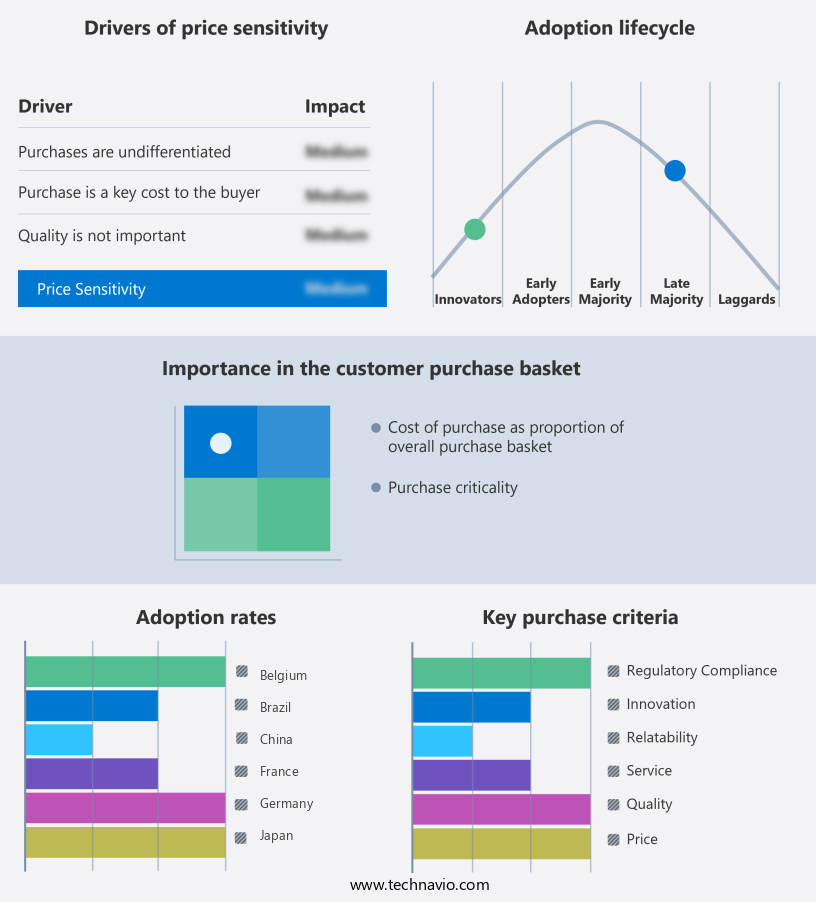
Biodegradable Polymers Market Share by Geography

 Customer Landscape

Key Companies & Market Insights

Companies are implementing various strategies, such as strategic alliances, biodegradable polymers market forecast, partnerships, mergers and acquisitions, geographical expansion, and product/service launches, to enhance their presence in the industry.

BASF SE - The company specializes in the production and supply of biodegradable polymers, specifically ecoflex and ecovio.

The industry research and growth report includes detailed analyses of the competitive landscape of the market and information about key companies, including:

  • BASF SE
  • BioLogiQ Inc.
  • Biome Bioplastics Ltd.
  • Corbion N.V.
  • DuPont de Nemours Inc.
  • Evonik Industries AG
  • Fkur Kunststoff GmbH
  • Jiangmen Xinshuo New Materials Co. Ltd
  • Kaneka Corp.
  • LG Chem Ltd.
  • Mitsubishi Chemical Group Corp.
  • Mitsui Chemicals Inc.
  • NatureWorks LLC
  • Novamont S.p.A.
  • Solvay SA
  • Trinseo PLC
  • Xiamen Changsu Industrial Co. Ltd.

Qualitative and quantitative analysis of companies has been conducted to help clients understand the wider business environment as well as the strengths and weaknesses of key industry players. Data is qualitatively analyzed to categorize companies as pure play, category-focused, industry-focused, and diversified; it is quantitatively analyzed to categorize companies as dominant, leading, strong, tentative, and weak.

Recent Development and News in Biodegradable Polymers Market

  • In January 2024, BASF SE, a leading chemical producer, announced the commercial production of its new biodegradable polymer, Ecoflex F, at its site in Ludwigshafen, Germany. This development marks a significant stride towards sustainable plastic solutions, as Ecoflex F can decompose in industrial composting facilities within six months (BASF SE, 2024).
  • In March 2025, Danish biotech company Novozymes and American chemical company DuPont announced a strategic partnership to develop and commercialize biodegradable polymers using microbial enzymes. This collaboration aims to reduce plastic waste by enhancing the biodegradability of plastics, thereby addressing the growing environmental concerns (DuPont, 2025).
  • In May 2024, LG Chem, a South Korean chemical company, secured a USD 100 million investment from SK Innovation to expand its biodegradable polymer production capacity. This investment will enable LG Chem to increase its market share and meet the rising demand for eco-friendly alternatives to traditional plastics (LG Chem, 2024).

Research Analyst Overview

The market continues to evolve, driven by the increasing demand for sustainable alternatives to traditional fossil fuel-based plastics. Biodegradable polymers, derived from renewable resources, offer numerous advantages such as reduced carbon footprint, biodegradability, and improved mechanical properties. Bioplastic additives play a crucial role in enhancing the performance of biodegradable polymers. Impact strength and fiber reinforcement are essential properties that can be enhanced through the addition of these additives. Bioplastic recycling is another area of focus, with chemical, mechanical, and composting methods being explored to extend the lifecycle of biodegradable polymers. Biodegradable plastics find extensive applications in various sectors, including food packaging, bioplastics in agriculture, and consumer goods.

Biodegradable bottles, biodegradable bags, and biodegradable coatings are some of the popular applications. Biopolymer synthesis techniques such as microbial fermentation and polymer blends are continually being innovated to improve production efficiency and reduce costs. Bioplastic market growth is driven by the increasing awareness of environmental issues and the need for sustainable solutions. Polylactic acid (PLA) and polyhydroxyalkanoates (PHA) are some of the commonly used bio-based polymers. Oxygen permeability and barrier properties are critical factors that determine the suitability of biodegradable polymers for various applications. Biodegradable polymers are subjected to various certification and standardization processes, including compostability certification, bioplastic certification, and environmental impact assessment.

The circular economy concept is gaining traction, with the focus on reducing waste and promoting the reuse and recycling of biodegradable polymers. Biodegradable polymers are finding increasing use in agriculture, particularly in mulch films and biodegradable coatings for seeds. The ongoing research and development in biopolymer synthesis and biodegradation technologies are expected to drive the growth of the market. The mechanical properties of biodegradable polymers, including tensile strength, flexural modulus, and melting point, are continually being optimized to meet the requirements of various applications. Biodegradable films are gaining popularity due to their excellent barrier properties and biodegradability. Innovation in bioplastics is a continuous process, with researchers exploring new methods for biopolymer synthesis, biodegradation, and recycling.

The future of biodegradable polymers looks promising, with the potential to replace fossil fuel-based plastics and contribute to a more sustainable future.

Dive into Technavio's strong research methodology, blending expert interviews, extensive data synthesis, and validated models for unparalleled Biodegradable Polymers Market insights. See full methodology.

Market Scope

Report Coverage

Details

Page number

253

Base year

2024

Historic period

2019-2023

Forecast period

2025-2029

Growth momentum & CAGR

Accelerate at a CAGR of 8.2%

Market growth 2025-2029

USD 3.39 billion

Market structure

Fragmented

YoY growth 2024-2025(%)

7.0

Key countries

China, US, Japan, Thailand, South Korea, France, Germany, Brazil, Belgium, and The Netherlands

Competitive landscape

Leading Companies, Market Positioning of Companies, Competitive Strategies, and Industry Risks

Request Free Sample

What are the Key Data Covered in this Biodegradable Polymers Market Research and Growth Report?

  • CAGR of the Biodegradable Polymers industry during the forecast period
  • Detailed information on factors that will drive the growth and forecasting between 2025 and 2029
  • Precise estimation of the size of the market and its contribution of the industry in focus to the parent market
  • Accurate predictions about upcoming growth and trends and changes in consumer behaviour
  • Growth of the market across APAC, North America, Europe, South America, and Middle East and Africa
  • Thorough analysis of the market's competitive landscape and detailed information about companies
  • Comprehensive analysis of factors that will challenge the biodegradable polymers market growth of industry companies

We can help! Our analysts can customize this biodegradable polymers market research report to meet your requirements.

Get in touch

1 Executive Summary

  • 1.1 Market overview
    • Executive Summary - Chart on Market Overview
    • Executive Summary - Data Table on Market Overview
    • Executive Summary - Chart on Global Market Characteristics
    • Executive Summary - Chart on Market by Geography
    • Executive Summary - Chart on Market Segmentation by Method
    • Executive Summary - Chart on Market Segmentation by Industry Application
    • Executive Summary - Chart on Market Segmentation by Type
    • Executive Summary - Chart on Incremental Growth
    • Executive Summary - Data Table on Incremental Growth
    • Executive Summary - Chart on Company Market Positioning

2 Technavio Analysis

  • 2.1 Analysis of price sensitivity, lifecycle, customer purchase basket, adoption rates, and purchase criteria
    • Analysis of price sensitivity, lifecycle, customer purchase basket, adoption rates, and purchase criteria
  • 2.2 Criticality of inputs and Factors of differentiation
    • Overview on criticality of inputs and factors of differentiation
  • 2.3 Factors of disruption
    • Overview on factors of disruption
  • 2.4 Impact of drivers and challenges
    • Impact of drivers and challenges in 2024 and 2029

3 Market Landscape

  • 3.1 Market ecosystem
    • Parent Market
    • Data Table on - Parent Market
  • 3.2 Market characteristics
    • Market characteristics analysis
  • 3.3 Value chain analysis
    • Value chain analysis

4 Market Sizing

  • 4.1 Market definition
    • Offerings of companies included in the market definition
  • 4.2 Market segment analysis
    • Market segments
  • 4.3 Market size 2024
    • 4.4 Market outlook: Forecast for 2024-2029
      • Chart on Global - Market size and forecast 2024-2029 ($ million)
      • Data Table on Global - Market size and forecast 2024-2029 ($ million)
      • Chart on Global Market: Year-over-year growth 2024-2029 (%)
      • Data Table on Global Market: Year-over-year growth 2024-2029 (%)

    5 Historic Market Size

    • 5.1 Global Biodegradable Polymers Market 2019 - 2023
      • Historic Market Size - Data Table on Global Biodegradable Polymers Market 2019 - 2023 ($ million)
    • 5.2 Method segment analysis 2019 - 2023
      • Historic Market Size - Method Segment 2019 - 2023 ($ million)
    • 5.3 Industry Application segment analysis 2019 - 2023
      • Historic Market Size - Industry Application Segment 2019 - 2023 ($ million)
    • 5.4 Type segment analysis 2019 - 2023
      • Historic Market Size - Type Segment 2019 - 2023 ($ million)
    • 5.5 Geography segment analysis 2019 - 2023
      • Historic Market Size - Geography Segment 2019 - 2023 ($ million)
    • 5.6 Country segment analysis 2019 - 2023
      • Historic Market Size - Country Segment 2019 - 2023 ($ million)

    6 Qualitative Analysis

    • 6.1 Impact Analysis of U.S. Tariffs on Global Biodegradable Polymers Market

      7 Five Forces Analysis

      • 7.1 Five forces summary
        • Five forces analysis - Comparison between 2024 and 2029
      • 7.2 Bargaining power of buyers
        • Bargaining power of buyers - Impact of key factors 2024 and 2029
      • 7.3 Bargaining power of suppliers
        • Bargaining power of suppliers - Impact of key factors in 2024 and 2029
      • 7.4 Threat of new entrants
        • Threat of new entrants - Impact of key factors in 2024 and 2029
      • 7.5 Threat of substitutes
        • Threat of substitutes - Impact of key factors in 2024 and 2029
      • 7.6 Threat of rivalry
        • Threat of rivalry - Impact of key factors in 2024 and 2029
      • 7.7 Market condition
        • Chart on Market condition - Five forces 2024 and 2029

      8 Market Segmentation by Method

      • 8.1 Market segments
        • Chart on Method - Market share 2024-2029 (%)
        • Data Table on Method - Market share 2024-2029 (%)
      • 8.2 Comparison by Method
        • Chart on Comparison by Method
        • Data Table on Comparison by Method
      • 8.3 Injection molding - Market size and forecast 2024-2029
        • Chart on Injection molding - Market size and forecast 2024-2029 ($ million)
        • Data Table on Injection molding - Market size and forecast 2024-2029 ($ million)
        • Chart on Injection molding - Year-over-year growth 2024-2029 (%)
        • Data Table on Injection molding - Year-over-year growth 2024-2029 (%)
      • 8.4 Extrusion - Market size and forecast 2024-2029
        • Chart on Extrusion - Market size and forecast 2024-2029 ($ million)
        • Data Table on Extrusion - Market size and forecast 2024-2029 ($ million)
        • Chart on Extrusion - Year-over-year growth 2024-2029 (%)
        • Data Table on Extrusion - Year-over-year growth 2024-2029 (%)
      • 8.5 Blow molding - Market size and forecast 2024-2029
        • Chart on Blow molding - Market size and forecast 2024-2029 ($ million)
        • Data Table on Blow molding - Market size and forecast 2024-2029 ($ million)
        • Chart on Blow molding - Year-over-year growth 2024-2029 (%)
        • Data Table on Blow molding - Year-over-year growth 2024-2029 (%)
      • 8.6 Thermoforming - Market size and forecast 2024-2029
        • Chart on Thermoforming - Market size and forecast 2024-2029 ($ million)
        • Data Table on Thermoforming - Market size and forecast 2024-2029 ($ million)
        • Chart on Thermoforming - Year-over-year growth 2024-2029 (%)
        • Data Table on Thermoforming - Year-over-year growth 2024-2029 (%)
      • 8.7 Others - Market size and forecast 2024-2029
        • Chart on Others - Market size and forecast 2024-2029 ($ million)
        • Data Table on Others - Market size and forecast 2024-2029 ($ million)
        • Chart on Others - Year-over-year growth 2024-2029 (%)
        • Data Table on Others - Year-over-year growth 2024-2029 (%)
      • 8.8 Market opportunity by Method
        • Market opportunity by Method ($ million)
        • Data Table on Market opportunity by Method ($ million)

      9 Market Segmentation by Industry Application

      • 9.1 Market segments
        • Chart on Industry Application - Market share 2024-2029 (%)
        • Data Table on Industry Application - Market share 2024-2029 (%)
      • 9.2 Comparison by Industry Application
        • Chart on Comparison by Industry Application
        • Data Table on Comparison by Industry Application
      • 9.3 Packaging - Market size and forecast 2024-2029
        • Chart on Packaging - Market size and forecast 2024-2029 ($ million)
        • Data Table on Packaging - Market size and forecast 2024-2029 ($ million)
        • Chart on Packaging - Year-over-year growth 2024-2029 (%)
        • Data Table on Packaging - Year-over-year growth 2024-2029 (%)
      • 9.4 Agriculture - Market size and forecast 2024-2029
        • Chart on Agriculture - Market size and forecast 2024-2029 ($ million)
        • Data Table on Agriculture - Market size and forecast 2024-2029 ($ million)
        • Chart on Agriculture - Year-over-year growth 2024-2029 (%)
        • Data Table on Agriculture - Year-over-year growth 2024-2029 (%)
      • 9.5 Biomedical - Market size and forecast 2024-2029
        • Chart on Biomedical - Market size and forecast 2024-2029 ($ million)
        • Data Table on Biomedical - Market size and forecast 2024-2029 ($ million)
        • Chart on Biomedical - Year-over-year growth 2024-2029 (%)
        • Data Table on Biomedical - Year-over-year growth 2024-2029 (%)
      • 9.6 Textiles - Market size and forecast 2024-2029
        • Chart on Textiles - Market size and forecast 2024-2029 ($ million)
        • Data Table on Textiles - Market size and forecast 2024-2029 ($ million)
        • Chart on Textiles - Year-over-year growth 2024-2029 (%)
        • Data Table on Textiles - Year-over-year growth 2024-2029 (%)
      • 9.7 Others - Market size and forecast 2024-2029
        • Chart on Others - Market size and forecast 2024-2029 ($ million)
        • Data Table on Others - Market size and forecast 2024-2029 ($ million)
        • Chart on Others - Year-over-year growth 2024-2029 (%)
        • Data Table on Others - Year-over-year growth 2024-2029 (%)
      • 9.8 Market opportunity by Industry Application
        • Market opportunity by Industry Application ($ million)
        • Data Table on Market opportunity by Industry Application ($ million)

      10 Market Segmentation by Type

      • 10.1 Market segments
        • Chart on Type - Market share 2024-2029 (%)
        • Data Table on Type - Market share 2024-2029 (%)
      • 10.2 Comparison by Type
        • Chart on Comparison by Type
        • Data Table on Comparison by Type
      • 10.3 PLA - Market size and forecast 2024-2029
        • Chart on PLA - Market size and forecast 2024-2029 ($ million)
        • Data Table on PLA - Market size and forecast 2024-2029 ($ million)
        • Chart on PLA - Year-over-year growth 2024-2029 (%)
        • Data Table on PLA - Year-over-year growth 2024-2029 (%)
      • 10.4 Starch-based polymers - Market size and forecast 2024-2029
        • Chart on Starch-based polymers - Market size and forecast 2024-2029 ($ million)
        • Data Table on Starch-based polymers - Market size and forecast 2024-2029 ($ million)
        • Chart on Starch-based polymers - Year-over-year growth 2024-2029 (%)
        • Data Table on Starch-based polymers - Year-over-year growth 2024-2029 (%)
      • 10.5 PHA - Market size and forecast 2024-2029
        • Chart on PHA - Market size and forecast 2024-2029 ($ million)
        • Data Table on PHA - Market size and forecast 2024-2029 ($ million)
        • Chart on PHA - Year-over-year growth 2024-2029 (%)
        • Data Table on PHA - Year-over-year growth 2024-2029 (%)
      • 10.6 PBS - Market size and forecast 2024-2029
        • Chart on PBS - Market size and forecast 2024-2029 ($ million)
        • Data Table on PBS - Market size and forecast 2024-2029 ($ million)
        • Chart on PBS - Year-over-year growth 2024-2029 (%)
        • Data Table on PBS - Year-over-year growth 2024-2029 (%)
      • 10.7 Others - Market size and forecast 2024-2029
        • Chart on Others - Market size and forecast 2024-2029 ($ million)
        • Data Table on Others - Market size and forecast 2024-2029 ($ million)
        • Chart on Others - Year-over-year growth 2024-2029 (%)
        • Data Table on Others - Year-over-year growth 2024-2029 (%)
      • 10.8 Market opportunity by Type
        • Market opportunity by Type ($ million)
        • Data Table on Market opportunity by Type ($ million)

      11 Customer Landscape

      • 11.1 Customer landscape overview
        • Analysis of price sensitivity, lifecycle, customer purchase basket, adoption rates, and purchase criteria

      12 Geographic Landscape

      • 12.1 Geographic segmentation
        • Chart on Market share by geography 2024-2029 (%)
        • Data Table on Market share by geography 2024-2029 (%)
      • 12.2 Geographic comparison
        • Chart on Geographic comparison
        • Data Table on Geographic comparison
      • 12.3 APAC - Market size and forecast 2024-2029
        • Chart on APAC - Market size and forecast 2024-2029 ($ million)
        • Data Table on APAC - Market size and forecast 2024-2029 ($ million)
        • Chart on APAC - Year-over-year growth 2024-2029 (%)
        • Data Table on APAC - Year-over-year growth 2024-2029 (%)
      • 12.4 North America - Market size and forecast 2024-2029
        • Chart on North America - Market size and forecast 2024-2029 ($ million)
        • Data Table on North America - Market size and forecast 2024-2029 ($ million)
        • Chart on North America - Year-over-year growth 2024-2029 (%)
        • Data Table on North America - Year-over-year growth 2024-2029 (%)
      • 12.5 Europe - Market size and forecast 2024-2029
        • Chart on Europe - Market size and forecast 2024-2029 ($ million)
        • Data Table on Europe - Market size and forecast 2024-2029 ($ million)
        • Chart on Europe - Year-over-year growth 2024-2029 (%)
        • Data Table on Europe - Year-over-year growth 2024-2029 (%)
      • 12.6 South America - Market size and forecast 2024-2029
        • Chart on South America - Market size and forecast 2024-2029 ($ million)
        • Data Table on South America - Market size and forecast 2024-2029 ($ million)
        • Chart on South America - Year-over-year growth 2024-2029 (%)
        • Data Table on South America - Year-over-year growth 2024-2029 (%)
      • 12.7 Middle East and Africa - Market size and forecast 2024-2029
        • Chart on Middle East and Africa - Market size and forecast 2024-2029 ($ million)
        • Data Table on Middle East and Africa - Market size and forecast 2024-2029 ($ million)
        • Chart on Middle East and Africa - Year-over-year growth 2024-2029 (%)
        • Data Table on Middle East and Africa - Year-over-year growth 2024-2029 (%)
      • 12.8 China - Market size and forecast 2024-2029
        • Chart on China - Market size and forecast 2024-2029 ($ million)
        • Data Table on China - Market size and forecast 2024-2029 ($ million)
        • Chart on China - Year-over-year growth 2024-2029 (%)
        • Data Table on China - Year-over-year growth 2024-2029 (%)
      • 12.9 US - Market size and forecast 2024-2029
        • Chart on US - Market size and forecast 2024-2029 ($ million)
        • Data Table on US - Market size and forecast 2024-2029 ($ million)
        • Chart on US - Year-over-year growth 2024-2029 (%)
        • Data Table on US - Year-over-year growth 2024-2029 (%)
      • 12.10 Japan - Market size and forecast 2024-2029
        • Chart on Japan - Market size and forecast 2024-2029 ($ million)
        • Data Table on Japan - Market size and forecast 2024-2029 ($ million)
        • Chart on Japan - Year-over-year growth 2024-2029 (%)
        • Data Table on Japan - Year-over-year growth 2024-2029 (%)
      • 12.11 Thailand - Market size and forecast 2024-2029
        • Chart on Thailand - Market size and forecast 2024-2029 ($ million)
        • Data Table on Thailand - Market size and forecast 2024-2029 ($ million)
        • Chart on Thailand - Year-over-year growth 2024-2029 (%)
        • Data Table on Thailand - Year-over-year growth 2024-2029 (%)
      • 12.12 South Korea - Market size and forecast 2024-2029
        • Chart on South Korea - Market size and forecast 2024-2029 ($ million)
        • Data Table on South Korea - Market size and forecast 2024-2029 ($ million)
        • Chart on South Korea - Year-over-year growth 2024-2029 (%)
        • Data Table on South Korea - Year-over-year growth 2024-2029 (%)
      • 12.13 Germany - Market size and forecast 2024-2029
        • Chart on Germany - Market size and forecast 2024-2029 ($ million)
        • Data Table on Germany - Market size and forecast 2024-2029 ($ million)
        • Chart on Germany - Year-over-year growth 2024-2029 (%)
        • Data Table on Germany - Year-over-year growth 2024-2029 (%)
      • 12.14 France - Market size and forecast 2024-2029
        • Chart on France - Market size and forecast 2024-2029 ($ million)
        • Data Table on France - Market size and forecast 2024-2029 ($ million)
        • Chart on France - Year-over-year growth 2024-2029 (%)
        • Data Table on France - Year-over-year growth 2024-2029 (%)
      • 12.15 Brazil - Market size and forecast 2024-2029
        • Chart on Brazil - Market size and forecast 2024-2029 ($ million)
        • Data Table on Brazil - Market size and forecast 2024-2029 ($ million)
        • Chart on Brazil - Year-over-year growth 2024-2029 (%)
        • Data Table on Brazil - Year-over-year growth 2024-2029 (%)
      • 12.16 The Netherlands - Market size and forecast 2024-2029
        • Chart on The Netherlands - Market size and forecast 2024-2029 ($ million)
        • Data Table on The Netherlands - Market size and forecast 2024-2029 ($ million)
        • Chart on The Netherlands - Year-over-year growth 2024-2029 (%)
        • Data Table on The Netherlands - Year-over-year growth 2024-2029 (%)
      • 12.17 Belgium - Market size and forecast 2024-2029
        • Chart on Belgium - Market size and forecast 2024-2029 ($ million)
        • Data Table on Belgium - Market size and forecast 2024-2029 ($ million)
        • Chart on Belgium - Year-over-year growth 2024-2029 (%)
        • Data Table on Belgium - Year-over-year growth 2024-2029 (%)
      • 12.18 Market opportunity by geography
        • Market opportunity by geography ($ million)
        • Data Tables on Market opportunity by geography ($ million)

      13 Drivers, Challenges, and Opportunity/Restraints

      • 13.1 Market drivers
        • 13.2 Market challenges
          • 13.3 Impact of drivers and challenges
            • Impact of drivers and challenges in 2024 and 2029
          • 13.4 Market opportunities/restraints

            14 Competitive Landscape

            • 14.1 Overview
              • 14.2 Competitive Landscape
                • Overview on criticality of inputs and factors of differentiation
              • 14.3 Landscape disruption
                • Overview on factors of disruption
              • 14.4 Industry risks
                • Impact of key risks on business

              15 Competitive Analysis

              • 15.1 Companies profiled
                • Companies covered
              • 15.2 Company ranking index
                • Company ranking index
              • 15.3 Market positioning of companies
                • Matrix on companies position and classification
              • 15.4 BASF SE
                • BASF SE - Overview
                • BASF SE - Business segments
                • BASF SE - Key news
                • BASF SE - Key offerings
                • BASF SE - Segment focus
                • SWOT
              • 15.5 BioLogiQ Inc.
                • BioLogiQ Inc. - Overview
                • BioLogiQ Inc. - Product / Service
                • BioLogiQ Inc. - Key offerings
                • SWOT
              • 15.6 Biome Bioplastics Ltd.
                • Biome Bioplastics Ltd. - Overview
                • Biome Bioplastics Ltd. - Product / Service
                • Biome Bioplastics Ltd. - Key offerings
                • SWOT
              • 15.7 Corbion N.V.
                • Corbion N.V. - Overview
                • Corbion N.V. - Business segments
                • Corbion N.V. - Key news
                • Corbion N.V. - Key offerings
                • Corbion N.V. - Segment focus
                • SWOT
              • 15.8 DuPont de Nemours Inc.
                • DuPont de Nemours Inc. - Overview
                • DuPont de Nemours Inc. - Business segments
                • DuPont de Nemours Inc. - Key news
                • DuPont de Nemours Inc. - Key offerings
                • DuPont de Nemours Inc. - Segment focus
                • SWOT
              • 15.9 Evonik Industries AG
                • Evonik Industries AG - Overview
                • Evonik Industries AG - Business segments
                • Evonik Industries AG - Key news
                • Evonik Industries AG - Key offerings
                • Evonik Industries AG - Segment focus
                • SWOT
              • 15.10 Fkur Kunststoff GmbH
                • Fkur Kunststoff GmbH - Overview
                • Fkur Kunststoff GmbH - Product / Service
                • Fkur Kunststoff GmbH - Key offerings
                • SWOT
              • 15.11 Kaneka Corp.
                • Kaneka Corp. - Overview
                • Kaneka Corp. - Business segments
                • Kaneka Corp. - Key news
                • Kaneka Corp. - Key offerings
                • Kaneka Corp. - Segment focus
                • SWOT
              • 15.12 LG Chem Ltd.
                • LG Chem Ltd. - Overview
                • LG Chem Ltd. - Business segments
                • LG Chem Ltd. - Key news
                • LG Chem Ltd. - Key offerings
                • LG Chem Ltd. - Segment focus
                • SWOT
              • 15.13 Mitsubishi Chemical Group Corp.
                • Mitsubishi Chemical Group Corp. - Overview
                • Mitsubishi Chemical Group Corp. - Business segments
                • Mitsubishi Chemical Group Corp. - Key news
                • Mitsubishi Chemical Group Corp. - Key offerings
                • Mitsubishi Chemical Group Corp. - Segment focus
                • SWOT
              • 15.14 Mitsui Chemicals Inc.
                • Mitsui Chemicals Inc. - Overview
                • Mitsui Chemicals Inc. - Business segments
                • Mitsui Chemicals Inc. - Key offerings
                • Mitsui Chemicals Inc. - Segment focus
                • SWOT
              • 15.15 NatureWorks LLC
                • NatureWorks LLC - Overview
                • NatureWorks LLC - Product / Service
                • NatureWorks LLC - Key offerings
                • SWOT
              • 15.16 Novamont S.p.A.
                • Novamont S.p.A. - Overview
                • Novamont S.p.A. - Product / Service
                • Novamont S.p.A. - Key offerings
                • SWOT
              • 15.17 Solvay SA
                • Solvay SA - Overview
                • Solvay SA - Business segments
                • Solvay SA - Key news
                • Solvay SA - Key offerings
                • Solvay SA - Segment focus
                • SWOT
              • 15.18 Xiamen Changsu Industrial Co. Ltd.
                • Xiamen Changsu Industrial Co. Ltd. - Overview
                • Xiamen Changsu Industrial Co. Ltd. - Product / Service
                • Xiamen Changsu Industrial Co. Ltd. - Key offerings
                • SWOT

              16 Appendix

              • 16.1 Scope of the report
                • 16.2 Inclusions and exclusions checklist
                  • Inclusions checklist
                  • Exclusions checklist
                • 16.3 Currency conversion rates for US$
                  • Currency conversion rates for US$
                • 16.4 Research methodology
                  • Research methodology
                • 16.5 Data procurement
                  • Information sources
                • 16.6 Data validation
                  • Data validation
                • 16.7 Validation techniques employed for market sizing
                  • Validation techniques employed for market sizing
                • 16.8 Data synthesis
                  • Data synthesis
                • 16.9 360 degree market analysis
                  • 360 degree market analysis
                • 16.10 List of abbreviations
                  • List of abbreviations

                Research Methodology

                Technavio presents a detailed picture of the market by way of study, synthesis, and summation of data from multiple sources. The analysts have presented the various facets of the market with a particular focus on identifying the key industry influencers. The data thus presented is comprehensive, reliable, and the result of extensive research, both primary and secondary.

                INFORMATION SOURCES

                Primary sources

                • Manufacturers and suppliers
                • Channel partners
                • Industry experts
                • Strategic decision makers

                Secondary sources

                • Industry journals and periodicals
                • Government data
                • Financial reports of key industry players
                • Historical data
                • Press releases

                DATA ANALYSIS

                Data Synthesis

                • Collation of data
                • Estimation of key figures
                • Analysis of derived insights

                Data Validation

                • Triangulation with data models
                • Reference against proprietary databases
                • Corroboration with industry experts

                REPORT WRITING

                Qualitative

                • Market drivers
                • Market challenges
                • Market trends
                • Five forces analysis

                Quantitative

                • Market size and forecast
                • Market segmentation
                • Geographical insights
                • Competitive landscape

                Interested in this report?

                Get your sample now to see our research methodology and insights!

                Download Now

                Frequently Asked Questions

                Biodegradable Polymers market growth will increase by $ 3390.7 mn during 2025-2029.

                The Biodegradable Polymers market is expected to grow at a CAGR of 8.2% during 2025-2029.

                Biodegradable Polymers market is segmented by Method( Injection molding, Extrusion, Blow molding, Thermoforming, Others) Industry Application( Packaging, Agriculture, Biomedical, Textiles, Others) Type( PLA, Starch-based polymers, PHA, PBS, Others)

                BASF SE, BioLogiQ Inc., Biome Bioplastics Ltd., Corbion N.V., DuPont de Nemours Inc., Evonik Industries AG, Fkur Kunststoff GmbH, Jiangmen Xinshuo New Materials Co. Ltd, Kaneka Corp., LG Chem Ltd., Mitsubishi Chemical Group Corp., Mitsui Chemicals Inc., NatureWorks LLC, Novamont S.p.A., Solvay SA, Trinseo PLC, Xiamen Changsu Industrial Co. Ltd. are a few of the key vendors in the Biodegradable Polymers market.

                APAC will register the highest growth rate of 46% among the other regions. Therefore, the Biodegradable Polymers market in APAC is expected to garner significant business opportunities for the vendors during the forecast period.

                China, US, Japan, Thailand, South Korea, France, Germany, Brazil, Belgium, The Netherlands

                • Growing environmental concernsA key driver influencing the global biodegradable polymers market is the intensifying concern over environmental degradation caused by plastic waste. In 2024 is the driving factor this market.
                • an estimated 220 million tonnes of plastic waste were generated globally is the driving factor this market.
                • averaging 28 kilograms per person. Of this total is the driving factor this market.
                • approximately one-third equivalent to 69.5 million tonnes was mismanaged is the driving factor this market.
                • contributing significantly to land is the driving factor this market.
                • marine is the driving factor this market.
                • and atmospheric pollution. These figures underscore the urgent need for sustainable alternatives to conventional plastics. The environmental burden of plastic waste is compounded by the low global recycling rate is the driving factor this market.
                • which remains at approximately 9 percent. This inefficiency in waste management has led to the accumulation of plastics in ecosystems is the driving factor this market.
                • where they persist for centuries is the driving factor this market.
                • disrupting wildlife is the driving factor this market.
                • contaminating food chains is the driving factor this market.
                • and releasing microplastics into water bodies and soil. The United Nations has reported that global plastic production has increased dramatically since the 1970s is the driving factor this market.
                • reaching 400 million tonnes annually. If current trends continue is the driving factor this market.
                • this figure is projected to rise to 1 is the driving factor this market.
                • 100 million tonnes by 2050 is the driving factor this market.
                • further exacerbating the environmental crisis. In response to these challenges is the driving factor this market.
                • biodegradable polymers have emerged as a viable solution. These materials are designed to break down under specific environmental conditions is the driving factor this market.
                • reducing long-term waste accumulation and mitigating the harmful effects associated with traditional plastics. Their adoption is being driven not only by regulatory pressures but also by growing public awareness and corporate responsibility initiatives aimed at reducing environmental footprints. The shift toward biodegradable alternatives reflects a broader transformation in material science and waste management strategies. As environmental concerns continue to shape consumer behavior is the driving factor this market.
                • policy frameworks is the driving factor this market.
                • and industrial practices is the driving factor this market.
                • the demand for biodegradable polymers is expected to be strongly influenced by the global imperative to address plastic pollution and promote sustainable development. is the driving factor this market.

                The Biodegradable Polymers market vendors should focus on grabbing business opportunities from the Injection molding segment as it accounted for the largest market share in the base year.
