
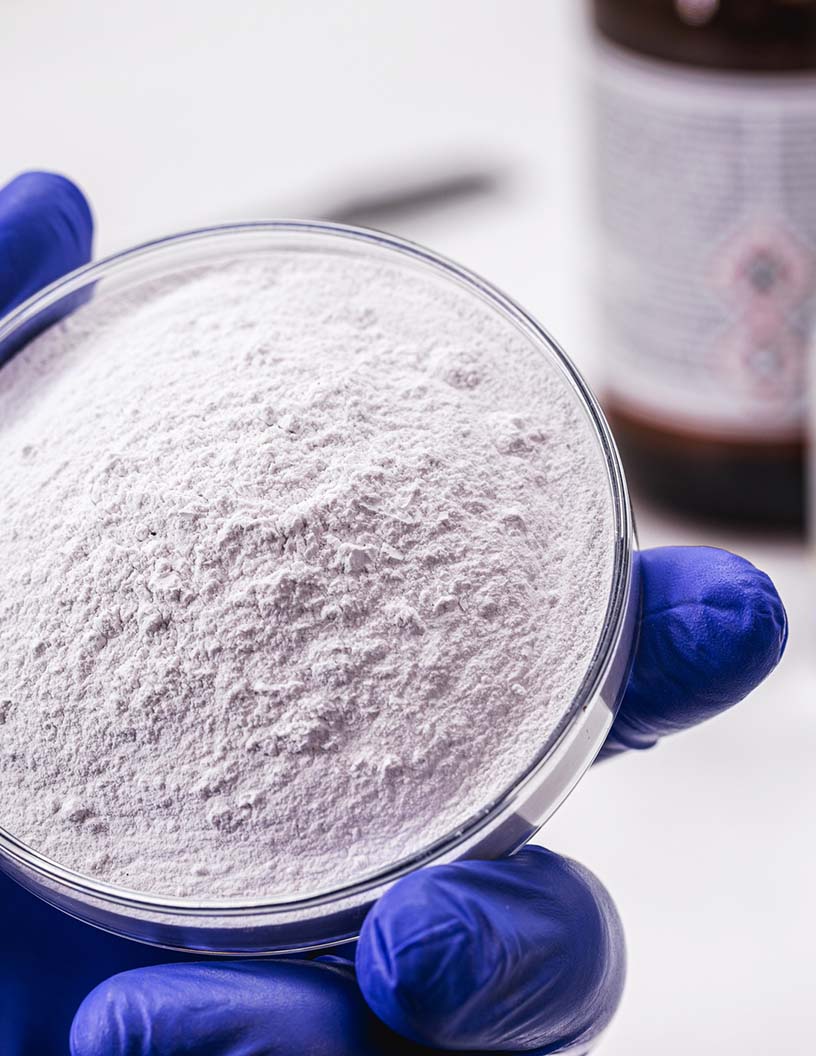


Carbomer Market Size 2024-2028
The carbomer market size is forecast to increase by USD 241 million at a CAGR of 5.45% between 2023 and 2028.
- The market is experiencing significant growth due to several key trends. The increasing demand for personal care and cosmetic products, driven by the rising awareness of health and wellness, is a major factor fueling market expansion. Additionally, the growth of healthcare services, particularly in North America, is contributing to the market's growth. However, the market faces challenges, such as the fluctuation in prices of raw materials, which can impact the profitability of manufacturers. Producers must closely monitor these trends and adapt to maintain a competitive edge in the market. Carbomers are used extensively in various industries, including pharmaceuticals, cosmetics, and food and beverages, due to their unique properties, such as their ability to form gels and stabilize emulsions.
- As the demand for these industries continues to grow, the market is poised for continued expansion.
What will be the Size of the Carbomer Market During the Forecast Period?

- The market encompasses the production and supply of polyalcohol allyl ethers, primarily used as thickening agents in various industries. This market exhibits significant growth due to its wide application in diverse sectors, including medicine, hygiene, and luxury cosmetics. Carbomers' ability to provide viscosity, flow control, and stability to gel-like formulations, particularly in water-based systems, makes them indispensable. The market's size is substantial, with continuous commercial development driven by the increasing demand for cost-effective, high-performing thickening agents. Product pricing remains competitive, with manufacturers focusing on optimizing production processes to meet the varying needs of different industries. Insoluble solids and liquid parts are key components of carbomer formulations, with the balance between them influencing the final product's properties.
- At the country level, the market shows consistent expansion, driven by the increasing demand for cosmetic products and the growing awareness of personal hygiene. As a result, the market is expected to maintain its growth trajectory, with ongoing research and development efforts aimed at enhancing the functionality and versatility of carbomer-based products.
How is this Carbomer Industry segmented and which is the largest segment?
The carbomer industry research report provides comprehensive data (region-wise segment analysis), with forecasts and estimates in "USD million" for the period 2024-2028, as well as historical data from 2018-2022 for the following segments.
- Type
- Synthetic
- Natural
- Application
- Personal care and cosmetics
- Pharmaceutical industry
- Others
- Geography
- APAC
- China
- Japan
- South Korea
- Europe
- Germany
- North America
- US
- South America
- Middle East and Africa
- APAC
By Type Insights
- The synthetic segment is estimated to witness significant growth during the forecast period.
The synthetic the market encompasses the manufacture and application of synthetic carbomers, which are polymers originating from acrylic acid. These carbomers are valued for their distinctive features and versatile uses in sectors like personal care, pharmaceuticals, and chemicals. In the personal care industry, synthetic carbomers are indispensable for their superior thickening and stabilizing capabilities. They function as rheology modifiers, emulsion stabilizers, and suspending agents in various products such as lotions, creams, gels, and hair formulations. The escalating emphasis on beauty and personal care products fuels the demand for synthetic carbomers In the personal care sector, leading to a heightened requirement for enhanced product texture and efficacy.
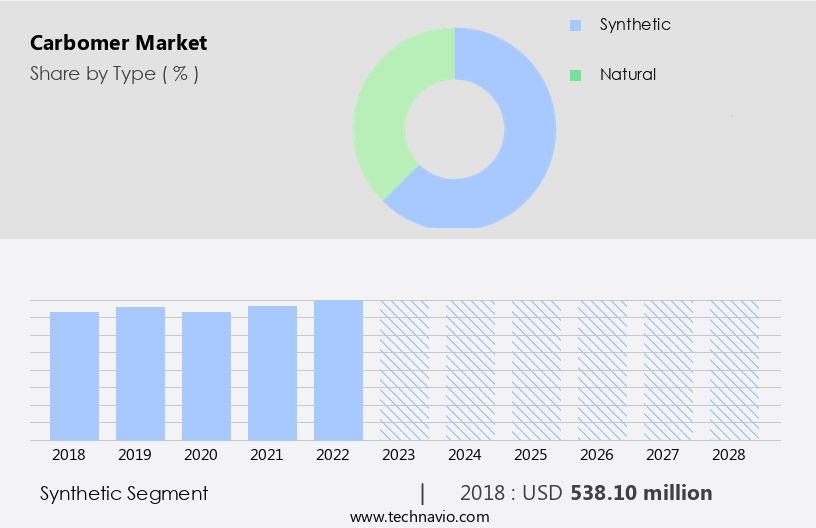
Get a glance at the Carbomer Industry report of share of various segments Request Free Sample
The Synthetic segment was valued at USD 538.10 million in 2018 and showed a gradual increase during the forecast period.
Regional Analysis
- APAC is estimated to contribute 44% to the growth of the global market during the forecast period.
Technavio's analysts have elaborately explained the regional trends and drivers that shape the market during the forecast period.
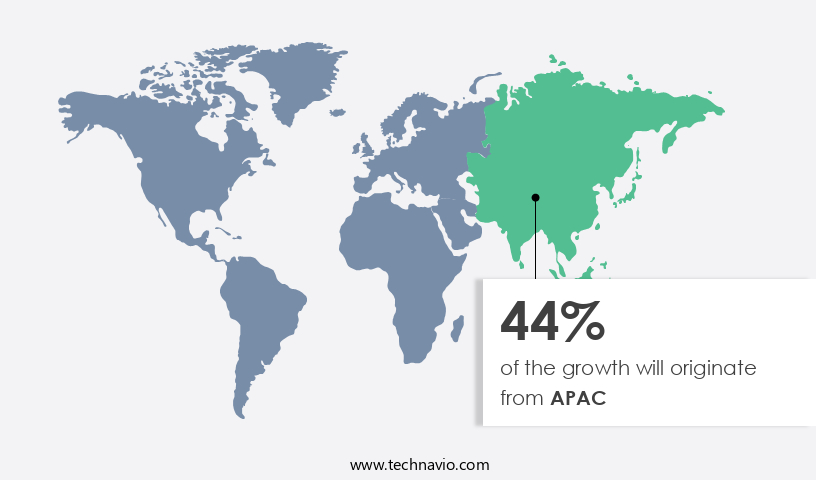
For more insights on the market share of various regions, Request Free Sample
The market In the APAC region is projected to expand due to the growth in industries such as cosmetics and pharmaceuticals. The increasing demand for personal care and cosmetic products, driven by a rising middle class population in countries like China and India, is a significant factor. Carbomers, as thickening, emulsifying, and stabilizing agents, are extensively used in the production of gels, creams, lotions, and various cosmetic formulations. The region has seen a consistent increase In the preference for natural and organic cosmetics. With a large consumer base and growing demand, the APAC the market is poised for substantial growth.
Market Dynamics
Our researchers analyzed the data with 2023 as the base year, along with the key drivers, trends, and challenges. A holistic analysis of drivers will help companies refine their marketing strategies to gain a competitive advantage.
What are the key market drivers leading to the rise In the adoption of Carbomer Industry?
Growing demand for personal care and cosmetic products is the key driver of the market.
- Carbomers, derived from acrylic acid, serve as essential thickening agents In the production of medicine, hygiene, cosmetics and care products. The global market for these colloidal substances has experienced significant growth due to various market dynamics. The increasing emphasis on personal care and appearance, fueled by rising disposable income, changing lifestyles, and heightened self-care awareness, has led to a surge in demand for cosmetic and personal care products. Carbomers contribute to the formulation of various gel-like products, including styling gels, facial moisturizers, sunscreens, shampoos, anti-aging treatments, eye creams, cleansers, and scrubs, by providing viscosity, flow, and mucilage-like consistency. In the realm of homecare products, carbomers are used in hand sanitizers and various other applications.
- Advanced technology and the use of nontoxic chemicals have further expanded the scope of carbomers In the HI&I (household, industrial, and institutional) and cosmetics industries. Carbomer 940, Carbomer 980, and Carbomer 934 are popular types of carbomers used for their colloidal consistency. Overall, the market for carbomers is expected to continue growing, driven by the increasing demand for personal care and cosmetic products.
What are the market trends shaping the Carbomer Industry?
Expansion of healthcare sector is the upcoming market trend.
- Carbomers, derived from acrylic acid, serve essential functions in various industries, including medicine, hygiene, cosmetics and care. In the healthcare sector, they act as thickening agents, enhancing the viscosity and flow properties of insoluble solids in liquid parts, creating gel-like formulations. This is particularly relevant in the production of pharmaceutical products, where carbomers are employed as viscosity modifiers and emulsion stabilizers. The expanding healthcare sector, driven by advancements in technology and an increasing global population, necessitates the development and production of a wide range of drugs, ointments, gels, and creams. This growing demand for healthcare products creates opportunities for the use of carbomers in various applications.
- For instance, in personal care, carbomers contribute to the colloidal consistency of styling gels, facial moisturizers, sunscreens, shampoos, anti-aging treatments, eye creams, cleansers, and scrubs. In the hygiene industry, carbomers are used in homecare products and hand sanitizers, ensuring a mucilage-like consistency. Nontoxic chemicals like Carbomer 940, Carbomer 980, and Carbomer 934 are preferred for their effectiveness and safety. Overall, the demand for carbomers is expected to grow as the healthcare and personal care industries continue to evolve.
What challenges does the Carbomer Industry face during its growth?
Fluctuation in prices of raw materials is a key challenge affecting the industry growth.
- Carbomers, a type of thickening agent derived from acrylic acid, play a significant role in various industries including medicine, hygiene, cosmetics and care. Acrylic acid, the primary raw material for Carbomers, is influenced by political and social scenarios such as crude oil prices, supply and demand dynamics, and global market conditions. The price volatility of crude oil, a petroleum-based product, impacts the cost of carbomers. Crude oil, an unstable commodity, has seen fluctuations in pricing due to its complex value and supply chain. Carbomers, with their colloidal consistency, are essential in creating gel-like formulations for cosmetic products like styling gel, facial moisturizer, sunscreen, shampoo, anti-aging treatment, eye cream, cleanser, and scrubs.
- In addition, they are used in homecare products, hand sanitizers, and HI&I products. Advanced technology and nontoxic chemicals are incorporated into Carbomers to enhance their performance. Despite the price fluctuations, Carbomers remain a popular choice due to their ability to provide viscosity, flow, and mucilage-like consistency to various products. Key Carbomer types include Carbomer 940, Carbomer 980, and Carbomer 934.
Exclusive Customer Landscape
The carbomer market forecasting report includes the adoption lifecycle of the market, covering from the innovator's stage to the laggard's stage. It focuses on adoption rates in different regions based on penetration. Furthermore, the carbomer market report also includes key purchase criteria and drivers of price sensitivity to help companies evaluate and develop their market growth analysis strategies.
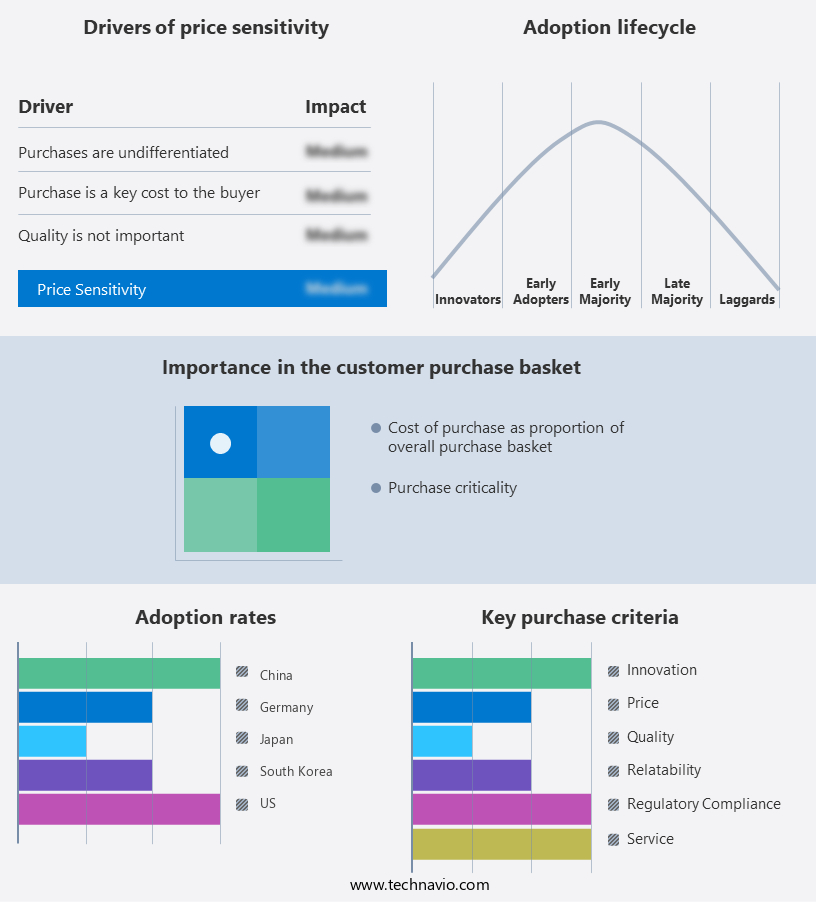
Customer Landscape
Key Companies & Market Insights
Companies are implementing various strategies, such as strategic alliances, carbomer market forecast, partnerships, mergers and acquisitions, geographical expansion, and product/service launches, to enhance their presence In the industry.
Anhui Newman Fine Chemicals Co. Ltd. - Carbomers are a type of non-ionic polyacrylate polymers widely used In the pharmaceutical and cosmetic industries for their thickening, stabilizing, and suspending properties. The company provides a range of carbomers, including NM Carbomer 10G, NM Carbomer 974P and 934P, NM Carbomer 970G, and NM Carbomer 971P.
The industry research and growth report includes detailed analyses of the competitive landscape of the market and information about key companies, including:
- Anhui Newman Fine Chemicals Co. Ltd.
- Ashahi Chemical Industries Pvt. Ltd.
- Ashland Inc.
- Azelis SA
- BASF SE
- Corel Pharma Chem
- Dow Inc.
- Evonik Industries AG
- Guangzhou DX Chemical Co. Ltd.
- Guangzhou Tinci Advanced Materials Co. Ltd.
- JENE CHEMICALS
- Libraw Pharma Excipients Pvt. Ltd.
- Maruti Chemicals
- Otto Chemie Pvt. Ltd.
- Shree Chemicals
- Shreeji Chem
- Sumitomo Seika Chemicals Co. Ltd.
- Taiwan Hopax Chems Mfg. Co. Ltd.
- The Lubrizol Corp.
- SNF Group
- Wego Chemical Group Inc.
Qualitative and quantitative analysis of companies has been conducted to help clients understand the wider business environment as well as the strengths and weaknesses of key industry players. Data is qualitatively analyzed to categorize companies as pure play, category-focused, industry-focused, and diversified; it is quantitatively analyzed to categorize companies as dominant, leading, strong, tentative, and weak.
Research Analyst Overview
The market encompasses a range of acrylic acid-based polymers used as thickening agents in various industries, including medicine, hygiene, and cosmetics & care. These carbomers provide viscosity and flow control to gel-like formulations, enabling them to maintain a colloidal consistency. Carbomers are essential In the production of insoluble solids in liquid parts, enhancing the overall performance and stability of the final product. In the context of cosmetics, they contribute to the mucilage-like consistency of private care products, such as styling gels and facial moisturizers. They also play a crucial role in sunscreens, shampoos, anti-aging treatments, eye creams, cleansers, and scrubs.
Advanced technology continues to drive innovation in the market, with the development of nontoxic chemicals and improved production methods. Carbomers are increasingly being used in hi&i products, including hand sanitizers, to provide the desired texture and consistency. Market dynamics for carbomers are influenced by both political and social scenarios. Regulatory compliance is a significant factor, with ongoing changes in regulations governing the use of certain chemicals in various industries. Consumer preferences and trends also impact market demand, with a growing emphasis on natural and organic products driving research and development efforts. Carbomer 940, Carbomer 980, and Carbomer 934 are common types of carbomers used In the market.
Each type offers unique properties, making them suitable for different applications. For instance, Carbomer 940 is known for its high viscosity, making it a popular choice for thickening shampoos and conditioners. Carbomer 980, on the other hand, offers excellent stability and is often used in facial masks and lotions. Carbomer 934 is valued for its ability to provide a smooth, even texture to cosmetic products. In conclusion, the market is a dynamic and evolving industry, driven by advancements in technology and changing consumer preferences. These thickening agents play a vital role In the production of various products across the medicine, hygiene, and cosmetics & care sectors, contributing to their stability, texture, and overall performance.
|
Market Scope |
|
|
Report Coverage |
Details |
|
Page number |
175 |
|
Base year |
2023 |
|
Historic period |
2018-2022 |
|
Forecast period |
2024-2028 |
|
Growth momentum & CAGR |
Accelerate at a CAGR of 5.45% |
|
Market growth 2024-2028 |
USD 241 million |
|
Market structure |
Fragmented |
|
YoY growth 2023-2024(%) |
4.87 |
|
Key countries |
China, US, Germany, Japan, and South Korea |
|
Competitive landscape |
Leading Companies, Market Positioning of Companies, Competitive Strategies, and Industry Risks |
What are the Key Data Covered in this Carbomer Market Research and Growth Report?
- CAGR of the Carbomer industry during the forecast period
- Detailed information on factors that will drive the growth and forecasting between 2024 and 2028
- Precise estimation of the size of the market and its contribution of the industry in focus to the parent market
- Accurate predictions about upcoming growth and trends and changes in consumer behaviour
- Growth of the market across APAC, Europe, North America, South America, and Middle East and Africa
- Thorough analysis of the market's competitive landscape and detailed information about companies
- Comprehensive analysis of factors that will challenge the carbomer market growth of industry companies
We can help! Our analysts can customize this carbomer market research report to meet your requirements.
 RIA -
RIA - 
