



Collagen Supplement Market Size 2025-2029
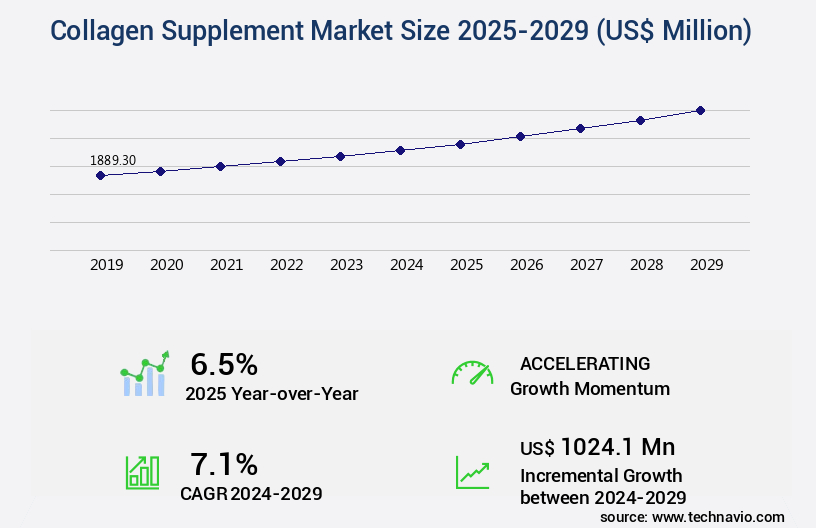
The collagen supplement market size is valued to increase USD 1.02 billion, at a CAGR of 7.1% from 2024 to 2029. Increasing adoption of collagen supplements to improve joint conditions and support bone health will drive the collagen supplement market.
Major Market Trends & Insights
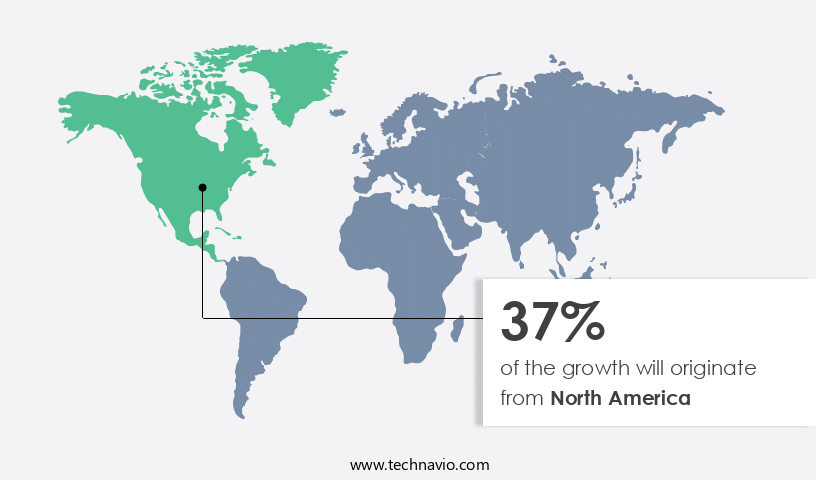
- North America dominated the market and accounted for a 37% growth during the forecast period.
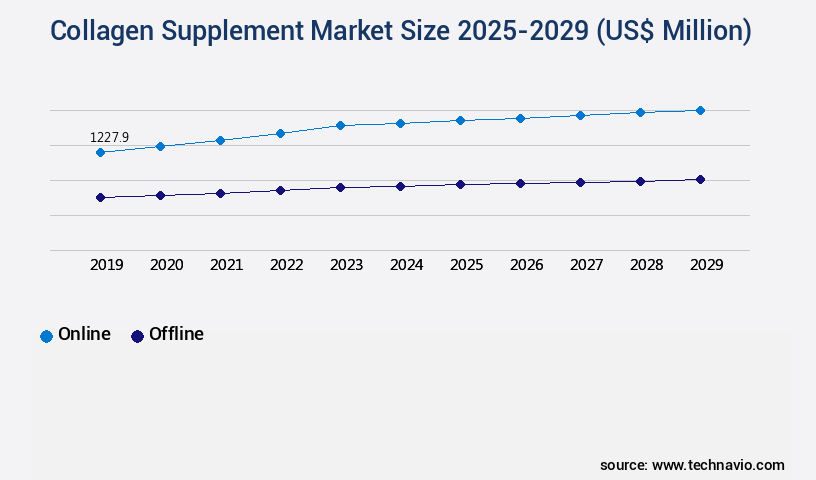
- By Distribution Channel - Online segment was valued at USD 1.23 billion in 2023
- By Source - Bovine segment accounted for the largest market revenue share in 2023
Market Size & Forecast
- Market Opportunities: USD 87.07 million
- Market Future Opportunities: USD 1024.10 million
- CAGR from 2024 to 2029 : 7.1%
Market Summary
- Collagen supplements have gained significant traction in the global health and wellness market due to their potential benefits for joint health and bone support. The market's expansion is driven by increasing consumer awareness of the role collagen plays in maintaining connective tissue health and the growing elderly population seeking preventative measures against age-related joint issues. Strategic initiatives from market players, including research and development of innovative collagen-based products and partnerships with key industry players, further fuel market growth. The vegan trend has emerged as a notable challenge for the market, as collagen is primarily derived from animal sources.
- However, the development of plant-based collagen alternatives, such as genetically modified microbes producing collagen, offers a potential solution. According to recent market research, The market size was valued at USD 12.3 billion in 2020 and is projected to expand at a steady pace in the coming years. This growth underscores the market's potential and the increasing importance of collagen supplements in the health and wellness industry.
What will be the Size of the Collagen Supplement Market during the forecast period?
Get Key Insights on Market Forecast (PDF) Request Free Sample
How is the Collagen Supplement Market Segmented ?
The collagen supplement industry research report provides comprehensive data (region-wise segment analysis), with forecasts and estimates in "USD million" for the period 2025-2029, as well as historical data from 2019-2023 for the following segments.
- Distribution Channel
- Online
- Offline
- Source
- Bovine
- Porcine
- Marine and poultry
- Product Type
- Powder
- Liquid
- Capsules
- Tablets
- Others
- Geography
- North America
- US
- Canada
- Europe
- France
- Germany
- Italy
- UK
- APAC
- China
- India
- Japan
- South America
- Brazil
- Rest of World (ROW)
- North America
By Distribution Channel Insights
The online segment is estimated to witness significant growth during the forecast period.
The market continues to thrive in the evolving e-commerce landscape, with online sales accounting for a significant portion of global sales. This trend is driven by the convenience and accessibility offered by e-commerce platforms, enabling consumers to purchase collagen supplements from the comfort of their homes. Stability testing and solubility are crucial factors in the production of collagen supplements, ensuring the preservation of their essential amino acid profile and peptide chain length during processing. Type I and II collagen, key components of collagen supplements, undergo various production methods such as enzymatic hydrolysis, thermal stability testing, and capsule encapsulation, to optimize bioavailability and absorption kinetics.
Collagen hydrolysate, a popular form, boasts a molecular weight distribution that enhances cellular regeneration, contributing to improved joint health, skin elasticity, bone density, and nail strength. A recent study revealed that hydrolyzed collagen peptides can increase type I collagen synthesis by up to 18% in postmenopausal women, underscoring their efficacy. E-commerce platforms enable consumers to access a wide range of dosage forms, from powder processing and liquid blending to tablet formulation, ensuring diverse options catering to individual preferences and sensory attributes. With ongoing research into collagen synthesis stimulation and rheological properties, the market continues to evolve, offering innovative solutions for various health and wellness applications.
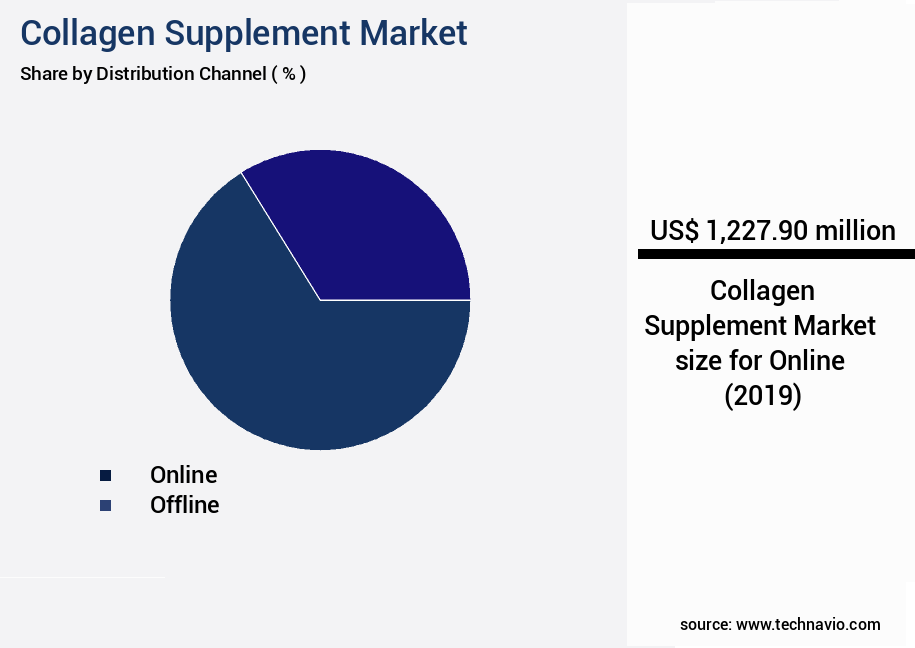
The Online segment was valued at USD 1.23 billion in 2019 and showed a gradual increase during the forecast period.
Regional Analysis
North America is estimated to contribute 37% to the growth of the global market during the forecast period.Technavio’s analysts have elaborately explained the regional trends and drivers that shape the market during the forecast period.
See How Collagen Supplement Market Demand is Rising in North America Request Free Sample
The North American the market is experiencing significant growth, fueled by increasing health consciousness and a culture of healthy eating among consumers in the United States, Canada, and Mexico. The benefits of collagen for skin health, joint support, and overall well-being have led to a surge in demand for nutraceutical products. Consumers are turning to collagen-based supplements as a natural solution to maintain their health and vitality.
However, concerns regarding animal-derived collagen persist due to the potential risks associated with disease transmission, particularly prion diseases such as Creutzfeldt-Jakob disease (CJD). Despite these concerns, the market's robust growth is expected to continue as consumers seek out high-quality, alternative sources of collagen, such as marine-derived collagen, to meet their nutritional needs.
Market Dynamics
Our researchers analyzed the data with 2024 as the base year, along with the key drivers, trends, and challenges. A holistic analysis of drivers will help companies refine their marketing strategies to gain a competitive advantage.
The market is experiencing robust growth as consumers seek natural solutions for various health and beauty concerns. Collagen, a key structural protein, is gaining popularity due to its numerous benefits, including improved joint health, skin hydration, and gut health. Type I collagen peptides, derived from animal sources, have shown enhanced bioavailability compared to their native form, making them a preferred choice for supplementation. Hydrolyzed collagen, a collagen peptide form, has been extensively studied for its effect on joint pain, with clinical trials reporting significant reductions in symptoms. Collagen hydrolysate, a type of hydrolyzed collagen, is particularly effective due to its smaller molecular weight, which increases its solubility and absorption mechanisms.
Gelatin peptides, another collagen derivative, have also gained attention for their potential absorption benefits. Collagen peptides' amino acid composition plays a crucial role in collagen synthesis, making them an essential nutritional supplement. Enzymatic hydrolysis is a common method for optimizing collagen peptide production, ensuring consistent molecular weight distribution and improved collagen solubility. Collagen supplement stability under various conditions is a critical concern for manufacturers, as collagen peptides can be sensitive to heat, light, and pH levels. Rheological properties of collagen peptide formulations are also essential, as they influence the texture and consistency of the final product.
Collagen peptide dosage plays a significant role in bone density improvement, with some studies suggesting that higher doses yield better results. Cross-linking is another process used to enhance collagen bioactivity, leading to improved efficacy. Collagen peptides interact with other nutrients, such as vitamin C, to boost their benefits. Clinical trial results demonstrate collagen peptides' impact on skin elasticity, while research on muscle protein synthesis suggests potential benefits for athletic performance and recovery. The safety profile and side effects of collagen supplements are a key concern for consumers and regulatory bodies. Regulatory requirements for collagen supplement labeling are stringent, ensuring transparency and consumer protection.
Quality control measures for collagen peptide production are essential to maintain consistency and efficacy. Manufacturing process optimization for collagen supplements is a critical area of focus, with more than 70% of new product developments focusing on improving production efficiency and sustainability. Consumer perception and acceptance of collagen supplements are on the rise, driven by increasing awareness of their health and beauty benefits.
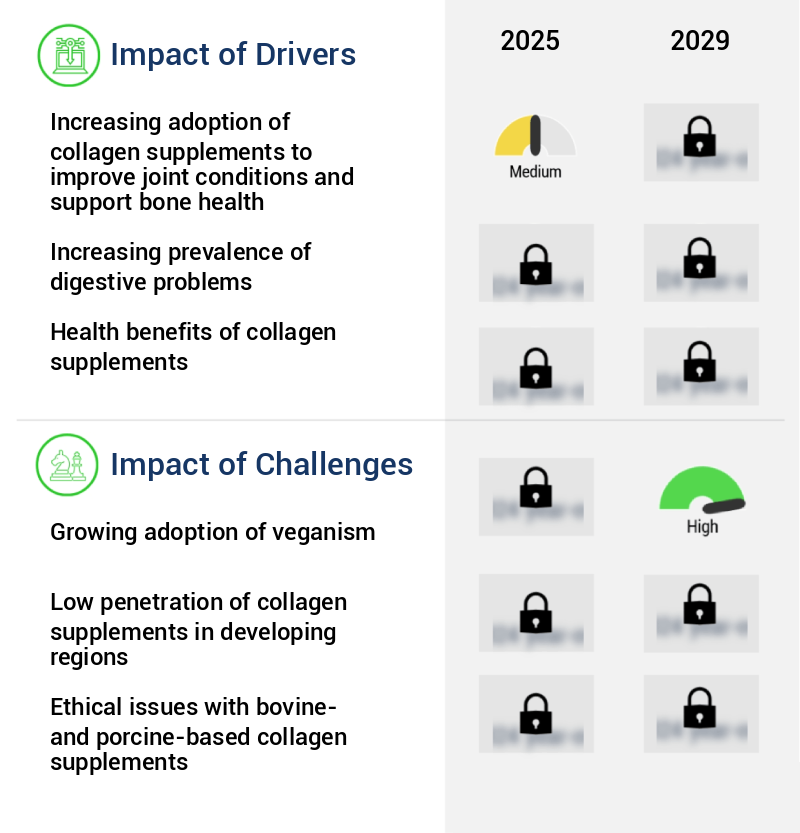
What are the key market drivers leading to the rise in the adoption of Collagen Supplement Industry?
- The market's growth is primarily attributed to the rising adoption of collagen supplements for enhancing joint conditions and bolstering bone health.
- Collagen supplements have gained significant attention in various sectors due to their health benefits, particularly in supporting muscle mass, bone health, and joint function. These supplements are rich in essential amino acids that contribute to bone mineral density (BMD) and help maintain protein levels in the blood, thereby reducing the risk of bone breakdown. The demand for collagen supplements is robust in the fitness industry, with bodybuilders and enthusiasts utilizing them for muscle recovery and performance enhancement. Collagen supplementation has also shown promising results in managing bone disorders such as osteoporosis, which affects bone tissues and increases fragility, especially in the spine.
- Furthermore, these supplements have gained traction in the healthcare sector, particularly for inflammatory bone diseases like rheumatoid arthritis, which predominantly affects older adults. By maintaining the integrity of connective tissues, collagen supplements help alleviate joint pain and inflammation, making them an essential addition to the healthcare regimens of millions. The ongoing market activities and evolving patterns underscore the versatility and importance of collagen supplements across various industries.
What are the market trends shaping the Collagen Supplement Industry?
- The strategic initiatives of market companies represent the emerging market trend. (Alternatively) Emerging as a significant market trend, the strategic initiatives of market companies assume great importance.
- The market remains dynamic in 2024, with companies actively engaging in strategic initiatives to fortify their market position. Market participants are investing in mergers and acquisitions, expansion projects, and increased production capacity to expand their reach and cater to growing consumer demand. For instance, Rejuvenated Ltd. And Nestle SA are focusing on strategic expansions and new product launches to bolster their presence in the beauty and wellness sector. Nestle SA's recent expansion of its collagen supplement portfolio underscores its commitment to the health and nutrition industry.
- Moreover, the market is witnessing a surge in plant-based and sustainable collagen alternatives, fueled by rising consumer awareness and the demand for ethical and eco-friendly products. These trends reflect the continuous evolution of the market and its applications across various sectors.
What challenges does the Collagen Supplement Industry face during its growth?
- The increasing prevalence of veganism poses a significant challenge to the expansion of industries that rely on animal products.
- The global demand for vegan collagen supplements is on the rise, fueled by increasing consumer consciousness towards ethical, environmental, and health considerations. In countries like India, where a substantial population adheres to a vegetarian diet, the preference for plant-based supplements is particularly strong. Factors such as growing disposable income, heightened health awareness, and the expanding vegan population are driving the transition towards vegan collagen alternatives. In North America and Europe, the vegan movement is gaining momentum as consumers seek cruelty-free and sustainable products. Ethical concerns regarding animal welfare and environmental impact are compelling individuals to opt for plant-based collagen sources over traditional bovine, porcine, and marine collagen.
- This shift is not limited to developed markets; emerging economies are also witnessing a surge in demand for vegan collagen supplements as consumers become more health-conscious and environmentally aware. The vegan collagen market's continuous evolution is a testament to the changing consumer landscape and the growing importance of ethical and sustainable product offerings. Companies are investing in research and development to create innovative plant-based collagen alternatives, ensuring consumers have access to high-quality, effective, and ethical supplements.
Exclusive Technavio Analysis on Customer Landscape
The collagen supplement market forecasting report includes the adoption lifecycle of the market, covering from the innovator’s stage to the laggard’s stage. It focuses on adoption rates in different regions based on penetration. Furthermore, the collagen supplement market report also includes key purchase criteria and drivers of price sensitivity to help companies evaluate and develop their market growth analysis strategies.
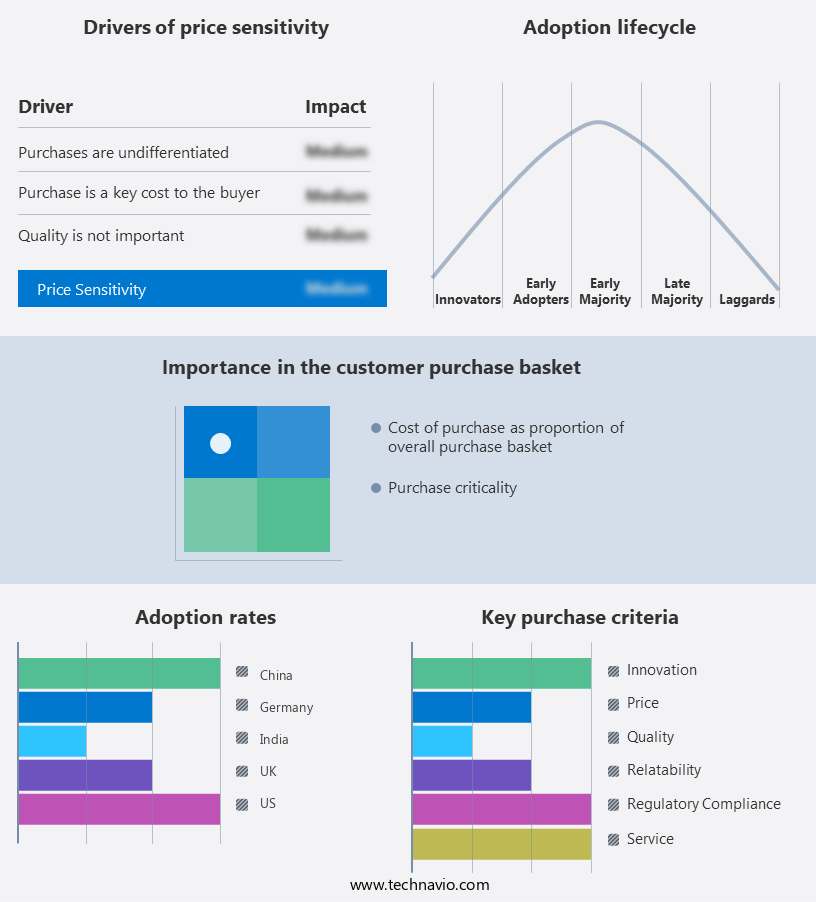
Customer Landscape of Collagen Supplement Industry
Competitive Landscape
Companies are implementing various strategies, such as strategic alliances, collagen supplement market forecast, partnerships, mergers and acquisitions, geographical expansion, and product/service launches, to enhance their presence in the industry.
Absolute collagen - This company specializes in marine collagen supplements, including Absolute Collagen Liquid Sachets. These daily doses are designed to enhance skin, hair, and nail health through the intake of collagen. The company's commitment to quality and innovation sets it apart in the health supplement market.
The industry research and growth report includes detailed analyses of the competitive landscape of the market and information about key companies, including:
- Absolute collagen
- Ancient Nutrition
- Codeage LLC
- ConnOils LLC
- Darling Ingredients Inc.
- DSM-Firmenich AG
- Glanbia plc
- Hunter and Gather Foods Ltd.
- Life Extension Foundation Buyers Club Inc.
- Nestle SA
- Nitta Gelatin Inc.
- PROTEIN SA
- Proto col
- Rejuvenated Ltd.
- Revive Collagen
- Shiseido Co. Ltd.
- The Carlyle Group Inc.
- The Clorox Co.
- Titan Biotech Ltd.
- ZENii Ltd.
Qualitative and quantitative analysis of companies has been conducted to help clients understand the wider business environment as well as the strengths and weaknesses of key industry players. Data is qualitatively analyzed to categorize companies as pure play, category-focused, industry-focused, and diversified; it is quantitatively analyzed to categorize companies as dominant, leading, strong, tentative, and weak.
Recent Development and News in Collagen Supplement Market
- In January 2024, Nestlé Health Science, a global leader in nutritional science, announced the launch of its new collagen peptide supplement, "Peptamen CollagenFortis," targeting the European market. This product expansion aimed to cater to the growing demand for collagen supplements in the region (Nestlé Health Science Press Release, 2024).
- In March 2024, Danone Manifesto Ventures, a venture capital arm of Danone, invested USD15 million in Bare Biology, a US-based collagen supplement company. This strategic investment aimed to strengthen Danone's presence in the collagen market and leverage Bare Biology's innovative technology (Danone Manifesto Ventures Press Release, 2024).
- In May 2024, the US Food and Drug Administration (FDA) granted Generally Recognized as Safe (GRAS) status to Verisol, a bioactive collagen peptide from Gelita, a leading collagen supplier. This regulatory approval opened the door for numerous food and beverage manufacturers to incorporate Verisol into their products (Gelita Press Release, 2024).
- In April 2025, Nutraceutical Corporation, a leading US-based dietary supplement company, acquired the collagen supplement brand, Vital Proteins, for approximately USD700 million. This acquisition expanded Nutraceutical's product portfolio and market reach in the market (Nutraceutical Corporation Press Release, 2025).
Dive into Technavio’s robust research methodology, blending expert interviews, extensive data synthesis, and validated models for unparalleled Collagen Supplement Market insights. See full methodology.
|
Market Scope |
|
|
Report Coverage |
Details |
|
Page number |
221 |
|
Base year |
2024 |
|
Historic period |
2019-2023 |
|
Forecast period |
2025-2029 |
|
Growth momentum & CAGR |
Accelerate at a CAGR of 7.1% |
|
Market growth 2025-2029 |
USD 1024.1 million |
|
Market structure |
Fragmented |
|
YoY growth 2024-2025(%) |
6.5 |
|
Key countries |
US, Germany, Canada, India, UK, France, Brazil, China, Italy, and Japan |
|
Competitive landscape |
Leading Companies, Market Positioning of Companies, Competitive Strategies, and Industry Risks |
Research Analyst Overview
- Amidst the dynamic landscape of nutraceuticals, the market continues to garner significant attention, fueled by growing consumer awareness of its myriad health benefits. Collagen, a key structural protein, plays a pivotal role in maintaining skin elasticity, joint health, and overall cellular regeneration. Two critical aspects of collagen supplements are stability and solubility. Stability testing ensures the product retains its efficacy, while solubility testing guarantees easy absorption. Peptide chain length and cross-linking collagen are crucial factors in these tests, as they impact the molecular weight distribution and bioavailability studies. Collagen supplements come in various forms, including Type I and Type II collagen, gelatin peptides, and hydrolyzed collagen peptides.
- Type I collagen is primarily associated with skin, while Type II collagen is linked to joint health. The amino acid profile of these supplements is essential, as it determines their efficacy in stimulating collagen synthesis. Collagen supplements have shown promise in areas beyond skin and joint health. They have been linked to wound healing, muscle protein synthesis, and even nail strength. However, challenges persist, such as protein denaturation during processing and enzymatic hydrolysis for optimal absorption. The market for collagen supplements is diverse, with various dosage forms and rheological properties catering to different consumer preferences.
- Collagen hydrolysate, a popular choice, offers improved absorption kinetics, while capsule encapsulation ensures gut permeability. In the realm of sensory attributes, thermal stability and shelf life are crucial considerations. Collagen supplements undergo rigorous testing to ensure they maintain their desired texture and taste throughout their shelf life. The market's continuous evolution reflects the ongoing quest for innovative, effective, and consumer-friendly solutions. With a growing body of research and development, this sector is poised to deliver significant advancements in the realm of health and wellness. A recent study revealed that the global collagen market was valued at approximately USD13.1 billion in 2020, underscoring its substantial impact on the nutraceuticals industry.
- This figure underscores the market's potential for growth and innovation.
What are the Key Data Covered in this Collagen Supplement Market Research and Growth Report?
-
What is the expected growth of the Collagen Supplement Market between 2025 and 2029?
-
USD 1.02 billion, at a CAGR of 7.1%
-
-
What segmentation does the market report cover?
-
The report is segmented by Distribution Channel (Online and Offline), Source (Bovine, Porcine, and Marine and poultry), Product Type (Powder, Liquid, Capsules, Tablets, and Others), and Geography (North America, Europe, Asia, and Rest of World (ROW))
-
-
Which regions are analyzed in the report?
-
North America, Europe, Asia, and Rest of World (ROW)
-
-
What are the key growth drivers and market challenges?
-
Increasing adoption of collagen supplements to improve joint conditions and support bone health, Growing adoption of veganism
-
-
Who are the major players in the Collagen Supplement Market?
-
Absolute collagen, Ancient Nutrition, Codeage LLC, ConnOils LLC, Darling Ingredients Inc., DSM-Firmenich AG, Glanbia plc, Hunter and Gather Foods Ltd., Life Extension Foundation Buyers Club Inc., Nestle SA, Nitta Gelatin Inc., PROTEIN SA, Proto col, Rejuvenated Ltd., Revive Collagen, Shiseido Co. Ltd., The Carlyle Group Inc., The Clorox Co., Titan Biotech Ltd., and ZENii Ltd.
-
Market Research Insights
- The market encompasses a diverse range of products, with an estimated global value of USD6.5 billion in 2021. This figure represents a significant increase from the USD4.5 billion reported in 2017, indicating a steady growth trajectory. Collagen supplements are derived from various sources, including bovine, porcine, and marine, with each offering unique benefits. Despite this market expansion, product validation and adverse effects remain critical concerns. Strict regulations govern health claims substantiation, labeling accuracy, safety profile, and quality control. Ingredient sourcing, heavy metal content, and allergenicity assessment are essential considerations for manufacturers to ensure consumer safety and GMP compliance.
- Manufacturing efficiency, collagen peptide efficacy, and nutritional labeling regulations also play a significant role in the market. Clinical trial data and contaminant analysis are crucial components of the supplement manufacturing process, ensuring product purity and effectiveness. In vivo studies and human subjects research further validate the benefits of collagen supplementation. Maintaining a robust quality assurance system, implementing cost optimization strategies, and managing the supply chain effectively are essential for market success. Microbial testing, purity testing, and storage conditions are critical factors in maintaining product integrity and consumer trust. Ultimately, the market continues to evolve, with ongoing research and innovation driving advancements in product development and regulatory compliance.
We can help! Our analysts can customize this collagen supplement market research report to meet your requirements.
 RIA -
RIA - 
