


Collagen Peptide Market Analysis Europe, North America, APAC, South America, Middle East and Africa - US, Germany, France, Japan, China, UK, Canada, South Korea, Brazil, Australia - Size and Forecast 2025-2029

Collagen Peptide Market Analysis Europe, North America, APAC, South America, Middle East and Africa - US, Germany, France, Japan, China, UK, Canada, South Korea, Brazil, Australia - Size and Forecast 2025-2029

Published: Jan 2025 209 Pages SKU: IRTNTR80531

Market Overview at a Glance

$721.7 Mn
Market Opportunity
8.5%
CAGR
8.2
YoY growth 2024-2025(%)

Collagen Peptide Market Size 2025-2029

The collagen peptide market size is valued to increase by USD 721.7 million, at a CAGR of 8.5% from 2024 to 2029. Increasing emphasis on health and wellness will drive the collagen peptide market.

Major Market Trends & Insights

  • Europe dominated the market and accounted for a 36% growth during the forecast period.
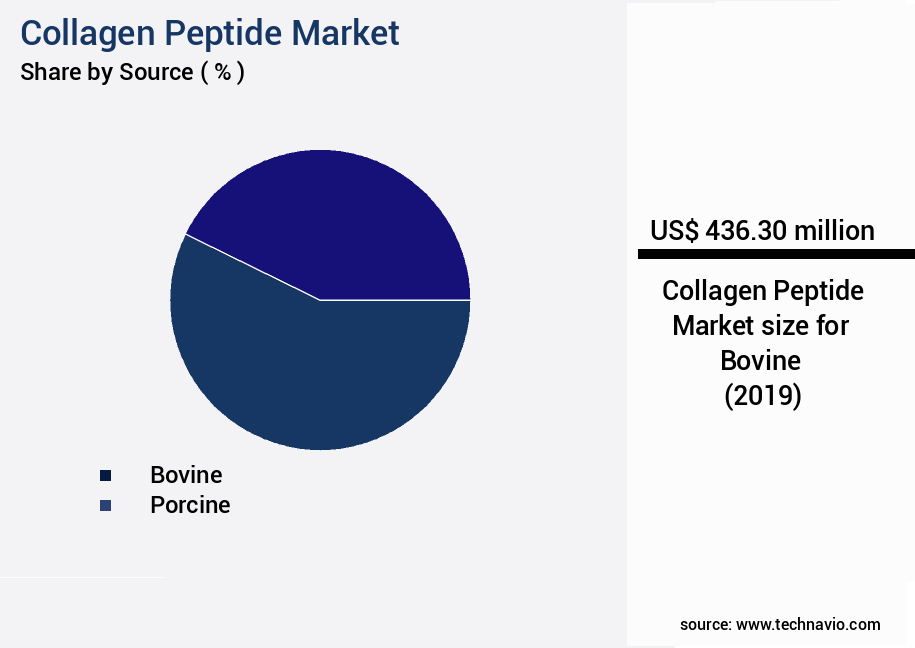
  • By Source - Bovine segment was valued at USD 436.30 million in 2023
  • By Application - Food and beverage industry segment accounted for the largest market revenue share in 2023

Market Size & Forecast

  • Market Opportunities: USD 119.61 million
  • Market Future Opportunities: USD 721.70 million
  • CAGR from 2024 to 2029 : 8.5%

Market Summary

  • Collagen peptides, a segment of the global nutraceuticals market, have gained significant traction in recent years due to their numerous health benefits. The global collagen peptides market size was valued at USD 4.4 billion in 2020 and is anticipated to expand at a steady pace. This growth can be attributed to the increasing awareness of health and wellness, with consumers seeking natural alternatives to synthetic supplements. Collagen peptides, derived from animal bones, skin, or connective tissue, offer various advantages, including improved skin elasticity, joint health, and gut health. Their easy solubility and digestibility make them a preferred choice over traditional collagen sources.
  • However, the market faces challenges, such as regulatory and quality concerns, which necessitate stringent production processes and adherence to international standards. The introduction of new collagen peptide products, including flavored powders and capsules, has broadened their appeal to a wider consumer base. As the demand for these supplements continues to grow, market players are investing in research and development to expand their product offerings and cater to diverse consumer preferences. Despite these opportunities, the market's future direction depends on addressing regulatory and quality concerns and maintaining transparency in production processes.

What will be the Size of the Collagen Peptide Market during the forecast period?
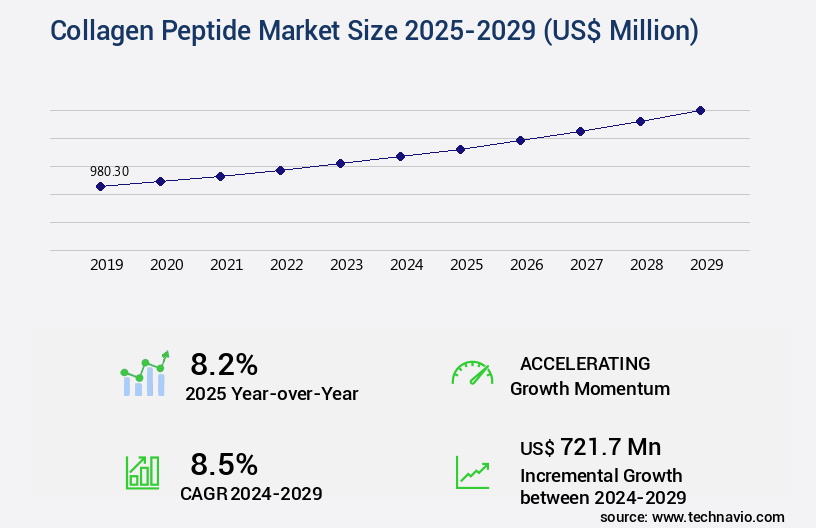
Collagen Peptide Market Size

Get Key Insights on Market Forecast (PDF) Request Free Sample

How is the Collagen Peptide Market Segmented?

The collagen peptide industry research report provides comprehensive data (region-wise segment analysis), with forecasts and estimates in "USD million" for the period 2025-2029, as well as historical data from 2019-2023 for the following segments.

  • Source
    • Bovine
    • Porcine
    • Others
  • Application
    • Food and beverage industry
    • Nutraceuticals industry
    • Personal care industry
    • Pharmaceutical industry
  • Geography
    • North America
      • US
      • Canada
    • Europe
      • France
      • Germany
      • UK
    • APAC
      • Australia
      • China
      • Japan
      • South Korea
    • South America
      • Brazil
    • Rest of World (ROW)

By Source Insights

The bovine segment is estimated to witness significant growth during the forecast period.

The market is witnessing significant growth, with bovine collagen peptides leading the charge. Sourced from cowhide, tendons, and bones, these peptides are rich in Type I and Type III collagen, which are essential for skin, joint, and bone health. The versatility and cost-effectiveness of bovine collagen make it the preferred choice for manufacturers in the nutraceuticals sector, catering to consumers' increasing demand for products that support joint health, enhance skin elasticity, and offer anti-aging benefits. Collagen peptides undergo various manufacturing processes, including gelatin extraction methods, enzymatic hydrolysis, and peptide purification. Quality control measures are implemented throughout these processes to ensure the final product's functional properties, such as hydrolyzed collagen peptide solubility, rheological properties, and shelf life assessment.
Collagen Peptide Market Size

Request Free Sample

The Bovine segment was valued at USD 436.30 million in 2019 and showed a gradual increase during the forecast period.

Regulatory compliance and food safety standards are strictly adhered to, with HPLC peptide separation, immunological assays, proline content analysis, and hydroxyproline quantification used for quality control. Bovine collagen peptides exhibit numerous health benefits, including bone health support, muscle protein synthesis, and wound healing properties. Their bioavailability is improved through acid hydrolysis techniques and mass spectrometry analysis. Manufacturers must maintain strict storage conditions to ensure collagen peptide stability. With the continuous evolution of the market, ongoing research focuses on enhancing the manufacturing processes and functional properties testing to cater to consumers' evolving needs. According to a recent study, the market is projected to reach USD 11.2 billion by 2026, highlighting its significant growth potential.
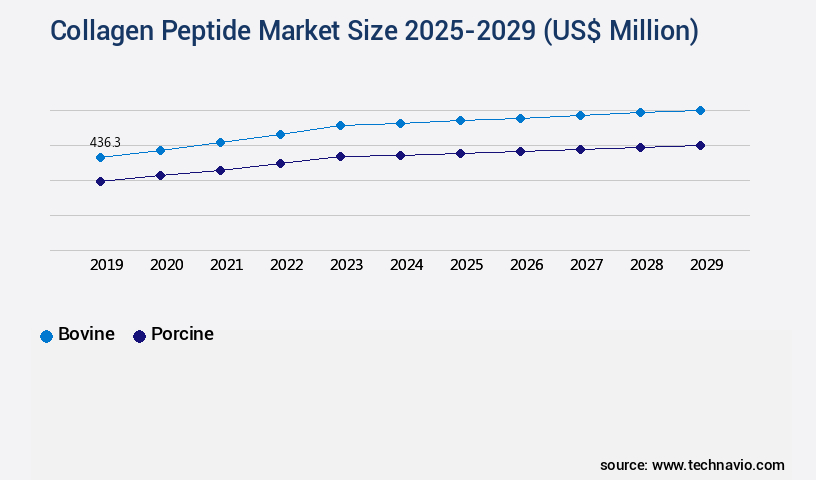
Collagen Peptide Market Size

Request Free Sample

Regional Analysis

Europe is estimated to contribute 36% to the growth of the global market during the forecast period. Technavio's analysts have elaborately explained the regional trends and drivers that shape the market during the forecast period.
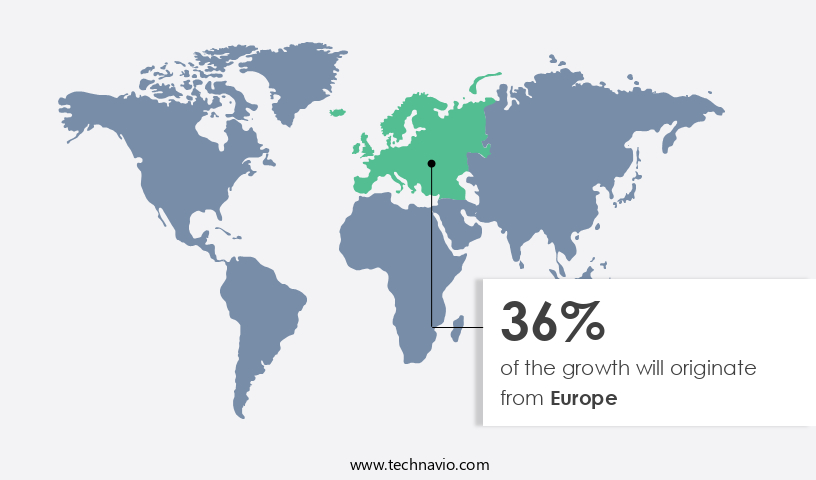
Collagen Peptide Market Share by Geography

See How Collagen Peptide Market Demand is Rising in Europe Request Free Sample

Europe, home to over 448 million people as of January 1, 2023, represents a substantial segment in the market. The region's aging population, with approximately 21% aged 65 and above, fuels the demand for healthcare and wellness products. Collagen peptides, renowned for their benefits in skin, joint, and bone health, are a popular choice. Europe's industrial landscape is further bolstered by Germany, the continent's largest food producer.

Its food and beverage industry ranks fourth in the country, making it a significant contributor to the market's growth.

Market Dynamics

Our researchers analyzed the data with 2024 as the base year, along with the key drivers, trends, and challenges. A holistic analysis of drivers will help companies refine their marketing strategies to gain a competitive advantage.

The market is experiencing significant growth due to the increasing demand for these bioactive proteins in various industries, including healthcare, food and beverage, and cosmetics. Collagen peptides, derived from the hydrolysis of collagen, offer numerous health benefits, making them a popular choice for consumers seeking to improve their skin elasticity, joint health, and overall wellness. One crucial aspect of the market is the determination of their absorption rate and bioavailability. This is achieved through various methods, including assessment of hydrolysis effects and optimization of hydrolysis parameters. The molecular weight distribution and stability of collagen peptides under various conditions are also essential factors in ensuring their efficacy. Collagen peptides have been shown to impact skin elasticity by promoting the production of new collagen fibers. They also influence joint health markers, such as cartilage regeneration and bone mineral density. Furthermore, collagen peptides have been found to affect gut microbiota composition, stimulate muscle protein synthesis, and correlate with wound healing. The amino acid composition of collagen peptides is another critical factor in their effectiveness. Comparison of extraction methods and analysis of their interaction with digestive enzymes are ongoing areas of research. Collagen peptides have also been found to have antioxidant capacity, making them attractive for use in cosmetics and functional foods. Consumer perception plays a significant role in the market. Studies have shown that collagen peptides can improve skin hydration levels and have positive effects on hair growth and nail strength. However, continued research is necessary to fully understand their mechanisms of action and optimize their production and application. In conclusion, the market is driven by the growing demand for these versatile proteins in various industries. The determination of collagen peptide absorption rate, effects of hydrolysis, assessment of bioavailability, and investigation of their antioxidant capacity are just a few of the ongoing research areas in this field. As the market continues to grow, it is essential to ensure the production of high-quality collagen peptides that meet the evolving needs of consumers.

The collagen peptide market is witnessing rapid expansion, driven by rising consumer interest in functional ingredients that promote skin, joint, and overall health. A critical area of scientific focus is collagen peptide absorption rate determination, which plays a pivotal role in evaluating the efficacy of oral supplementation. Studies using labeled peptides and plasma analysis are helping determine how quickly and efficiently these peptides enter the bloodstream after ingestion. The effects of collagen peptide hydrolysis are central to their biofunctionality. The degree of hydrolysis influences not only the peptide size but also its biological activity, solubility, and absorption efficiency. Tailoring hydrolysis conditions is therefore key to optimizing product performance for different health outcomes.

Among the most sought-after benefits is the collagen peptide impact on skin elasticity. Clinical studies have demonstrated that regular intake can improve dermal density and hydration, largely due to increased fibroblast activity and enhanced synthesis of extracellular matrix components. To validate these outcomes, the assessment of collagen peptide bioavailability remains essential. Measuring the presence of key dipeptides like proline-hydroxyproline in plasma provides insight into the extent and duration of peptide activity in the human body.

Another prominent application is the collagen peptide influence on joint health markers. Supplementation has been associated with reduced joint discomfort, improved mobility, and decreased levels of inflammation-related biomarkers in both aging populations and athletes. Product quality starts at the molecular level, making the analysis of collagen peptide amino acid composition fundamental. High concentrations of glycine, proline, and hydroxyproline are indicative of functional collagen peptides and help differentiate between sources and production methods.

Innovation in the market is also driven by the comparison of collagen peptide extraction methods. Whether using enzymatic, acid, or alkaline hydrolysis, each method yields peptides with distinct molecular profiles, bioactivity, and suitability for specific end-use applications. To ensure consistent product quality, the optimization of collagen peptide hydrolysis parameters—such as temperature, pH, enzyme type, and time—is critical. These parameters directly affect peptide size distribution, solubility, and organoleptic properties.

Another quality determinant is the determination of collagen peptide molecular weight distribution. Smaller peptides are typically more bioavailable, and analytical techniques like gel permeation chromatography are employed to ensure targeted molecular weight ranges are met in commercial formulations. Product formulation and shelf life also depend on the evaluation of collagen peptide stability under various conditions, including heat, pH changes, and storage. Stability studies ensure that the peptides retain their functional and nutritional properties throughout the product's lifecycle.

An emerging area of research is the collagen peptide impact on gut microbiota composition. Preliminary findings suggest that collagen peptides may influence gut health by modulating microbial diversity and promoting the growth of beneficial bacteria, thereby offering additional functional benefits beyond their structural role in tissues. As scientific validation continues to expand, the collagen peptide market is positioned for sustained growth, supported by innovation in extraction, formulation, and clinical research aimed at meeting consumer demands for evidence-based wellness products.
Collagen Peptide Market Size

What are the key market drivers leading to the rise in the adoption of Collagen Peptide Industry?

  • The market is propelled forward by an escalating focus on health and wellness. 
  • The market is experiencing significant growth due to the increasing consumer focus on health, fitness, and aging-related concerns. With a growing awareness of the importance of maintaining well-being, there is a rising demand for products containing collagen peptides. This trend is particularly noticeable among younger generations, such as Gen Z, with approximately 50% expressing concerns about aging as early as age 23. As collagen naturally decreases in the body by up to one percent each year starting in the twenties, the market for collagen peptides is poised to expand.
  • These vital proteins are essential for maintaining skin elasticity and plumpness, making them a popular ingredient in dietary supplements, functional foods, and beverages.

What are the market trends shaping the Collagen Peptide Industry?

  • Introducing new products is currently a significant market trend. This trend is characterized by companies continuously launching innovative offerings to meet consumer demands.
  • The market is experiencing a robust evolution, fueled by the increasing demand for health and wellness solutions. Innovative collagen peptide products are gaining traction, as evidenced by Gelita's recent introduction of Optibar. This specialized collagen peptide blend, launched on May 20, 2024, is designed for protein bars, catering to the market's need for long-lasting, soft, and indulgent textures, even at high protein concentrations of up to 60%. Optibar functions as a sugar-free binder, enabling low- and no-sugar claims for cereal bars.
  • Derived from enzymatic hydrolysis, Optibar is versatile and suitable for both sweet and savory bars. Its strong solubility, neutral taste, and excellent bioavailability make it an attractive option for manufacturers. This ingredient's versatility and desirable properties underscore the market's potential for continued growth and innovation.

What challenges does the Collagen Peptide Industry face during its growth?

  • The expansion of the industry is significantly impeded by regulatory and quality concerns, which pose a substantial challenge. 
  • The market is characterized by stringent regulatory requirements and a focus on consumer trust and product efficacy. In the United States, the Food and Drug Administration (FDA) classifies collagen peptides as Generally Recognized as Safe (GRAS) for use in foods and dietary supplements. However, manufacturers must provide substantial evidence of safety and adhere to precise labeling practices to avoid product recalls or legal actions. In contrast, the European Union regulates collagen peptides through the European Food Safety Authority (EFSA), which emphasizes safety, ethical sourcing, and accurate labeling.
  • These regulatory bodies' stringent standards contribute to the market's robust growth, with collagen peptides gaining popularity in various sectors, including food and beverages, cosmetics, and pharmaceuticals. For instance, the market in the food industry is expected to reach a significant market share, while the cosmetics sector is projected to exhibit a substantial CAGR during the forecast period.

Exclusive Technavio Analysis on Customer Landscape

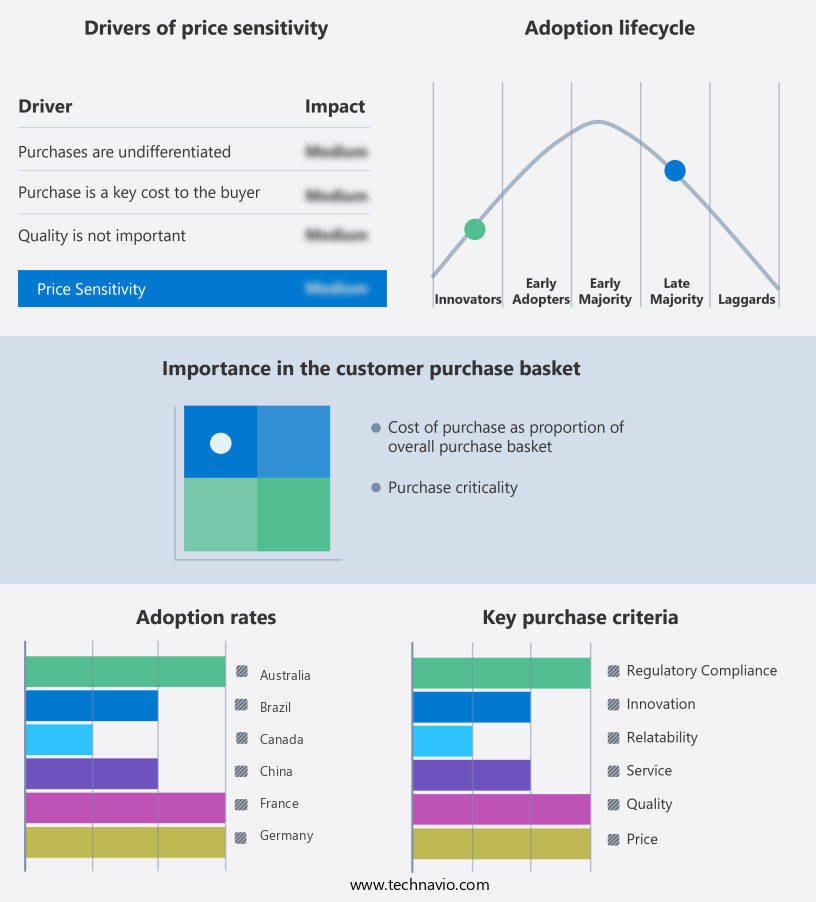
The collagen peptide market forecasting report includes the adoption lifecycle of the market, covering from the innovator's stage to the laggard's stage. It focuses on adoption rates in different regions based on penetration. Furthermore, the collagen peptide market report also includes key purchase criteria and drivers of price sensitivity to help companies evaluate and develop their market growth analysis strategies.
Collagen Peptide Market Share by Geography

 Customer Landscape of Collagen Peptide Industry

Competitive Landscape

Companies are implementing various strategies, such as strategic alliances, collagen peptide market forecast, partnerships, mergers and acquisitions, geographical expansion, and product/service launches, to enhance their presence in the industry.

Advanced BioMatrix Inc. - This company specializes in synthetic collagen peptides, including 5-FAM Collagen Hybridizing Peptide (CHP). 

The industry research and growth report includes detailed analyses of the competitive landscape of the market and information about key companies, including:

  • Advanced BioMatrix Inc.
  • Amicogen Co. Ltd.
  • BioCell Technology LLC
  • Bioiberica S.A.U.
  • Collagen Solutions Plc
  • ConnOils LLC
  • Crescent Biotech
  • Darling Ingredients Inc.
  • Foodmate Co. Ltd.
  • Gelita AG
  • Holista Colltech Ltd.
  • Lapi Gelatine Spa
  • Nitta Gelatin Inc.
  • PB Leiner
  • SAS Gelatines Weishardt
  • Viscofan SA

Qualitative and quantitative analysis of companies has been conducted to help clients understand the wider business environment as well as the strengths and weaknesses of key industry players. Data is qualitatively analyzed to categorize companies as pure play, category-focused, industry-focused, and diversified; it is quantitatively analyzed to categorize companies as dominant, leading, strong, tentative, and weak.

Recent Development and News in the Collagen Peptide Market

  • In January 2024, Nestlé Health Science, a global leader in nutritional science, announced the launch of its new collagen peptide supplement product, Fortigel Forte, aimed at addressing joint health and skin beauty concerns (Nestlé Health Science Press Release, 2024).
  • In March 2024, Danish biotech company, Gelita, and German pharmaceutical company, Merck KGaA, signed a strategic partnership to jointly develop and commercialize collagen peptide-based pharmaceutical products for the treatment of various diseases, including osteoarthritis and skin conditions (Merck KGaA Press Release, 2024).
  • In May 2024, Japanese biotech firm, Ajinomoto Co. Inc., completed a USD 150 million investment in its new collagen peptide production facility in China, increasing its global production capacity by 30% (Ajinomoto Co. Inc. Press Release, 2024).
  • In February 2025, the European Commission granted a Novel Food authorization to FrieslandCampina for its collagen peptide product, Peptan, enabling its commercialization across Europe (FrieslandCampina Press Release, 2025).

Dive into Technavio's robust research methodology, blending expert interviews, extensive data synthesis, and validated models for unparalleled Collagen Peptide Market insights. See full methodology.

Market Scope

Report Coverage

Details

Page number

209

Base year

2024

Historic period

2019-2023

Forecast period

2025-2029

Growth momentum & CAGR

Accelerate at a CAGR of 8.5%

Market growth 2025-2029

USD 721.7 million

Market structure

Fragmented

YoY growth 2024-2025(%)

8.2

Key countries

US, Germany, France, Japan, China, UK, Canada, South Korea, Brazil, and Australia

Competitive landscape

Leading Companies, Market Positioning of Companies, Competitive Strategies, and Industry Risks

Request Free Sample

Research Analyst Overview

  • The market continues to evolve, driven by the increasing demand for these bioactive ingredients in various sectors. Immunological assays and glycine content determination are essential quality control measures in the production of collagen peptides. Gelatin extraction methods and HPLC peptide separation are critical steps in the enzymatic hydrolysis process, ensuring the purity and functionality of the final product. Functional properties testing, such as hydroxyproline quantification and proline content analysis, assess the quality and effectiveness of collagen peptide hydrolysates. Shelf life assessment and regulatory compliance are crucial aspects of manufacturing processes, ensuring the safety and stability of collagen peptide products.
  • Collagen peptides are gaining popularity for their benefits in gut health improvement, bone health support, joint health, muscle protein synthesis, and skin elasticity improvement. For instance, a study showed a 20% increase in collagen synthesis after consuming hydrolyzed collagen peptides for eight weeks. Industry growth in the market is expected to reach double-digit percentages in the coming years, driven by the increasing awareness of their health benefits and the expanding applications in food and beverage, pharmaceuticals, and cosmetics industries. Collagen peptide manufacturers employ various peptide purification methods, such as acid hydrolysis techniques and mass spectrometry analysis, to ensure the highest quality and consistency in their products.
  • Regulatory compliance, storage conditions, and rheological properties are essential considerations in the production and distribution of collagen peptide products. Collagen peptide solubility and functional properties, such as wound healing properties and peptide bioavailability, are critical factors in their effectiveness and market success. Hydrolyzed collagen peptides offer advantages in terms of improved solubility and bioavailability compared to traditional collagen sources. In conclusion, the market is a dynamic and evolving industry, driven by the growing demand for these bioactive ingredients in various sectors. Manufacturers employ rigorous quality control measures, advanced production techniques, and regulatory compliance to ensure the safety, efficacy, and consistency of their collagen peptide products.
  • The market's continued growth is expected to bring new innovations and applications in the years to come.

What are the Key Data Covered in this Collagen Peptide Market Research and Growth Report?

  • What is the expected growth of the Collagen Peptide Market between 2025 and 2029?

    • USD 721.7 million, at a CAGR of 8.5%

  • What segmentation does the market report cover?

    • The report is segmented by Source (Bovine, Porcine, and Others), Application (Food and beverage industry, Nutraceuticals industry, Personal care industry, and Pharmaceutical industry), and Geography (Europe, North America, APAC, South America, and Middle East and Africa)

  • Which regions are analyzed in the report?

    • Europe, North America, APAC, South America, and Middle East and Africa

  • What are the key growth drivers and market challenges?

    • Increasing emphasis on health and wellness, Regulatory and quality concerns

  • Who are the major players in the Collagen Peptide Market?

    • Advanced BioMatrix Inc., Amicogen Co. Ltd., BioCell Technology LLC, Bioiberica S.A.U., Collagen Solutions Plc, ConnOils LLC, Crescent Biotech, Darling Ingredients Inc., Foodmate Co. Ltd., Gelita AG, Holista Colltech Ltd., Lapi Gelatine Spa, Nitta Gelatin Inc., PB Leiner, SAS Gelatines Weishardt, and Viscofan SA

Market Research Insights

  • The market represents a significant and continually evolving sector within the broader health and nutrition industry. According to recent reports, the market is projected to experience steady growth, with an anticipated expansion of approximately 6% annually. This expansion is driven by increasing consumer awareness of the health benefits associated with collagen peptides, such as improved joint health, skin hydration, and digestive enzyme activity. An example of the market's dynamic nature can be seen in the sales of collagen peptide supplements. Over the past few years, sales have experienced a notable increase, with some retailers reporting a rise of up to 30% in demand.
  • This trend is expected to continue as more consumers seek out natural solutions to support their overall health and wellness. Collagen peptides are gaining popularity due to their versatility and wide range of applications. They are used in various industries, including food and beverage, pharmaceuticals, and cosmetics, among others. The versatility of collagen peptides, coupled with their growing market presence, makes them an exciting and evolving area to watch.

We can help! Our analysts can customize this collagen peptide market research report to meet your requirements.

Get in touch

1 Executive Summary

  • 1.1 Market overview
    • Executive Summary - Chart on Market Overview
    • Executive Summary - Data Table on Market Overview
    • Executive Summary - Chart on Global Market Characteristics
    • Executive Summary - Chart on Market by Geography
    • Executive Summary - Chart on Market Segmentation by Source
    • Executive Summary - Chart on Market Segmentation by Application
    • Executive Summary - Chart on Incremental Growth
    • Executive Summary - Data Table on Incremental Growth
    • Executive Summary - Chart on Company Market Positioning

2 Technavio Analysis

  • 2.1 Analysis of price sensitivity, lifecycle, customer purchase basket, adoption rates, and purchase criteria
    • Analysis of price sensitivity, lifecycle, customer purchase basket, adoption rates, and purchase criteria
  • 2.2 Criticality of inputs and Factors of differentiation
    • Overview on criticality of inputs and factors of differentiation
  • 2.3 Factors of disruption
    • Overview on factors of disruption
  • 2.4 Impact of drivers and challenges
    • Impact of drivers and challenges in 2024 and 2029

3 Market Landscape

  • 3.1 Market ecosystem
    • Parent Market
    • Data Table on - Parent Market
  • 3.2 Market characteristics
    • Market characteristics analysis
  • 3.3 Value chain analysis
    • Value chain analysis

4 Market Sizing

  • 4.1 Market definition
    • Offerings of companies included in the market definition
  • 4.2 Market segment analysis
    • Market segments
  • 4.3 Market size 2024
    • 4.4 Market outlook: Forecast for 2024-2029
      • Chart on Global - Market size and forecast 2024-2029 ($ million)
      • Data Table on Global - Market size and forecast 2024-2029 ($ million)
      • Chart on Global Market: Year-over-year growth 2024-2029 (%)
      • Data Table on Global Market: Year-over-year growth 2024-2029 (%)

    5 Historic Market Size

    • 5.1 Global Collagen Peptide Market 2019 - 2023
      • Historic Market Size - Data Table on Global Collagen Peptide Market 2019 - 2023 ($ million)
    • 5.2 Source segment analysis 2019 - 2023
      • Historic Market Size - Source Segment 2019 - 2023 ($ million)
    • 5.3 Application segment analysis 2019 - 2023
      • Historic Market Size - Application Segment 2019 - 2023 ($ million)
    • 5.4 Geography segment analysis 2019 - 2023
      • Historic Market Size - Geography Segment 2019 - 2023 ($ million)
    • 5.5 Country segment analysis 2019 - 2023
      • Historic Market Size - Country Segment 2019 - 2023 ($ million)

    6 Qualitative Analysis

    • 6.1 Impact of AI on Global Collagen Peptide Market

      7 Five Forces Analysis

      • 7.1 Five forces summary
        • Five forces analysis - Comparison between 2024 and 2029
      • 7.2 Bargaining power of buyers
        • Bargaining power of buyers - Impact of key factors 2024 and 2029
      • 7.3 Bargaining power of suppliers
        • Bargaining power of suppliers - Impact of key factors in 2024 and 2029
      • 7.4 Threat of new entrants
        • Threat of new entrants - Impact of key factors in 2024 and 2029
      • 7.5 Threat of substitutes
        • Threat of substitutes - Impact of key factors in 2024 and 2029
      • 7.6 Threat of rivalry
        • Threat of rivalry - Impact of key factors in 2024 and 2029
      • 7.7 Market condition
        • Chart on Market condition - Five forces 2024 and 2029

      8 Market Segmentation by Source

      • 8.1 Market segments
        • Chart on Source - Market share 2024-2029 (%)
        • Data Table on Source - Market share 2024-2029 (%)
      • 8.2 Comparison by Source
        • Chart on Comparison by Source
        • Data Table on Comparison by Source
      • 8.3 Bovine - Market size and forecast 2024-2029
        • Chart on Bovine - Market size and forecast 2024-2029 ($ million)
        • Data Table on Bovine - Market size and forecast 2024-2029 ($ million)
        • Chart on Bovine - Year-over-year growth 2024-2029 (%)
        • Data Table on Bovine - Year-over-year growth 2024-2029 (%)
      • 8.4 Porcine - Market size and forecast 2024-2029
        • Chart on Porcine - Market size and forecast 2024-2029 ($ million)
        • Data Table on Porcine - Market size and forecast 2024-2029 ($ million)
        • Chart on Porcine - Year-over-year growth 2024-2029 (%)
        • Data Table on Porcine - Year-over-year growth 2024-2029 (%)
      • 8.5 Others - Market size and forecast 2024-2029
        • Chart on Others - Market size and forecast 2024-2029 ($ million)
        • Data Table on Others - Market size and forecast 2024-2029 ($ million)
        • Chart on Others - Year-over-year growth 2024-2029 (%)
        • Data Table on Others - Year-over-year growth 2024-2029 (%)
      • 8.6 Market opportunity by Source
        • Market opportunity by Source ($ million)
        • Data Table on Market opportunity by Source ($ million)

      9 Market Segmentation by Application

      • 9.1 Market segments
        • Chart on Application - Market share 2024-2029 (%)
        • Data Table on Application - Market share 2024-2029 (%)
      • 9.2 Comparison by Application
        • Chart on Comparison by Application
        • Data Table on Comparison by Application
      • 9.3 Food and beverage industry - Market size and forecast 2024-2029
        • Chart on Food and beverage industry - Market size and forecast 2024-2029 ($ million)
        • Data Table on Food and beverage industry - Market size and forecast 2024-2029 ($ million)
        • Chart on Food and beverage industry - Year-over-year growth 2024-2029 (%)
        • Data Table on Food and beverage industry - Year-over-year growth 2024-2029 (%)
      • 9.4 Nutraceuticals industry - Market size and forecast 2024-2029
        • Chart on Nutraceuticals industry - Market size and forecast 2024-2029 ($ million)
        • Data Table on Nutraceuticals industry - Market size and forecast 2024-2029 ($ million)
        • Chart on Nutraceuticals industry - Year-over-year growth 2024-2029 (%)
        • Data Table on Nutraceuticals industry - Year-over-year growth 2024-2029 (%)
      • 9.5 Personal care industry - Market size and forecast 2024-2029
        • Chart on Personal care industry - Market size and forecast 2024-2029 ($ million)
        • Data Table on Personal care industry - Market size and forecast 2024-2029 ($ million)
        • Chart on Personal care industry - Year-over-year growth 2024-2029 (%)
        • Data Table on Personal care industry - Year-over-year growth 2024-2029 (%)
      • 9.6 Pharmaceutical industry - Market size and forecast 2024-2029
        • Chart on Pharmaceutical industry - Market size and forecast 2024-2029 ($ million)
        • Data Table on Pharmaceutical industry - Market size and forecast 2024-2029 ($ million)
        • Chart on Pharmaceutical industry - Year-over-year growth 2024-2029 (%)
        • Data Table on Pharmaceutical industry - Year-over-year growth 2024-2029 (%)
      • 9.7 Market opportunity by Application
        • Market opportunity by Application ($ million)
        • Data Table on Market opportunity by Application ($ million)

      10 Customer Landscape

      • 10.1 Customer landscape overview
        • Analysis of price sensitivity, lifecycle, customer purchase basket, adoption rates, and purchase criteria

      11 Geographic Landscape

      • 11.1 Geographic segmentation
        • Chart on Market share by geography 2024-2029 (%)
        • Data Table on Market share by geography 2024-2029 (%)
      • 11.2 Geographic comparison
        • Chart on Geographic comparison
        • Data Table on Geographic comparison
      • 11.3 Europe - Market size and forecast 2024-2029
        • Chart on Europe - Market size and forecast 2024-2029 ($ million)
        • Data Table on Europe - Market size and forecast 2024-2029 ($ million)
        • Chart on Europe - Year-over-year growth 2024-2029 (%)
        • Data Table on Europe - Year-over-year growth 2024-2029 (%)
      • 11.4 North America - Market size and forecast 2024-2029
        • Chart on North America - Market size and forecast 2024-2029 ($ million)
        • Data Table on North America - Market size and forecast 2024-2029 ($ million)
        • Chart on North America - Year-over-year growth 2024-2029 (%)
        • Data Table on North America - Year-over-year growth 2024-2029 (%)
      • 11.5 APAC - Market size and forecast 2024-2029
        • Chart on APAC - Market size and forecast 2024-2029 ($ million)
        • Data Table on APAC - Market size and forecast 2024-2029 ($ million)
        • Chart on APAC - Year-over-year growth 2024-2029 (%)
        • Data Table on APAC - Year-over-year growth 2024-2029 (%)
      • 11.6 South America - Market size and forecast 2024-2029
        • Chart on South America - Market size and forecast 2024-2029 ($ million)
        • Data Table on South America - Market size and forecast 2024-2029 ($ million)
        • Chart on South America - Year-over-year growth 2024-2029 (%)
        • Data Table on South America - Year-over-year growth 2024-2029 (%)
      • 11.7 Middle East and Africa - Market size and forecast 2024-2029
        • Chart on Middle East and Africa - Market size and forecast 2024-2029 ($ million)
        • Data Table on Middle East and Africa - Market size and forecast 2024-2029 ($ million)
        • Chart on Middle East and Africa - Year-over-year growth 2024-2029 (%)
        • Data Table on Middle East and Africa - Year-over-year growth 2024-2029 (%)
      • 11.8 US - Market size and forecast 2024-2029
        • Chart on US - Market size and forecast 2024-2029 ($ million)
        • Data Table on US - Market size and forecast 2024-2029 ($ million)
        • Chart on US - Year-over-year growth 2024-2029 (%)
        • Data Table on US - Year-over-year growth 2024-2029 (%)
      • 11.9 Germany - Market size and forecast 2024-2029
        • Chart on Germany - Market size and forecast 2024-2029 ($ million)
        • Data Table on Germany - Market size and forecast 2024-2029 ($ million)
        • Chart on Germany - Year-over-year growth 2024-2029 (%)
        • Data Table on Germany - Year-over-year growth 2024-2029 (%)
      • 11.10 France - Market size and forecast 2024-2029
        • Chart on France - Market size and forecast 2024-2029 ($ million)
        • Data Table on France - Market size and forecast 2024-2029 ($ million)
        • Chart on France - Year-over-year growth 2024-2029 (%)
        • Data Table on France - Year-over-year growth 2024-2029 (%)
      • 11.11 Japan - Market size and forecast 2024-2029
        • Chart on Japan - Market size and forecast 2024-2029 ($ million)
        • Data Table on Japan - Market size and forecast 2024-2029 ($ million)
        • Chart on Japan - Year-over-year growth 2024-2029 (%)
        • Data Table on Japan - Year-over-year growth 2024-2029 (%)
      • 11.12 China - Market size and forecast 2024-2029
        • Chart on China - Market size and forecast 2024-2029 ($ million)
        • Data Table on China - Market size and forecast 2024-2029 ($ million)
        • Chart on China - Year-over-year growth 2024-2029 (%)
        • Data Table on China - Year-over-year growth 2024-2029 (%)
      • 11.13 UK - Market size and forecast 2024-2029
        • Chart on UK - Market size and forecast 2024-2029 ($ million)
        • Data Table on UK - Market size and forecast 2024-2029 ($ million)
        • Chart on UK - Year-over-year growth 2024-2029 (%)
        • Data Table on UK - Year-over-year growth 2024-2029 (%)
      • 11.14 Canada - Market size and forecast 2024-2029
        • Chart on Canada - Market size and forecast 2024-2029 ($ million)
        • Data Table on Canada - Market size and forecast 2024-2029 ($ million)
        • Chart on Canada - Year-over-year growth 2024-2029 (%)
        • Data Table on Canada - Year-over-year growth 2024-2029 (%)
      • 11.15 South Korea - Market size and forecast 2024-2029
        • Chart on South Korea - Market size and forecast 2024-2029 ($ million)
        • Data Table on South Korea - Market size and forecast 2024-2029 ($ million)
        • Chart on South Korea - Year-over-year growth 2024-2029 (%)
        • Data Table on South Korea - Year-over-year growth 2024-2029 (%)
      • 11.16 Brazil - Market size and forecast 2024-2029
        • Chart on Brazil - Market size and forecast 2024-2029 ($ million)
        • Data Table on Brazil - Market size and forecast 2024-2029 ($ million)
        • Chart on Brazil - Year-over-year growth 2024-2029 (%)
        • Data Table on Brazil - Year-over-year growth 2024-2029 (%)
      • 11.17 Australia - Market size and forecast 2024-2029
        • Chart on Australia - Market size and forecast 2024-2029 ($ million)
        • Data Table on Australia - Market size and forecast 2024-2029 ($ million)
        • Chart on Australia - Year-over-year growth 2024-2029 (%)
        • Data Table on Australia - Year-over-year growth 2024-2029 (%)
      • 11.18 Market opportunity by geography
        • Market opportunity by geography ($ million)
        • Data Tables on Market opportunity by geography ($ million)

      12 Drivers, Challenges, and Opportunity/Restraints

      • 12.1 Market drivers
        • 12.2 Market challenges
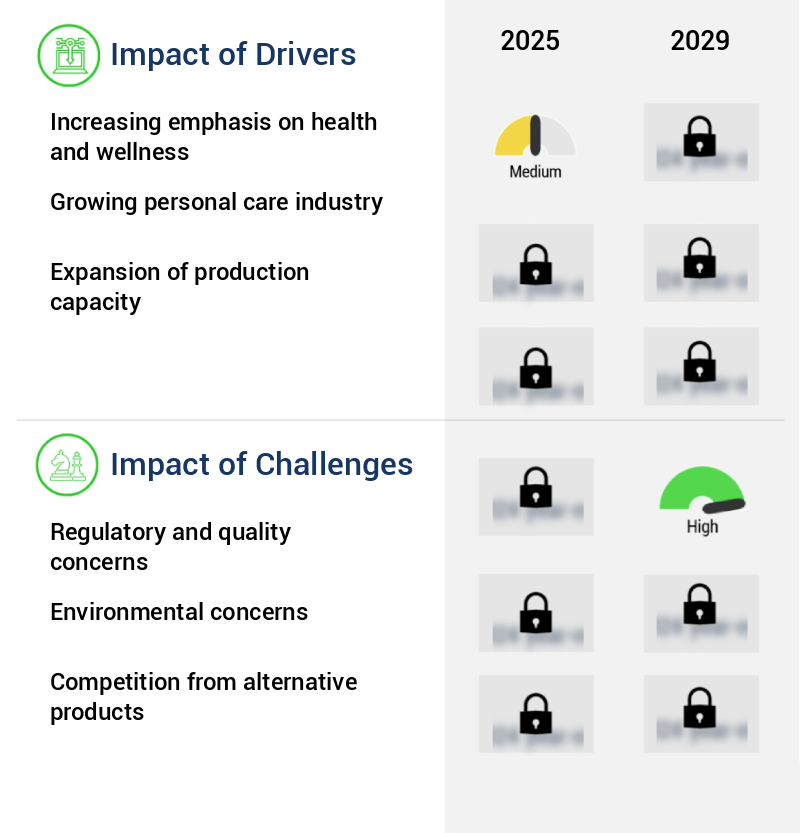
          • 12.3 Impact of drivers and challenges
            • Impact of drivers and challenges in 2024 and 2029
          • 12.4 Market opportunities/restraints

            13 Competitive Landscape

            • 13.1 Overview
              • 13.2 Competitive Landscape
                • Overview on criticality of inputs and factors of differentiation
              • 13.3 Landscape disruption
                • Overview on factors of disruption
              • 13.4 Industry risks
                • Impact of key risks on business

              14 Competitive Analysis

              • 14.1 Companies profiled
                • Companies covered
              • 14.2 Company ranking index
                • Company ranking index
              • 14.3 Market positioning of companies
                • Matrix on companies position and classification
              • 14.4 Advanced BioMatrix Inc.
                • Advanced BioMatrix Inc. - Overview
                • Advanced BioMatrix Inc. - Product / Service
                • Advanced BioMatrix Inc. - Key offerings
                • SWOT
              • 14.5 Amicogen Co. Ltd.
                • Amicogen Co. Ltd. - Overview
                • Amicogen Co. Ltd. - Product / Service
                • Amicogen Co. Ltd. - Key offerings
                • SWOT
              • 14.6 BioCell Technology LLC
                • BioCell Technology LLC - Overview
                • BioCell Technology LLC - Product / Service
                • BioCell Technology LLC - Key offerings
                • SWOT
              • 14.7 Bioiberica S.A.U.
                • Bioiberica S.A.U. - Overview
                • Bioiberica S.A.U. - Product / Service
                • Bioiberica S.A.U. - Key offerings
                • SWOT
              • 14.8 ConnOils LLC
                • ConnOils LLC - Overview
                • ConnOils LLC - Product / Service
                • ConnOils LLC - Key offerings
                • SWOT
              • 14.9 Crescent Biotech
                • Crescent Biotech - Overview
                • Crescent Biotech - Product / Service
                • Crescent Biotech - Key offerings
                • SWOT
              • 14.10 Darling Ingredients Inc.
                • Darling Ingredients Inc. - Overview
                • Darling Ingredients Inc. - Business segments
                • Darling Ingredients Inc. - Key news
                • Darling Ingredients Inc. - Key offerings
                • Darling Ingredients Inc. - Segment focus
                • SWOT
              • 14.11 Foodmate Co. Ltd.
                • Foodmate Co. Ltd. - Overview
                • Foodmate Co. Ltd. - Product / Service
                • Foodmate Co. Ltd. - Key offerings
                • SWOT
              • 14.12 Gelita AG
                • Gelita AG - Overview
                • Gelita AG - Product / Service
                • Gelita AG - Key offerings
                • SWOT
              • 14.13 Holista Colltech Ltd.
                • Holista Colltech Ltd. - Overview
                • Holista Colltech Ltd. - Product / Service
                • Holista Colltech Ltd. - Key offerings
                • SWOT
              • 14.14 Lapi Gelatine Spa
                • Lapi Gelatine Spa - Overview
                • Lapi Gelatine Spa - Product / Service
                • Lapi Gelatine Spa - Key offerings
                • SWOT
              • 14.15 Nitta Gelatin Inc.
                • Nitta Gelatin Inc. - Overview
                • Nitta Gelatin Inc. - Product / Service
                • Nitta Gelatin Inc. - Key offerings
                • SWOT
              • 14.16 PB Leiner
                • PB Leiner - Overview
                • PB Leiner - Product / Service
                • PB Leiner - Key offerings
                • SWOT
              • 14.17 SAS Gelatines Weishardt
                • SAS Gelatines Weishardt - Overview
                • SAS Gelatines Weishardt - Product / Service
                • SAS Gelatines Weishardt - Key offerings
                • SWOT
              • 14.18 Viscofan SA
                • Viscofan SA - Overview
                • Viscofan SA - Product / Service
                • Viscofan SA - Key offerings
                • SWOT

              15 Appendix

              • 15.1 Scope of the report
                • 15.2 Inclusions and exclusions checklist
                  • Inclusions checklist
                  • Exclusions checklist
                • 15.3 Currency conversion rates for US$
                  • Currency conversion rates for US$
                • 15.4 Research methodology
                  • Research methodology
                • 15.5 Data procurement
                  • Information sources
                • 15.6 Data validation
                  • Data validation
                • 15.7 Validation techniques employed for market sizing
                  • Validation techniques employed for market sizing
                • 15.8 Data synthesis
                  • Data synthesis
                • 15.9 360 degree market analysis
                  • 360 degree market analysis
                • 15.10 List of abbreviations
                  • List of abbreviations

                Research Methodology

                Technavio presents a detailed picture of the market by way of study, synthesis, and summation of data from multiple sources. The analysts have presented the various facets of the market with a particular focus on identifying the key industry influencers. The data thus presented is comprehensive, reliable, and the result of extensive research, both primary and secondary.

                INFORMATION SOURCES

                Primary sources

                • Manufacturers and suppliers
                • Channel partners
                • Industry experts
                • Strategic decision makers

                Secondary sources

                • Industry journals and periodicals
                • Government data
                • Financial reports of key industry players
                • Historical data
                • Press releases

                DATA ANALYSIS

                Data Synthesis

                • Collation of data
                • Estimation of key figures
                • Analysis of derived insights

                Data Validation

                • Triangulation with data models
                • Reference against proprietary databases
                • Corroboration with industry experts

                REPORT WRITING

                Qualitative

                • Market drivers
                • Market challenges
                • Market trends
                • Five forces analysis

                Quantitative

                • Market size and forecast
                • Market segmentation
                • Geographical insights
                • Competitive landscape

                Interested in this report?

                Get your sample now to see our research methodology and insights!

                Download Now

                Frequently Asked Questions

                Collagen Peptide market growth will increase by $ 721.7 mn during 2025-2029 .

                The Collagen Peptide market is expected to grow at a CAGR of 8.5% during 2025-2029 .

                Collagen Peptide market is segmented by Source( Bovine, Porcine, Others) Application( Food and beverage industry, Nutraceuticals industry, Personal care industry, Pharmaceutical industry)

                Advanced BioMatrix Inc., Amicogen Co. Ltd., BioCell Technology LLC, Bioiberica S.A.U., Collagen Solutions Plc, ConnOils LLC, Crescent Biotech, Darling Ingredients Inc., Foodmate Co. Ltd., Gelita AG, Holista Colltech Ltd., Lapi Gelatine Spa, Nitta Gelatin Inc., PB Leiner, SAS Gelatines Weishardt, Viscofan SA are a few of the key vendors in the Collagen Peptide market.

                Europe will register the highest growth rate of 36% among the other regions. Therefore, the Collagen Peptide market in Europe is expected to garner significant business opportunities for the vendors during the forecast period.

                US, Germany, France, Japan, China, UK, Canada, South Korea, Brazil, Australia

                • Increasing emphasis on health and wellnessThe global collagen peptide market is significantly driven by the growing consumer focus on health is the driving factor this market.
                • fitness is the driving factor this market.
                • and aging-related concerns. As individuals become more health-conscious is the driving factor this market.
                • there is an increasing demand for products that support overall well-being is the driving factor this market.
                • including dietary supplements is the driving factor this market.
                • functional foods is the driving factor this market.
                • and beverages enriched with collagen peptides. This trend is particularly evident among younger generations is the driving factor this market.
                • such as Gen Z is the driving factor this market.
                • who are increasingly aware of the importance of maintaining health and preventing age-related issues.Approximately 50% of Gen Z individuals globally express concerns about aging as early as age 23. Collagen is the driving factor this market.
                • a vital protein responsible for maintaining skin elasticity and plumpness is the driving factor this market.
                • naturally decreases in the body by up to one percent each year starting in the twenties. As the oldest members of Gen Z reach this critical point of collagen loss is the driving factor this market.
                • there is a heightened interest in collagen-based products to counteract the effects of aging.The emphasis on health and wellness extends beyond just skincare. Consumers are seeking holistic solutions that address multiple aspects of health is the driving factor this market.
                • including joint and bone health is the driving factor this market.
                • muscle recovery is the driving factor this market.
                • and overall vitality. Collagen peptides is the driving factor this market.
                • known for their bioavailability and effectiveness is the driving factor this market.
                • are increasingly incorporated into a variety of products to meet these needs. Dietary supplements in the form of powders is the driving factor this market.
                • capsules is the driving factor this market.
                • and gummies are popular choices is the driving factor this market.
                • offering convenient ways to boost collagen intake.Functional foods and beverages fortified with collagen peptides are also gaining traction. Products such as protein bars is the driving factor this market.
                • smoothies is the driving factor this market.
                • and collagen-infused water cater to the demand for on-the-go is the driving factor this market.
                • nutritionally enhanced options. These products not only support skin health but also contribute to joint mobility and muscle strength is the driving factor this market.
                • making them appealing to a broad range of consumers.As consumers continue to prioritize their health and seek effective solutions to aging-related concerns is the driving factor this market.
                • the demand for collagen peptides in various forms is expected to grow during the forecast period is the driving factor this market.
                • fueling market expansion and innovation. is the driving factor this market.

                The Collagen Peptide market vendors should focus on grabbing business opportunities from the Bovine segment as it accounted for the largest market share in the base year.
