



Computer Vision In Healthcare Market Size 2026-2030
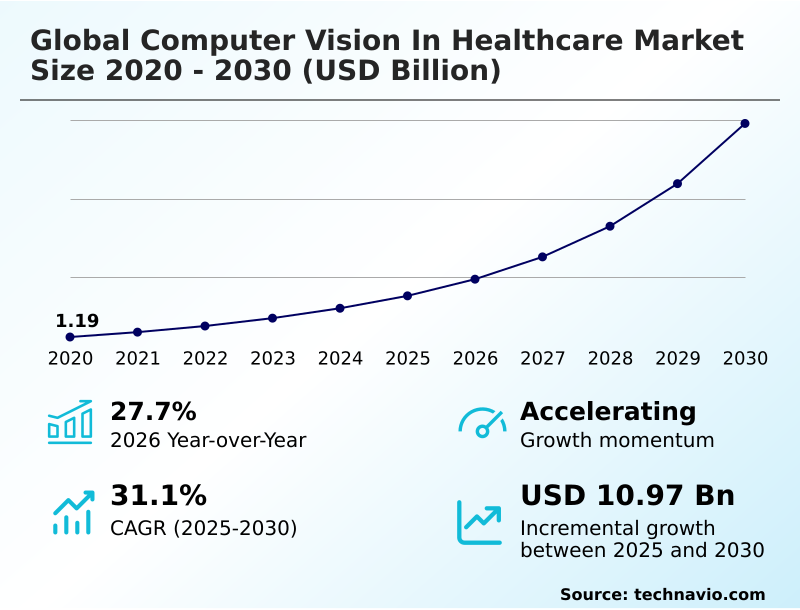
The computer vision in healthcare market size is valued to increase by USD 10.97 billion, at a CAGR of 31.1% from 2025 to 2030. Accelerated advancements in AI and ML algorithms will drive the computer vision in healthcare market.
Major Market Trends & Insights
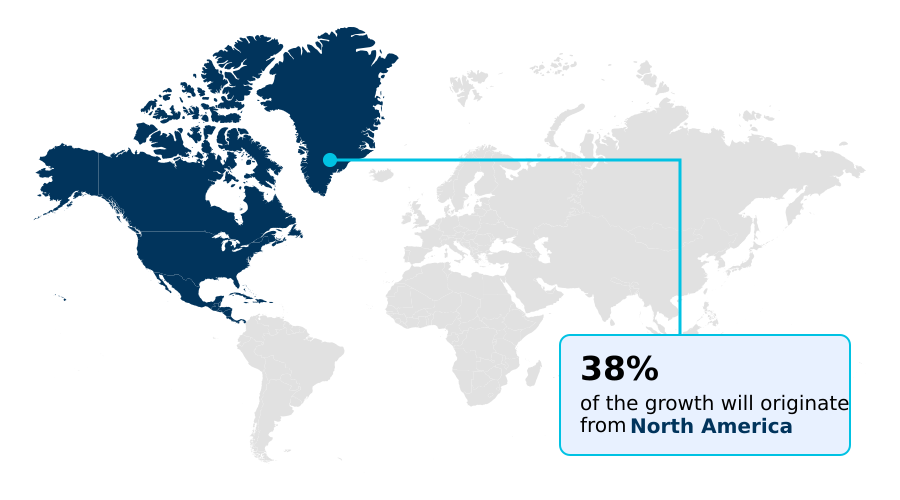
- North America dominated the market and accounted for a 38.3% growth during the forecast period.
- By End-user - Healthcare providers segment was valued at USD 1.49 billion in 2024
- By Component - Software segment accounted for the largest market revenue share in 2024
Market Size & Forecast
- Market Opportunities: USD 13.59 billion
- Market Future Opportunities: USD 10.97 billion
- CAGR from 2025 to 2030 : 31.1%
Market Summary
- The computer vision in healthcare market is undergoing transformative expansion, driven by the need for greater diagnostic precision and clinical efficiency. This field leverages sophisticated algorithms like convolutional neural networks to analyze medical imagery, enabling capabilities from automated triage in emergency settings to enhanced precision in robotic-assisted surgery.
- Key applications include medical image analysis for early disease detection and digital pathology, where AI assists in identifying malignancies. A significant trend is the shift towards edge computing in healthcare, allowing for real-time analysis on devices without cloud latency. For instance, a hospital network can implement an AI-powered monitoring system for in-patient wards.
- This system uses contactless patient monitoring for fall detection and alerts staff, improving patient safety and optimizing nursing workflows without requiring additional personnel. This scenario highlights the technology's practical impact, moving beyond research to deliver tangible improvements in care quality and operational efficiency through tools like AI-powered workflow tools and AI-driven surgical video analytics.
- The development of explainable AI techniques is also crucial for building clinical trust and navigating regulatory hurdles.
What will be the Size of the Computer Vision In Healthcare Market during the forecast period?
Get Key Insights on Market Forecast (PDF) Get Free Sample
How is the Computer Vision In Healthcare Market Segmented?
The computer vision in healthcare industry research report provides comprehensive data (region-wise segment analysis), with forecasts and estimates in "USD million" for the period 2026-2030, as well as historical data from 2020-2024 for the following segments.
- End-user
- Healthcare providers
- Diagnostic centers
- Research and academic institutes
- Others
- Component
- Software
- Hardware
- Services
- Application
- Medical imaging and diagnostics
- Pathology and laboratory automation
- Surgeries and robotics
- Hospital management and patient monitoring
- Others
- Geography
- North America
- US
- Canada
- Mexico
- Asia
- Europe
- Germany
- France
- UK
- Rest of World (ROW)
- North America
By End-user Insights
The healthcare providers segment is estimated to witness significant growth during the forecast period.
Healthcare providers are central to the market's expansion, driven by the need to optimize hospital workflows and improve clinical outcomes.
This segment is adopting systems for AI-powered care coordination and AI-driven surgical video analytics to manage staff shortages and complex patient needs. The use of ambient intelligence in patient rooms for contactless patient monitoring is becoming a standard.
These AI-enabled diagnostic tools analyze video feeds to detect adverse events like falls, enabling immediate intervention. In operating rooms, surgical navigation systems leveraging real-time surgical intelligence and augmented reality overlays reduce procedural times.
Integrating this visual data with EHRs creates a comprehensive patient view. For instance, facilities implementing these technologies report up to a 20% reduction in specific adverse events, showcasing clear operational gains from AI-powered workflow tools.
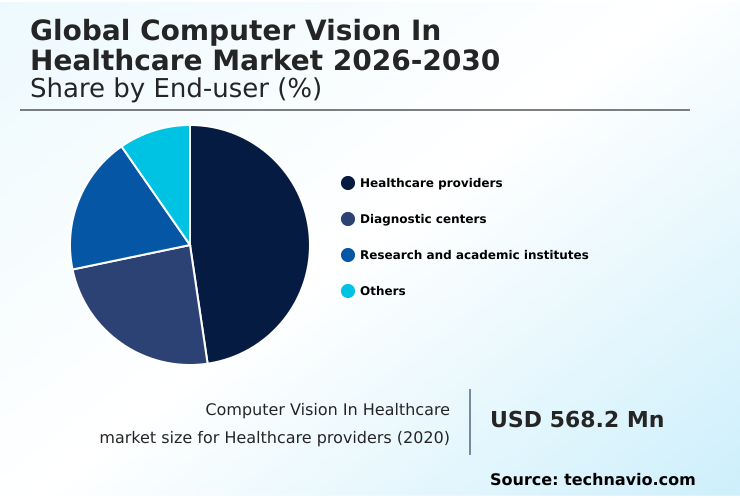
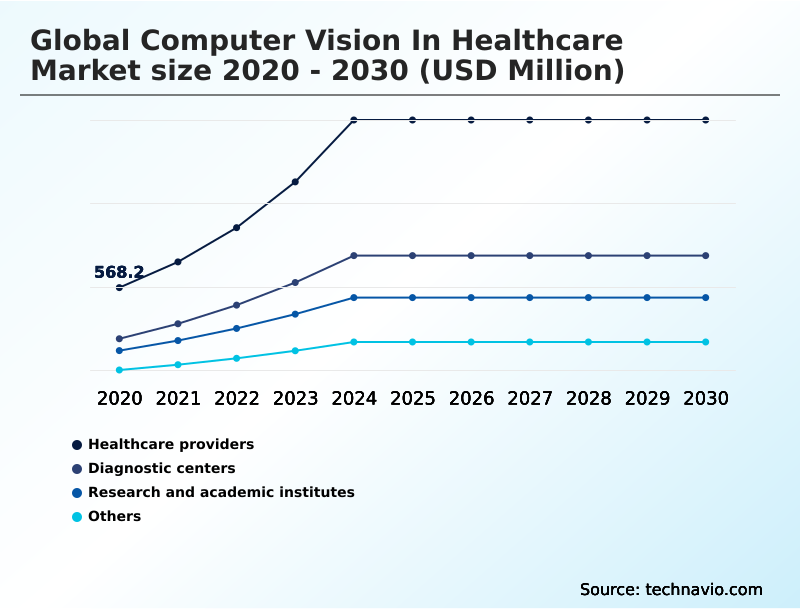
The Healthcare providers segment was valued at USD 1.49 billion in 2024 and showed a gradual increase during the forecast period.
Regional Analysis
North America is estimated to contribute 38.3% to the growth of the global market during the forecast period.Technavio’s analysts have elaborately explained the regional trends and drivers that shape the market during the forecast period.
See How Computer Vision In Healthcare Market Demand is Rising in North America Get Free Sample
North America continues to dominate the market, driven by high investment in digital health infrastructure and a favorable regulatory environment that has accelerated approvals for AI-driven software. The region accounts for over 38% of the market's incremental growth.
Asia is the fastest-growing region, with a CAGR of 32.4%, fueled by government initiatives promoting AI-based tuberculosis screening and leveraging technology to address physician shortages.
In Europe, the health data hub initiative fosters collaboration, though strict data privacy regulations add complexity. The adoption of AI-powered diagnostic assays in this region is often linked to national reimbursement schemes.
These regional dynamics show a global shift towards integrating AI-powered imaging into standard care.
Market Dynamics
Our researchers analyzed the data with 2025 as the base year, along with the key drivers, trends, and challenges. A holistic analysis of drivers will help companies refine their marketing strategies to gain a competitive advantage.
- The market's future is being shaped by highly specific applications designed to solve complex clinical problems. The demand for computer vision for early disease detection is paramount, driving innovation in tools for the automated detection of Alzheimer's biomarkers from routine scans, a task that was previously impossible to scale.
- In surgery, the focus is on integrating edge computing for real-time surgical guidance, where real-time analytics for surgical video feeds provide surgeons with unprecedented situational awareness, a core component of advanced computer vision in robotic-assisted surgery.
- In diagnostics, deep learning for radiologic image analysis is becoming standard, while the use of generative AI for synthetic pathology data is overcoming the critical bottleneck of data scarcity. This allows for the training of more robust algorithms for applications like AI tools for dermatological skin assessment.
- The push for computer vision for contactless patient monitoring and its use in computer vision applications in telehealth is expanding care beyond hospital walls. Navigating the AI medical device regulatory approval process and ensuring AI model validation for demographic inclusivity are key to success.
- A key operational metric shows that systems addressing the interoperability with electronic health records are adopted three times faster than siloed solutions, underscoring the importance of seamless integration.
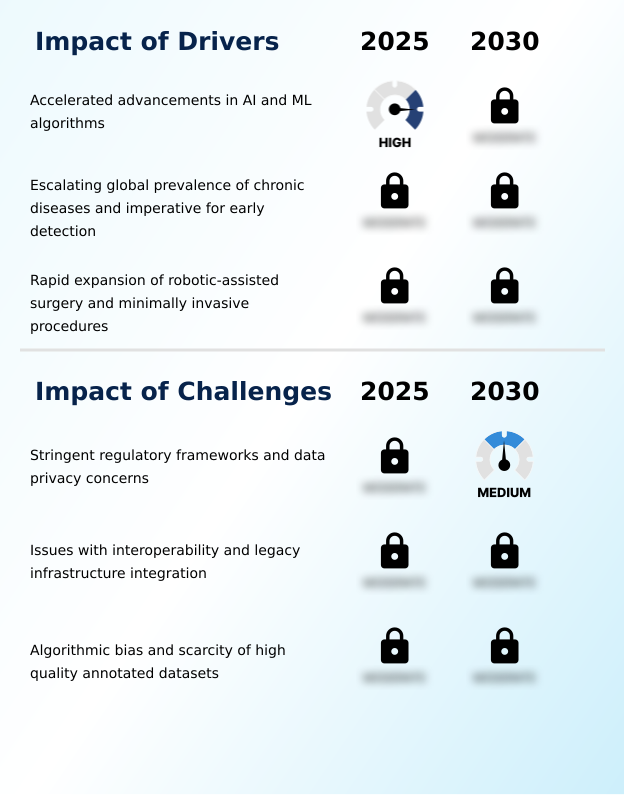
What are the key market drivers leading to the rise in the adoption of Computer Vision In Healthcare Industry?
- Accelerated advancements in artificial intelligence and machine learning algorithms are a key driver for market growth.
- Accelerated advancements in convolutional neural networks and vision transformers are the primary market driver. These algorithms enable a new class of AI-powered radiology solutions to perform tasks like semantic segmentation with superhuman accuracy.
- The escalating prevalence of chronic diseases creates a compelling demand for the early detection capabilities offered by AI-assisted diagnostics. For example, systems utilizing computational fluid dynamics derived from scans can non-invasively assess cardiovascular risk, improving diagnostic yields by over 25%.
- This technological push allows for the automation of routine tasks, freeing clinicians to focus on complex cases. Furthermore, the expansion of robotic-assisted surgery relies on these technologies for precise instrument tracking and navigation, solidifying their role in modern medicine.
What are the market trends shaping the Computer Vision In Healthcare Industry?
- A key market trend is the convergence of edge computing with real-time surgical intelligence. This integration is essential for enabling low-latency decision support during critical procedures.
- A dominant trend is the migration of processing to the edge, enabling real-time surgical intelligence on medical devices. This shift, powered by low-latency AI libraries, is crucial for robotic-assisted surgery, where immediate feedback from vision-guided robotic platforms improves safety and precision. The use of generative adversarial networks and diffusion models to create synthetic medical data is another transformative trend.
- It addresses data scarcity for training robust models for AI-powered cancer diagnostics and other applications, reducing dependency on limited high-quality annotated datasets. This synergy of edge computing in healthcare and generative AI accelerates innovation, with some systems demonstrating a 30% faster processing time for medical image analysis at the point of care.
What challenges does the Computer Vision In Healthcare Industry face during its growth?
- Stringent regulatory frameworks and data privacy concerns present a key challenge affecting industry growth.
- Significant challenges hinder market adoption, primarily complex regulatory frameworks and issues of interoperability of AI systems with legacy infrastructure. The black box nature of deep learning makes model validation difficult, while the risk of algorithmic bias is a major ethical concern, as demonstrated when some AI-based dermatological assessment tools showed a 20% higher error rate on underrepresented demographics.
- Navigating data privacy laws and the high cost of creating diverse, high-quality annotated datasets create substantial barriers. Addressing these issues requires a move towards explainable AI techniques and robust AI lifecycle management. Without transparent and unbiased systems, achieving widespread clinical trust and navigating the stringent approval processes for AI-enabled medical devices will remain a primary challenge.
Exclusive Technavio Analysis on Customer Landscape
The computer vision in healthcare market forecasting report includes the adoption lifecycle of the market, covering from the innovator’s stage to the laggard’s stage. It focuses on adoption rates in different regions based on penetration. Furthermore, the computer vision in healthcare market report also includes key purchase criteria and drivers of price sensitivity to help companies evaluate and develop their market growth analysis strategies.
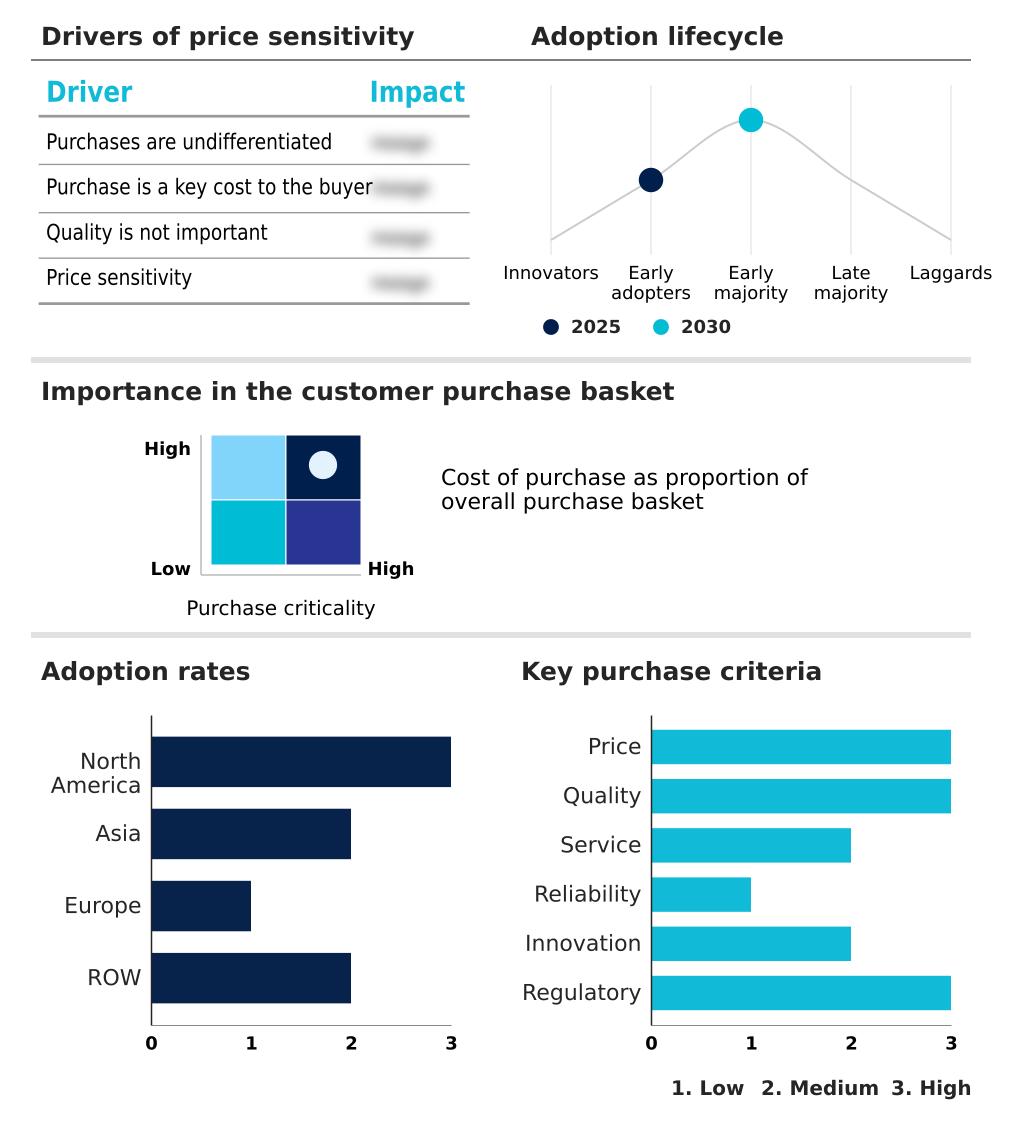
Customer Landscape of Computer Vision In Healthcare Industry
Competitive Landscape
Companies are implementing various strategies, such as strategic alliances, computer vision in healthcare market forecast, partnerships, mergers and acquisitions, geographical expansion, and product/service launches, to enhance their presence in the industry.
Aidoc Medical Ltd. - Delivers AI-powered radiology solutions for real-time detection of critical conditions, expediting patient treatment and enhancing diagnostic impact.
The industry research and growth report includes detailed analyses of the competitive landscape of the market and information about key companies, including:
- Aidoc Medical Ltd.
- Butterfly Network Inc.
- Canon Medical Systems Corp.
- Enlitic Inc.
- GE Healthcare Technologies
- HeartFlow Inc.
- Ibex Medical Analytics
- Koninklijke Philips NV
- Lunit Inc.
- Nano-X Imaging Ltd.
- Oxipit
- Qure.ai Technologies Pvt. Ltd.
- RADLogics Inc.
- Samsung Medison Co.Ltd.
- Siemens Healthineers AG
- Tempus Labs Inc.
- Ultromics Ltd.
- Viz.ai Inc.
Qualitative and quantitative analysis of companies has been conducted to help clients understand the wider business environment as well as the strengths and weaknesses of key industry players. Data is qualitatively analyzed to categorize companies as pure play, category-focused, industry-focused, and diversified; it is quantitatively analyzed to categorize companies as dominant, leading, strong, tentative, and weak.
Recent Development and News in Computer vision in healthcare market
- In March 2025, NVIDIA Corp. launched its updated Clara Holoscan platform with new low-latency AI libraries to process 4K video feeds from surgical devices in real-time.
- In March 2025, Qualcomm Technologies Inc. announced a new processor series optimized for the Internet of Medical Things, featuring built-in computer vision acceleration for next-generation portable medical devices.
- In April 2025, HCA Healthcare announced a strategic enterprise-wide rollout of an AI-powered ambient monitoring system to analyze patient movements and predict fall risks across its acute care facilities.
- In May 2025, Koninklijke Philips NV announced a strategic collaboration with NVIDIA Corp. to co-develop an AI-powered MRI foundational model aimed at significantly reducing scan times and improving image reconstruction quality.
Dive into Technavio’s robust research methodology, blending expert interviews, extensive data synthesis, and validated models for unparalleled Computer Vision In Healthcare Market insights. See full methodology.
| Market Scope | |
|---|---|
| Page number | 303 |
| Base year | 2025 |
| Historic period | 2020-2024 |
| Forecast period | 2026-2030 |
| Growth momentum & CAGR | Accelerate at a CAGR of 31.1% |
| Market growth 2026-2030 | USD 10971.9 million |
| Market structure | Fragmented |
| YoY growth 2025-2026(%) | 27.7% |
| Key countries | US, Canada, Mexico, China, Japan, India, South Korea, Indonesia, Thailand, Singapore, Germany, France, UK, Italy, The Netherlands, Spain, Russia, Australia, Brazil, Saudi Arabia, South Africa, UAE and Turkey |
| Competitive landscape | Leading Companies, Market Positioning of Companies, Competitive Strategies, and Industry Risks |
Research Analyst Overview
- The computer vision in healthcare market is defined by the practical application of advanced algorithms to solve tangible clinical challenges. Core technologies like convolutional neural networks and vision transformers are enabling a new generation of diagnostic and procedural tools. From AI-powered cancer diagnostics in digital pathology to guidance systems for robotic-assisted surgery, these solutions are becoming integral to care delivery.
- Boardroom decisions are increasingly focused on the strategic implementation of these technologies, weighing the benefits of AI-powered care coordination against the complexities of AI lifecycle management. A key trend is the move toward real-time surgical intelligence, which has been shown to reduce procedural analysis time by over 30% in certain complex interventions.
- The market's maturity is reflected in the development of sophisticated platforms like the AI-rad companion suite and specialized tools for AI-based dermatological assessment and automated triage. Success hinges on effective clinical workflow integration and the use of explainable AI techniques to foster trust and ensure adoption.
What are the Key Data Covered in this Computer Vision In Healthcare Market Research and Growth Report?
-
What is the expected growth of the Computer Vision In Healthcare Market between 2026 and 2030?
-
USD 10.97 billion, at a CAGR of 31.1%
-
-
What segmentation does the market report cover?
-
The report is segmented by End-user (Healthcare providers, Diagnostic centers, Research and academic institutes, and Others), Component (Software, Hardware, and Services), Application (Medical imaging and diagnostics, Pathology and laboratory automation, Surgeries and robotics, Hospital management and patient monitoring, and Others) and Geography (North America, Asia, Europe, Rest of World (ROW))
-
-
Which regions are analyzed in the report?
-
North America, Asia, Europe and Rest of World (ROW)
-
-
What are the key growth drivers and market challenges?
-
Accelerated advancements in AI and ML algorithms, Stringent regulatory frameworks and data privacy concerns
-
-
Who are the major players in the Computer Vision In Healthcare Market?
-
Aidoc Medical Ltd., Butterfly Network Inc., Canon Medical Systems Corp., Enlitic Inc., GE Healthcare Technologies, HeartFlow Inc., Ibex Medical Analytics, Koninklijke Philips NV, Lunit Inc., Nano-X Imaging Ltd., Oxipit, Qure.ai Technologies Pvt. Ltd., RADLogics Inc., Samsung Medison Co.Ltd., Siemens Healthineers AG, Tempus Labs Inc., Ultromics Ltd. and Viz.ai Inc.
-
Market Research Insights
- Market dynamics are shaped by the imperative to enhance diagnostic accuracy and operational efficiency. The adoption of AI-powered radiology solutions and AI-assisted diagnostics is accelerating, with some applications reducing radiologist review times by up to 30%. AI-driven software is moving beyond pilot programs, as clinical workflow integration becomes a key purchasing criterion.
- Platforms offering AI-powered care coordination demonstrate significant value, correlating with a 15% reduction in patient readmission rates in certain high-risk cohorts. However, the success of these AI-assisted diagnostic tools depends heavily on seamless interoperability of AI systems with existing hospital IT, a factor that differentiates leading vendors. The market is clearly transitioning toward enterprise-scale, outcome-driven implementations.
We can help! Our analysts can customize this computer vision in healthcare market research report to meet your requirements.
 RIA -
RIA - 
