


Concrete And Cement Market Size 2026-2030
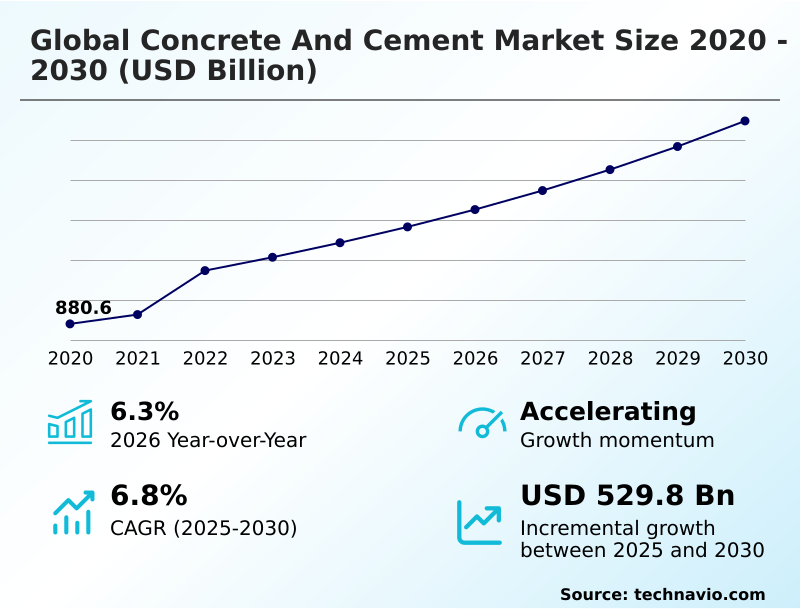
The concrete and cement market size is valued to increase by USD 529.8 billion, at a CAGR of 6.8% from 2025 to 2030. Growing global construction industry will drive the concrete and cement market.
Major Market Trends & Insights
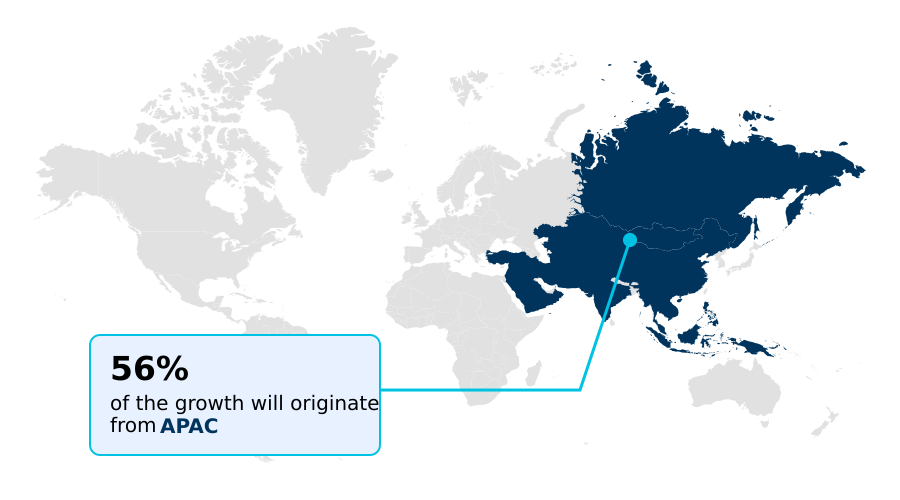
- APAC dominated the market and accounted for a 55.8% growth during the forecast period.
- By Product - Cement segment was valued at USD 746.7 billion in 2024
- By End-user - Residential segment accounted for the largest market revenue share in 2024
Market Size & Forecast
- Market Opportunities: USD 1014.7 billion
- Market Future Opportunities: USD 529.8 billion
- CAGR from 2025 to 2030 : 6.8%
Market Summary
- The concrete and cement market remains foundational to global economic development, with demand intrinsically linked to construction, infrastructure, and urbanization. Core drivers include extensive government spending on public works and a burgeoning need for residential and commercial buildings.
- However, the industry navigates significant challenges, primarily the high carbon footprint associated with clinker production, which has intensified regulatory pressure and spurred a transition toward sustainability. Key trends are now centered on innovation in materials and processes.
- For instance, a manufacturer might deploy a digital twin of its kiln to simulate the use of alternative fuels, optimizing energy consumption and reducing emissions without compromising the quality of its portland cement. This pivot towards green cement, supplementary cementitious materials, and carbon capture technologies is redefining operational standards.
- The market's future trajectory depends on balancing the persistent demand for construction materials with the urgent need for decarbonization and environmental stewardship.
What will be the Size of the Concrete And Cement Market during the forecast period?
Get Key Insights on Market Forecast (PDF) Get Free Sample
How is the Concrete And Cement Market Segmented?
The concrete and cement industry research report provides comprehensive data (region-wise segment analysis), with forecasts and estimates in "USD billion" for the period 2026-2030, as well as historical data from 2020-2024 for the following segments.
- Product
- Cement
- Concrete
- End-user
- Residential
- Non-residential
- Application
- Construction
- Oil and gas
- Mining
- Others
- Geography
- APAC
- China
- Japan
- India
- Europe
- Germany
- UK
- France
- North America
- US
- Canada
- Mexico
- South America
- Brazil
- Argentina
- Middle East and Africa
- Saudi Arabia
- UAE
- South Africa
- Rest of World (ROW)
- APAC
By Product Insights
The cement segment is estimated to witness significant growth during the forecast period.
The concrete and cement market is segmented by product into cement and concrete, and by end-user into residential and non-residential sectors. The cement segment, featuring products like portland cement and various structural binders, serves as the foundational component for concrete.
The concrete segment itself is driven by demand for ready-mix concrete solutions and specialized high-performance concrete in large-scale projects.
End-user dynamics show the residential sector fueled by urban infrastructure development, while the non-residential sector is driven by commercial and industrial construction projects.
Geographically, APAC accounts for over 55% of the market's incremental growth, underscoring the region's dominant role in driving demand for advanced cement-based materials, clinker substitutes, and construction aggregates.
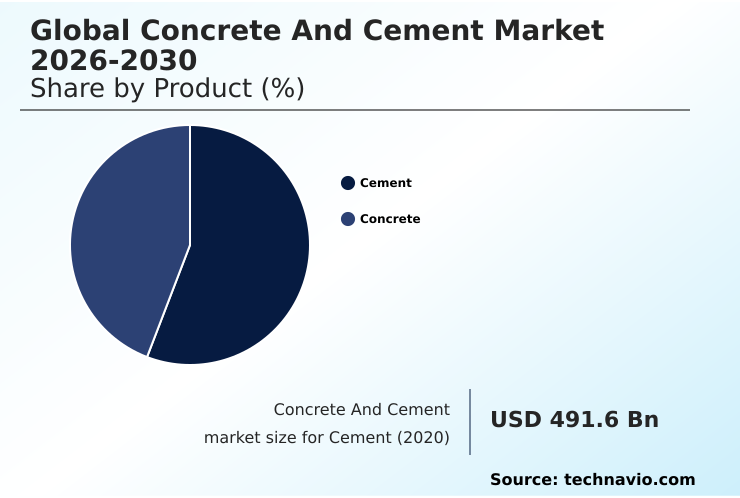
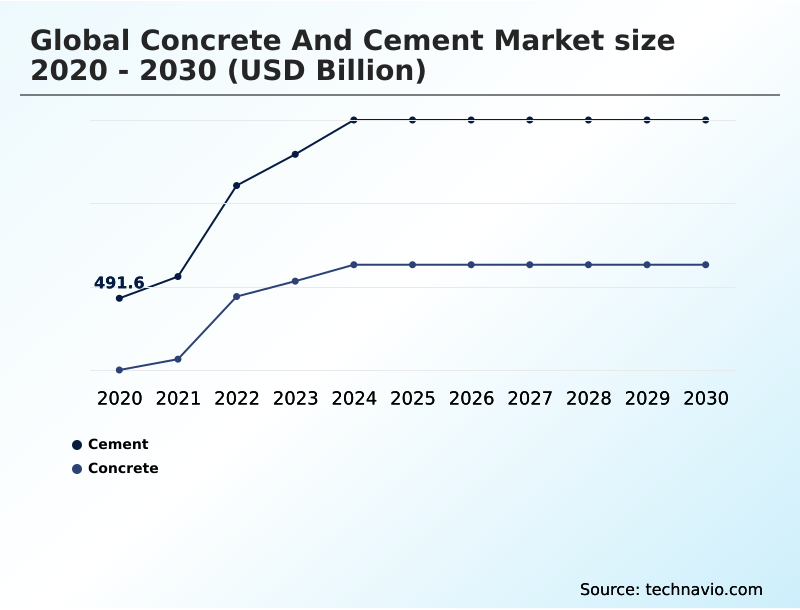
The Cement segment was valued at USD 746.7 billion in 2024 and showed a gradual increase during the forecast period.
Regional Analysis
APAC is estimated to contribute 55.8% to the growth of the global market during the forecast period.Technavio’s analysts have elaborately explained the regional trends and drivers that shape the market during the forecast period.
See How Concrete And Cement Market Demand is Rising in APAC Get Free Sample
The geographic landscape is dominated by APAC, which commands over 55% of the market's growth potential and is expanding at a CAGR of 7.1%.
This expansion is fueled by rapid urbanization in countries like China and India, which drives massive urban infrastructure development and residential construction.
In contrast, North America and Europe, with CAGRs of 6.2% and 6.9% respectively, represent mature markets focused on infrastructure modernization and the adoption of sustainable construction materials.
These regions are early adopters of low-carbon concrete solutions and green cement, driven by stringent environmental regulations.
The focus here is less on new builds and more on retrofitting and upgrading aging structures, utilizing advanced materials like carbon concrete to extend their lifespan. This regional divergence highlights a global market operating at two speeds.
Market Dynamics
Our researchers analyzed the data with 2025 as the base year, along with the key drivers, trends, and challenges. A holistic analysis of drivers will help companies refine their marketing strategies to gain a competitive advantage.
- Navigating the future of the concrete and cement market requires a deep understanding of its strategic complexities. The benefits of using high-performance concrete in demanding environments must be weighed against material costs and specialized application requirements. A critical industry debate centers on the most effective sustainable alternatives to traditional portland cement, with options ranging from blended cements to novel binders.
- Further, the role of geopolymer-based products in green building is expanding, though scalability remains a consideration. For producers, the challenges in large-scale carbon capture storage are immense, involving high capital investment and geological uncertainty. This is compounded by the need to adhere to evolving environmental regulations for cement manufacturing emissions, which vary significantly by region.
- Firms that successfully integrate advancements in oil well cementing technology demonstrate the value of niche specialization. Innovations in self-compacting concrete technology are improving on-site efficiency, with some firms reporting labor productivity gains over 15% higher than projects using conventional mixes.
- Simultaneously, the industry is analyzing the impact of supplementary cementitious materials on durability to optimize lifecycle costs for major infrastructure assets. As digitalization advances, a key focus is on improving digitalization in concrete and cement logistics to reduce costs and emissions.
What are the key market drivers leading to the rise in the adoption of Concrete And Cement Industry?
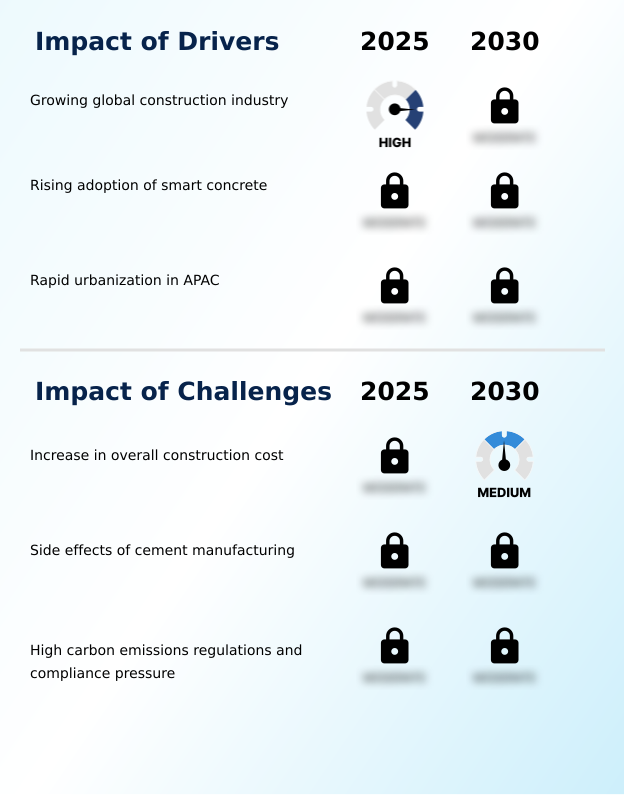
- The market is primarily driven by the sustained growth of the global construction industry, fueled by large-scale infrastructure projects and increasing urbanization.
- The market's growth is fundamentally driven by global urban infrastructure development and the expansion of both residential and non-residential construction projects.
- Governments worldwide are increasing investments in public infrastructure, which directly fuels demand for essential materials like portland cement, aggregates, and structural binders. For every dollar invested in infrastructure, economic output is amplified, creating a ripple effect that sustains construction activity.
- The rising adoption of ready-mix concrete solutions streamlines large-scale projects, increasing pouring efficiency by over 20%. Furthermore, rapid urbanization is not just expanding cities but also necessitating the use of high-performance concrete to build taller, more resilient structures.
What are the market trends shaping the Concrete And Cement Industry?
- Rapid urbanization, coupled with rising disposable incomes globally, is a significant trend driving continuous expansion in construction and infrastructure development.
- Key trends are reshaping the market, led by a strong push toward sustainability and digitalization. The rising demand for green cement and low-carbon cement is accelerating the adoption of supplementary cementitious materials, with some green formulations reducing embodied carbon by over 40% compared to traditional portland cement.
- This aligns with the growing use of carbon capture storage (CCS) in clinker production. Concurrently, the use of precast concrete components, monitored via digital platforms, reduces on-site waste by up to 30%. Innovations in smart concrete technology are also enabling real-time structural health monitoring, enhancing safety in critical urban infrastructure development.
What challenges does the Concrete And Cement Industry face during its growth?
- An increase in overall construction costs, driven by fluctuating raw material and energy prices, presents a key challenge to the industry's growth trajectory.
- Significant challenges constrain the market, primarily stemming from the environmental impact of concrete and the high energy costs of the cement manufacturing process. The production of clinker is a major source of carbon emissions, prompting stringent regulations and driving the industry's decarbonization efforts.
- Volatility in energy prices directly impacts profitability, as fuel can constitute over 30% of a plant's operational costs. This pressure is compelling a shift toward clinker substitutes and alternative fuels. Furthermore, the logistical complexities of construction material distribution in dense urban areas can increase project timelines and costs, with transport alone sometimes adding 15% to the final material price.
Exclusive Technavio Analysis on Customer Landscape
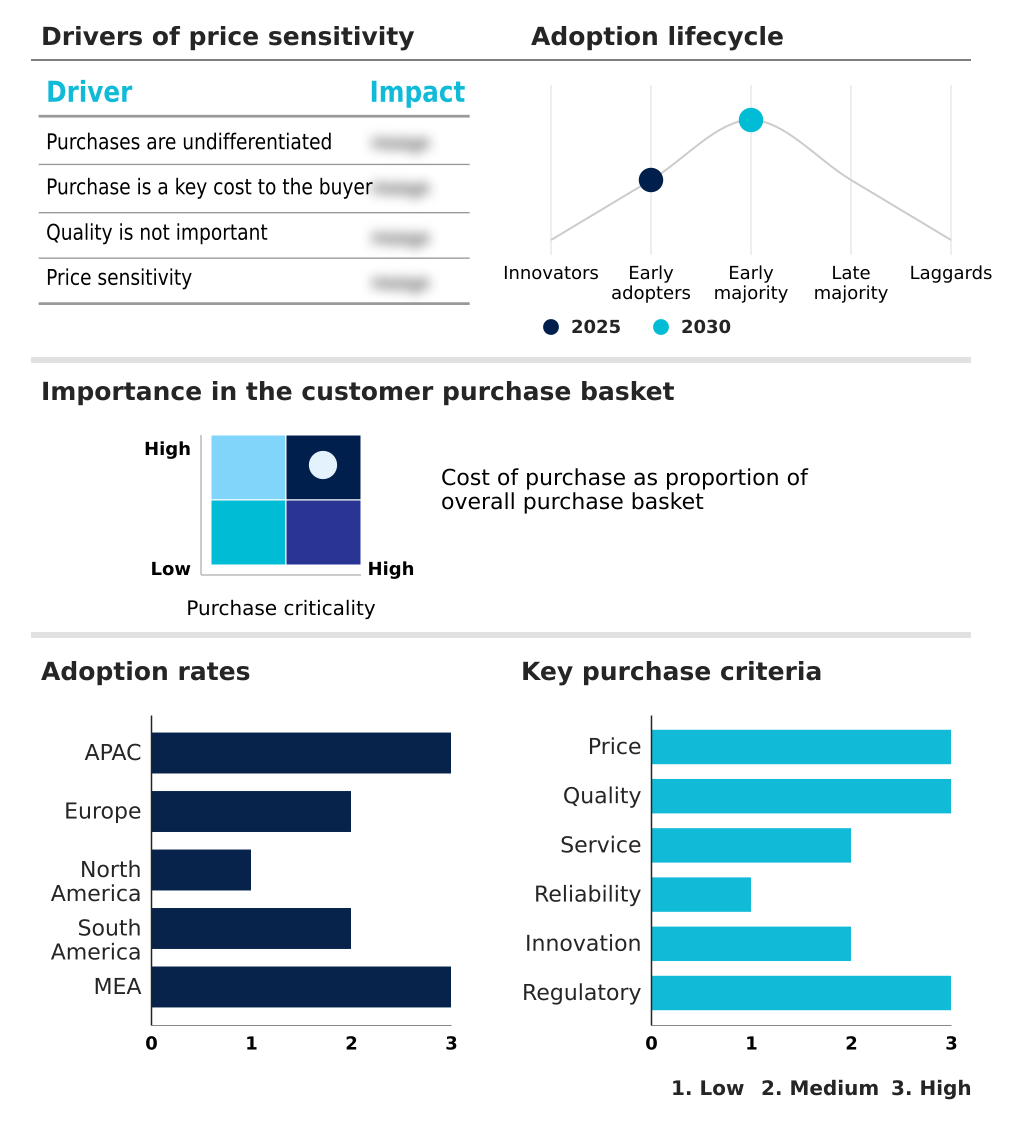
The concrete and cement market forecasting report includes the adoption lifecycle of the market, covering from the innovator’s stage to the laggard’s stage. It focuses on adoption rates in different regions based on penetration. Furthermore, the concrete and cement market report also includes key purchase criteria and drivers of price sensitivity to help companies evaluate and develop their market growth analysis strategies.
Customer Landscape of Concrete And Cement Industry
Competitive Landscape
Companies are implementing various strategies, such as strategic alliances, concrete and cement market forecast, partnerships, mergers and acquisitions, geographical expansion, and product/service launches, to enhance their presence in the industry.
Ambuja Cements Ltd. - Key offerings revolve around foundational construction materials, including a range of cement, concrete, and aggregate products tailored for diverse structural and architectural applications.
The industry research and growth report includes detailed analyses of the competitive landscape of the market and information about key companies, including:
- Ambuja Cements Ltd.
- Buzzi SpA
- Cementos Argos SA
- CEMEX SAB de CV
- CRH Plc
- Dalmia Bharat Group
- Dangote Cement plc
- Heidelberg Materials AG
- Holcim Ltd.
- JK Cement Ltd
- Martin Marietta Materials Inc.
- Mitsubishi Cement Corp.
- Oldcastle APG Inc.
- Shree Cement Ltd
- Siam Cement PCL
- Sumitomo Corp.
- Taiheiyo Cement Corp.
- Titan SA
- UltraTech Cement Ltd.
- Vicat S.A.
Qualitative and quantitative analysis of companies has been conducted to help clients understand the wider business environment as well as the strengths and weaknesses of key industry players. Data is qualitatively analyzed to categorize companies as pure play, category-focused, industry-focused, and diversified; it is quantitatively analyzed to categorize companies as dominant, leading, strong, tentative, and weak.
Recent Development and News in Concrete and cement market
- In May 2025, Holcim expanded its ECOPact low-carbon concrete range, making it available in several new markets in Southeast Asia to meet the growing demand for sustainable construction materials in urban development projects.
- In March 2025, CEMEX SAB de CV announced a strategic investment to upgrade its primary production facility in the US, focusing on implementing carbon capture, utilization, and storage (CCUS) technology to significantly reduce the plant's carbon footprint.
- In January 2025, Heidelberg Materials AG secured a multi-year contract to supply its specialized high-performance concrete for the construction of a major high-speed rail network in Europe, highlighting the material's use in critical infrastructure.
- In October 2024, CRH Plc completed the acquisition of a mid-sized aggregates and ready-mix concrete producer in North America, strengthening its vertically integrated supply chain and market position in the region.
Dive into Technavio’s robust research methodology, blending expert interviews, extensive data synthesis, and validated models for unparalleled Concrete And Cement Market insights. See full methodology.
| Market Scope | |
|---|---|
| Page number | 297 |
| Base year | 2025 |
| Historic period | 2020-2024 |
| Forecast period | 2026-2030 |
| Growth momentum & CAGR | Accelerate at a CAGR of 6.8% |
| Market growth 2026-2030 | USD 529.8 billion |
| Market structure | Fragmented |
| YoY growth 2025-2026(%) | 6.3% |
| Key countries | China, Japan, India, South Korea, Australia, Indonesia, Germany, UK, France, Italy, Spain, The Netherlands, US, Canada, Mexico, Brazil, Argentina, Chile, Saudi Arabia, UAE, South Africa, Israel and Turkey |
| Competitive landscape | Leading Companies, Market Positioning of Companies, Competitive Strategies, and Industry Risks |
Research Analyst Overview
- The concrete and cement market is undergoing a fundamental transformation driven by the dual pressures of infrastructure demand and decarbonization. Core materials like portland cement, aggregates, and gypsum remain central, but the focus has shifted to enhancing their performance and sustainability.
- The integration of admixtures, supplementary cementitious materials, and clinker substitutes is now standard practice to produce blended cements and high-performance concrete. This addresses the need for greater durability and seismic resilience in modern construction. A key boardroom-level decision revolves around capital expenditure for decarbonization technologies.
- Investment in carbon capture storage (CCS) is becoming a strategic imperative, not just a compliance measure. Firms implementing waste heat recovery systems have reported energy efficiency gains exceeding 25%. The development of green cement, low-carbon cement, and even carbon concrete reflects a decisive pivot.
- Innovations in oil well cementing and precast concrete are opening new application frontiers, while advancements in nanotechnology in concrete promise next-generation structural binders with unprecedented properties.
What are the Key Data Covered in this Concrete And Cement Market Research and Growth Report?
-
What is the expected growth of the Concrete And Cement Market between 2026 and 2030?
-
USD 529.8 billion, at a CAGR of 6.8%
-
-
What segmentation does the market report cover?
-
The report is segmented by Product (Cement, and Concrete), End-user (Residential, and Non-residential), Application (Construction, Oil and gas, Mining, and Others) and Geography (APAC, Europe, North America, South America, Middle East and Africa)
-
-
Which regions are analyzed in the report?
-
APAC, Europe, North America, South America and Middle East and Africa
-
-
What are the key growth drivers and market challenges?
-
Growing global construction industry, Increase in overall construction cost
-
-
Who are the major players in the Concrete And Cement Market?
-
Ambuja Cements Ltd., Buzzi SpA, Cementos Argos SA, CEMEX SAB de CV, CRH Plc, Dalmia Bharat Group, Dangote Cement plc, Heidelberg Materials AG, Holcim Ltd., JK Cement Ltd, Martin Marietta Materials Inc., Mitsubishi Cement Corp., Oldcastle APG Inc., Shree Cement Ltd, Siam Cement PCL, Sumitomo Corp., Taiheiyo Cement Corp., Titan SA, UltraTech Cement Ltd. and Vicat S.A.
-
Market Research Insights
- Market dynamics are shaped by the interplay between infrastructure demand and sustainability mandates. The adoption of ready-mix concrete solutions in large urban projects improves construction efficiency by over 25% compared to traditional site-mixing methods. Concurrently, the integration of advanced cement-based materials in non-residential construction projects enhances structural longevity, reducing lifecycle maintenance costs.
- The shift toward sustainable construction materials is notable, with low-carbon concrete solutions now representing a rapidly growing sub-segment. These materials can reduce the embodied carbon of a structure by up to 40%, aligning with stringent environmental regulations and corporate ESG goals. This evolution reflects an industry-wide move from a commodity focus to value-added, performance-based offerings.
We can help! Our analysts can customize this concrete and cement market research report to meet your requirements.
 RIA -
RIA - 
