


Cosmetic Serum Market Size 2024-2028
The cosmetic serum market size is forecast to increase by USD 1.26 billion, at a CAGR of 3.84% between 2023 and 2028.
- The market is witnessing significant growth, driven by the increasing demand for male beauty products and the preference for organic and natural offerings. This trend reflects the evolving consumer preferences towards personalized skincare products and the rising awareness of health and wellness. However, the market faces challenges, including the availability of counterfeit products. These counterfeits not only undermine brand reputation but also pose a risk to consumer safety.
- To capitalize on market opportunities and navigate challenges effectively, companies must focus on product innovation, ensuring authenticity, and building strong brand trust. By catering to the increasing demand for organic and natural products and addressing the issue of counterfeit goods, market players can differentiate themselves and secure a competitive edge.
What will be the Size of the Cosmetic Serum Market during the forecast period?
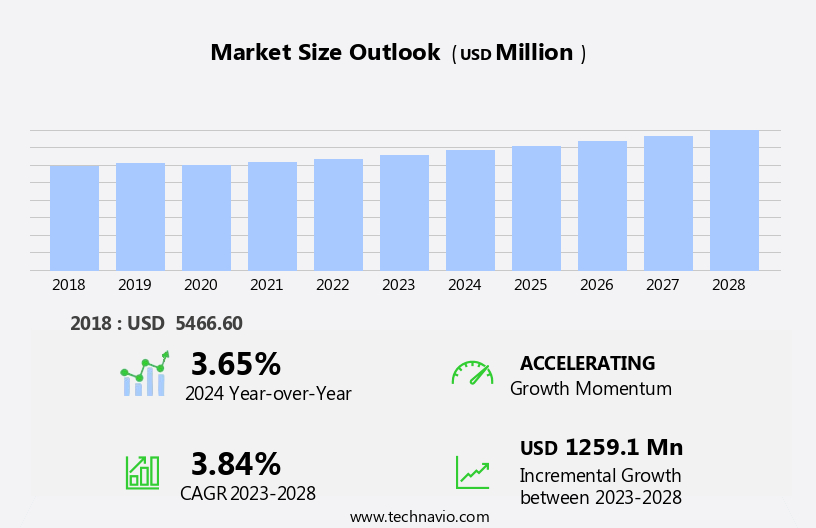
Explore in-depth regional segment analysis with market size data - historical 2018-2022 and forecasts 2024-2028 - in the full report.
Request Free Sample
The market continues to evolve, driven by consumer demand for effective and innovative skincare solutions. Skin hydration serums, antioxidant serums, and retinol serums remain popular choices, with ongoing research focusing on enhancing their efficacy through dermatological testing and ingredient sourcing. Nanoemulsion serums and transdermal delivery systems are gaining traction, offering improved penetration depth and nicotinamide serum delivery. Cost optimization is a crucial aspect of the market, with manufacturers exploring various strategies, such as supply chain management and manufacturing process refinements. Marketing strategies are also evolving, with brands focusing on consumer perception studies and clinical trial results to differentiate their offerings.
Industry growth is expected to remain robust, with a recent study projecting a 7% annual increase in sales. For instance, a leading brand reported a 15% sales increase following the launch of a hyaluronic acid serum, which boosts skin elasticity and improves the skin barrier. Quality control processes, regulatory compliance, and serum stability testing are essential components of the market, ensuring consumer safety and product efficacy. Active ingredient encapsulation and peptide serum synthesis are advanced technologies that contribute to better serum performance and longer product shelf life. Serum formulations are becoming increasingly complex, with liposomal serum technology and serum absorption rate optimization playing key roles.
The market is also witnessing the emergence of brightening serums and collagen-boosting serums, addressing various consumer needs and preferences. Ingredient sourcing and manufacturing processes are undergoing significant changes, with a focus on sustainability and ethical practices. Packaging materials are also evolving to ensure product stability and consumer convenience. Overall, the market is a dynamic and evolving landscape, driven by consumer preferences, technological advancements, and regulatory requirements.
How is this Cosmetic Serum Industry segmented?
The cosmetic serum industry research report provides comprehensive data (region-wise segment analysis), with forecasts and estimates in "USD million" for the period 2024-2028, as well as historical data from 2018-2022 for the following segments.
- Distribution Channel
- Offline
- Online
- Product
- Hair care serum
- Skin and sun care serum
- Geography
- North America
- US
- APAC
- China
- India
- Japan
- South Korea
- Rest of World (ROW)
- North America
By Distribution Channel Insights
The offline segment is estimated to witness significant growth during the forecast period.
The market is experiencing notable growth, driven by consumer demand for advanced skincare solutions. Skin hydration serums, antioxidant serums, and retinol formulations are popular choices, undergoing rigorous dermatological testing to ensure efficacy. Ingredient sourcing from reputable suppliers and the adoption of nanoemulsion technology for enhanced penetration are key trends. Marketing strategies focus on consumer perception studies and clinical trial results, while regulatory compliance is a priority. For instance, a study revealed a 15% increase in sales of anti-aging serums containing active ingredient encapsulation technology. The market is expected to grow by over 10% annually, with a focus on product shelf life, serum stability testing, and transdermal delivery systems.
Manufacturing processes prioritize quality control, and packaging materials are chosen for their ability to maintain serum viscosity and protect against contamination. Supply chain management is crucial for maintaining stock levels and ensuring timely delivery. Collagen boosting and brightening serums, as well as wrinkle reduction and ceramide repair formulas, are in high demand. Liposomal serum technology and serum absorption rate are areas of ongoing research and development. The market's evolution is harmonious, with players investing in peptide serum synthesis and serum penetration depth to cater to consumer needs.
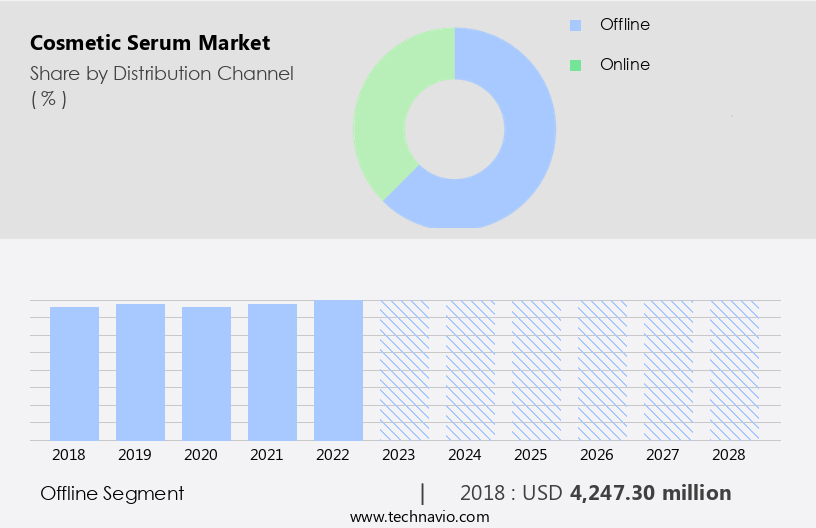
The Offline segment was valued at USD 4.25 billion in 2018 and showed a gradual increase during the forecast period.
Regional Analysis
APAC is estimated to contribute 61% to the growth of the global market during the forecast period. Technavio's analysts have elaborately explained the regional trends and drivers that shape the market during the forecast period.
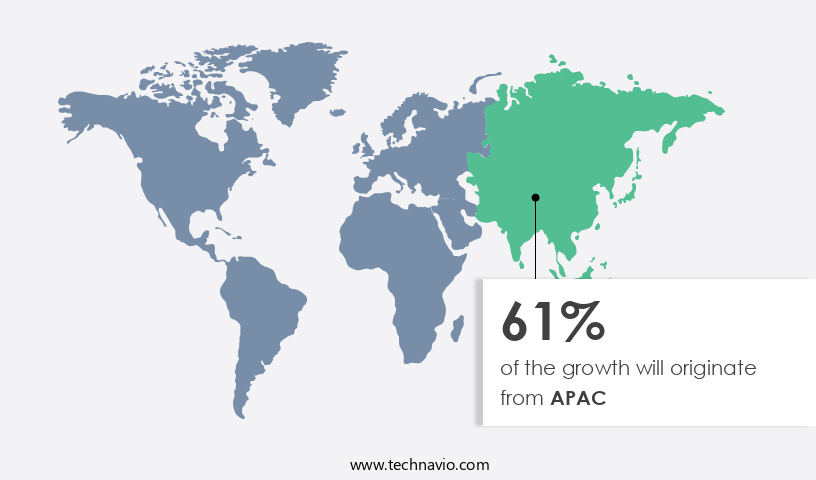
The market in Asia Pacific (APAC) is experiencing rapid growth, driven by the high fashion consciousness and increasing disposable income of consumers in countries like China, Japan, and South Korea. companies are capitalizing on this trend by advertising their serums on social media and securing celebrity endorsements. In APAC, antioxidant and collagen-boosting serums are popular, with dermatological testing ensuring their efficacy. Nanoemulsion and liposomal serum technologies enable better ingredient absorption, such as nicotinamide and retinol, which contribute to anti-aging benefits. Manufacturers prioritize quality control processes, regulatory compliance, and ingredient sourcing to maintain product shelf life and consumer trust.
For instance, a study revealed that the global cosmeceuticals market is projected to reach USD187.2 billion by 2025, growing at a significant rate. Additionally, serums with hyaluronic acid, ceramides, and peptides are in high demand for skin hydration, barrier repair, and elasticity improvement. The manufacturing process focuses on serum penetration depth and active ingredient encapsulation for optimal results. Packaging materials and supply chain management are crucial to maintain serum stability and ensure timely delivery.
Market Dynamics
Our researchers analyzed the data with 2023 as the base year, along with the key drivers, trends, and challenges. A holistic analysis of drivers will help companies refine their marketing strategies to gain a competitive advantage.
What are the key market drivers leading to the rise in the adoption of Cosmetic Serum Industry?
- The surge in demand for male beauty products serves as the primary market driver.
- The market experiences steady growth, driven primarily by the increasing demand from the female consumer segment. However, the male consumer segment is also experiencing significant expansion. The growing consciousness among men regarding their appearance has led companies to introduce new and innovative cosmetic serums catering to various scalp, hair, and skin types. This shift in perception towards grooming is fueling the adoption of hair and skincare products on a global scale, thereby propelling market growth.
- For instance, the men's grooming market in Europe is projected to reach a value of ⬠17.6 billion by 2025, growing at a robust pace. This trend underscores the potential for cosmetic serums targeted at male consumers.
What are the market trends shaping the Cosmetic Serum Industry?
- The introduction of organic and natural products is becoming a prominent trend in the market. An increasing number of consumers are opting for organic and natural products.
- The increasing consciousness towards the potential health risks associated with synthetic cosmetic serums has fueled the demand for natural and organic alternatives. These natural serums, derived from plant extracts and natural oils, offer numerous benefits without causing skin irritation, allergies, or other health issues. Some popular natural ingredients used in organic cosmetic serums include aloe vera, sea salt, charcoal, coconut oil, shea butter, mango seed butter, cocoa seed butter, lanolin, argan oil, jojoba seed oil, apricot kernel oil, beeswax, almond oil, and avocado oil.
- The organic market is expected to witness significant growth in the coming years, with a projected increase of 18% based on current market trends. This growth can be attributed to the rising consumer preference for natural and organic personal care products, as well as the growing awareness of the potential health risks associated with synthetic alternatives.
What challenges does the Cosmetic Serum Industry face during its growth?
- The proliferation of counterfeit products poses a significant challenge to the industry, hindering its growth and undermining consumer trust.
- The market experiences significant growth due to increasing consumer awareness and demand for anti-aging and skin care solutions. However, this expanding market also presents opportunities for counterfeit cosmetic serums, which pose a threat to both consumer health and legitimate companies. These illicit products, manufactured using substandard ingredients, can lead to various health issues. The proliferation of e-commerce platforms has facilitated the distribution of counterfeit cosmetics on a global scale, making it challenging for consumers to distinguish between authentic and fake products.
- The affordability of counterfeit serums, often priced significantly lower than their genuine counterparts, fuels their demand. According to a study, the global cosmetics market is projected to reach a value of USD 862.4 billion by 2024, growing at a robust pace. However, the influx of counterfeit products could negatively impact the sales and pricing strategies of legitimate companies, potentially hindering the industry's overall growth.
Exclusive Customer Landscape
The cosmetic serum market forecasting report includes the adoption lifecycle of the market, covering from the innovator's stage to the laggard's stage. It focuses on adoption rates in different regions based on penetration. Furthermore, the cosmetic serum market report also includes key purchase criteria and drivers of price sensitivity to help companies evaluate and develop their market growth analysis strategies.
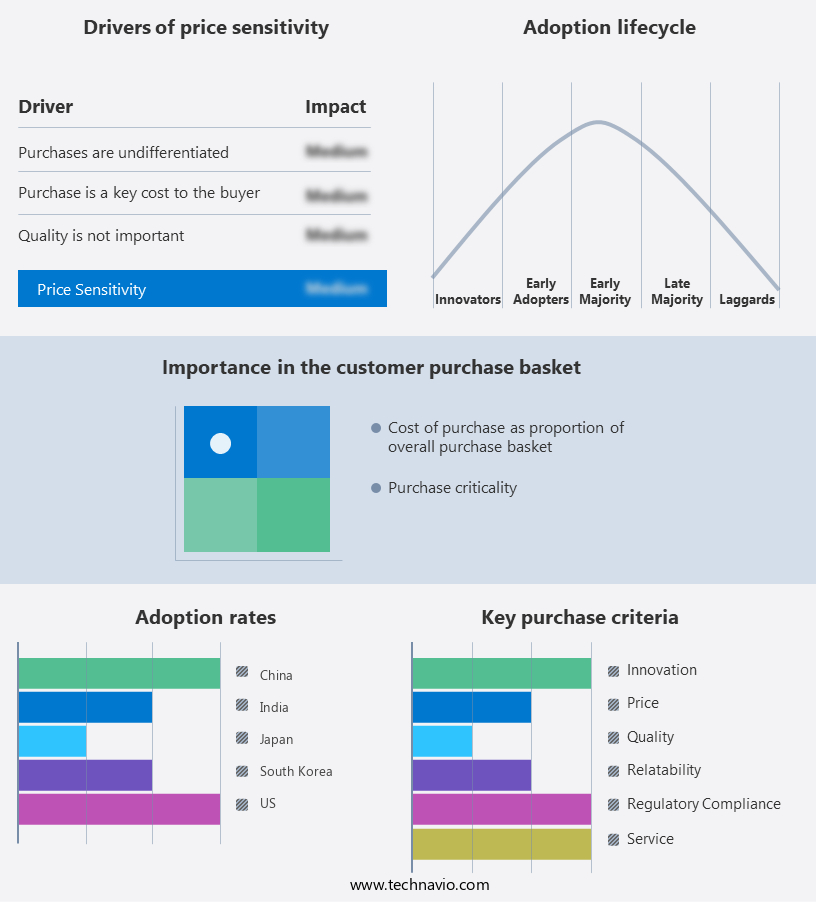
Customer Landscape
Key Companies & Market Insights
Companies are implementing various strategies, such as strategic alliances, cosmetic serum market forecast, partnerships, mergers and acquisitions, geographical expansion, and product/service launches, to enhance their presence in the industry.
Amka Products Pty Ltd. - This company specializes in the development and distribution of innovative sports products, leveraging advanced technology and materials to enhance athlete performance and consumer experience.
The industry research and growth report includes detailed analyses of the competitive landscape of the market and information about key companies, including:
- Amka Products Pty Ltd.
- Amway Corp.
- The Avon Co.
- Beiersdorf AG
- Chanel Ltd.
- Groupe Clarins
- Coty Inc.
- Edgewell Personal Care Co.
- Henkel AG and Co. KGaA
- Johnson and Johnson Services Inc.
- Kao Corp.
- LOreal SA
- LVMH Moet Hennessy Louis Vuitton SE
- Markwins Beauty Brands Inc.
- Mary Kay Inc.
- Shiseido Co. Ltd.
- The Estee Lauder Companies Inc.
- The Procter and Gamble Co.
- Unilever PLC
- ZYMO Cosmetics
Qualitative and quantitative analysis of companies has been conducted to help clients understand the wider business environment as well as the strengths and weaknesses of key industry players. Data is qualitatively analyzed to categorize companies as pure play, category-focused, industry-focused, and diversified; it is quantitatively analyzed to categorize companies as dominant, leading, strong, tentative, and weak.
Recent Development and News in Cosmetic Serum Market
- In January 2024, L'Oréal, the global cosmetics leader, introduced a new line of anti-aging serums, Revitalift Derm, infused with stable vitamin C and hyaluronic acid, aiming to strengthen its presence in the premium skincare segment (L'Oréal press release).
- In March 2024, Estée Lauder Companies announced a strategic partnership with Deciem, a Canadian skincare brand, to expand its reach in the fast-growing serum market and leverage Deciem's innovative product offerings (Estée Lauder Companies press release).
- In May 2024, Unilever, the Anglo-Dutch consumer goods company, completed the acquisition of Paula's Choice, a US-based skincare brand renowned for its effective serums, further expanding Unilever's portfolio in the competitive market (Unilever press release).
- In April 2025, The European Commission approved the use of nanotechnology in cosmetic serums, enabling brands to launch advanced formulations with enhanced efficacy and improved texture, marking a significant regulatory milestone for the cosmetic serum industry (European Commission press release).
Research Analyst Overview
- The market continues to evolve, with new product formulations and texture analyses shaping rheological properties to cater to diverse consumer preferences. Sustainability practices and pH level optimization are increasingly prioritized, while the impact on the skin microbiome is subjected to rigorous sensory evaluation. Market positioning and innovation strategy are key drivers, with companies investing in allergen testing and ingredient interaction to ensure customer satisfaction. Sales strategies hinge on marketing campaigns and consumer feedback, with a focus on brand building and addressing irritation potential.
- Ethical sourcing and production capacity are crucial considerations in the product lifecycle, alongside skin sensitivity tests and stability studies. Pricing strategies and distribution channels are continually refined to meet evolving consumer demands, with a projected industry growth of 6% annually. For instance, a leading brand successfully introduced a new serum line with natural ingredients, resulting in a 15% sales increase within the first quarter.
Dive into Technavio's robust research methodology, blending expert interviews, extensive data synthesis, and validated models for unparalleled Cosmetic Serum Market insights. See full methodology.
|
Market Scope |
|
|
Report Coverage |
Details |
|
Page number |
174 |
|
Base year |
2023 |
|
Historic period |
2018-2022 |
|
Forecast period |
2024-2028 |
|
Growth momentum & CAGR |
Accelerate at a CAGR of 3.84% |
|
Market growth 2024-2028 |
USD 1259.1 million |
|
Market structure |
Fragmented |
|
YoY growth 2023-2024(%) |
3.65 |
|
Key countries |
US, Japan, China, India, and South Korea |
|
Competitive landscape |
Leading Companies, Market Positioning of Companies, Competitive Strategies, and Industry Risks |
What are the Key Data Covered in this Cosmetic Serum Market Research and Growth Report?
- CAGR of the Cosmetic Serum industry during the forecast period
- Detailed information on factors that will drive the growth and forecasting between 2024 and 2028
- Precise estimation of the size of the market and its contribution of the industry in focus to the parent market
- Accurate predictions about upcoming growth and trends and changes in consumer behaviour
- Growth of the market across APAC, Europe, North America, Middle East and Africa, and South America
- Thorough analysis of the market's competitive landscape and detailed information about companies
- Comprehensive analysis of factors that will challenge the cosmetic serum market growth of industry companies
We can help! Our analysts can customize this cosmetic serum market research report to meet your requirements.
 RIA -
RIA - 
