



Crowdsourced Testing Market Size 2026-2030
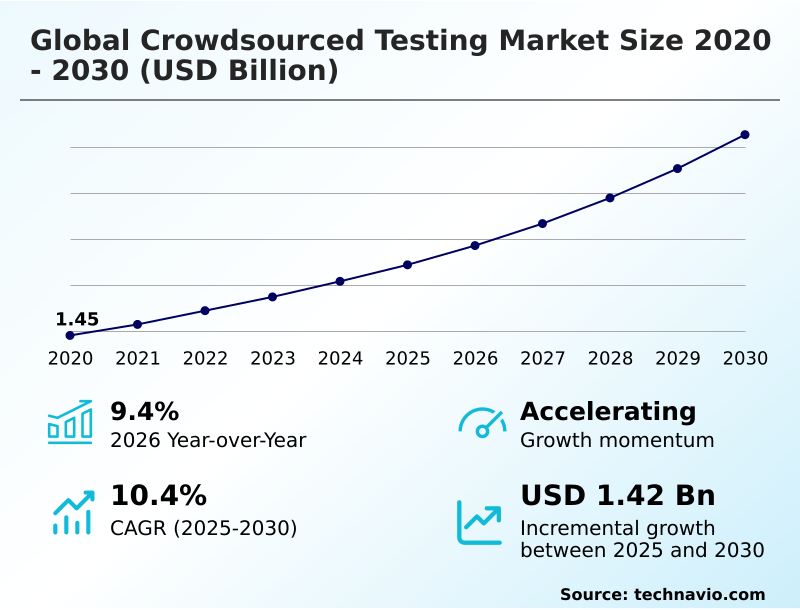
The crowdsourced testing market size is valued to increase by USD 1.42 billion, at a CAGR of 10.4% from 2025 to 2030. Strategic integration of agentic AI and hybrid quality assurance models will drive the crowdsourced testing market.
Major Market Trends & Insights
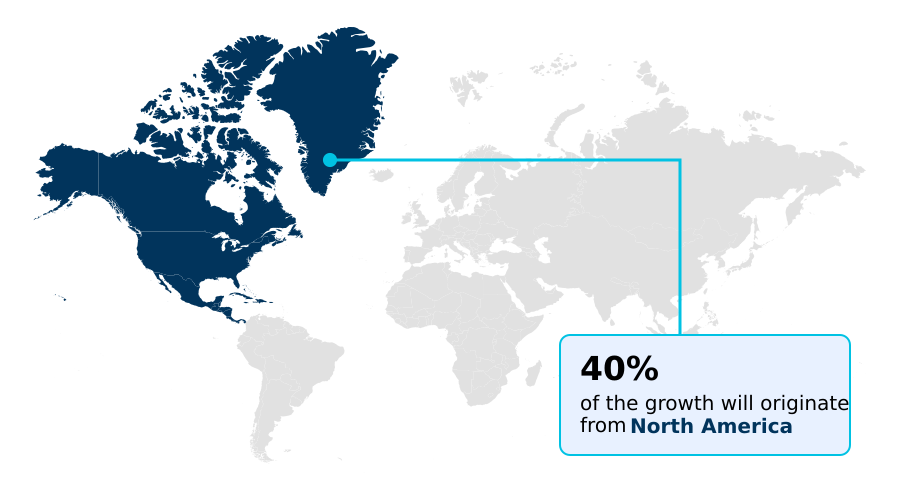
- North America dominated the market and accounted for a 39.5% growth during the forecast period.
- By Component - Platform segment was valued at USD 1.48 billion in 2024
- By Type - Usability Testing segment accounted for the largest market revenue share in 2024
Market Size & Forecast
- Market Opportunities: USD 2.20 billion
- Market Future Opportunities: USD 1.42 billion
- CAGR from 2025 to 2030 : 10.4%
Market Summary
- The crowdsourced testing market has evolved into a critical component of modern software development, moving beyond simple bug identification to offer comprehensive quality assurance. This model leverages a distributed global network to perform real-world device testing under authentic user conditions, a necessity driven by extreme device fragmentation and rapid DevOps cycles.
- A key market dynamic is the shift toward hybrid quality assurance models, where agentic AI handles repetitive regression tasks while human intelligence is reserved for nuanced user journey validation and exploratory testing.
- For instance, a global fintech firm launching a mobile payment app utilizes this approach to test functionality on hundreds of device models in emerging markets, while simultaneously using specialized testers to verify compliance with local financial regulations. This ensures both technical stability and market readiness.
- However, the industry navigates significant challenges, including stringent data sovereignty laws like the Digital Operational Resilience Act (DORA) and the legal complexities of gig worker classification, which impact operational models.
What will be the Size of the Crowdsourced Testing Market during the forecast period?
Get Key Insights on Market Forecast (PDF) Get Free Sample
How is the Crowdsourced Testing Market Segmented?
The crowdsourced testing industry research report provides comprehensive data (region-wise segment analysis), with forecasts and estimates in "USD million" for the period 2026-2030, as well as historical data from 2020-2024 for the following segments.
- Component
- Platform
- Services
- Type
- Usability testing
- Functionality testing
- Performance testing
- Localization testing
- Others
- End-user
- Large enterprises
- SMEs
- Geography
- North America
- US
- Canada
- Mexico
- Europe
- Germany
- UK
- France
- APAC
- China
- India
- Japan
- Middle East and Africa
- Saudi Arabia
- UAE
- South Africa
- South America
- Brazil
- Argentina
- Colombia
- Rest of World (ROW)
- North America
By Component Insights
The platform segment is estimated to witness significant growth during the forecast period.
The platform segment is evolving from a labor marketplace into an intelligent quality orchestration hub, defined by its integration of agentic AI and seamless connectivity with enterprise development pipelines.
Modern platforms provide a unified interface for managing both distributed human testers and automated regression scripts, eliminating operational silos.
This shift toward hybrid quality assurance models addresses the reality that automated scans can miss up to 70% of critical usability barriers. Enhanced security capabilities, such as persistent reconnaissance and autonomous AI scanning for continuous exposure management, are now standard.
This technological maturity enables enterprises to utilize AI-driven vulnerability management and test case generation, scaling testing efforts while maintaining rigorous governance over the entire software delivery stack.
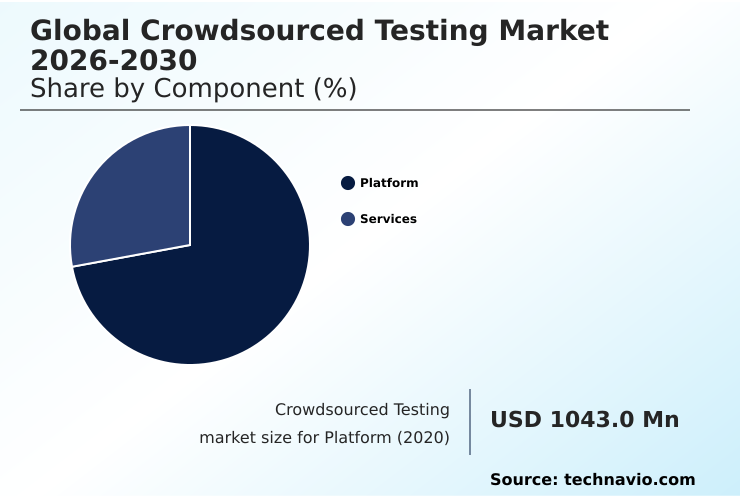
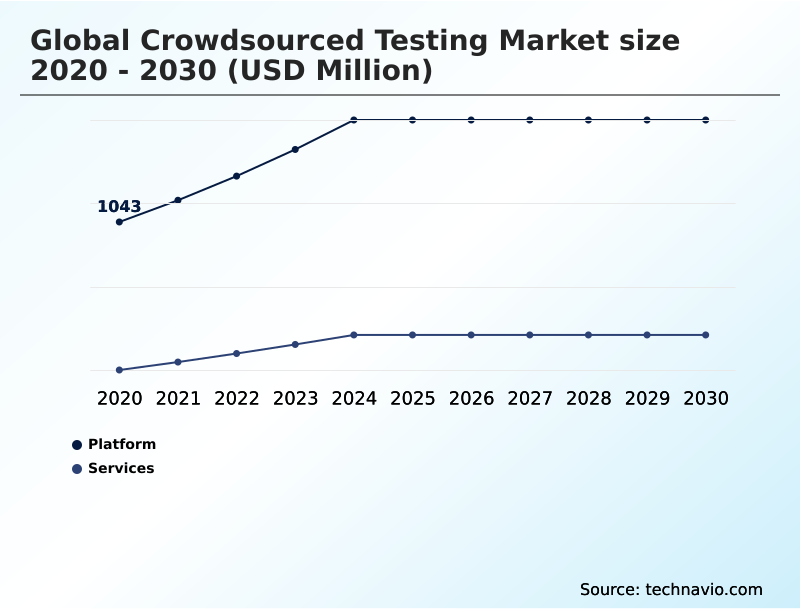
The Platform segment was valued at USD 1.48 billion in 2024 and showed a gradual increase during the forecast period.
Regional Analysis
North America is estimated to contribute 39.5% to the growth of the global market during the forecast period.Technavio’s analysts have elaborately explained the regional trends and drivers that shape the market during the forecast period.
See How Crowdsourced Testing Market Demand is Rising in North America Get Free Sample
The geographic landscape of the crowdsourced testing market is led by North America, which accounts for 39.5% of the incremental growth, driven by early adoption of AI-augmented penetration testing and mature cybersecurity protocols.
However, APAC is the fastest-growing region, with an 11.9% CAGR fueled by mobile-first economies grappling with hyper-localization and device fragmentation. The European market, representing 23.72% of the opportunity, is distinctly shaped by regulatory-driven demand.
The enforcement of the European Accessibility Act (EAA) and data sovereignty laws has institutionalized the need for specialized human-in-the-loop validation and lived-experience testing, making compliance a primary catalyst for market activity.
This regional divergence highlights a global shift from cost arbitrage to strategic risk management and regulatory adherence.
Market Dynamics
Our researchers analyzed the data with 2025 as the base year, along with the key drivers, trends, and challenges. A holistic analysis of drivers will help companies refine their marketing strategies to gain a competitive advantage.
- The sophistication of the global crowdsourced testing market 2026-2030 is increasingly defined by specialized, high-value use cases that address the limitations of pure automation. The strategic use of agentic AI for regression testing has become a foundational practice, freeing up skilled human testers to focus on more complex and subjective tasks.
- This includes the critical work of validating non-deterministic AI systems, where human oversight is essential to identify bias and contextual errors that algorithms miss. In the security domain, the focus has expanded to encompass crowdsourced security for IoT devices, a challenging area where hardware and software interactions create unique vulnerabilities.
- Simultaneously, regulatory pressures have elevated the importance of accessibility testing with assistive technologies, as manual audits can identify nearly double the compliance issues compared to automated scans alone. The need for real-world device testing for 5G applications further underscores this trend, as factors like network handovers and thermal throttling cannot be accurately simulated.
- Consequently, the market's value proposition is shifting toward a model that provides deep, contextual insights through specialized human intelligence, something essential for modern digital product assurance.
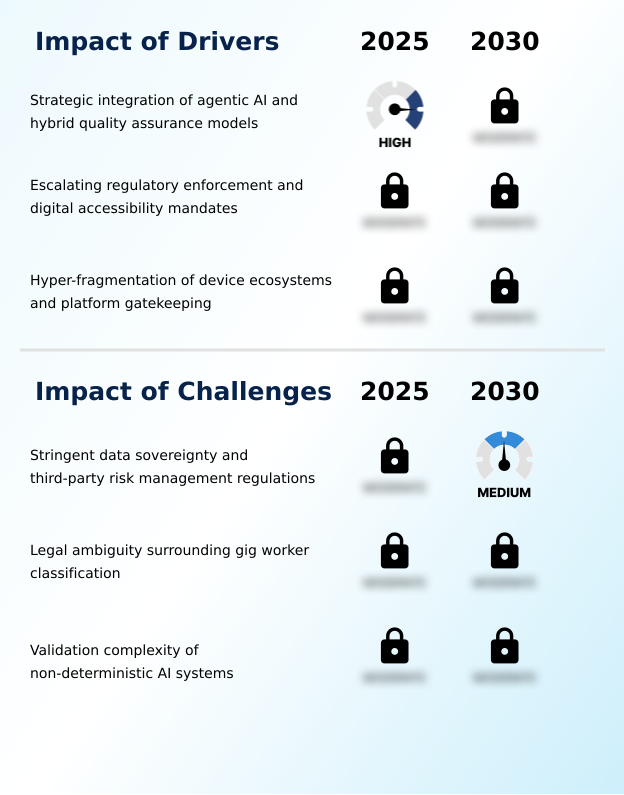
What are the key market drivers leading to the rise in the adoption of Crowdsourced Testing Industry?
- The strategic integration of agentic AI with hybrid quality assurance models is a key driver for market expansion.
- Market growth is primarily propelled by the integration of agentic AI into distributed testing workflows, enabling hybrid models that accelerate release velocity without compromising quality.
- The adoption of AI-augmented penetration testing addresses the critical shortage of cybersecurity talent, allowing teams to identify vulnerabilities 50% faster.
- A second major driver is the enforcement of stringent digital accessibility and security mandates, such as the European Accessibility Act (EAA) and PCI DSS 4.0.
- These regulations have transformed crowdsourced testing from an operational choice into a legal necessity for market access.
- Finally, the hyper-fragmentation of device ecosystems, intensified by frequent OS updates, makes real-world device testing the only viable solution for preventing device-specific failures that can increase user churn by up to 40%.
What are the market trends shaping the Crowdsourced Testing Industry?
- The market is increasingly defined by the convergence of agentic AI and human-in-the-loop quality engineering. This forms a new discipline focused on symbiotic human-AI collaboration.
- Key market trends are redefining quality assurance, led by the institutionalization of crowdsourced security as a standard for enterprise risk management. Over 60% of CISOs are shifting budgets from traditional consultancies to platforms offering continuous red teaming and bug bounty programs, driven by new compliance mandates. This move reflects a broader adoption of human-in-the-loop validation for complex systems.
- Another dominant trend is the focus on hyper-localization and inclusive design assurance. Real-world testing is now essential for validating payment flows on regional systems and ensuring digital products meet accessibility standards, a shift that improves user retention by over 25% in new markets. This evolution toward specialized, high-value services highlights the market's maturity beyond simple functional checks.
What challenges does the Crowdsourced Testing Industry face during its growth?
- Stringent data sovereignty regulations and complex third-party risk management rules present a key challenge to market growth.
- The market faces significant challenges from an intensifying regulatory landscape. Stringent data sovereignty laws and third-party risk management rules, such as the Digital Operational Resilience Act (DORA), create substantial compliance burdens that can slow adoption in the financial sector by over 30%.
- Another critical challenge is the legal ambiguity surrounding gig worker classification, which threatens the cost-effective, independent contractor model that underpins the industry. Furthermore, the validation complexity of non-deterministic AI systems presents a major technical hurdle.
- The industry reports a significant skills gap, with demand for AI safety testing tripling while the supply of qualified testers grows only marginally, creating friction and eroding profit margins for platforms offering AI assurance.
Exclusive Technavio Analysis on Customer Landscape
The crowdsourced testing market forecasting report includes the adoption lifecycle of the market, covering from the innovator’s stage to the laggard’s stage. It focuses on adoption rates in different regions based on penetration. Furthermore, the crowdsourced testing market report also includes key purchase criteria and drivers of price sensitivity to help companies evaluate and develop their market growth analysis strategies.
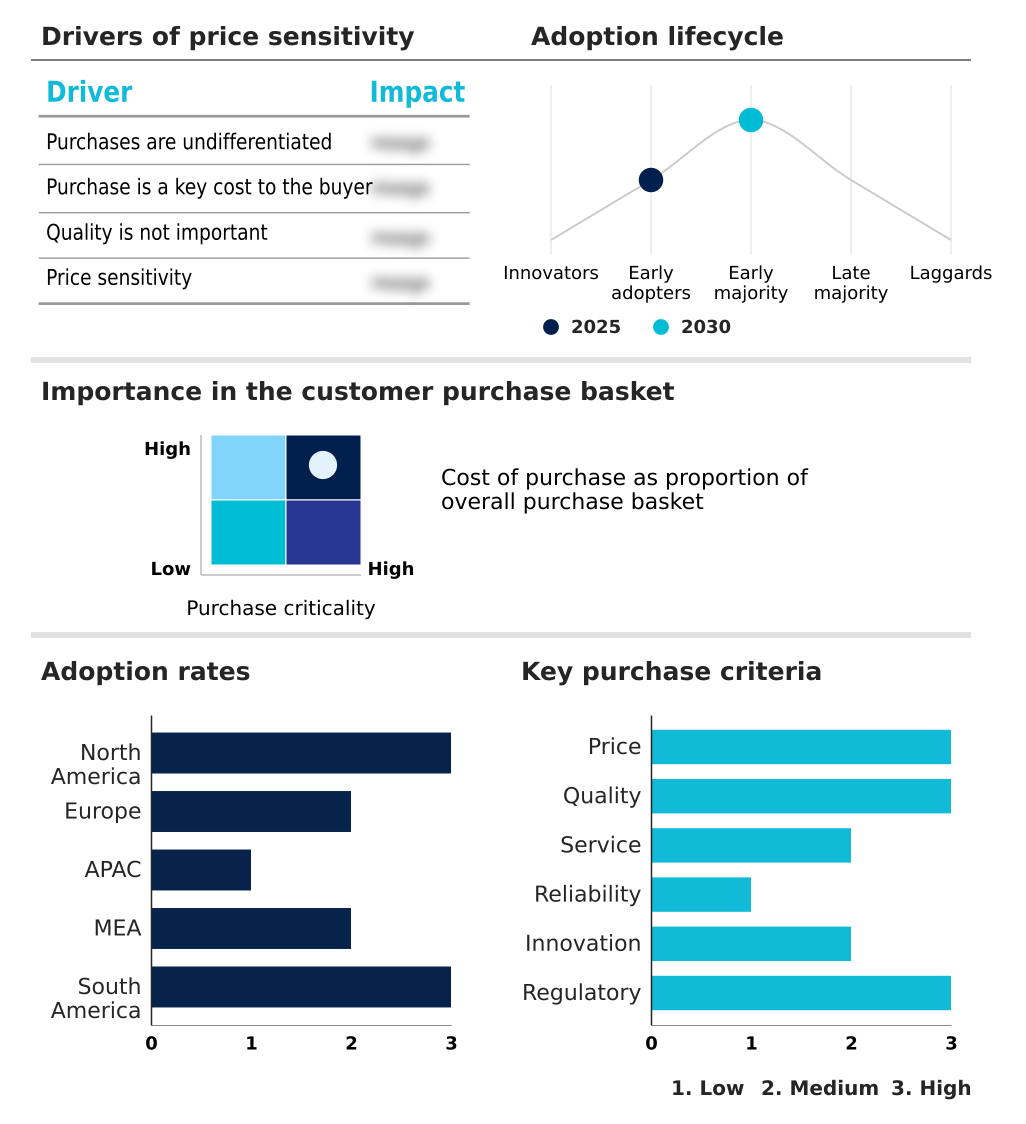
Customer Landscape of Crowdsourced Testing Industry
Competitive Landscape
Companies are implementing various strategies, such as strategic alliances, crowdsourced testing market forecast, partnerships, mergers and acquisitions, geographical expansion, and product/service launches, to enhance their presence in the industry.
Applause App Quality Inc. - Provides digital quality assurance through crowdsourced testing services, ensuring digital experiences are functional, intuitive, and accessible across platforms.
The industry research and growth report includes detailed analyses of the competitive landscape of the market and information about key companies, including:
- Applause App Quality Inc.
- Bugcrowd Inc.
- Cigniti Technologies Ltd.
- Cobalt Labs Inc.
- Digivante Ltd.
- Flatworld Solutions Inc.
- Infosys Ltd.
- QA InfoTech
- QualiTest Group
- QUALITEST.
- Rainforest QA
- Spa Worldwide Ltd.
- Synack Inc.
- Test IO Inc.
- Test Yantra Software
- Testbirds B.V.
- Testlio Inc.
- Userfeel Ltd
Qualitative and quantitative analysis of companies has been conducted to help clients understand the wider business environment as well as the strengths and weaknesses of key industry players. Data is qualitatively analyzed to categorize companies as pure play, category-focused, industry-focused, and diversified; it is quantitatively analyzed to categorize companies as dominant, leading, strong, tentative, and weak.
Recent Development and News in Crowdsourced testing market
- In February, 2025, Testlio Inc. launched its Managed No-Code Automation and Managed Bespoke Automation services, integrating AI-driven automation with human-led quality engineering.
- In March, 2025, the conclusion of the transition period for PCI DSS 4.0 made 51 new security controls mandatory, driving demand for continuous crowdsourced security testing.
- In April, 2025, Infosys Ltd. acquired The Missing Link, a cybersecurity services firm, to bolster its secure digital delivery capabilities for enterprise clients.
- In May, 2025, several European Union member states introduced draft legislation to transpose the EU Platform Work Directive, creating legal ambiguity around the employment classification of testers.
Dive into Technavio’s robust research methodology, blending expert interviews, extensive data synthesis, and validated models for unparalleled Crowdsourced Testing Market insights. See full methodology.
| Market Scope | |
|---|---|
| Page number | 293 |
| Base year | 2025 |
| Historic period | 2020-2024 |
| Forecast period | 2026-2030 |
| Growth momentum & CAGR | Accelerate at a CAGR of 10.4% |
| Market growth 2026-2030 | USD 1422.3 million |
| Market structure | Fragmented |
| YoY growth 2025-2026(%) | 9.4% |
| Key countries | US, Canada, Mexico, Germany, UK, France, Italy, The Netherlands, Spain, China, India, Japan, South Korea, Australia, Indonesia, Saudi Arabia, UAE, South Africa, Israel, Turkey, Brazil, Argentina and Colombia |
| Competitive landscape | Leading Companies, Market Positioning of Companies, Competitive Strategies, and Industry Risks |
Research Analyst Overview
- The crowdsourced testing market has fundamentally evolved from a supplemental bug-hunting service into an indispensable component of enterprise risk management and digital governance. This transformation is driven by the strategic adoption of agentic AI and hybrid quality assurance models, which enable organizations to balance rapid release velocity with a high-quality user experience.
- The integration of AI-augmented penetration testing has become standard practice for continuous vulnerability management. Boardroom decisions are now directly influenced by the need to comply with stringent mandates like PCI DSS 4.0 and the European Accessibility Act (EAA), making crowdsourced compliance verification non-negotiable.
- Authentic usability audits conducted by testers with disabilities uncover up to 70% of critical accessibility issues missed by automated tools. Furthermore, the relentless device fragmentation in the mobile ecosystem necessitates real-world device testing and hyper-localization to mitigate risks associated with device-specific failures and ensure a seamless user journey across all platforms.
What are the Key Data Covered in this Crowdsourced Testing Market Research and Growth Report?
-
What is the expected growth of the Crowdsourced Testing Market between 2026 and 2030?
-
USD 1.42 billion, at a CAGR of 10.4%
-
-
What segmentation does the market report cover?
-
The report is segmented by Component (Platform, and Services), Type (Usability Testing, Functionality Testing, Performance Testing, Localization Testing, and Others), End-user (Large enterprises, and SMEs) and Geography (North America, Europe, APAC, Middle East and Africa, South America)
-
-
Which regions are analyzed in the report?
-
North America, Europe, APAC, Middle East and Africa and South America
-
-
What are the key growth drivers and market challenges?
-
Strategic integration of agentic AI and hybrid quality assurance models, Stringent data sovereignty and third-party risk management regulations
-
-
Who are the major players in the Crowdsourced Testing Market?
-
Applause App Quality Inc., Bugcrowd Inc., Cigniti Technologies Ltd., Cobalt Labs Inc., Digivante Ltd., Flatworld Solutions Inc., Infosys Ltd., QA InfoTech, QualiTest Group, QUALITEST., Rainforest QA, Spa Worldwide Ltd., Synack Inc., Test IO Inc., Test Yantra Software, Testbirds B.V., Testlio Inc. and Userfeel Ltd
-
Market Research Insights
- The market's dynamics are shaped by a strategic shift toward hybrid quality engineering, where firms blend automated and manual validation to enhance efficiency. This approach has been shown to reduce test planning and setup times by over 40% compared to traditional methods.
- Concurrently, the adoption of continuous red teaming and crowdsourced security for IoT devices allows organizations to identify critical vulnerabilities three times faster than with annual penetration tests. These advancements are driven by the need for robust AI model safety validation and inclusive design assurance to meet new digital accessibility mandates.
- While these methodologies deliver significant ROI by accelerating release velocity, platforms still face operational headwinds from gig worker classification challenges and the need to ensure compliance across fragmented global regulatory frameworks.
We can help! Our analysts can customize this crowdsourced testing market research report to meet your requirements.
 RIA -
RIA - 
