


Cryogenic Valves Market Size 2026-2030
The cryogenic valves market size is valued to increase by USD 991.4 million, at a CAGR of 4.8% from 2025 to 2030. Increase in oil and gas drilling E and P operations will drive the cryogenic valves market.
Major Market Trends & Insights
- North America dominated the market and accounted for a 50.3% growth during the forecast period.
- By End-user - Oil and Gas segment was valued at in 2024
- By Type - Ball valves segment accounted for the largest market revenue share in 2024
Market Size & Forecast
- Market Opportunities: USD 1.66 billion
- Market Future Opportunities: USD 991.4 million
- CAGR from 2025 to 2030 : 4.8%
Market Summary
- The cryogenic valves market is fundamentally tied to the global expansion of industries handling super-cooled liquids. These specialized components are indispensable for cryogenic fluid management, particularly in applications like liquefied natural gas (LNG) handling, where they ensure the safe transport and storage of resources.
- The market's momentum is driven by the global energy transition, which positions LNG as a crucial bridge fuel and accelerates the development of a green hydrogen infrastructure. This necessitates advanced valve technologies capable of sub-zero temperature regulation and ensuring bubble-tight shutoff to prevent hazardous leaks.
- A key business scenario involves optimizing LNG liquefaction trains, where the reliability of cryogenic ball valves directly impacts plant uptime and throughput.
- As applications expand into aerospace propulsion systems and semiconductor manufacturing equipment, manufacturers face the dual challenge of meeting stringent purity requirements and enhancing thermal cycling resistance, pushing innovation in specialized seal materials and low-temperature ductility of alloys to maintain performance and safety in high-pressure cryogenic service.
What will be the Size of the Cryogenic Valves Market during the forecast period?

Get Key Insights on Market Forecast (PDF) Get Free Sample
How is the Cryogenic Valves Market Segmented?
The cryogenic valves industry research report provides comprehensive data (region-wise segment analysis), with forecasts and estimates in "USD million" for the period 2026-2030, as well as historical data from 2020-2024 for the following segments.
- End-user
- Oil and gas
- Chemicals
- Energy and power
- Food and beverage
- Others
- Type
- Ball valves
- Gate valves
- Globe valves
- Others
- Application
- Liquefied natural gas
- Industrial gases
- Petrochemical
- Others
- Geography
- North America
- US
- Canada
- Mexico
- Europe
- Germany
- UK
- The Netherlands
- APAC
- China
- Japan
- South Korea
- South America
- Brazil
- Argentina
- Middle East and Africa
- Saudi Arabia
- UAE
- South Africa
- Rest of World (ROW)
- North America
By End-user Insights
The oil and gas segment is estimated to witness significant growth during the forecast period.
The oil and gas sector is a primary consumer, driven by extensive infrastructure for liquefied natural gas (LNG) handling. Demand is centered on components that ensure cryogenic process safety, including valves offering bubble-tight shutoff.
These are critical in LNG liquefaction trains and on LNG carriers. Operations require high-performance cryogenic globe valves and cryogenic gate valves to manage sub-zero temperature regulation across the value chain, from liquefaction plants to regasification terminal components.
The integrity of these systems is paramount, as failures can be catastrophic.
Consequently, operators prioritize high-performance valves with extended bonnet design, where adherence to rigorous standards has been shown to improve process safety by reducing leakage incidents by over 15%, ensuring both operational efficiency and regulatory compliance.
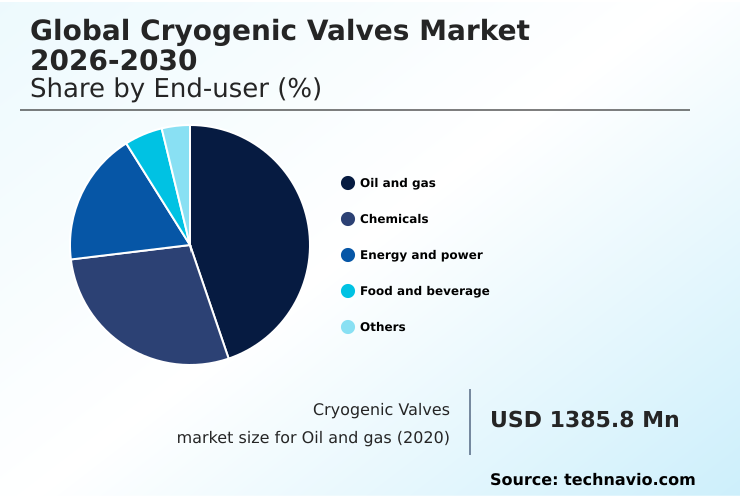
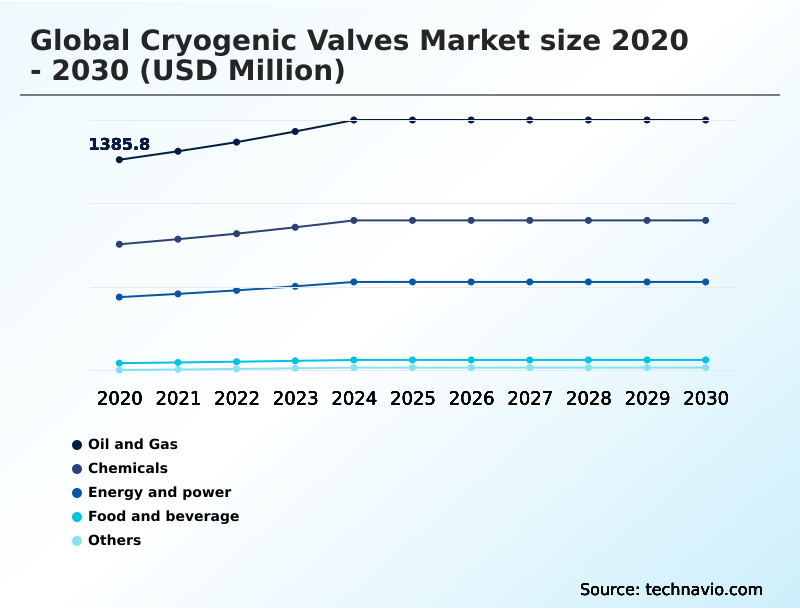
The Oil and gas segment was valued at in 2024 and showed a gradual increase during the forecast period.
Regional Analysis
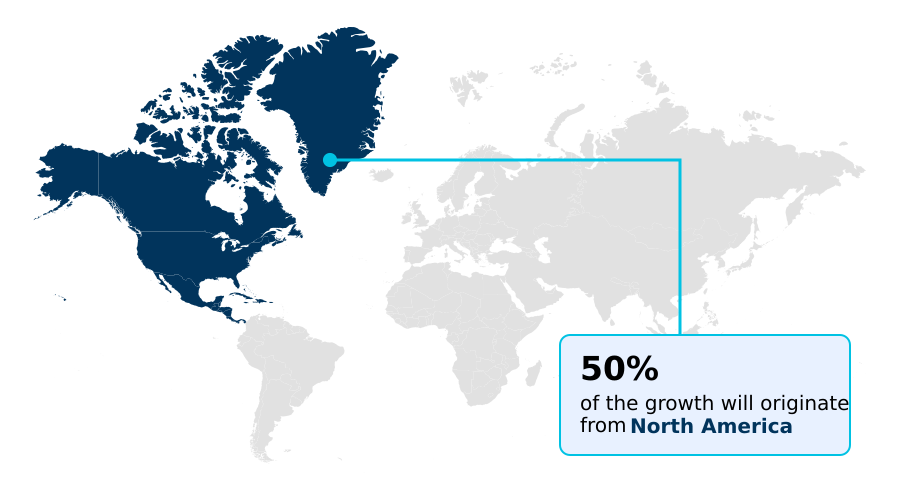
North America is estimated to contribute 50.3% to the growth of the global market during the forecast period.Technavio’s analysts have elaborately explained the regional trends and drivers that shape the market during the forecast period.
See How Cryogenic Valves Market Demand is Rising in North America Get Free Sample
The global cryogenic valves market exhibits a distinct geographic concentration, with North America accounting for over 50% of the incremental growth, largely driven by the United States' expansive LNG export infrastructure.
This region's leadership is reinforced by substantial investments in energy infrastructure projects, including green hydrogen infrastructure. The US market alone is more than five times the size of Canada's, reflecting its role in global energy supply chains.
Developments in aerospace propulsion systems and semiconductor manufacturing equipment further fuel regional demand for components enabling cryogenic fluid management.
As nations in Europe and APAC build out their LNG import and industrial gas capacities, focusing on floating storage regasification unit (FSRU) deployments, the competitive landscape continues to evolve, balancing regional manufacturing strengths with global supply chain dependencies.
Market Dynamics
Our researchers analyzed the data with 2025 as the base year, along with the key drivers, trends, and challenges. A holistic analysis of drivers will help companies refine their marketing strategies to gain a competitive advantage.
- Strategic decision-making in the global cryogenic valves market 2026-2030 hinges on a deep understanding of specific application requirements and technological advancements. The selection of cryogenic valves for LNG service involves rigorous evaluation of material performance in thermal cycling and adherence to fire safe certified cryogenic valve standards.
- For emerging hydrogen applications, material selection for hydrogen valves is paramount, often requiring specialized alloys to prevent embrittlement. Top entry vs side entry cryogenic valves present different trade-offs for maintenance in space-constrained environments like FLNG vessels. Innovations are focused on improving the reliability of the stainless steel cryogenic ball valve and extended stem gate valve cryogenic designs.
- Key performance indicators such as ball valve seat leakage rates and cryogenic valve fugitive emission rates are under intense scrutiny due to stricter environmental regulations. Consequently, testing protocols for cryogenic valves are becoming more stringent.
- The integration of a cryogenic control valve with positioner into automated cryogenic valve systems is a critical trend, with firms adopting these technologies reporting up to a 20% reduction in manual intervention errors compared to legacy setups.
- The development of the bellows seal valve for cryogenics and the vacuum insulated cryogenic globe valve addresses the need for enhanced thermal efficiency and zero-leak performance. The high pressure liquid nitrogen valve is crucial for industrial and medical applications, while the cryogenic valve for aerospace applications must meet extreme reliability standards.
- Understanding the nuances of preventing fugitive emissions in valves and the proper maintenance of cryogenic valve systems is essential for ensuring long-term operational safety and efficiency.
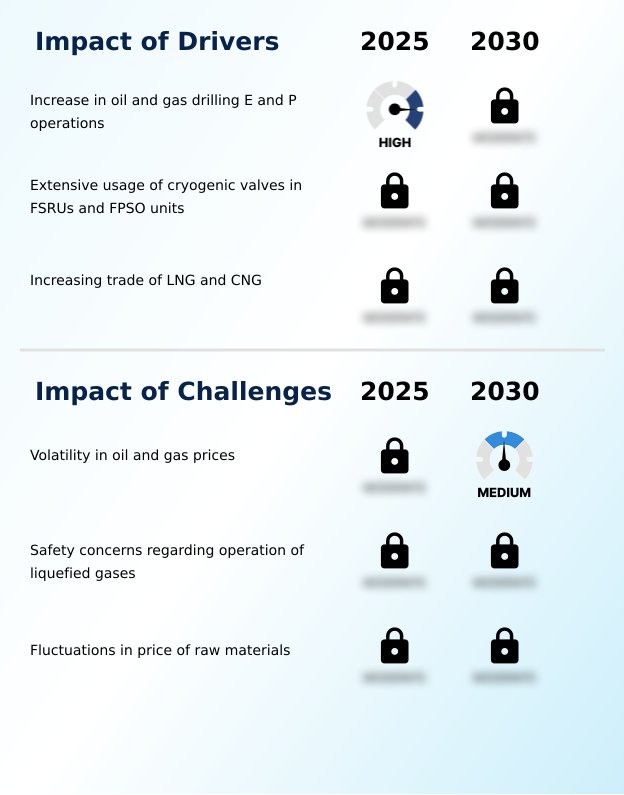
What are the key market drivers leading to the rise in the adoption of Cryogenic Valves Industry?
- The increase in oil and gas exploration and production operations, particularly in offshore and unconventional reserves, is a key driver for the market.
- Market growth is significantly driven by escalating investments in large-scale energy infrastructure projects worldwide. The expansion of LNG liquefaction trains and regasification terminal components is creating sustained demand for high-performance valves capable of cryogenic fluid management.
- A surge in global LNG trade has directly resulted in a 25% increase in procurement for floating storage regasification unit (FSRU) components in key import markets.
- Furthermore, efficiency gains are a powerful driver; for example, projects that utilize advanced cryogenic transfer lines and vacuum jacketed valves report an average 15% reduction in costly boil-off gas losses.
- This emphasis on operational efficiency, coupled with the build-out of green hydrogen infrastructure, continues to fuel demand for reliable cryogenic flow control technologies across the energy sector.
What are the market trends shaping the Cryogenic Valves Industry?
- Increasing capital investments in the global energy and power industry represent a significant upcoming market trend. This is fueled by the expansion of natural gas-fired power plants and the need for efficient power generation.
- Key trends are shaping the competitive landscape, with a notable shift towards customized solutions for specialized industrial gas applications and carbon capture utilization and storage (CCUS). Manufacturers are focusing on enhancing cryogenic flow control through advanced cryogenic valve actuation and fire-safe valve design. These innovations are critical for meeting the demands of sophisticated end-users in sectors like aerospace and electronics.
- Adopting customized valve solutions can improve flow efficiency by up to 10% in specific high-purity processes. Moreover, strategic implementation of certified fire-safe designs has been shown to reduce operational risk, with some facilities reporting an associated 5% decrease in insurance premiums.
- This focus on application-specific engineering underscores a market moving beyond standardized products toward high-value, performance-driven cryogenic transfer lines and components.
What challenges does the Cryogenic Valves Industry face during its growth?
- The volatility in global oil and gas prices presents a key challenge to the market, impacting investment decisions and creating demand uncertainty.
- The market faces persistent challenges from supply chain volatility and stringent regulatory hurdles. Fluctuations in the cost of high-grade alloys and specialized seal materials can lead to project cost overruns of up to 20%, creating significant uncertainty for both manufacturers and end-users. This unpredictability complicates long-term planning for energy infrastructure projects.
- Additionally, the need to comply with rigorous standards for cryogenic process safety necessitates intensive quality control measures. Implementing comprehensive valve seat leakage testing protocols, for example, can increase manufacturing lead times by an average of 8%, impacting project timelines.
- Navigating these economic and regulatory pressures while maintaining performance standards for applications like nitrogen rejection units remains a key operational challenge for industry stakeholders.
Exclusive Technavio Analysis on Customer Landscape
The cryogenic valves market forecasting report includes the adoption lifecycle of the market, covering from the innovator’s stage to the laggard’s stage. It focuses on adoption rates in different regions based on penetration. Furthermore, the cryogenic valves market report also includes key purchase criteria and drivers of price sensitivity to help companies evaluate and develop their market growth analysis strategies.
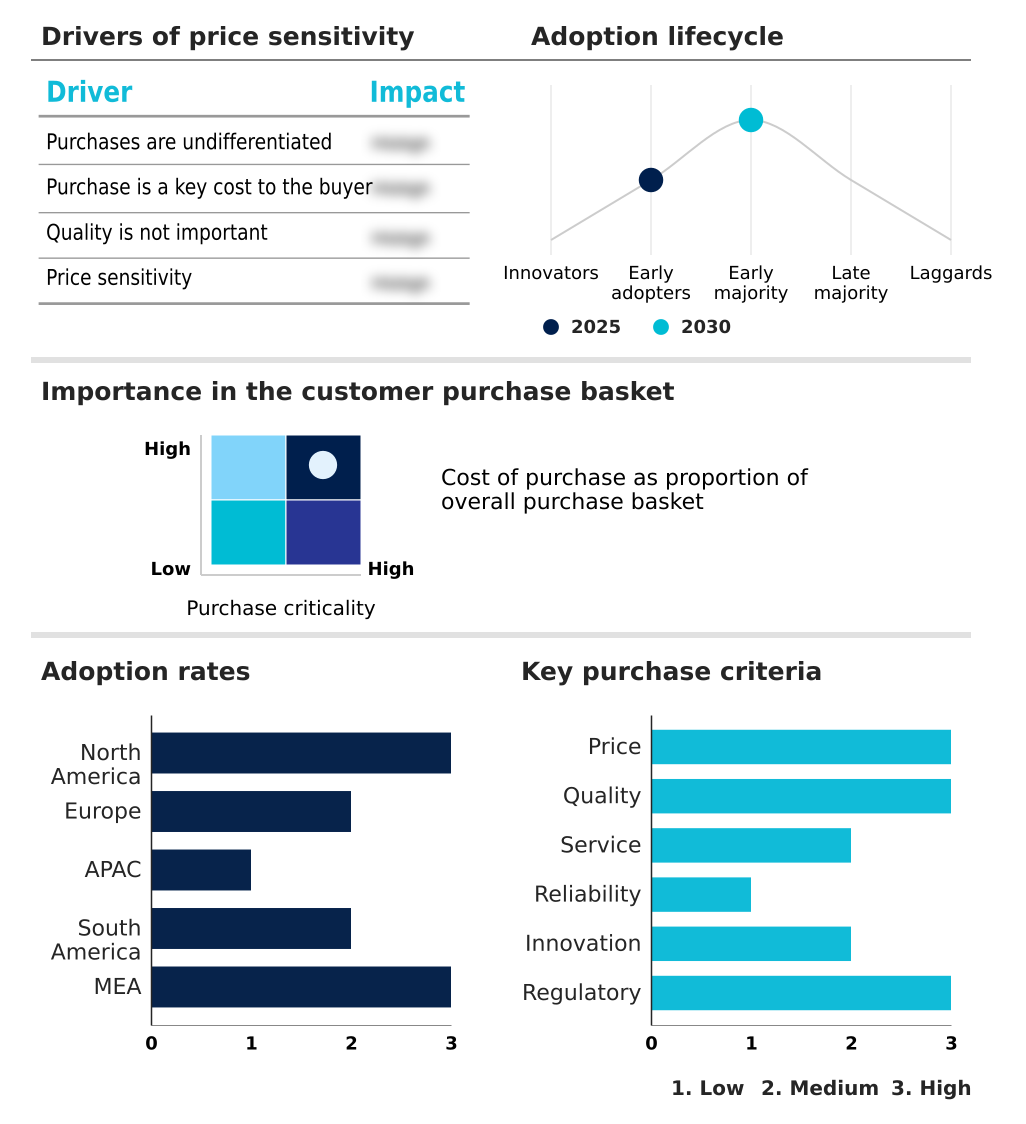
Customer Landscape of Cryogenic Valves Industry
Competitive Landscape
Companies are implementing various strategies, such as strategic alliances, cryogenic valves market forecast, partnerships, mergers and acquisitions, geographical expansion, and product/service launches, to enhance their presence in the industry.
Acme Cryogenics Inc - Offerings include specialized cryogenic valves such as globe, gate, and check valves, engineered for extreme temperature and high-pressure service in critical industrial applications.
The industry research and growth report includes detailed analyses of the competitive landscape of the market and information about key companies, including:
- Acme Cryogenics Inc
- BAC Valves SA
- Blackhall Engineering Ltd.
- Bray International Inc.
- Cryofab Inc.
- Emerson Electric Co.
- Flowserve Corp.
- HEROSE GmbH
- Hy Lok Corp.
- IMI Plc
- ITT Inc.
- KITZ Corp.
- Larsen and Toubro Ltd.
- Parker Hannifin Corp.
- Powell Valves
- SAMSON AG
- Schlumberger Ltd.
- Velan Inc.
- Weka AG
Qualitative and quantitative analysis of companies has been conducted to help clients understand the wider business environment as well as the strengths and weaknesses of key industry players. Data is qualitatively analyzed to categorize companies as pure play, category-focused, industry-focused, and diversified; it is quantitatively analyzed to categorize companies as dominant, leading, strong, tentative, and weak.
Recent Development and News in Cryogenic valves market
- In September 2024, Samsung Heavy Industries secured a major procurement agreement to equip a new fleet of LNG carriers with high-performance cryogenic ball valves, underscoring demand from the maritime sector.
- In January 2025, Air Liquide confirmed a major investment to build a new cryogenic plant in the United States to supply ultra-pure industrial gases to a key semiconductor manufacturer.
- In February 2025, QatarEnergy announced its decision to proceed with the North Field West expansion project, a massive LNG initiative set to significantly increase global production capacity and drive substantial demand for cryogenic valves.
- In May 2025, Element Resources announced plans for a large-scale liquid hydrogen production plant in California, creating new demand for specialized cryogenic valve technology for green energy.
Dive into Technavio’s robust research methodology, blending expert interviews, extensive data synthesis, and validated models for unparalleled Cryogenic Valves Market insights. See full methodology.
| Market Scope | |
|---|---|
| Page number | 302 |
| Base year | 2025 |
| Historic period | 2020-2024 |
| Forecast period | 2026-2030 |
| Growth momentum & CAGR | Accelerate at a CAGR of 4.8% |
| Market growth 2026-2030 | USD 991.4 million |
| Market structure | Fragmented |
| YoY growth 2025-2026(%) | 4.5% |
| Key countries | US, Canada, Mexico, Germany, UK, The Netherlands, Italy, Spain, France, China, Japan, South Korea, India, Australia, Indonesia, Brazil, Argentina, Chile, Saudi Arabia, UAE, Qatar, South Africa and Turkey |
| Competitive landscape | Leading Companies, Market Positioning of Companies, Competitive Strategies, and Industry Risks |
Research Analyst Overview
- The cryogenic valves market is undergoing a significant evolution, driven by the dual pressures of global energy transition and increasingly stringent industrial standards. Beyond traditional LNG handling, the emerging hydrogen economy is creating demand for components that can perform reliably at even lower temperatures, making low-temperature ductility and thermal cycling resistance critical material properties.
- Boardroom decisions are increasingly influenced by the need for compliance with fugitive emission control regulations, which directly impacts corporate ESG ratings and operational risk profiles. For instance, valves incorporating advanced specialized seal materials demonstrate a 40% lower failure rate in high-pressure cryogenic service, translating to improved asset longevity and reduced lifecycle costs.
- This shift necessitates a focus on technologies like vacuum jacketed valves and quarter-turn operation for emergency shutdown systems.
- The reliability of cryogenic ball valves, cryogenic gate valves, and cryogenic globe valves in applications from cryogenic propellant feed lines to ultra-high purity gas control for semiconductor manufacturing is no longer just an engineering concern but a strategic imperative tied to long-term profitability and safety.
What are the Key Data Covered in this Cryogenic Valves Market Research and Growth Report?
-
What is the expected growth of the Cryogenic Valves Market between 2026 and 2030?
-
USD 991.4 million, at a CAGR of 4.8%
-
-
What segmentation does the market report cover?
-
The report is segmented by End-user (Oil and Gas, Chemicals, Energy and power, Food and beverage, and Others), Type (Ball valves, Gate valves, Globe valves, and Others), Application (Liquefied natural gas, Industrial gases, Petrochemical, and Others) and Geography (North America, Europe, APAC, South America, Middle East and Africa)
-
-
Which regions are analyzed in the report?
-
North America, Europe, APAC, South America and Middle East and Africa
-
-
What are the key growth drivers and market challenges?
-
Increase in oil and gas drilling E and P operations, Volatility in oil and gas prices
-
-
Who are the major players in the Cryogenic Valves Market?
-
Acme Cryogenics Inc, BAC Valves SA, Blackhall Engineering Ltd., Bray International Inc., Cryofab Inc., Emerson Electric Co., Flowserve Corp., HEROSE GmbH, Hy Lok Corp., IMI Plc, ITT Inc., KITZ Corp., Larsen and Toubro Ltd., Parker Hannifin Corp., Powell Valves, SAMSON AG, Schlumberger Ltd., Velan Inc. and Weka AG
-
Market Research Insights
- The market's dynamics are shaped by a complex interplay between procurement strategies and technical requirements. While large-scale energy infrastructure projects exert significant buyer power, the high criticality of components for cryogenic process safety moderates this influence.
- End-users are increasingly prioritizing long-term reliability over initial capital cost, with data indicating that valves compliant with stringent fugitive emission control standards can reduce product loss by up to 3%. This focus on operational excellence drives demand for advanced solutions in cryogenic valve actuation and fire-safe valve design.
- Furthermore, systems incorporating predictive maintenance analytics report a 15% reduction in unplanned downtime, highlighting a shift towards smarter, more integrated flow control solutions across industrial gas applications and carbon capture utilization and storage (CCUS) projects.
We can help! Our analysts can customize this cryogenic valves market research report to meet your requirements.
 RIA -
RIA - 
