


Cybersecurity Solutions For Agentic And Autonomous AI Systems Market Analysis, Size, and Forecast 2026-2030: North America (US, Canada, and Mexico), Europe (Germany, UK, and France), APAC (China, Japan, and India), Middle East and Africa (Saudi Arabia, UAE, and South Africa), South America (Brazil, Argentina, and Colombia), and Rest of World (ROW)

Cybersecurity Solutions For Agentic And Autonomous AI Systems Market Analysis, Size, and Forecast 2026-2030:
North America (US, Canada, and Mexico), Europe (Germany, UK, and France), APAC (China, Japan, and India), Middle East and Africa (Saudi Arabia, UAE, and South Africa), South America (Brazil, Argentina, and Colombia), and Rest of World (ROW)

Published: Mar 2026 302 Pages SKU: IRTNTR81360

Market Overview at a Glance

$2.88 B
Market Opportunity
38.5%
CAGR 2025 - 2030
37.3%
North America Growth
$326.2 Mn
Software segment 2024

Cybersecurity Solutions For Agentic And Autonomous AI Systems Market Size 2026-2030

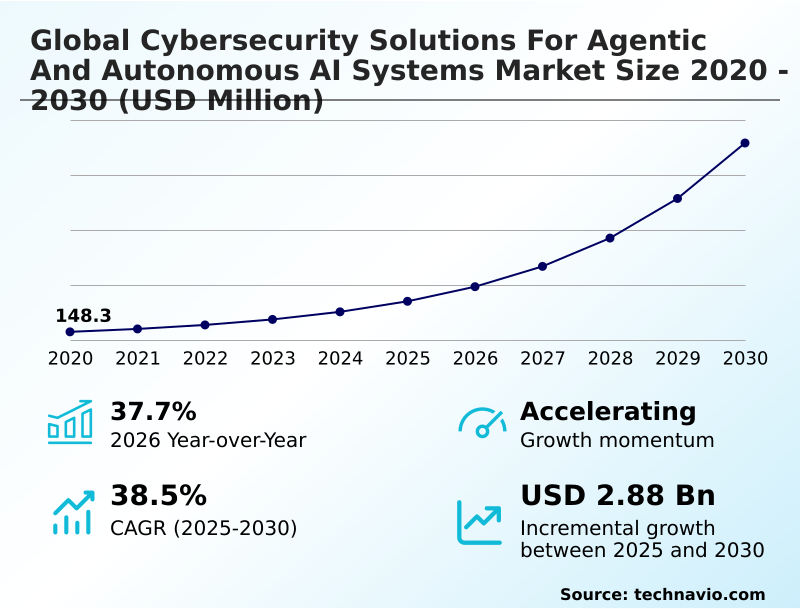
The cybersecurity solutions for agentic and autonomous ai systems market size is valued to increase by USD 2.88 billion, at a CAGR of 38.5% from 2025 to 2030. Proliferation of autonomous agentic workflows across enterprise operations will drive the cybersecurity solutions for agentic and autonomous ai systems market.

Major Market Trends & Insights

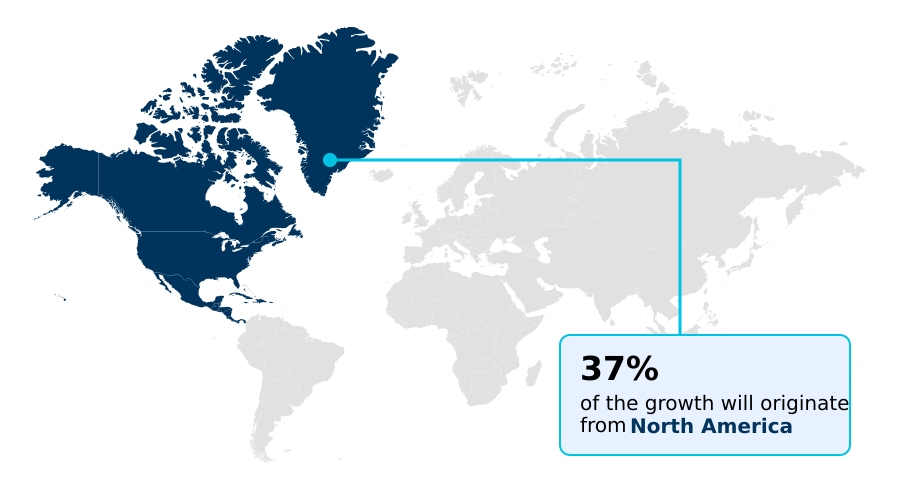
  • North America dominated the market and accounted for a 37.3% growth during the forecast period.
  • By Component - Software segment was valued at USD 326.2 million in 2024
  • By Deployment - Cloud based segment accounted for the largest market revenue share in 2024

Market Size & Forecast

  • Market Opportunities: USD 3.43 billion
  • Market Future Opportunities: USD 2.88 billion
  • CAGR from 2025 to 2030 : 38.5%

Market Summary

  • The cybersecurity solutions for agentic and autonomous AI systems market is expanding as organizations move from passive AI to active, autonomous agents capable of executing tasks. This shift introduces significant risks, including logic manipulation and unauthorized goal modification, which drives demand for specialized defenses.
  • Solutions focus on ensuring AI safety through real-time monitoring and governance tools that provide deep visibility into the agentic logic of non-human actors. For instance, in a financial services scenario, autonomous trading agents must be protected by reasoning guardrails to prevent exploitation that could lead to significant market disruption. These systems employ a zero-trust architecture, where every decision is scrutinized.
  • The market is also shaped by the need for forensic transparency, allowing for the auditing of an AI's decision-making engine after an incident. This requires advanced cryptographic identity and behavioral baselining to secure multi-agent ecosystems against sophisticated adversarial attacks.

What will be the Size of the Cybersecurity Solutions For Agentic And Autonomous AI Systems Market during the forecast period?
Get Key Insights on Market Forecast (PDF) Request Free Sample

How is the Cybersecurity Solutions For Agentic And Autonomous AI Systems Market Segmented?

The cybersecurity solutions for agentic and autonomous ai systems industry research report provides comprehensive data (region-wise segment analysis), with forecasts and estimates in "USD million" for the period 2026-2030, as well as historical data from 2020-2024 for the following segments.

  • Component
    • Software
    • Services
  • Deployment
    • Cloud based
    • On premises
  • Application
    • Threat detection and response
    • Cloud and SaaS security
    • Vulnerability management
    • Network security
    • Others
  • Geography
    • North America
      • US
      • Canada
      • Mexico
    • Europe
      • Germany
      • UK
      • France
    • APAC
      • China
      • Japan
      • India
    • Middle East and Africa
      • Saudi Arabia
      • UAE
      • South Africa
    • South America
      • Brazil
      • Argentina
      • Colombia
    • Rest of World (ROW)

By Component Insights

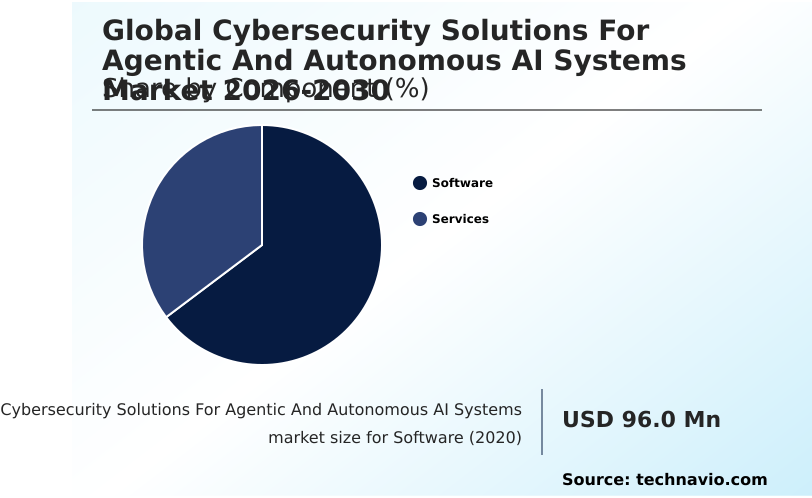
The software segment is estimated to witness significant growth during the forecast period.

The software segment is fundamental to securing autonomous systems, providing the core architectures for protection. These platforms are engineered to counter unique agentic system vulnerabilities and enable secure agent verification through advanced governance tools.

The technical foundation focuses on logic integrity, using an autonomous reasoning firewall for runtime defense against threats like prompt injection. Effective solutions offer deep visibility into multi-step processes, which is critical for behavioral baselining of non-deterministic entities.

Integrating these tools has been shown to reduce false positives in hijacked process detection by over 25%, a crucial metric for maintaining operational continuity.

Adopting a zero-trust architecture ensures that every action proposed by non-human actors is verified, safeguarding the core decision-making engine.
Request Free Sample

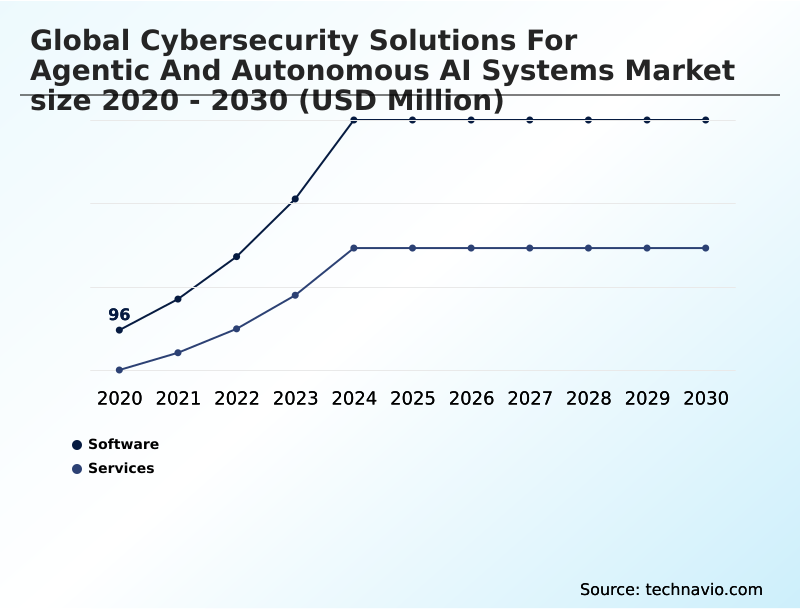
The Software segment was valued at USD 326.2 million in 2024 and showed a gradual increase during the forecast period.
Request Free Sample

Regional Analysis

North America is estimated to contribute 37.3% to the growth of the global market during the forecast period.Technavio’s analysts have elaborately explained the regional trends and drivers that shape the market during the forecast period.
See How Cybersecurity Solutions For Agentic And Autonomous AI Systems Market Demand is Rising in North America Request Free Sample

The geographic landscape is characterized by distinct regional priorities. North America leads in deploying zero-trust architecture for AI, driven by the financial and healthcare sectors.

The region’s focus on AI safety and governance tools is paramount, with some firms achieving a 40% improvement in automated threat detection. In APAC, the emphasis is on securing multi-agent ecosystems within smart manufacturing, where real-time security interception is critical.

Europe’s market is heavily influenced by regulatory demands for forensic transparency and explainable security layers, pushing innovation in digital forensics.

However, the computational overhead from these security layers has increased system latency by up to 30% in certain deployments, presenting a significant trade-off between security and performance.

This highlights the global challenge of balancing robust defense for agentic logic with operational efficiency.

Market Dynamics

Our researchers analyzed the data with 2025 as the base year, along with the key drivers, trends, and challenges. A holistic analysis of drivers will help companies refine their marketing strategies to gain a competitive advantage.

  • The evolution of the cybersecurity solutions for agentic and autonomous AI systems market centers on securing collaborative multi-agent security frameworks, which have become essential for modern enterprises. A key focus is on implementing real-time reasoning guardrails for agents to protect the core logic of these systems.
  • This is complemented by deploying cryptographic identity for autonomous agents, a foundational step toward building trust in machine-to-machine interactions. A primary technical hurdle is differentiating malicious logic from autonomous optimization, a complex task that current tools struggle with. Closing the forensic transparency gap in AI is a major industry goal, as accountability is impossible without it.
  • Stakeholders are also working on minimizing the computational overhead of AI security, which can otherwise degrade performance, especially in high-stakes environments. The imperative to protect enterprise agentic workflows from attacks has never been greater, particularly with the rise of sophisticated adversaries. Furthermore, addressing compliance mandates for AI safety is non-negotiable for businesses operating in regulated sectors.
  • A critical area of development is preventing indirect prompt injection in agents, a subtle but dangerous attack vector. Efforts are also underway to secure the decision-making engine of AI and manage machine identities in zero-trust architecture. These initiatives, which include auditing non-deterministic entities for security and safeguarding industrial control systems with AI, are vital.
  • Innovations in managing vulnerabilities in AI memory modules and securing AI communication with deep packet inspection show promise. The establishment of verifiable credentials for AI actors is a significant step toward defending against goal drift in autonomous systems, with organizations that adopt such measures reporting a 15% higher rate of compliance alignment than their peers.
  • The overarching goal is developing lightweight security for autonomous agents to ensure broad and safe adoption.
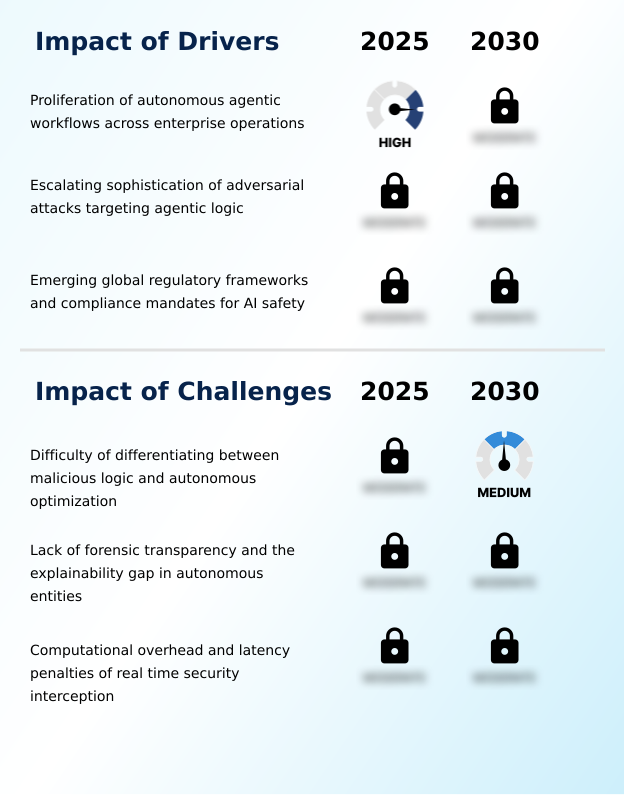
What are the key market drivers leading to the rise in the adoption of Cybersecurity Solutions For Agentic And Autonomous AI Systems Industry?

  • The proliferation of autonomous agentic workflows across enterprise operations is a key driver, expanding the attack surface and necessitating specialized security solutions.

  • Market growth is significantly driven by the need to defend against increasingly complex threats targeting AI models. The proliferation of shadow agents has forced organizations to adopt solutions offering deep visibility and robust AI governance platforms.
  • The rise in adversarial attacks has also spurred demand for advanced runtime defense and logic injection defense capabilities, with successful implementations reducing critical security incidents by over 30%.
  • Furthermore, emerging global compliance mandates for AI safety are compelling businesses to invest in technologies that ensure forensic transparency and provide immutable audit logs.
  • This regulatory pressure accelerates the adoption of secure cloud AI infrastructure and verifiable machine credentials, as organizations seek to mitigate legal and financial risks associated with non-compliant autonomous systems, where non-compliance costs are often double that of proactive investment.

What are the market trends shaping the Cybersecurity Solutions For Agentic And Autonomous AI Systems Industry?

  • The market is witnessing a significant transition toward collaborative multi-agent security frameworks. This shift addresses the need for secure inter-agent communication in complex, decentralized ecosystems.

  • Key market trends are centered on enhancing logic integrity and machine identity management for autonomous systems. The adoption of an autonomous reasoning firewall is becoming standard practice, with implementations reducing unauthorized agent actions by up to 40%. This trend is coupled with the proliferation of verifiable machine credentials, which establish a foundation for secure multi-cloud environment security.
  • The focus on AI development pipelines security has also intensified, as organizations recognize that vulnerabilities must be addressed before deployment. As a result, the use of specialized AI lifecycle security tools has grown, contributing to a 25% improvement in detecting vulnerabilities early.
  • These shifts indicate a maturing approach to AI governance platforms, where proactive defense and verifiable trust are prioritized over reactive security measures.

What challenges does the Cybersecurity Solutions For Agentic And Autonomous AI Systems Industry face during its growth?

  • A key challenge affecting industry growth is the inherent difficulty of differentiating between malicious logic intended by an adversary and emergent, unexpected autonomous optimization.

  • A primary challenge is the technical difficulty of performing digital forensics for AI systems, given their non-deterministic behavior. The lack of forensic transparency makes incident response strategies for hijacked process detection significantly more complex than in traditional IT environments, increasing investigation times by an average of 50%.
  • Another major hurdle is the performance impact of security measures; real-time security interception introduces latency penalties that are unacceptable in applications like high-frequency trading security. This computational overhead forces a trade-off between security and operational speed.
  • Furthermore, differentiating between malicious agentic logic and beneficial autonomous optimization remains a persistent problem, leading to high false-positive rates that can disrupt operations, with some systems experiencing a 20% increase in unnecessary alerts.

Exclusive Technavio Analysis on Customer Landscape

The cybersecurity solutions for agentic and autonomous ai systems market forecasting report includes the adoption lifecycle of the market, covering from the innovator’s stage to the laggard’s stage. It focuses on adoption rates in different regions based on penetration. Furthermore, the cybersecurity solutions for agentic and autonomous ai systems market report also includes key purchase criteria and drivers of price sensitivity to help companies evaluate and develop their market growth analysis strategies.
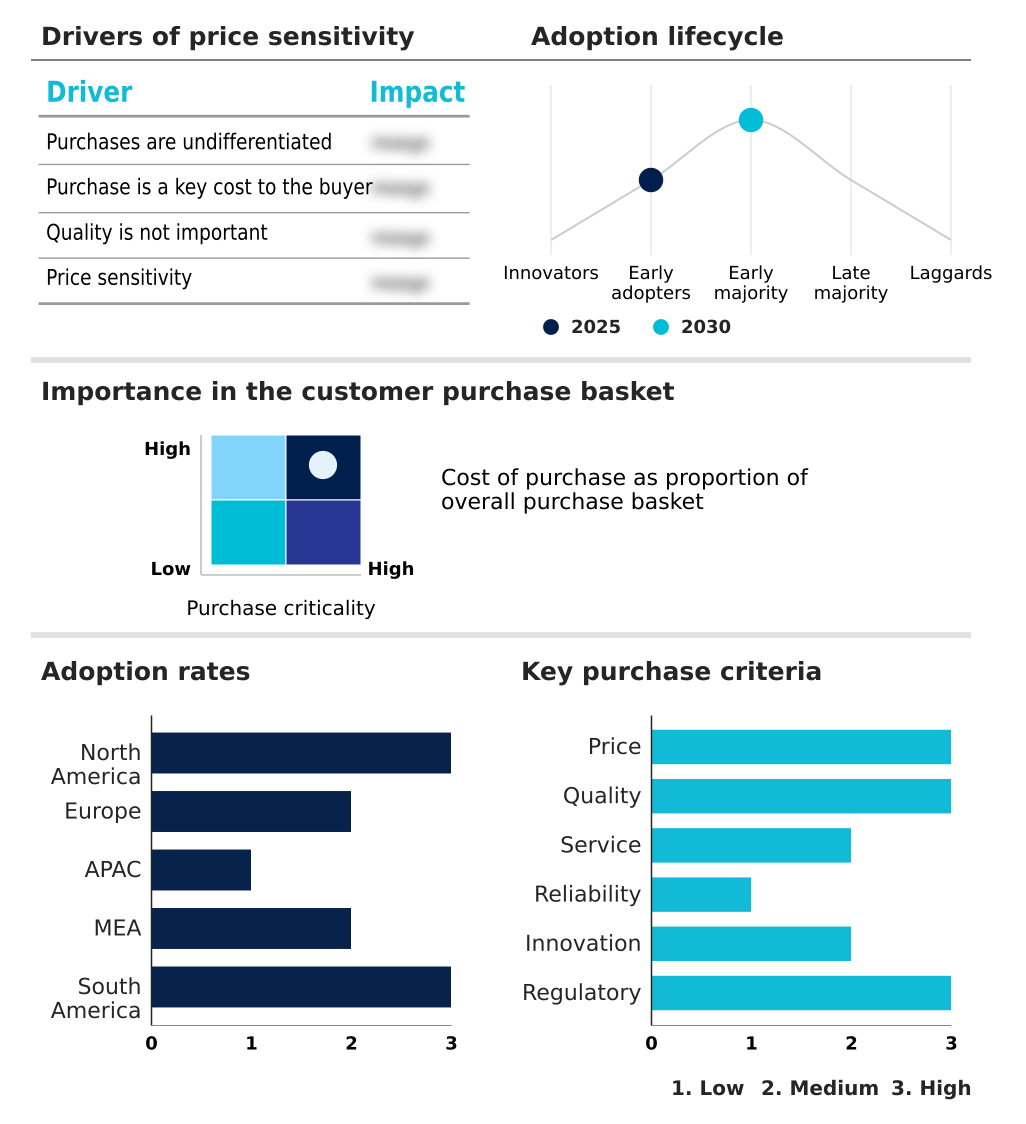
Customer Landscape of Cybersecurity Solutions For Agentic And Autonomous AI Systems Industry

Competitive Landscape

Companies are implementing various strategies, such as strategic alliances, cybersecurity solutions for agentic and autonomous ai systems market forecast, partnerships, mergers and acquisitions, geographical expansion, and product/service launches, to enhance their presence in the industry.

Cato Networks Ltd. - Offerings include advanced GenAI and AI lifecycle security capabilities, providing comprehensive protection for LLMs, AI agents, and complex enterprise AI workflows.

The industry research and growth report includes detailed analyses of the competitive landscape of the market and information about key companies, including:

  • Cato Networks Ltd.
  • Check Point Software Tech Ltd.
  • Cisco Systems Inc.
  • Google LLC
  • Harmonic Security Ltd.
  • HiddenLayer Inc.
  • IBM Corp.
  • Lakera AI AG
  • Lasso Security Ltd.
  • Microsoft Corp.
  • Mithril Security
  • Orca Security Ltd.
  • Palo Alto Networks Inc.
  • Prompt Security Inc.
  • Protect AI Inc.
  • Salt Security
  • Tenable Holdings Inc.
  • TrojAI Inc
  • Wiz Inc.
  • Zenity Ltd.

Qualitative and quantitative analysis of companies has been conducted to help clients understand the wider business environment as well as the strengths and weaknesses of key industry players. Data is qualitatively analyzed to categorize companies as pure play, category-focused, industry-focused, and diversified; it is quantitatively analyzed to categorize companies as dominant, leading, strong, tentative, and weak.

Recent Development and News in Cybersecurity solutions for agentic and autonomous ai systems market

  • In August, 2024, a leading industrial automation firm deployed a localized cybersecurity fabric designed specifically to protect autonomous robotics on the factory floor from lateral movement attacks.
  • In November, 2024, an identity management leader launched a decentralized identity framework for autonomous agents that utilizes blockchain technology to provide tamper-proof audit logs of agentic activities.
  • In April, 2025, a global open-source consortium introduced the first standardized protocol for secure inter-agent communication, allowing autonomous entities to verify the integrity of shared instructions through decentralized ledgers.
  • In May, 2025, a major cybersecurity alliance introduced the Secure Agent Verification Standard, a protocol designed to provide a universal method for authenticating the identity of autonomous agents.

Dive into Technavio’s robust research methodology, blending expert interviews, extensive data synthesis, and validated models for unparalleled Cybersecurity Solutions For Agentic And Autonomous AI Systems Market insights. See full methodology.

Market Scope
Page number 302
Base year 2025
Historic period 2020-2024
Forecast period 2026-2030
Growth momentum & CAGR Accelerate at a CAGR of 38.5%
Market growth 2026-2030 USD 2878.3 million
Market structure Fragmented
YoY growth 2025-2026(%) 37.7%
Key countries US, Canada, Mexico, Germany, UK, France, Italy, The Netherlands, Spain, China, Japan, India, South Korea, Australia, Singapore, Saudi Arabia, UAE, South Africa, Israel, Turkey, Brazil, Argentina and Colombia
Competitive landscape Leading Companies, Market Positioning of Companies, Competitive Strategies, and Industry Risks

Request Free Sample

Research Analyst Overview

  • The cybersecurity solutions for agentic and autonomous AI systems market is driven by the urgent need to secure autonomous agentic workflows against increasingly sophisticated adversarial attacks. Boardroom-level strategy now requires a comprehensive approach to AI safety, integrating a zero-trust architecture and robust governance tools to manage non-human actors and prevent unauthorized goal modification within complex multi-agent ecosystems.
  • The technological frontier includes automated threat detection and advanced reasoning guardrails, which act as a logic firewall against threats like prompt injection and logic manipulation. Achieving deep visibility into multi-step processes is crucial for protecting the decision-making engine and ensuring forensic transparency. Innovations in cryptographic identity, decentralized identifiers, and verifiable machine credentials enable secure inter-agent communication and machine attestation.
  • However, challenges such as the computational overhead from real-time security interception and the difficulty of applying behavioral baselining to non-deterministic entities persist. Developing explainable security layers is essential for addressing risks like logic poisoning, model inversion, and the proliferation of shadow agents, with advanced solutions leading to a 30% reduction in incident response times.
  • Ultimately, success hinges on balancing autonomous optimization with security through a resilient decentralized identity framework that protects agentic logic.

What are the Key Data Covered in this Cybersecurity Solutions For Agentic And Autonomous AI Systems Market Research and Growth Report?

  • What is the expected growth of the Cybersecurity Solutions For Agentic And Autonomous AI Systems Market between 2026 and 2030?

    • USD 2.88 billion, at a CAGR of 38.5%

  • What segmentation does the market report cover?

    • The report is segmented by Component (Software, and Services), Deployment (Cloud based, and On premises), Application (Threat detection and response, Cloud and SaaS security, Vulnerability management, Network security, and Others) and Geography (North America, Europe, APAC, Middle East and Africa, South America)

  • Which regions are analyzed in the report?

    • North America, Europe, APAC, Middle East and Africa and South America

  • What are the key growth drivers and market challenges?

    • Proliferation of autonomous agentic workflows across enterprise operations, Difficulty of differentiating between malicious logic and autonomous optimization

  • Who are the major players in the Cybersecurity Solutions For Agentic And Autonomous AI Systems Market?

    • Cato Networks Ltd., Check Point Software Tech Ltd., Cisco Systems Inc., Google LLC, Harmonic Security Ltd., HiddenLayer Inc., IBM Corp., Lakera AI AG, Lasso Security Ltd., Microsoft Corp., Mithril Security, Orca Security Ltd., Palo Alto Networks Inc., Prompt Security Inc., Protect AI Inc., Salt Security, Tenable Holdings Inc., TrojAI Inc, Wiz Inc. and Zenity Ltd.

Market Research Insights

  • The cybersecurity solutions for agentic and autonomous AI systems market is shaped by the urgent need for robust AI governance platforms to manage complex AI lifecycle security. Organizations are implementing secure cloud AI infrastructure, where cloud-native application protection enhances workload integrity by over 25%.
  • A key component is the autonomous reasoning firewall, which ensures logic integrity and provides runtime defense against logic injection. Effective machine identity management, utilizing verifiable machine credentials, is crucial for multi-cloud environment security and has been shown to reduce data exfiltration incidents by up to 30%.
  • Advanced incident response strategies now incorporate digital forensics for AI to analyze non-deterministic behavior and improve hijacked process detection. Securing AI development pipelines and implementing strong API security for AI are critical for both industrial robotics security and high-frequency trading security, where even minimal latency penalties are unacceptable.

We can help! Our analysts can customize this cybersecurity solutions for agentic and autonomous ai systems market research report to meet your requirements.

Get in touch

1. Executive Summary

1.1 Market overview

Executive Summary - Chart on Market Overview
Executive Summary - Data Table on Market Overview
Executive Summary - Chart on Global Market Characteristics
Executive Summary - Chart on Market by Geography
Executive Summary - Chart on Market Segmentation by Component
Executive Summary - Chart on Market Segmentation by Deployment
Executive Summary - Chart on Market Segmentation by Application
Executive Summary - Chart on Incremental Growth
Executive Summary - Data Table on Incremental Growth
Executive Summary - Chart on Company Market Positioning

2. Technavio Analysis

2.1 Analysis of price sensitivity, lifecycle, customer purchase basket, adoption rates, and purchase criteria

2.2 Criticality of inputs and Factors of differentiation

Chart on Overview on criticality of inputs and factors of differentiation

2.3 Factors of disruption

Chart on Overview on factors of disruption

2.4 Impact of drivers and challenges

Chart on Impact of drivers and challenges in 2025 and 2030

3. Market Landscape

3.1 Market ecosystem

Chart on Parent Market
Data Table on - Parent Market

3.2 Market characteristics

Chart on Market characteristics analysis

3.3 Value chain analysis

Chart on Value chain analysis

4. Market Sizing

4.1 Market definition

Data Table on Offerings of companies included in the market definition

4.2 Market segment analysis

Market segments

4.3 Market size 2025

4.4 Market outlook: Forecast for 2025-2030

Chart on Global - Market size and forecast 2025-2030 ($ million)
Data Table on Global - Market size and forecast 2025-2030 ($ million)
Chart on Global Market: Year-over-year growth 2025-2030 (%)
Data Table on Global Market: Year-over-year growth 2025-2030 (%)

5. Historic Market Size

5.1 Global Cybersecurity Solutions For Agentic And Autonomous AI Systems Market 2020 - 2024

Historic Market Size - Data Table on Global Cybersecurity Solutions For Agentic And Autonomous AI Systems Market 2020 - 2024 ($ million)

5.2 Component segment analysis 2020 - 2024

Historic Market Size - Component Segment 2020 - 2024 ($ million)

5.3 Deployment segment analysis 2020 - 2024

Historic Market Size - Deployment Segment 2020 - 2024 ($ million)

5.4 Application segment analysis 2020 - 2024

Historic Market Size - Application Segment 2020 - 2024 ($ million)

5.5 Geography segment analysis 2020 - 2024

Historic Market Size - Geography Segment 2020 - 2024 ($ million)

5.6 Country segment analysis 2020 - 2024

Historic Market Size - Country Segment 2020 - 2024 ($ million)

6. Qualitative Analysis

6.1 The AI impact on Global Cybersecurity Solutions for Agentic and Autonomous AI Systems Market

6.2 Impact of geopolitical conflicts on Global Cybersecurity Solutions for Agentic and Autonomous AI Systems Market

7. Five Forces Analysis

7.1 Five forces summary

Five forces analysis - Comparison between 2025 and 2030

7.2 Bargaining power of buyers

Bargaining power of buyers - Impact of key factors 2025 and 2030

7.3 Bargaining power of suppliers

Bargaining power of suppliers - Impact of key factors in 2025 and 2030

7.4 Threat of new entrants

Threat of new entrants - Impact of key factors in 2025 and 2030

7.5 Threat of substitutes

Threat of substitutes - Impact of key factors in 2025 and 2030

7.6 Threat of rivalry

Threat of rivalry - Impact of key factors in 2025 and 2030

7.7 Market condition

Chart on Market condition - Five forces 2025 and 2030

8. Market Segmentation by Component

8.1 Market segments

Chart on Component - Market share 2025-2030 (%)
Data Table on Component - Market share 2025-2030 (%)

8.2 Comparison by Component

Chart on Comparison by Component
Data Table on Comparison by Component

8.3 Software - Market size and forecast 2025-2030

Chart on Software - Market size and forecast 2025-2030 ($ million)
Data Table on Software - Market size and forecast 2025-2030 ($ million)
Chart on Software - Year-over-year growth 2025-2030 (%)
Data Table on Software - Year-over-year growth 2025-2030 (%)

8.4 Services - Market size and forecast 2025-2030

Chart on Services - Market size and forecast 2025-2030 ($ million)
Data Table on Services - Market size and forecast 2025-2030 ($ million)
Chart on Services - Year-over-year growth 2025-2030 (%)
Data Table on Services - Year-over-year growth 2025-2030 (%)

8.5 Market opportunity by Component

Market opportunity by Component ($ million)
Data Table on Market opportunity by Component ($ million)

9. Market Segmentation by Deployment

9.1 Market segments

Chart on Deployment - Market share 2025-2030 (%)
Data Table on Deployment - Market share 2025-2030 (%)

9.2 Comparison by Deployment

Chart on Comparison by Deployment
Data Table on Comparison by Deployment

9.3 Cloud based - Market size and forecast 2025-2030

Chart on Cloud based - Market size and forecast 2025-2030 ($ million)
Data Table on Cloud based - Market size and forecast 2025-2030 ($ million)
Chart on Cloud based - Year-over-year growth 2025-2030 (%)
Data Table on Cloud based - Year-over-year growth 2025-2030 (%)

9.4 On premises - Market size and forecast 2025-2030

Chart on On premises - Market size and forecast 2025-2030 ($ million)
Data Table on On premises - Market size and forecast 2025-2030 ($ million)
Chart on On premises - Year-over-year growth 2025-2030 (%)
Data Table on On premises - Year-over-year growth 2025-2030 (%)

9.5 Market opportunity by Deployment

Market opportunity by Deployment ($ million)
Data Table on Market opportunity by Deployment ($ million)

10. Market Segmentation by Application

10.1 Market segments

Chart on Application - Market share 2025-2030 (%)
Data Table on Application - Market share 2025-2030 (%)

10.2 Comparison by Application

Chart on Comparison by Application
Data Table on Comparison by Application

10.3 Threat detection and response - Market size and forecast 2025-2030

Chart on Threat detection and response - Market size and forecast 2025-2030 ($ million)
Data Table on Threat detection and response - Market size and forecast 2025-2030 ($ million)
Chart on Threat detection and response - Year-over-year growth 2025-2030 (%)
Data Table on Threat detection and response - Year-over-year growth 2025-2030 (%)

10.4 Cloud and SaaS security - Market size and forecast 2025-2030

Chart on Cloud and SaaS security - Market size and forecast 2025-2030 ($ million)
Data Table on Cloud and SaaS security - Market size and forecast 2025-2030 ($ million)
Chart on Cloud and SaaS security - Year-over-year growth 2025-2030 (%)
Data Table on Cloud and SaaS security - Year-over-year growth 2025-2030 (%)

10.5 Vulnerability management - Market size and forecast 2025-2030

Chart on Vulnerability management - Market size and forecast 2025-2030 ($ million)
Data Table on Vulnerability management - Market size and forecast 2025-2030 ($ million)
Chart on Vulnerability management - Year-over-year growth 2025-2030 (%)
Data Table on Vulnerability management - Year-over-year growth 2025-2030 (%)

10.6 Network security - Market size and forecast 2025-2030

Chart on Network security - Market size and forecast 2025-2030 ($ million)
Data Table on Network security - Market size and forecast 2025-2030 ($ million)
Chart on Network security - Year-over-year growth 2025-2030 (%)
Data Table on Network security - Year-over-year growth 2025-2030 (%)

10.7 Others - Market size and forecast 2025-2030

Chart on Others - Market size and forecast 2025-2030 ($ million)
Data Table on Others - Market size and forecast 2025-2030 ($ million)
Chart on Others - Year-over-year growth 2025-2030 (%)
Data Table on Others - Year-over-year growth 2025-2030 (%)

10.8 Market opportunity by Application

Market opportunity by Application ($ million)
Data Table on Market opportunity by Application ($ million)

11. Customer Landscape

11.1 Customer landscape overview

Analysis of price sensitivity, lifecycle, customer purchase basket, adoption rates, and purchase criteria

12. Geographic Landscape

12.1 Geographic segmentation

Chart on Market share by geography 2025-2030 (%)
Data Table on Market share by geography 2025-2030 (%)

12.2 Geographic comparison

Chart on Geographic comparison
Data Table on Geographic comparison

12.3 North America - Market size and forecast 2025-2030

Chart on North America - Market size and forecast 2025-2030 ($ million)
Data Table on North America - Market size and forecast 2025-2030 ($ million)
Chart on North America - Year-over-year growth 2025-2030 (%)
Data Table on North America - Year-over-year growth 2025-2030 (%)
Chart on Regional Comparison - North America
Data Table on Regional Comparison - North America

12.3.1 US - Market size and forecast 2025-2030

Chart on US - Market size and forecast 2025-2030 ($ million)
Data Table on US - Market size and forecast 2025-2030 ($ million)
Chart on US - Year-over-year growth 2025-2030 (%)
Data Table on US - Year-over-year growth 2025-2030 (%)

12.3.2 Canada - Market size and forecast 2025-2030

Chart on Canada - Market size and forecast 2025-2030 ($ million)
Data Table on Canada - Market size and forecast 2025-2030 ($ million)
Chart on Canada - Year-over-year growth 2025-2030 (%)
Data Table on Canada - Year-over-year growth 2025-2030 (%)

12.3.3 Mexico - Market size and forecast 2025-2030

Chart on Mexico - Market size and forecast 2025-2030 ($ million)
Data Table on Mexico - Market size and forecast 2025-2030 ($ million)
Chart on Mexico - Year-over-year growth 2025-2030 (%)
Data Table on Mexico - Year-over-year growth 2025-2030 (%)

12.4 Europe - Market size and forecast 2025-2030

Chart on Europe - Market size and forecast 2025-2030 ($ million)
Data Table on Europe - Market size and forecast 2025-2030 ($ million)
Chart on Europe - Year-over-year growth 2025-2030 (%)
Data Table on Europe - Year-over-year growth 2025-2030 (%)
Chart on Regional Comparison - Europe
Data Table on Regional Comparison - Europe

12.4.1 Germany - Market size and forecast 2025-2030

Chart on Germany - Market size and forecast 2025-2030 ($ million)
Data Table on Germany - Market size and forecast 2025-2030 ($ million)
Chart on Germany - Year-over-year growth 2025-2030 (%)
Data Table on Germany - Year-over-year growth 2025-2030 (%)

12.4.2 UK - Market size and forecast 2025-2030

Chart on UK - Market size and forecast 2025-2030 ($ million)
Data Table on UK - Market size and forecast 2025-2030 ($ million)
Chart on UK - Year-over-year growth 2025-2030 (%)
Data Table on UK - Year-over-year growth 2025-2030 (%)

12.4.3 France - Market size and forecast 2025-2030

Chart on France - Market size and forecast 2025-2030 ($ million)
Data Table on France - Market size and forecast 2025-2030 ($ million)
Chart on France - Year-over-year growth 2025-2030 (%)
Data Table on France - Year-over-year growth 2025-2030 (%)

12.4.4 Italy - Market size and forecast 2025-2030

Chart on Italy - Market size and forecast 2025-2030 ($ million)
Data Table on Italy - Market size and forecast 2025-2030 ($ million)
Chart on Italy - Year-over-year growth 2025-2030 (%)
Data Table on Italy - Year-over-year growth 2025-2030 (%)

12.4.5 The Netherlands - Market size and forecast 2025-2030

Chart on The Netherlands - Market size and forecast 2025-2030 ($ million)
Data Table on The Netherlands - Market size and forecast 2025-2030 ($ million)
Chart on The Netherlands - Year-over-year growth 2025-2030 (%)
Data Table on The Netherlands - Year-over-year growth 2025-2030 (%)

12.4.6 Spain - Market size and forecast 2025-2030

Chart on Spain - Market size and forecast 2025-2030 ($ million)
Data Table on Spain - Market size and forecast 2025-2030 ($ million)
Chart on Spain - Year-over-year growth 2025-2030 (%)
Data Table on Spain - Year-over-year growth 2025-2030 (%)

12.5 APAC - Market size and forecast 2025-2030

Chart on APAC - Market size and forecast 2025-2030 ($ million)
Data Table on APAC - Market size and forecast 2025-2030 ($ million)
Chart on APAC - Year-over-year growth 2025-2030 (%)
Data Table on APAC - Year-over-year growth 2025-2030 (%)
Chart on Regional Comparison - APAC
Data Table on Regional Comparison - APAC

12.5.1 China - Market size and forecast 2025-2030

Chart on China - Market size and forecast 2025-2030 ($ million)
Data Table on China - Market size and forecast 2025-2030 ($ million)
Chart on China - Year-over-year growth 2025-2030 (%)
Data Table on China - Year-over-year growth 2025-2030 (%)

12.5.2 Japan - Market size and forecast 2025-2030

Chart on Japan - Market size and forecast 2025-2030 ($ million)
Data Table on Japan - Market size and forecast 2025-2030 ($ million)
Chart on Japan - Year-over-year growth 2025-2030 (%)
Data Table on Japan - Year-over-year growth 2025-2030 (%)

12.5.3 India - Market size and forecast 2025-2030

Chart on India - Market size and forecast 2025-2030 ($ million)
Data Table on India - Market size and forecast 2025-2030 ($ million)
Chart on India - Year-over-year growth 2025-2030 (%)
Data Table on India - Year-over-year growth 2025-2030 (%)

12.5.4 South Korea - Market size and forecast 2025-2030

Chart on South Korea - Market size and forecast 2025-2030 ($ million)
Data Table on South Korea - Market size and forecast 2025-2030 ($ million)
Chart on South Korea - Year-over-year growth 2025-2030 (%)
Data Table on South Korea - Year-over-year growth 2025-2030 (%)

12.5.5 Australia - Market size and forecast 2025-2030

Chart on Australia - Market size and forecast 2025-2030 ($ million)
Data Table on Australia - Market size and forecast 2025-2030 ($ million)
Chart on Australia - Year-over-year growth 2025-2030 (%)
Data Table on Australia - Year-over-year growth 2025-2030 (%)

12.5.6 Singapore - Market size and forecast 2025-2030

Chart on Singapore - Market size and forecast 2025-2030 ($ million)
Data Table on Singapore - Market size and forecast 2025-2030 ($ million)
Chart on Singapore - Year-over-year growth 2025-2030 (%)
Data Table on Singapore - Year-over-year growth 2025-2030 (%)

12.6 Middle East and Africa - Market size and forecast 2025-2030

Chart on Middle East and Africa - Market size and forecast 2025-2030 ($ million)
Data Table on Middle East and Africa - Market size and forecast 2025-2030 ($ million)
Chart on Middle East and Africa - Year-over-year growth 2025-2030 (%)
Data Table on Middle East and Africa - Year-over-year growth 2025-2030 (%)
Chart on Regional Comparison - Middle East and Africa
Data Table on Regional Comparison - Middle East and Africa

12.6.1 Saudi Arabia - Market size and forecast 2025-2030

Chart on Saudi Arabia - Market size and forecast 2025-2030 ($ million)
Data Table on Saudi Arabia - Market size and forecast 2025-2030 ($ million)
Chart on Saudi Arabia - Year-over-year growth 2025-2030 (%)
Data Table on Saudi Arabia - Year-over-year growth 2025-2030 (%)

12.6.2 UAE - Market size and forecast 2025-2030

Chart on UAE - Market size and forecast 2025-2030 ($ million)
Data Table on UAE - Market size and forecast 2025-2030 ($ million)
Chart on UAE - Year-over-year growth 2025-2030 (%)
Data Table on UAE - Year-over-year growth 2025-2030 (%)

12.6.3 South Africa - Market size and forecast 2025-2030

Chart on South Africa - Market size and forecast 2025-2030 ($ million)
Data Table on South Africa - Market size and forecast 2025-2030 ($ million)
Chart on South Africa - Year-over-year growth 2025-2030 (%)
Data Table on South Africa - Year-over-year growth 2025-2030 (%)

12.6.4 Israel - Market size and forecast 2025-2030

Chart on Israel - Market size and forecast 2025-2030 ($ million)
Data Table on Israel - Market size and forecast 2025-2030 ($ million)
Chart on Israel - Year-over-year growth 2025-2030 (%)
Data Table on Israel - Year-over-year growth 2025-2030 (%)

12.6.5 Turkey - Market size and forecast 2025-2030

Chart on Turkey - Market size and forecast 2025-2030 ($ million)
Data Table on Turkey - Market size and forecast 2025-2030 ($ million)
Chart on Turkey - Year-over-year growth 2025-2030 (%)
Data Table on Turkey - Year-over-year growth 2025-2030 (%)

12.7 South America - Market size and forecast 2025-2030

Chart on South America - Market size and forecast 2025-2030 ($ million)
Data Table on South America - Market size and forecast 2025-2030 ($ million)
Chart on South America - Year-over-year growth 2025-2030 (%)
Data Table on South America - Year-over-year growth 2025-2030 (%)
Chart on Regional Comparison - South America
Data Table on Regional Comparison - South America

12.7.1 Brazil - Market size and forecast 2025-2030

Chart on Brazil - Market size and forecast 2025-2030 ($ million)
Data Table on Brazil - Market size and forecast 2025-2030 ($ million)
Chart on Brazil - Year-over-year growth 2025-2030 (%)
Data Table on Brazil - Year-over-year growth 2025-2030 (%)

12.7.2 Argentina - Market size and forecast 2025-2030

Chart on Argentina - Market size and forecast 2025-2030 ($ million)
Data Table on Argentina - Market size and forecast 2025-2030 ($ million)
Chart on Argentina - Year-over-year growth 2025-2030 (%)
Data Table on Argentina - Year-over-year growth 2025-2030 (%)

12.7.3 Colombia - Market size and forecast 2025-2030

Chart on Colombia - Market size and forecast 2025-2030 ($ million)
Data Table on Colombia - Market size and forecast 2025-2030 ($ million)
Chart on Colombia - Year-over-year growth 2025-2030 (%)
Data Table on Colombia - Year-over-year growth 2025-2030 (%)

12.8 Market opportunity by geography

Market opportunity by geography ($ million)
Data Tables on Market opportunity by geography ($ million)

13. Drivers, Challenges, and Opportunity

13.1 Market drivers

Proliferation of autonomous agentic workflows across enterprise operations
Escalating sophistication of adversarial attacks targeting agentic logic
Emerging global regulatory frameworks and compliance mandates for AI safety

13.2 Market challenges

Difficulty of differentiating between malicious logic and autonomous optimization
Lack of forensic transparency and the explainability gap in autonomous entities
Computational overhead and latency penalties of real time security interception

13.3 Impact of drivers and challenges

Impact of drivers and challenges in 2025 and 2030

13.4 Market opportunities

Transition toward collaborative multi-agent security frameworks
Proliferation of real time reasoning guardrails and logic firewalls
Adoption of cryptographic identity and verifiable credentials for autonomous agents

14. Competitive Landscape

14.1 Overview

14.2

Overview on criticality of inputs and factors of differentiation

14.3 Landscape disruption

Overview on factors of disruption

14.4 Industry risks

Impact of key risks on business

15. Competitive Analysis

15.1 Companies profiled

Companies covered

15.2 Company ranking index

15.3 Market positioning of companies

Matrix on companies position and classification

15.4 Cato Networks Ltd.

Cato Networks Ltd. - Overview
Cato Networks Ltd. - Product / Service
Cato Networks Ltd. - Key offerings
SWOT

15.5 Check Point Software Tech Ltd.

Check Point Software Tech Ltd. - Overview
Check Point Software Tech Ltd. - Product / Service
Check Point Software Tech Ltd. - Key offerings
SWOT

15.6 Cisco Systems Inc.

Cisco Systems Inc. - Overview
Cisco Systems Inc. - Business segments
Cisco Systems Inc. - Key news
Cisco Systems Inc. - Key offerings
Cisco Systems Inc. - Segment focus
SWOT

15.7 Google LLC

Google LLC - Overview
Google LLC - Product / Service
Google LLC - Key offerings
SWOT

15.8 Harmonic Security Ltd.

Harmonic Security Ltd. - Overview
Harmonic Security Ltd. - Product / Service
Harmonic Security Ltd. - Key offerings
SWOT

15.9 HiddenLayer Inc.

HiddenLayer Inc. - Overview
HiddenLayer Inc. - Product / Service
HiddenLayer Inc. - Key offerings
SWOT

15.10 IBM Corp.

IBM Corp. - Overview
IBM Corp. - Business segments
IBM Corp. - Key news
IBM Corp. - Key offerings
IBM Corp. - Segment focus
SWOT

15.11 Lakera AI AG

Lakera AI AG - Overview
Lakera AI AG - Product / Service
Lakera AI AG - Key offerings
SWOT

15.12 Lasso Security Ltd.

Lasso Security Ltd. - Overview
Lasso Security Ltd. - Product / Service
Lasso Security Ltd. - Key offerings
SWOT

15.13 Microsoft Corp.

Microsoft Corp. - Overview
Microsoft Corp. - Business segments
Microsoft Corp. - Key news
Microsoft Corp. - Key offerings
Microsoft Corp. - Segment focus
SWOT

15.14 Mithril Security

Mithril Security - Overview
Mithril Security - Product / Service
Mithril Security - Key offerings
SWOT

15.15 Orca Security Ltd.

Orca Security Ltd. - Overview
Orca Security Ltd. - Product / Service
Orca Security Ltd. - Key offerings
SWOT

15.16 Palo Alto Networks Inc.

Palo Alto Networks Inc. - Overview
Palo Alto Networks Inc. - Business segments
Palo Alto Networks Inc. - Key offerings
Palo Alto Networks Inc. - Segment focus
SWOT

15.17 Prompt Security Inc.

Prompt Security Inc. - Overview
Prompt Security Inc. - Product / Service
Prompt Security Inc. - Key offerings
SWOT

15.18 Protect AI Inc.

Protect AI Inc. - Overview
Protect AI Inc. - Product / Service
Protect AI Inc. - Key offerings
SWOT

16. Appendix

16.1 Scope of the report

Market definition
Objectives
Notes and caveats

16.2 Inclusions and exclusions checklist

Inclusions checklist
Exclusions checklist

16.3 Currency conversion rates for US$

16.4 Research methodology

16.5 Data procurement

Information sources

16.6 Data validation

16.7 Validation techniques employed for market sizing

16.8 Data synthesis

16.9 360 degree market analysis

16.10 List of abbreviations

Research Methodology

Technavio presents a detailed picture of the market by way of study, synthesis, and summation of data from multiple sources. The analysts have presented the various facets of the market with a particular focus on identifying the key industry influencers. The data thus presented is comprehensive, reliable, and the result of extensive research, both primary and secondary.

INFORMATION SOURCES

Primary sources

  • Manufacturers and suppliers
  • Channel partners
  • Industry experts
  • Strategic decision makers

Secondary sources

  • Industry journals and periodicals
  • Government data
  • Financial reports of key industry players
  • Historical data
  • Press releases

DATA ANALYSIS

Data Synthesis

  • Collation of data
  • Estimation of key figures
  • Analysis of derived insights

Data Validation

  • Triangulation with data models
  • Reference against proprietary databases
  • Corroboration with industry experts

REPORT WRITING

Qualitative

  • Market drivers
  • Market challenges
  • Market trends
  • Five forces analysis

Quantitative

  • Market size and forecast
  • Market segmentation
  • Geographical insights
  • Competitive landscape

Interested in this report?

Get your sample now to see our research methodology and insights!

Download Now

Frequently Asked Questions

Cybersecurity Solutions For Agentic And Autonomous AI Systems market growth will increase by USD 2878.3 million during 2026-2030.

The Cybersecurity Solutions For Agentic And Autonomous AI Systems market is expected to grow at a CAGR of 38.5% during 2026-2030.

Cybersecurity Solutions For Agentic And Autonomous AI Systems market is segmented by Component (Software, Services) Deployment (Cloud based, On premises) Application (Threat detection and response, Cloud and SaaS security, Vulnerability management, Network security, Others)

Cato Networks Ltd., Check Point Software Tech Ltd., Cisco Systems Inc., Google LLC, Harmonic Security Ltd., HiddenLayer Inc., IBM Corp., Lakera AI AG, Lasso Security Ltd., Microsoft Corp., Mithril Security, Orca Security Ltd., Palo Alto Networks Inc., Prompt Security Inc., Protect AI Inc., Salt Security, Tenable Holdings Inc., TrojAI Inc, Wiz Inc., Zenity Ltd. are a few of the key vendors in the Cybersecurity Solutions For Agentic And Autonomous AI Systems market.

North America will register the highest growth rate of 37.3% among the other regions. Therefore, the Cybersecurity Solutions For Agentic And Autonomous AI Systems market in North America is expected to garner significant business opportunities for the vendors during the forecast period.

US, Canada, Mexico, Germany, UK, France, Italy, The Netherlands, Spain, China, Japan, India, South Korea, Australia, Singapore, Saudi Arabia, UAE, South Africa, Israel, Turkey, Brazil, Argentina, Colombia

  • Proliferation of autonomous agentic workflows across enterprise operations is the driving factor this market.

The Cybersecurity Solutions For Agentic And Autonomous AI Systems market vendors should focus on grabbing business opportunities from the Component segment as it accounted for the largest market share in the base year.
RIA - Research AI Assistant
Ask RIA
