

Data Center Blade Server Market Analysis, Size, and Forecast 2026-2030: North America (US, Canada, and Mexico), Europe (Germany, UK, and France), APAC (China, Japan, and India), Middle East and Africa (Saudi Arabia, UAE, and South Africa), South America (Brazil, Argentina, and Colombia), and Rest of World (ROW)

Data Center Blade Server Market Analysis, Size, and Forecast 2026-2030:
North America (US, Canada, and Mexico), Europe (Germany, UK, and France), APAC (China, Japan, and India), Middle East and Africa (Saudi Arabia, UAE, and South Africa), South America (Brazil, Argentina, and Colombia), and Rest of World (ROW)

Published: Dec 2025 312 Pages SKU: IRTNTR81220

Market Overview at a Glance

$11.97 B
Market Opportunity
9.1%
CAGR 2025 - 2030
42.1%
North America Growth
$9.86 B
Half height blade segment 2024

Data Center Blade Server Market Size 2026-2030

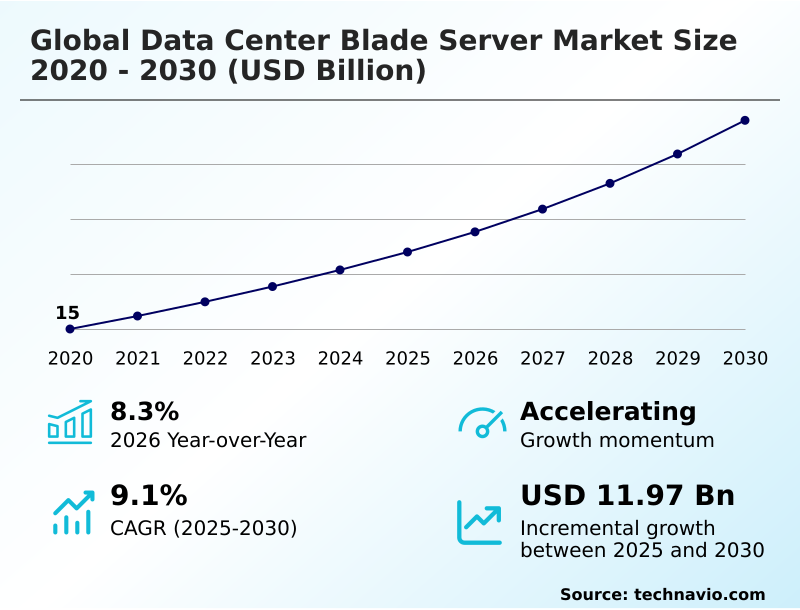
The data center blade server market size is valued to increase by USD 11.97 billion, at a CAGR of 9.1% from 2025 to 2030. Exponential growth of artificial intelligence (AI) and machine learning (ML) will drive the data center blade server market.

Major Market Trends & Insights

  • North America dominated the market and accounted for a 42.1% growth during the forecast period.
  • By Form Factor - Half height blade segment was valued at USD 9.86 billion in 2024
  • By Type - Tier 3 segment accounted for the largest market revenue share in 2024

Market Size & Forecast

  • Market Opportunities: USD 18.96 billion
  • Market Future Opportunities: USD 11.97 billion
  • CAGR from 2025 to 2030 : 9.1%

Market Summary

  • The data center blade server market is undergoing a significant transformation, driven by the escalating need for high-density, energy-efficient computing. The primary catalyst is the explosion of artificial intelligence and machine learning workloads, which demand specialized full-height blade configurations capable of housing multiple high-wattage accelerators.
  • This has forced a market-wide pivot toward advanced thermal management, making direct-to-chip liquid cooling a standard feature rather than a niche option. Concurrently, the principles of composable infrastructure, enabled by high-speed unified fabric and Compute Express Link (CXL), are turning the blade chassis into a fluid resource pool.
  • For instance, a financial services firm can now dynamically allocate GPU and memory resources from a shared pool to different blades for real-time risk analytics, drastically improving resource utilization. However, the high initial capital expenditure for proprietary chassis systems and intense competition from hyperconverged infrastructure (HCI) present considerable challenges.
  • Success in this evolving landscape depends on delivering not just hardware density but also sophisticated software-defined management and a clear path to managing the power and cooling complexities of next-generation processors, ensuring a strong total cost of ownership proposition.

What will be the Size of the Data Center Blade Server Market during the forecast period?
Get Key Insights on Market Forecast (PDF) Request Free Sample

How is the Data Center Blade Server Market Segmented?

The data center blade server industry research report provides comprehensive data (region-wise segment analysis), with forecasts and estimates in "USD million" for the period 2026-2030, as well as historical data from 2020-2024 for the following segments.

  • Form factor
    • Half height blade
    • Full height blade
    • Others
  • Type
    • Tier 3
    • Tier 4
    • Tier 2
    • Tier 1
  • Application
    • Virtualization and cloud computing
    • AI and ML Workloads
    • Big data analytics
    • Others
  • Geography
    • North America
      • US
      • Canada
      • Mexico
    • Europe
      • Germany
      • UK
      • France
    • APAC
      • China
      • Japan
      • India
    • Middle East and Africa
      • Saudi Arabia
      • UAE
      • South Africa
    • South America
      • Brazil
      • Argentina
      • Colombia
    • Rest of World (ROW)

By Form Factor Insights

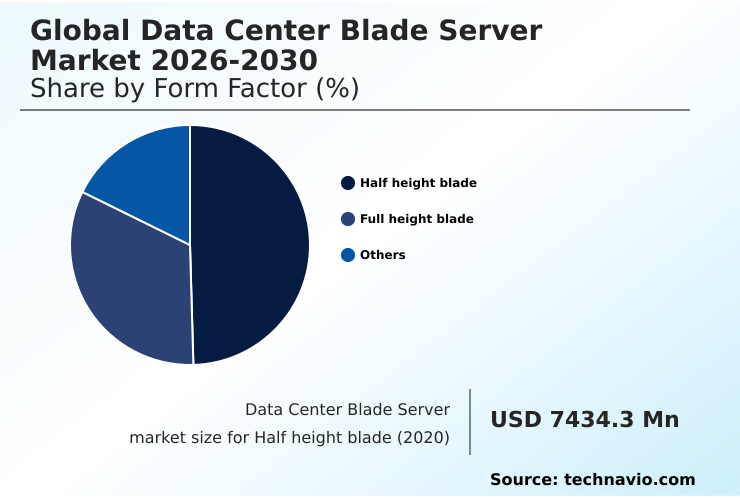
The half height blade segment is estimated to witness significant growth during the forecast period.

The half-height blade segment remains foundational for enterprise virtualization and general cloud workloads, prized for its optimal balance of computational density and cost-effectiveness.

This modular computing format enables organizations to maximize independent compute nodes within a single blade chassis, directly addressing the need for server consolidation and a smaller data center footprint.

The design inherently improves operational expenditure (Opex) by centralizing power and cooling.

For mission-critical workloads, the architecture's efficiency is paramount; successful deployments have demonstrated the ability to reduce server provisioning time by more than 30%, a critical metric for agile business operations.

The continued adoption is driven by its ability to support high-density computing for a majority of enterprise applications without requiring the specialized infrastructure of more advanced systems.
Request Free Sample

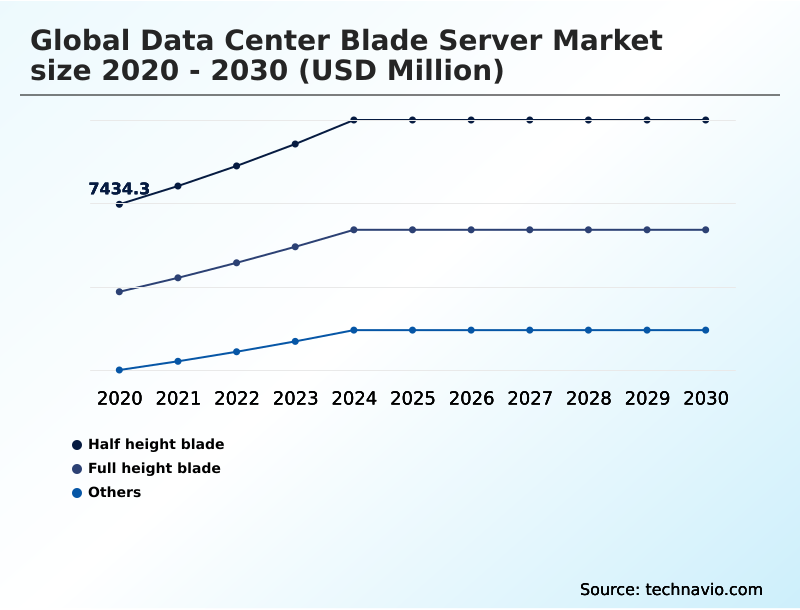
The Half height blade segment was valued at USD 9.86 billion in 2024 and showed a gradual increase during the forecast period.
Request Free Sample

Regional Analysis

North America is estimated to contribute 42.1% to the growth of the global market during the forecast period.Technavio’s analysts have elaborately explained the regional trends and drivers that shape the market during the forecast period.
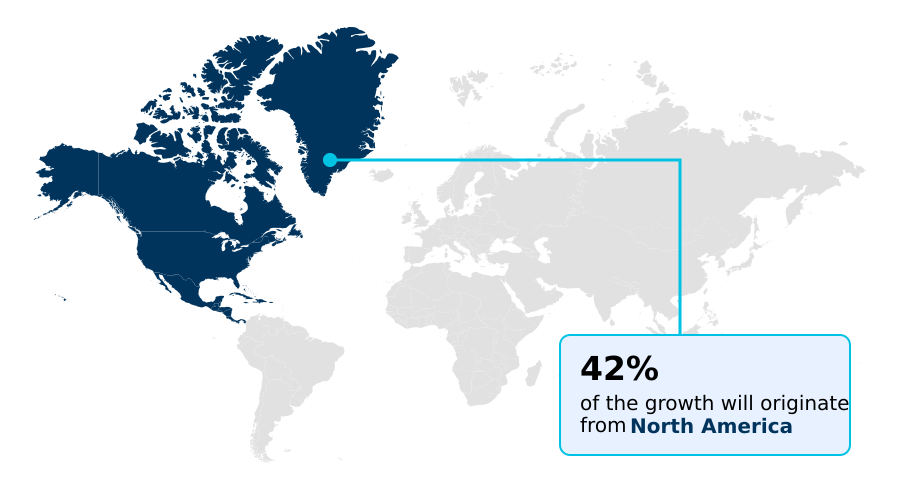
See How Data Center Blade Server Market Demand is Rising in North America Request Free Sample

The geographic landscape of the global data center blade server market 2026-2030 is led by North America, which is projected to contribute 42.1% of the market's incremental growth, driven by hyperscale cloud providers and AI infrastructure investments.

In this region, full-height blade systems with direct-to-chip liquid cooling are in high demand.

Europe's market is heavily influenced by data sovereignty and sustainability regulations, favoring blade enclosures that deliver superior power usage effectiveness (PUE); some deployments in the region have achieved a PUE below 1.1.

Meanwhile, the market in APAC is defined by rapid 5G network expansion and edge computing deployments, creating strong demand for modular computing solutions like micro-blades.

These regional dynamics highlight a global shift toward specialized, high-density computing platforms tailored to specific workload and regulatory requirements.

Market Dynamics

Our researchers analyzed the data with 2025 as the base year, along with the key drivers, trends, and challenges. A holistic analysis of drivers will help companies refine their marketing strategies to gain a competitive advantage.

  • The strategic application of blade servers is becoming increasingly specialized, moving beyond general server consolidation to address specific, high-value use cases. The demand for a blade server for AI model training is driving the adoption of advanced thermal solutions, with liquid cooling for full-height blades becoming essential to manage the heat from dense GPU clusters.
  • In parallel, enterprises are leveraging high-density virtualization blade solutions to maximize compute resources in private cloud environments. This is often coupled with the adoption of composable infrastructure for private cloud, which uses technologies like CXL fabric attached memory expansion to create flexible, software-defined resource pools.
  • This approach delivers more than double the computational throughput per watt compared to legacy rack-based deployments for certain workloads. For organizations focused on financial optimization, the debate over blade server vs rack server TCO is being won by blades in dense environments, with many now focused on reducing Opex with blade server consolidation.
  • At the network perimeter, edge computing micro-blade servers are enabling low-latency processing for 5G and IoT applications. In specialized sectors, the need for a blade server for financial trading and for secure government cloud blade servers highlights the platform's ability to deliver high performance, security, and reliability in mission-critical scenarios.
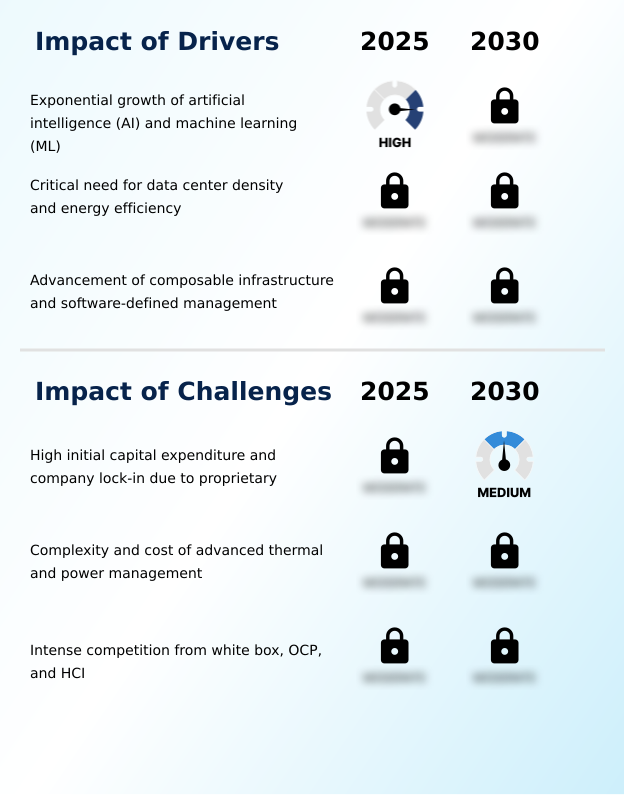
What are the key market drivers leading to the rise in the adoption of Data Center Blade Server Industry?

  • The exponential growth of artificial intelligence and machine learning workloads is a primary driver for the market, demanding unprecedented computational density and specialized server architectures.

  • Market growth is primarily driven by the unstoppable demand for high-density computing, fueled by AI model training and inference workloads.
  • The blade server's shared infrastructure is architecturally superior for this purpose, with new full-height blade designs supporting up to four times the thermal design power (TDP) of previous generations. This density is essential for maximizing the compute-per-square-foot metric.
  • The second major driver is the critical need for energy efficiency, where the centralized management of power and cooling in a blade chassis delivers superior Power Usage Effectiveness (PUE); new power systems are exceeding the 80 PLUS Titanium efficiency standard by 2%.
  • Finally, the move toward software-defined management and composable infrastructure, enabling hot-swappable components and dynamic resource allocation, significantly reduces operational expenditure (Opex) and provisioning time.

What are the market trends shaping the Data Center Blade Server Industry?

  • The industrialization of liquid cooling solutions is becoming a standard design consideration for high-density blade servers. This shift is driven by the escalating thermal output from processors and accelerators used in ultra-high-density AI workloads.

  • Key market trends are coalescing around thermal management, security, and resource flexibility. The industrialization of liquid cooling is a direct response to the escalating thermal design power (TDP) of AI accelerators, with advanced blade enclosures now supporting multiple high-wattage GPUs.
  • This shift enables data centers to achieve a Power Usage Effectiveness (PUE) below 1.1, a feat unattainable with air cooling in high-density environments. Concurrently, the establishment of a silicon-root-of-trust is becoming a standard security feature, embedding trust into the silicon-level boot process to protect against firmware attacks. This is complemented by AI-driven cyber resilience managed at the chassis level.
  • Furthermore, the rise of composable infrastructure, facilitated by Compute Express Link (CXL) and a unified fabric, is enabling unprecedented resource disaggregation and memory pooling within the blade chassis.

What challenges does the Data Center Blade Server Industry face during its growth?

  • A key challenge affecting industry growth is the high initial capital expenditure associated with proprietary chassis systems, which can lead to company lock-in and reduced procurement flexibility.

  • Significant challenges constrain market adoption, led by high initial capital expenditure (Capex) and the proprietary chassis designs that result in vendor lock-in. This financial model is a barrier for organizations without large upfront budgets. A second major challenge is the complexity of managing extreme thermal loads.
  • Despite consolidation benefits, over 30% of older blade chassis in some environments are not fully populated due to cooling limitations. This necessitates costly and complex upgrades to cooling distribution units (CDUs) and power distribution units (PDUs). Finally, intense competition from hyperconverged infrastructure (HCI) and Open Compute Project (OCP) solutions threatens the market.
  • HCI offers similar management simplification without the proprietary hardware, while OCP provides hyperscale cloud providers with a cost-effective, company-agnostic alternative, diverting a massive segment of potential demand.

Exclusive Technavio Analysis on Customer Landscape

The data center blade server market forecasting report includes the adoption lifecycle of the market, covering from the innovator’s stage to the laggard’s stage. It focuses on adoption rates in different regions based on penetration. Furthermore, the data center blade server market report also includes key purchase criteria and drivers of price sensitivity to help companies evaluate and develop their market growth analysis strategies.

Customer Landscape of Data Center Blade Server Industry

Competitive Landscape

Companies are implementing various strategies, such as strategic alliances, data center blade server market forecast, partnerships, mergers and acquisitions, geographical expansion, and product/service launches, to enhance their presence in the industry.

Atos SE - Offerings include highly dense, modular computing infrastructure engineered to maximize processing power and operational efficiency through shared resources and centralized management.

The industry research and growth report includes detailed analyses of the competitive landscape of the market and information about key companies, including:

  • Atos SE
  • Cisco Systems Inc.
  • Dell Technologies Inc.
  • Fujitsu Ltd.
  • Hewlett Packard
  • Hitachi Vantara LLC
  • Hon Hai Precision. Ltd.
  • Huawei Technologies Co. Ltd.
  • IBM Corp.
  • Inspur Group.
  • Inventec Corp.
  • Lenovo Group Ltd.
  • NEC Corp.
  • New H3C Technologies
  • Oracle Corp.
  • Penguin Solutions
  • Quanta Computer lnc.
  • Sugon Information Co.
  • Super Micro Computer Inc.
  • Wistron Corp.

Qualitative and quantitative analysis of companies has been conducted to help clients understand the wider business environment as well as the strengths and weaknesses of key industry players. Data is qualitatively analyzed to categorize companies as pure play, category-focused, industry-focused, and diversified; it is quantitatively analyzed to categorize companies as dominant, leading, strong, tentative, and weak.

Recent Development and News in Data center blade server market

  • In February 2025, Hewlett Packard Enterprise unveiled its next-generation liquid-cooled blade enclosure for the HPE Synergy platform, featuring factory-integrated manifolds to support significantly higher thermal design power per compute module.
  • In May 2025, Dell Technologies introduced a new full-height PowerEdge MX blade module integrating an advanced Compute Express Link (CXL) 3.0-enabled fabric, allowing multiple blades to share a disaggregated memory pool.
  • In October 2025, Supermicro announced its latest generation of SuperBlade enclosures featuring CXL fabric-attached memory expansion, enabling a single blade server to access terabytes of memory from a dedicated memory blade within the same chassis.
  • In March 2025, Cisco Systems announced a major overhaul of its UCS X-Series power subsystem, introducing a new generation of high-efficiency power supply units that achieved a certified efficiency rating exceeding the 80 PLUS Titanium standard by 2%.

Dive into Technavio’s robust research methodology, blending expert interviews, extensive data synthesis, and validated models for unparalleled Data Center Blade Server Market insights. See full methodology.

Market Scope
Page number 312
Base year 2025
Historic period 2020-2024
Forecast period 2026-2030
Growth momentum & CAGR Accelerate at a CAGR of 9.1%
Market growth 2026-2030 USD 11969.1 million
Market structure Fragmented
YoY growth 2025-2026(%) 8.3%
Key countries US, Canada, Mexico, Germany, UK, France, Italy, The Netherlands, Spain, China, Japan, India, South Korea, Australia, Indonesia, Saudi Arabia, UAE, South Africa, Israel, Turkey, Brazil, Argentina and Colombia
Competitive landscape Leading Companies, Market Positioning of Companies, Competitive Strategies, and Industry Risks

Request Free Sample

Research Analyst Overview

  • The data center blade server market is fundamentally evolving around the principles of modularity and disaggregation. The traditional value proposition of server consolidation is now secondary to the architecture's role as a foundation for next-generation workloads.
  • The integration of a unified fabric and a high-speed chassis backplane is critical, enabling true composable infrastructure where resources are pooled and provisioned on demand. Technologies like Compute Express Link (CXL) are transforming the blade enclosure into a dynamic system, supporting features like memory pooling and resource disaggregation.
  • This allows for the deployment of specialized, accelerator-enabled models without replacing the entire shared infrastructure. For boardroom decisions, this translates into a more flexible capital expenditure strategy, where investments in the chassis are future-proofed against rapid changes in processor and accelerator technology. Deployments using this architecture have achieved a 30% reduction in processing time for data-intensive tasks.
  • The focus is now on hot-swappable components, software-defined management, and the ability of the blade chassis to support high-density computing with superior compute-per-square-foot metrics.

What are the Key Data Covered in this Data Center Blade Server Market Research and Growth Report?

  • What is the expected growth of the Data Center Blade Server Market between 2026 and 2030?

    • USD 11.97 billion, at a CAGR of 9.1%

  • What segmentation does the market report cover?

    • The report is segmented by Form Factor (Half height blade, Full height blade, and Others), Type (Tier 3, Tier 4, Tier 2, and Tier 1), Application (Virtualization and cloud computing, AI and ML workloads, Big data analytics, and Others) and Geography (North America, Europe, APAC, Middle East and Africa, South America)

  • Which regions are analyzed in the report?

    • North America, Europe, APAC, Middle East and Africa and South America

  • What are the key growth drivers and market challenges?

    • Exponential growth of artificial intelligence (AI) and machine learning (ML), High initial capital expenditure and company lock-in due to proprietary

  • Who are the major players in the Data Center Blade Server Market?

    • Atos SE, Cisco Systems Inc., Dell Technologies Inc., Fujitsu Ltd., Hewlett Packard, Hitachi Vantara LLC, Hon Hai Precision. Ltd., Huawei Technologies Co. Ltd., IBM Corp., Inspur Group., Inventec Corp., Lenovo Group Ltd., NEC Corp., New H3C Technologies, Oracle Corp., Penguin Solutions, Quanta Computer lnc., Sugon Information Co., Super Micro Computer Inc. and Wistron Corp.

Market Research Insights

  • Market dynamics are increasingly shaped by the pursuit of operational efficiency and a lower total cost of ownership (TCO). The adoption of sophisticated software-defined management platforms is proving critical, with some organizations achieving a 40% reduction in server provisioning time, directly lowering operational expenditure (Opex). This is particularly relevant for hyperscale cloud providers and large enterprises managing mission-critical workloads.
  • Furthermore, the focus on sustainability is driving demand for blade systems that can operate with superior energy efficiency. Deployments utilizing integrated liquid cooling have demonstrated the ability to achieve a Power Usage Effectiveness (PUE) ratio below 1.1, a significant improvement over traditional air-cooled infrastructure.
  • This efficiency gain is crucial for managing the high capital expenditure (Capex) associated with modern data center builds and meeting stringent environmental regulations, making blade architecture a strategic choice for sustainable, large-scale computing.

We can help! Our analysts can customize this data center blade server market research report to meet your requirements.

Get in touch

1. Executive Summary

1.1 Market overview

Executive Summary - Chart on Market Overview
Executive Summary - Data Table on Market Overview
Executive Summary - Chart on Global Market Characteristics
Executive Summary - Chart on Market by Geography
Executive Summary - Chart on Market Segmentation by Form Factor
Executive Summary - Chart on Market Segmentation by Type
Executive Summary - Chart on Market Segmentation by Application
Executive Summary - Chart on Incremental Growth
Executive Summary - Data Table on Incremental Growth
Executive Summary - Chart on Company Market Positioning

2. Technavio Analysis

2.1 Analysis of price sensitivity, lifecycle, customer purchase basket, adoption rates, and purchase criteria

2.2 Criticality of inputs and Factors of differentiation

Chart on Overview on criticality of inputs and factors of differentiation

2.3 Factors of disruption

Chart on Overview on factors of disruption

2.4 Impact of drivers and challenges

Chart on Impact of drivers and challenges in 2025 and 2030

3. Market Landscape

3.1 Market ecosystem

Chart on Parent Market
Data Table on - Parent Market

3.2 Market characteristics

Chart on Market characteristics analysis

3.3 Value chain analysis

Chart on Value chain analysis

4. Market Sizing

4.1 Market definition

Data Table on Offerings of companies included in the market definition

4.2 Market segment analysis

Market segments

4.3 Market size 2025

4.4 Market outlook: Forecast for 2025-2030

Chart on Global - Market size and forecast 2025-2030 ($ million)
Data Table on Global - Market size and forecast 2025-2030 ($ million)
Chart on Global Market: Year-over-year growth 2025-2030 (%)
Data Table on Global Market: Year-over-year growth 2025-2030 (%)

5. Historic Market Size

5.1 Global Data Center Blade Server Market 2020 - 2024

Historic Market Size - Data Table on Global Data Center Blade Server Market 2020 - 2024 ($ million)

5.2 Form Factor segment analysis 2020 - 2024

Historic Market Size - Form Factor Segment 2020 - 2024 ($ million)

5.3 Type segment analysis 2020 - 2024

Historic Market Size - Type Segment 2020 - 2024 ($ million)

5.4 Application segment analysis 2020 - 2024

Historic Market Size - Application Segment 2020 - 2024 ($ million)

5.5 Geography segment analysis 2020 - 2024

Historic Market Size - Geography Segment 2020 - 2024 ($ million)

5.6 Country segment analysis 2020 - 2024

Historic Market Size - Country Segment 2020 - 2024 ($ million)

6. Qualitative Analysis

6.1 The AI impact on global data center blade server market

7. Five Forces Analysis

7.1 Five forces summary

Five forces analysis - Comparison between 2025 and 2030

7.2 Bargaining power of buyers

Bargaining power of buyers - Impact of key factors 2025 and 2030

7.3 Bargaining power of suppliers

Bargaining power of suppliers - Impact of key factors in 2025 and 2030

7.4 Threat of new entrants

Threat of new entrants - Impact of key factors in 2025 and 2030

7.5 Threat of substitutes

Threat of substitutes - Impact of key factors in 2025 and 2030

7.6 Threat of rivalry

Threat of rivalry - Impact of key factors in 2025 and 2030

7.7 Market condition

Chart on Market condition - Five forces 2025 and 2030

8. Market Segmentation by Form Factor

8.1 Market segments

Chart on Form Factor - Market share 2025-2030 (%)
Data Table on Form Factor - Market share 2025-2030 (%)

8.2 Comparison by Form Factor

Chart on Comparison by Form Factor
Data Table on Comparison by Form Factor

8.3 Half height blade - Market size and forecast 2025-2030

Chart on Half height blade - Market size and forecast 2025-2030 ($ million)
Data Table on Half height blade - Market size and forecast 2025-2030 ($ million)
Chart on Half height blade - Year-over-year growth 2025-2030 (%)
Data Table on Half height blade - Year-over-year growth 2025-2030 (%)

8.4 Full height blade - Market size and forecast 2025-2030

Chart on Full height blade - Market size and forecast 2025-2030 ($ million)
Data Table on Full height blade - Market size and forecast 2025-2030 ($ million)
Chart on Full height blade - Year-over-year growth 2025-2030 (%)
Data Table on Full height blade - Year-over-year growth 2025-2030 (%)

8.5 Others - Market size and forecast 2025-2030

Chart on Others - Market size and forecast 2025-2030 ($ million)
Data Table on Others - Market size and forecast 2025-2030 ($ million)
Chart on Others - Year-over-year growth 2025-2030 (%)
Data Table on Others - Year-over-year growth 2025-2030 (%)

8.6 Market opportunity by Form Factor

Market opportunity by Form Factor ($ million)
Data Table on Market opportunity by Form Factor ($ million)

9. Market Segmentation by Type

9.1 Market segments

Chart on Type - Market share 2025-2030 (%)
Data Table on Type - Market share 2025-2030 (%)

9.2 Comparison by Type

Chart on Comparison by Type
Data Table on Comparison by Type

9.3 Tier 3 - Market size and forecast 2025-2030

Chart on Tier 3 - Market size and forecast 2025-2030 ($ million)
Data Table on Tier 3 - Market size and forecast 2025-2030 ($ million)
Chart on Tier 3 - Year-over-year growth 2025-2030 (%)
Data Table on Tier 3 - Year-over-year growth 2025-2030 (%)

9.4 Tier 4 - Market size and forecast 2025-2030

Chart on Tier 4 - Market size and forecast 2025-2030 ($ million)
Data Table on Tier 4 - Market size and forecast 2025-2030 ($ million)
Chart on Tier 4 - Year-over-year growth 2025-2030 (%)
Data Table on Tier 4 - Year-over-year growth 2025-2030 (%)

9.5 Tier 2 - Market size and forecast 2025-2030

Chart on Tier 2 - Market size and forecast 2025-2030 ($ million)
Data Table on Tier 2 - Market size and forecast 2025-2030 ($ million)
Chart on Tier 2 - Year-over-year growth 2025-2030 (%)
Data Table on Tier 2 - Year-over-year growth 2025-2030 (%)

9.6 Tier 1 - Market size and forecast 2025-2030

Chart on Tier 1 - Market size and forecast 2025-2030 ($ million)
Data Table on Tier 1 - Market size and forecast 2025-2030 ($ million)
Chart on Tier 1 - Year-over-year growth 2025-2030 (%)
Data Table on Tier 1 - Year-over-year growth 2025-2030 (%)

9.7 Market opportunity by Type

Market opportunity by Type ($ million)
Data Table on Market opportunity by Type ($ million)

10. Market Segmentation by Application

10.1 Market segments

Chart on Application - Market share 2025-2030 (%)
Data Table on Application - Market share 2025-2030 (%)

10.2 Comparison by Application

Chart on Comparison by Application
Data Table on Comparison by Application

10.3 Virtualization and cloud computing - Market size and forecast 2025-2030

Chart on Virtualization and cloud computing - Market size and forecast 2025-2030 ($ million)
Data Table on Virtualization and cloud computing - Market size and forecast 2025-2030 ($ million)
Chart on Virtualization and cloud computing - Year-over-year growth 2025-2030 (%)
Data Table on Virtualization and cloud computing - Year-over-year growth 2025-2030 (%)

10.4 AI and ML Workloads - Market size and forecast 2025-2030

Chart on AI and ML Workloads - Market size and forecast 2025-2030 ($ million)
Data Table on AI and ML Workloads - Market size and forecast 2025-2030 ($ million)
Chart on AI and ML Workloads - Year-over-year growth 2025-2030 (%)
Data Table on AI and ML Workloads - Year-over-year growth 2025-2030 (%)

10.5 Big data analytics - Market size and forecast 2025-2030

Chart on Big data analytics - Market size and forecast 2025-2030 ($ million)
Data Table on Big data analytics - Market size and forecast 2025-2030 ($ million)
Chart on Big data analytics - Year-over-year growth 2025-2030 (%)
Data Table on Big data analytics - Year-over-year growth 2025-2030 (%)

10.6 Others - Market size and forecast 2025-2030

Chart on Others - Market size and forecast 2025-2030 ($ million)
Data Table on Others - Market size and forecast 2025-2030 ($ million)
Chart on Others - Year-over-year growth 2025-2030 (%)
Data Table on Others - Year-over-year growth 2025-2030 (%)

10.7 Market opportunity by Application

Market opportunity by Application ($ million)
Data Table on Market opportunity by Application ($ million)

11. Customer Landscape

11.1 Customer landscape overview

Analysis of price sensitivity, lifecycle, customer purchase basket, adoption rates, and purchase criteria

12. Geographic Landscape

12.1 Geographic segmentation

Chart on Market share by geography 2025-2030 (%)
Data Table on Market share by geography 2025-2030 (%)

12.2 Geographic comparison

Chart on Geographic comparison
Data Table on Geographic comparison

12.3 North America - Market size and forecast 2025-2030

Chart on North America - Market size and forecast 2025-2030 ($ million)
Data Table on North America - Market size and forecast 2025-2030 ($ million)
Chart on North America - Year-over-year growth 2025-2030 (%)
Data Table on North America - Year-over-year growth 2025-2030 (%)
Chart on Regional Comparison - North America
Data Table on Regional Comparison - North America

12.3.1 US - Market size and forecast 2025-2030

Chart on US - Market size and forecast 2025-2030 ($ million)
Data Table on US - Market size and forecast 2025-2030 ($ million)
Chart on US - Year-over-year growth 2025-2030 (%)
Data Table on US - Year-over-year growth 2025-2030 (%)

12.3.2 Canada - Market size and forecast 2025-2030

Chart on Canada - Market size and forecast 2025-2030 ($ million)
Data Table on Canada - Market size and forecast 2025-2030 ($ million)
Chart on Canada - Year-over-year growth 2025-2030 (%)
Data Table on Canada - Year-over-year growth 2025-2030 (%)

12.3.3 Mexico - Market size and forecast 2025-2030

Chart on Mexico - Market size and forecast 2025-2030 ($ million)
Data Table on Mexico - Market size and forecast 2025-2030 ($ million)
Chart on Mexico - Year-over-year growth 2025-2030 (%)
Data Table on Mexico - Year-over-year growth 2025-2030 (%)

12.4 Europe - Market size and forecast 2025-2030

Chart on Europe - Market size and forecast 2025-2030 ($ million)
Data Table on Europe - Market size and forecast 2025-2030 ($ million)
Chart on Europe - Year-over-year growth 2025-2030 (%)
Data Table on Europe - Year-over-year growth 2025-2030 (%)
Chart on Regional Comparison - Europe
Data Table on Regional Comparison - Europe

12.4.1 Germany - Market size and forecast 2025-2030

Chart on Germany - Market size and forecast 2025-2030 ($ million)
Data Table on Germany - Market size and forecast 2025-2030 ($ million)
Chart on Germany - Year-over-year growth 2025-2030 (%)
Data Table on Germany - Year-over-year growth 2025-2030 (%)

12.4.2 UK - Market size and forecast 2025-2030

Chart on UK - Market size and forecast 2025-2030 ($ million)
Data Table on UK - Market size and forecast 2025-2030 ($ million)
Chart on UK - Year-over-year growth 2025-2030 (%)
Data Table on UK - Year-over-year growth 2025-2030 (%)

12.4.3 France - Market size and forecast 2025-2030

Chart on France - Market size and forecast 2025-2030 ($ million)
Data Table on France - Market size and forecast 2025-2030 ($ million)
Chart on France - Year-over-year growth 2025-2030 (%)
Data Table on France - Year-over-year growth 2025-2030 (%)

12.4.4 Italy - Market size and forecast 2025-2030

Chart on Italy - Market size and forecast 2025-2030 ($ million)
Data Table on Italy - Market size and forecast 2025-2030 ($ million)
Chart on Italy - Year-over-year growth 2025-2030 (%)
Data Table on Italy - Year-over-year growth 2025-2030 (%)

12.4.5 The Netherlands - Market size and forecast 2025-2030

Chart on The Netherlands - Market size and forecast 2025-2030 ($ million)
Data Table on The Netherlands - Market size and forecast 2025-2030 ($ million)
Chart on The Netherlands - Year-over-year growth 2025-2030 (%)
Data Table on The Netherlands - Year-over-year growth 2025-2030 (%)

12.4.6 Spain - Market size and forecast 2025-2030

Chart on Spain - Market size and forecast 2025-2030 ($ million)
Data Table on Spain - Market size and forecast 2025-2030 ($ million)
Chart on Spain - Year-over-year growth 2025-2030 (%)
Data Table on Spain - Year-over-year growth 2025-2030 (%)

12.5 APAC - Market size and forecast 2025-2030

Chart on APAC - Market size and forecast 2025-2030 ($ million)
Data Table on APAC - Market size and forecast 2025-2030 ($ million)
Chart on APAC - Year-over-year growth 2025-2030 (%)
Data Table on APAC - Year-over-year growth 2025-2030 (%)
Chart on Regional Comparison - APAC
Data Table on Regional Comparison - APAC

12.5.1 China - Market size and forecast 2025-2030

Chart on China - Market size and forecast 2025-2030 ($ million)
Data Table on China - Market size and forecast 2025-2030 ($ million)
Chart on China - Year-over-year growth 2025-2030 (%)
Data Table on China - Year-over-year growth 2025-2030 (%)

12.5.2 Japan - Market size and forecast 2025-2030

Chart on Japan - Market size and forecast 2025-2030 ($ million)
Data Table on Japan - Market size and forecast 2025-2030 ($ million)
Chart on Japan - Year-over-year growth 2025-2030 (%)
Data Table on Japan - Year-over-year growth 2025-2030 (%)

12.5.3 India - Market size and forecast 2025-2030

Chart on India - Market size and forecast 2025-2030 ($ million)
Data Table on India - Market size and forecast 2025-2030 ($ million)
Chart on India - Year-over-year growth 2025-2030 (%)
Data Table on India - Year-over-year growth 2025-2030 (%)

12.5.4 South Korea - Market size and forecast 2025-2030

Chart on South Korea - Market size and forecast 2025-2030 ($ million)
Data Table on South Korea - Market size and forecast 2025-2030 ($ million)
Chart on South Korea - Year-over-year growth 2025-2030 (%)
Data Table on South Korea - Year-over-year growth 2025-2030 (%)

12.5.5 Australia - Market size and forecast 2025-2030

Chart on Australia - Market size and forecast 2025-2030 ($ million)
Data Table on Australia - Market size and forecast 2025-2030 ($ million)
Chart on Australia - Year-over-year growth 2025-2030 (%)
Data Table on Australia - Year-over-year growth 2025-2030 (%)

12.5.6 Indonesia - Market size and forecast 2025-2030

Chart on Indonesia - Market size and forecast 2025-2030 ($ million)
Data Table on Indonesia - Market size and forecast 2025-2030 ($ million)
Chart on Indonesia - Year-over-year growth 2025-2030 (%)
Data Table on Indonesia - Year-over-year growth 2025-2030 (%)

12.6 Middle East and Africa - Market size and forecast 2025-2030

Chart on Middle East and Africa - Market size and forecast 2025-2030 ($ million)
Data Table on Middle East and Africa - Market size and forecast 2025-2030 ($ million)
Chart on Middle East and Africa - Year-over-year growth 2025-2030 (%)
Data Table on Middle East and Africa - Year-over-year growth 2025-2030 (%)
Chart on Regional Comparison - Middle East and Africa
Data Table on Regional Comparison - Middle East and Africa

12.6.1 Saudi Arabia - Market size and forecast 2025-2030

Chart on Saudi Arabia - Market size and forecast 2025-2030 ($ million)
Data Table on Saudi Arabia - Market size and forecast 2025-2030 ($ million)
Chart on Saudi Arabia - Year-over-year growth 2025-2030 (%)
Data Table on Saudi Arabia - Year-over-year growth 2025-2030 (%)

12.6.2 UAE - Market size and forecast 2025-2030

Chart on UAE - Market size and forecast 2025-2030 ($ million)
Data Table on UAE - Market size and forecast 2025-2030 ($ million)
Chart on UAE - Year-over-year growth 2025-2030 (%)
Data Table on UAE - Year-over-year growth 2025-2030 (%)

12.6.3 South Africa - Market size and forecast 2025-2030

Chart on South Africa - Market size and forecast 2025-2030 ($ million)
Data Table on South Africa - Market size and forecast 2025-2030 ($ million)
Chart on South Africa - Year-over-year growth 2025-2030 (%)
Data Table on South Africa - Year-over-year growth 2025-2030 (%)

12.6.4 Israel - Market size and forecast 2025-2030

Chart on Israel - Market size and forecast 2025-2030 ($ million)
Data Table on Israel - Market size and forecast 2025-2030 ($ million)
Chart on Israel - Year-over-year growth 2025-2030 (%)
Data Table on Israel - Year-over-year growth 2025-2030 (%)

12.6.5 Turkey - Market size and forecast 2025-2030

Chart on Turkey - Market size and forecast 2025-2030 ($ million)
Data Table on Turkey - Market size and forecast 2025-2030 ($ million)
Chart on Turkey - Year-over-year growth 2025-2030 (%)
Data Table on Turkey - Year-over-year growth 2025-2030 (%)

12.7 South America - Market size and forecast 2025-2030

Chart on South America - Market size and forecast 2025-2030 ($ million)
Data Table on South America - Market size and forecast 2025-2030 ($ million)
Chart on South America - Year-over-year growth 2025-2030 (%)
Data Table on South America - Year-over-year growth 2025-2030 (%)
Chart on Regional Comparison - South America
Data Table on Regional Comparison - South America

12.7.1 Brazil - Market size and forecast 2025-2030

Chart on Brazil - Market size and forecast 2025-2030 ($ million)
Data Table on Brazil - Market size and forecast 2025-2030 ($ million)
Chart on Brazil - Year-over-year growth 2025-2030 (%)
Data Table on Brazil - Year-over-year growth 2025-2030 (%)

12.7.2 Argentina - Market size and forecast 2025-2030

Chart on Argentina - Market size and forecast 2025-2030 ($ million)
Data Table on Argentina - Market size and forecast 2025-2030 ($ million)
Chart on Argentina - Year-over-year growth 2025-2030 (%)
Data Table on Argentina - Year-over-year growth 2025-2030 (%)

12.7.3 Colombia - Market size and forecast 2025-2030

Chart on Colombia - Market size and forecast 2025-2030 ($ million)
Data Table on Colombia - Market size and forecast 2025-2030 ($ million)
Chart on Colombia - Year-over-year growth 2025-2030 (%)
Data Table on Colombia - Year-over-year growth 2025-2030 (%)

12.8 Market opportunity by geography

Market opportunity by geography ($ million)
Data Tables on Market opportunity by geography ($ million)

13. Drivers, Challenges, and Opportunity

13.1 Market drivers

Exponential growth of artificial intelligence (AI) and machine learning (ML)
Critical need for data center density and energy efficiency
Advancement of composable infrastructure and software-defined management

13.2 Market challenges

High initial capital expenditure and company lock-in due to proprietary
Complexity and cost of advanced thermal and power management
Intense competition from white box, OCP, and HCI

13.3 Impact of drivers and challenges

Impact of drivers and challenges in 2025 and 2030

13.4 Market opportunities

Industrialization of liquid cooling for ultra-high density AI workloads
Rise of composable and disaggregated infrastructure via CXL and unified fabric
Increased focus on security and trust in blade ecosystem

14. Competitive Landscape

14.1 Overview

14.2

Overview on criticality of inputs and factors of differentiation

14.3 Landscape disruption

Overview on factors of disruption

14.4 Industry risks

Impact of key risks on business

15. Competitive Analysis

15.1 Companies profiled

Companies covered

15.2 Company ranking index

15.3 Market positioning of companies

Matrix on companies position and classification

15.4 Cisco Systems Inc.

Cisco Systems Inc. - Overview
Cisco Systems Inc. - Business segments
Cisco Systems Inc. - Key news
Cisco Systems Inc. - Key offerings
Cisco Systems Inc. - Segment focus
SWOT

15.5 Dell Technologies Inc.

Dell Technologies Inc. - Overview
Dell Technologies Inc. - Business segments
Dell Technologies Inc. - Key news
Dell Technologies Inc. - Key offerings
Dell Technologies Inc. - Segment focus
SWOT

15.6 Fujitsu Ltd.

Fujitsu Ltd. - Overview
Fujitsu Ltd. - Business segments
Fujitsu Ltd. - Key news
Fujitsu Ltd. - Key offerings
Fujitsu Ltd. - Segment focus
SWOT

15.7 Hewlett Packard

Hewlett Packard - Overview
Hewlett Packard - Business segments
Hewlett Packard - Key news
Hewlett Packard - Key offerings
Hewlett Packard - Segment focus
SWOT

15.8 Hitachi Vantara LLC

Hitachi Vantara LLC - Overview
Hitachi Vantara LLC - Product / Service
Hitachi Vantara LLC - Key news
Hitachi Vantara LLC - Key offerings
SWOT

15.9 Hon Hai Precision. Ltd.

Hon Hai Precision. Ltd. - Overview
Hon Hai Precision. Ltd. - Product / Service
Hon Hai Precision. Ltd. - Key news
Hon Hai Precision. Ltd. - Key offerings
SWOT

15.10 Huawei Technologies Co. Ltd.

Huawei Technologies Co. Ltd. - Overview
Huawei Technologies Co. Ltd. - Product / Service
Huawei Technologies Co. Ltd. - Key news
Huawei Technologies Co. Ltd. - Key offerings
SWOT

15.11 IBM Corp.

IBM Corp. - Overview
IBM Corp. - Business segments
IBM Corp. - Key news
IBM Corp. - Key offerings
IBM Corp. - Segment focus
SWOT

15.12 Inspur Group.

Inspur Group. - Overview
Inspur Group. - Product / Service
Inspur Group. - Key offerings
SWOT

15.13 Inventec Corp.

Inventec Corp. - Overview
Inventec Corp. - Business segments
Inventec Corp. - Key offerings
Inventec Corp. - Segment focus
SWOT

15.14 Lenovo Group Ltd.

Lenovo Group Ltd. - Overview
Lenovo Group Ltd. - Business segments
Lenovo Group Ltd. - Key news
Lenovo Group Ltd. - Key offerings
Lenovo Group Ltd. - Segment focus
SWOT

15.15 NEC Corp.

NEC Corp. - Overview
NEC Corp. - Business segments
NEC Corp. - Key news
NEC Corp. - Key offerings
NEC Corp. - Segment focus
SWOT

15.16 Oracle Corp.

Oracle Corp. - Overview
Oracle Corp. - Business segments
Oracle Corp. - Key news
Oracle Corp. - Key offerings
Oracle Corp. - Segment focus
SWOT

15.17 Super Micro Computer Inc.

Super Micro Computer Inc. - Overview
Super Micro Computer Inc. - Business segments
Super Micro Computer Inc. - Key news
Super Micro Computer Inc. - Key offerings
Super Micro Computer Inc. - Segment focus
SWOT

15.18 Wistron Corp.

Wistron Corp. - Overview
Wistron Corp. - Business segments
Wistron Corp. - Key offerings
Wistron Corp. - Segment focus
SWOT

16. Appendix

16.1 Scope of the report

Market definition
Objectives
Notes and caveats

16.2 Inclusions and exclusions checklist

Inclusions checklist
Exclusions checklist

16.3 Currency conversion rates for US$

16.4 Research methodology

16.5 Data procurement

Information sources

16.6 Data validation

16.7 Validation techniques employed for market sizing

16.8 Data synthesis

16.9 360 degree market analysis

16.10 List of abbreviations

Research Methodology

Technavio presents a detailed picture of the market by way of study, synthesis, and summation of data from multiple sources. The analysts have presented the various facets of the market with a particular focus on identifying the key industry influencers. The data thus presented is comprehensive, reliable, and the result of extensive research, both primary and secondary.

INFORMATION SOURCES

Primary sources

  • Manufacturers and suppliers
  • Channel partners
  • Industry experts
  • Strategic decision makers

Secondary sources

  • Industry journals and periodicals
  • Government data
  • Financial reports of key industry players
  • Historical data
  • Press releases

DATA ANALYSIS

Data Synthesis

  • Collation of data
  • Estimation of key figures
  • Analysis of derived insights

Data Validation

  • Triangulation with data models
  • Reference against proprietary databases
  • Corroboration with industry experts

REPORT WRITING

Qualitative

  • Market drivers
  • Market challenges
  • Market trends
  • Five forces analysis

Quantitative

  • Market size and forecast
  • Market segmentation
  • Geographical insights
  • Competitive landscape

Interested in this report?

Get your sample now to see our research methodology and insights!

Download Now

Frequently Asked Questions

Data Center Blade Server market growth will increase by USD 11969.1 million during 2026-2030 .

The Data Center Blade Server market is expected to grow at a CAGR of 9.1% during 2026-2030 .

Data Center Blade Server market is segmented by Form factor (Half height blade, Full height blade, Others) Type (Tier 3, Tier 4, Tier 2, Tier 1) Application (Virtualization and cloud computing, AI and ML Workloads, Big data analytics, Others)

Atos SE, Cisco Systems Inc., Dell Technologies Inc., Fujitsu Ltd., Hewlett Packard, Hitachi Vantara LLC, Hon Hai Precision. Ltd., Huawei Technologies Co. Ltd., IBM Corp., Inspur Group., Inventec Corp., Lenovo Group Ltd., NEC Corp., New H3C Technologies, Oracle Corp., Penguin Solutions, Quanta Computer lnc., Sugon Information Co., Super Micro Computer Inc., Wistron Corp. are a few of the key vendors in the Data Center Blade Server market.

North America will register the highest growth rate of 42.1% among the other regions. Therefore, the Data Center Blade Server market in North America is expected to garner significant business opportunities for the vendors during the forecast period.

US, Canada, Mexico, Germany, UK, France, Italy, The Netherlands, Spain, China, Japan, India, South Korea, Australia, Indonesia, Saudi Arabia, UAE, South Africa, Israel, Turkey, Brazil, Argentina, Colombia

  • Exponential growth of artificial intelligence (AI) and machine learning (ML) is the driving factor this market.

The Data Center Blade Server market vendors should focus on grabbing business opportunities from the Form factor segment as it accounted for the largest market share in the base year.
