

Diesel Engine Market Analysis APAC, Europe, North America, South America, Middle East and Africa - US, China, Germany, Japan, India - Size and Forecast 2024-2028

Diesel Engine Market Analysis APAC, Europe, North America, South America, Middle East and Africa - US, China, Germany, Japan, India - Size and Forecast 2024-2028

Published: Aug 2024 156 Pages SKU: IRTNTR70134

Market Overview at a Glance

$39.1 B
Market Opportunity
3.29%
CAGR
3.14
YoY growth 2023-2024(%)

Diesel Engine Market Size 2024-2028

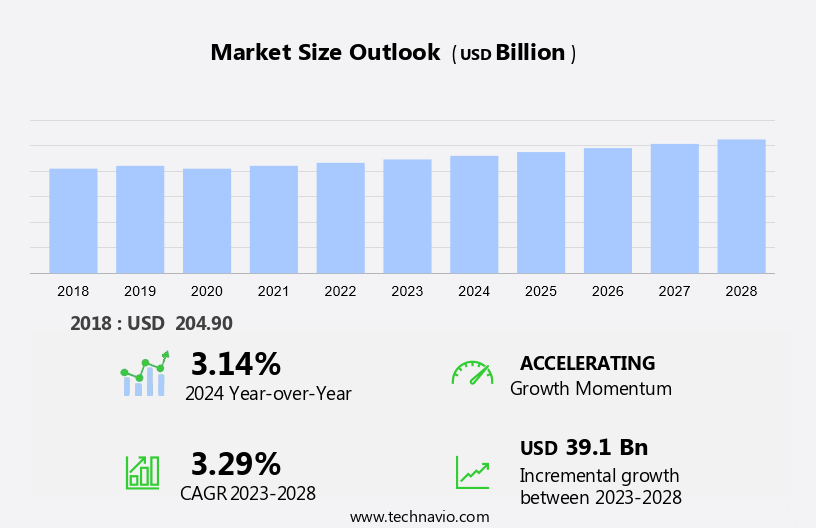
The diesel engine market size is forecast to increase by USD 39.1 billion at a CAGR of 3.29% between 2023 and 2028.

  • The market exhibits significant growth due to increasing demand for diesel engines, particularly In the Asia-Pacific region. Thermal efficiency and power output are key advantages of diesel engines, making them a preferred choice for industries such as mining and construction. However, the rising popularity of electric vehicles (EVs) and the high cost of diesel engines are major challenges. Gas prices also impact the market dynamics, with fluctuations influencing the competitiveness of diesel engines. Despite these challenges, the market continues to expand, driven by its proven performance and efficiency in power generation and automobiles.

What will be the Size of the Diesel Engine Market During the Forecast Period?
Diesel Engine Market Size

 Request Free Sample

  • The market encompasses various industries, including construction, automobiles, power generation, and heavy-end equipment. These engines are renowned for their efficiency and reliability, making them a preferred choice for numerous applications. In the construction sector, diesel engines power heavy machinery such as excavators, bulldozers, and cranes. Their high thermal efficiency makes them ideal for heavy-duty applications, ensuring productivity and reducing operational costs. The manufacturing sector relies on diesel engines for powering auxiliary equipment, including compressors, generators, and pumps. These engines' strength and reliability make them indispensable in industrial settings. In the power generation sector, diesel engines are used to generate electricity, particularly in areas where grid power is unavailable or unreliable. Their ability to provide a consistent power source makes them a popular choice for data centers and telecommunication facilities. The oil and gas sector utilizes diesel engines in drilling operations and for powering equipment in offshore platforms. Their high power-to-weight ratio and fuel efficiency make them an ideal choice for these applications.
  • In the health care sector, diesel engines are used to power emergency generators and backup power systems. Their reliability and ability to provide a consistent power source make them essential in critical applications. The mining sector heavily relies on diesel engines to power heavy machinery, including trucks, loaders, and drills. Their power output and durability make them a preferred choice for these applications. In the transportation sector, diesel engines power heavy vehicles, including buses, trucks, and trains. Their fuel efficiency and power output make them a popular choice for long-haul transportation applications. The agricultural sector uses diesel engines to power tractors and other heavy equipment. Their reliability and power output make them essential for farming operations. The maritime sector utilizes diesel engines to power ships and boats. Their high power output and fuel efficiency make them a preferred choice for marine applications. Infrastructural developments, such as road construction and bridge building, require heavy machinery, which is often powered by diesel engines. Their power output and reliability make them an ideal choice for these applications. Diesel engines are also used in various applications, including motorcycles, chainsaws, and heavy-duty pumps. Their power output and fuel efficiency make them a popular choice for these applications. Gas prices play a significant role In the market. When gas prices are high, diesel engines become more attractive due to their fuel efficiency.
  • However, when gas prices are low, gasoline engines may become more cost-effective. In summary, the market is diverse and encompasses various industries and applications. Their high thermal efficiency, power output, and reliability make them an ideal choice for heavy-duty applications. The price of gas is a significant factor In the market, with diesel engines becoming more attractive when gas prices are high.

How is this Diesel Engine Industry segmented and which is the largest segment?

The diesel engine industry research report provides comprehensive data (region-wise segment analysis), with forecasts and estimates in "USD billion" for the period 2024-2028, as well as historical data from 2018-2022 for the following segments.

  • End-user
    • On road
    • Off road
  • Geography
    • APAC
      • China
      • India
      • Japan
    • Europe
      • Germany
    • North America
      • US
    • South America
    • Middle East and Africa

By End-user Insights

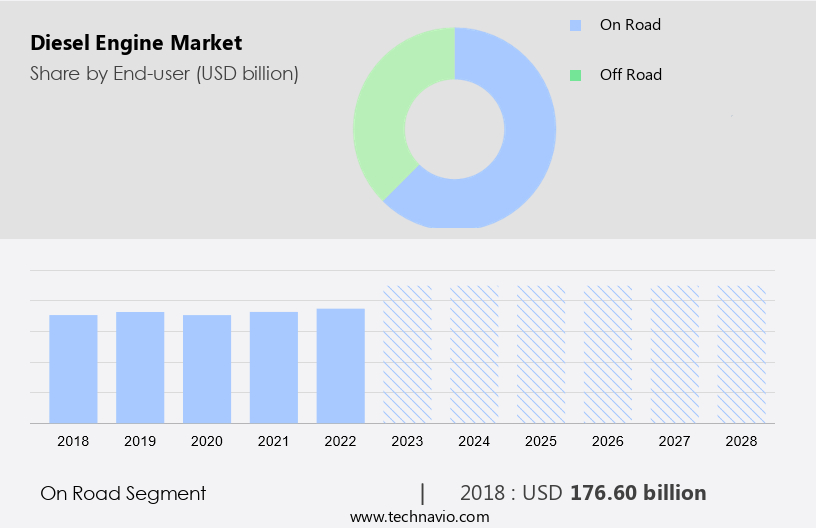
  • The on-road segment is estimated to witness significant growth during the forecast period.

The market encompasses various applications, with the on-road segment being a significant contributor. This segment comprises light-duty vehicles, medium-duty vehicles, and heavy-duty vehicles. Light-duty vehicles, which include passenger cars, are gaining popularity in developing countries due to rising disposable incomes. Diesel engines offer better fuel efficiency and operational advantages, making diesel-powered cars an attractive choice when compared to their gasoline counterparts. The affordability of diesel fuel is another factor fueling the demand for diesel engine cars.

Moving on to heavy-duty vehicles, also known as heavy-duty vehicles (HDVs), they consist of medium-duty trucks (3.5-15 tonnes), heavy-duty trucks (more than 15 tonnes), and minibusses. Light-duty trucks, or LDVs, are also part of this category and include light trucks used for transporting people and light commercial vehicles used for freight (< 3.5 tonnes). The thermal efficiency of diesel engines makes them a preferred choice for heavy-duty applications in industries like mining and construction, where high power output and fuel economy are crucial. Despite the high upfront cost of diesel engines, their long-term operational benefits make them a worthwhile investment.
Diesel Engine Market Size

Get a glance at the  Diesel Engine Industry report of share of various segments Request Free Sample

The On road segment was valued at USD 176.60 billion in 2018 and showed a gradual increase during the forecast period.

Regional Analysis

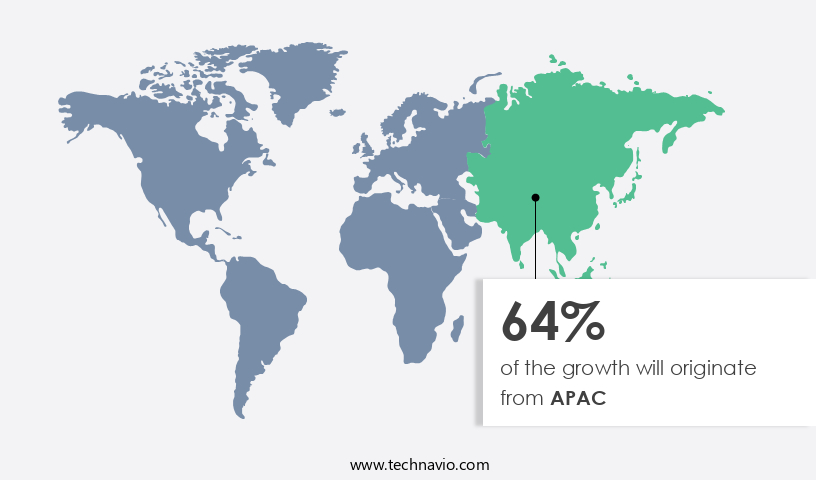
  • APAC is estimated to contribute 64% to the growth of the global market during the forecast period.

Technavio's analysts have elaborately explained the regional trends and drivers that shape the market during the forecast period.
Diesel Engine Market Share by Geography

For more insights on the market share of various regions, Request Free Sample

The Asia Pacific (APAC) region plays a significant role In the market due to its large imports and the presence of various sectors such as ships, trains, automotive vehicles, and power generation. The region's infrastructure projects and transportation networks also contribute to the market's growth. One of the primary reasons for the region's dominance is the lower labor costs, enabling cost-effective production for diesel engine manufacturers. Furthermore, the substantial agriculture, construction, and automotive markets in countries like China, India, Japan, and South Korea are driving the demand for diesel engines. With the increasing population and economic development in APAC, the demand for agricultural equipment is also on the rise.

In 2021, the demand for agricultural products was high In the region, leading to an anticipated increase In the demand for better harvesting machinery. Strict emission regulations are becoming increasingly stringent, and diesel engine manufacturers are focusing on producing engines that meet these standards. This trend is expected to continue, further boosting the market in APAC. 

Market Dynamics

Our researchers analyzed the data with 2023 as the base year, along with the key drivers, trends, and challenges. A holistic analysis of drivers will help companies refine their marketing strategies to gain a competitive advantage.

What are the key market drivers leading to the rise In the adoption of Diesel Engine Industry?

Growing demand for diesel engines from APAC is the key driver of the market.

  • The demand for diesel engines is experiencing growth In the Asia Pacific (APAC) region, primarily driven by the expansion of the construction, mining, transportation, and industrial sectors. The need for dependable power sources, expanding power generation capacity, and the proliferation of manufacturing and processing industries are major factors fueling the market in APAC. China, India, and Indonesia are primary markets for diesel engines in this region due to their strong economic growth and significant infrastructure investments, particularly in road and railway development. Moreover, international manufacturers are attracted to setting up their manufacturing facilities in this region, particularly in China and India, due to the cost benefits these countries provide.
  • Additionally, environmental concerns, such as the need for cleaner engines, are increasingly influencing the market. Agriculture remains a significant consumer of diesel engines, with agricultural mechanization being a major driver of demand. However, the shift towards electric and hybrid vehicles is expected to impact the market negatively. The APAC region will continue to be the fastest-growing major economy In the world, further boosting the demand for diesel engines. In summary, the market in APAC is poised for steady growth due to the region's economic expansion, infrastructure development, and the continued demand for diesel engines in various industries.

What are the market trends shaping the Diesel Engine Industry?

The growing popularity of EVs (electric vehicles) is the upcoming market trend.

  • The increasing popularity of electric vehicles (EVs), specifically battery electric vehicles (BEVs) and plug-in hybrid electric vehicles (PHEVs), poses a significant challenge for the market. EVs are becoming increasingly preferred due to their reduced environmental impact and compliance with emission regulations set by various environmental regulatory bodies worldwide. EVs provide numerous advantages, including lower operating costs due to the cheaper price of electricity compared to gasoline, diesel, and petrol, and fewer moving parts, resulting in reduced maintenance costs.
  • Moreover, EVs offer superior performance, providing smooth acceleration, strong torque, excellent handling, and quiet operation. These benefits make EVs an attractive alternative to diesel-powered vehicles in various sectors such as construction, manufacturing, health care, oil and gas, telecommunications, data centers, and mining. The environmental, social, and economic benefits of EVs are driving their adoption, making them a formidable competitor In the automotive market.

What challenges does the Diesel Engine Industry face during its growth?

The high cost of diesel engines is a key challenge affecting the industry's growth.

  • Diesel engines incur higher costs compared to their gasoline counterparts due to several factors. One reason is the requirement of advanced technologies such as turbochargers and intake air intercoolers in diesel engines to enhance their performance. The longer stroke of diesel engines, which results from higher compression, also increases the bore length and drives up costs. In regions with low temperatures, glow plugs are essential for diesel engines to operate efficiently, adding to the overall cost.
  • Moreover, the technology needed to meet stringent emission norms, including the reduction of particulate matter and NOx, is expensive. In the Medium Power category and High Power segment of the Commercial vehicles sector and Off-highway vehicles, as well as In the Automotive sector, digitalization, sustainability, resilience, and infrastructure investments are key trends. As the market for diesel engines continues to evolve, it is crucial for stakeholders to stay informed and adapt to these trends to remain competitive.

Exclusive Customer Landscape

The diesel engine market forecasting report includes the adoption lifecycle of the market, market growth and forecasting, covering from the innovator's stage to the laggard's stage. It focuses on adoption rates in different regions based on penetration. Furthermore, the diesel engine market report also includes key purchase criteria and drivers of price sensitivity to help companies evaluate and develop their market growth analysis strategies.
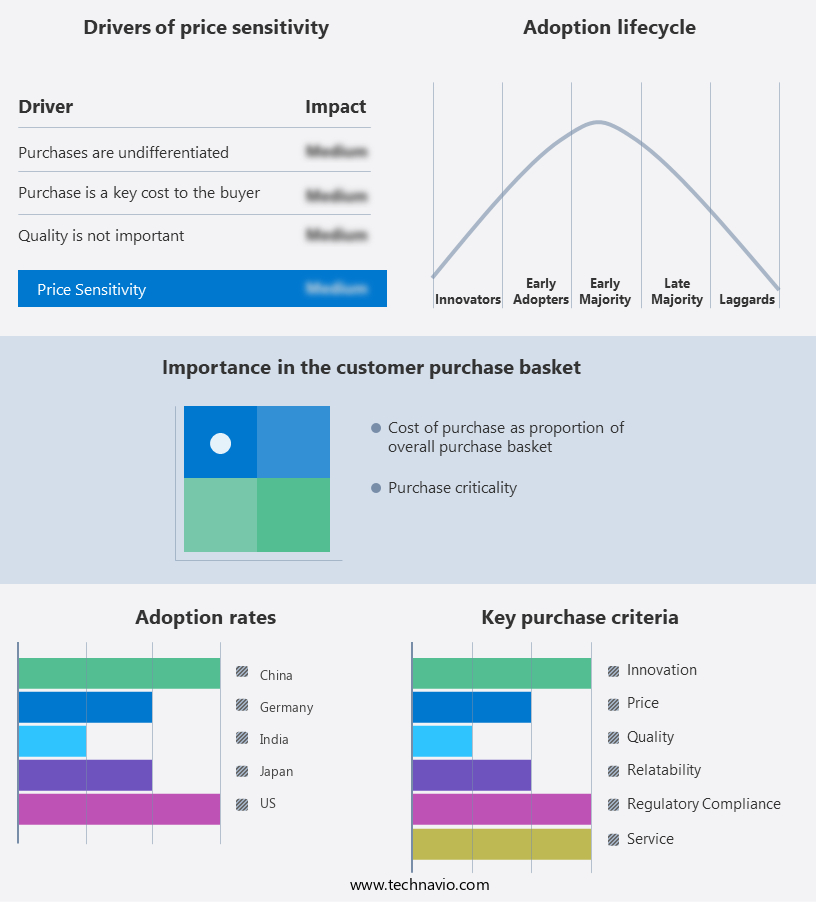
Diesel Engine Market Share by Geography

 Customer Landscape

Key Companies & Market Insights

Companies are implementing various strategies, such as strategic alliances, diesel engine market forecast, partnerships, mergers and acquisitions, geographical expansion, and product/service launches, to enhance their presence In the industry. The industry research and growth report includes detailed analyses of the competitive landscape of the market and information about key companies, including:

  • AB Volvo
  • AGCO Corp.
  • BorgWarner Inc.
  • Caterpillar Inc.
  • Continental AG
  • Cummins Inc.
  • Deere and Co.
  • DEUTZ AG
  • Doosan Corp.
  • General Motors Co.
  • Hyundai Heavy Industries Group
  • Kohler Co.
  • Kubota Corp.
  • Mercedes Benz Group AG
  • Mitsubishi Heavy Industries Ltd.
  • Robert Bosch GmbH
  • Rolls Royce Holdings Plc
  • Volkswagen AG
  • Wartsila Corp.

Qualitative and quantitative analysis of companies has been conducted to help clients understand the wider business environment as well as the strengths and weaknesses of key industry players. Data is qualitatively analyzed to categorize companies as pure play, category-focused, industry-focused, and diversified; it is quantitatively analyzed to categorize companies as dominant, leading, strong, tentative, and weak.

Research Analyst Overview

The market is a significant contributor to various industries, including construction, manufacturing, healthcare, oil, gas, telecommunication, data centers, mining, and power generation. It offers high thermal efficiency, making them a preferred choice for applications requiring high power output. The automotive sector, particularly heavy vehicles and commercial vehicles, is a major consumer due to their fuel efficiency and power capabilities. However, the increasing focus on environmental concerns and stringent emission regulations has led to the development of cleaner alternatives, such as electric and hybrid vehicles. This shift may impact the demand, particularly In the automotive sector. Despite this, the demand remains strong in sectors such as infrastructure projects, transportation networks, and heavy-end equipment applications, including mining, ships, trains, and heavy vehicles.

Thus, the high-cost used in these applications offer superior power and efficiency, making them a necessary investment for these industries. Two-stroke and four-stroke continue to dominate the market, with the latter gaining popularity due to their lower emissions and improved fuel efficiency. The market in portable equipment, motorcycles, chainsaws, and other applications is also growing, driven by the need for power in remote locations and the increasing demand for mechanization in agriculture. The market is expected to grow, driven by infrastructure investments, digitalization, and the need for resilience in various industries. The market is also witnessing innovation In the form of advanced technologies aimed at improving thermal efficiency and reducing emissions.

Market Scope

Report Coverage

Details

Page number

156

Base year

2023

Historic period

2018-2022

Forecast period

2024-2028

Growth momentum & CAGR

Accelerate at a CAGR of 3.29%

Market growth 2024-2028

USD 39.1 billion

Market structure

Fragmented

YoY growth 2023-2024(%)

3.14

Key countries

US, China, Germany, Japan, and India

Competitive landscape

Leading Companies, Market Positioning of Companies, Competitive Strategies, and Industry Risks

Request Free Sample

What are the Key Data Covered in this Diesel Engine Market Research and Growth Report?

  • CAGR of the Diesel Engine industry during the forecast period
  • Detailed information on factors that will drive the growth and forecasting between 2024 and 2028
  • Precise estimation of the size of the market and its contribution of the industry in focus to the parent market
  • Accurate predictions about upcoming growth and trends and changes in consumer behaviour
  • Growth of the market across APAC, Europe, North America, South America, and Middle East and Africa
  • Thorough analysis of the market's competitive landscape and detailed information about companies
  • Comprehensive analysis of factors that will challenge the diesel engine market growth of industry companies

We can help! Our analysts can customize this diesel engine market research report to meet your requirements.

Get in touch

1 Executive Summary

  • 1.1 Market overview
    • Executive Summary - Chart on Market Overview
    • Executive Summary - Data Table on Market Overview
    • Executive Summary - Chart on Global Market Characteristics
    • Executive Summary - Chart on Market by Geography
    • Executive Summary - Chart on Market Segmentation by End-user
    • Executive Summary - Chart on Incremental Growth
    • Executive Summary - Data Table on Incremental Growth
    • Executive Summary - Chart on Company Market Positioning

2 Market Landscape

  • 2.1 Market ecosystem
    • Parent Market
    • Data Table on - Parent Market
  • 2.2 Market characteristics
    • Market characteristics analysis
  • 2.3 Value chain analysis
    • Value Chain Analysis

3 Market Sizing

  • 3.1 Market definition
    • Offerings of companies included in the market definition
  • 3.2 Market segment analysis
    • Market segments
  • 3.3 Market size 2023
    • 3.4 Market outlook: Forecast for 2023-2028
      • Chart on Global - Market size and forecast 2023-2028 ($ billion)
      • Data Table on Global - Market size and forecast 2023-2028 ($ billion)
      • Chart on Global Market: Year-over-year growth 2023-2028 (%)
      • Data Table on Global Market: Year-over-year growth 2023-2028 (%)

    4 Historic Market Size

    • 4.1 Global Diesel Engine Market 2018 - 2022
      • Historic Market Size - Data Table on Global Diesel Engine Market 2018 - 2022 ($ billion)
    • 4.2 End-user segment analysis 2018 - 2022
      • Historic Market Size - End-user Segment 2018 - 2022 ($ billion)
    • 4.3 Geography segment analysis 2018 - 2022
      • Historic Market Size - Geography Segment 2018 - 2022 ($ billion)
    • 4.4 Country segment analysis 2018 - 2022
      • Historic Market Size - Country Segment 2018 - 2022 ($ billion)

    5 Five Forces Analysis

    • 5.1 Five forces summary
      • Five forces analysis - Comparison between 2023 and 2028
    • 5.2 Bargaining power of buyers
      • Bargaining power of buyers - Impact of key factors 2023 and 2028
    • 5.3 Bargaining power of suppliers
      • Bargaining power of suppliers - Impact of key factors in 2023 and 2028
    • 5.4 Threat of new entrants
      • Threat of new entrants - Impact of key factors in 2023 and 2028
    • 5.5 Threat of substitutes
      • Threat of substitutes - Impact of key factors in 2023 and 2028
    • 5.6 Threat of rivalry
      • Threat of rivalry - Impact of key factors in 2023 and 2028
    • 5.7 Market condition
      • Chart on Market condition - Five forces 2023 and 2028

    6 Market Segmentation by End-user

    • 6.1 Market segments
      • Chart on End-user - Market share 2023-2028 (%)
      • Data Table on End-user - Market share 2023-2028 (%)
    • 6.2 Comparison by End-user
      • Chart on Comparison by End-user
      • Data Table on Comparison by End-user
    • 6.3 On road - Market size and forecast 2023-2028
      • Chart on On road - Market size and forecast 2023-2028 ($ billion)
      • Data Table on On road - Market size and forecast 2023-2028 ($ billion)
      • Chart on On road - Year-over-year growth 2023-2028 (%)
      • Data Table on On road - Year-over-year growth 2023-2028 (%)
    • 6.4 Off road - Market size and forecast 2023-2028
      • Chart on Off road - Market size and forecast 2023-2028 ($ billion)
      • Data Table on Off road - Market size and forecast 2023-2028 ($ billion)
      • Chart on Off road - Year-over-year growth 2023-2028 (%)
      • Data Table on Off road - Year-over-year growth 2023-2028 (%)
    • 6.5 Market opportunity by End-user
      • Market opportunity by End-user ($ billion)
      • Data Table on Market opportunity by End-user ($ billion)

    7 Customer Landscape

    • 7.1 Customer landscape overview
      • Analysis of price sensitivity, lifecycle, customer purchase basket, adoption rates, and purchase criteria

    8 Geographic Landscape

    • 8.1 Geographic segmentation
      • Chart on Market share by geography 2023-2028 (%)
      • Data Table on Market share by geography 2023-2028 (%)
    • 8.2 Geographic comparison
      • Chart on Geographic comparison
      • Data Table on Geographic comparison
    • 8.3 APAC - Market size and forecast 2023-2028
      • Chart on APAC - Market size and forecast 2023-2028 ($ billion)
      • Data Table on APAC - Market size and forecast 2023-2028 ($ billion)
      • Chart on APAC - Year-over-year growth 2023-2028 (%)
      • Data Table on APAC - Year-over-year growth 2023-2028 (%)
    • 8.4 Europe - Market size and forecast 2023-2028
      • Chart on Europe - Market size and forecast 2023-2028 ($ billion)
      • Data Table on Europe - Market size and forecast 2023-2028 ($ billion)
      • Chart on Europe - Year-over-year growth 2023-2028 (%)
      • Data Table on Europe - Year-over-year growth 2023-2028 (%)
    • 8.5 North America - Market size and forecast 2023-2028
      • Chart on North America - Market size and forecast 2023-2028 ($ billion)
      • Data Table on North America - Market size and forecast 2023-2028 ($ billion)
      • Chart on North America - Year-over-year growth 2023-2028 (%)
      • Data Table on North America - Year-over-year growth 2023-2028 (%)
    • 8.6 South America - Market size and forecast 2023-2028
      • Chart on South America - Market size and forecast 2023-2028 ($ billion)
      • Data Table on South America - Market size and forecast 2023-2028 ($ billion)
      • Chart on South America - Year-over-year growth 2023-2028 (%)
      • Data Table on South America - Year-over-year growth 2023-2028 (%)
    • 8.7 Middle East and Africa - Market size and forecast 2023-2028
      • Chart on Middle East and Africa - Market size and forecast 2023-2028 ($ billion)
      • Data Table on Middle East and Africa - Market size and forecast 2023-2028 ($ billion)
      • Chart on Middle East and Africa - Year-over-year growth 2023-2028 (%)
      • Data Table on Middle East and Africa - Year-over-year growth 2023-2028 (%)
    • 8.8 US - Market size and forecast 2023-2028
      • Chart on US - Market size and forecast 2023-2028 ($ billion)
      • Data Table on US - Market size and forecast 2023-2028 ($ billion)
      • Chart on US - Year-over-year growth 2023-2028 (%)
      • Data Table on US - Year-over-year growth 2023-2028 (%)
    • 8.9 China - Market size and forecast 2023-2028
      • Chart on China - Market size and forecast 2023-2028 ($ billion)
      • Data Table on China - Market size and forecast 2023-2028 ($ billion)
      • Chart on China - Year-over-year growth 2023-2028 (%)
      • Data Table on China - Year-over-year growth 2023-2028 (%)
    • 8.10 Germany - Market size and forecast 2023-2028
      • Chart on Germany - Market size and forecast 2023-2028 ($ billion)
      • Data Table on Germany - Market size and forecast 2023-2028 ($ billion)
      • Chart on Germany - Year-over-year growth 2023-2028 (%)
      • Data Table on Germany - Year-over-year growth 2023-2028 (%)
    • 8.11 Japan - Market size and forecast 2023-2028
      • Chart on Japan - Market size and forecast 2023-2028 ($ billion)
      • Data Table on Japan - Market size and forecast 2023-2028 ($ billion)
      • Chart on Japan - Year-over-year growth 2023-2028 (%)
      • Data Table on Japan - Year-over-year growth 2023-2028 (%)
    • 8.12 India - Market size and forecast 2023-2028
      • Chart on India - Market size and forecast 2023-2028 ($ billion)
      • Data Table on India - Market size and forecast 2023-2028 ($ billion)
      • Chart on India - Year-over-year growth 2023-2028 (%)
      • Data Table on India - Year-over-year growth 2023-2028 (%)
    • 8.13 Market opportunity by geography
      • Market opportunity by geography ($ billion)
      • Data Tables on Market opportunity by geography ($ billion)

    9 Drivers, Challenges, and Opportunity/Restraints

    • 9.1 Market drivers
      • 9.2 Market challenges
        • 9.3 Impact of drivers and challenges
          • Impact of drivers and challenges in 2023 and 2028
        • 9.4 Market opportunities/restraints

          10 Competitive Landscape

          • 10.1 Overview
            • 10.2 Competitive Landscape
              • Overview on criticality of inputs and factors of differentiation
            • 10.3 Landscape disruption
              • Overview on factors of disruption
            • 10.4 Industry risks
              • Impact of key risks on business

            11 Competitive Analysis

            • 11.1 Companies profiled
              • Companies covered
            • 11.2 Market positioning of companies
              • Matrix on companies position and classification
            • 11.3 AB Volvo
              • AB Volvo - Overview
              • AB Volvo - Business segments
              • AB Volvo - Key news
              • AB Volvo - Key offerings
              • AB Volvo - Segment focus
            • 11.4 Caterpillar Inc.
              • Caterpillar Inc. - Overview
              • Caterpillar Inc. - Business segments
              • Caterpillar Inc. - Key news
              • Caterpillar Inc. - Key offerings
              • Caterpillar Inc. - Segment focus
            • 11.5 Cummins Inc.
              • Cummins Inc. - Overview
              • Cummins Inc. - Business segments
              • Cummins Inc. - Key news
              • Cummins Inc. - Key offerings
              • Cummins Inc. - Segment focus
            • 11.6 Doosan Corp.
              • Doosan Corp. - Overview
              • Doosan Corp. - Business segments
              • Doosan Corp. - Key news
              • Doosan Corp. - Key offerings
              • Doosan Corp. - Segment focus
            • 11.7 Hyundai Heavy Industries Group
              • Hyundai Heavy Industries Group - Overview
              • Hyundai Heavy Industries Group - Business segments
              • Hyundai Heavy Industries Group - Key news
              • Hyundai Heavy Industries Group - Key offerings
              • Hyundai Heavy Industries Group - Segment focus
            • 11.8 Kohler Co.
              • Kohler Co. - Overview
              • Kohler Co. - Product / Service
              • Kohler Co. - Key news
              • Kohler Co. - Key offerings
            • 11.9 Mitsubishi Heavy Industries Ltd.
              • Mitsubishi Heavy Industries Ltd. - Overview
              • Mitsubishi Heavy Industries Ltd. - Business segments
              • Mitsubishi Heavy Industries Ltd. - Key news
              • Mitsubishi Heavy Industries Ltd. - Key offerings
              • Mitsubishi Heavy Industries Ltd. - Segment focus
            • 11.10 Rolls Royce Holdings Plc
              • Rolls Royce Holdings Plc - Overview
              • Rolls Royce Holdings Plc - Business segments
              • Rolls Royce Holdings Plc - Key news
              • Rolls Royce Holdings Plc - Key offerings
              • Rolls Royce Holdings Plc - Segment focus
            • 11.11 Volkswagen AG
              • Volkswagen AG - Overview
              • Volkswagen AG - Business segments
              • Volkswagen AG - Key news
              • Volkswagen AG - Key offerings
              • Volkswagen AG - Segment focus
            • 11.12 Wartsila Corp.
              • Wartsila Corp. - Overview
              • Wartsila Corp. - Business segments
              • Wartsila Corp. - Key news
              • Wartsila Corp. - Key offerings
              • Wartsila Corp. - Segment focus

            12 Appendix

            • 12.1 Scope of the report
              • 12.2 Inclusions and exclusions checklist
                • Inclusions checklist
                • Exclusions checklist
              • 12.3 Currency conversion rates for US$
                • Currency conversion rates for US$
              • 12.4 Research methodology
                • Research methodology
              • 12.5 Data procurement
                • Information sources
              • 12.6 Data validation
                • Data validation
              • 12.7 Validation techniques employed for market sizing
                • Validation techniques employed for market sizing
              • 12.8 Data synthesis
                • Data synthesis
              • 12.9 360 degree market analysis
                • 360 degree market analysis
              • 12.10 List of abbreviations
                • List of abbreviations

              Research Methodology

              Technavio presents a detailed picture of the market by way of study, synthesis, and summation of data from multiple sources. The analysts have presented the various facets of the market with a particular focus on identifying the key industry influencers. The data thus presented is comprehensive, reliable, and the result of extensive research, both primary and secondary.

              INFORMATION SOURCES

              Primary sources

              • Manufacturers and suppliers
              • Channel partners
              • Industry experts
              • Strategic decision makers

              Secondary sources

              • Industry journals and periodicals
              • Government data
              • Financial reports of key industry players
              • Historical data
              • Press releases

              DATA ANALYSIS

              Data Synthesis

              • Collation of data
              • Estimation of key figures
              • Analysis of derived insights

              Data Validation

              • Triangulation with data models
              • Reference against proprietary databases
              • Corroboration with industry experts

              REPORT WRITING

              Qualitative

              • Market drivers
              • Market challenges
              • Market trends
              • Five forces analysis

              Quantitative

              • Market size and forecast
              • Market segmentation
              • Geographical insights
              • Competitive landscape

              Interested in this report?

              Get your sample now to see our research methodology and insights!

              Download Now

              Frequently Asked Questions

              Diesel Engine market growth will increase by $ 39.1 bn during 2024-2028.

              The Diesel Engine market is expected to grow at a CAGR of 3.29% during 2024-2028.

              Diesel Engine market is segmented by End-user( On road, Off road) Geographic( APAC, Europe, North America, South America, MEA)

              AB Volvo, AGCO Corp., BorgWarner Inc., Caterpillar Inc., Continental AG, Cummins Inc., Deere and Co., DEUTZ AG, Doosan Corp., General Motors Co., Hyundai Heavy Industries Group, Kohler Co., Kubota Corp., Mercedes Benz Group AG, Mitsubishi Heavy Industries Ltd., Robert Bosch GmbH, Rolls Royce Holdings Plc, Volkswagen AG, Wartsila Corp. are a few of the key vendors in the Diesel Engine market.

              APAC will register the highest growth rate of 64% among the other regions. Therefore, the Diesel Engine market in APAC is expected to garner significant business opportunities for the vendors during the forecast period.

              US, China, Germany, Japan, India

              • Growing demand for diesel engines from APACDemand for diesel engines is increasing in APAC due to the growth of the construction is the driving factor this market.
              • mining is the driving factor this market.
              • transport is the driving factor this market.
              • and industrial sectors in the region. Increasing demand for reliable power supply is the driving factor this market.
              • rising power generation capacity is the driving factor this market.
              • and growing manufacturing and process industries in the region are driving the diesel engine market. China is the driving factor this market.
              • India is the driving factor this market.
              • and Indonesia are the key markets for diesel engines in this region is the driving factor this market.
              • owing to their rapid economic growth and an upsurge in infrastructure spending is the driving factor this market.
              • particularly on roads and railways. Furthermore is the driving factor this market.
              • global manufacturers are keen on establishing their manufacturing plants in this region is the driving factor this market.
              • mostly China and India is the driving factor this market.
              • because of the cost advantages these countries offer. The low labor cost and easy availability of raw materials reduce the cost of procurement is the driving factor this market.
              • thereby overall production. In addition is the driving factor this market.
              • the diesel engine market is expected to grow at a steady pace in Australia and Southeast Asia. Thus is the driving factor this market.
              • these countries offer significant growth potential for the diesel engine market. &nbsp; is the driving factor this market.

              The Diesel Engine market vendors should focus on grabbing business opportunities from the On road segment as it accounted for the largest market share in the base year.
              RIA - Research AI Assistant
              Ask RIA
