



Digital Video Recorder Market Size 2024-2028
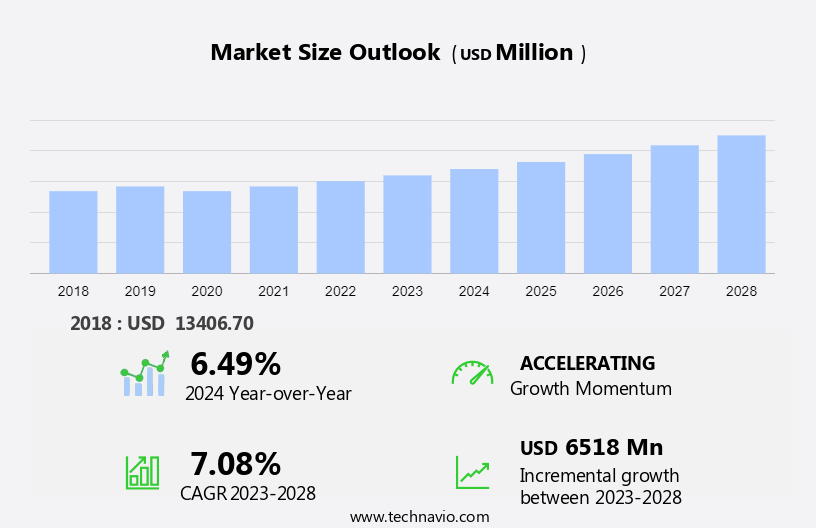
The digital video recorder market size is forecast to increase by USD 6.52 billion at a CAGR of 7.08% between 2023 and 2028. The digital video recorder (DVR) market is witnessing significant growth due to the increasing demand for storing and accessing audio-visual content in digital format. The market is driven by the proliferation of mobile computing devices, enabling users to record and watch television shows, movies, and video surveillance footage on the go. However, the market faces challenges such as complex infrastructural requirements and slow internet speeds, which can disrupt video surveillance. To mitigate these issues, DVRs are being developed to support various storage devices like USB flash drives and SD memory cards. Additionally, networked DVRs are gaining popularity, allowing users to access content remotely and record from IP cameras.
As the demand for high-definition video content continues to rise, the market is expected to grow steadily. Keywords: Digital Video Recorder, Audio, Video, Storage device, USB flash drive, SD memory card, Networked, Television shows, Movies, Video surveillance, IP cameras. The market is experiencing steady growth due to the increasing popularity of mobile computing devices and the demand for storing and accessing audio-visual content in digital format. The market is driven by the increasing use of DVRs for recording and watching television shows, movies, and video surveillance footage on mobile devices. However, the market faces challenges such as complex infrastructural requirements and slow internet speeds, which can disrupt video surveillance.
The digital video recorder (DVR) market in the US is witnessing significant growth, driven by the increasing demand for storing and accessing audio and video content in digital format. DVRs have become an essential component of both small and medium enterprises (SMEs) and large enterprises, providing a cost-effective solution for recording and managing television shows and movies. DVRs come in various forms, including networked, USB flash drives, and SD memory cards. Networked DVRs are internet-connected devices that enable users to access and manage their recorded content remotely. USB flash drives and SD memory cards offer portability and convenience, allowing users to transfer their content easily.
Cloud-based DVR solutions have emerged as a popular alternative to physical hardware. These solutions enable users to store their content in the cloud, providing unlimited storage capacity and access to content from anywhere. Television shows and movies can be recorded and watched on demand, making cloud-based DVRs an attractive option for consumers. Artificial intelligence (AI) and machine learning technologies are increasingly being integrated into DVRs, enabling video analytics and advanced features such as content recommendation and search. AI-enabled DVRs can automatically record specific programs based on user preferences, making content discovery more efficient. Compatibility with various television channels, including DTH segment and HD channels, is a crucial factor in the DVR market.
Product lines catering to different customer segments, such as multi-room DVRs and smart home solutions, are gaining popularity. Embedded DVRs, hybrid DVRs, and PC-based DVRs offer flexibility and customization for different use cases. The DVR market in the US is expected to grow significantly, driven by the increasing adoption of internet-connected devices and the shift towards cloud-based solutions. The market is expected to offer numerous opportunities for players in the technology industry, particularly in the areas of AI, machine learning, and video analytics. In conclusion, the market in the US is witnessing robust growth, driven by the increasing demand for digital storage solutions for audio and video content.
The market offers significant opportunities for players in the technology industry, particularly in the areas of AI, machine learning, and cloud-based solutions. DVRs come in various forms, including networked, USB flash drives, SD memory cards, and cloud-based solutions, catering to different customer segments and use cases. The market is expected to continue growing, driven by the increasing adoption of internet-connected devices and the shift towards cloud-based solutions. Keywords: digital video recorder, audio, video, storage device, USB flash drive, SD memory card, networked, television shows, movies, cloud-based DVR solutions, physical hardware, internet-connected device, artificial intelligence, machine learning, video analytics, small medium enterprise, large enterprise, multi-room DVRs, smart home, television, cloud-based DVRs, compatibility, product line, embedded DVRs, hybrid DVRs, PC-based DVRs, DTH segment, HD channels.
Market Segmentation
The market research report provides comprehensive data (region-wise segment analysis), with forecasts and estimates in "USD million" for the period 2024-2028, as well as historical data from 2018-2022 for the following segments.
- Deployment
- In-home DVR
- Cloud DVR
- Geography
- North America
- US
- APAC
- China
- Japan
- Europe
- Germany
- UK
- South America
- Middle East and Africa
- North America
By Deployment Insights
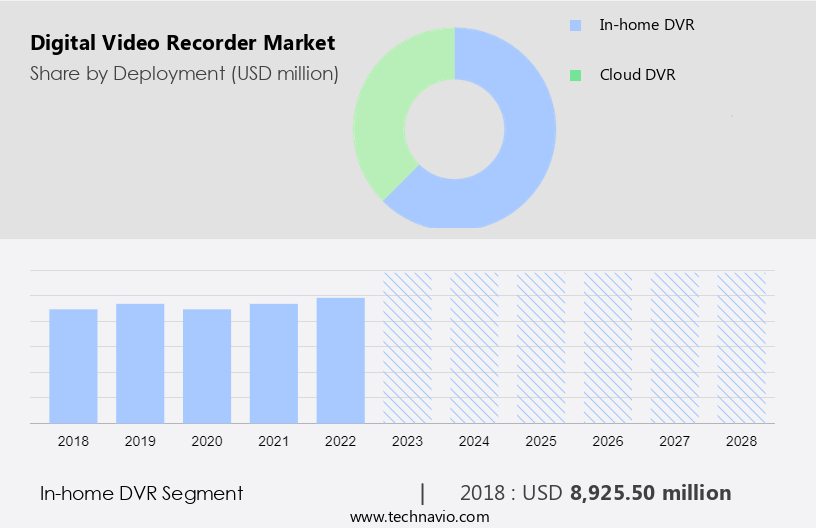
The in-home dvr segment is estimated to witness significant growth during the forecast period.In-home Digital Video Recorders (DVRs) refer to the physical devices utilized in set-top boxes and closed-circuit television (CCTV) cameras. These DVRs employ local hard drives to save digital video and audio files. However, they come with certain limitations, such as storage capacity and the number of simultaneous recordings, which are contingent upon the number of tuners. For instance, a DVR with two tuners can only record and watch one show at a time, necessitating the selection of which program to prioritize. The advent of advanced technologies like artificial intelligence (AI), deep learning, and facial recognition in CCTV cameras is expected to fuel the demand for in-home DVRs.
With the increasing investment in smart city projects across many nations, the need for intelligent infrastructure, advanced security systems, and smart parking management systems is on the rise, thereby driving the market growth for in-home DVRs. In addition, USB flash drives and SD memory cards offer expandable storage solutions for these devices. Networked DVRs also provide an alternative to traditional in-home DVRs, allowing users to access and manage their recorded content remotely via the internet. In-home DVRs cater to various applications, including television shows, movies, and video surveillance, making them an essential component of modern entertainment and security systems.
Get a glance at the market share of various segments Request Free Sample
The In-home DVR segment accounted for USD 8925.50 million in 2018 and showed a gradual increase during the forecast period.
Regional Insights
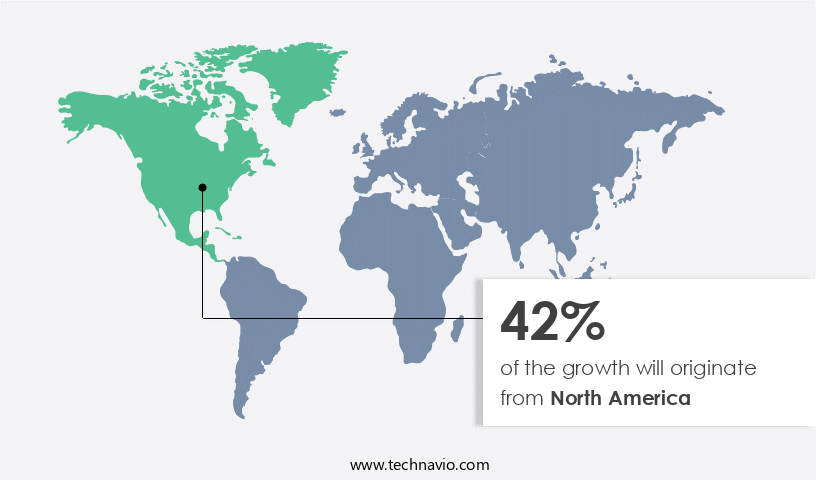
North America is estimated to contribute 42% to the growth of the global market during the forecast period. Technavio’s analysts have elaborately explained the regional trends and drivers that shape the market during the forecast period.
For more insights on the market share of various regions Request Free Sample
The Digital Video Recorder (DVR) market in North America is experiencing steady growth due to the increasing demand for advanced security systems and the proliferation of mobile devices. With the rise of mobile computing and the availability of high-speed internet, Mobile DVRs and Turbo HD DVRs have gained popularity, offering users the ability to record and store video footage on the go. Large enterprises and industries are also investing in DVR solutions to ensure the safety and security of their premises. Cloud-based DVR solutions have emerged as a viable alternative to physical hardware, providing ample storage space and ease of access to footage from anywhere.
Moreover, the adoption of artificial intelligence, machine learning, and video analytics is transforming the DVR market. These technologies enable advanced features such as facial recognition, object detection, and real-time alerts, making video surveillance more effective and efficient. The increasing use of internet-connected devices and the availability of affordable storage solutions are further fueling the growth of the market. The demand for advertising-based video on demand (AVOD) is also expected to significantly drive the growth of the digital video content market in North America. Overall, the DVR market in North America is poised for continued growth, driven by the need for security, advanced technologies, and the increasing popularity of mobile devices.
Our researchers analyzed the data with 2023 as the base year, along with the key drivers, trends, and challenges. A holistic analysis of drivers will help companies refine their marketing strategies to gain a competitive advantage.
Market Driver
Increasing penetration of mobile computing devices is the key driver of the market. The Digital Video Recorder (DVR) market is experiencing significant growth due to the increasing number of TV households, particularly in Small and Medium Enterprises (SMEs) and Large Enterprises. Multi-room DVRs are gaining popularity in the connected home and smart home environment, enabling fast data retrieval and high image quality. The demand for DVRs is driven by the expanding TV subscriber base and the availability of advanced features such as storage space requirement. The increasing use of mobile devices and the availability of mobile apps from major DVR companies are further fueling market growth. As more consumers adopt mobile devices for accessing content on-the-go, the demand for DVRs with advanced features and compatibility with multiple devices is expected to increase.
Market Trends
Complicated infrastructural requirements is the upcoming trend in the market. In the realm of video surveillance, Digital Video Recorders (DVRs) have become indispensable due to their ability to record and store AV data. Compatibility with various product lines, including Embedded DVRs, Hybrid DVRs, and PC-based DVRs, is essential to cater to the diverse needs of industries. The DTH segment, which includes HD channels and pay-to-use channels, has driven the demand for DVRs in the retail sector. Value-added services such as motion detection, face recognition, and video analytics have expanded the application analysis of DVRs. However, the increasing volume of surveillance data, particularly with the adoption of high-definition recording, has placed significant demands on storage solutions.
These systems must offer high quality, reliability, and scalability to accommodate the expanding data volumes. Moreover, the potential loss of critical surveillance data could have severe consequences, making it imperative to invest in robust and reliable storage solutions. In conclusion, the DVR industry requires advanced storage solutions that can meet the demands of high-quality recording, reliability, and scalability to ensure the security and integrity of surveillance data.
Market Challenge
Slow internet speed leads to disruptions in video surveillance is a key challenge affecting the market growth. The Digital Video Recorder (DVR) market encompasses various applications, including disk drives, Internet access, on-demand entertainment, time-shifting, and ad-skipping. One significant aspect of DVRs is video management software, which enables users to record, store, and manage their video content. NVR camera systems are another component of the DVR market, which require substantial bandwidth for smooth video transmission. For cloud-based DVRs, a reliable Internet connection is crucial. Customers' Internet connections, in particular, must be high-speed for uploading video feeds to third-party security agencies. Most broadband or high-speed Internet service providers offer asymmetric connections, with download speeds significantly higher than upload speeds.
However, the upload speed is essential for transmitting video feeds to security agencies. These agencies must also have an Internet connection capable of handling the incoming aggregate bandwidth of their customers' video feeds. The high cost of transmitting videos is a challenge in providing a hosted video service. To address this, DVRs with large disk drives and efficient video compression algorithms are essential. The use of Internet access for on-demand entertainment and time-shifting further increases the need for high-speed connections and efficient video management software. Ad-skipping functionality also adds to the bandwidth usage, requiring robust video management systems to minimize latency and ensure a seamless user experience.
Exclusive Customer Landscape
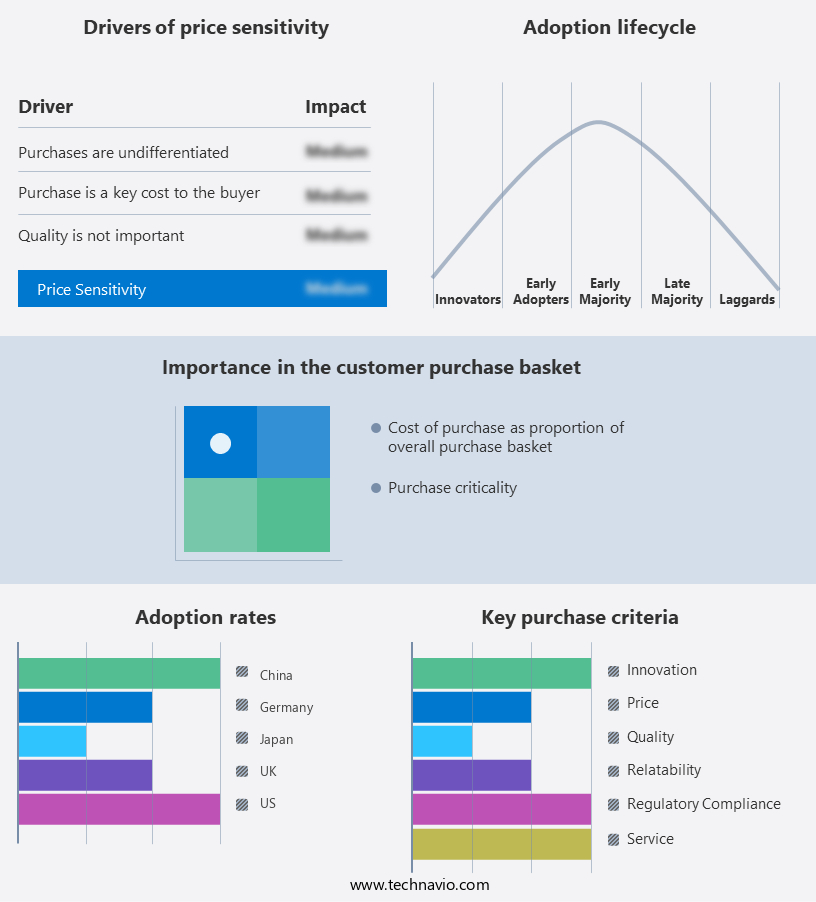
The market forecasting report includes the adoption lifecycle of the market, covering from the innovator’s stage to the laggard’s stage. It focuses on adoption rates in different regions based on penetration. Furthermore, the report also includes key purchase criteria and drivers of price sensitivity to help companies evaluate and develop their market growth analysis strategies.
Customer Landscape
Key Companies & Market Insights
Companies are implementing various strategies, such as strategic alliances, partnerships, mergers and acquisitions, geographical expansion, and product/service launches, to enhance their presence in the market.
ALE International - The company provides digital video recorder solutions, ensuring uninterrupted service through features like Hot Standby Router Protocol and Gateway Load Balancing Protocol for redundancy. These advanced technologies maintain seamless video recording and transmission, ensuring business continuity and reliability. Our digital video recorders cater to various industries, offering high-quality video storage and retrieval capabilities. With a focus on performance and dependability, our offerings are ideal for security, surveillance, and other applications requiring continuous video recording.
The market research and growth report includes detailed analyses of the competitive landscape of the market and information about key companies, including:
- ALE International
- AT and T Inc.
- Canon Inc.
- Cisco Systems Inc.
- Comcast Corp.
- CommScope Holding Co. Inc.
- Dahua Technology Co. Ltd.
- Dell Technologies Inc.
- DISH Network L.L.C.
- EchoStar Corp.
- Honeywell International Inc.
- Johnson Controls International Plc.
- Panasonic Holdings Corp.
- Renesas Electronics Corp.
- Robert Bosch GmbH
- Sony Group Corp.
- Technicolor SA
- Teledyne Technologies Inc.
- Xperi Holding Corp.
- Zoom Corp.
Qualitative and quantitative analysis of companies has been conducted to help clients understand the wider business environment as well as the strengths and weaknesses of key market players. Data is qualitatively analyzed to categorize companies as pure play, category-focused, industry-focused, and diversified; it is quantitatively analyzed to categorize companies as dominant, leading, strong, tentative, and weak.
Research Analyst Overview
The digital video recorder (DVR) market is witnessing significant growth due to the increasing demand for digital format storage of audio and video content. Television shows and movies in digital format are becoming increasingly popular, leading to an increase in the adoption of DVRs for home use. The market is segmented into networked DVRs, USB flash drives, and SD memory cards for storage devices. Networked DVRs are gaining popularity due to their ability to record and store large amounts of HD videos, enabling users to access their content from anywhere using internet-connected devices. Television households are shifting towards cloud-based DVR solutions for fast data retrieval and high image quality.
The market also caters to the needs of large enterprises, offering cloud-based DVR solutions for security purposes, such as video surveillance using IP cameras. The requirement for large storage space for HD videos and the integration of artificial intelligence and machine learning for video analytics are driving the market growth. The DVR market is also witnessing the emergence of mobile DVRs, Turbo HD DVRs, and multi-room DVRs for mobile computing and smart home applications. The market is witnessing competition from various players offering value-added services, such as on-demand entertainment, time-shifting, and ad-skipping. The initial cost, compatibility with various broadcast channels, and product line differentiation are key factors influencing the market's growth.
The DVR market is also witnessing the adoption of hybrid DVRs, embedded DVRs, and PC-based DVRs in the DTH segment for HD channels and pay-to-use channels. The market is expected to grow further due to the increasing bandwidth usage and the integration of application analysis in the retail sector.
|
Market Scope |
|
|
Report Coverage |
Details |
|
Page number |
145 |
|
Base year |
2023 |
|
Historic period |
2018-2022 |
|
Forecast period |
2024-2028 |
|
Growth momentum & CAGR |
Accelerate at a CAGR of 7.08% |
|
Market growth 2024-2028 |
USD 6518 million |
|
Market structure |
Fragmented |
|
YoY growth 2023-2024(%) |
6.49 |
|
Regional analysis |
North America, APAC, Europe, South America, and Middle East and Africa |
|
Performing market contribution |
North America at 42% |
|
Key countries |
US, China, Japan, Germany, and UK |
|
Competitive landscape |
Leading Companies, Market Positioning of Companies, Competitive Strategies, and Industry Risks |
|
Key companies profiled |
ALE International, AT and T Inc., Canon Inc., Cisco Systems Inc., Comcast Corp., CommScope Holding Co. Inc., Dahua Technology Co. Ltd., Dell Technologies Inc., DISH Network L.L.C., EchoStar Corp., Honeywell International Inc., Johnson Controls International Plc., Panasonic Holdings Corp., Renesas Electronics Corp., Robert Bosch GmbH, Sony Group Corp., Technicolor SA, Teledyne Technologies Inc., Xperi Holding Corp., and Zoom Corp. |
|
Market dynamics |
Parent market analysis, market growth inducers and obstacles, market forecast, fast-growing and slow-growing segment analysis, COVID-19 impact and recovery analysis and future consumer dynamics, market condition analysis for the forecast period |
|
Customization purview |
If our market report has not included the data that you are looking for, you can reach out to our analysts and get segments customized. |
What are the Key Data Covered in this Market Research and Growth Report?
- CAGR of the market during the forecast period
- Detailed information on factors that will drive the market growth and forecasting between 2024 and 2028
- Precise estimation of the size of the market and its contribution of the market in focus to the parent market
- Accurate predictions about upcoming market growth and trends and changes in consumer behaviour
- Growth of the market across North America, APAC, Europe, South America, and Middle East and Africa
- Thorough analysis of the market’s competitive landscape and detailed information about companies
- Comprehensive analysis of factors that will challenge the growth of market companies
We can help! Our analysts can customize this market research report to meet your requirements. Get in touch
 RIA -
RIA - 
