
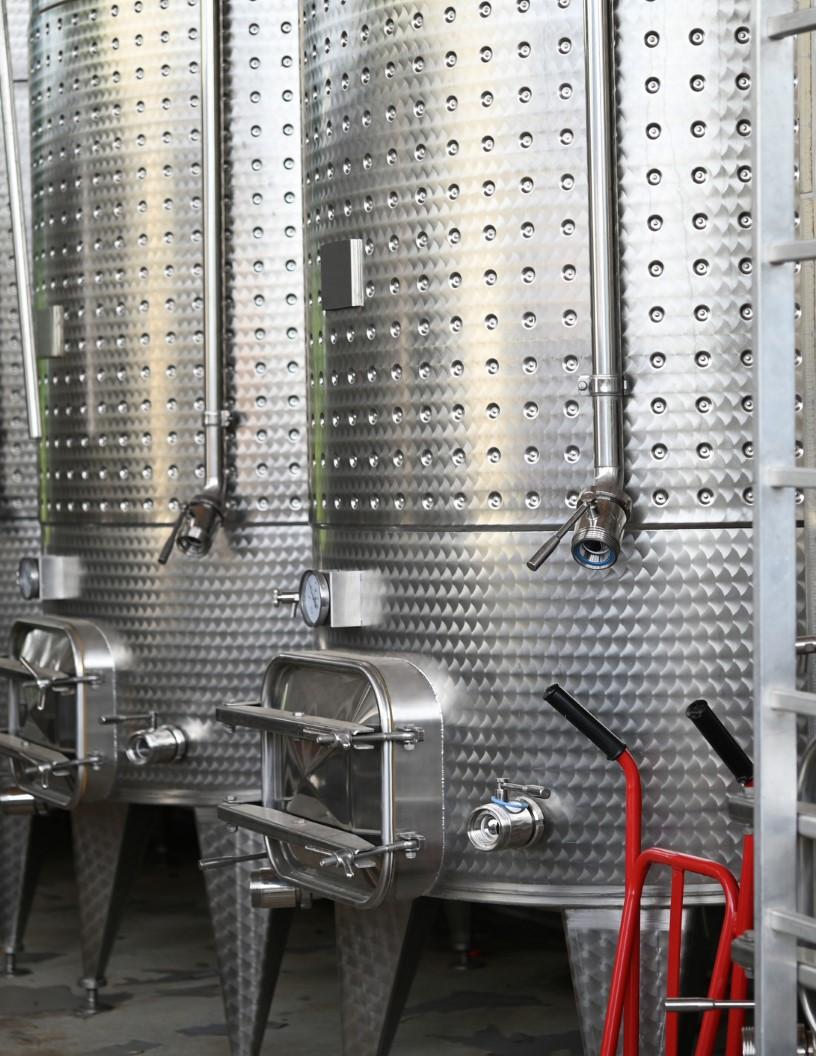


Distillation Systems Market Size 2025-2029
The distillation systems market size is forecast to increase by USD 2.58 billion, at a CAGR of 6% between 2024 and 2029.
- The market is driven by the increasing adoption of desalination techniques and the growing demand for biofuels. Desalination, a process that removes salt and other minerals from seawater to produce clean water, relies heavily on distillation systems. As water scarcity becomes a pressing issue worldwide, the demand for desalination is surging, thereby fueling market growth. Additionally, the biofuels industry's expansion is another significant market driver. Biofuels, such as ethanol and biodiesel, are produced through distillation processes, making these systems indispensable. Apart from this, increasing demand for distilled spirits is a significant growth driver. However, the high costs associated with setting up and maintaining distillation systems pose a significant challenge to market growth.
- The capital-intensive nature of these plants requires substantial investment, which can deter potential entrants. Furthermore, the operational costs, including energy consumption and maintenance, add to the financial burden. Companies seeking to capitalize on market opportunities must focus on cost reduction strategies, such as energy efficiency and process optimization, to remain competitive. The integration of renewable energy sources, advanced materials research, and industrial automation solutions is transforming the industry, enabling more efficient and sustainable production processes.
What will be the Size of the Distillation Systems Market during the forecast period?

Explore in-depth regional segment analysis with market size data - historical 2019-2023 and forecasts 2025-2029 - in the full report.
Request Free Sample
- The market encompasses various components, including control strategies, valve trays, plant design, emissions control, and process intensification. PID control and advanced techniques like bubble cap trays, sieve trays, and structured packing are integral to optimizing performance and reducing operating costs. Energy recovery, heat integration, and dynamic simulation are crucial for enhancing energy efficiency and minimizing capital cost through economic analysis. Heat exchanger design and biomass conversion technologies are critical components in the distillation systems used in these industries, as they facilitate the efficient transfer of heat and the conversion of raw materials into valuable products.
- Construction management, reliability analysis, and downtime reduction are essential for ensuring successful startup and commissioning. Operating and maintenance strategies, waste minimization, and life cycle analysis are vital for long-term performance and cost savings. Random packing and CFD simulation offer opportunities for process optimization and improved bubble column design. Column stills can be made of copper or stainless steel, or a combination of both.
How is this Distillation Systems Industry segmented?
The distillation systems industry research report provides comprehensive data (region-wise segment analysis), with forecasts and estimates in "USD million" for the period 2025-2029, as well as historical data from 2019-2023 for the following segments.
- Type
- Column still
- Pot still
- Method
- Continuous
- Batch
- End-user
- Petroleum and biorefinery
- Food and beverages
- Pharmaceuticals
- Water treatment
- Others
- Geography
- North America
- US
- Canada
- Europe
- France
- Germany
- Italy
- UK
- APAC
- China
- India
- Japan
- South Korea
- Rest of World (ROW)
- North America
By Type Insights
The column still segment is estimated to witness significant growth during the forecast period. In the market, atmospheric distillation plays a significant role in various industries, including pharmaceutical manufacturing and biofuel production. Heat transfer is a crucial aspect of distillation systems, ensuring efficient energy consumption and maintaining optimal operating pressure. Safety standards and wastewater treatment are essential considerations, with corrosion resistance a key factor in materials of construction. Column stills, featuring fractionating towers and trays or plates, dominate the market. These stills, which can be made of copper or stainless steel, enable continuous distillation through vapor-liquid separation, yielding cleaner, purer products compared to batch methods. Column stills, including those used in crude oil distillation and vacuum distillation, are integral to gas processing and chemical synthesis.
Process modeling and simulation software, such as Aspen Plus, optimize distillation column design and operation. Multi-component distillation, including binary distillation and distillation columns, addresses the challenge of separating mixtures with varying boiling points and vapor pressures. Plate efficiency, feed composition, and process control are essential factors in optimizing distillation processes. Environmental regulations necessitate water treatment and membrane separation for wastewater management. Maintenance procedures and materials of construction must meet safety and corrosion resistance standards. Mass transfer and vapor pressure are essential factors in distillation efficiency. Biofuel production, particularly ethanol, and pharmaceutical manufacturing are key applications for distillation systems. Innovations in distillation technologies include tray distillation, packed distillation, and side draw techniques, which offer increased plate efficiency and energy savings. Vapor-liquid separation and energy consumption remain critical concerns in the evolving the market.
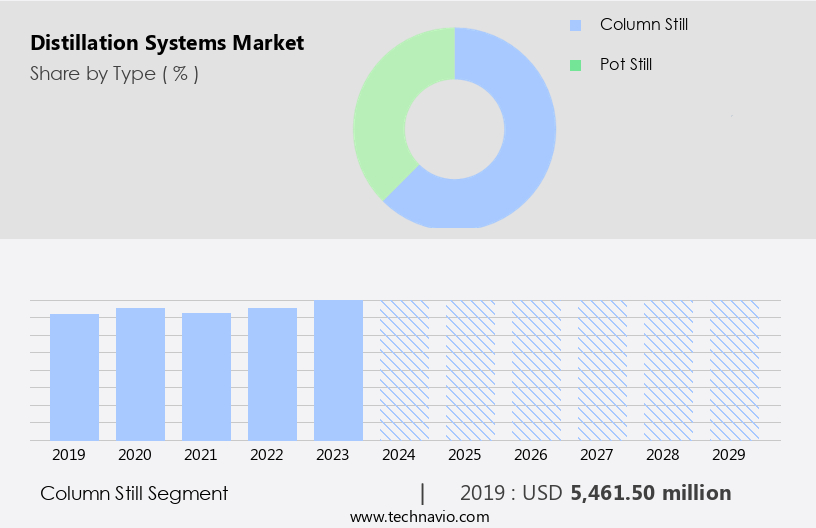
The Column still segment was valued at USD 5.46 billion in 2019 and showed a gradual increase during the forecast period.
The Distillation Systems Market is witnessing significant growth due to increasing demand for efficient separation processes in industries like chemicals, pharmaceuticals, and food processing. A well-designed overhead system ensures effective vapor handling, optimizing product recovery. Meanwhile, the bottom product plays a crucial role in maximizing yield by efficiently collecting residual fractions. The choice of packing material impacts performance, influencing energy efficiency and separation precision. Among various methods, batch distillation remains a preferred technique for small-scale operations, offering flexibility in processing different feedstocks.
The Distillation Systems Market is evolving rapidly, with industries prioritizing efficiency and cost-effectiveness. Advanced control technologies are revolutionizing operations, enabling real-time adjustments for optimal separation and energy savings. Startup commissioning plays a crucial role in ensuring seamless integration of new systems, minimizing downtime and maximizing productivity. Effective operation maintenance is key to sustaining performance and extending equipment lifespan. Continuous performance monitoring helps identify inefficiencies, leading to proactive troubleshooting and enhanced yield. Additionally, managing operating cost is a critical factor for industries aiming to optimize resources without compromising quality.
Regional Analysis
APAC is estimated to contribute 44% to the growth of the global market during the forecast period. Technavio's analysts have elaborately explained the regional trends and drivers that shape the market during the forecast period.

The market is witnessing significant growth, particularly in the Asia Pacific (APAC) region. Driven by industrialization, urbanization, and population expansion, the demand for clean water is surging across various industries such as food and beverage, pharmaceuticals, pulp and paper, and power generation. This increasing demand for water is fueling the market growth, with refining capacity in APAC anticipated to expand steadily. The petrochemical industry is a major contributor to this trend, as the growing automotive sector and industrial demand drive up the need for petrochemical products. In response, refinery operators in APAC are prioritizing capacity expansion.
Heat transfer plays a crucial role in distillation systems, ensuring energy efficiency and optimal performance. Safety standards are rigorously enforced to ensure the safe and reliable operation of these systems. Wastewater treatment is another critical consideration, with corrosion resistance and product purity key factors in the design and implementation of distillation systems. Both batch and continuous distillation methods are employed in various industries. Aspen Plus simulation software and fractionating towers are essential tools for optimizing distillation processes, particularly in pharmaceutical manufacturing and biofuel production. Multi-component distillation, including binary distillation and distillation columns, are used to separate complex mixtures.
Vacuum distillation and energy consumption are important considerations in the design and operation of distillation systems. Ethanol production, a significant application of distillation technology, is subject to environmental regulations and process control requirements. Crude oil distillation is a major application of distillation systems, with materials of construction and maintenance procedures crucial to their longevity and efficiency. Gas processing and vapor-liquid separation are other applications that rely on distillation technology. Design optimization, plate efficiency, feed composition, and chemical synthesis are all critical factors in the effective use of distillation systems. Separation technologies, including membrane separation and side draw, are increasingly being employed to enhance the performance of distillation processes.
Market Dynamics
Our researchers analyzed the data with 2024 as the base year, along with the key drivers, trends, and challenges. A holistic analysis of drivers will help companies refine their marketing strategies to gain a competitive advantage.
What are the Distillation Systems market drivers leading to the rise in the adoption of Industry?
- The increasing implementation of desalination technology serves as the primary catalyst for market growth. The market experiences significant growth due to the increasing global population and the resulting demand for clean water. Freshwater reserves are unevenly distributed, leading to an increased demand for desalination and water treatment. The scarcity of safe, usable water is driven by the presence of contaminants, such as industrial waste, pollutants, and pathogens. This demand for clean water is primarily influenced by population growth and dietary changes. Heat transfer plays a crucial role in distillation systems, ensuring product purity and efficiency. Safety standards are stringently enforced to prevent corrosion and ensure system reliability. Distillation methods include atmospheric, batch, and packed, with fractionating towers utilized for separating components based on their boiling points.
- Advanced simulation software, such as Aspen Plus, is employed to optimize distillation processes and improve energy efficiency. The pharmaceutical manufacturing sector heavily relies on distillation systems for producing high-purity products. Wastewater treatment applications also contribute to the market's growth, as these systems enable the recycling and reuse of water. Distillation systems must meet rigorous safety and corrosion resistance standards to ensure product quality and prevent environmental contamination. These systems are essential for providing clean water to industries and communities worldwide.
What are the Distillation Systems market trends shaping the Industry?
- The increasing demand for biofuels represents a significant market trend in the energy sector. Biofuels, such as ethanol and biodiesel, are gaining popularity due to their renewable and eco-friendly nature, making them an attractive alternative to traditional fossil fuels. Biofuels have experienced significant growth in recent years and are anticipated to continue this trend during the forecast period. The increasing emphasis on sustainable practices and solutions within the petroleum industry has fueled the demand for biofuels, which can make an economy more eco-friendly and decrease its reliance on fossil fuels. The transportation sector is the primary driver of biofuel demand due to the increasing adoption of government mandates promoting the use of sustainable fuels worldwide. Distillation systems play a crucial role in biofuel production, particularly in the separation and purification of ethanol and other biofuels. These systems employ various techniques such as tray distillation, binary distillation, vacuum distillation, and continuous distillation.
- The choice of distillation method depends on the relative volatility of the components and the desired product purity. Distillation columns, a key component of distillation systems, are designed based on vapor pressure and plate efficiency to ensure optimal separation and energy consumption. Multi-component distillation poses unique challenges, requiring careful column design and operation to achieve high product purity. Energy consumption is a critical consideration in distillation systems, and advancements in technology have led to more energy-efficient designs. For instance, vacuum distillation reduces energy consumption by lowering the boiling point of the mixture, allowing for lower temperatures and reduced energy input. The demand for biofuels is driven by the need for sustainable energy sources and government mandates. Distillation systems, employing various techniques and components, are essential in biofuel production, with energy efficiency being a significant concern.
How does Distillation Systems market faces challenges face during its growth?
- The escalating costs associated with establishing and operating distillation systems represent a significant challenge to the growth of the industry. Distillation systems play a crucial role in the production of various chemicals and gas processing industries. The cost of operating a distillation plant is influenced by several factors, including feed composition, processing capacity, and energy efficiency. The energy consumption in distillation is higher compared to other treatment technologies due to the need for high temperatures and pressures for separation. The design and configuration of a distillation plant significantly impact its cost. Pretreatment filters, energy-recovery devices, and chemical cleaning systems are essential components of the plant. Additional devices like burners, double heating systems, and decolorization systems can be integrated into the setup.
- The capital expenditure (CAPEX) for setting up a distillation plant remains substantial due to the complexity of the process and the materials of construction used. Process modeling and separation technologies, such as membrane separation, are increasingly being adopted to optimize energy usage and reduce costs. Maintenance procedures are critical in ensuring the efficient operation of a distillation plant. Regular upkeep of equipment and timely replacement of worn-out parts can help minimize downtime and reduce operational costs. The operating pressure and mass transfer efficiency are essential factors that influence the overall performance and profitability of a distillation plant.
Exclusive Customer Landscape
The distillation systems market forecasting report includes the adoption lifecycle of the market, covering from the innovator's stage to the laggard's stage. It focuses on adoption rates in different regions based on penetration. Furthermore, the distillation systems market report also includes key purchase criteria and drivers of price sensitivity to help companies evaluate and develop their market growth analysis strategies.

Customer Landscape
Key Companies & Market Insights
Companies are implementing various strategies, such as strategic alliances, distillation systems market forecast, partnerships, mergers and acquisitions, geographical expansion, and product/service launches, to enhance their presence in the industry.
Accumax Lab Devices Pvt. Ltd. - The company specializes in supplying advanced distillation systems for laboratory applications.
The industry research and growth report includes detailed analyses of the competitive landscape of the market and information about key companies, including:
- Accumax Lab Devices Pvt. Ltd.
- Alfa Laval AB
- Arkchem Systems Pvt. Ltd.
- BUCHI Labortechnik AG
- De Dietrich SAS
- Dynalab Corp.
- FOSS
- GEA Group AG
- GMM Pfaudler Ltd.
- Kalina Engineering Pvt. Ltd.
- Larsen and Toubro Ltd.
- Paul Mueller Co. Inc.
- Pilodist
- Robert Bosch GmbH
- Rufouz Hitek Engineers Pvt. Ltd.
- Specific Mechanical Systems Ltd.
- StillDragon
- Sulzer Ltd.
- Vendome Copper and Brass Works Inc.
Qualitative and quantitative analysis of companies has been conducted to help clients understand the wider business environment as well as the strengths and weaknesses of key industry players. Data is qualitatively analyzed to categorize companies as pure play, category-focused, industry-focused, and diversified; it is quantitatively analyzed to categorize companies as dominant, leading, strong, tentative, and weak.
Recent Development and News in Distillation Systems Market
- In February 2024, Emerson Electric Company introduced the latest addition to its Micro Motion Coriolis mass flowmeters portfolio, the 8800 series, designed specifically for the oil and gas industry. This innovative product launch aims to enhance process efficiency and improve operational excellence by delivering precise measurement of liquid and gas flows (Emerson Electric Company Press Release, 2024).
- In May 2024, Thermo Fisher Scientific and Sartorius AG announced a strategic partnership to combine their respective expertise in laboratory services and bioprocessing solutions. This collaboration intends to create a comprehensive offering for the biopharmaceutical industry, enabling customers to access integrated solutions from research to production (Thermo Fisher Scientific Press Release, 2024).
Research Analyst Overview
The market is characterized by its continuous evolution, driven by the diverse applications across various sectors. In the realm of biofuel production, distillation plays a pivotal role in the separation and purification of bioethanol. Tray distillation and binary distillation are commonly employed, with relative volatility being a crucial factor in the process. Distillation columns, a key component, undergo design optimization to enhance energy efficiency and plate efficiency. Vacuum distillation, essential for crude oil refining, ensures the separation of components at lower temperatures and pressures. Energy consumption is a significant concern, leading to the adoption of continuous distillation and ethanol production processes.
Multi-component distillation poses challenges, necessitating advanced process modeling and simulation software. Distillation systems are integral to pharmaceutical manufacturing, where product purity and safety standards are paramount. Heat transfer, a critical aspect, is optimized through the use of fractionating towers and vapor pressure control. Materials of construction must exhibit corrosion resistance and adhere to environmental regulations. Gas processing and wastewater treatment also rely on distillation systems for vapor-liquid separation and mass transfer. Operating pressure, feed composition, and feed preheating are essential factors in these applications. Maintenance procedures and process control are continually refined to ensure optimal performance.
The market is a dynamic landscape, with ongoing research and development focusing on improving efficiency, reducing energy consumption, and enhancing product purity. Separation technologies, including membrane separation and side draw, offer alternative solutions to traditional distillation methods. The integration of advanced simulation software and process control systems further streamlines operations and improves overall process performance.
Dive into Technavio's strong research methodology, blending expert interviews, extensive data synthesis, and validated models for unparalleled Distillation Systems Market insights. See full methodology.
|
Market Scope |
|
|
Report Coverage |
Details |
|
Page number |
223 |
|
Base year |
2024 |
|
Historic period |
2019-2023 |
|
Forecast period |
2025-2029 |
|
Growth momentum & CAGR |
Accelerate at a CAGR of 6% |
|
Market growth 2025-2029 |
USD 2.58 billion |
|
Market structure |
Fragmented |
|
YoY growth 2024-2025(%) |
5.5 |
|
Key countries |
US, China, Canada, Japan, Germany, UK, France, India, Italy, and South Korea |
|
Competitive landscape |
Leading Companies, Market Positioning of Companies, Competitive Strategies, and Industry Risks |
What are the Key Data Covered in this Distillation Systems Market Research and Growth Report?
- CAGR of the Distillation Systems industry during the forecast period
- Detailed information on factors that will drive the growth and forecasting between 2025 and 2029
- Precise estimation of the size of the market and its contribution of the industry in focus to the parent market
- Accurate predictions about upcoming growth and trends and changes in consumer behaviour
- Growth of the market across APAC, Europe, North America, Middle East and Africa, and South America
- Thorough analysis of the market's competitive landscape and detailed information about companies
- Comprehensive analysis of factors that will challenge the distillation systems market growth of industry companies
We can help! Our analysts can customize this distillation systems market research report to meet your requirements.
 RIA -
RIA - 
