


E-wallet Market Size 2026-2030
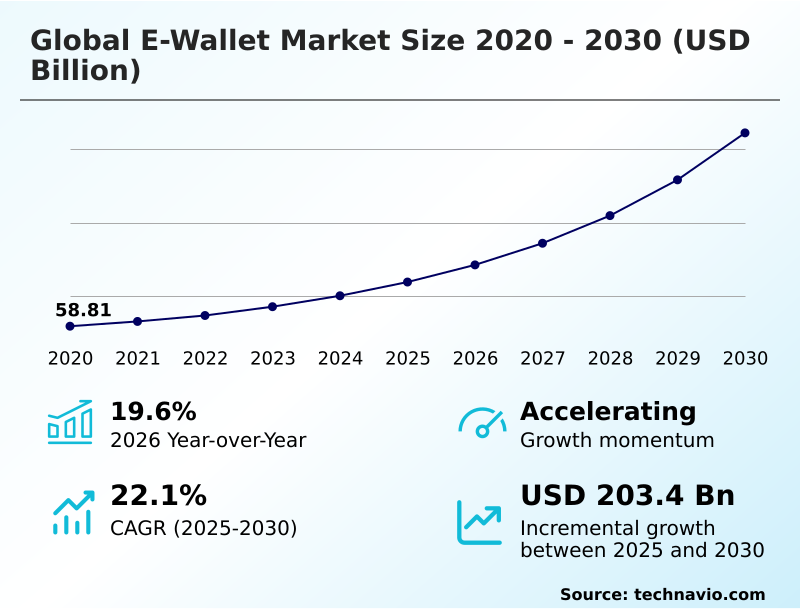
The e-wallet market size is valued to increase by USD 203.40 billion, at a CAGR of 22.1% from 2025 to 2030. Rising number of online transactions will drive the e-wallet market.
Major Market Trends & Insights
- APAC dominated the market and accounted for a 36.9% growth during the forecast period.
- By Technology - Proximity segment was valued at USD 66.74 billion in 2024
- By Application - Retail and e-commerce segment accounted for the largest market revenue share in 2024
Market Size & Forecast
- Market Opportunities: USD 263.63 billion
- Market Future Opportunities: USD 203.40 billion
- CAGR from 2025 to 2030 : 22.1%
Market Summary
- The e-wallet market is undergoing a significant transformation, driven by the global shift toward a cashless economy and the widespread adoption of smartphones. This evolution is supported by key technological advancements, including the implementation of robust digital payment gateway architecture and sophisticated payment processing software.
- Trends such as the integration of biometric authentication and AI for fraud detection are enhancing security and building consumer trust. A primary driver is the demand for convenience in e-commerce checkout and peer-to-peer transfers, which has become essential for both consumers and businesses.
- For instance, a retail enterprise can leverage omnichannel retail payments to create a seamless customer journey, integrating digital loyalty programs and in-app purchasing to boost engagement and sales. However, the market faces challenges related to e-wallet regulatory compliance and the high costs of maintaining a secure cloud-based payment infrastructure.
- The development of open banking APIs is helping to address interoperability issues, fostering a more connected digital financial services ecosystem.
What will be the Size of the E-wallet Market during the forecast period?
Get Key Insights on Market Forecast (PDF) Get Free Sample
How is the E-wallet Market Segmented?
The e-wallet industry research report provides comprehensive data (region-wise segment analysis), with forecasts and estimates in "USD million" for the period 2026-2030, as well as historical data from 2020-2024 for the following segments.
- Technology
- Proximity
- Remote
- Application
- Retail and e-commerce
- Media and entertainment
- Hospitality and transportation
- Telecommunication
- Others
- Type
- Semi-closed wallets
- Open wallets
- Closed wallets
- Geography
- APAC
- China
- Japan
- India
- North America
- US
- Canada
- Mexico
- Europe
- Germany
- UK
- France
- South America
- Brazil
- Argentina
- Middle East and Africa
- Saudi Arabia
- UAE
- South Africa
- Rest of World (ROW)
- APAC
By Technology Insights
The proximity segment is estimated to witness significant growth during the forecast period.
The proximity segment is defined by technologies enabling secure, in-person transactions. Solutions built on near field communication (nfc payment technology) and qr code technology are becoming standard for facilitating contactless payments.
This shift enhances contactless transaction speed at the mobile point of sale, with tap-to-pay functionality improving checkout efficiency by over 30%.
The integrity of these transactions is maintained through robust methods like tokenization, which masks sensitive data, and hardware-level security via a secure element.
As qr code payment standards mature, they provide a low-cost, highly accessible method for merchants to accept digital payments, further driving adoption in physical retail environments.
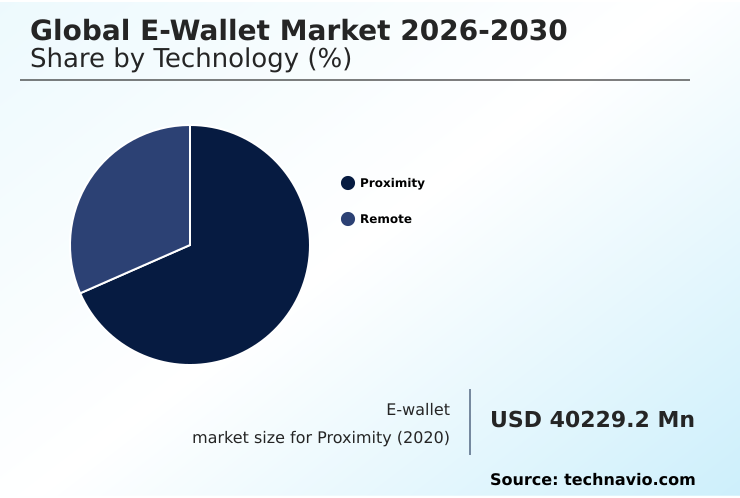
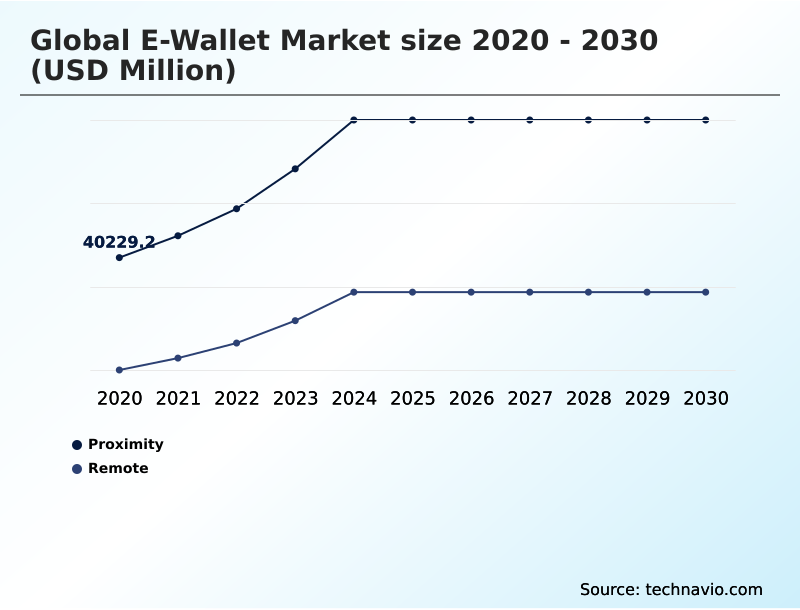
The Proximity segment was valued at USD 66.74 billion in 2024 and showed a gradual increase during the forecast period.
Regional Analysis
APAC is estimated to contribute 36.9% to the growth of the global market during the forecast period.Technavio’s analysts have elaborately explained the regional trends and drivers that shape the market during the forecast period.
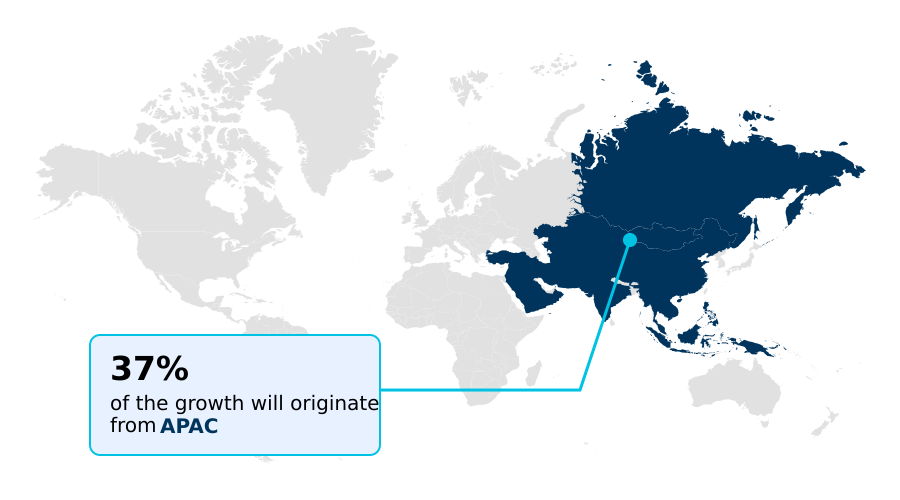
See How E-wallet Market Demand is Rising in APAC Get Free Sample
The geographic landscape of the e-wallet market is highly varied. In APAC, high mobile penetration has spurred the rapid adoption of digital financial services, with some countries seeing over 80% of retail transactions occur via mobile.
In contrast, North America and Europe are focusing on refining omnichannel retail payments and enhancing mobile banking integration. The development of central bank digital currency (CBDC) initiatives is a key factor influencing regional strategies.
These digital currency solutions are poised to transform cross-border payment processing, with pilot programs demonstrating a potential 40% reduction in transaction fees.
Effective digital identity verification remains a universal priority, underpinning the trust required for widespread consumer and merchant acceptance across all regions, including South America and the Middle East and Africa.
Market Dynamics
Our researchers analyzed the data with 2025 as the base year, along with the key drivers, trends, and challenges. A holistic analysis of drivers will help companies refine their marketing strategies to gain a competitive advantage.
- Strategically navigating the e-wallet market requires a deep understanding of its core operational and security components. A primary consideration is how to secure e-wallet transactions, where the deployment of ai based real time fraud detection has become a critical layer of defense, proving to be over 60% more effective than legacy systems in identifying fraudulent patterns.
- For businesses, the pathway to market entry often involves deciding between a proprietary platform or pursuing e-wallet integration for small business through third-party providers. This decision is closely tied to the complexities of implementing a digital wallet api and requires a thorough analysis when comparing open and closed loop wallets.
- The future of biometric payment verification promises to further streamline user experience, while the immediate benefits of using qr code payments are evident in their low-cost, scalable deployment. From a financial perspective, a cross-border e-wallet fee comparison reveals significant savings over traditional methods.
- In an e-wallet vs traditional bank transfers analysis, the digital alternative consistently offers superior speed and lower costs, despite the persistent challenges of e-wallet market adoption, such as regulatory uncertainty and the need for broader consumer education.
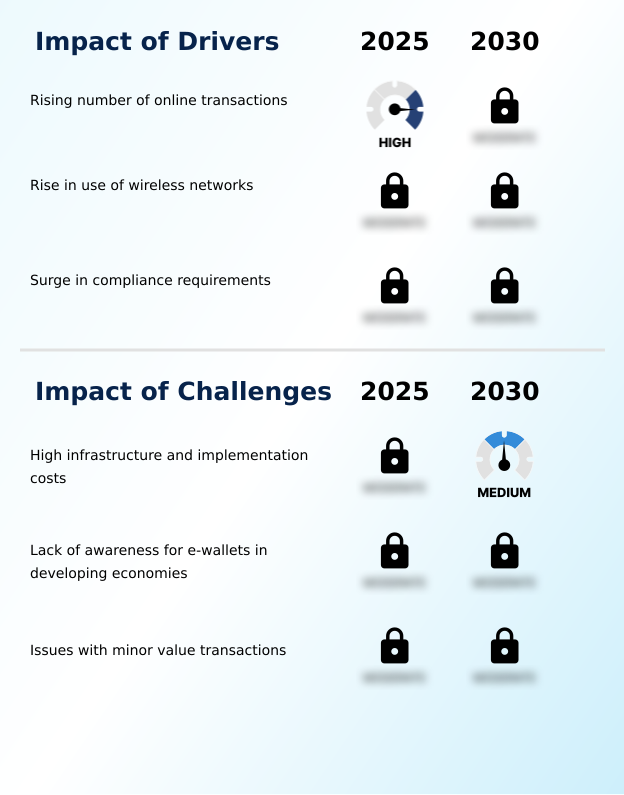
What are the key market drivers leading to the rise in the adoption of E-wallet Industry?
- The rising number of online transactions is a key driver fueling the expansion of the market.
- The proliferation of real-time payment networks and high digital wallet adoption are key market drivers. A streamlined e-commerce checkout experience has been shown to reduce cart abandonment rates by over 15%, while integrated digital loyalty programs increase customer retention.
- The rise of the gig economy has fueled demand for efficient peer to peer transfers and enhanced p2p payment app features.
- In many regions, government-backed initiatives like the unified payment interface provide crucial digital wallet enablement, expanding access to financial services.
- The evolution toward a super app financial ecosystem that consolidates services like subscription billing and banking into a single platform continues to propel market expansion.
What are the market trends shaping the E-wallet Industry?
- The integration of advanced technologies such as artificial intelligence, blockchain, and biometrics is a significant trend. It is reshaping the market by enhancing security and improving the overall user experience.
- Advanced technologies are setting new standards in the e-wallet market. The integration of blockchain in digital payments is enhancing transparency for cross border transfers, reducing settlement times by up to 60%. Enhanced security features like biometric authentication and multi factor verification are central to improving e-wallet user experience design, with platforms reporting a 25% increase in user trust.
- AI for fraud detection leverages real time analytics to identify and block threats with greater precision. Furthermore, the embedding of buy now pay later (bnpl) services, p2p lending platforms, and the issuance of virtual card numbers for secure online shopping are expanding the functional scope of digital wallets far beyond simple payments.
What challenges does the E-wallet Industry face during its growth?
- High infrastructure and implementation costs present a key challenge, affecting the growth trajectory of the industry.
- Significant operational challenges constrain market growth. Navigating complex e-wallet regulatory compliance can increase operational costs by up to 25% for service providers. The initial capital outlay for a secure cloud based payment infrastructure and a robust digital payment gateway is substantial.
- Interoperability also remains a hurdle; achieving seamless mobile payment system integration between different merchant payment solutions and a closed loop payment system requires significant investment in payment processing software and open banking APIs. Moreover, the continuous need to update fraud management solutions to counter evolving threats adds a persistent financial burden, impacting profitability for providers of all sizes.
Exclusive Technavio Analysis on Customer Landscape
The e-wallet market forecasting report includes the adoption lifecycle of the market, covering from the innovator’s stage to the laggard’s stage. It focuses on adoption rates in different regions based on penetration. Furthermore, the e-wallet market report also includes key purchase criteria and drivers of price sensitivity to help companies evaluate and develop their market growth analysis strategies.
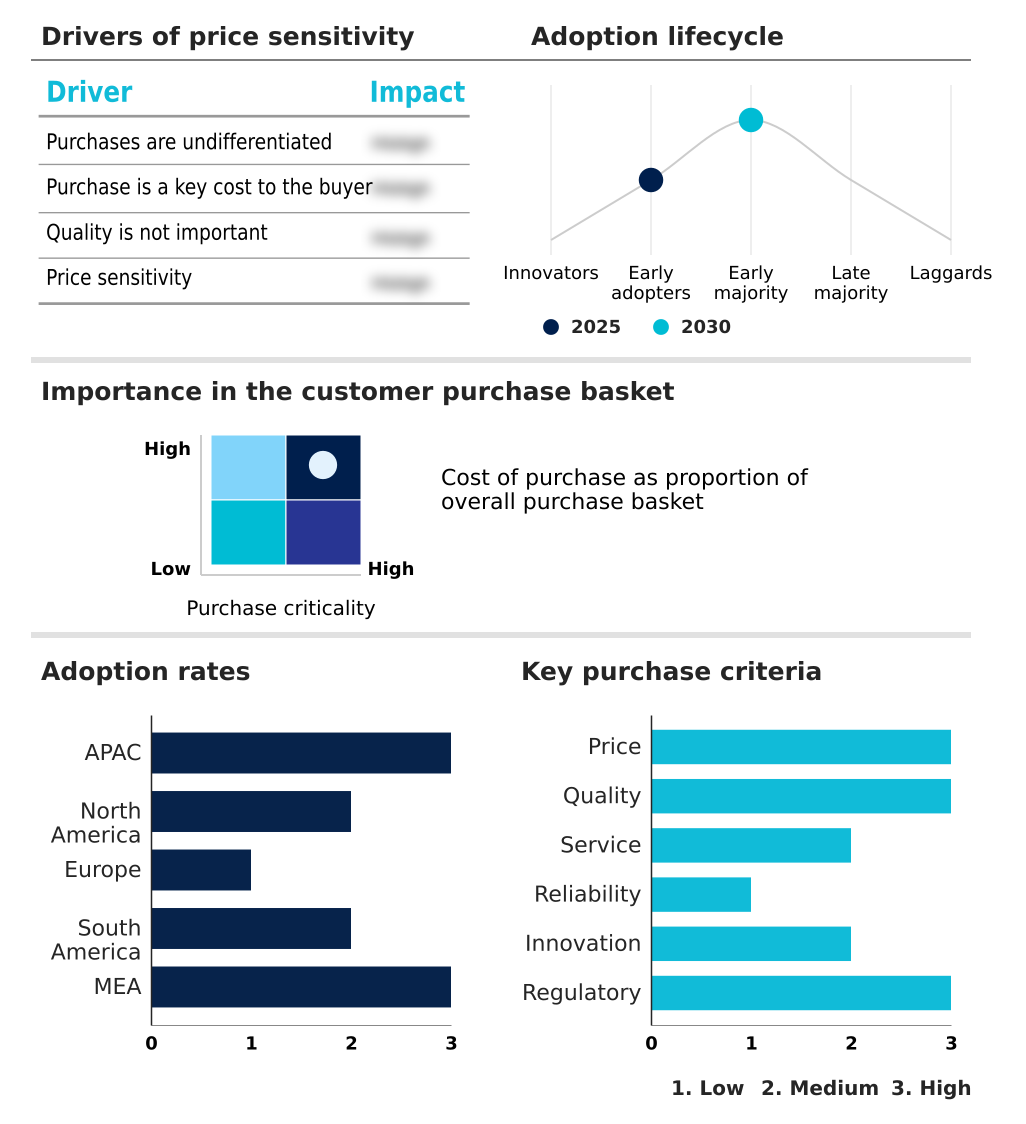
Customer Landscape of E-wallet Industry
Competitive Landscape
Companies are implementing various strategies, such as strategic alliances, e-wallet market forecast, partnerships, mergers and acquisitions, geographical expansion, and product/service launches, to enhance their presence in the industry.
ACI Worldwide Inc. - Offerings include real-time payments, advanced payment processing software, and integrated fraud management solutions designed for the enterprise financial ecosystem.
The industry research and growth report includes detailed analyses of the competitive landscape of the market and information about key companies, including:
- ACI Worldwide Inc.
- Adyen NV
- American Express Co.
- Apple Inc.
- Bharti Airtel Ltd.
- Block Inc.
- Google LLC
- Grab Holdings Ltd.
- Klarna Bank AB
- Mastercard Inc.
- One97 Communications Ltd.
- PayPal Holdings Inc.
- Paysafe Ltd.
- PhonePe Pvt. Ltd.
- Revolut Ltd.
- Samsung Electronics Co. Ltd.
- Stripe Inc.
- Tencent Holdings Ltd.
- Visa Inc.
- WEX Inc.
Qualitative and quantitative analysis of companies has been conducted to help clients understand the wider business environment as well as the strengths and weaknesses of key industry players. Data is qualitatively analyzed to categorize companies as pure play, category-focused, industry-focused, and diversified; it is quantitatively analyzed to categorize companies as dominant, leading, strong, tentative, and weak.
Recent Development and News in E-wallet market
- In August, 2024, Grab finalized an agreement with several regional central banks to integrate its digital payment system into a unified Southeast Asian QR network, enabling real-time currency conversion.
- In January, 2025, PayPal announced a major infrastructure overhaul of its global processing hubs, investing in backend systems to accommodate higher data throughput and enhance platform reliability.
- In March, 2025, Amazon Pay formed a strategic partnership with international fashion retailers, launching an integrated one-touch checkout that automates regional tax and shipping calculations.
- In May, 2025, Apple Pay launched an enhanced AI-driven biometric verification system that analyzes behavioral patterns to prevent unauthorized device usage, setting a new standard in mobile security.
Dive into Technavio’s robust research methodology, blending expert interviews, extensive data synthesis, and validated models for unparalleled E-wallet Market insights. See full methodology.
| Market Scope | |
|---|---|
| Page number | 294 |
| Base year | 2025 |
| Historic period | 2020-2024 |
| Forecast period | 2026-2030 |
| Growth momentum & CAGR | Accelerate at a CAGR of 22.1% |
| Market growth 2026-2030 | USD 203399.4 million |
| Market structure | Fragmented |
| YoY growth 2025-2026(%) | 19.6% |
| Key countries | China, Japan, India, South Korea, Australia, Indonesia, US, Canada, Mexico, Germany, UK, France, Italy, Spain, The Netherlands, Brazil, Argentina, Chile, Saudi Arabia, UAE, South Africa, Israel and Turkey |
| Competitive landscape | Leading Companies, Market Positioning of Companies, Competitive Strategies, and Industry Risks |
Research Analyst Overview
- The e-wallet market's evolution extends far beyond simple peer-to-peer transfers, now encompassing a complex ecosystem built on advanced payment processing software and secure digital payment gateway architecture. This infrastructure supports a range of functionalities, from contactless payments and seamless e-commerce checkout to complex subscription billing and emerging p2p lending platforms.
- A key strategic consideration for boardroom decision-making is the rise of central bank digital currency, which necessitates investment in compliant digital currency solutions and adaptable platforms. Security is foundational, with technologies like tokenization, biometric authentication, multi-factor verification, and a hardware-based secure element forming a layered defense.
- Platforms leveraging AI for fraud detection through real-time analytics have demonstrated a 40% improvement in identifying anomalous transactions. The market is also defined by its delivery mechanisms, including near field communication for in-person transactions, qr code technology for broad accessibility, and unified payment interface systems for interoperability.
- Digital wallet enablement through open banking APIs is fostering innovation, though challenges remain in bridging the gap between open and closed-loop payment systems while ensuring robust digital identity verification.
What are the Key Data Covered in this E-wallet Market Research and Growth Report?
-
What is the expected growth of the E-wallet Market between 2026 and 2030?
-
USD 203.40 billion, at a CAGR of 22.1%
-
-
What segmentation does the market report cover?
-
The report is segmented by Technology (Proximity, and Remote), Application (Retail and e-commerce, Media and entertainment, Hospitality and transportation, Telecommunication, and Others), Type (Semi-closed wallets, Open wallets, and Closed wallets) and Geography (APAC, North America, Europe, South America, Middle East and Africa)
-
-
Which regions are analyzed in the report?
-
APAC, North America, Europe, South America and Middle East and Africa
-
-
What are the key growth drivers and market challenges?
-
Rising number of online transactions, High infrastructure and implementation costs
-
-
Who are the major players in the E-wallet Market?
-
ACI Worldwide Inc., Adyen NV, American Express Co., Apple Inc., Bharti Airtel Ltd., Block Inc., Google LLC, Grab Holdings Ltd., Klarna Bank AB, Mastercard Inc., One97 Communications Ltd., PayPal Holdings Inc., Paysafe Ltd., PhonePe Pvt. Ltd., Revolut Ltd., Samsung Electronics Co. Ltd., Stripe Inc., Tencent Holdings Ltd., Visa Inc. and WEX Inc.
-
Market Research Insights
- Market dynamics are shaped by accelerating digital wallet adoption, with platforms achieving a 40% higher engagement rate when featuring a superior e-wallet user experience design. The evolution toward a super app financial ecosystem is a key trend, integrating diverse digital financial services and p2p payment app features.
- Innovations in tap-to-pay functionality are improving contactless transaction speed, a critical factor for merchant payment solutions. Security remains paramount, with robust digital wallet security protocols and AI for fraud detection reducing illicit activities by up to 50%. Navigating e-wallet regulatory compliance is crucial, as is achieving seamless mobile payment system integration with existing mobile banking infrastructure.
- The rise of services like buy now pay later (bnpl) and integrated digital loyalty programs further diversifies offerings, while advancements in cross-border payment processing and real-time payment networks enhance global utility.
We can help! Our analysts can customize this e-wallet market research report to meet your requirements.
 RIA -
RIA - 
