



Electrophysiology Market Size 2025-2029
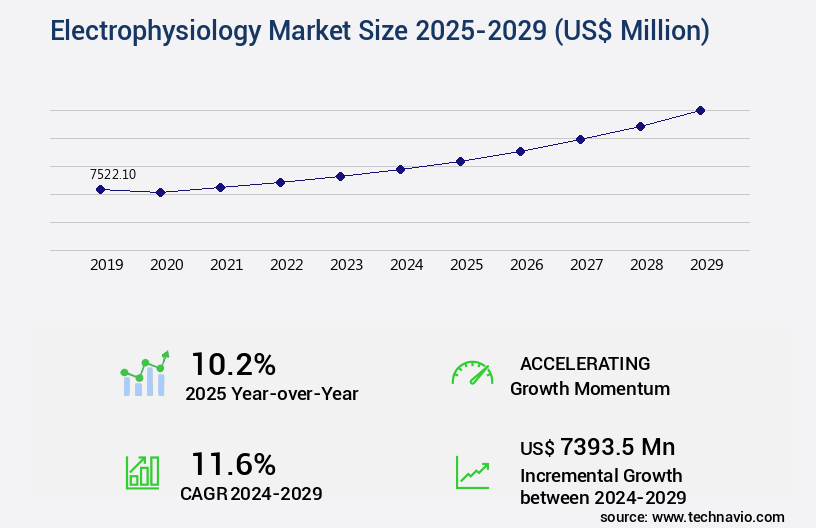
The electrophysiology market size is valued to increase USD 7.39 billion, at a CAGR of 11.6% from 2024 to 2029. Increasing incidence of target diseases and electrophysiology procedures will drive the electrophysiology market.
Major Market Trends & Insights
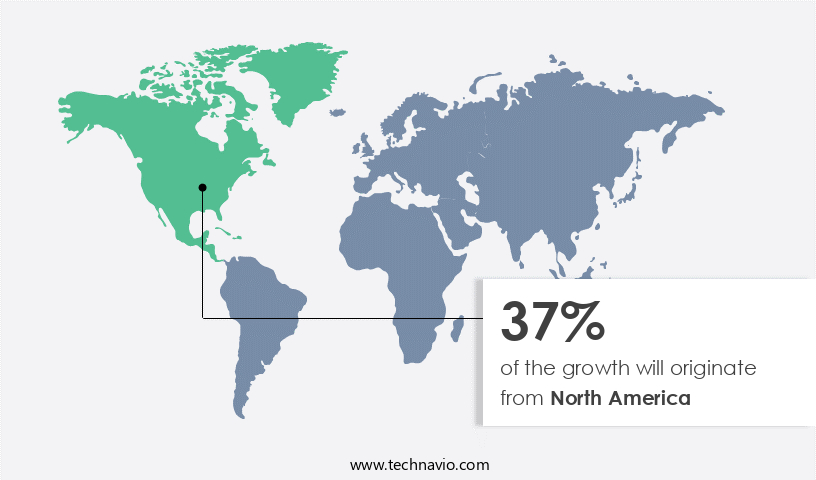
- North America dominated the market and accounted for a 37% growth during the forecast period.
- By Product - Lab devices segment was valued at USD 2.98 billion in 2023
- By End-user - Hospitals and cardiac centers segment accounted for the largest market revenue share in 2023
Market Size & Forecast
- Market Opportunities: USD 132.12 million
- Market Future Opportunities: USD 7393.50 million
- CAGR from 2024 to 2029 : 11.6%
Market Summary
- The market encompasses a dynamic and continually evolving landscape, driven by the increasing incidence of target diseases and the subsequent demand for electrophysiology procedures. Core technologies, such as catheter ablation and cardiac mapping systems, play a pivotal role in this market, enabling precise diagnosis and treatment of cardiac arrhythmias. Technological advancements, including the integration of artificial intelligence and machine learning, are further revolutionizing electrophysiology, offering improved accuracy and efficiency. However, the high cost of electrophysiology products poses a significant challenge, limiting accessibility and affordability for many patients.
- The electrophysiology devices market is expected to witness a significant growth rate, driven by the increasing prevalence of cardiac arrhythmias and the ongoing development of advanced technologies. Despite this, regulatory compliance and reimbursement policies remain major obstacles, necessitating close attention from industry players and stakeholders alike.
What will be the Size of the Electrophysiology Market during the forecast period?
Get Key Insights on Market Forecast (PDF) Request Free Sample
How is the Electrophysiology Market Segmented ?
The electrophysiology industry research report provides comprehensive data (region-wise segment analysis), with forecasts and estimates in "USD million" for the period 2025-2029, as well as historical data from 2019-2023 for the following segments.
- Product
- Lab devices
- Ablation catheters
- Diagnostic catheters
- Access devices
- End-user
- Hospitals and cardiac centers
- ASCs
- Device
- Atrial fibrillation (AF)
- Non-atrial fibrillation
- Geography
- North America
- US
- Canada
- Europe
- France
- Germany
- Italy
- UK
- APAC
- China
- India
- Japan
- South Korea
- Rest of World (ROW)
- North America
By Product Insights
The lab devices segment is estimated to witness significant growth during the forecast period.
In the dynamic and evolving the market, cutting-edge technologies such as EEG data analysis, multi-electrode arrays, and patch clamp techniques play pivotal roles in understanding voltage-gated ion channels and single-cell electrophysiology. Extracellular recording techniques, including electrical impedance tomography, are instrumental in drug discovery electrophysiology, while intracellular recording methods like whole-cell patch clamp provide insights into pacemaker cell activity and membrane potential. Neuromuscular junction studies employ outside-out patch clamp for ecg signal processing and ion channel mutations analysis. Cardiac electrophysiology focuses on heart rate variability, action potential propagation, and ion channel kinetics, utilizing sodium channel blockers and calcium channel antagonists.
Bioelectric signal acquisition techniques, such as cell-attached and inside-out patch clamps, optical mapping, and ion channel pharmacology, contribute significantly to neural network modeling and electrocardiogram interpretation. These advanced procedures enable electrophysiologists to diagnose and treat conditions like arrhythmia, fibrillation, and congestive heart failure, ultimately improving patient outcomes.
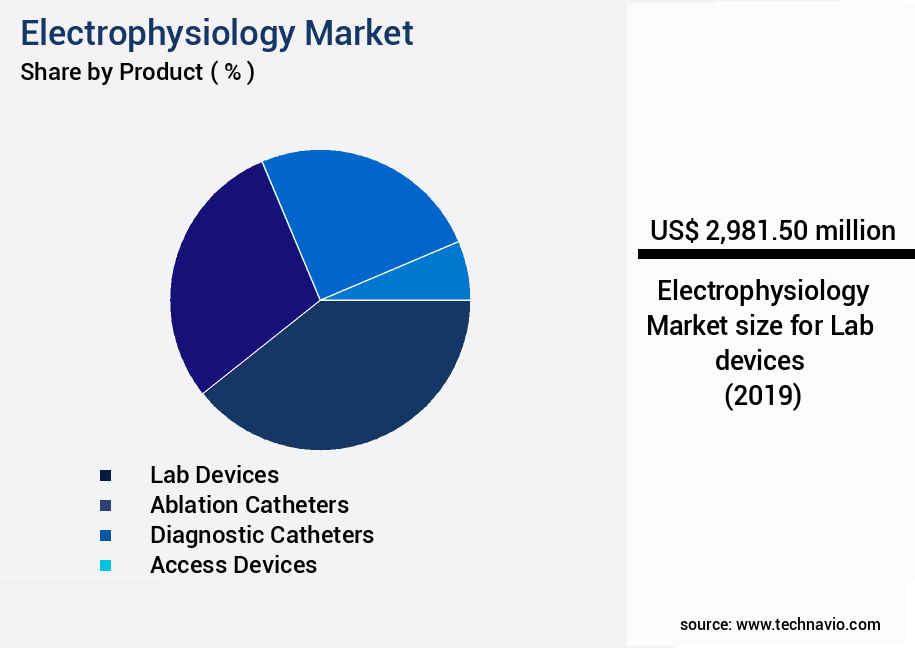
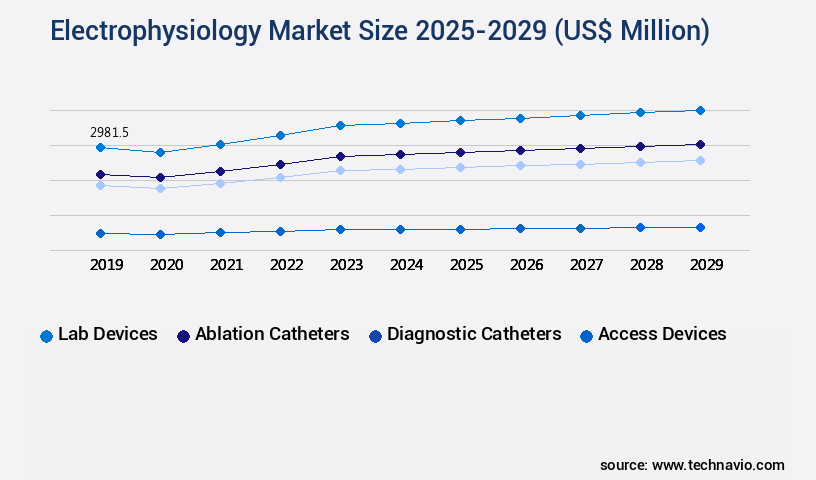
The Lab devices segment was valued at USD 2.98 billion in 2019 and showed a gradual increase during the forecast period.
Regional Analysis
North America is estimated to contribute 37% to the growth of the global market during the forecast period.Technavio's analysts have elaborately explained the regional trends and drivers that shape the market during the forecast period.
See How Electrophysiology Market Demand is Rising in North America Request Free Sample
The North America market is experiencing significant growth, underpinned by a robust healthcare infrastructure and a strong focus on clinical innovation. This region's dominance in the global market is attributed to high procedural adoption rates in both academic and non-academic medical institutions. Favorable reimbursement frameworks and regulatory clarity further bolster this trend. The presence of specialized cardiac care centers and a growing pool of trained electrophysiologists are accelerating procedural volumes. Moreover, the integration of digital technologies into electrophysiology workflows is enhancing procedural efficiency and diagnostic accuracy, fueling market expansion.
The region's emphasis on early diagnosis and intervention ensures the uptake of advanced electrophysiology systems across various clinical settings. According to a recent report, the North American the market is expected to account for over 40% of the global market share by 2026.
Market Dynamics
Our researchers analyzed the data with 2024 as the base year, along with the key drivers, trends, and challenges. A holistic analysis of drivers will help companies refine their marketing strategies to gain a competitive advantage.
The market encompasses a dynamic and intricate landscape, driven by the increasing understanding of voltage gated sodium channel subtypes and calcium activated potassium channels in mechanisms of cardiac arrhythmias. This market's growth is underpinned by advancements in gap junction research, revealing their crucial role in conduction and the effects of ion channel mutations. Analysis of action potential morphology and the impact of drugs on ion channel kinetics are pivotal applications of optical mapping in electrophysiology. High throughput electrophysiology screening and mathematical modeling of cardiac cells are essential for the development of novel antiarrhythmic drugs. Furthermore, assessment of neuronal network dynamics and single cell electrophysiology techniques are integral to understanding the complexities of ion channels.
Multi electrode array data processing and improved signal acquisition methods are critical for advanced data analysis algorithms. Non-invasive electrophysiology methods and functional characterization of ion channels are key trends, as researchers identify novel drug targets through translational electrophysiology research. A significant comparison within the market lies in the industrial versus academic application segments. While both sectors contribute to the market's growth, industrial applications account for a substantially larger share due to their focus on commercial drug development and diagnostic tools. This trend underscores the market's potential for innovation and growth, making it an attractive area for investment and collaboration.
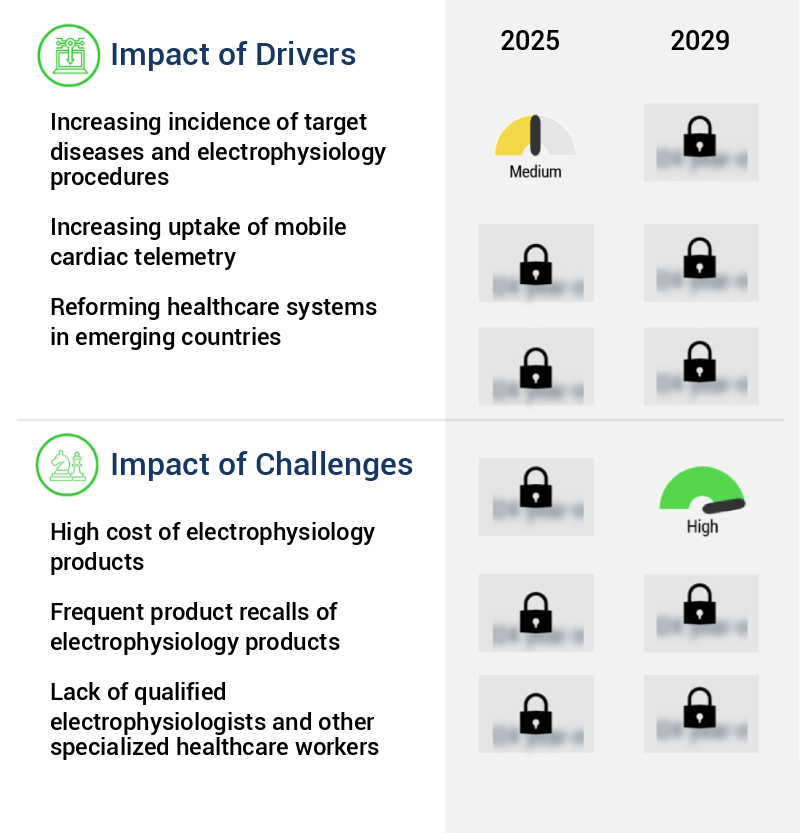
What are the key market drivers leading to the rise in the adoption of Electrophysiology Industry?
- The rising prevalence of target diseases and the subsequent growth in electrophysiology procedures serve as the primary market drivers.
- The market is witnessing significant growth, fueled by the rising prevalence of cardiovascular disorders like atrial fibrillation and arrhythmias. This trend is attributed to aging populations and lifestyle changes. In response, there is a growing demand for accurate diagnostic and therapeutic solutions. Electrophysiology procedures, particularly catheter ablation, are increasingly preferred due to their minimally invasive nature, resulting in improved patient outcomes and shorter recovery times.
- Advanced technologies, such as 3D electro-anatomical mapping systems and contact-force sensing catheters, have revolutionized the field by enhancing procedure accuracy and safety. Healthcare organizations globally are investing in infrastructure and expertise to meet the escalating need for electrophysiological interventions.
What are the market trends shaping the Electrophysiology Industry?
- In the realm of electrophysiology, technological advancements represent the current market trend. Advanced technologies are driving innovation in the electrophysiology sector.
- Electrophysiology technology, a significant innovation in the cardiology sector, has gained considerable traction in the global market due to its effectiveness in managing and treating arrhythmia. Arrhythmia, a major cardiac disorder, contributes to approximately 15%-20% of total deaths, often linked to sudden cardiac death. Electrophysiology devices have emerged as preferred solutions for conventional arrhythmia treatment methods. These devices incorporate advanced modalities, such as cardiac magnetic resonance imaging (CMR), computerized cardiac tomography (CT), echocardiography, fluoroscopy, and electro-anatomic mapping. These technologies enable healthcare professionals to comprehensively analyze the root causes of various arrhythmia cases.
- The integration of these modalities in electrophysiology devices has revolutionized the diagnosis and treatment process, offering improved patient outcomes. Electrophysiology technology continues to evolve, presenting substantial opportunities for growth and innovation across the healthcare sector.
What challenges does the Electrophysiology Industry face during its growth?
- The escalating costs of electrophysiology products pose a significant challenge to the industry's growth trajectory.
- The market faces challenges due to the high cost of related products, which can hinder the adoption of electrophysiology procedures in certain regions. For example, only a few countries offer reimbursements for arrhythmia procedures, such as the US in North America. In contrast, developing countries like India and China lack government reimbursement programs, leaving patients to rely on private insurance or pay out-of-pocket expenses. Despite these challenges, the market remains competitive, with intense pricing pressure among existing players. Developed countries' reimbursement policies contribute to increased adoption of electrophysiology products and procedures, making North America a significant market player.
- However, the absence of such policies in developing countries can limit market growth in those regions. In summary, the market is characterized by its competitive pricing landscape, with the availability of government reimbursement programs playing a crucial role in market expansion. The high cost of electrophysiology products and limited reimbursement policies in certain regions can impact the adoption of electrophysiology procedures and, subsequently, the market's growth trajectory.
Exclusive Technavio Analysis on Customer Landscape
The electrophysiology market forecasting report includes the adoption lifecycle of the market, covering from the innovator's stage to the laggard's stage. It focuses on adoption rates in different regions based on penetration. Furthermore, the electrophysiology market report also includes key purchase criteria and drivers of price sensitivity to help companies evaluate and develop their market growth analysis strategies.
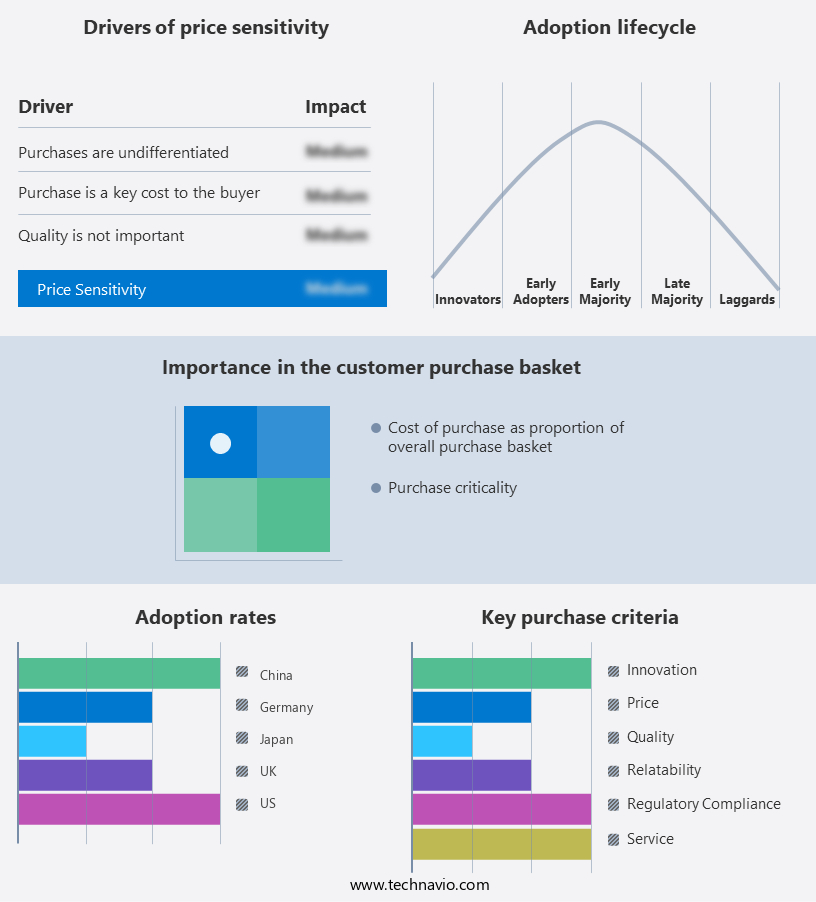
Customer Landscape of Electrophysiology Industry
Competitive Landscape
Companies are implementing various strategies, such as strategic alliances, electrophysiology market forecast, partnerships, mergers and acquisitions, geographical expansion, and product/service launches, to enhance their presence in the industry.
Abbott Laboratories - This company specializes in electrophysiology solutions, delivering advanced technologies for accessing, imaging, transseptal procedures, mapping, ablation, LAO, vascular closure, monitoring, diagnosing, and managing arrhythmias. Their offerings optimize electrophysiology procedures for improved patient care.
The industry research and growth report includes detailed analyses of the competitive landscape of the market and information about key companies, including:
- Abbott Laboratories
- Acutus Medical Inc.
- APN Health LLC
- Asahi Kasei Corp.
- BIOTRONIK SE and Co. KG
- Boston Scientific Corp.
- CathRx Pty Ltd.
- EP Solutions SA
- GE Healthcare Technologies Inc.
- Imricor
- Japan Lifeline Co. Ltd.
- Johnson and Johnson Services Inc.
- Koninklijke Philips NV
- Medtronic Plc
- Merit Medical Systems Inc.
- MicroPort Scientific Corp.
- OSYPKA AG
- Siemens Healthineers AG
- Stereotaxis Inc.
Qualitative and quantitative analysis of companies has been conducted to help clients understand the wider business environment as well as the strengths and weaknesses of key industry players. Data is qualitatively analyzed to categorize companies as pure play, category-focused, industry-focused, and diversified; it is quantitatively analyzed to categorize companies as dominant, leading, strong, tentative, and weak.
Recent Development and News in Electrophysiology Market
- In January 2024, Medtronic, a leading medical technology company, announced the U.S. Food and Drug Administration (FDA) approval of its new ablation catheter, the Arctic Front Advance ST Flexablate Ablation System, for the treatment of atrial fibrillation (AFib) (Medtronic Press Release, 2024). This innovative technology enables more precise and effective ablation, reducing the risk of complications.
- In March 2024, Boston Scientific and Abbott Laboratories entered into a strategic collaboration to develop and commercialize a new generation of cardiac monitoring and remote patient management solutions (Boston Scientific Press Release, 2024). The partnership combines Boston Scientific's expertise in electrophysiology and Abbott's strengths in digital health, aiming to improve patient care and outcomes.
- In May 2024, Siemens Healthineers, a leading medical technology provider, announced the acquisition of Cardeas Medical, a pioneer in the field of non-invasive cardiac electrical mapping (Siemens Healthineers Press Release, 2024). The acquisition strengthens Siemens Healthineers' electrophysiology portfolio, enabling the company to offer more comprehensive solutions for the diagnosis and treatment of cardiac arrhythmias.
- In April 2025, Edwards Lifesciences, a global leader in patient care technologies, completed the acquisition of Pulsar Vascular, a company specializing in the development of innovative catheter-based therapies for structural heart disease (Edwards Lifesciences Press Release, 2025). The acquisition enhances Edwards Lifesciences' electrophysiology capabilities, expanding its product offerings and enabling it to address a broader range of patient needs.
Dive into Technavio's robust research methodology, blending expert interviews, extensive data synthesis, and validated models for unparalleled Electrophysiology Market insights. See full methodology.
|
Market Scope |
|
|
Report Coverage |
Details |
|
Page number |
226 |
|
Base year |
2024 |
|
Historic period |
2019-2023 |
|
Forecast period |
2025-2029 |
|
Growth momentum & CAGR |
Accelerate at a CAGR of 11.6% |
|
Market growth 2025-2029 |
USD 7393.5 million |
|
Market structure |
Fragmented |
|
YoY growth 2024-2025(%) |
10.2 |
|
Key countries |
US, Germany, UK, Canada, China, France, Japan, India, Italy, and South Korea |
|
Competitive landscape |
Leading Companies, Market Positioning of Companies, Competitive Strategies, and Industry Risks |
Research Analyst Overview
- In the dynamic and evolving landscape of electrophysiology, advanced technologies continue to reshape the way researchers explore and understand electrical signals within cells and tissues. One such innovation is EEG data analysis, which employs multi-electrode arrays to measure brain activity and decode neural information. This technique complements traditional methods like patch clamp, which reveals the intricacies of voltage-gated ion channels through single-cell electrophysiology. Extracellular recording, a crucial aspect of electrophysiology, is gaining momentum through advancements in electrical impedance tomography. This non-invasive imaging technique offers insights into tissue properties and electrical activity, contributing to drug discovery efforts. Meanwhile, intracellular recording delves deeper into cellular processes, unraveling the mysteries of ion channel activity, membrane potential, and synaptic transmission.
- Beyond neuronal applications, electrophysiology plays a pivotal role in cardiac research. Cardiac electrophysiology investigates the electrical properties of the heart, with techniques like ECG signal processing and ion channel pharmacology shedding light on heart rate variability and action potential propagation. Moreover, the study of pacemaker cell activity and ion channel mutations contributes significantly to understanding cardiac arrhythmias and developing targeted therapies. Neural network modeling and ion channel kinetics further expand the scope of electrophysiology, allowing for a more comprehensive understanding of bioelectric signal acquisition and processing. As research progresses, advancements in outside-in and inside-out patch clamp techniques, optical mapping, and calcium channel antagonists continue to fuel new discoveries and applications in this ever-evolving field.
What are the Key Data Covered in this Electrophysiology Market Research and Growth Report?
-
What is the expected growth of the Electrophysiology Market between 2025 and 2029?
-
USD 7.39 billion, at a CAGR of 11.6%
-
-
What segmentation does the market report cover?
-
The report is segmented by Product (Lab devices, Ablation catheters, Diagnostic catheters, and Access devices), End-user (Hospitals and cardiac centers and ASCs), Device (Atrial fibrillation (AF) and Non-atrial fibrillation), and Geography (North America, Europe, Asia, and Rest of World (ROW))
-
-
Which regions are analyzed in the report?
-
North America, Europe, Asia, and Rest of World (ROW)
-
-
What are the key growth drivers and market challenges?
-
Increasing incidence of target diseases and electrophysiology procedures, High cost of electrophysiology products
-
-
Who are the major players in the Electrophysiology Market?
-
Abbott Laboratories, Acutus Medical Inc., APN Health LLC, Asahi Kasei Corp., BIOTRONIK SE and Co. KG, Boston Scientific Corp., CathRx Pty Ltd., EP Solutions SA, GE Healthcare Technologies Inc., Imricor, Japan Lifeline Co. Ltd., Johnson and Johnson Services Inc., Koninklijke Philips NV, Medtronic Plc, Merit Medical Systems Inc., MicroPort Scientific Corp., OSYPKA AG, Siemens Healthineers AG, and Stereotaxis Inc.
-
Market Research Insights
- The market encompasses technologies and techniques used to study the electrical properties of various biological systems, including muscle fibers and neurons. Two key areas of focus are spike detection and mathematical modeling. In 2020, the global market for spike detection solutions was valued at USD2.5 billion, with a growth rate of 6% expected annually. In contrast, the mathematical modeling segment, which includes techniques such as wavelet transform, time series analysis, and ionic current modeling, was valued at USD3.2 billion and is projected to expand at a rate of 8% per year. These markets are driven by the continuous advancements in understanding the complex electrical behaviors of myocardial cells, muscle fiber contraction, and neuronal activity.
- Technological innovations in electrotonic conduction, membrane capacitance, and ionic currents have led to improvements in signal averaging, artifact rejection, and noise reduction, enabling more accurate transmembrane voltage measurements and computational simulations. Furthermore, advances in model validation and data filtering have facilitated the exploration of ion conductance, calcium influx, and sodium potassium pump dynamics, enhancing our understanding of depolarization, repolarization, pacemaker potential, and other key electrophysiological phenomena.
We can help! Our analysts can customize this electrophysiology market research report to meet your requirements.
 RIA -
RIA - 
