


Europe Office Furniture Market Size 2026-2030
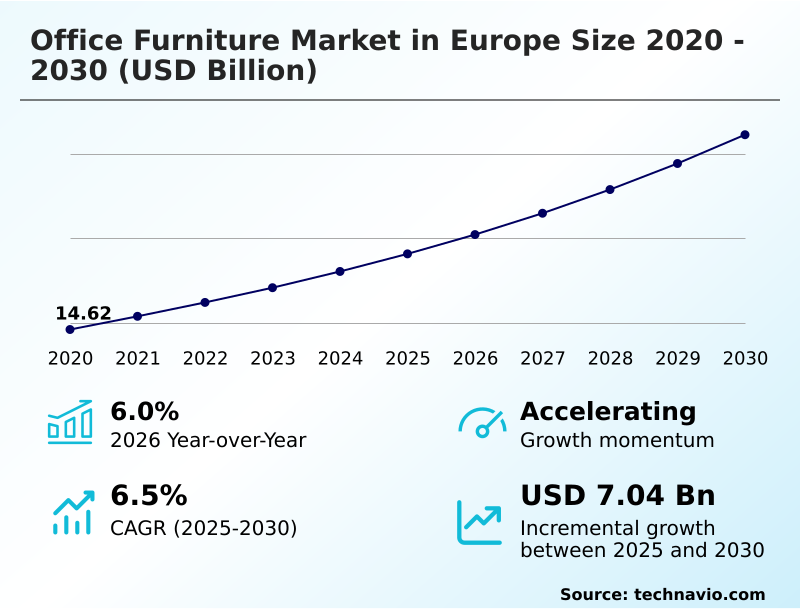
The europe office furniture market size is valued to increase by USD 7.04 billion, at a CAGR of 6.5% from 2025 to 2030. Hybrid work models and office reconfigurations will drive the europe office furniture market.
Major Market Trends & Insights
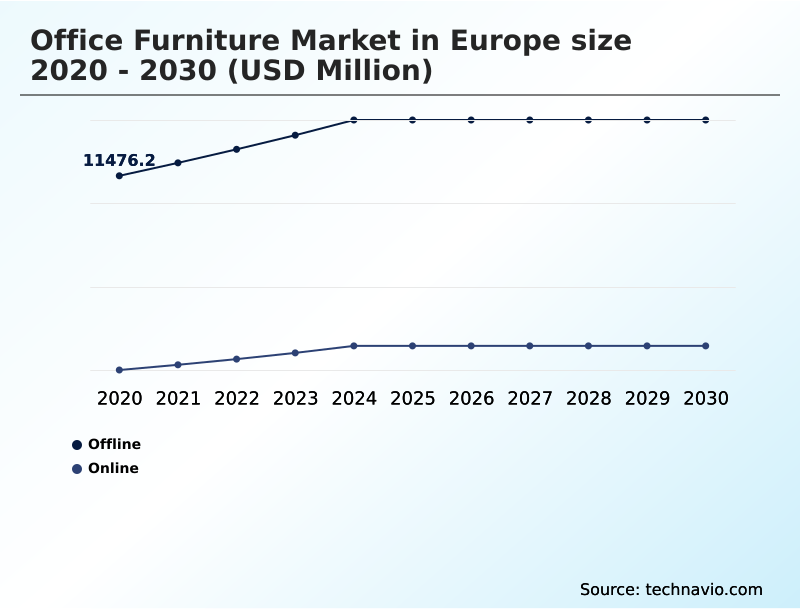
- By Distribution Channel - Offline segment was valued at USD 13.87 billion in 2024
- By End-user - Commercial office furniture segment accounted for the largest market revenue share in 2024
Market Size & Forecast
- Market Opportunities: USD 11.51 billion
- Market Future Opportunities: USD 7.04 billion
- CAGR from 2025 to 2030 : 6.5%
Market Summary
- The office furniture market in Europe is undergoing a significant transformation, moving beyond simple functionality to become a strategic tool for corporate success. Key drivers include the imperative for employee well-being initiatives and the widespread adoption of hybrid work models, which compel businesses to redesign spaces for collaboration and flexibility.
- This shift fuels demand for activity-based working furniture, such as acoustic office pods and modular desking systems, that support diverse tasks. Sustainability is no longer a niche concern but a core component of procurement, with a strong emphasis on circular economy principles and furniture made from sustainable materials.
- A business scenario illustrating this is a tech firm investing in certified ergonomic seating and height-adjustable desks to boost employee retention and reduce health-related absenteeism. This investment not only improves workplace productivity enhancement but also reinforces the company's commitment to its workforce.
- At the same time, the market contends with intense competition and the need for constant innovation in areas like smart furniture integration and neurodiverse-friendly design, ensuring workspaces are both efficient and inclusive. This complex interplay of trends and challenges defines the industry's dynamic evolution.
What will be the Size of the Europe Office Furniture Market during the forecast period?
Get Key Insights on Market Forecast (PDF) Get Free Sample
How is the Europe Office Furniture Market Segmented?
The europe office furniture industry research report provides comprehensive data (region-wise segment analysis), with forecasts and estimates in "USD million" for the period 2026-2030, as well as historical data from 2020-2024 for the following segments.
- Distribution channel
- Offline
- Online
- End-user
- Commercial office furniture
- Home office furniture
- Product
- Seating
- Systems
- Tables
- Storage units and files
- Overhead bins
- Material
- Wood
- Steel
- Others
- Geography
- Europe
- Germany
- UK
- The Netherlands
- Europe
By Distribution Channel Insights
The offline segment is estimated to witness significant growth during the forecast period.
The offline channel, which includes the B2B direct sales channel and value-added reseller networks, remains central to the market. It excels in delivering customized office fit-outs for large-scale commercial office furniture needs and complex office reconfiguration projects.
This channel allows clients to physically assess ergonomic chair mechanisms and material quality, crucial for significant corporate interior design investments. The consultative approach facilitates the integration of biophilic design elements and neurodiverse-friendly design principles.
While online furniture configurators are improving, over 70% of major corporations still prefer the in-depth engagement of offline partners for developing and executing their workplace strategies.
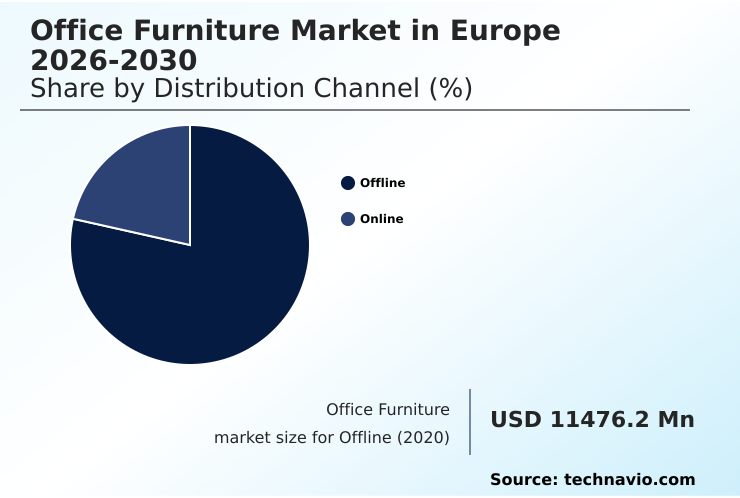
The Offline segment was valued at USD 13.87 billion in 2024 and showed a gradual increase during the forecast period.
Market Dynamics
Our researchers analyzed the data with 2025 as the base year, along with the key drivers, trends, and challenges. A holistic analysis of drivers will help companies refine their marketing strategies to gain a competitive advantage.
- Understanding the nuances of the modern workplace is crucial for navigating the office furniture market in Europe. The impact of hybrid work on office furniture demand is profound, pushing companies to explore how modular office furniture for agile workspaces can optimize their real estate.
- A detailed cost-benefit analysis of sit-stand desks often reveals that the initial investment is offset by gains in employee health, directly linking ergonomic furniture benefits for employee productivity. The role of acoustic pods in open-plan offices is increasingly vital for providing focus areas, a key aspect of neurodiverse design principles in furniture selection.
- Simultaneously, the focus on sustainable materials in commercial office furniture is driving the adoption of circular economy models for office furniture. Businesses are now evaluating procurement criteria for sustainable office furniture, a process where a product's end-of-life recyclability is as important as its initial cost.
- This has led to innovative business structures, where exploring how furniture-as-a-service reduces capex has become a key strategic conversation. Firms using such models report up to 15% greater capital flexibility over those using traditional purchasing. This shift is also evident in technology in ergonomic chair design and smart office furniture integration with IoT, which are becoming standard expectations.
- The future of work and its effect on furniture will continue to be shaped by these evolving demands.
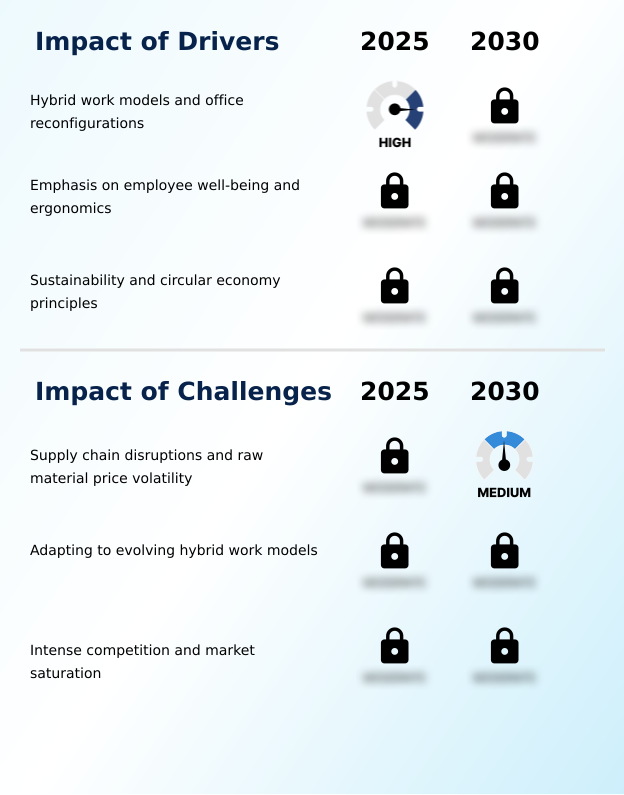
What are the key market drivers leading to the rise in the adoption of Europe Office Furniture Industry?
- The widespread adoption of hybrid work models, which necessitates significant office reconfigurations, is a primary driver propelling market growth.
- The market's growth trajectory is strongly influenced by the widespread need for hybrid work model support, driving investment in flexible zoning solutions and hot desking furniture.
- A heightened focus on employee well-being initiatives is a primary driver, with companies that implement high-quality home office ergonomics and adhere to workplace health and safety regulations reporting up to a 20% increase in employee satisfaction.
- Corporate social responsibility (CSR) mandates are compelling businesses to adopt circular business models and enforce sustainable procurement policies.
- This strategic pivot not only meets regulatory demands but also serves as a powerful tool for brand identity reflection in a competitive talent market.
What are the market trends shaping the Europe Office Furniture Industry?
- The increasing demand for flexible and modular furniture solutions represents a significant trend, driven by the need for adaptable and reconfigurable office spaces.
- Market evolution is increasingly defined by agile and intelligent workplace solutions. Demand for movable wall systems and modular desking systems is surging, enabling reconfigurations up to 50% faster, which is critical for creating agile work environments and supporting return-to-office initiatives. The integration of smart building technology is advancing, with furniture featuring wireless charging integration and posture monitoring sensors.
- This provides valuable space utilization analytics, improving facility management optimization by 15% for early adopters. A focus on lightweight construction materials and tool-free assembly for multi-functional furniture also underscores the trend towards enhancing both usability and end-of-life recyclability.
What challenges does the Europe Office Furniture Industry face during its growth?
- Persistent supply chain disruptions and the price volatility of key raw materials present a significant challenge affecting industry growth and stability.
- The market faces persistent challenges from operational and economic pressures. Intense raw material price volatility remains a primary concern, with unpredictable cost hikes of over 20% for key materials impacting profitability. This is compounded by supply chain logistics disruptions, which delay the delivery of components for collaborative furniture solutions and other specialized products.
- The procurement tender process for public sector contracts is becoming more complex, demanding greater evidence of sustainability and supply chain resilience. Adapting product portfolios to the uncertain, fluctuating demand between individual and shared spaces also poses a significant strategic challenge for manufacturers.
Exclusive Technavio Analysis on Customer Landscape
The europe office furniture market forecasting report includes the adoption lifecycle of the market, covering from the innovator’s stage to the laggard’s stage. It focuses on adoption rates in different regions based on penetration. Furthermore, the europe office furniture market report also includes key purchase criteria and drivers of price sensitivity to help companies evaluate and develop their market growth analysis strategies.
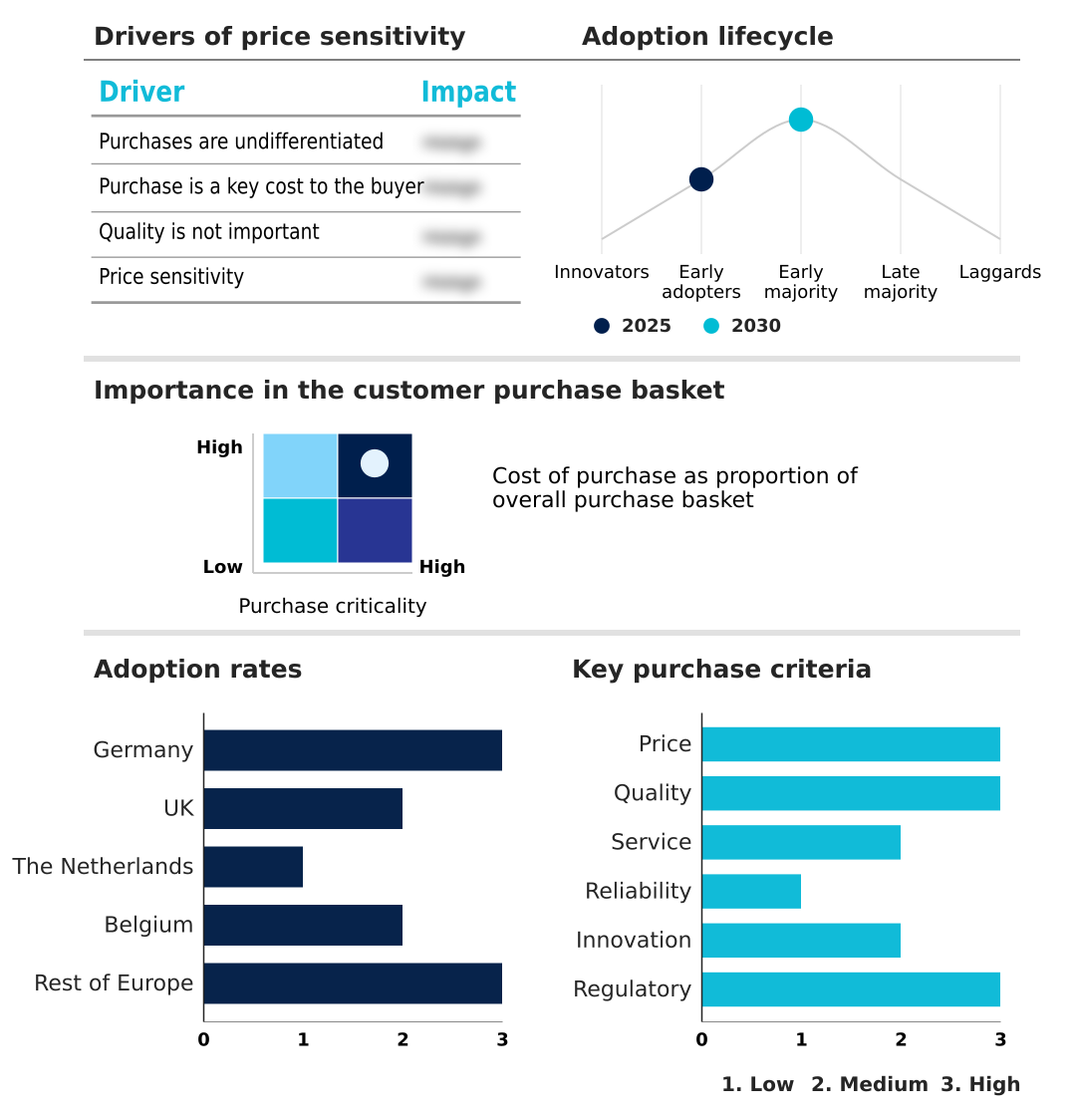
Customer Landscape of Europe Office Furniture Industry
Competitive Landscape
Companies are implementing various strategies, such as strategic alliances, europe office furniture market forecast, partnerships, mergers and acquisitions, geographical expansion, and product/service launches, to enhance their presence in the industry.
Actiu Berbegal S.A. - Offers ergonomic office furniture, including modular lounge systems and sustainable tables, engineered to enhance creativity and productivity in modern, user-centric workspaces.
The industry research and growth report includes detailed analyses of the competitive landscape of the market and information about key companies, including:
- Actiu Berbegal S.A.
- Boss Design Ltd.
- Estel
- Flokk AS
- Intetstuhl GmbH
- Isku Yhtyma Oy
- Kinnarps AB
- Konig Neurath AG
- Koninklijke Ahrend BV
- Martela Oyj
- Narbutas International
- Nowy Styl
- Sedus Stoll AG
- The Senator Group Ltd.
- TOPSTAR GMBH
- Unifor A.G.
- USM Furniture AG
- Vitra International AG
- VS Vereinigte GmbH and Co.
- Wilkhahn AG
Qualitative and quantitative analysis of companies has been conducted to help clients understand the wider business environment as well as the strengths and weaknesses of key industry players. Data is qualitatively analyzed to categorize companies as pure play, category-focused, industry-focused, and diversified; it is quantitatively analyzed to categorize companies as dominant, leading, strong, tentative, and weak.
Recent Development and News in Europe office furniture market
- In August 2024, a survey by a leading European design firm revealed that companies' lack of consistent long-term hybrid work strategies created significant ambiguity for furniture procurement.
- In October 2024, a major European office furniture manufacturer launched a new collection of modular acoustic pods and movable wall systems designed to create flexible zones in open-plan offices.
- In November 2024, the European Union introduced new directives aimed at promoting sustainable product design and extending product lifespans, directly impacting the office furniture market's adoption of circular economy principles.
- In April 2025, a partnership between Danish textile firm Kvadrat and a Swiss material science startup resulted in the launch of the first commercial closed-loop textile recycling program for furniture upholstery.
Dive into Technavio’s robust research methodology, blending expert interviews, extensive data synthesis, and validated models for unparalleled Europe Office Furniture Market insights. See full methodology.
| Market Scope | |
|---|---|
| Page number | 226 |
| Base year | 2025 |
| Historic period | 2020-2024 |
| Forecast period | 2026-2030 |
| Growth momentum & CAGR | Accelerate at a CAGR of 6.5% |
| Market growth 2026-2030 | USD 7035.8 million |
| Market structure | Fragmented |
| YoY growth 2025-2026(%) | 6.0% |
| Key countries | Germany, UK, The Netherlands, Belgium and Rest of Europe |
| Competitive landscape | Leading Companies, Market Positioning of Companies, Competitive Strategies, and Industry Risks |
Research Analyst Overview
- The office furniture market in Europe is shaped by a strategic pivot toward human-centric and sustainable workspaces. Demand is strong for ergonomic office furniture and modular office systems that facilitate reconfigurable office layouts. The emphasis on user-centric design is evident in the push for activity-based working furniture, including acoustic office pods and collaborative furniture solutions.
- Boardroom decisions are increasingly influenced by the dual imperatives of sustainability and employee well-being. For example, adopting circular economy principles and specifying sustainable furniture materials with low-VOC finishes is now a critical component of corporate strategy, driven by both regulatory pressures and brand reputation.
- Manufacturers are responding with innovations in height-adjustable desks, ergonomic chair mechanisms, and smart furniture integration, featuring integrated power and data. Firms that implement certified ergonomic seating and sit-stand workstations demonstrate a commitment to employee health, which has been shown to reduce absenteeism by over 10%.
- This focus on creating supportive environments is a key differentiator in a competitive market, where end-of-life recyclability and environmental product declarations are becoming standard requirements.
What are the Key Data Covered in this Europe Office Furniture Market Research and Growth Report?
-
What is the expected growth of the Europe Office Furniture Market between 2026 and 2030?
-
USD 7.04 billion, at a CAGR of 6.5%
-
-
What segmentation does the market report cover?
-
The report is segmented by Distribution Channel (Offline, and Online), End-user (Commercial office furniture, and Home office furniture), Product (Seating, Systems, Tables, Storage units and files, and Overhead bins), Material (Wood, Steel, and Others) and Geography (Europe)
-
-
Which regions are analyzed in the report?
-
Europe
-
-
What are the key growth drivers and market challenges?
-
Hybrid work models and office reconfigurations, Supply chain disruptions and raw material price volatility
-
-
Who are the major players in the Europe Office Furniture Market?
-
Actiu Berbegal S.A., Boss Design Ltd., Estel, Flokk AS, Intetstuhl GmbH, Isku Yhtyma Oy, Kinnarps AB, Konig Neurath AG, Koninklijke Ahrend BV, Martela Oyj, Narbutas International, Nowy Styl, Sedus Stoll AG, The Senator Group Ltd., TOPSTAR GMBH, Unifor A.G., USM Furniture AG, Vitra International AG, VS Vereinigte GmbH and Co. and Wilkhahn AG
-
Market Research Insights
- The market's dynamism is shaped by strategic shifts in workplace philosophy. Facility management optimization is now a key priority, with companies leveraging data to inform office design. For instance, implementing smart building technology in furniture can provide space utilization analytics that lead to a 20% improvement in layout efficiency.
- Corporate social responsibility (CSR) initiatives and sustainable procurement policies are heavily influencing purchasing decisions, with firms adopting circular business models seeing material waste reductions of up to 30% compared to linear approaches. Furthermore, as part of broader employee retention strategies, organizations are investing heavily in home office ergonomics and agile work environments, recognizing that a supportive workspace directly impacts performance.
We can help! Our analysts can customize this europe office furniture market research report to meet your requirements.
 RIA -
RIA - 
