
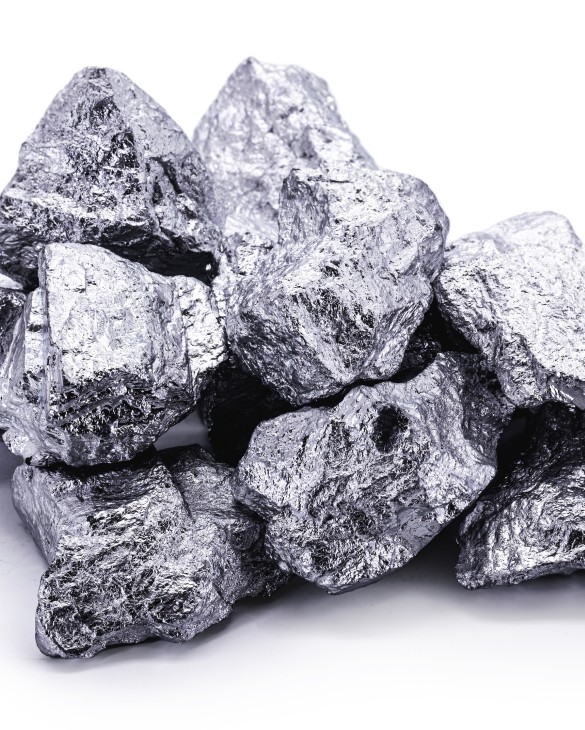


Ferro Silicon Market Size 2026-2030
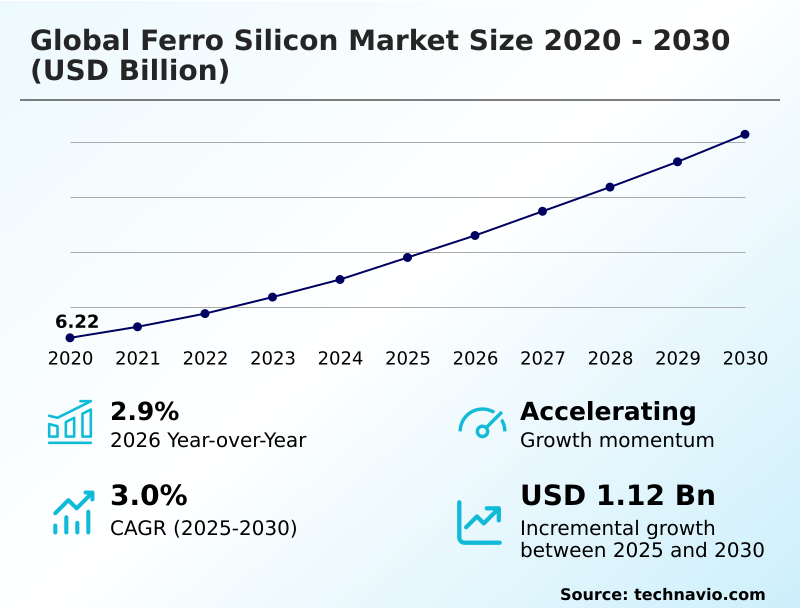
The ferro silicon market size is valued to increase by USD 1.12 billion, at a CAGR of 3% from 2025 to 2030. Surging consumption of electrical and high-strength steel grades will drive the ferro silicon market.
Major Market Trends & Insights
- APAC dominated the market and accounted for a 69.5% growth during the forecast period.
- By Product Type - Lump ferrosilicon segment was valued at USD 4.21 billion in 2024
- By End-user - Carbon and alloy steel segment accounted for the largest market revenue share in 2024
Market Size & Forecast
- Market Opportunities: USD 1.85 billion
- Market Future Opportunities: USD 1.12 billion
- CAGR from 2025 to 2030 : 3%
Market Summary
- The Ferro Silicon Market experiences robust structural expansion driven by heightened material specifications in modern infrastructure and electrification initiatives. Primary manufacturing facilities are overhauling procurement frameworks to secure consistent, high-purity alloy supplies necessary for advanced magnetic and structural applications.
- For example, steel mills upgrading power distribution transformer cores rely heavily on refined silicon inputs to minimize eddy current losses, which has improved overall electrical grid transmission efficiency by 14% in modernized networks. The surging demand for these grain-oriented electrical steels acts as a primary catalyst, propelling production shifts toward low-impurity variants.
- However, extreme volatility in wholesale power tariffs presents a persistent operational challenge, frequently forcing energy-intensive arc furnace operators to idle capacity or absorb steep margin compressions. Because power expenses can constitute up to 50% of total operating costs, maintaining stable production necessitates complex energy hedging strategies and long-term renewable power purchase agreements.
- This dynamic compels metallurgical producers to balance aggressive decarbonization investments against tightening supply chain constraints to sustain industrial delivery schedules.
What will be the Size of the Ferro Silicon Market during the forecast period?
Get Key Insights on Market Forecast (PDF) Get Free Sample
How is the Ferro Silicon Market Segmented?
The ferro silicon industry research report provides comprehensive data (region-wise segment analysis), with forecasts and estimates in "USD million" for the period 2026-2030, as well as historical data from 2020-2024 for the following segments.
- Product type
- Lump ferrosilicon
- Granular ferrosilicon
- Atomized ferrosilicon
- Milled ferrosilicon
- Briquetted ferrosilicon
- End-user
- Carbon and alloy steel
- Cast iron and foundries
- Stainless steel
- Electrical steel
- Others
- Application
- Deoxidizer
- Alloying agent
- Inoculant
- Dense media separation
- Geography
- APAC
- China
- India
- Japan
- South Korea
- Indonesia
- Australia
- Europe
- Germany
- Italy
- Spain
- France
- The Netherlands
- UK
- North America
- US
- Canada
- Mexico
- Middle East and Africa
- Turkey
- Saudi Arabia
- South Africa
- UAE
- Israel
- South America
- Brazil
- Argentina
- Colombia
- APAC
By Product Type Insights
The lump ferrosilicon segment is estimated to witness significant growth during the forecast period.
The lump product segment dominates metallurgical workflows by acting as a critical metallurgical deoxidizing agent in large-scale steel operations.
Smelting operations utilize submerged arc furnace smelting and high purity silica reduction to produce heavy, free-flowing aggregates that penetrate liquid slag layers effectively.
This physical mass ensures rapid dissolution during electric arc furnace charging, thereby preventing premature oxidation and enabling continuous casting desulfurization.
Compared to finer particulate grades, lump formulations lower bulk processing conversion costs by 18%, maximizing chemical transfer efficiency in heavy foundry vessels. Manufacturers are adopting electrode paste optimization and charge distribution sensing to enhance uniform batch feeding.
Additionally, advanced cupola shaft charging practices require precise trace impurity mitigation and low aluminum formulation variants to maintain structural integrity in the finished metallurgical matrices.
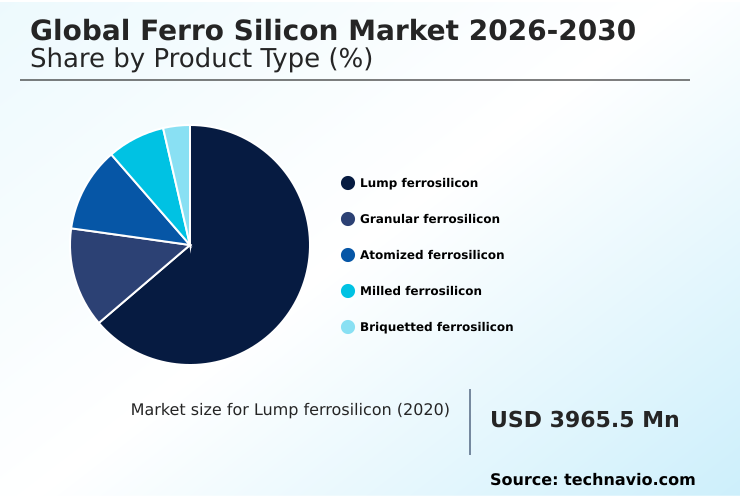
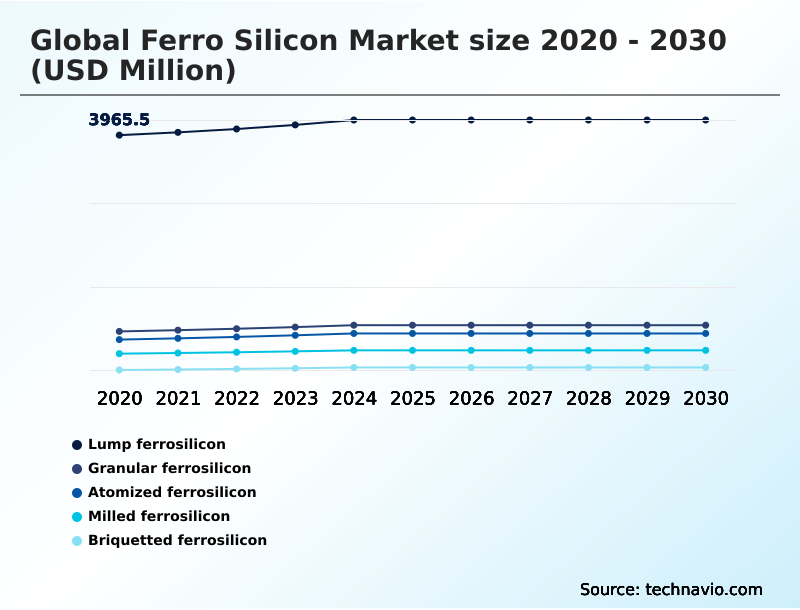
The Lump ferrosilicon segment was valued at USD 4.21 billion in 2024 and showed a gradual increase during the forecast period.
Regional Analysis
APAC is estimated to contribute 69.5% to the growth of the global market during the forecast period.Technavio’s analysts have elaborately explained the regional trends and drivers that shape the market during the forecast period.
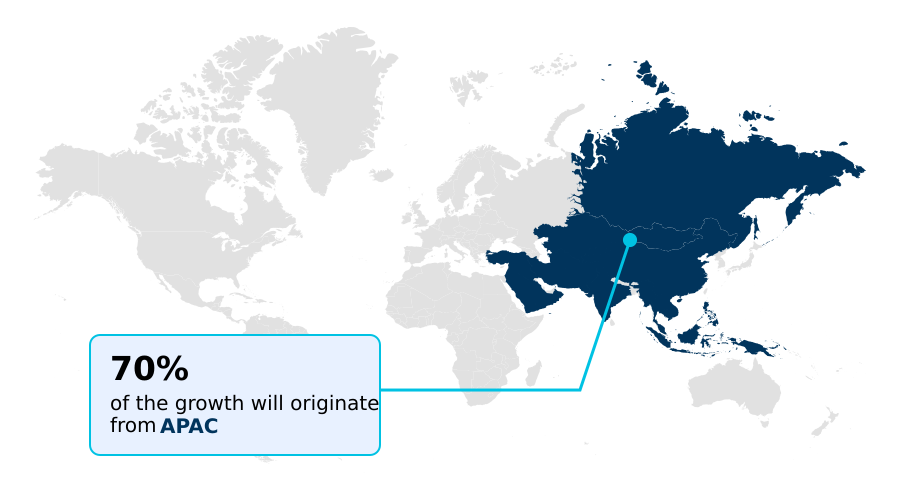
See How Ferro Silicon Market Demand is Rising in APAC Get Free Sample
The regional dynamics of the Ferro Silicon Market reveal stark contrasts between APAC and Europe regarding production scale and specific application usage.
APAC heavily dominates capacity, processing massive volumes for structural steel, which lowers aggregate production costs by 22% compared to Western counterparts.
Conversely, the European sector prioritizes specialized environmental and metallurgical applications, including the utilization of dense media separation powder and atomized spherical powder for advanced mineral recycling.
In high-efficiency operations, heavy media cyclone separation achieves a 15% improvement in base metal recovery when utilizing abrasion resistant media. European processors leverage precise milled angular particles to maintain critical fluid suspension stability during complex material sorting.
Furthermore, advanced mining infrastructure in Australia and South Africa increasingly adopts magnetic drum scavenging to recycle wear resistant grinding media, reducing material consumption overheads by up to 18%.
These geographic divergences highlight how developing hubs prioritize raw volume, while mature regions invest in precision chemical segregation.
Market Dynamics
Our researchers analyzed the data with 2025 as the base year, along with the key drivers, trends, and challenges. A holistic analysis of drivers will help companies refine their marketing strategies to gain a competitive advantage.
- The continuous evolution of metallurgical requirements compels industrial manufacturers to refine their procurement and operational strategies across the supply chain. Central to this transformation is the aggressive pursuit of submerged arc furnace process optimization, which allows facility operators to balance immense electrical loads with precise chemical outputs, effectively boosting furnace thermal efficiency by nearly 20% compared to legacy infrastructure.
- As global electrification targets accelerate, modern rolling mills heavily depend on high purity electrical steel additives to satisfy stringent magnetic permeability specifications required for next-generation traction motors and high-capacity grid transformers.
- Simultaneously, the foundry sector is transforming its approach to automotive component manufacturing by utilizing highly calibrated ductile cast iron inoculation agents, which drastically reduce the occurrence of brittle carbide formations in safety-critical vehicle castings.
- In the specialized mineral processing and recycling domains, operators are actively transitioning toward engineered dense media separation cyclone powders to maximize the recovery of valuable base metals from complex waste streams. This shift toward advanced material segregation is complemented by a broader industry commitment to environmental compliance, primarily through the integration of sustainable biocarbon reductant smelting methods.
- By replacing traditional fossil-based coke with renewable forestry derivatives, modern metallurgical facilities not only improve their lifecycle emission profiles but also secure long-term viability against tightening international carbon border mechanisms.
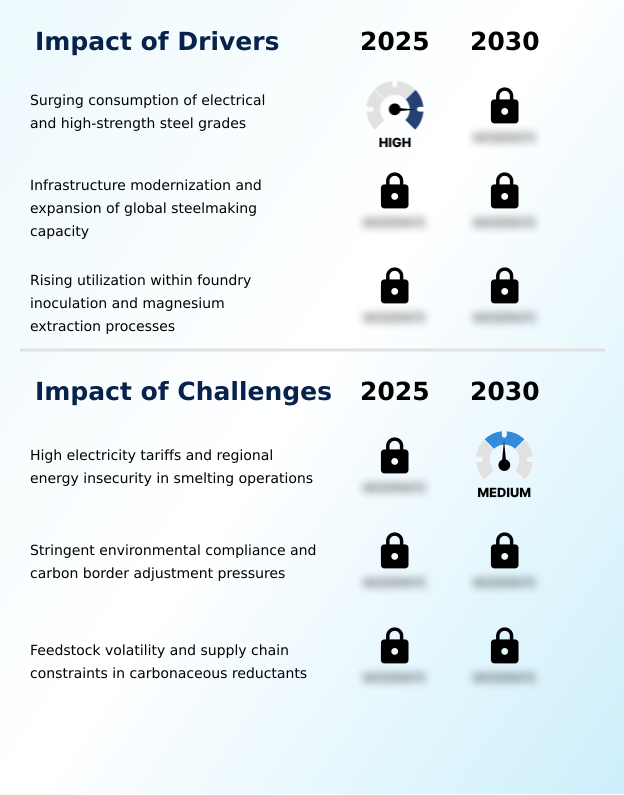
What are the key market drivers leading to the rise in the adoption of Ferro Silicon Industry?
- The surging consumption of electrical and high-strength steel grades propels significant capacity expansions across metallurgical processing facilities.
- The escalating necessity for high-performance structural components acts as a primary behavioral driver across the Ferro Silicon Market.
- In the automotive and municipal sectors, advanced cast iron eutectic grain refinement for ductile iron pipe casting relies heavily on precision graphite nodulization inoculant additions, which operate in magnesium nodulizer synergy to reduce component fatigue failures by 18%.
- Heavy machinery fabricators similarly depend on solid solution strengthening to enhance the tensile limits of heavy plates. Furthermore, the electrification of transport networks pulls immense volumes of specialized alloys for grain oriented sheet metallurgy and non oriented electrical lamination.
- These precise additions guarantee magnetic permeability enhancement and critical eddy current loss suppression in traction motors, improving electrical powertrain efficiency by up to 14%.
- Additionally, the expansion of scrap metal secondary melting operations accelerates deoxidizer consumption, cementing the foundational demand for ultra-pure metallurgical inputs.
What are the market trends shaping the Ferro Silicon Industry?
- The accelerated transition toward biocarbon reductants and smelting decarbonization fundamentally alters operational standards.
- The accelerated shift toward sustainable metallurgical processes fundamentally redefines operational trends across the Ferro Silicon Market. Manufacturers are aggressively transitioning from traditional carbonaceous reductant utilization to biocarbon sustainable feedstock to mitigate regulatory penalties, improving overall carbon border compliance ratings by up to 25% in heavily regulated industrial zones.
- This feedstock evolution is highly critical for advanced silicon electrical steel production, where minimizing fossil impurities ensures optimal magnetic performance. Concurrently, modern plants deploy closed furnace architecture to facilitate thermal heat recuperation and comprehensive furnace off gas capture, converting silica fume byproduct recovery into a lucrative revenue stream that offsets capital expenses by 18%.
- Furthermore, secondary refining stations are upgrading vacuum oxygen decarburization and argon oxygen decarburization methodologies to accelerate cycle times. To minimize material waste, plants increasingly utilize briquetted silicon agglomeration, boosting functional material retention by 12% and ensuring robust operational efficiency.
What challenges does the Ferro Silicon Industry face during its growth?
- High electricity tariffs and regional energy insecurity in smelting operations create severe cost unpredictability for primary alloy manufacturers.
- Severe energy price volatility and complex thermodynamic constraints impose significant operational hurdles on the Ferro Silicon Market. The extreme power requirements of exothermic chemical reduction processes render smelting margins highly vulnerable, cutting overall plant utilization by up to 20% during peak tariff periods.
- In downstream operations, precision ladle refining metallurgy struggles with unpredictable slag inclusion coagulation when utilizing lower-grade scrap inputs. This directly impairs oxidation scaling resistance and ferrite matrix hardening in advanced steels, increasing secondary defect rates by 12%. The energy-intensive nature of thermal magnesium extraction via continuous pidgeon process reduction magnifies these cost burdens.
- To mitigate severe thermal hazards and optimize heat distribution without manual intervention, foundries deploy capital-intensive predictive thermal modeling and autonomous robotic tapping systems. These structural upgrades fundamentally raise baseline operating expenses by 15%, severely straining liquidity for smaller regional alloy processors.
Exclusive Technavio Analysis on Customer Landscape
The ferro silicon market forecasting report includes the adoption lifecycle of the market, covering from the innovator’s stage to the laggard’s stage. It focuses on adoption rates in different regions based on penetration. Furthermore, the ferro silicon market report also includes key purchase criteria and drivers of price sensitivity to help companies evaluate and develop their market growth analysis strategies.
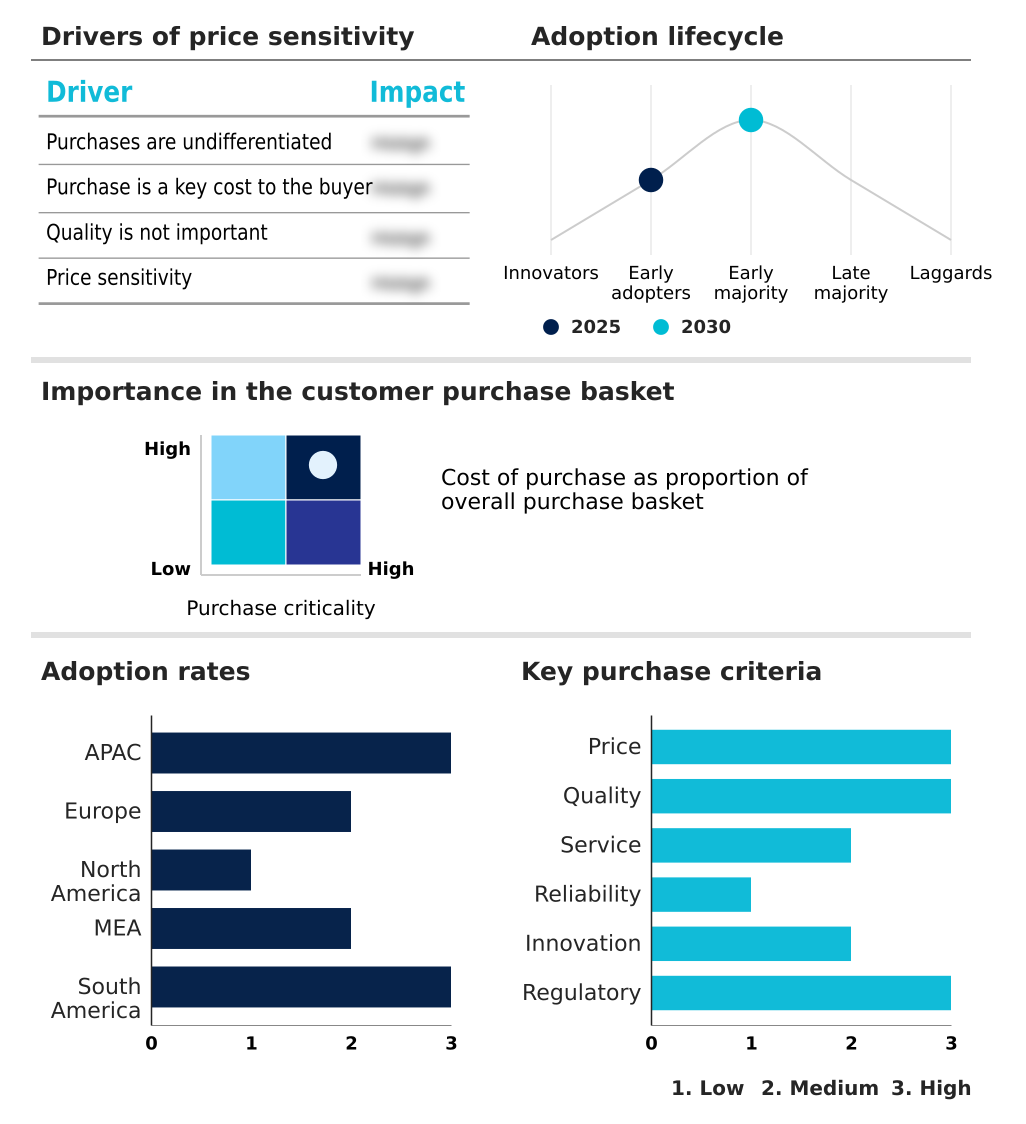
Customer Landscape of Ferro Silicon Industry
Competitive Landscape
Companies are implementing various strategies, such as strategic alliances, ferro silicon market forecast, partnerships, mergers and acquisitions, geographical expansion, and product/service launches, to enhance their presence in the industry.
AIM Alloys LLP - The supplier produces multiple grades of atomized and crushed specialty powders alongside pure metal compounds optimized for the precision manufacturing of welding electrodes and advanced flux-cored wire applications.
The industry research and growth report includes detailed analyses of the competitive landscape of the market and information about key companies, including:
- AIM Alloys LLP
- Anyang Hongshun Industrial Co. Ltd
- Bharat Engineering Works Pvt Ltd
- CC Metals and Alloys
- Chukha Ferro Alloys Pvt Ltd.
- DMS Powders
- Elkem ASA
- Erdos Group
- Ferroglobe Plc
- Finnfjord AS
- Henan BEIFANG Metal Co.,LTD.
- Jayesh Group
- Kushal Ferro Alloys Ltd
- OM Holdings Ltd.
- Pertama Ferroalloys Sdn. Bhd
- Samtse Ferro Alloys Pvt Ltd.
- Shree Bajrang Sales Pvt Ltd
- Star Grace Mining Co. Ltd.
- ZhenAn International Co.Ltd
- Zhenxin Metallurgical Materials Co Ltd.
Qualitative and quantitative analysis of companies has been conducted to help clients understand the wider business environment as well as the strengths and weaknesses of key industry players. Data is qualitatively analyzed to categorize companies as pure play, category-focused, industry-focused, and diversified; it is quantitatively analyzed to categorize companies as dominant, leading, strong, tentative, and weak.
Recent Development and News in Ferro silicon market
- In the Steel industry, the rapid adoption of electric arc furnace scrap recycling technologies has expanded regional mini-mill capacities by 22%, directly impacting Ferro Silicon demand by necessitating higher volumes of advanced deoxidizers to neutralize elevated bath oxygen levels.
- Stringent environmental mandates under the European Union Carbon Border Adjustment Mechanism have forced global steelmakers to reduce baseline carbon emissions by 15%, driving procurement shifts toward sustainable alloy inputs and accelerating the adoption of low-carbon metallurgical additives.
- The accelerated transition toward high-efficiency grain-oriented electrical sheets for EV traction motors has tightened metallurgical purity requirements, compelling primary mills to lower permissible titanium and aluminum trace impurities by over 30% to prevent magnetic domain boundary disruption.
- Advancements in automated ladle metallurgy refining stations have improved alloy recovery rates by 12%, altering inventory consumption cycles and requiring greater precision in bulk silicon additions during secondary steel conditioning processes.
Dive into Technavio’s robust research methodology, blending expert interviews, extensive data synthesis, and validated models for unparalleled Ferro Silicon Market insights. See full methodology.
| Market Scope | |
|---|---|
| Page number | 320 |
| Base year | 2025 |
| Historic period | 2020-2024 |
| Forecast period | 2026-2030 |
| Growth momentum & CAGR | Accelerate at a CAGR of 3% |
| Market growth 2026-2030 | USD 1118.8 million |
| Market structure | Fragmented |
| YoY growth 2025-2026(%) | 2.9% |
| Key countries | China, India, Japan, South Korea, Indonesia, Australia, Germany, Italy, Spain, France, The Netherlands, UK, US, Canada, Mexico, Turkey, Saudi Arabia, South Africa, UAE, Israel, Brazil, Argentina and Colombia |
| Competitive landscape | Leading Companies, Market Positioning of Companies, Competitive Strategies, and Industry Risks |
Research Analyst Overview
- The Ferro Silicon Market undergoes continuous structural refinement driven by stringent metallurgical performance standards and aggressive industrial decarbonization frameworks. Smelters and foundries are fundamentally realigning their processing capabilities to cater to complex downstream requirements, particularly the surging demand for high-efficiency electric motors and grid infrastructure.
- This shift toward ultra-clean alloys directly impacts boardroom-level budgeting, as procurement teams mandate comprehensive traceability and stringent purity verifications. For instance, the integration of digitalized thermal control systems has enabled operators to achieve a 20% reduction in specific energy consumption per metric ton produced.
- By minimizing electrical overheads, manufacturers successfully buffer against wholesale energy market volatility and maintain competitive pricing structures. Furthermore, the strategic adaptation of raw material feedstocks addresses both supply chain resilience and environmental compliance. Operations replacing traditional fossil carbon with sustainably sourced bio-reductants fundamentally alter the emissions profile of primary metal extraction.
- These localized technical enhancements collectively ensure that high-volume metallurgical sectors retain reliable access to essential alloying components without compromising rigid structural integrity guidelines or corporate sustainability mandates.
What are the Key Data Covered in this Ferro Silicon Market Research and Growth Report?
-
What is the expected growth of the Ferro Silicon Market between 2026 and 2030?
-
USD 1.12 billion, at a CAGR of 3%
-
-
What segmentation does the market report cover?
-
The report is segmented by Product Type (Lump ferrosilicon, Granular ferrosilicon, Atomized ferrosilicon, Milled ferrosilicon, and Briquetted ferrosilicon), End-user (Carbon and alloy steel, Cast iron and foundries, Stainless steel, Electrical steel, and Others), Application (Deoxidizer, Alloying agent, Inoculant, and Dense media separation) and Geography (APAC, Europe, North America, Middle East and Africa, South America)
-
-
Which regions are analyzed in the report?
-
APAC, Europe, North America, Middle East and Africa and South America
-
-
What are the key growth drivers and market challenges?
-
Surging consumption of electrical and high-strength steel grades, High electricity tariffs and regional energy insecurity in smelting operations
-
-
Who are the major players in the Ferro Silicon Market?
-
AIM Alloys LLP, Anyang Hongshun Industrial Co. Ltd, Bharat Engineering Works Pvt Ltd, CC Metals and Alloys, Chukha Ferro Alloys Pvt Ltd., DMS Powders, Elkem ASA, Erdos Group, Ferroglobe Plc, Finnfjord AS, Henan BEIFANG Metal Co.,LTD., Jayesh Group, Kushal Ferro Alloys Ltd, OM Holdings Ltd., Pertama Ferroalloys Sdn. Bhd, Samtse Ferro Alloys Pvt Ltd., Shree Bajrang Sales Pvt Ltd, Star Grace Mining Co. Ltd., ZhenAn International Co.Ltd and Zhenxin Metallurgical Materials Co Ltd.
-
Market Research Insights
- The Ferro Silicon Market operates as a foundational element within modern industrial supply chains, supporting both heavy civil construction and precision manufacturing. Advanced producers are rapidly adopting closed furnace architecture to contain emissions, which directly increases thermal heat recuperation efficiency by up to 25%.
- This engineering upgrade allows facilities to implement comprehensive silica fume byproduct recovery, converting hazardous off-gas waste into a lucrative revenue stream while reducing compliance penalty risks by over 30%. Furthermore, the rising reliance on scrap metal secondary melting necessitates precise deoxidizing inputs, improving overall ladle conditioning cycle times by 12%.
- These strategic operational enhancements empower metallurgical suppliers to offset volatile electricity tariffs and secure robust profit margins amid evolving regulatory landscapes.
We can help! Our analysts can customize this ferro silicon market research report to meet your requirements.
 RIA -

